Author: Hanna Rosti PhD

  • IUCN CRITERIA – populations matter the most!

    IUCN CRITERIA – populations matter the most!

    IUCN CRITERIA FOR ENDANGERED SPECIES

    CRITERIA IS AS FOLLOWS

    IUCN CRITERIA FOR SPECIES (IUCN 2012)

    EXTINCT (EX): A taxon is Extinct when there is no reasonable doubt that the last individual has died. A taxon is presumed Extinct when exhaustive surveys in known and/or expected habitat, at appropriate times (diurnal, seasonal, annual), throughout its historic range have failed to record an individual. Surveys should be over a time frame appropriate to the taxon’s life cycle and life form.

    EXTINCT IN THE WILD (EW) A taxon is Extinct in the Wild when it is known only to survive in cultivation, in captivity or as a naturalized population (or populations) well outside the past range. A taxon is presumed Extinct in the Wild when exhaustive surveys in known and/or expected habitat, at appropriate times (diurnal, seasonal, annual), throughout its historic range have failed to record an individual. Surveys should be over a time frame appropriate to the taxon’s life cycle and life form.

    CRITICALLY ENDANGERED (CR) A taxon is Critically Endangered when the best available evidence indicates that it meets any of the criteria A to E for Critically Endangered (see Section V), and it is therefore considered to be facing an extremely high risk of extinction in the wild.
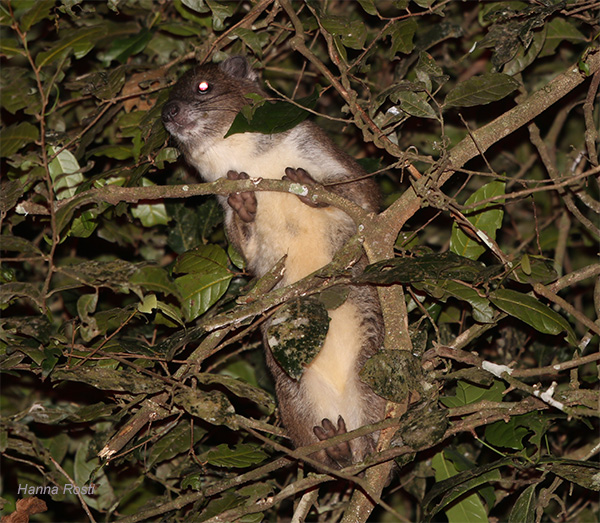
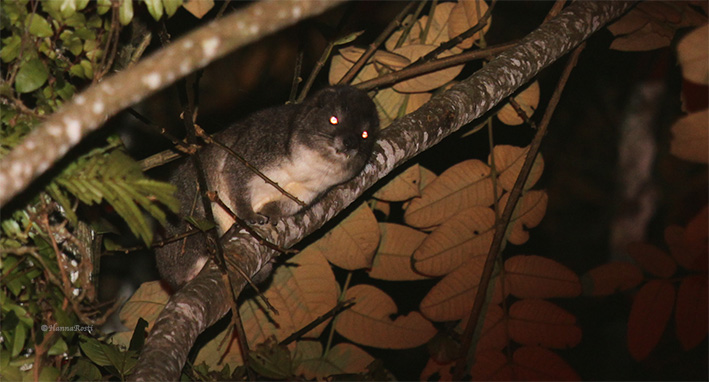
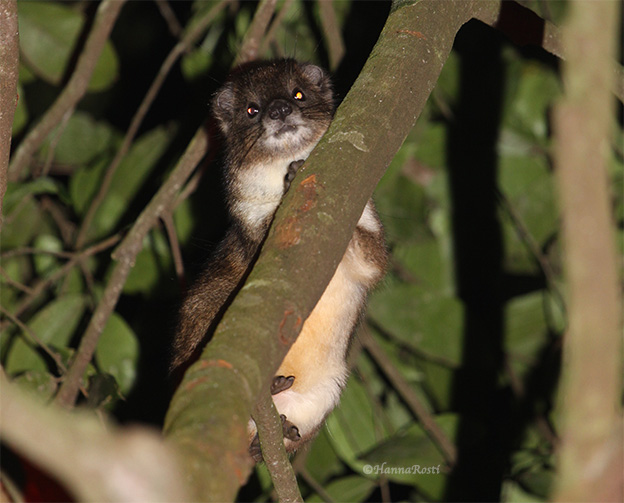
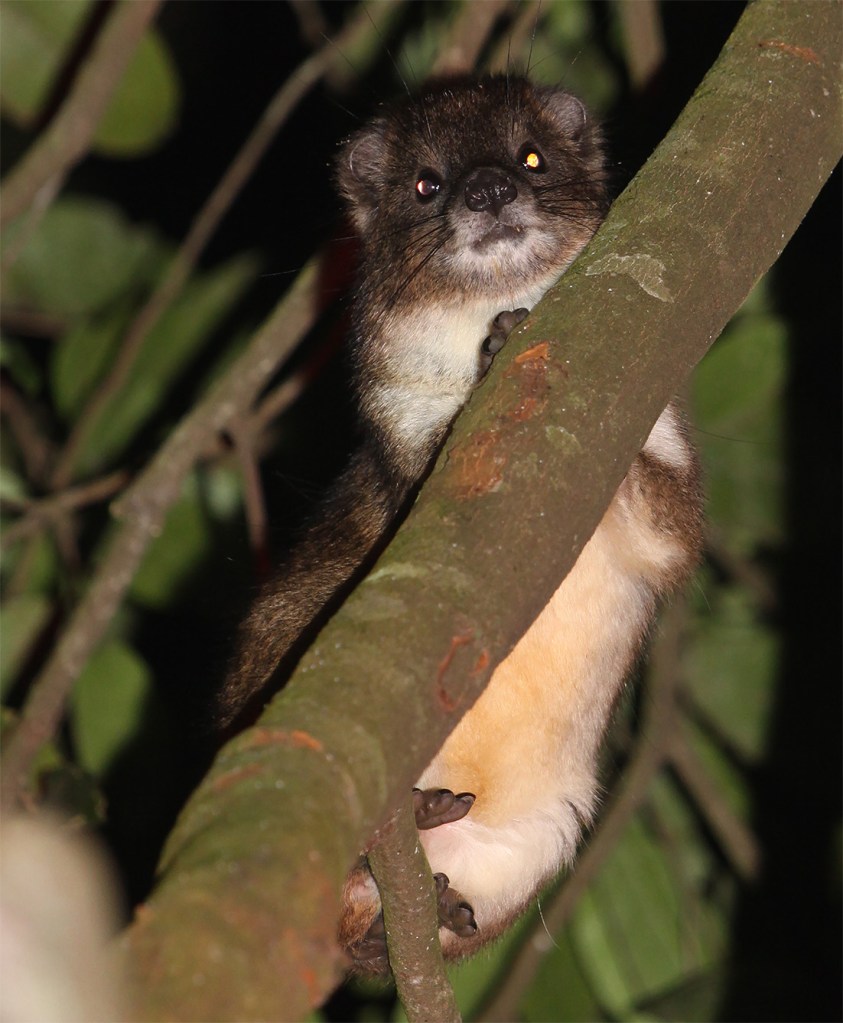
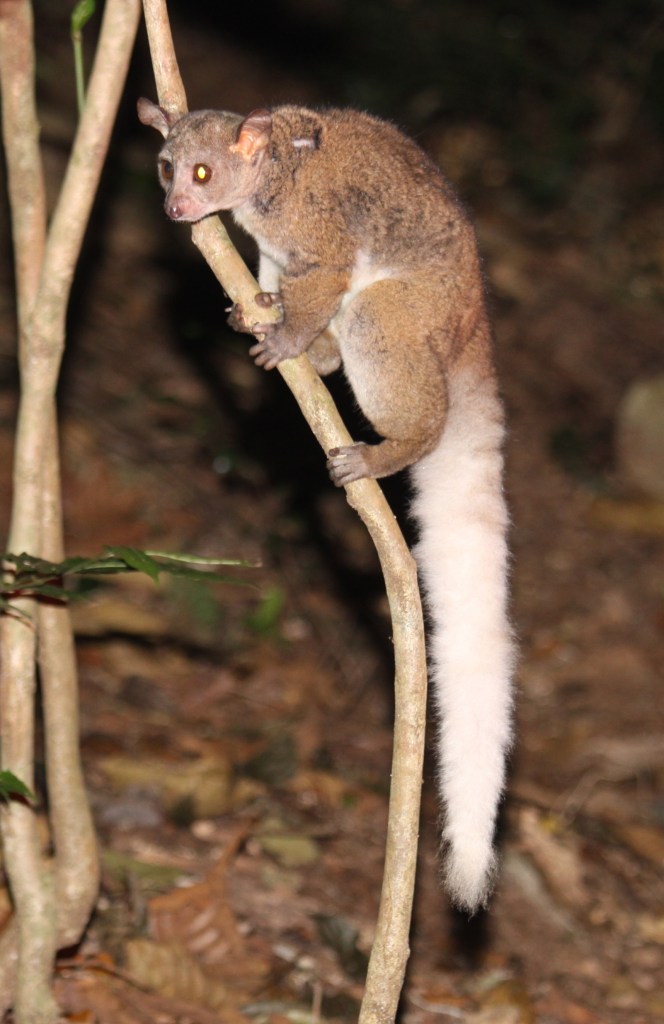
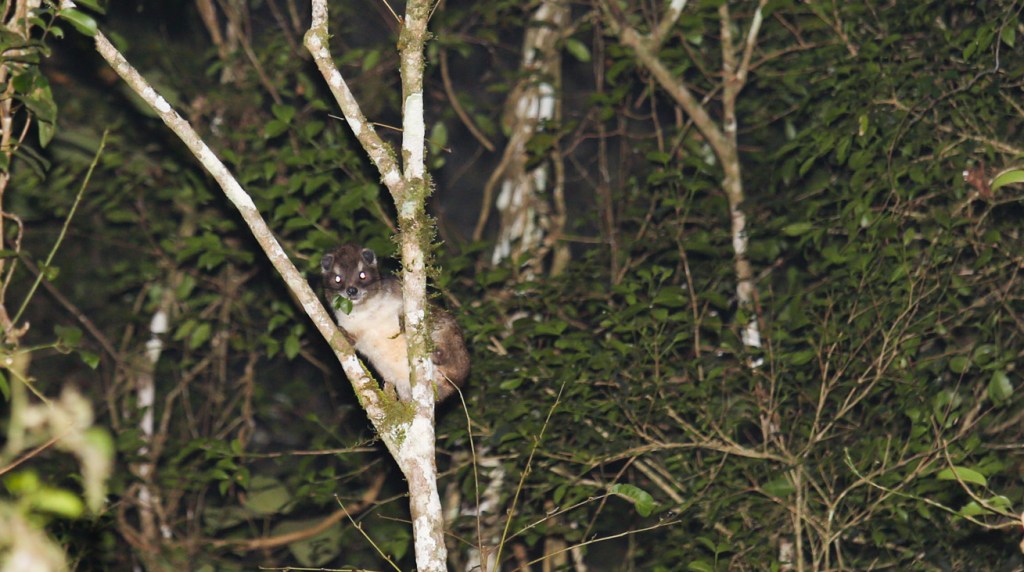
    Tree hyrax (Dendrohyrax sp.) Taita Hills, Kenya. This is most likely undescribed species for the science and thus doesn’t have IUCN assessment.

    ENDANGERED (EN) A taxon is Endangered when the best available evidence indicates that it meets any of the criteria A to E for Endangered (see Section V), and it is therefore considered to be facing a very high risk of extinction in the wild.

    VULNERABLE (VU) A taxon is Vulnerable when the best available evidence indicates that it meets any of the criteria A to E for Vulnerable (see Section V), and it is therefore considered to be facing a high risk of extinction in the wild.

    NEAR THREATENED (NT) A taxon is Near Threatened when it has been evaluated against the criteria but does not qualify for Critically Endangered, Endangered or Vulnerable now, but is close to qualifying for or is likely to qualify for a threatened category in the near future.

    LEAST CONCERN (LC) A taxon is Least Concern when it has been evaluated against the criteria and does not qualify for Critically Endangered, Endangered, Vulnerable or Near Threatened. Widespread and abundant taxa are included in this category.

    DATA DEFICIENT (DD) A taxon is Data Deficient when there is inadequate information to make a direct, or indirect, assessment of its risk of extinction based on its distribution and/or population status. A taxon in this category may be well studied, and its biology well known, but appropriate data on abundance and/or distribution are lacking. Data Deficient is therefore not a category of threat. Listing of taxa in this category indicates that more information is required and acknowledges the possibility that future research will show that threatened classification is appropriate. It is important to make positive use of whatever data are available. In many cases great care should be exercised in choosing between DD and a threatened status. If the range of a taxon is suspected to be relatively circumscribed, and a considerable period of time has elapsed since the last record of the taxon, threatened status may well be justified.

    NOT EVALUATED (NE) A taxon is Not Evaluated when it has not yet been evaluated against the criteria.
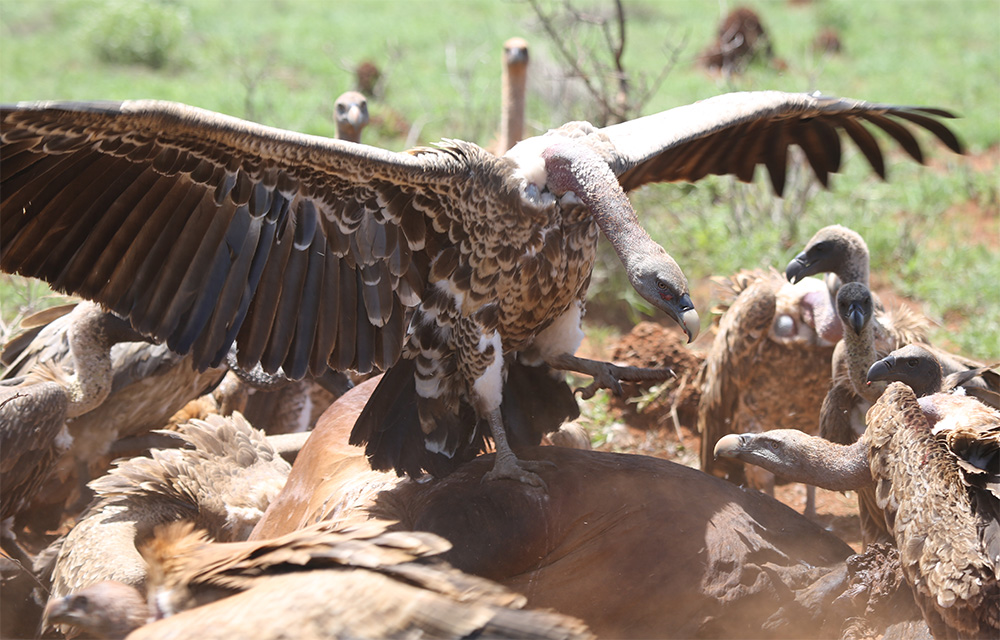
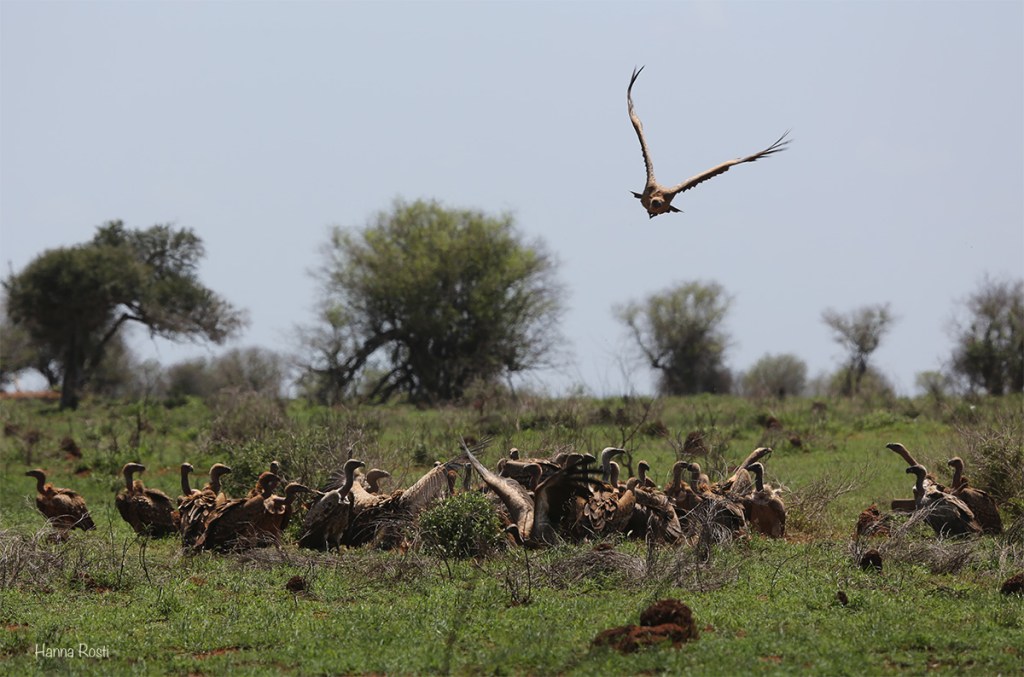
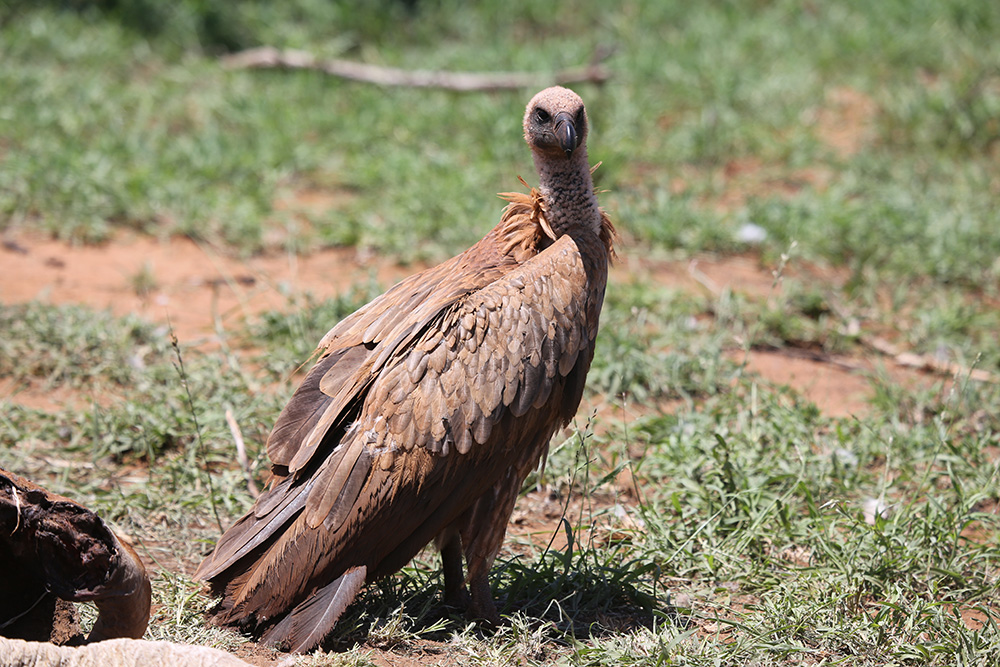
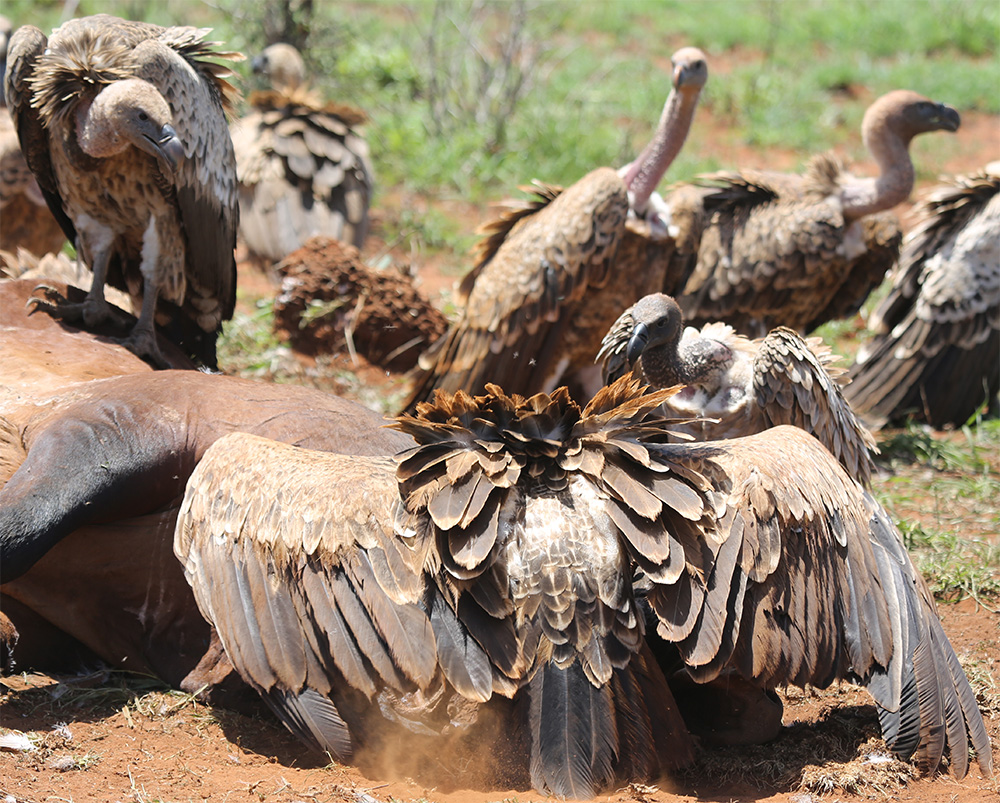
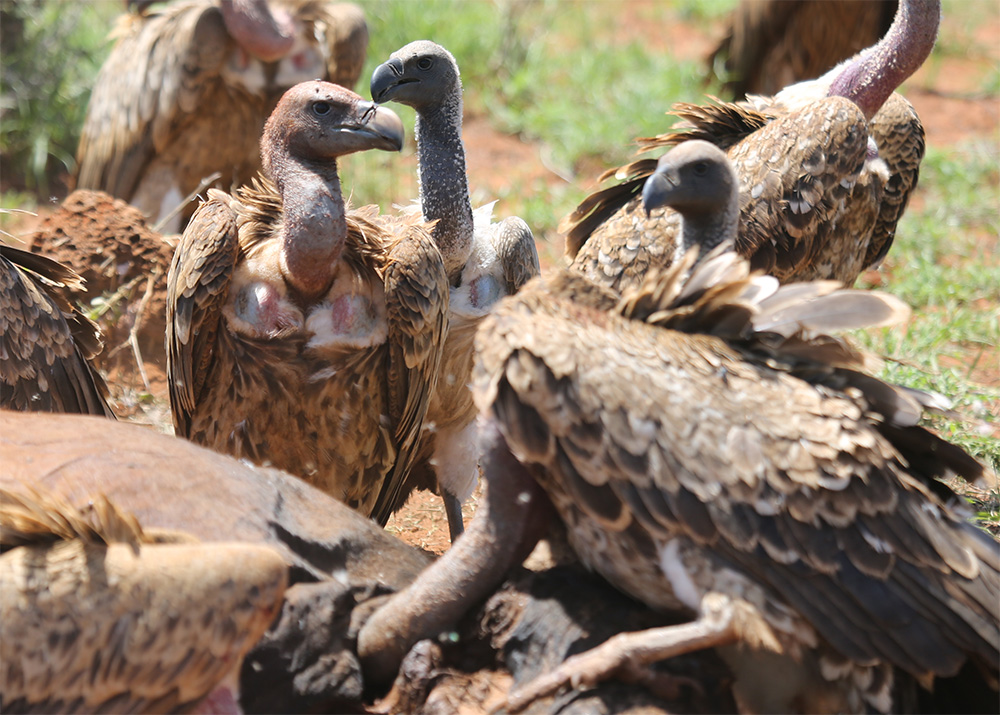
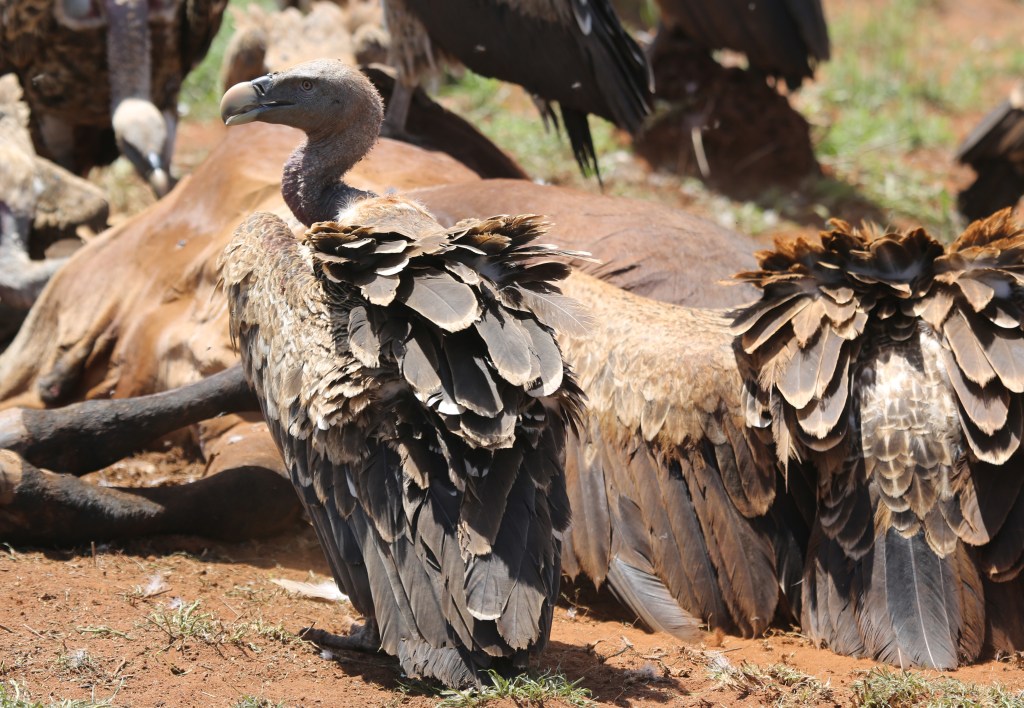
    Critically Endangered (CR) vultures, Rüppells Vulture (Gyps rueppelli) and White-Backed Vulture (Gyps africanus) feeding on cow that has been killed by lions in Lumo conservancy Kenya in 2021.

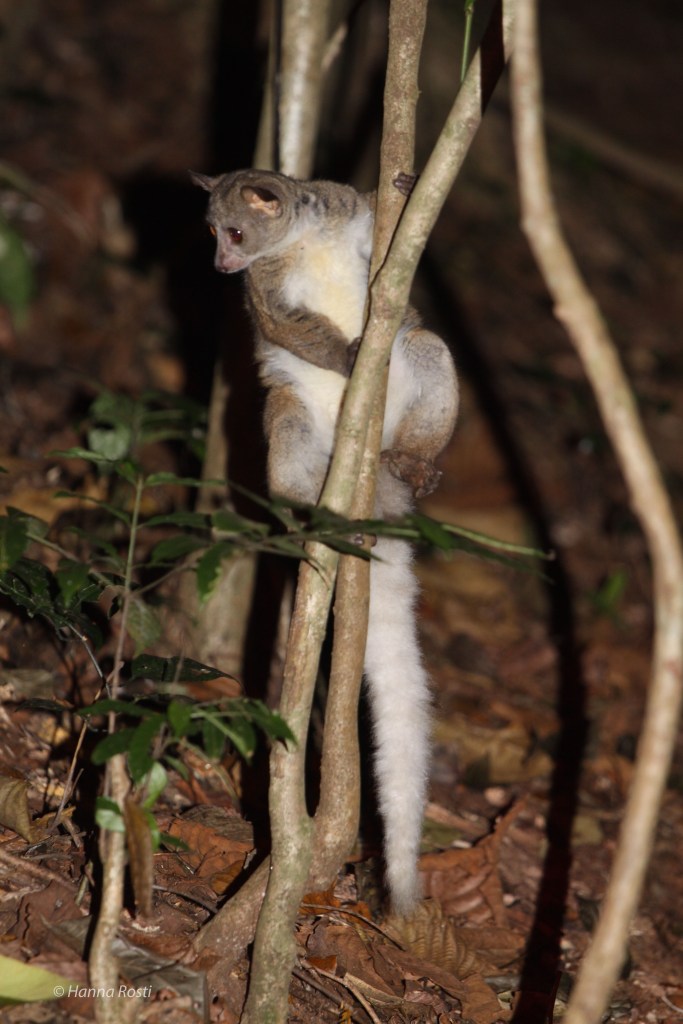
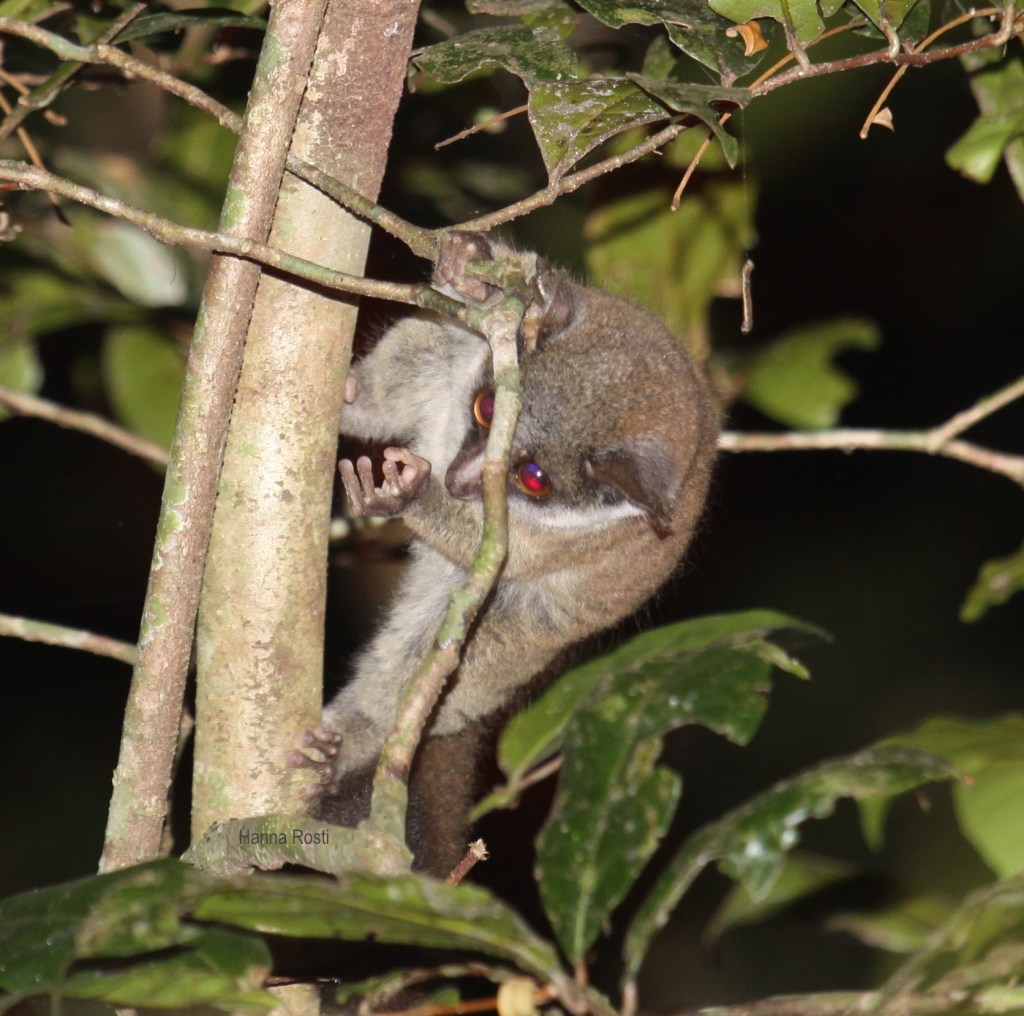
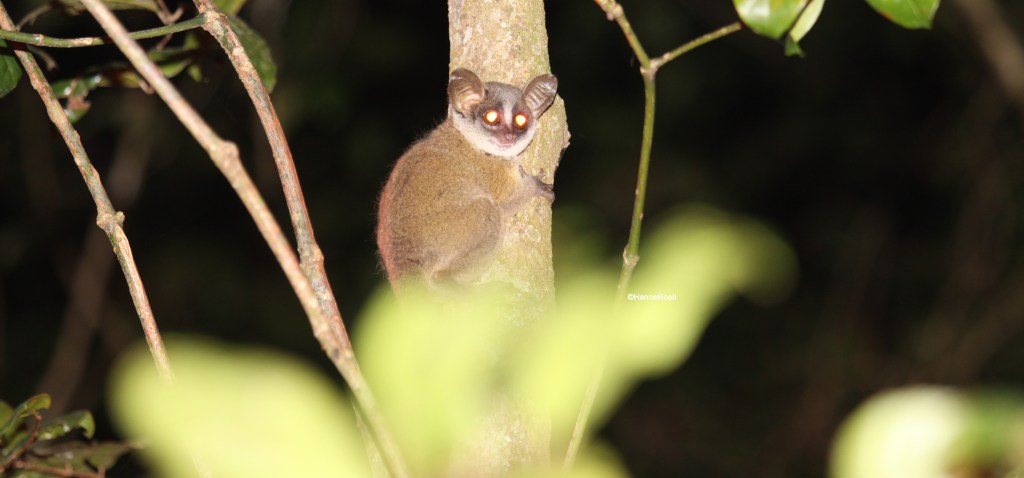
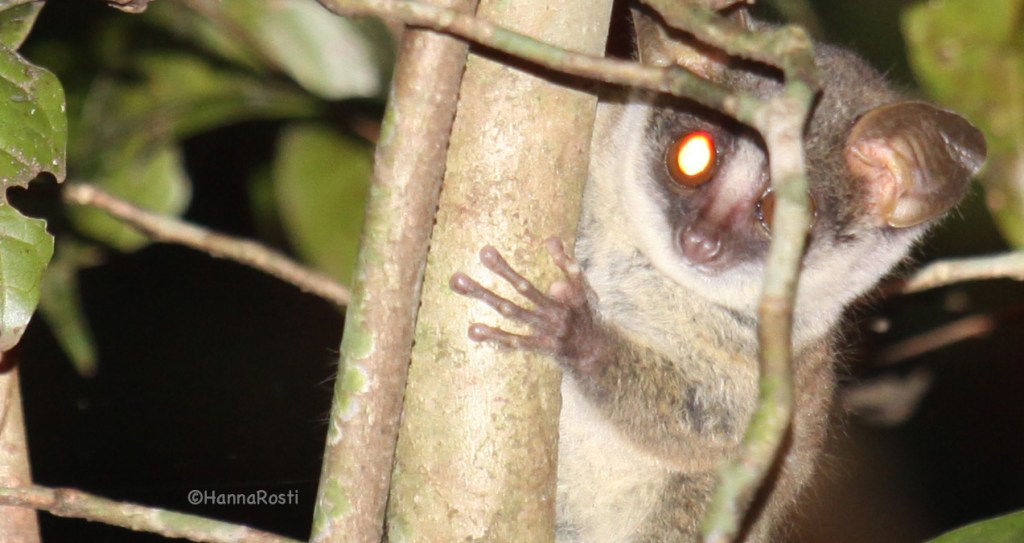
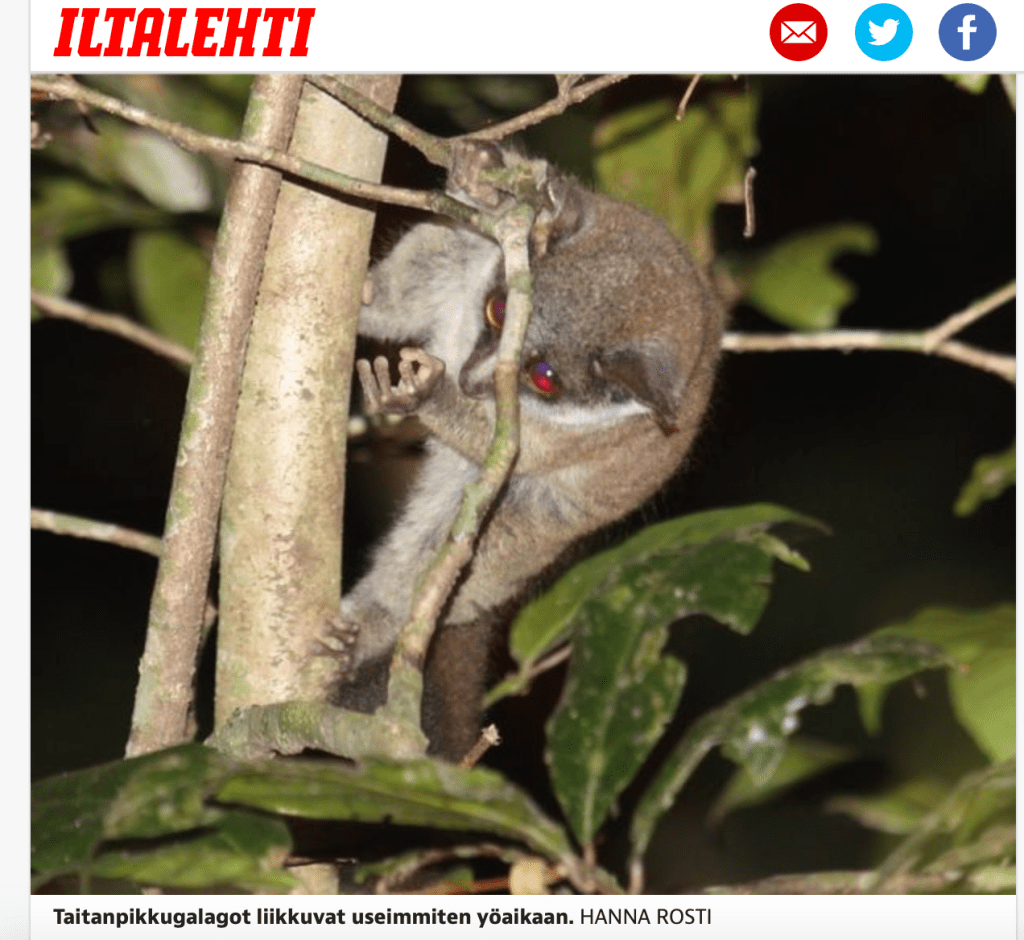
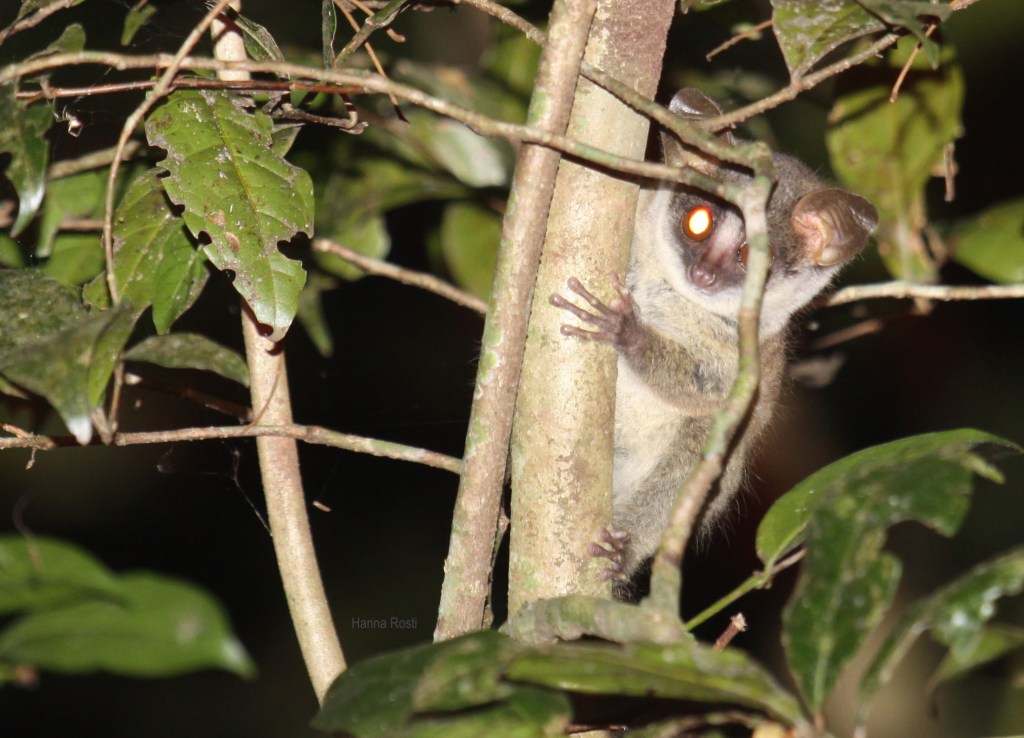
    Taita tree hyrax (Dendrohyrax sp.) and Taita dwarf galago (Paragalago cocos) fulfill following criteria for Critically Endangered species.

    MORE DETAILED KNOWLEDGE ABOUT CRITICALLY ENDANGERED (CR)

    IUCN guide about Critically Endangered:

    A. Reduction in population size based on any of the following (shortened by Hanna Rosti), original with much longer text can be found here: IUCN Red List categories and criteria, version 3.1, second edition

    A. Population size

    • An observed, estimated, inferred or suspected population size reduction of ≥90% over the last 10 years based on direct observation, decline in area of occupancy, extent of occurrence and/or quality of habitat
    • An observed, estimated, inferred or suspected population size reduction of ≥80% over the last 10 years where the reduction or its causes may not have ceased or may not be understood or may not be reversible.

    B. Geographic range

    • Extent of occurrence estimated to be less than 100 km2
    • Area of occupancy estimated to be less than 10 km2

    C. Population size estimated to number fewer than 250 mature individuals or

    • A continuing decline, observed, projected, or inferred, in numbers of mature individuals. Quantitative analysis showing the probability of extinction in the wild is at least 50% within 10 years or three generations, whichever is the longer (up to a maximum of 100 years).

    How IUCN assessment and criteria is made?

    UCN criteria are made based on peer reviewed scientific journals, and they are written by top scientist of the species. Before IUCN assessment can be done, species must be scientifically identified and named.

    Assessment is based on research. Collecting substantial knowledge, preferably long-term knowledge of each species in the planet is not always possible. Species are very different, and methods that different species are studied vary accordingly. There is lack of data on most nocturnal animals, simply because they are so difficult to study.

    Publishing scientific articles is time consuming and expensive. It means that species may go extinct, or their IUCN status may change faster than can be noticed, as humans are changing Earth in ever-growing speed.
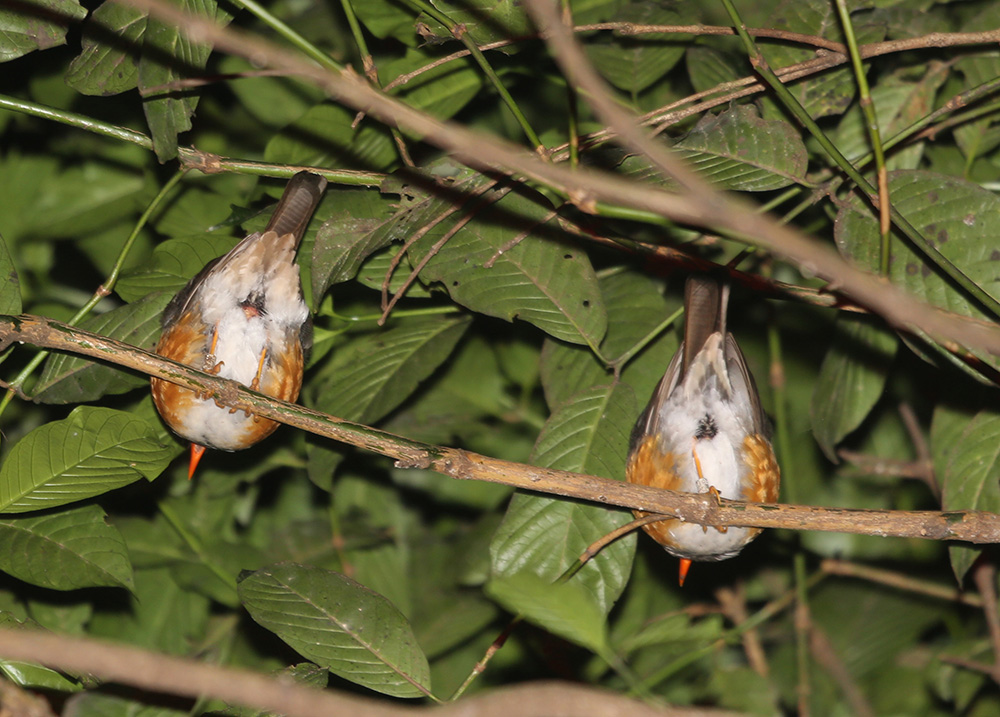
    Critically Endangered (CR) Taita thrush (Turdus helleri) from Taita Hills. Number of mature individuals 930.

    Taita tree hyrax and Taita dwarf galago are already CR Critically endangered

    However, Taita tree hyrax and Taita dwarf galago don’t yet have any IUCN criteria. In Taita Hills there is about 6 km2 of indigenous tropical cloud forest left. This means that these species are Critially Endangered based on B2, area of occupancy less than 10 km2.

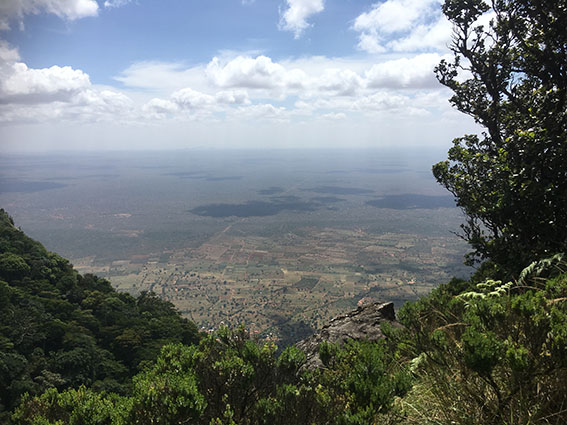
    Forests that are left in Taita Hills are severely fragmented, and not connected to each other. So they are like islands in the sea. Forests are remaining in the mountain tops of Taita Hills, and they are also called water towers, as local people understand the ability of indigenous forest of attract rainwater.
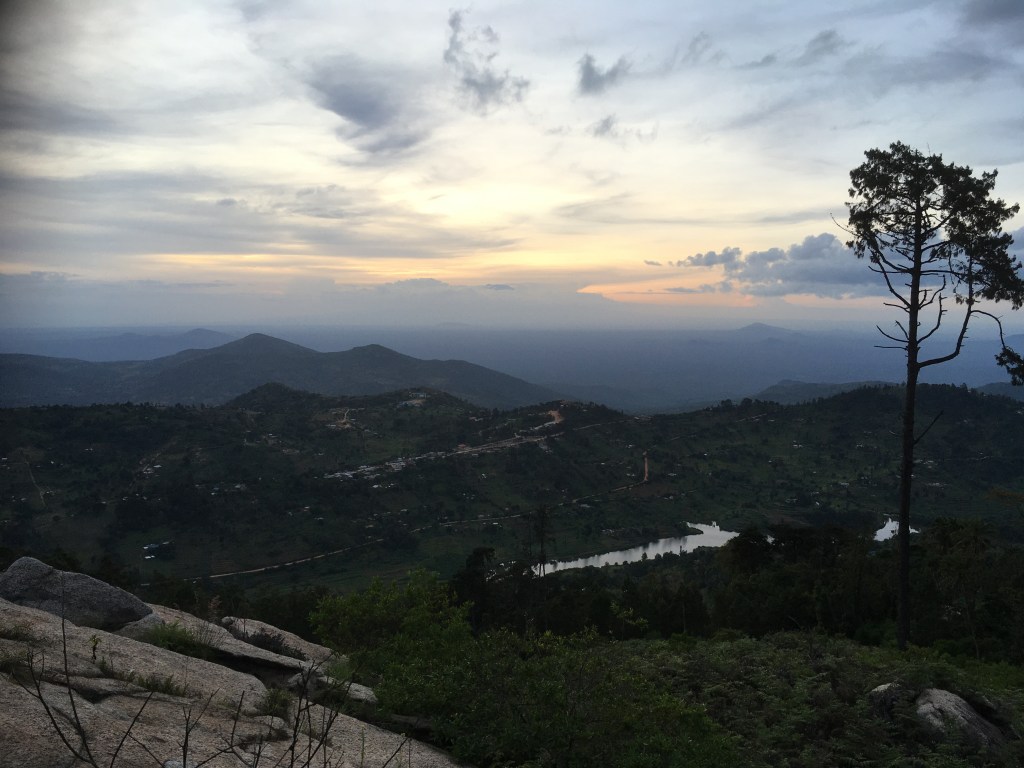
    Most of Taita Hills forest have been cleared for agriculture and exotic tree (Eucalyptus, cyprus, pine etc.) plantations during last 100 years.

    Largest forest fragments are Mbololo 1,8 km2, and Ngangao 1,2 km2 and Chawia 0,8 km2. These are very small forests – all of them. Only Mbololo and Ngangao still have dwarf galago populations. Tree hyrax is more common, and it also survives in smaller fragments.

    These severy fragmented forests are still source of firewood for some local people. A price of electricity is very high in Kenya, and using gas is also too expensive to some people. Firewood is used for cooking. Collection of firewood decreases quality of the forest, and signs are clearly visible on the edges and around paths inside the forest.
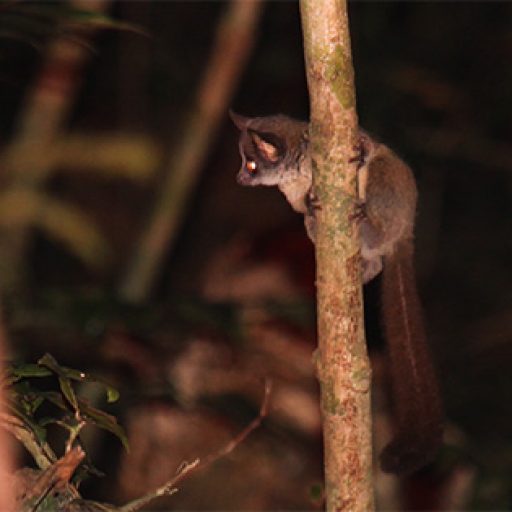
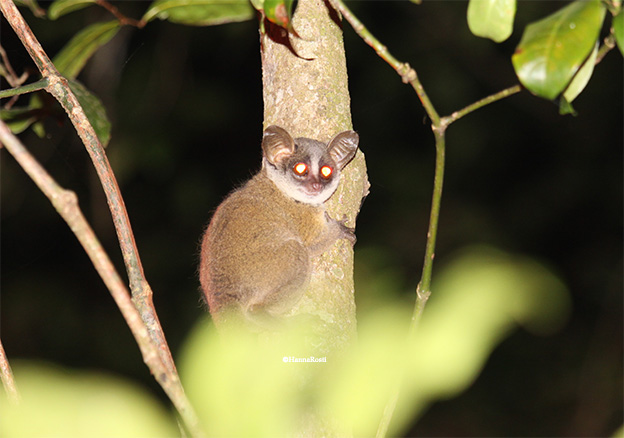
    This Kenya coast dwarf galago (Paragalago cocos), is interesting relict population from wider range of Kenya coast dwarf galago. Other populations are living in coast of Kenya. But in Taita Hills, it is only living on two mountain tops.

    Populations are what matter!

    All populations are worth conservation. Before species go extinct, population number may even increase in some area, if habitats are destroyed and animals are packed in remaining habitat. This is called extinction debt. Competition in remaining habitat will decrease number of animals.

    If we wait with conservation efforts until 90 % of population is lost, it is too late!

    Forms of life are connected to each other. What happens to one species, happens to many species. This is because species use other species as food sources and rely on other species as their habitat, reproduction, safety and habitat.

    The web of life can decrease in countless ways that humans are unable to monitor, even with most high quality research.

    In a another words, we can’t predict consequences to other species caused by one species of animal going Critically Endangered or Extinct.

    All populations should be conserved in a level, where they have genetic biodiversity, resilience to changes and disease, capability to reproduce normally.

    IUCN guidelines are necessary tool to evaluate and compare situations where species are.

    However, more awareness should be given to each population, and conservation before species is Critically Endangered.

    We are living sixth mass extinction, our responsibility is to protect other species, and keep populations of other species alive, resilient and strong.
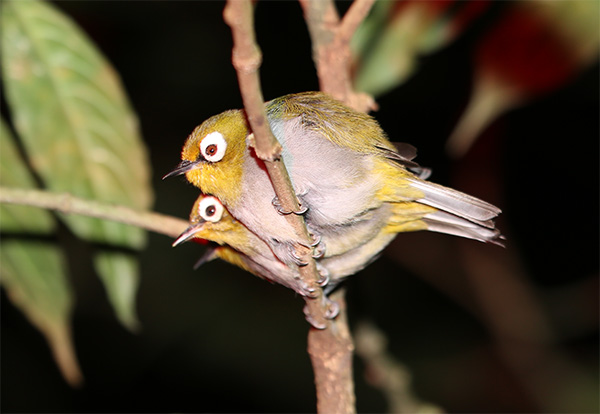
    Taita white-eye (Zosterops silvanus) is categorized as Endangered (EN) by IUCN.

    Read also: Conservation of Mbololo and Ngangao Forests

    Read also: Taita tree hyrax – mysterious relict species
    Read also: AABA conference poster presentation: Distribution, population density and behavior of dwarf galagos in Taita Hills (Paragalago sp.)

  • Videos

    Videos

    27.8.2022

    Short video introduction to tree hyraxes, with unique footage

    Video of tree hyraxes filmed at night with night binoculars

    As far as we know this is first video of tree hyraxes filmed at night. Tree hyraxes in East Africa are extremely shy, and difficult to observe. Usually they vanish in to the canopy when seen, or before humans can see them.

    Tree hyraxes, and other nocturnal animals of Taita Hills

    Video telling about Hanna Rosti’s research and conservation of noctural animals in Taita Hills, filmed in January 2021

    Volunteer opportunities with Kenya wildlife conservation – Mwalua Wildlife Trust

    Mwalua Wildlife Trust was founded by Patrick Kilonzo to provide drinking water for animals suffering from lack of water during the dry season. As Water for Elephants has been success, many more work needs to be done. Volunteers from all over the world are welcome to join

    Identify nocturnal tropic animals of from thermal imaging camera recordings, answers are in the end

    Test if you identify animals from thermal imaging camera. Animals in the video are nocturnal and live in indigenous cloud forests of Taita Hills, Kenya. These animals are surviving on the last fragments of indigenous forest.

    Tsavo West by Peter A Mwasi

    Tsavo West is one of most beautiful places in the world. And one of world largest conservation areas. This short film introduces scenery of Tsavo West and its most common animals. Peter also visits Chaimu crater and Mzima springs.

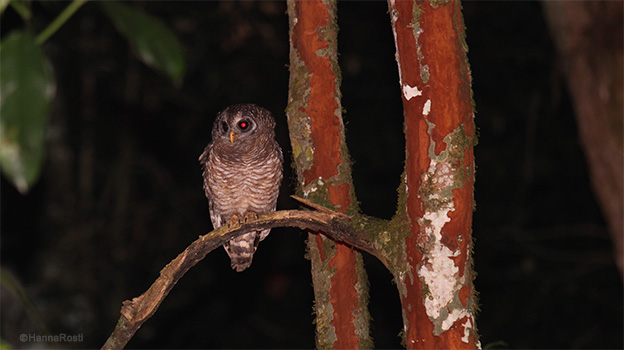
    African wood owl (Strix woodfordii)

    African wood owl filmed in Ngangao Forest, Taita Hills, Kenya. Filming Benson Mwakachola Lombo

  • Critically endangered: Rüppell’s Vulture and White-Backed Vulture in Kenya

    Critically endangered: Rüppell’s Vulture and White-Backed Vulture in Kenya

    Critically Endangered (CR) vultures, Rüppells Vulture and White-Backed Vulture feeding on cow that has been killed by lions in Lumo conservancy Kenya in 2021. As they feed they make considerable noise, squealing.

    This article shows how to identify these species and discusses reasons behing re, even though it is not always easy as their coloring changes with age.

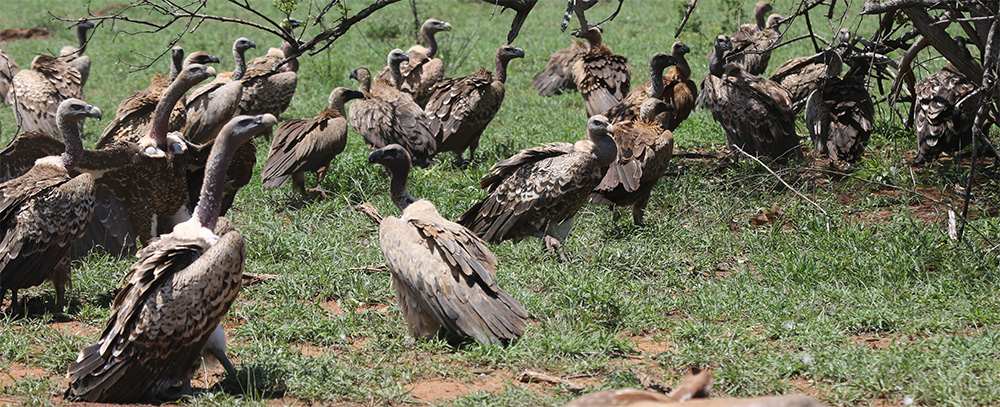
    Magnificent sight in African savannas that has sadly become increasingly rare. These vultures have gathered here in Lumo conservancy, Taita, Kenya.

    Rüppell’s Vulture (Gyps rueppelli)

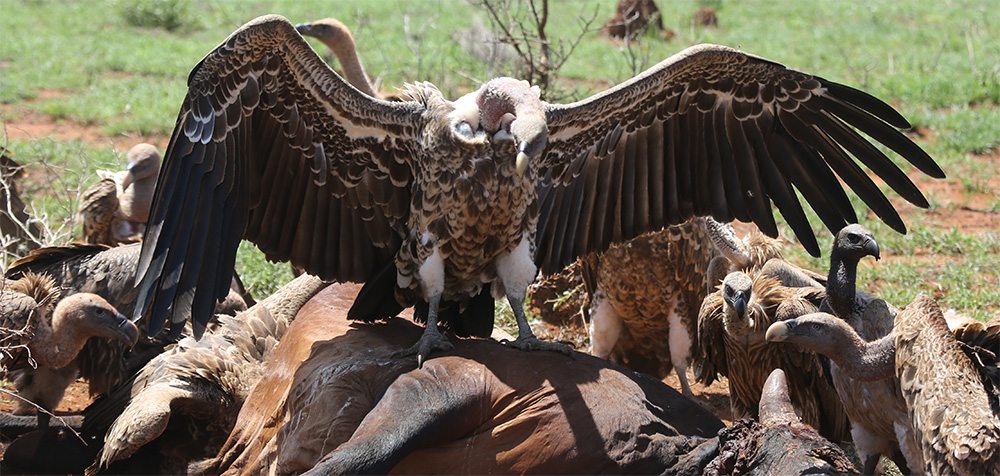
    Larger species is Rüppells Vulture (Gyps rueppelli), with beautiful white decorations in the feathers and white collar.

    Rüppells vulture (Gyps rueppelli) standing on a cow. Wingspan of this species is over two meters 226-255.

    There are no feathers on the head or the neck. This allows birds to stick their heads inside carcasses. There was actually one fully in on this carcass.

    Rüppell’s vulture is a species that has flown in the altitude of 11300m. Individual died as it crashed with aeroplane. This is highest altitude where bird has ever been proven to be.

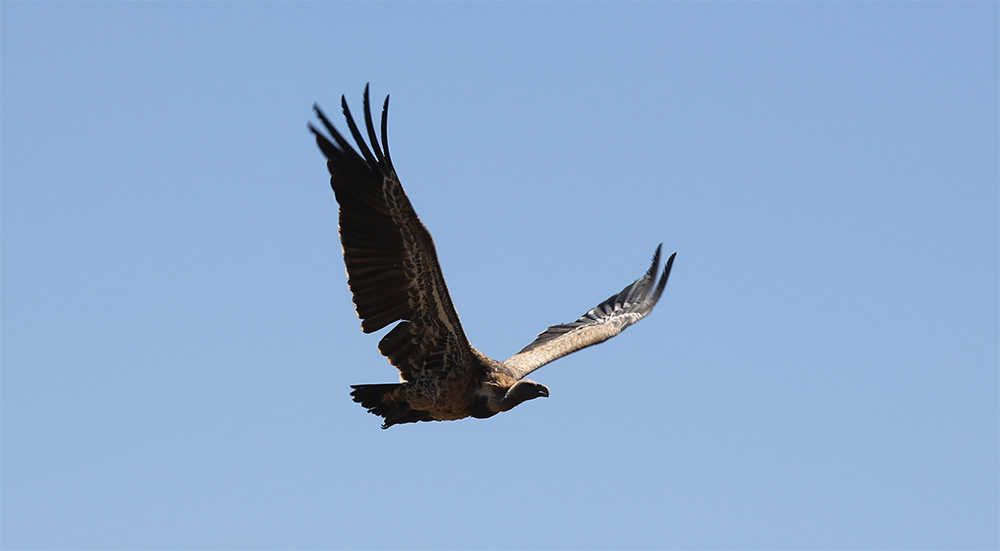
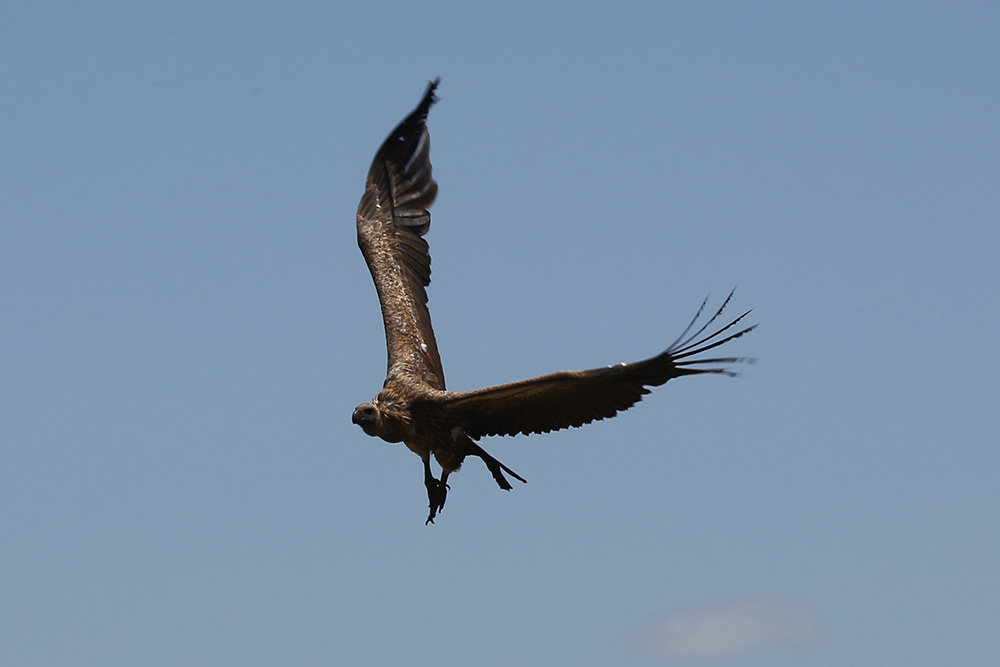
    Rüppell’s vulture on flight

    Rüppell’s vulture weighs 6.4-9 kg. Wingspan is 226-255.

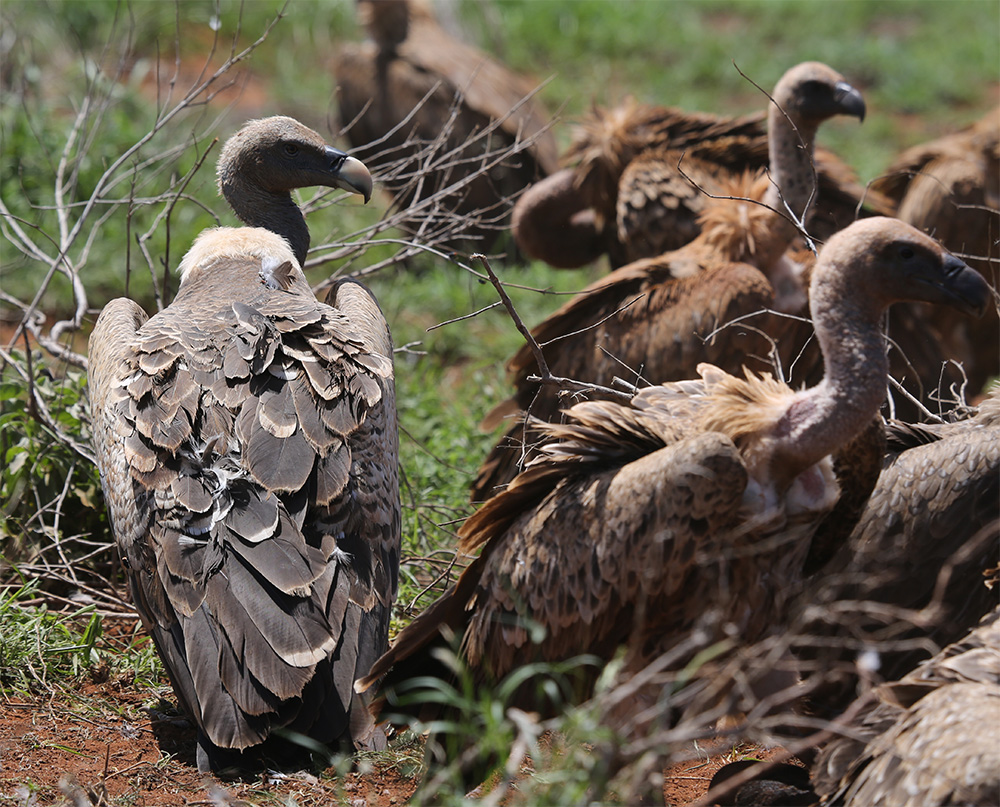
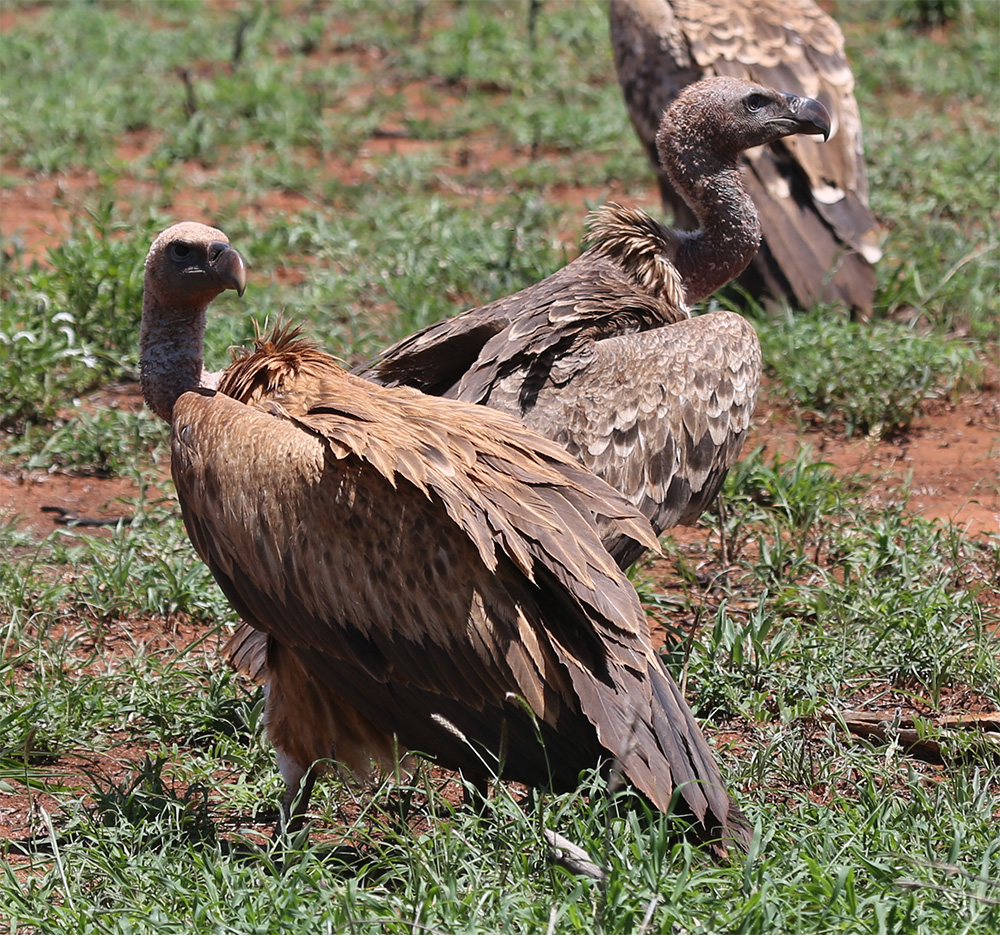
    Rüppell’s Vulture from behind (on the left). Others are White-Backed Vultures.

    White-Backed Vulture (Gyps africanus)

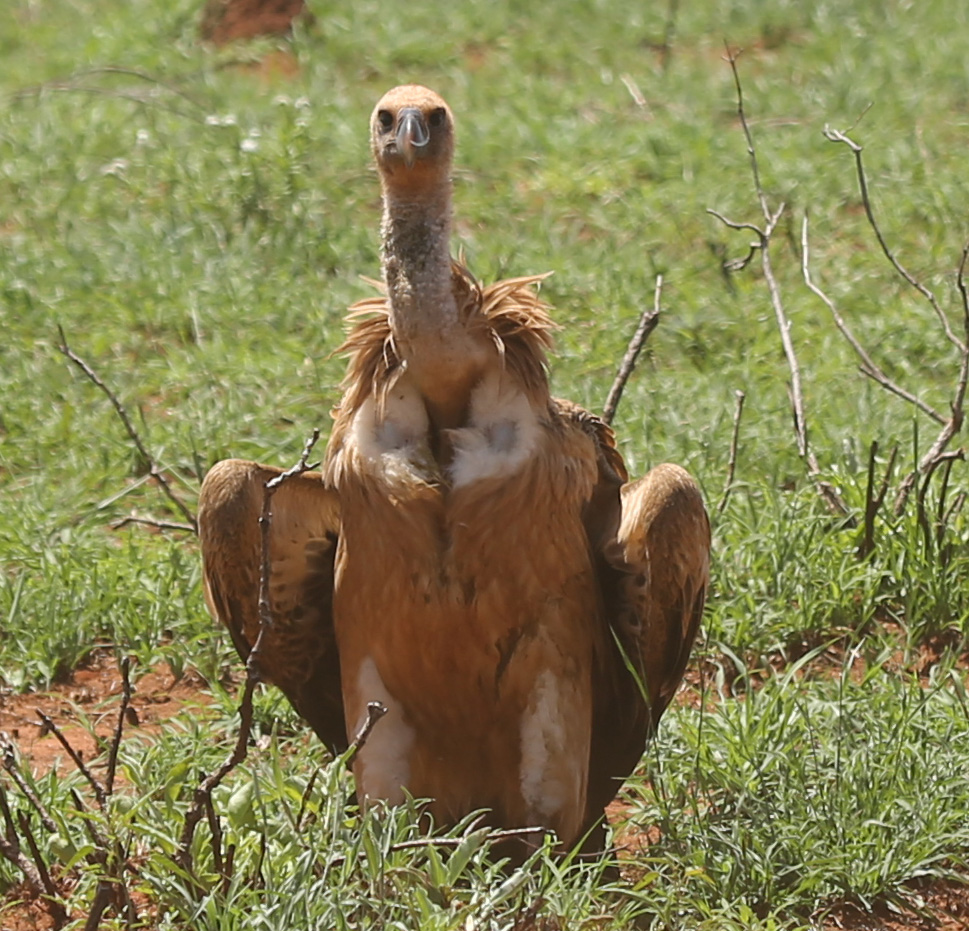
    White-Backed Vulture is ligher brown and more even in coloring. It weighs 4.2-7.2 kilograms and wingspan is 192-225 cm.

    White-Backed Vulture (Gyps africanus) is smaller than Rüppells Vulture and may avoid confrontation with larger species.
    White-Backed Vulture from the front with nice light brown coloring.
    White-Backed Vulture on flight, its wingspan may also exceed two meters
    How to separate these two species? Here in the front is White-Backed Vulture and on the behind Rüppell’s Vulture. Coloring is different, with White-Backed being lighter brown. Rüppell’s is larger and sturdier.

    Reasons for decrease of vultures

    • Loss of trees used for resting and nesting. Vultures need large trees (about 1m wide at breast height) in the places where they are not disturbed. These trees are rare in Africa.
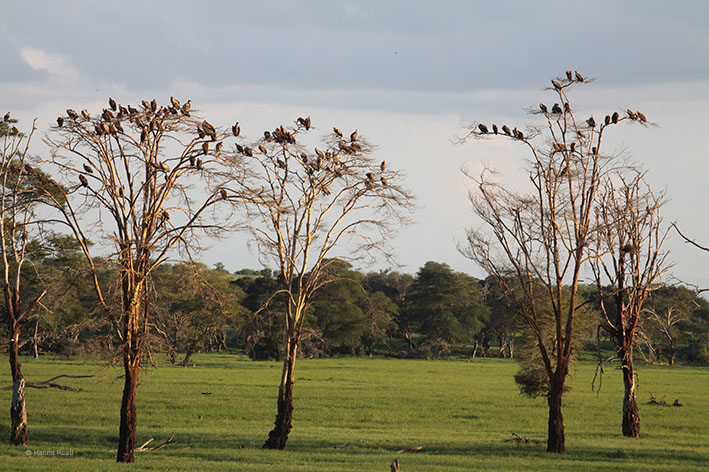
    These are trees in Taita Sanctuary where vultures used to sleep in 2018 and 2019. Now they have moved. These trees have died as they cant survive this treatment by vultures. These trees were only ones in the area large enough for vultures.
    • Pesticides and poisoning – as vultures are top carnivores – what ever their prey has been feeding on ends up in vultures and accumulates to their bodies causing serious consequences including death. These are heavy metals from pesticides, medicines used for cattle and direct poisons. Vultures have been poisoned accidentally and non-accidentally.
    • Loss of habitat, as ever increasing human population requires more and more land. Habitat suitable for vultures decrease all over Africa.
  • Tsavo West – land of giraffes, zebras and elephants

    Tsavo West – land of giraffes, zebras and elephants

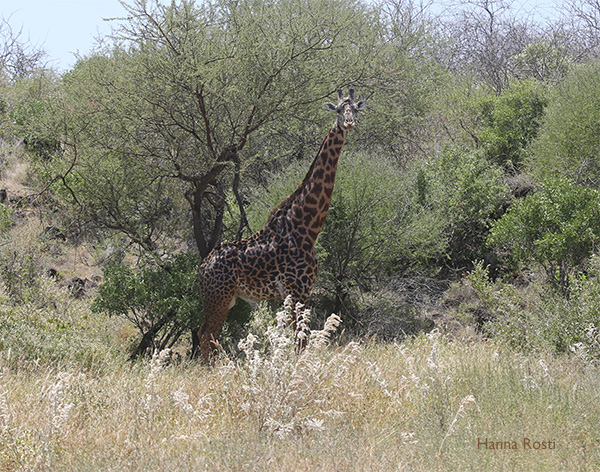
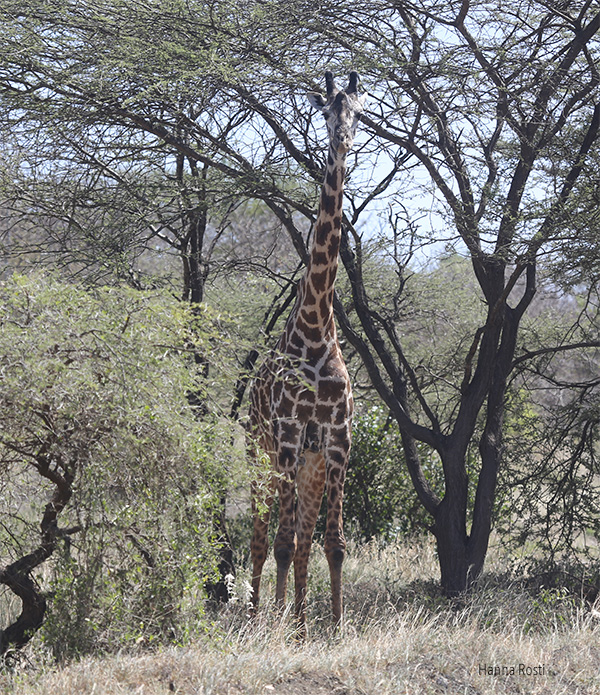
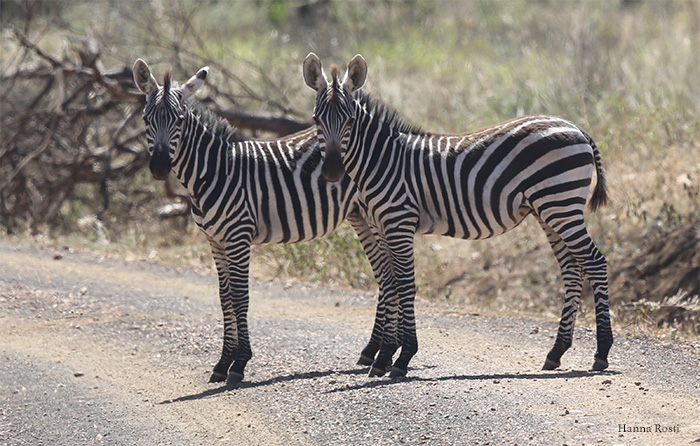
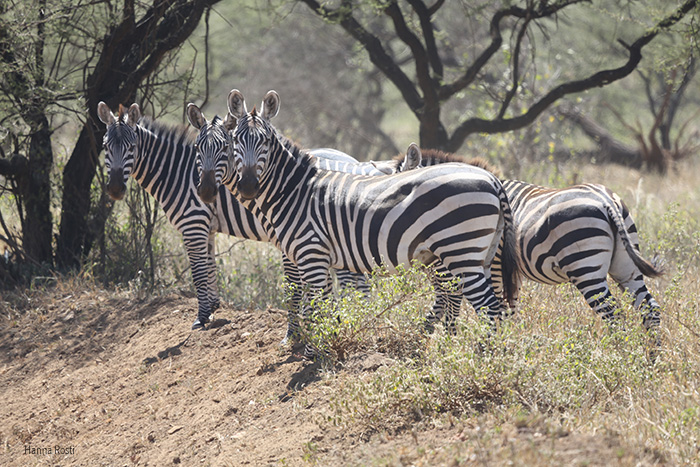
    Tsawo West is large park, where you literally can get lost (like we did). It is covered with small mountain ranges and small trees. Elephants and dik-diks are more abundant in the more dense areas, where as zebras, giraffes and many antilopes prefer more open areas for safety.

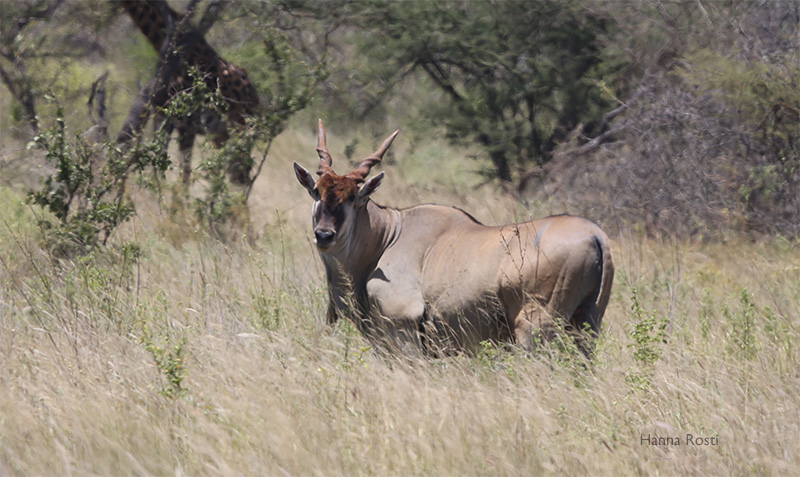
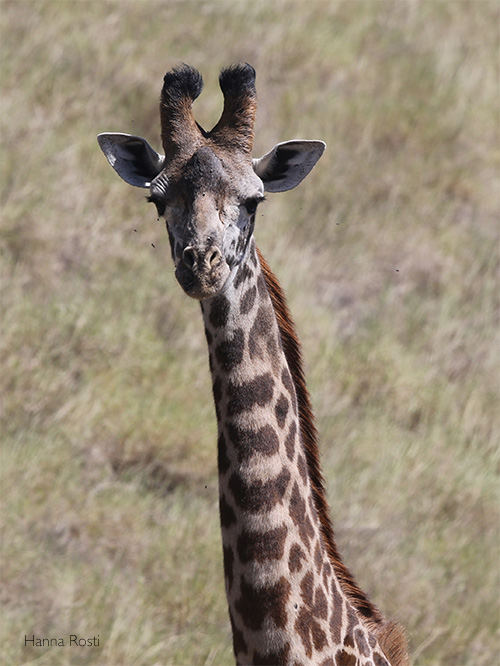
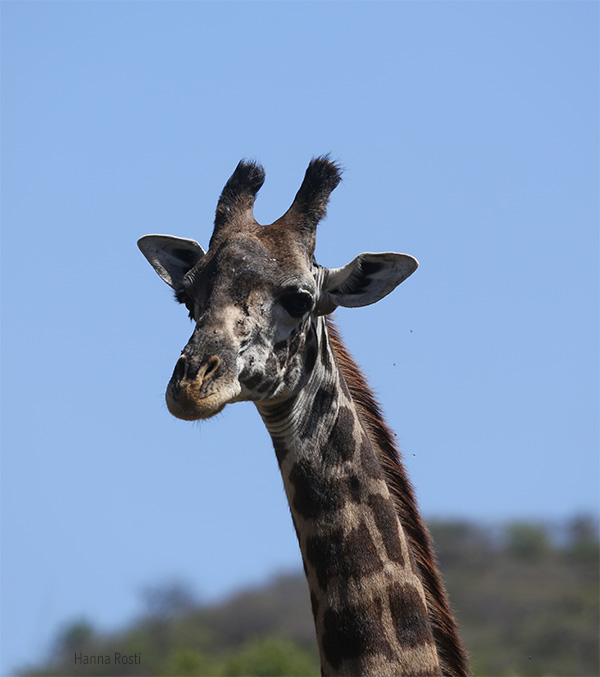
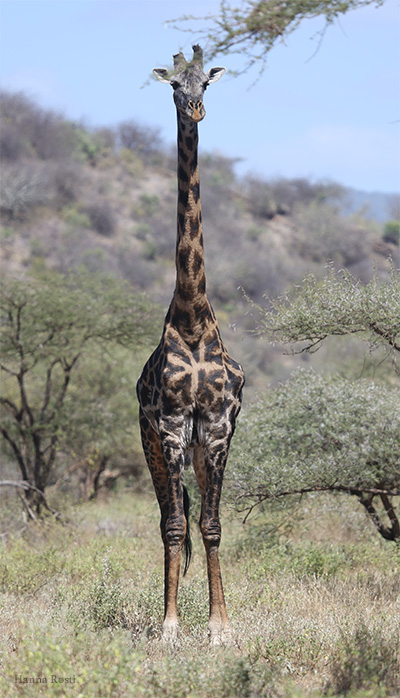
    Large male with other horn broken from Tsavo West, close to Tsavo river

    We drove in from Mtito Andei Gate from highway between Nairobi and Mombasa. We payed the fee through mPesa. As we were not sure if cash payments were possible. Fee for four people, two residents, two non-residents was only 63 euros, as due to covid-epidemic Kenya reduced the fees for 50 %.

    Elephants close to Mtito Andei gate

    From the beginning we saw elephants, lots of elephants and lots of dik-diks. First stop was rhino sanctuary, but it was open only between 16-18. Thus we only used clean toilets and continued to Chaimu crater.

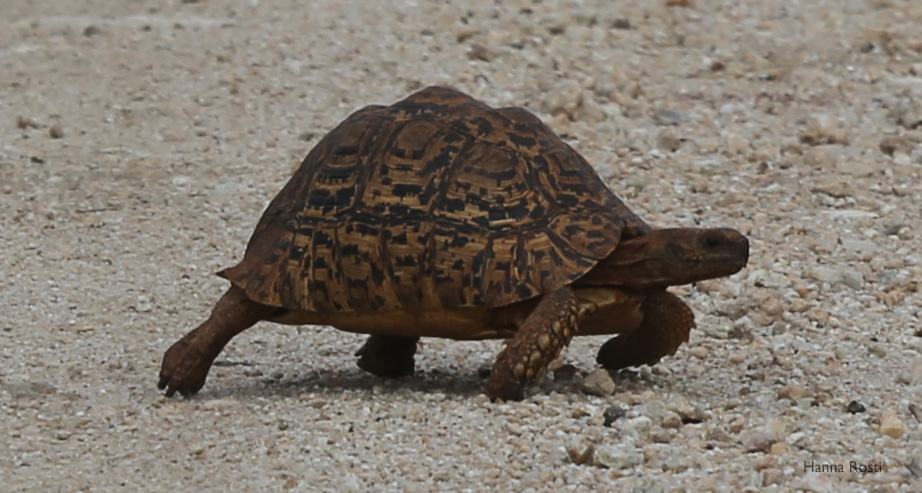
    This leopard turtle was among the first animals we saw.

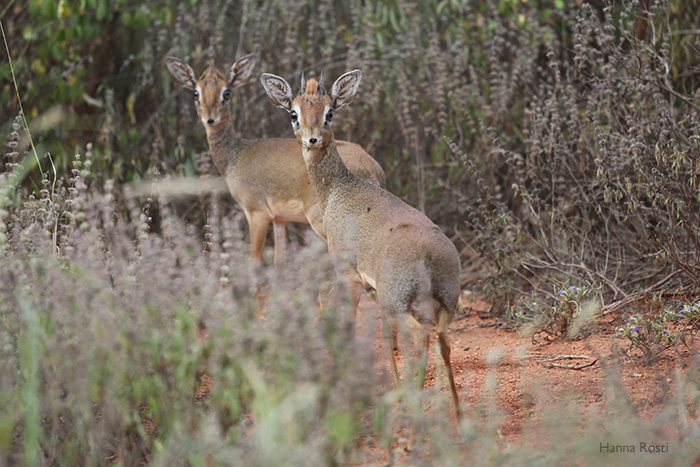
    Dik-diks are along the road
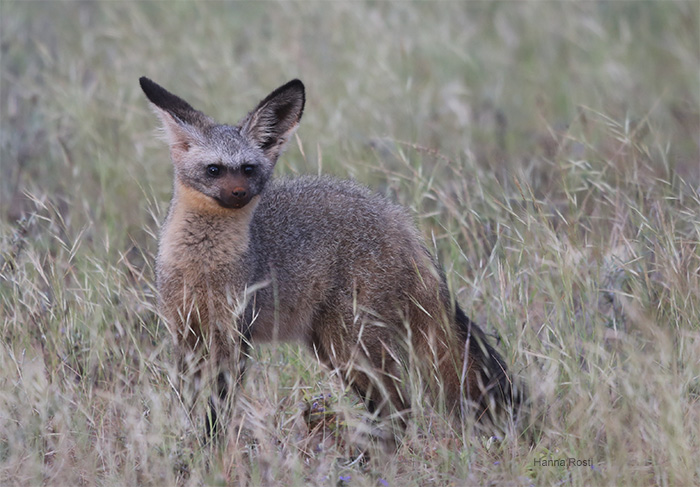
    We also saw several bat-eared foxes
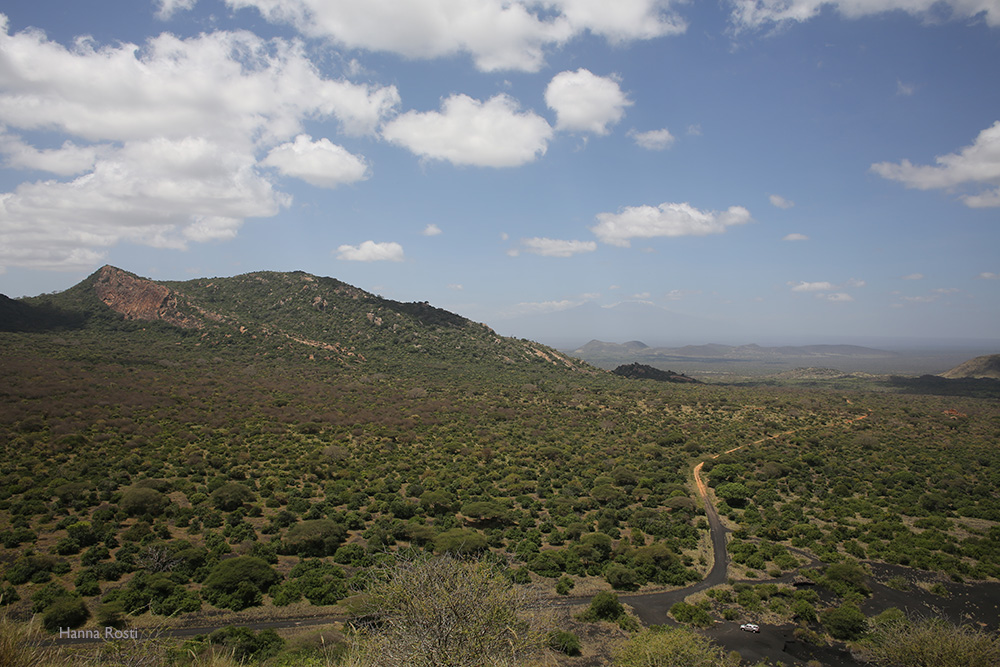
    Scenery from Chaimu crater, where we climbing is possible. Chaimu is dormant volcano, that erupted just 200 years ago. More about Chaimu from the video we made (also added below). See how small Toyota Hilux looks in this landscape!

    From Chaimu crater we continued to Mzima springs. Mzima springs is 55 kilometers from Mtito Andei gate. After long drive it is nice to be able to do a small walk in Mzima springs to see hippos and crocodiles.

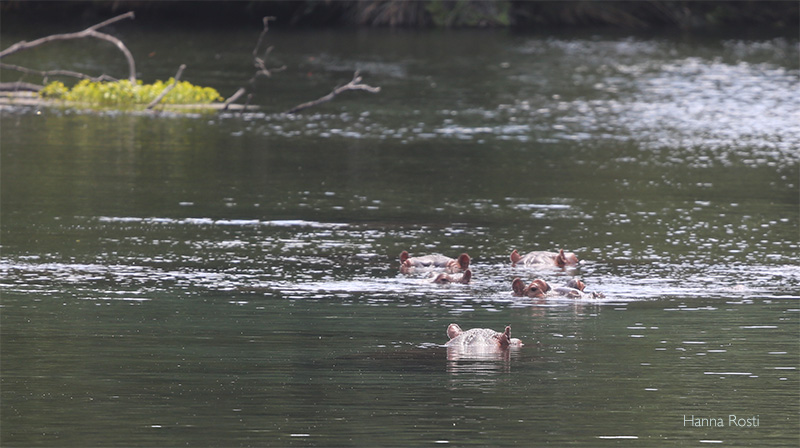
    Hippo group from Mzima springs
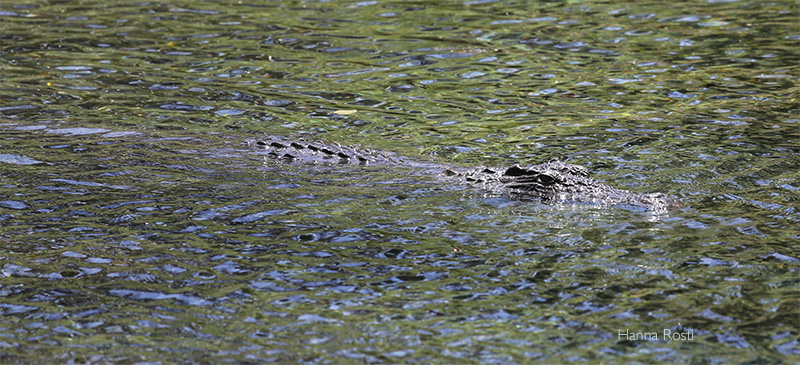
    Crocodile from Mzima springs

    From Mzima springs our idea was to continue to the Voi-Taveta road close to Maktau. However we could not find bridge through Tsavo river. The bridge all roads lead to was under construction, and we didn’t have a map. So we had to drive all the way back to Mtito Andei gate. As we had left from Wundanyi, total drive of the day was 450 km. Next time I will by the map in advance, you can’t trust that you could get one from the gate.

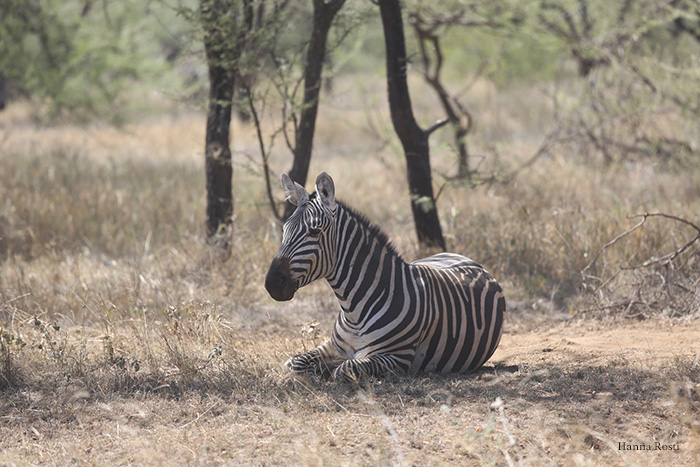
    Area around Mzima springs is more dry and open. We saw hundreds of zebras, countless giraffes and other antilopes.

    Animals and photos that were memorable for me are these

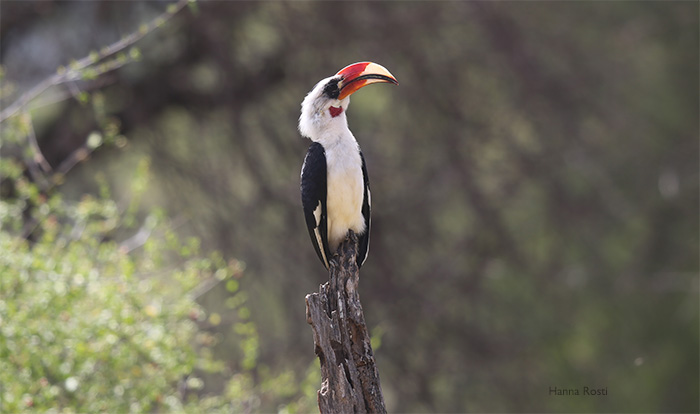
    Red-billed hornbill
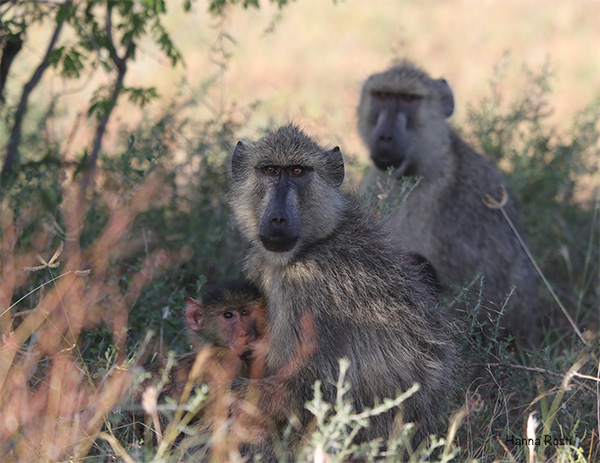
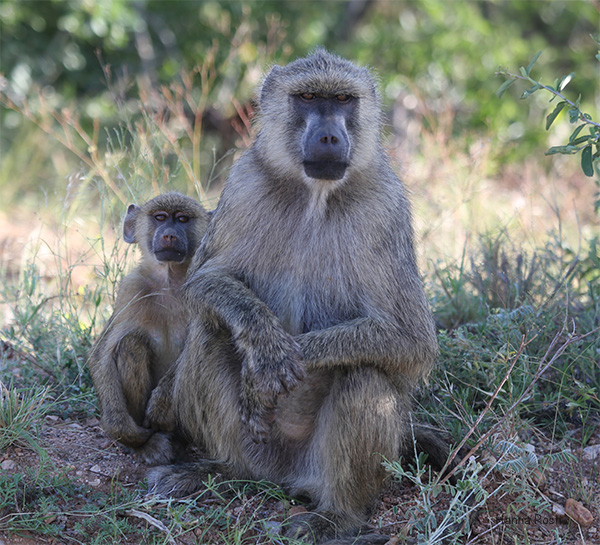
    Baboon family close to Tsavo river
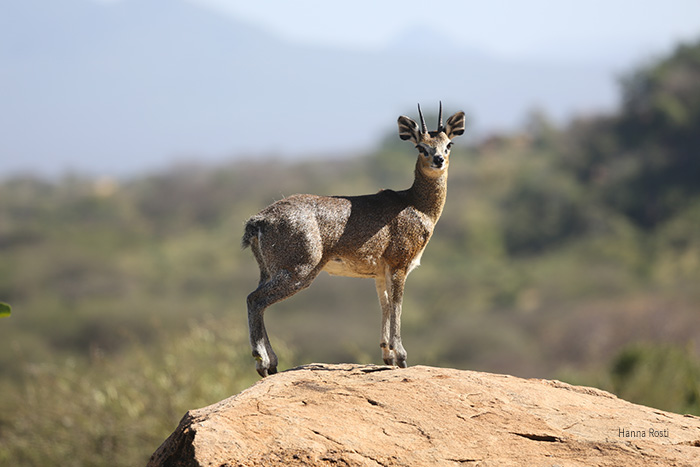
    Klipspringer
    Paradise whydah (Vidua paradisea)

    Wildlife in Tsavo West is astounding. I will definedly go back, to camp in tents for some time.

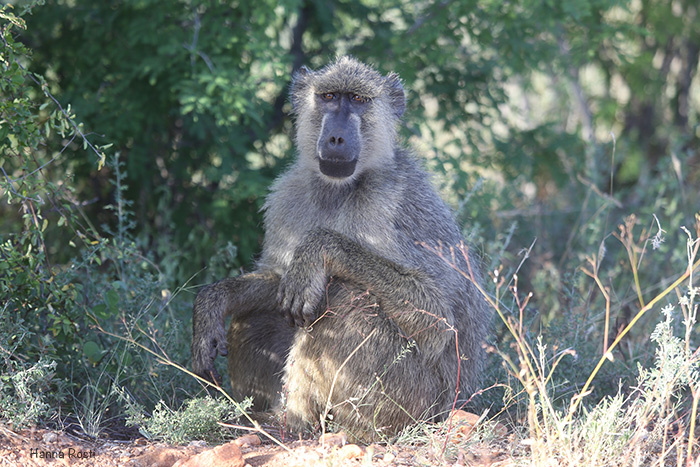
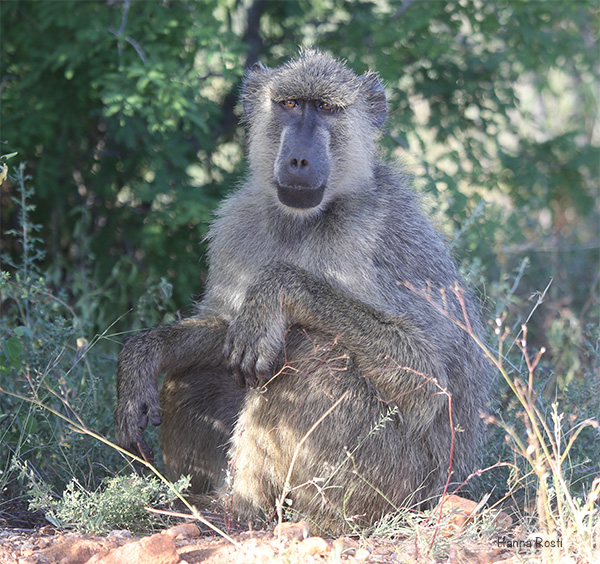
    How sweet and peaceful this baboon female looks
    We made this video to be shown at local schools, so that they would also learn about Tsavo West. It is also very informative for anyone planning to visit Tsavo West.
  • Nature guide in Taita Hills -Benson Lombo

    Nature guide in Taita Hills -Benson Lombo

    Guiding tours on the indigenous forests of Taita Hills, including Ngangao, Mbololo, Vuria, Chawia, and Iyale.

    Taita white eye, endemic bird to Taita Hills

    Also historical sites like Kenyatta caves, where first president of Kenya hide from colonialist, and Mwangeka caves where Mwangeka organized his group to fight against slavery in Taita Hills.

    • Birding
    • Beautiful scenaries to Tsavo and to Mt Kilimanjaro
    • Nocturnal animals, tree hyraxes, greater galagos and dwarf galagos

    Nocturnal mammals of Taita Hills are extremely interesting and loud at night. By using red light it is possible to observe them in their natural habitat. This is truly unforgettable experience. As there are no large predators in Taita Hills, walking in the forest at night is safe.

    Small-eared greater galago in Ngangao Forest

    I have 20 years of experience with working with researchers in many different fields, including e.g. forestry, bat research, botany and mammals of Taita Hills.

    Contact email: mwakacholabenson@gmail.com

    Phone: 0757632997

    Phone: 0754732851

    Benson Lombo
    View to Taita Hills from Ngangao peak

  • Acoustic communication of Taita tree hyrax

    Acoustic communication of Taita tree hyrax

    Dendrohyrax sp.

    This article focuses on incredible variable acoustic communication of Taita tree hyrax. If you are interested in other peculiar features of tree hyraxes please read this previous article of Taita tree hyraxes.

    Taita tree hyrax is believed to be undescribed species for the science based on these calls. For nocturnal cryptic animals, that are difficult to observe, call analysis has been the typical method of making taxonomic evaluation. Each species have their typical calls, especially calls that are used for so called ‘advertising’. These are calls that are used to draw attention of other con-species.

    Taita tree hyrax female. Life of tree hyraxes are almost completely unknown. We don’t know if both sexes are calling, or are they just males. Tree hyraxes are believed to be solitary, but continues calling is difficult to explain for animal that is believed to be solitary.

    Basic territorial call that is heard frequently in the forests of Taita Hills is ‘strangled thwack’. This call is most likely call that tree hyraxes use to claim their territory. Tree hyraxes eat leaves, and they are dependent on tree cavities for daytime sleeping sites.

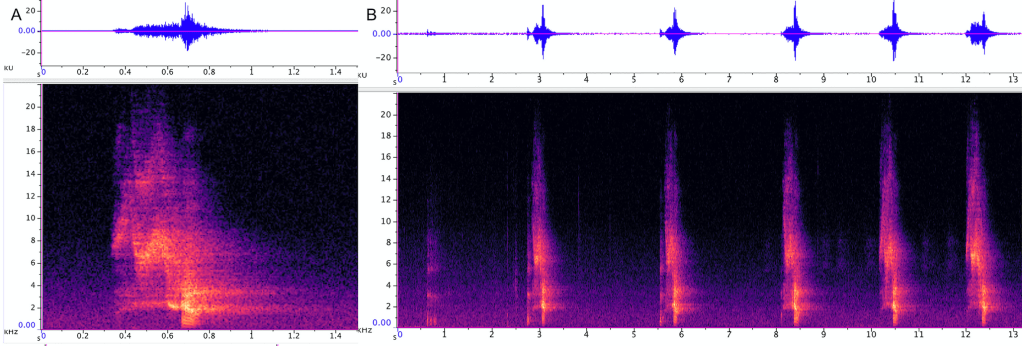
    Strangled thwack is more than 100 dB call. Twist in the call, and noisy elements make sure that this call doesn’t go unnoticed.

    Strangled thwacks are used in Taita Hills and in East Usambara Mountain. East Usambara Mountains are 160 km from Taita Hills. East Usambara Mountains are also part of Eastern Arch Mountains, and it is located in Tanzania.

    Based on this very unique call type, Taita tree hyrax is believed to be tree hyrax species that is not yet described scientifically (Rosti et al. 2020).

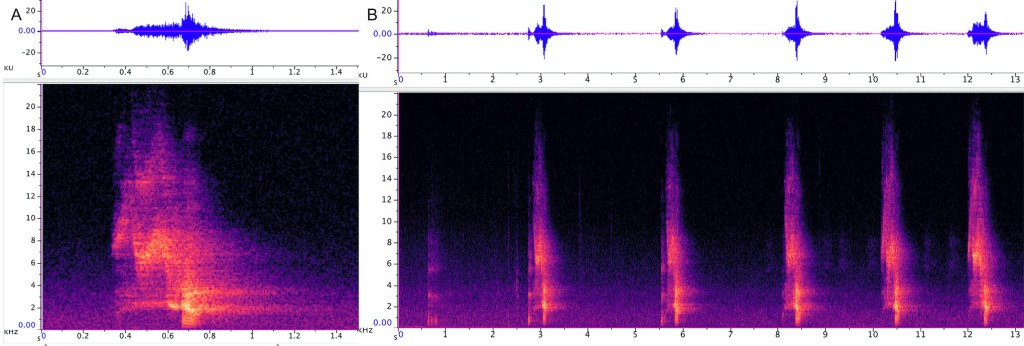
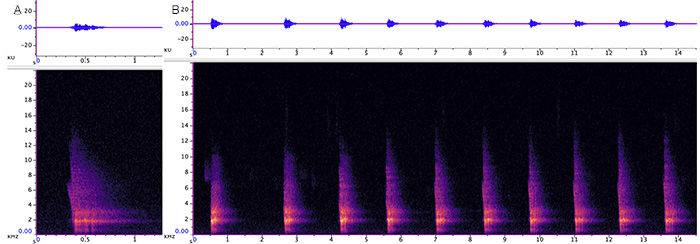
    Strangled thwack call from Taita Hills. Horizontal axel time (s), vertical axel frequency (kHz) A) One strangled thwack call. Call duration about 1 s. Notice changes (frequency modulation) in the strongest frequency of the call. B) Sequence of strangled thwacks. Usually tree hyraxes use these calls in about 10 call sequences where they counter call with other tree hyraxes.
    Strangled thwack sequence from one animal

    Usually tree hyraxes are counter calling with each other.

    Taita Tree hyrax counter-calling

    Another call type that tree hyraxes are using in Taita Hills is called hac. Hac call is used as territorial call. It is not quite as loud and frequency range is lower. Probably hac call is used when calling animal becomes little tired, or it want’s to use call type that is slightly less demanding.

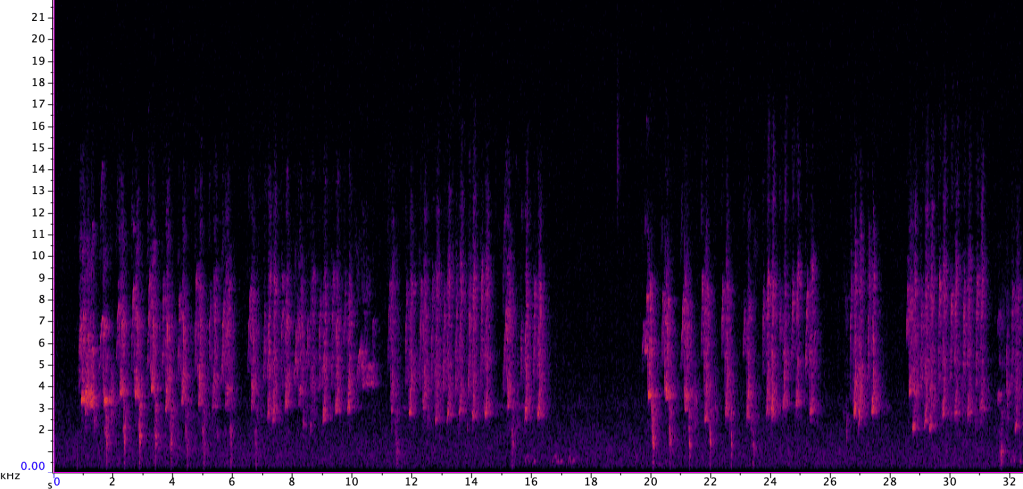
    Spectrograms of hac calls, time (s) on horizontal axel, frequency (kHz) on vertical axel. Hac call has smaller frequency range and it can be continued much longer, sometimes sequence may have more than hundred calls.

    Songs from Taita tree hyrax

    Taita tree hyrax sings songs. Songs have been previously found from rock hyrax (Procavia capensis) (Koren et al. 2008).

    Singing mammals are very rare. Gibbons and whales sing. But I don’t know other singing mammals.

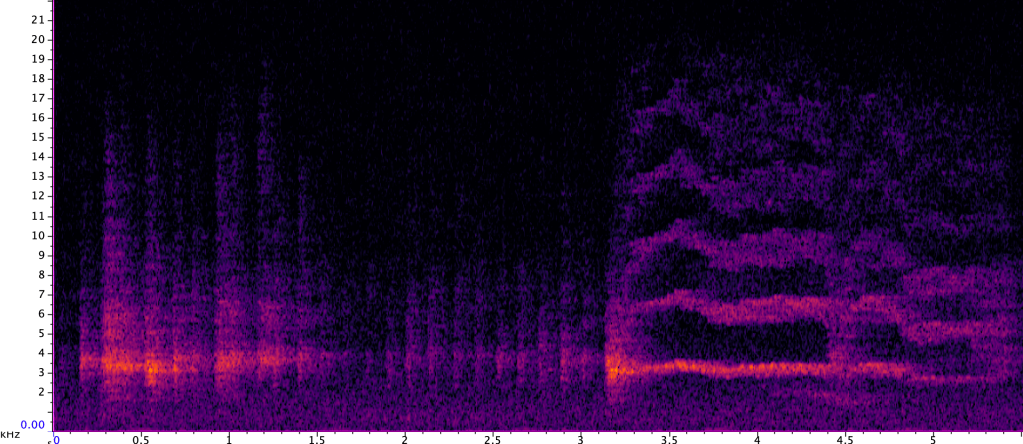
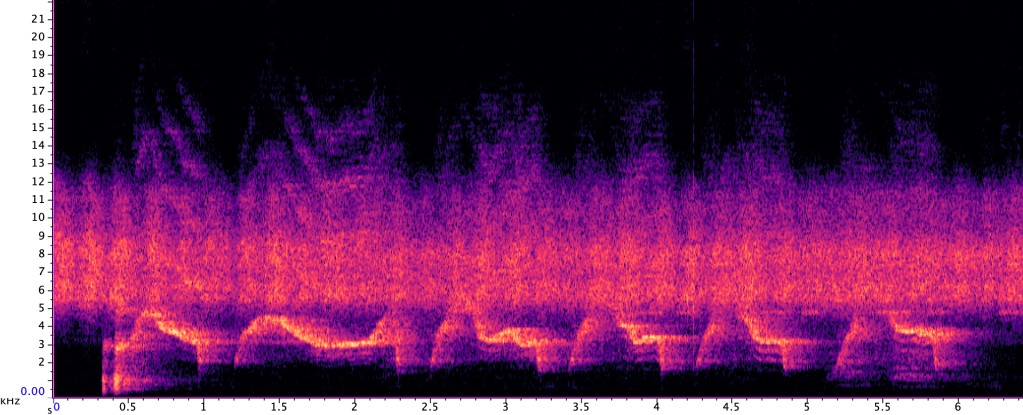
    Singing Taita tree hyrax. Duration on horizontal axel (s) and frequency on vertical axel (kHz). These songs may last for more than 12 minutes.
    Sound sample from Taita tree hyrax song.
    Dendrohyrax song may begin like this.

    Purpose of these songs are unknown. Probably they are used by males as they advertise their fitness for females that might be available for mating. In Taita Hills, remaining forests are packed with tree hyraxes and most likely all available territories are taken. It might mean that moving from one place to another could be difficult. Tree hyraxes may have to take a risk and come down to the ground where they are in greater danger to be hunted by genets. Acoustic communication is used as means to communicate with other tree hyraxes.

    Tree hyrax wheezes, wheeze may be used as part of a song or alone
    Taita tree hyrax wheezes with katytids on the background

    More reading about tree hyraxes:

    Demartsev, Vlad, Arik Kershenbaum, Amiyaal Ilany, Adi Barocas, Einat Bar Ziv, Lee Koren, and Eli Geffen. 2014. “Male Hyraxes Increase Song Complexity and Duration in the Presence of Alert Individuals.” Behavioral Ecology 25 (6): 1451–58. https://doi.org/10.1093/beheco/aru155.

    Hoeck, Hendrik. 2017. “Some Thoughts on the Distribution of the Tree Hyraxes (Genus Dendrohyrax) in Northern Tanzania.” Afrotherian Conservation, no. 13: 47–49.

    IUCN. 2014. “Dendrohyrax Validus: Hoeck, H., Rovero, F., Cordeiro, N., Butynski, T., Perkin, A. & Jones, T.: The IUCN Red List of Threatened Species 2015: E.T136599A21288090.” International Union for Conservation of Nature. https://doi.org/10.2305/IUCN.UK.2015-2.RLTS.T136599A21288090.en.

    Koren, Lee, Ofer Mokady, and Eli Geffen. 2008. “Social Status and Cortisol Levels in Singing Rock Hyraxes.” Hormones and Behavior 54 (1): 212–16. https://doi.org/10.1016/j.yhbeh.2008.02.020.

    Roberts, Diana, Elmer Topp-Jørgensen, and D.C. Moyer. 2013. “Dendrohyrax Validus Eastern Tree Hyrax.” In Mammals of Africa Vol I. Vol. 2013. Bloomsbury.

  • Vocalization Analyses of Nocturnal Arboreal Mammals of the Taita Hills, Kenya

    Vocalization Analyses of Nocturnal Arboreal Mammals of the Taita Hills, Kenya

    Article published 14.12.2020 in MDPI journal Diversity

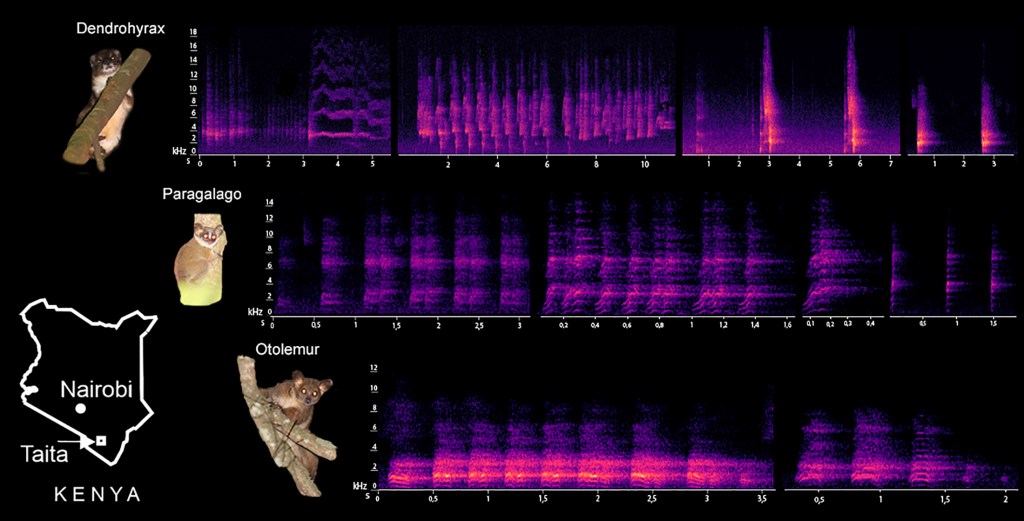
    This article describes acoustic communication of Taita tree hyrax (Dendrohyrax), dwarf galago (Paragalago) populations living in Taita Hills and small-eared greater galago (Otolemur garnettii lasiotis) population.

    Link to the open access article

    This article is written by Hanna Rosti, Jouko Rikkinen, Henry Pihlström, Simon Bearder and Petri Pellikka.

    Main findings:

    1. Tree hyraxes from Taita Hills most likely belong to previously undescribed species. This is based on call named ‘strangled thwack’ that is not heard from other tree hyrax species.
    Tree hyrax female from Taita Hills
    Spectrogram image of strangled thwack
    Sound sample of strangled thwack

    2. Taita tree hyraxes sing, these songs may last more than 12 minutes. In these songs several different syllables are combined in different order. Most likely these songs are used by males to attract females.

    Tree hyrax song sample from Taita Hills

    3. The other dwarf galago population is Kenya coast dwarf galago population (Paragalago cocos). This population is almost extinct with only about 10 individuals.

    Kenya coast dwarf galago is living on mountain of Taita Hills.
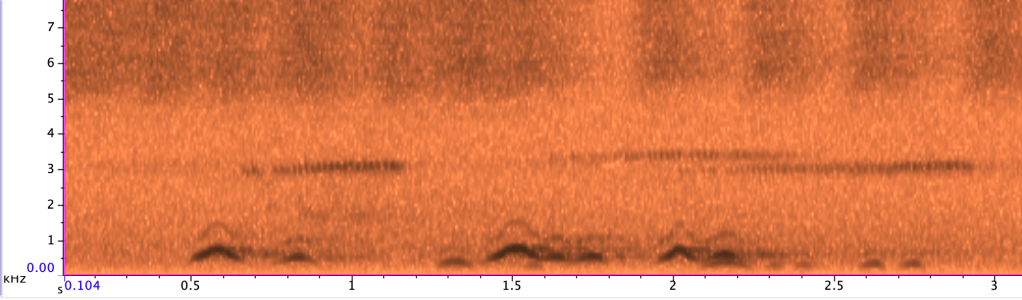
    Spectrogam of dwarf galago calls from Taita Hills
    Recording from population believed to be Kenya coast dwarf galago in Taita Hills

    4. Small-eared greater galagos in Taita Hills belong to subspecies Otolemur garnettii lasiotis. This was confirmed by comparing acoustical analysis from different subspecies.

    Young male O. g. lasiotis with very white tail from Taita Hills
  • Suku Paragalago, Itä-Afrikan pikkugalagot

    Suku Paragalago, Itä-Afrikan pikkugalagot

    Metsät pienenivät ja jäivät kuin savannien ympäröimiksi saariksi

    Noin viisi – kolmr miljoonaa vuotta sitten vaihtelevat kuivien jaksojen kaudet Itä-Afrikassa johtivat laajojen metsien muuttumiseen savanneiksi. Nämä muutokset seurailivat jääkausia, vaikkei Afrikassa jäätymistä laajemmassa mittakaavassa tapahtunutkaan.

    Jäljelle jääneet metsät jäivät eristyksiin toisistaan, niitä ympäröi kuiva savanni jota metsien lajit eivät voineet ylittää. Metsiä jäi Eastern Arc Vuorien huipuille ja rannikon kosteammille alangoille.

    Itäisessä Afrikassa kuivumisen seurauksena metsiä jäi vain Itäisten Kaarivuorten rinteille ja huipuille. Huippuja ympäröi savanni, jota metsissä elävät lajit eivät voi ylittää.

    Metsien isolaatio johti Itä-Afrikan metsien eläin- ja kasvilajien lajiutumiseen. Hyvin pieneltä alueelta Keniasta ja Tansaniassa tavataankin poikkeuksellisen suuri määrä lintu-, nisäkäs-, sammakko- ym. lajeja. Tämä alue on yksi maailman biodiversiteetin Hot Spot aluesta.

    Pikkugalagoiden lajiutuminen

    Pikkugalagot ovat yöeläimiä, enimmäkseen hyönteissyöjiä, pieniä (alle 150g) ja ketteriä hyppijöitä. Jotkut lajit ovat hyvin arkoja ja vaikeasti löydettäviä. Siten Taitavuorten pikkugalagotkin saattoivat elää pienissä metsäsaarekkeissa pitkään ihmisten tietämättä niistä lainkaan.

    Galagot ovat puoliapinoita kuten makit Madagasgarilla ja tarsierit Aasiassa. Puoliapinat ovat kädellisiä, mutta niitä pidetään ns. ”vähemmän kehittyneinä” kuin muita kädellisiä. Lemurit, lorit, tarsierit ja galagot ovat puoliapinoita.

    Afrikassa kaikki puoliapinat ovat galagoita ja yöeläimiä. Ilmeisesti kilpailu muiden kädellislajien kanssa on johtanut niiden yöaktiivisuuteen.

    Pikkugalagoiden taksonomia, lajintunnistus, on ollut tutkijoille haastavaa. Nämä yöaktiiviset lajit ovat kryptisiä, eli eri lajit näyttävät keskenään samanlaisilta. Öisessä metsässä eri lajit tunnistavat toisensa kutsujen perusteella, eivät ulkonäön perusteella (Bearder 1999).

    Pitkän matkan kutsuhuudot ovat helpoin tunnistaa lajit toisistaan, sillä kullakin lajilla on oma tunnusomainen kutsuhuuto. Pikkugalagot käyttävät näitä kutsuhuutoja aamuisin ryhmän kokoontuessa yön ruuanetsinnän jalkeen ja illalla ennen hajaantumista metsään. Kutsuhuutoja käytetään myös yönaikana, huudoilla ylläpidetään yhteyttä ryhmän jäseniin.

    Pikkugalagoiden taksonomia perustui aluksi museoihin kerättyihin kuolleisiin yksilöihin. Myöhemmin taksonomia perustui myös kutsuhuutojen analysointiin, lajien käyttäytymisen ja eliömaantieteelliseen tutkimukseen. Viime vuosina DNA tutkimus on tuonut paljon lisätietoa pikkugalagoiden taksonomiasta (Pozzi et al. 2020).

    Suku – Paragalago (2017) Itäisen Afrikan pikkugalagot

    Pikkugalagoiden, suku Galagoides uudelleenarvioitiin vuonna 2017 (Masters et al. 2017). Tutkimus perustui genetiikan, ääntelyn ja morfologian vertailuun. Tutkimuksen perusteella suku Galagoides jaettiin kahtia, ja Itä-Afrikan pikkugalagoiden suvun nimeksi tuli ParagalagoGalagoides suku koostuu kolmesta lajista, jotka elävät varsin laajalla alueella Länsi-Afrikassa. Lajit ovat G. demidoff, G. thomasi ja G. kumbirensisG. kumbirensis löydettiin Angolasta ja kuvattiin lajina vasta vuonna 2017 (Svensson et al. 2017).

    Uuteen Paragalago sukuun kuuluu, tällä hetkellä, viisi lajia. Nämä lajit ovat Kenian rannikkopikkugalago (P. cocos), Zanzibarin pikkugalago (P. zanzibaricus), Mosambicin pikkugalago (P. granti), vuoristopikkugalago (P. orinus) ja Rondon pikkugalago (P. rondoensis).

    On mahdollista, että lajeja on enemmänkin, sillä monet populaatiot ovat olleet pitkään eristyneinä. Syvällisempää pikkugalagotutkimusta ei ole tehty kovinkaan paljoa, Taitavuorten pikkugalagojakaan ei ole tutkittu ennen nyt alkanutta tutkimustamme. Koska Taitavuorten pikkugalago saattaa olla P. cocos (Rosti et al. 2020), Kenian rannikkopikkugalago, tämä artikkeli keskittyy erityisesti P. cocos lajin taksonomiaan.

    Taitavuorten pikkugalagolaji on edelleen arvoitus. Se kuulostaa Kenian rannikkopikkugalagolta, mutta elää täysin erilaisessa elinympäristössä vuorten huipuilla.

    Rajat lajien välillä eivät ole yksinkertaisia, ja tutkimuksissa täytyy yhdistää tutkimustuloksia morfologiasta, käyttäytymisestä, akustisesta kommunikaatiosta, eliömaantieteestä ja genetiikasta. Jokaisen populaation suojelu on tärkeää, mutta lajin tunnistus voi auttaa saamaan lisää resursseja suojeluun. Suojelutoimet kohdennetaan helpommin lajeihin, jotka ovat uhanalaisia Kansainvälisen luonnonsuojeluliiton IUCN punaisessa kirjassa. Siten oikea uhanalaisuusluokitus saattaa pelastaa populaation sukupuutolta.

    Paragalagot IUCN:n Punaisessa kirjassa

    Paras tietolähde pikkugalagoihin (ja muihinkin Afrikan eläimiin) on Mammals of Africa sarja (MOA) (2013), ja pikkugalagot löytävät osasta II. Kunkin lajin ääntelyä voi kuunnella Wildsolutionsin nettisivuita. Tämä sivusto on Eastern Africa Primate Diversity and Conservation Program, jota ylläpitävät tutkijat ja luonnonsuojelijat Thomas Butynski ja Yvonne de Yong.

    Paragalagolajien elinalueet ja painot lyhyesti (Names IUCN 2019)

    P. cocos: Kenian rannikkopikkugalago, Kenya coast galago, coast of Kenya, 138-150 g.

    P. zanzibaricus: Zanzibarin pikkugalago, Zanzibar dwarf galago, lowland forests at the coast of Tanzania, 118-195 g.

    P. zanzibaricus zanzibaricus: Zanzibar island, saarella elävät yksilöt ovat pienempiä

    P. zanzibaricus udzunwensis: Matundu dwarf galago, useat Tansanian alankometsät lähellä rannikkoa

    P. granti: Mosambicin pikkugalago, Wozambique dwarf galago, eteläinen Tanzania, Malawi, Zimbabwe ja Mosambique, 165 g.

    P. orinus:  Vuoristopikkugalago, Mountain dwarf galago, Uzzungwa ja Uluguru vuoret Tansania, 74,98 g. Yksi maailman 25 uhanalaisimmasta kädellisestä IUCN:n ja IPS:n  mukaan.

    P. rondoensis: Rondon pikkugalago, Rondo dwarf galago, tavataan kuudesta eristyneestä alankometsän saarekkeesta Tansanian rannikolla, 60-73g. 

    P. cocos, Kenya coast galago, nimeämisen historia

    Thomas Butynski kollogoineen kirjoitti yhteenvetoartikkelin Itä-Afrikan pikkugalagoiden taksonomiasta (Butynski et al. 2006). Siihen aikaan itäistenkin lajien suku oli Galagoides, selvyyden vuoksi käytän tässä kuitenkin sukua Paragalago.

    Edmund Heller nimesi lajin 1912, Galago moholin alalajina. Hän keräsi 10 yksilöä Mazerasista Keniasta. Habitaatti, josta eläimet pyydystettiin oli matalampaa pusikkoa ja kookospalmuja.

    P. cocos nostettiin omaksi lajikseen Elliotin toimesta 1913. Pitkän aikaa lajia kuitenkin pidettiin käytännössä Galago gallarumin alalajina (Galago gallarum cocos) tai Zanzibarin pikkugalagon alalajina (P. zanzibaricus cocos).

    P. cocoksen käyttäytymistä, ääntelyä ja ekologiaa tutkittiin perusteellisesti Dianin ja Gedin metsissä Keniassa (Harcourt & Nash 1986a,b; Harcourt & Perkin 2013). Harcourtin ja Nashin artikkeleissa laji oli vielä nimetty P. zanzibaricukseksi, mutta tutkimus oli osoittamassa, että laji ei ollut P. zanzibaricus vaan P. cocos.

    Dianin ja Gedin metsät ovat 40 kilometrin päässä Mazerazista, josta P. cocoksen lajimäärityksessä 1912 käytetyt yksilöt olivat kerätty. Thomas Butynski ja Yvonne de Yong kävivät Mazerasissa 2004 määrittämässä metsän pikkugalagoiden lajin, ja varmistivat että laji on P. cocos. Siis sama laji kuin Dianin ja Gedin metsissä.

    Aiemmin julkaistujen tieteellisten artikkelien lukeminen voi tuntua hankalalta, sillä lajien nimet ovat vaihtuneet, ja myös suvun nimi on vaihtunut. 

    P. cocos oli P. zanzibaricus, tai jokin muu vuoteen 2006 saakka. Butynski et al. (2006) artikkelista saakka P. cocos on saanut pitää lajistatuksensa. Tämä lajistatus perustui pitkälti lajityypilliseen kutsuhuutoon, joka on selvästi erilainen kuin P. zanzibaricuksella. Lajin englanninkielinen nimi vaihtui jälleen viime vuonna, kun Kenya coast dwarf galago lajinimestä pudotettiin dwarf pois IUCN.n arvioinnissa. Siten lajin englanninkielistä nimeä ei voi pitää vakiintuneena.

    Pikkugalagoiden lajieroja on etsitty nenän ja pään alueen värityksestä,vatsan ja selän värityksestä korvien pituudesta, ruumiinkoosta, hännän värityksestä ja pituudesta. Ongelmana on että populaatioiden sisällä on lähes yhtä paljon vaihtelua kuin lajien välillä. Ääntely on yksiselitteisempi tapa tunnistaa lajeja.

    Kenian rannikkopikkugalagon (P. cocos) elinalueet

    Kenian rannikkopikkugalagoa (P.cocos) tavataan ikivihreissä alankometsissä Kenian rannikolla, ja myös Tana jokea  ylävirtaan seuraillen. Etelässä elinalue rajautuu Mgambon metsään Tansanian puolella ja koillisessa Itäisen Usambarara vuorten alarinteille (Harcourt & Perkin, 2013). Kenian rannikkopikkugalagoa tavataan 350 metrin korkeuteen saakka merenpinnasta.

    P. cocos on näistä rannikolla elävistä lajeista pohjoisin, P. zanzibaricus keskimmäinen ja P. granti eteläisin laji. On mahdollista että P. cocos ja P. zanzibaricus elävät samoissa metsissä muutamissa metsissä Itäisillä Usambara vuorilla ja pohjoisessa Tansanian rannikkokaistaleella (Butynski et al. 2006).

    Miksi pikkugalagolajeja tavataan niin paljon suppealta alueelta?

    Ilmaston ja kasvillisuuden muutokset viiden viimeisen vuoden aikana johtivat laajojen metsien katoamiseen Itäisestä Afrikasta. Tämä sai aikaan myös hyppäyksen ihmisen evoluutiossa, ihmisen sopeutuessa elämään kuivemmalla ja kuumemmalla savannilla. Jäljelle jääneet metsät olivat eristäytyneitä laikkuja Itäisillä Kaarivuorilla, joista metsien lajisto sai turvapaikkansa. Nämä metsät ovat noin 30 miljoonaa vuotta vanhoja. Metsien hämmästyttävä monimuotoisuus on kokenut kovia erityisesti viimeisen sadan vuoden aikana, jolloin metsät on miltei hävitetty. 

    Itäisten Kaarivuorten metsät yhdessä Itä-Afrikan rannikon alankometsien kanssa muodostaa Zanj alueen, jossa on poikkeuksellisen monimuotoinen eliömaailma. Tällä alueella tulee olla kaikkein korkein suojeluarvo (Masters et al. 2017).

    Pikkugalagoiden tutkijoita

    Tässä joitakin tutkijoita, jotka ovat tehneet pikkugalagotutkimusta Itä-Afrikassa:

    Simon Bearder, Thomas Butynski, Andrew Perkin, Yvonne de Yong, Magdalena Svensson, Caroline Harcourt, Leanne Nash, Paul Honess, Judith Masters, Anna Nekaris

    Öinen pikkugalagotutkimus on vaikeaa, siten pikkugalagoista tiedetäänkin hämmästyttävän vähän verrattuna useimpiin muihin kädellisiin.

    Pikkugalagot ovat kaikkialla Afrikassa vähenemässä niiden elinalueiden pienentyessä jatkuvasti. Monet Paragalago lajit ovat erityisen herkkiä, sillä ne vaativat alkuperäismetsää selviytyäkseen.

    Lähteet:

    Bearder SK. 1999. Physical and social diversity among nocturnal primates: A new view based on long term research. Primates 40:267–282. DOI: 10.1007/BF02557715.

    Butynski TM, de Jong YA, Perkin AW, Bearder SK, Honess PE. 2006. Taxonomy, Distribution, and Conservation Status of Three Species of Dwarf Galagos (Galagoides) in Eastern Africa. Primate Conservation 21:63–79. DOI: 10.1896/0898-6207.21.1.63.

    Harcourt CS, Nash LT. 1986a. Social organization of Galagos in Kenyan coastal forests: I.Galago zanzibaricus. American Journal of Primatology 10:339–355. DOI: 10.1002/ajp.1350100406.

    Harcourt CS, Nash LT. 1986b. Species differences in substrate use and diet between sympatric galagos in two Kenyan coastal forests. Primates 27:41–52. DOI: 10.1007/BF02382521.

    Harcourt CS, Perkin AW. 2013. Galagoides cocos Kenya Coast Dwarf Galago (Diani Dwarf Galago). In: Mammals of Africa. Bloomsbury,.

    Masters JC, Génin F, Couette S, Groves CP, Nash SD, Delpero M, Pozzi L. 2017. A new genus for the eastern dwarf galagos (Primates: Galagidae). Zoological Journal of the Linnean Society 181:229–241. DOI: 10.1093/zoolinnean/zlw028.

    Pozzi L, Penna A, Bearder SK, Karlsson J, Perkin A, Disotell TR. 2020. Cryptic diversity and species boundaries within the Paragalago zanzibaricus species complex. Molecular Phylogenetics and Evolution 150:106887. DOI: 10.1016/j.ympev.2020.106887.

    Rosti H, Rikkinen J, Pellikka P, Bearder S, Mwang’ombe J. 2020. Taita Mountain dwarf galago is extant in the Taita Hills of Kenya. Oryx 2020:151–153. DOI: https://doi.org/10.1017/S003060531900142X.

    Svensson MS, Bersacola E, Mills MSL, Munds RA, Nijman V, Perkin A, Masters JC, Couette S, Nekaris KA-I, Bearder SK. 2017. A giant among dwarfs: a new species of galago (Primates: Galagidae) from Angola: Svensson et al. American Journal of Physical Anthropology 163:30–43. DOI: 10.1002/ajpa.23175.

  • Afrikan metsäpöllö

    Afrikan metsäpöllö

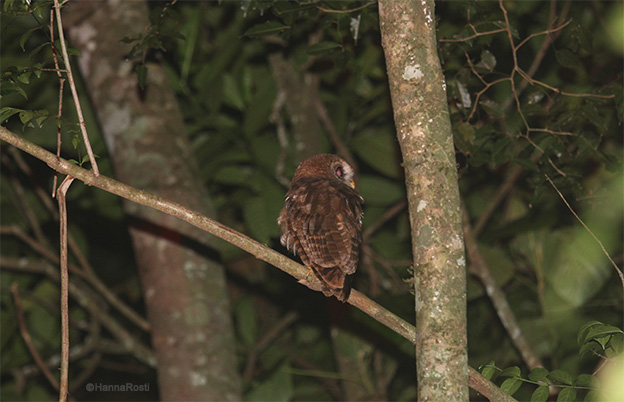
    Afrikan metsäpöllö Kenian Taitavuorilta 2019.

    Afrikan metsäpöllö (Strix woodfordii) huhuilee vielä Taitan jäljellä olevissa metsissä. Afrikan metsäpöllö kuuluu siis sukuun Strix, johon kuuluu myös meidän viirupöllömme (Strix uralensis). Näillä pöllöillä ei ole korvatupsuja.

    Afrikan metsäpöllö etsii pikkugalagoa joka juuri pakeni sen kynsistä. Taitavuoret 2019.

    Pöllöpariskunnat pitävät yhteyttä toisiinsa huhuilemalla. Naaraan huhuiluissa on korkeampi taajuus, tai se voi käyttää kokonaan toista “huui” äännettä.

    Afrikan metsäpöllöpariskunta. Naaraas huhuilee korkeammalla sävelellä.
    Spektrogrammi metsäpöllöjen huhuilusta. Pöllöt huhuilevat noin yhden kilohertsin taajuudella.

    Afrikan metsäpöllöt elävät yhdessä ja pitävät yhteyttä toisiinsa ympärivuotisesti, ainakin Taitavuorilla.

    Afrikan metsäpöllö katselee maahan, josta se saalistaa hyönteisiä.

    Afrikan metsäpöllö on noin variksen kokoinen 30-35 cm pitkä ja painaa noin 240-350 grammaa. Se syö eniten hyönteisiä, mutta saalistaa toki mahdollisuuksien mukaan myös pieniä nisäkkäitä.

    Ainakaan nämä pöllöt eivät näe punaista valoa, eivätkä ne kiinnittäneet mitään huomiota ihmisiin, jotka ovat öisessä metsässä.

    Afrikan metsäpöllö tyypillisessä saalistusasennossaan. Se on ruumiiltaan varsin tanakka.

    Esiintyminen ja suojelutilanne

    Afrikassa metsäpöllö on edelleen yleinen. Sitä tavataan varsin suuressa osassa Afrikkaa. Kansainvälisen luonnonsuojeluliiton (IUCN) uhanalaisuusstatus on elinvoimainen (LC Least consern).

    Teksti Afrikan metsäpöllön uhanalaisuusluokituksesta.
    https://www.iucnredlist.org/species/22689166/93220349#population

    Tästä lajista ei ole kuitenkaan olemassa yhtään pidempiaikaista tutkimusta. Koska metsiä häviää eri puolilla Afrikkaa, on myös tämän lajin elinympäristöjen pieneneminen tosiasia.

    Afrikan metsäpöllön elinalue Afrikassa.
    https://dx.doi.org/10.2305/IUCN.UK.2016-3.RLTS.T22689166A93220349.en

    Afrikan metsäpöllöltä tunnistetaan neljä alalajia. Nämä alalajit poikkeavat toisistaan ulkonäöltä huomattavasti

    • Strix woodfordii woodfordii: eteläisestä Angolasta Kongon Demokraattisen tasavallan eteläosiin, lounaisesta Tansaniasta, Botswanaan, ja Etelä-Afrikkaan.
    • Strix woodfordii nuchalis: Senegal, Gambia ja Biokon saari, eteläinen Sudan, Uganda, Kongon Demokraattisen tasavallan länsiosat, ja pohjoinen Angola
    • Strix woodfordii umbrina: Etiopia ja Sudan.
    • Strix woodfordii nigricantior: Eteläisestä Somaliasta to Keniaan, Tansaniaan, Zanzibarin saarelle, ja Kongon Demokraattisen tasavallan itäosat.

    Takaapäin väritys on kauniin ruskea

    Taksonomia

    Linnaeus loi suvun Strix 1758 korvattomille pöllöille, suomeksi viirupöllöille. Strix suvun pöllöillä ei ole korvatupsuja. Maailmassa on 16-22 lajia näitä Strix suvun pöllöjä lähteistä riippuen ja niitä elää miltei joka puolella maailmaa.

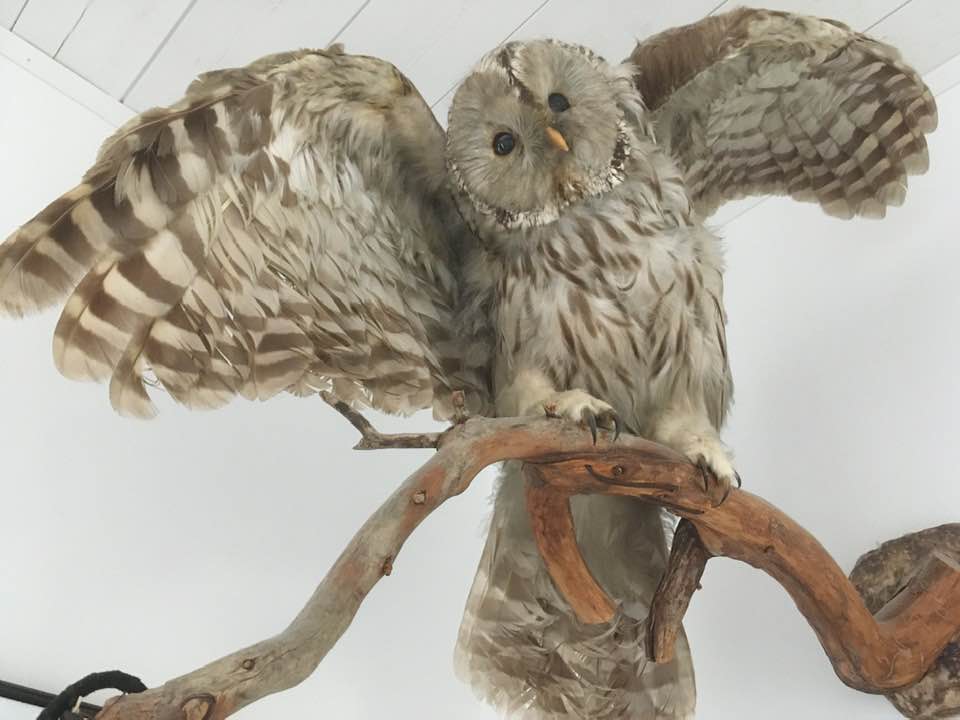
    Tässä suomalainen viirupöllö (Strix uralensis) jonka isäni oli löytänyt kuolleena joskus 1970 luvun alussa.
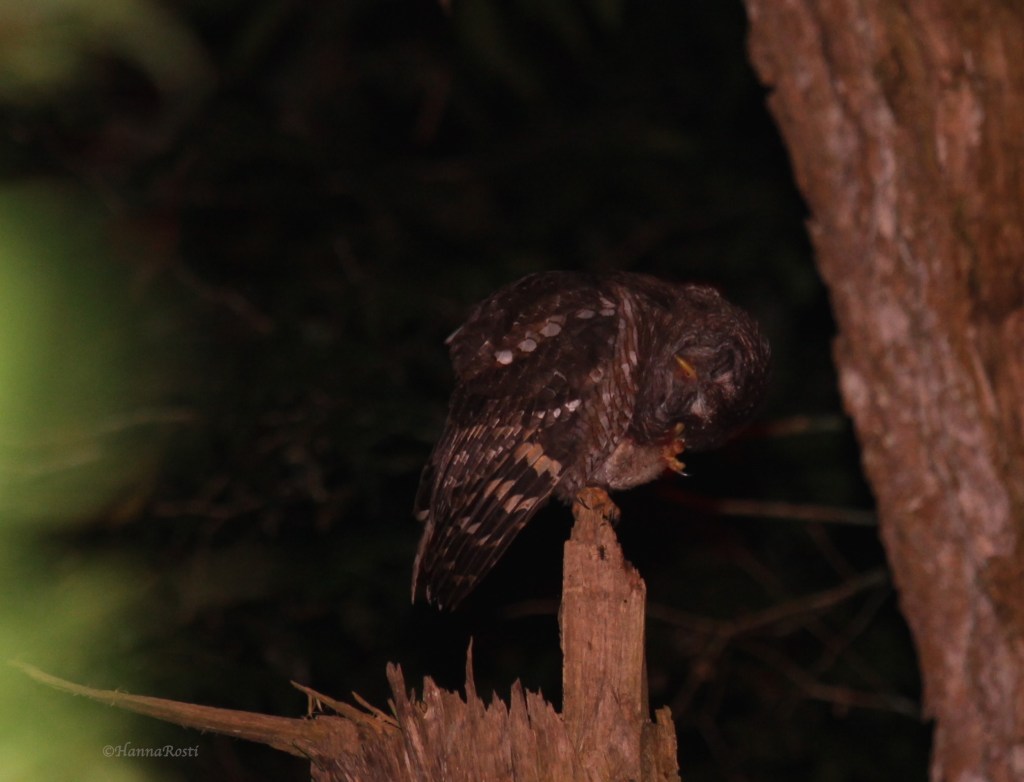
    Afrikan metsäpöllö raapimassa korvaansa. Taita Hills 2019.

    Lähteet:

    Birdlife African wood owl: http://datazone.birdlife.org/species/factsheet/african-wood-owl-strix-woodfordii

    Avibase African wood owl: https://avibase.bsc-eoc.org/species.jsp?lang=FI&avibaseid=2E6575A8C8ECAD9B&sec=summary

    Iucn Red Lis Assessment: https://www.iucnredlist.org/species/22689166/93220349#population

    BirdLife International. 2016. Strix woodfordiiThe IUCN Red List of Threatened Species 2016: e.T22689166A93220349. https://dx.doi.org/10.2305/IUCN.UK.2016-3.RLTS.T22689166A93220349.en. Downloaded on 08 May 2020.

  • African wood owl in Taita Hills Kenya

    African wood owl in Taita Hills Kenya

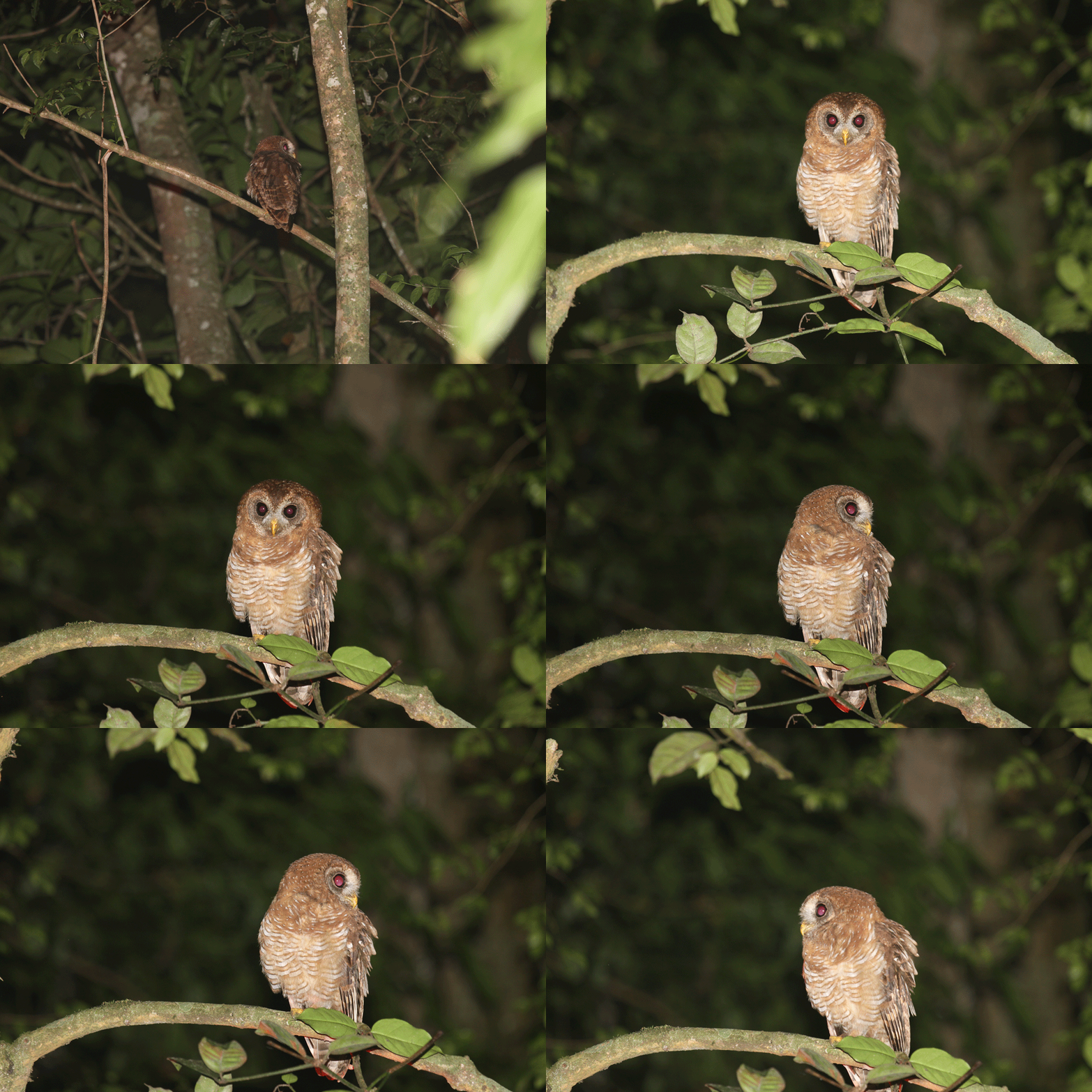
    African wood owl looking for Taita mountain dwarf galago, that just escaped from him.

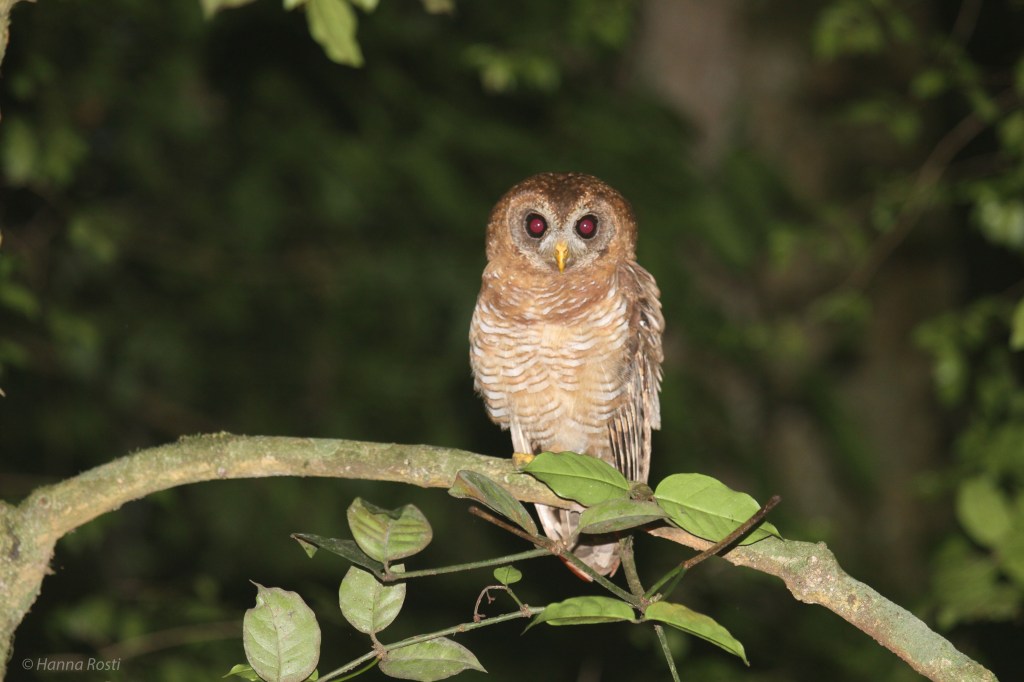
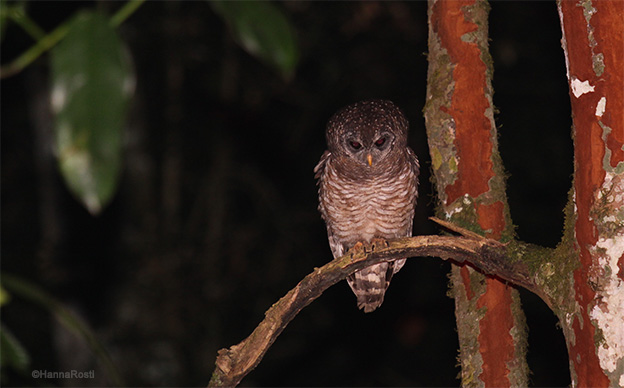
    In Taita Hills of Kenya African wood owl (Strix woodfordii) is quite common. Owl couple keep contact with each other by calling. Interestingly male and female can counter call with similar calls, or female may use different call.

    African wood owl from Ngangao Forest Taita Hills in 2019.

    Counter calling of African wood owl couple from Taita Hills.

    African wood owl male and female counter calling

    Male makes a series of rapid, clear hoots, and the female answers with higher pitched, more leisurely hoots.

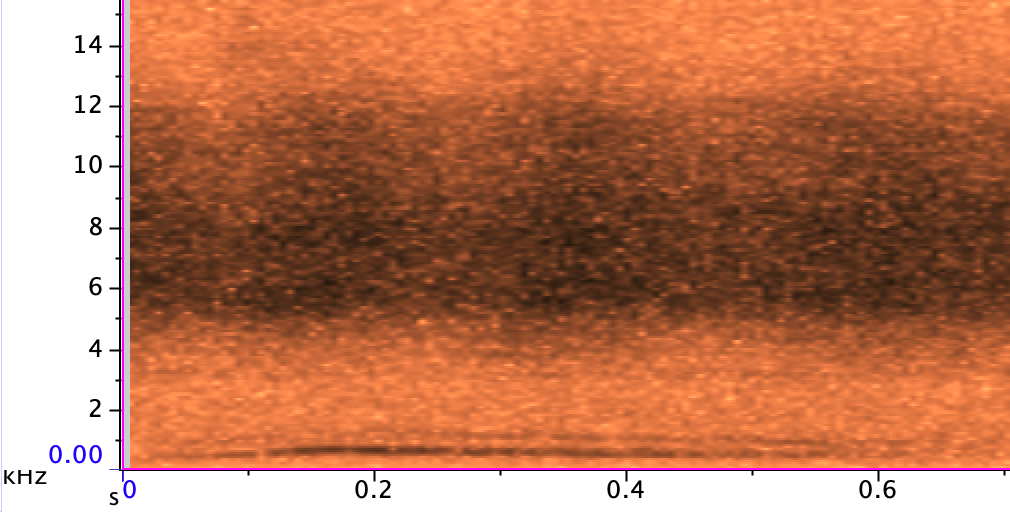
    This is spectrogram of the part of calling sequence above made with Raven 1.6 Pro. On vertical axel you can see frequency and on horizontal axel the time. African wood owl hoots have fundamental (lowest) harmonic (lowest line) bellow 1 kHz. Calls coming near the recorder have stronger spectrogram. Above African wood owl there is another bird? with long chirr, and above that there are cicadas. So owls and cicadas can be easily heard simultaneously, as they use different frequencies.

    Different call of a female African wood owl from Taita Hills

    Hoot of a African wood owl female with nice lowering pitch
    Spectrogram of a female African wood owl, a single hoof with slight rise in the middle. Given also as a response to call above. Call is using frequency about one kHz. Black belt between 5-12 kHz are cicada choir.

    African wood owls in Taita Hills are about the size of the crow, 30-35 cm, weighing 240-350 grams. African wood owl eats mainly insects.

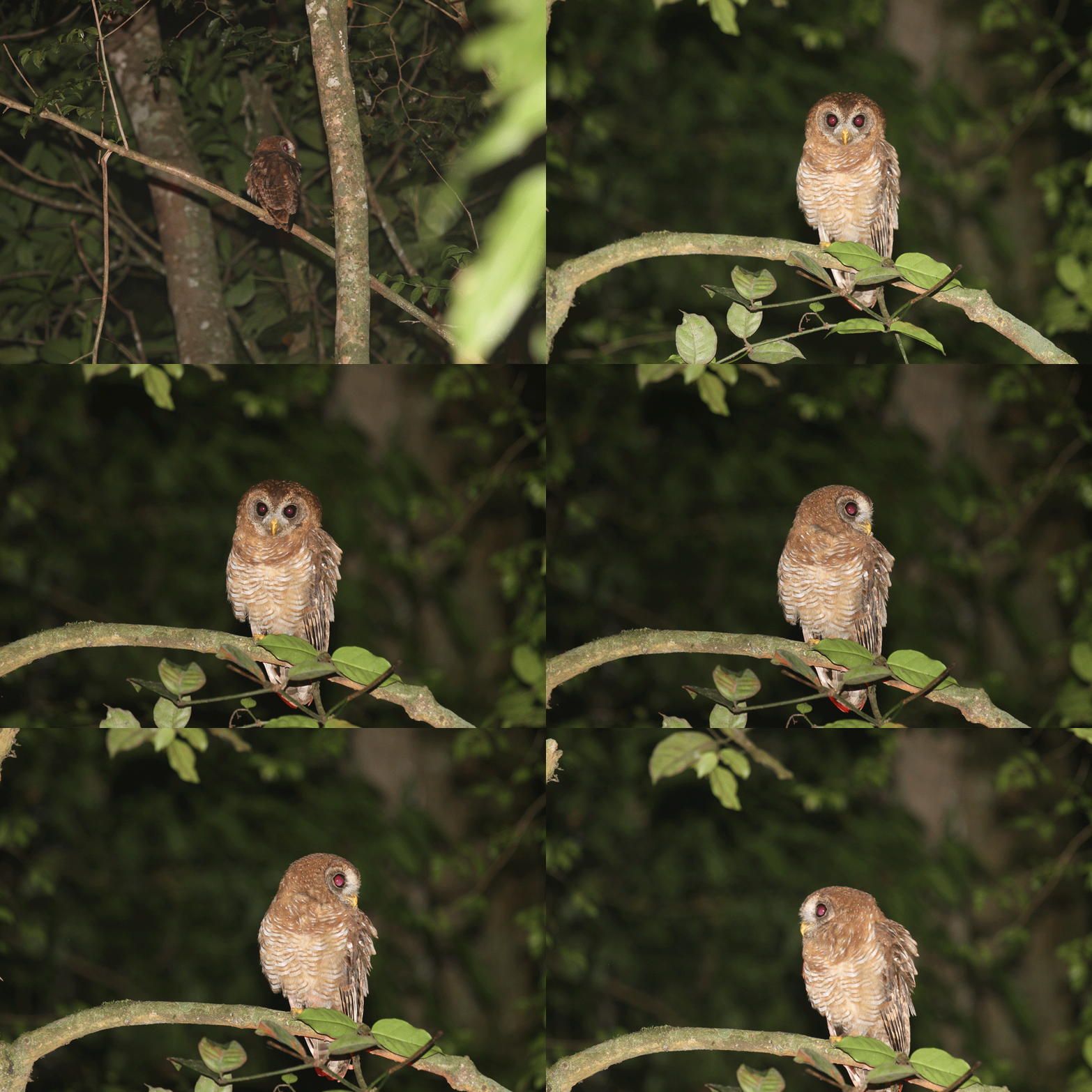
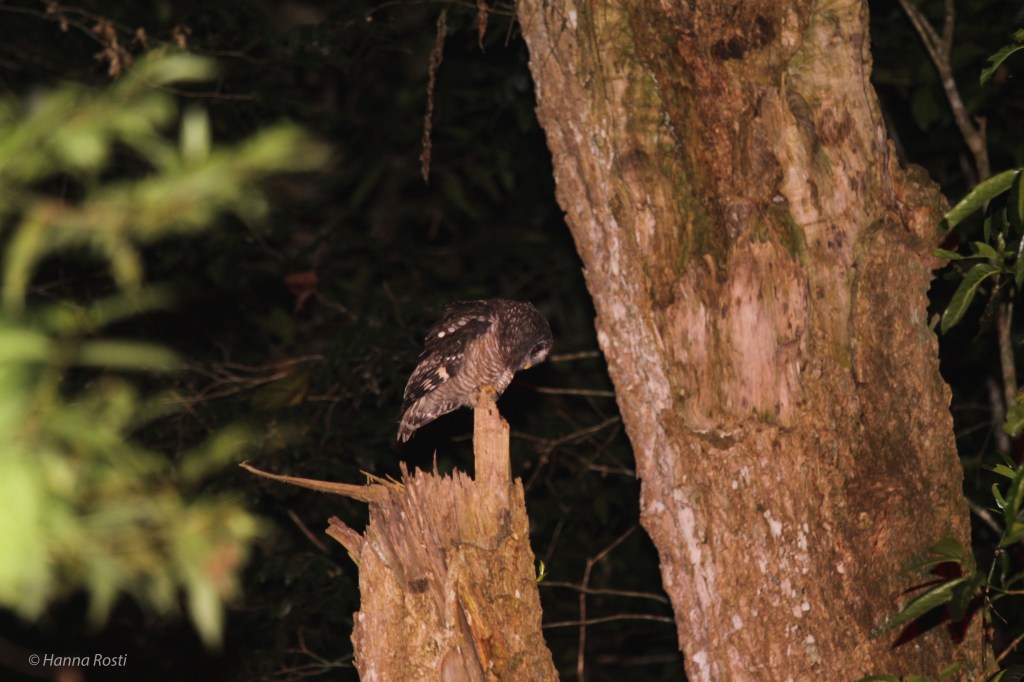
    African wood owl looking for prey. Taita Hills 2019.

    They can’t see red flashlight, which has enabled me to watch them without them without owls paying any attention for me.

    African wood owl looking for insects or small mammals to prey on. Taita Hills 2019.

    Mainly insectivorous, however they also catch small mammals… In Taita Hills African wood owls hunt also Taita mountain dwarf galagos that are almost extinct. For dwarf galagos this owl may be the ultimate reason for extinction.

    From the behind coloring has beautiful shades of brown. Taita Hills 2019.

    Reason for extremely low population numbers in dwarf galagos is loss of habitat, as forests have been cleared for fields. However, in these small remaining patches of forest, the probability of dwarf galago being hunted by wood owl increases. They share same territories every night. Dwarf galagos are dependent on refugee sites in hollow trees. Only very old trees are have hollows or are completely hollow.

    Distribution and conservation status

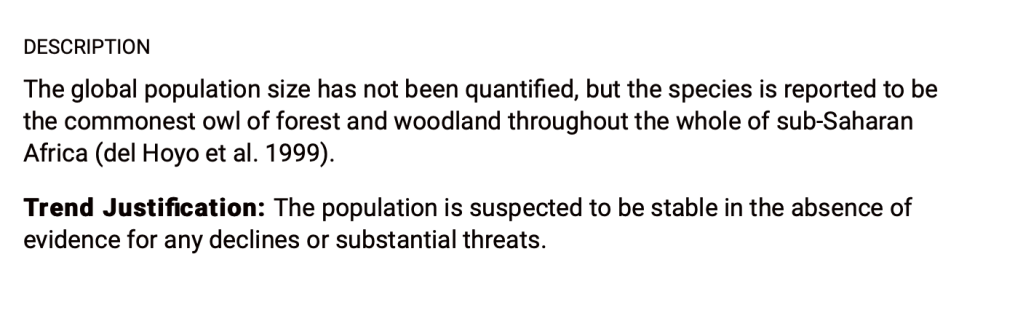
    African wood owl has extremely large distribution in Africa. Conservation status is Least Concern LC. Populations seem to be stable. However there is no long term research about the species

    IUCN RED LIST DESCRIPTION https://www.iucnredlist.org/species/22689166/93220349#population

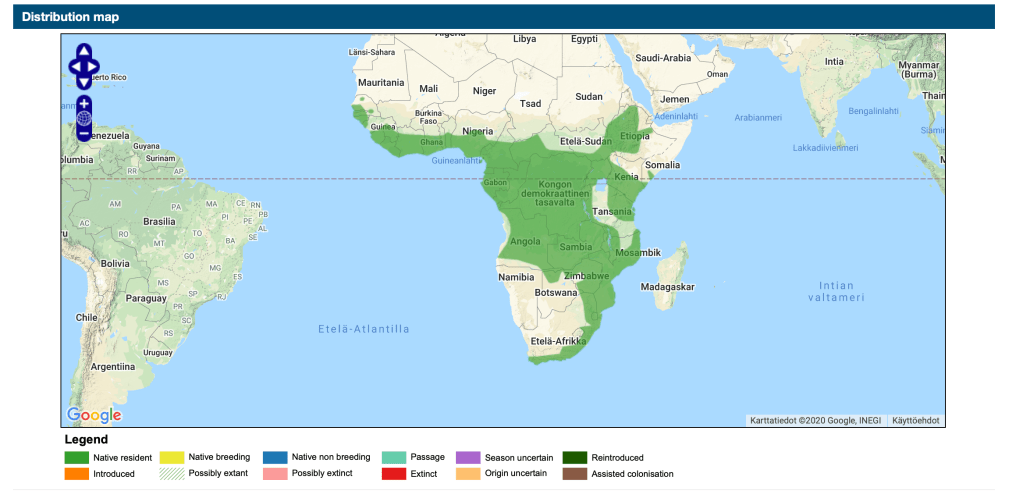
    Distribution map of African wood owl by BirdLife International. BirdLife International (2020) Species factsheet: Strix woodfordii. Downloaded from http://www.birdlife.org on 08/05/2020.

    Geographic range from Avibase with four subspecies: These subspecies have considerable differences in their coloration.

    • Strix woodfordii woodfordii: southern Angola to southern Democratic Republic of the Congo, southwestern Tanzania, Botswana, and South Africa
    • Strix woodfordii nuchalis: Senegambia and Bioko Island to South Sudan, Uganda, western Democratic Republic of the Congo, and northern Angola
    • Strix woodfordii umbrina: Ethiopia and eastern South Sudan
    • Strix woodfordii nigricantior: southern Somalia to Kenya, Tanzania, Zanzibar, and eastern Democratic Republic of the Congo
    African wood owl has horizontal stripes. Taita Hills 2019.

    Taxonomy

    Genus Strix was created by Linnaeus 1758 for earless owls. Strix owls do not have ear tufts. There are 22 species of genus Strix in the world. They are medium to large in size and live in forests. Strix owls are found around the world. African wood owl has four subspecies as described earlier.

    Here is Ural owl (Strix uralensis) from my home. This owl was found dead by my father in Finland 1970 and stuffed. Ural owl is much bigger than African wood owl. In Finland these owls are known for their strong protective behavior against people who put rings to baby owls feet. As an adaptation to cold climate the feet have feathers also.

    African wood owl scratching his ear. Taita Hills 2019.

    Sources:

    Birdlife African wood owl: http://datazone.birdlife.org/species/factsheet/african-wood-owl-strix-woodfordii

    Avibase African wood owl: https://avibase.bsc-eoc.org/species.jsp?lang=FI&avibaseid=2E6575A8C8ECAD9B&sec=summary

    Iucn Red Lis Assessment: https://www.iucnredlist.org/species/22689166/93220349#population

    BirdLife International. 2016. Strix woodfordiiThe IUCN Red List of Threatened Species 2016: e.T22689166A93220349. https://dx.doi.org/10.2305/IUCN.UK.2016-3.RLTS.T22689166A93220349.en. Downloaded on 08 May 2020.

  • Pikkugalago mediassa

    Pikkugalago mediassa

    Taitan pikkugalago on saanut paljon huomiota Suomessa ja ulkomailla

    Rosti, Hanna, Jouko Rikkinen, Petri Pellikka, Simon Bearder, and James Mwang’ombe. 2020. “Taita Mountain Dwarf Galago Is Extant in the Taita Hills of Kenya.” Oryx 2020 (54(2)): 151–53. https://doi.org/10.1017/S003060531900142X.

    Helsingin sanomat 12.2.2020
    Suomalaistutkijat tunnistivat uuden nisäkkään, joita elää parissa metsässä vain kymmeniä

    Helsingin yliopiston tiedote 14.2.2020. Tutkijoita pitkään karttanut pieni kädellinen löytyi uudelleen Keniasta

    In the field haastattelu, Hanna Rosti 27.2, suomeksi, vapaammin tutkimuksesta https://www.facebook.com/inthefieldbiology/videos/2793813200703928/

    Arto Nyberg, YLE:n haastatteluohjelma: vieraana Hanna Rosti 5.4 https://areena.yle.fi/1-50386711https://areena.yle.fi/1-50386711

    https://areena.yle.fi/1-50386711

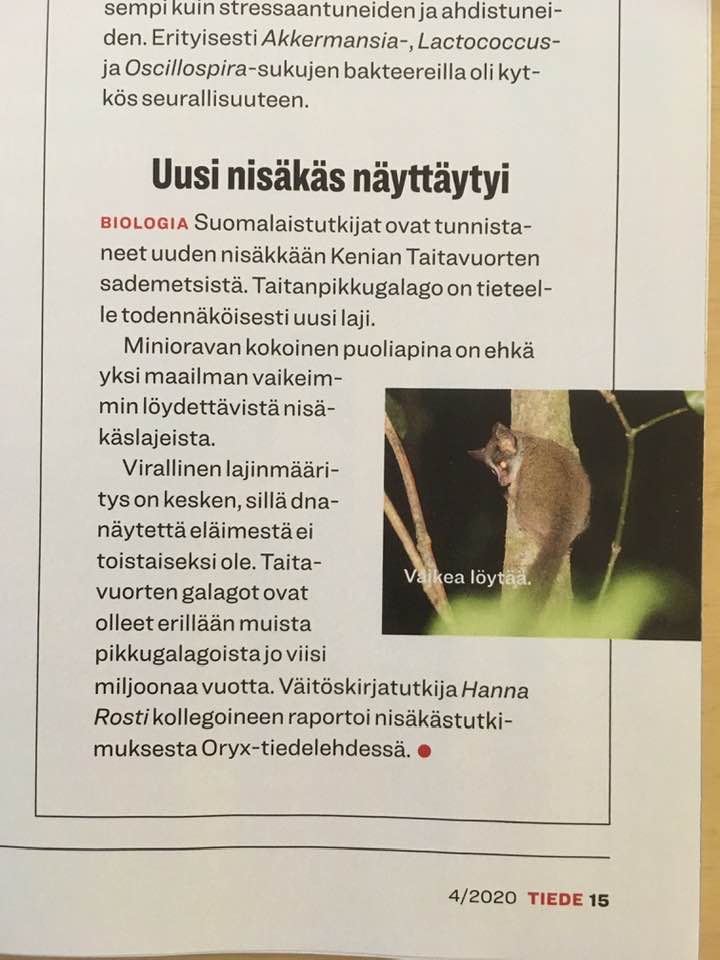
    Tiede 4/2020: Uusi nisäkäs näyttäytyi

    Etelä-Suomen Sanomat 14.4.2020: Hollolalainen biologi Hanna Rosti löysi Kenian vuorilta kaksi aiemmin tunnistamatonta nisäkäslajia – ”Jokaisen kädellistutkijan päiväuni” Sama artikkeli julkaistiin myös ainakin Keski-Uusimaa lehdessä 21.4.2020

    Iltalehti 11.5.2020: Suomalaistutkija löysi todennäköisesti uuden nisäkäslajin Kenian viidakosta

    https://www.iltalehti.fi/ulkomaat/a/a04b10b7-d5b3-4d31-a0ba-c8d5aaf25da2

    GraniTalks luentovierailu Kauniaisten lukiolla 27.11.2019. Videotallenne

    Uutinen pikkugalagon löytymisestä julkaistiin seuraavissa ulkomaalaisissa lehdissä ja blogeissa

    EurekAlert! 17.2.2020: Enigmatic small primate finally caught on film in Taita, Kenya

    DailyMail 17.2.2020: Adorable 3.5OUNCE African primate the Taita mountain dwarf galago is caught on camera for the first time in nearly 20 years as the species faces extinction

    The Amed Post 17.2.2020: Elusive tiny primate is captured on camera for the first time in nearly 20 years

    Infosurhoi 18.2.2020: Elusive tiny primate is captured on camera for the first time in nearly 20 years

    ScienceDaily 18.2.2020: Enigmatic small primate finally caught on film in Taita, Kenya

    Phys.org 18.2.2020: Enigmatic small primate finally caught on film in Taita, Kenya

    International business times 19.2.2020: Tiny Primate Caught On Camera After Nearly 20 Years Of No Sightings

    NU-NL 23.2.2020 Sinds 2002 verdwenen halfaap duikt plots op op camerabeelden

    Sci-News 26.2.2020: Dwarf Galago Feared Extinct Rediscovered in Kenya 
    Enrico de Lazaro This article was excellent combination of Oryx article and bulletin from University of Helsinki

    Africa Geographic Editorial 2.3.2020: Newly discovered Taita Mountain dwarf galago (bushbaby) could already be on the brink of extinction

    Living National Tresures 12.3.2020: Checklist of Endemics of Africa 

    Nature Kenya 3.3.2020:  Tiny primate sighting is another reason for conserving Taita Hills forests. Conservation of the natural forests scattered across these hills is critical for the survival of some of earth’s rarest species
    https://www.iltalehti.fi/ulkomaat/a/a04b10b7-d5b3-4d31-a0ba-c8d5aaf25da2

  • Taitan puutamaani

    Taitan puutamaani

    Taitan puutamaani (Dendrohyrax sp.) on äänekäs, noin 2-5 kg painava yöaktiivinen, suurta marsua muistuttava eläin.

    Video Taitan puutamaaneista ja puutamaaneista yleensä elokuu 2022.

    Nimensä mukaisesti se elää puissa. On hämmästyttävää miten pulska eläin kykenee kiipeilemään puissa vain kolmella töppömäisellä varpaallaan.

    Taitan puutamaaniuros. Urokseksi yksilön tunnistaa kulmikkaista syöksyhampaista ja suuresta koosta. Vatsa on vaalea, viiksikarvat paksut ja vahvat. Nakkimaisten varpaiden avulla liikkuminen korkeassa latvustossa on hieman kömpelöä.

    Tamaaneja on olemassa kolme ryhmää. Puutamaanit, kalliotamaanit ja pensastamaanit. Tamaanit kuuluvat Paenungulatoihin, joihin kuuluvat niiden lisäksi norsut ja manaatit.

    Vaikka puutamaani siis muistuttaa ulkonäöltään jyrsijää, se on läheisempää sukua norsuille ja manaateille

    Puutamaanit syövät lehtiä. Vastaavassa ekologisessa lokerossa elävät koalat Australiassa ja laiskiaiset Etelä-Amerikassa.

    Puutamaaneja elää vain Afrikassa. Afrikassa tunnistettuja lajeja on kolme: idän puutamaani (Dendrohyrax validus), lännenpuutamaani (Dendrohyrax dorsalis) ja puutamaani (Dendrohyrax arboreus).

    Puutamaaneista tiedetään hyvin vähän. Puutamaanien monimuotoisesta ääntelystä ei ole julkaistu ainuttakaan artikkelia. Eläinten populaatioden tiheyttä on pyritty arviomaan laskemalla niiden käyttämien vessojen, latriinien, määrää.

    On todennäköistä, kuten myös Afrikan eläimistön perusteos Mammals of Africa (Kingdon 2013) toteaa, että lajeja on todennäköisesti paljon enemmän.

    Lajeja on enemmän siksi, että populaatiot ovat eläneet eristyneinä omien vuoriensa huipuille tai savannin ympäröimiin metsäsaarekkeisiin miljoonien vuosien ajan.

    Pitkä eristys on todennäköisesti johtanut lajiutumiseen. Ainakin Taitan puutamaanin ääntely on aivan erilaista kuin muiden puutamaanien ääntely.

    Äänivertailu on tärkeää sillä äänistä yksilötkin tunnistavat lajikumppaninsa ja saavat monenlaista tietoa ääntelevästä eläimestä.

    Nämä kuvat ovat ensimmäisiä, mitä on koskaan otettu puutamaaneista käsivaralta.

    Tämä yksilö on nuorehko naaras. Syöksyhampaat ovat pienehköt. Puutamaani jäi katselemaan meitä pitkäksi aikaa vain parin metrin päähän, kunnes se jatkoi matkaansa puuta ylöspäin.
    Emeritiusprofessori Simon Bearder, joka on tehnyt Afrikassa kenttätöitä yli 40 vuoden ajan, on hämmästellyt lukuisia kertoja miten olen onnistunut saamaan valokuvia puutamaaneista. Hänen mukaansa tutkijat eivät ole koskaan ennen päässeet näkemään eläimiä. Se selittää myös osaltaan sitä miksi puutamaaneja ei ole juuri tutkittu aikaisemmin.
    Puutamaanien erityispiirteet

    Puutamaaneilla on monia erityisiä piirteitä mitkä mahdollistavat niiden elämän korkeissa Afrikan sademetsissä, käyttäen ravinnokseen ainoastaan lehtiä. Osa näistä erityispiirteistä liittyvät puutamaanien evoluutiohistoriaan.

    • Hampaat muistuttavat sarvikuonon ja hevosen hampaistoa
    • Ruuansulatusjärjestelmä on monimutkainen ja erilainen kuin kaikilla muilla lajeilla
    • Ravintoköyhä, kuitupitoinen lehtiravinto vaatii paljon aikaa ruuan sulatteluun, puutamaanit lepäävät suuren osan päivästä ja yöstä.
    • Vatsa on suuri ja pullea.
    • Aineenvaihdunta on hidasta ja ruumiinlämpö on alhaisempi kuin muilla nisäkkäillä.
    • Alhainen lämpötila mahdollistaa urosten sisäiset kivekset.
    • Selkäranka on ylöspäin kaartunut.
    • Viiksikarvatyyppisiä karvoja on kaikkialla kehossa, ne todennäköisesti auttavat suunnistamaan pimeydessä.
    • Ei tiedetä miten hyvin ne näkevät pimeydessä. Kuvani viittaavat siihen että Taitan puutamaanilla saattaa olla jonkinlainen tapedum lucidum kalvo. Kalvo joka saa useimpien nisäkkäiden silmät loistamaan pimeydessä, kun niihin osoittaa valolla.
    • Erittäin monimuotoinen ja äänekäs kommunikaatiojärjestelmä. Puutamaaneja pidetään yksineläjinä, on kuitenkin ristiriitaista miksi yksineläjä käyttäisi näin paljon energiaa (jota on puutamaaneilla ravinnonköyhyyden vuoksi vähän) vilkkaaseen vokaaliseen kommunikaatioon. Tosin suurin osa kommunikaatiosta on suunnattu pitämään lajikumppanit loitolla ravintolähteenä toimivasta puusta.

    • Erittäin tärkeitä ovat päiväpesinä toimivat puiden onkalot, ilman päiväpesää puutamaani on hyvin suojaton.