Hanna Rosti, Janne Heiskanen, Simon Bearder, Benson Lombo, Henry Pihlström, Petri Pellikka & Jouko Rikkinen
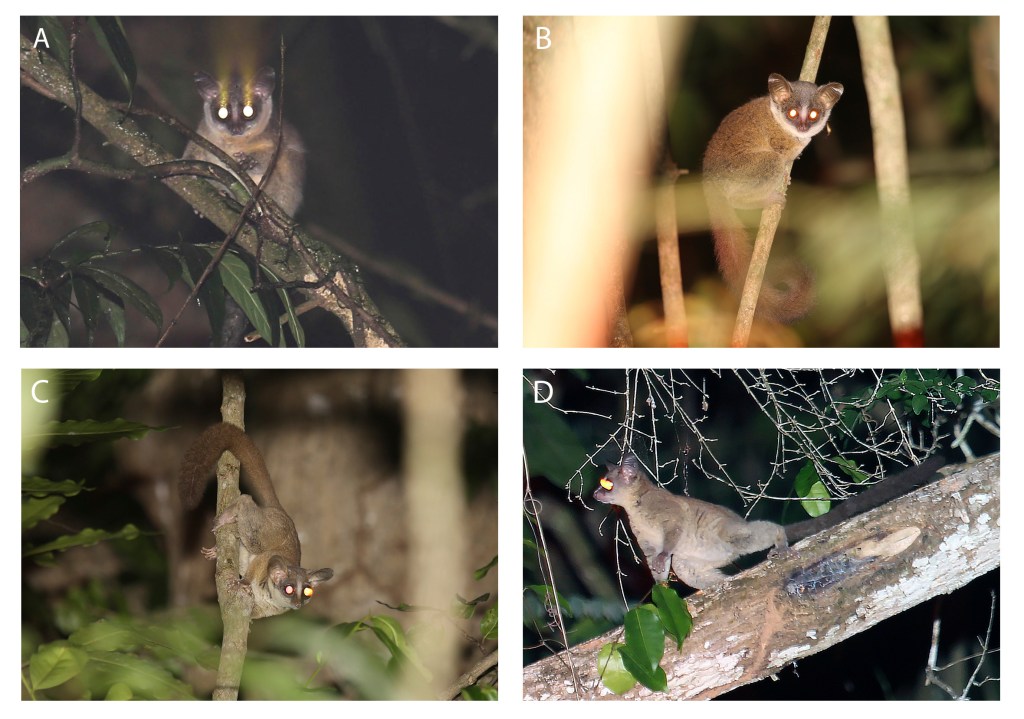
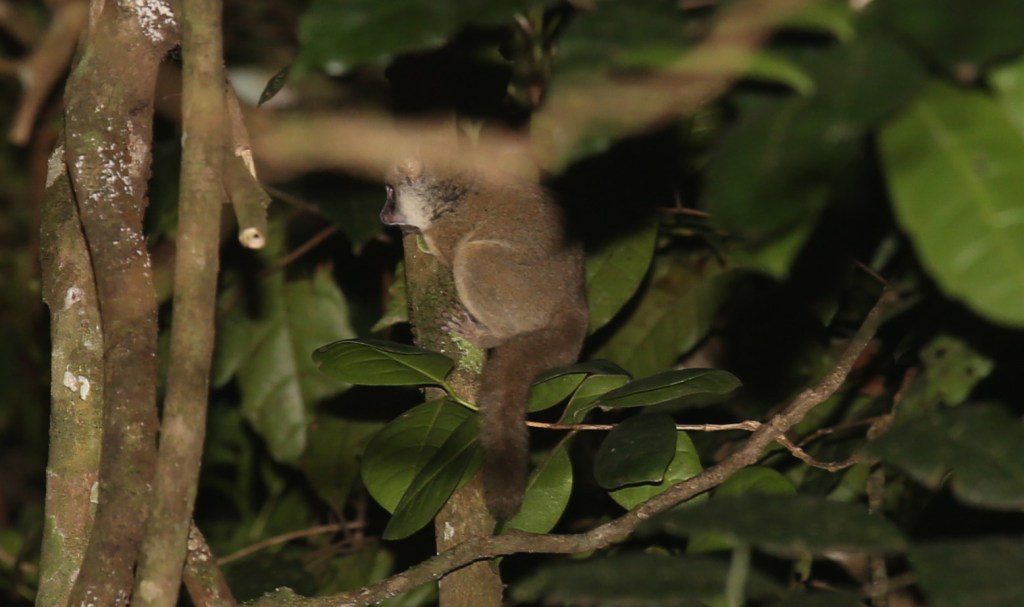
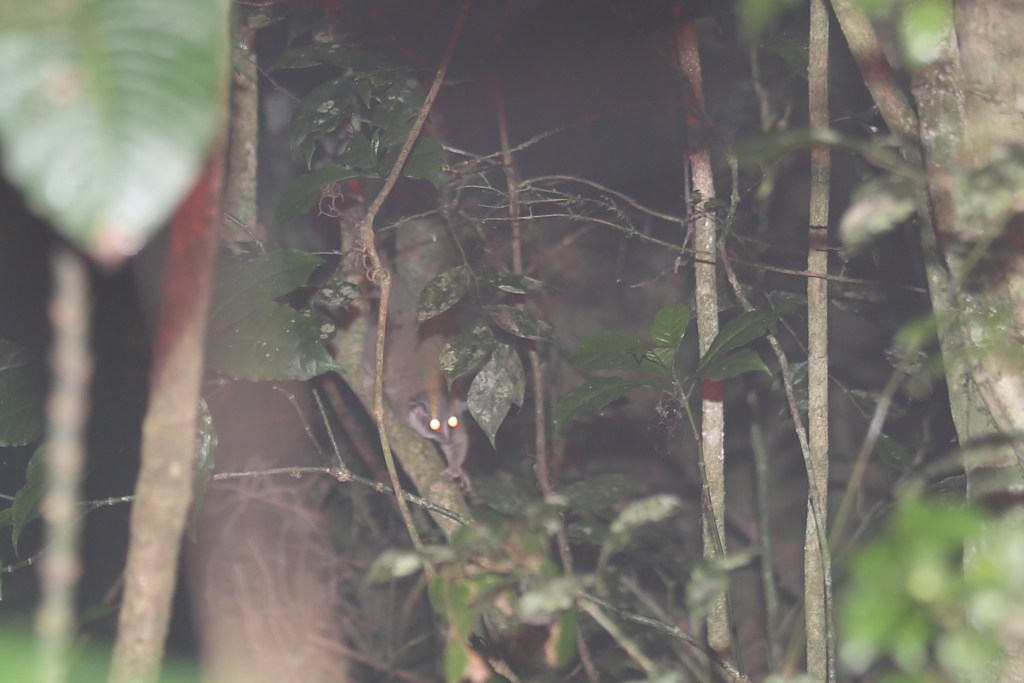
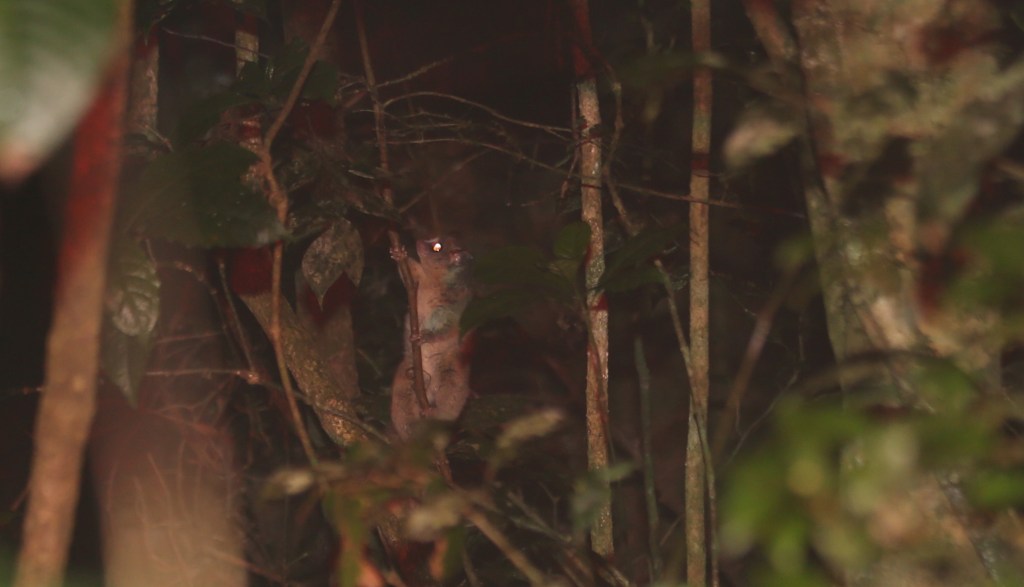
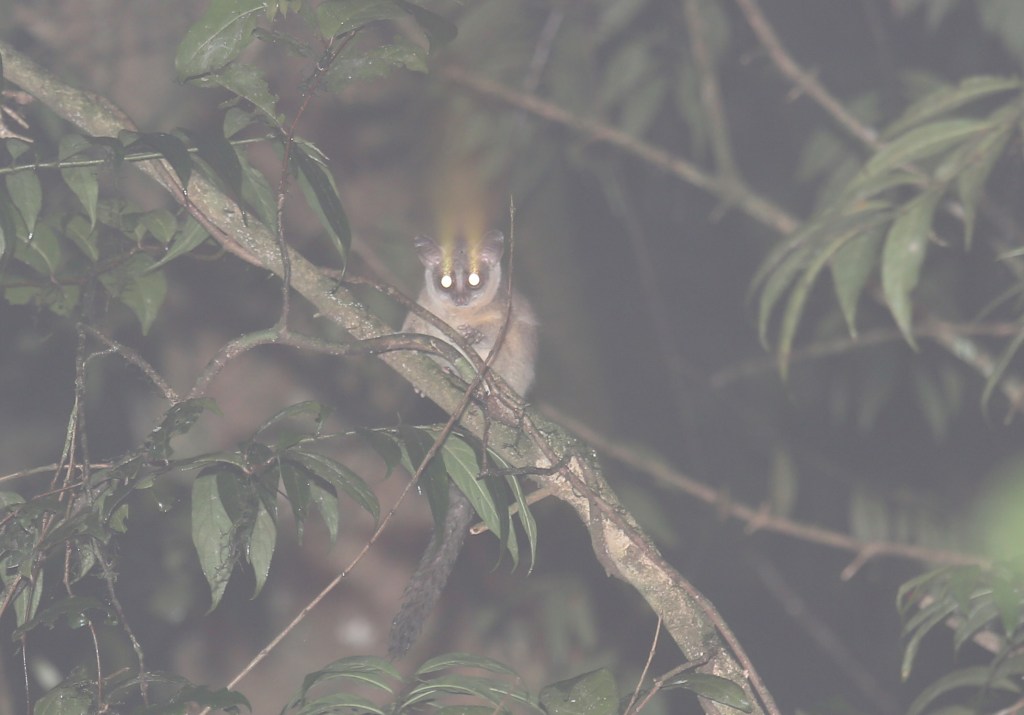
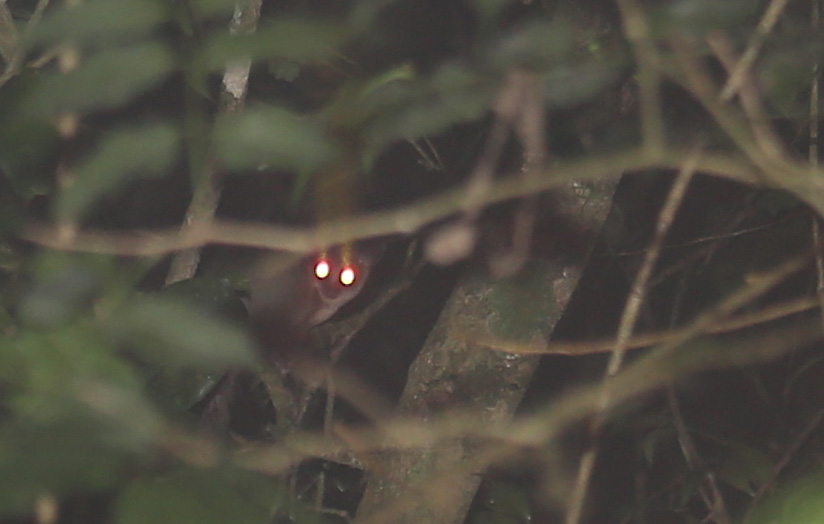
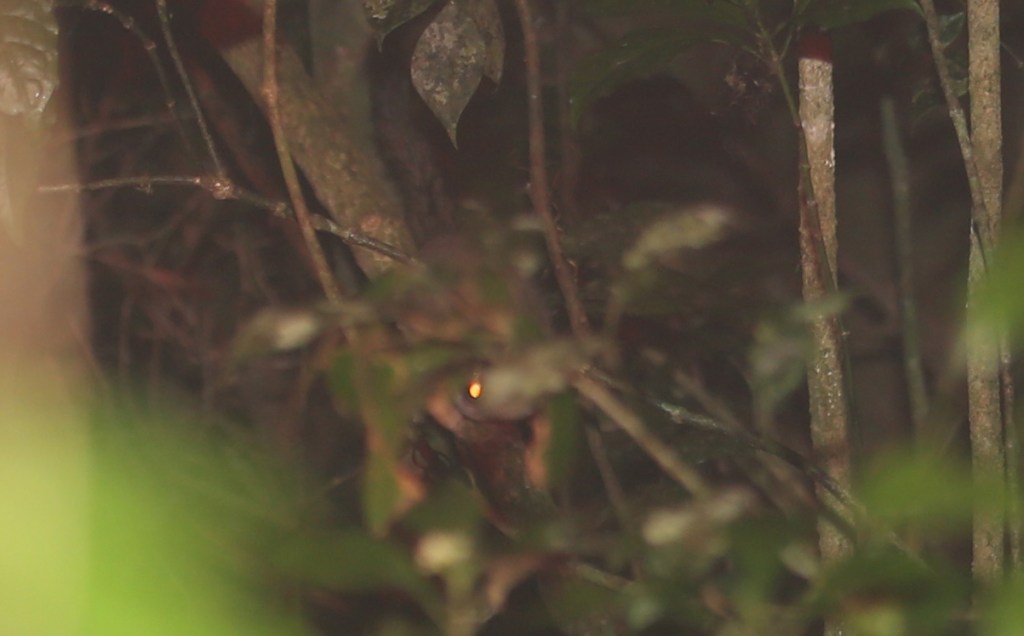
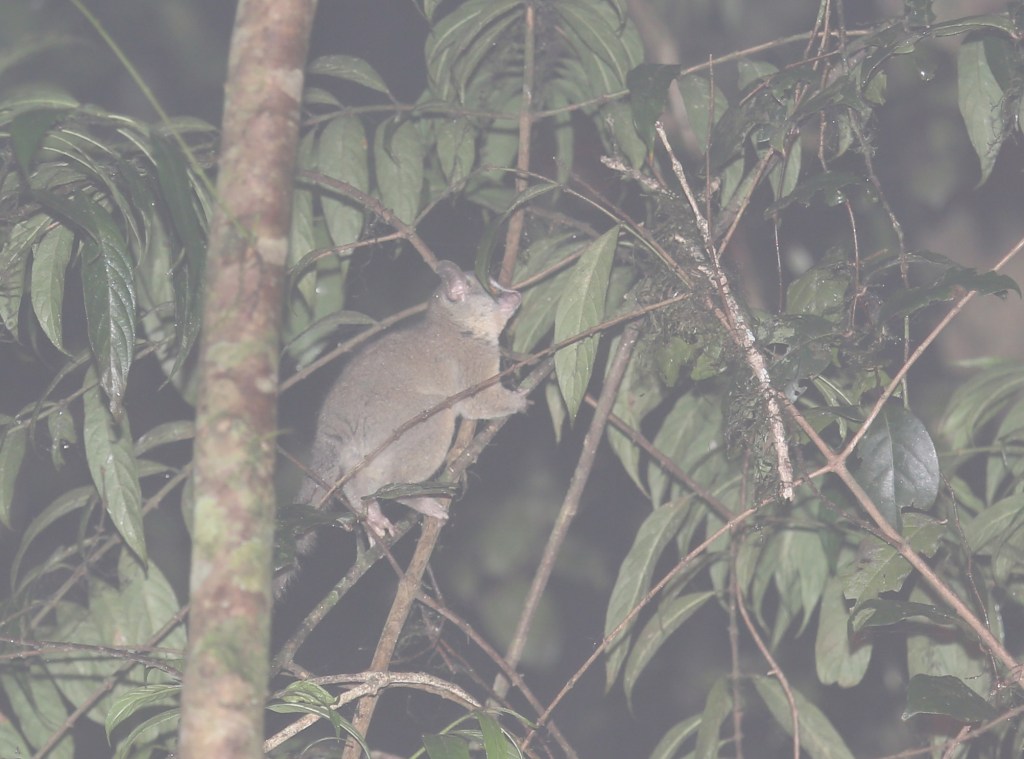
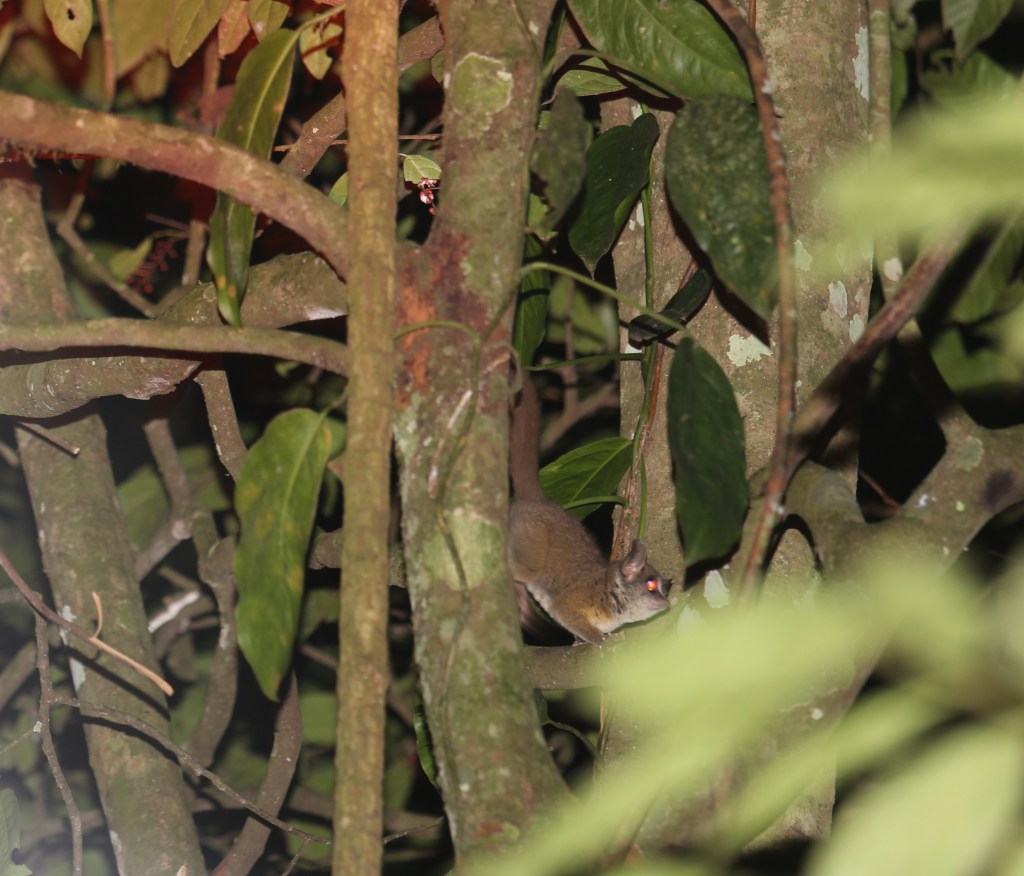
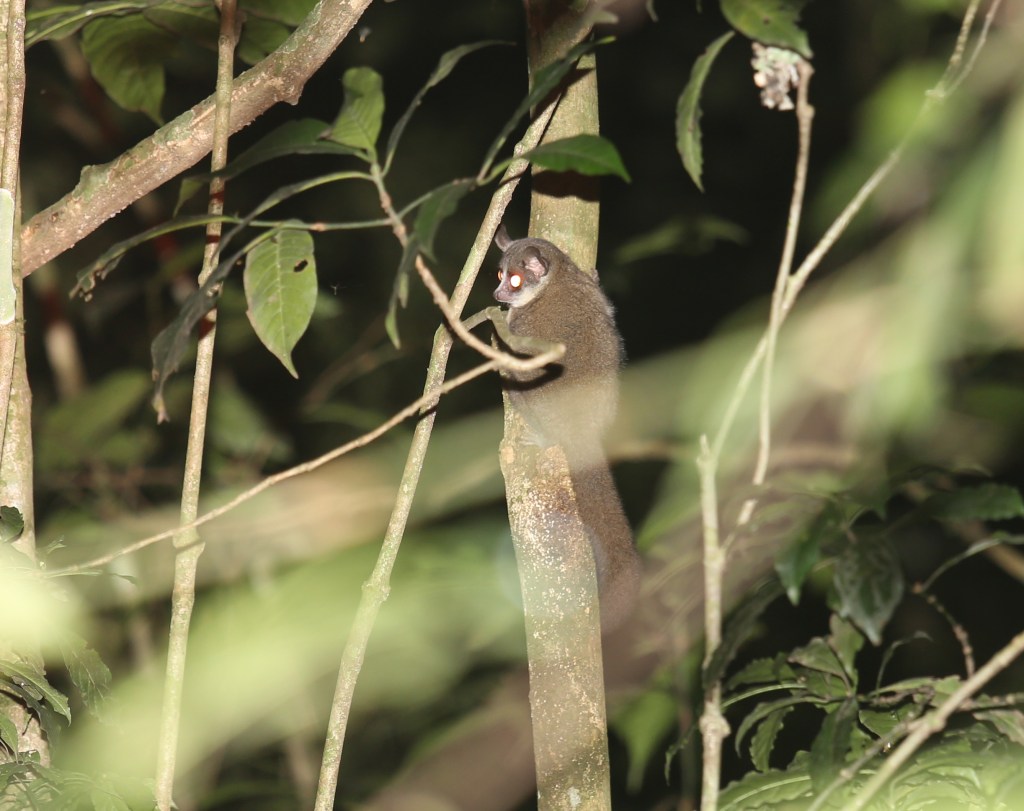
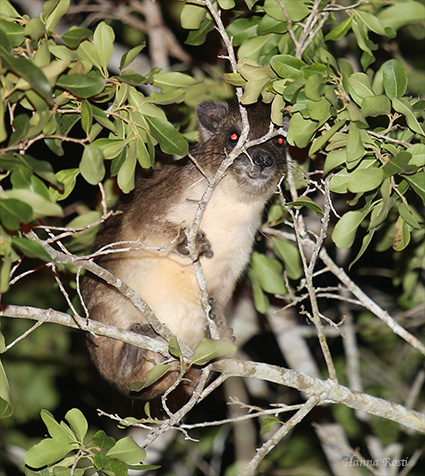
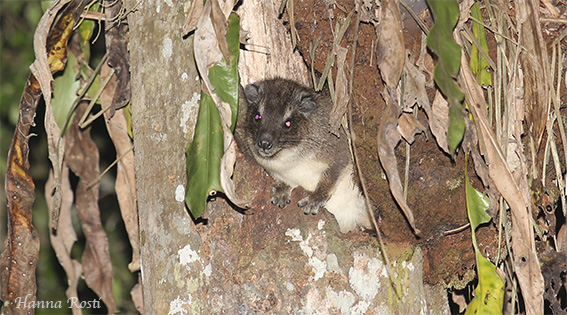
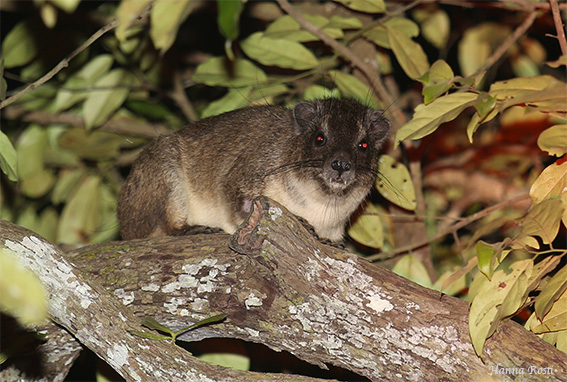
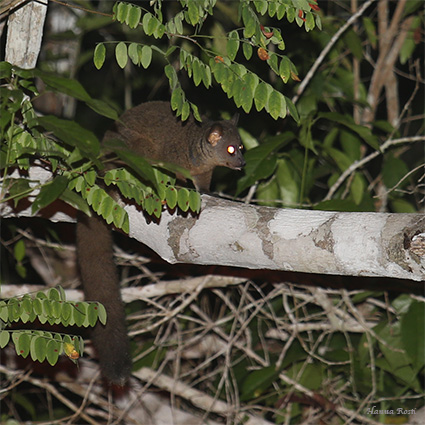
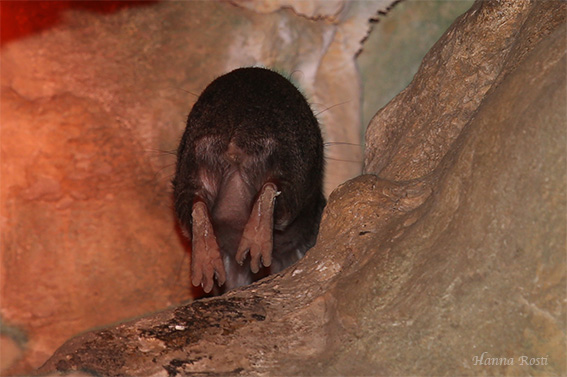
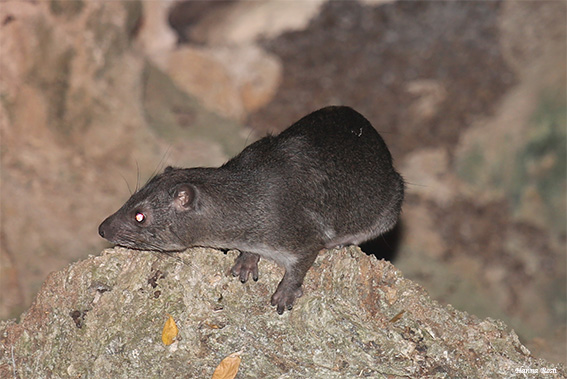
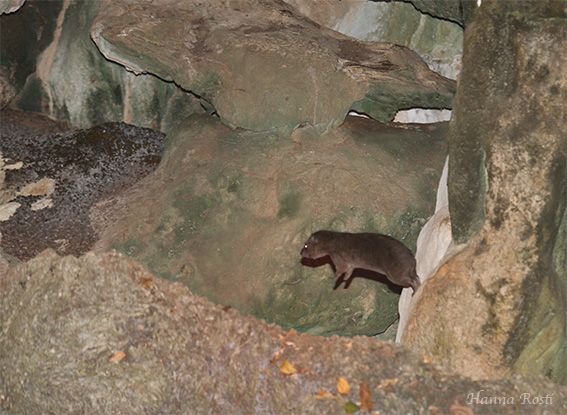
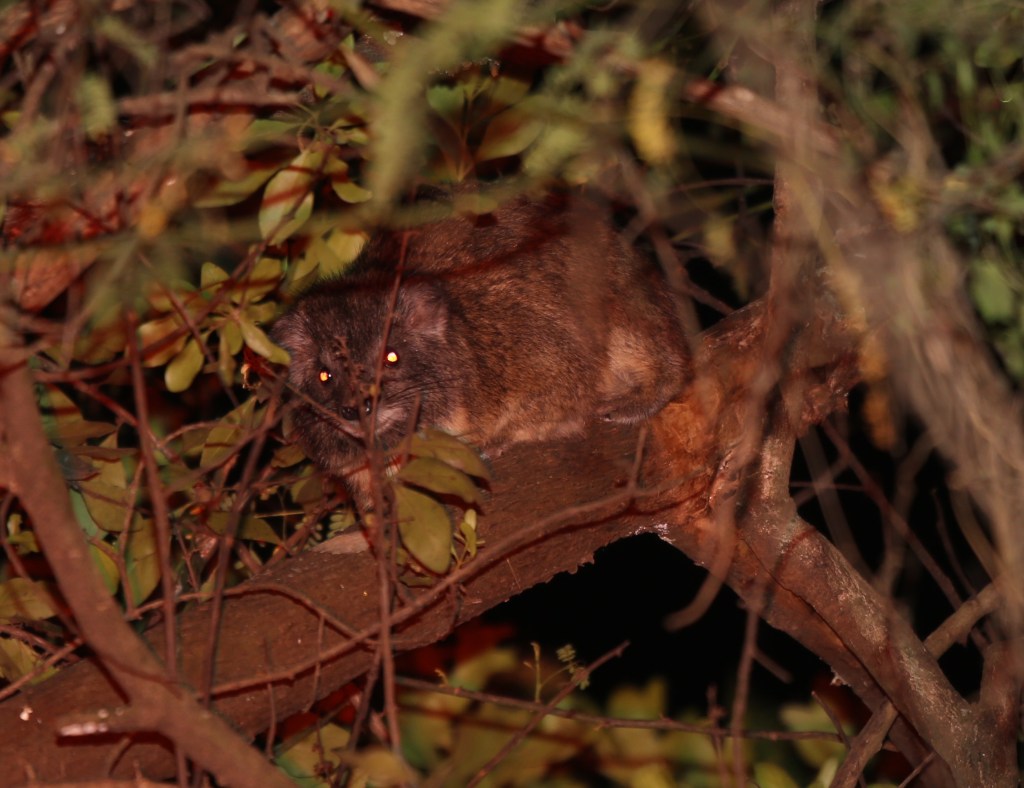
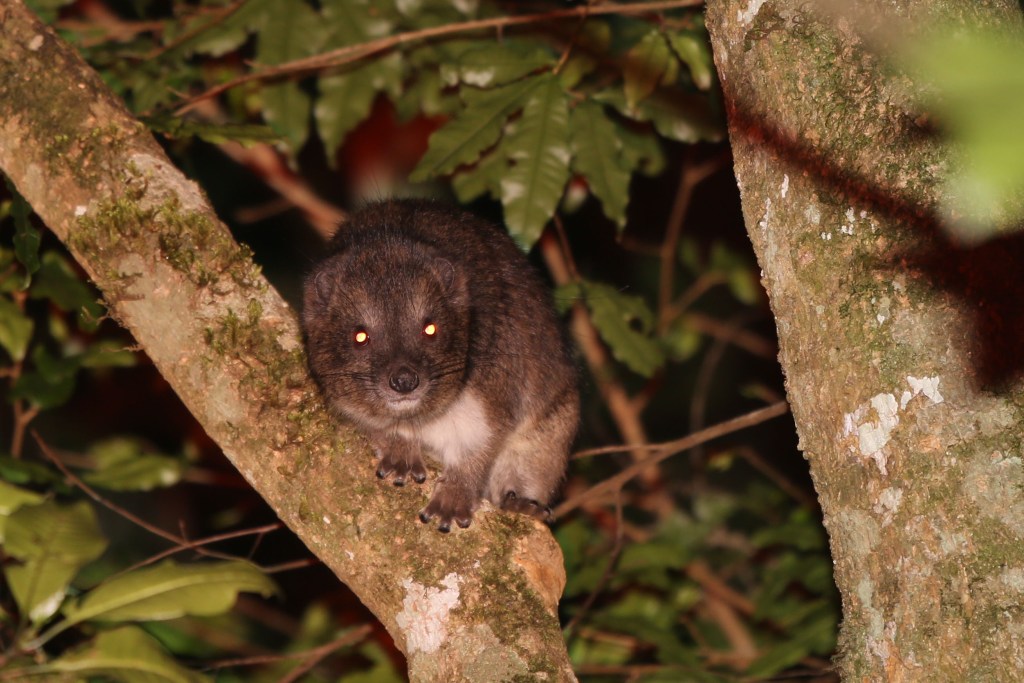
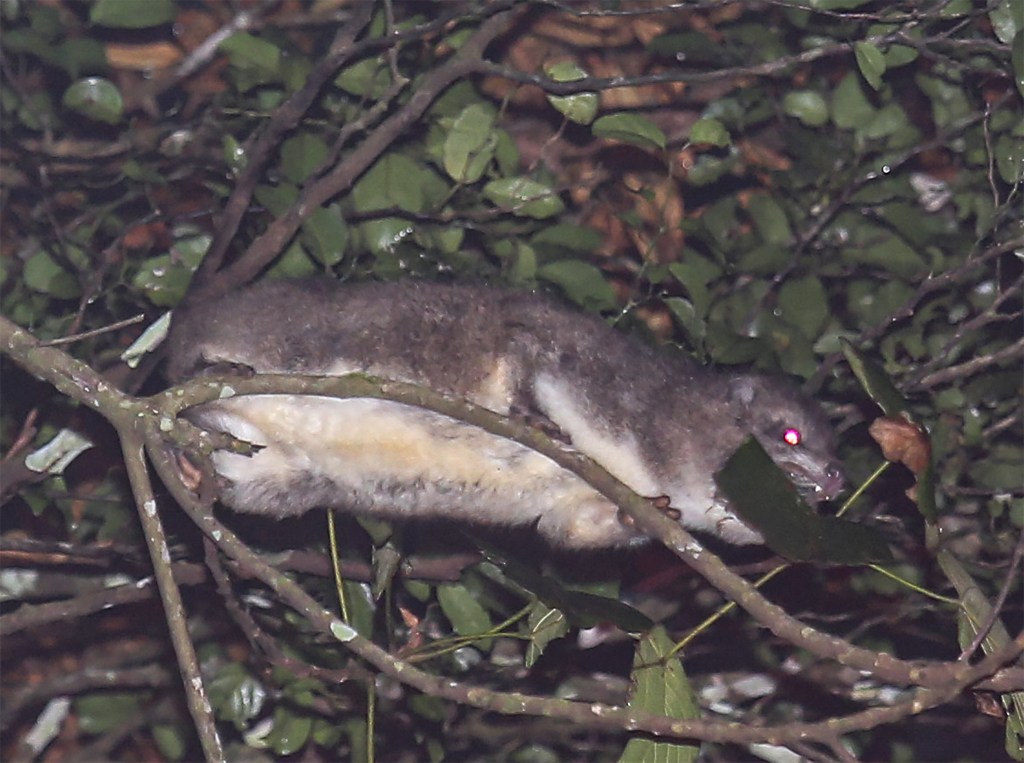
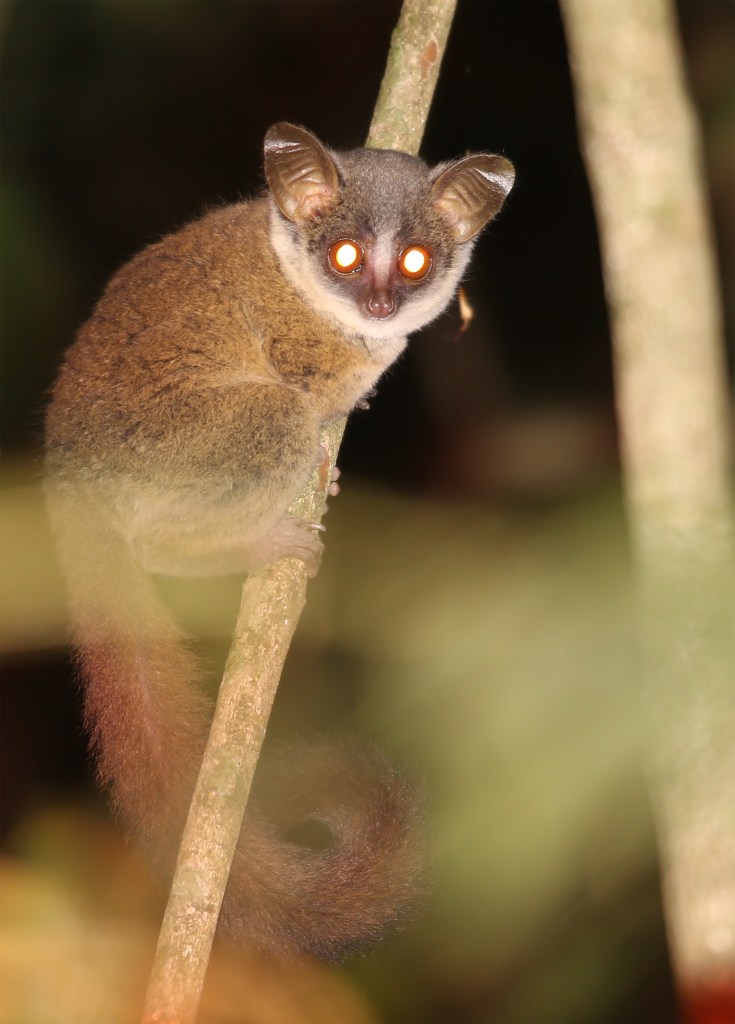
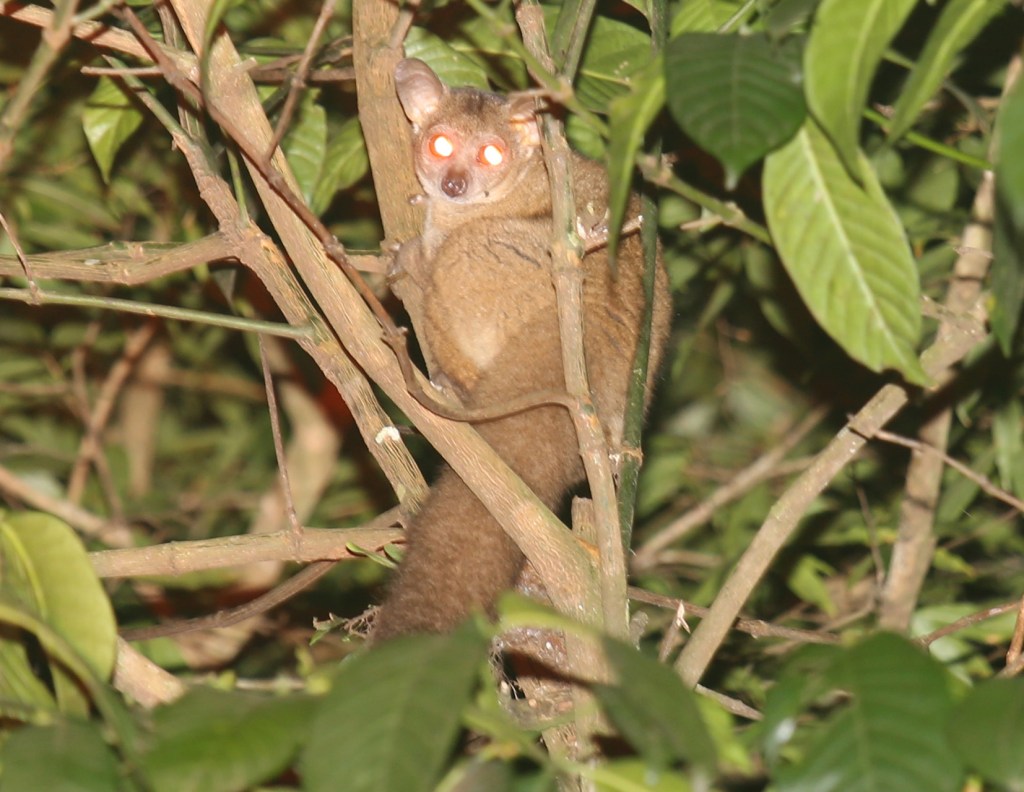
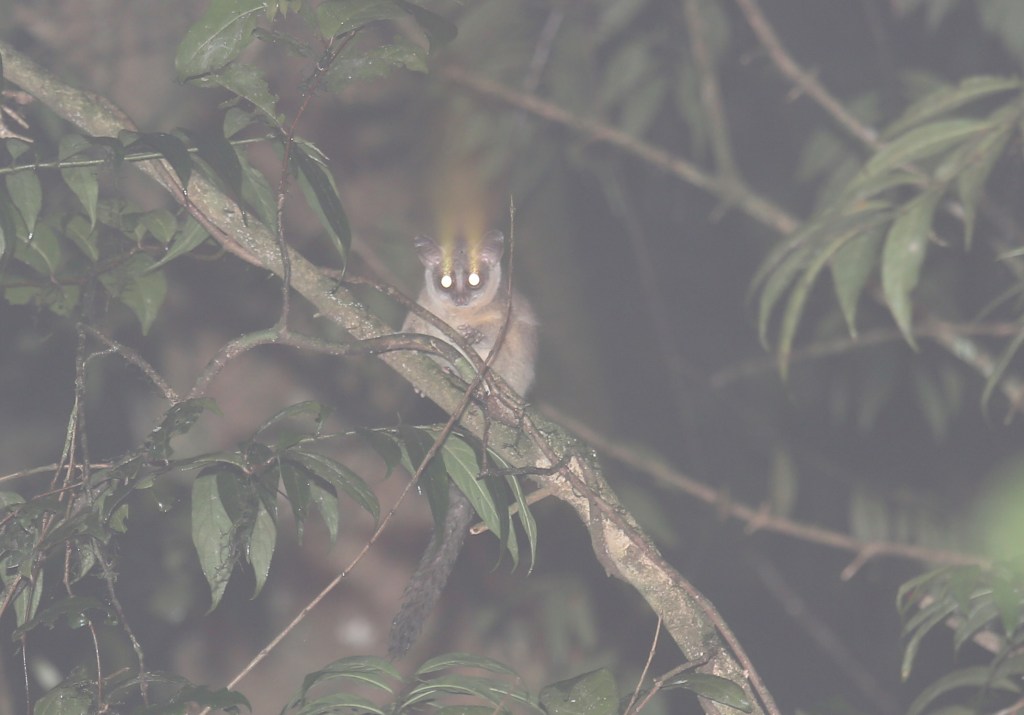
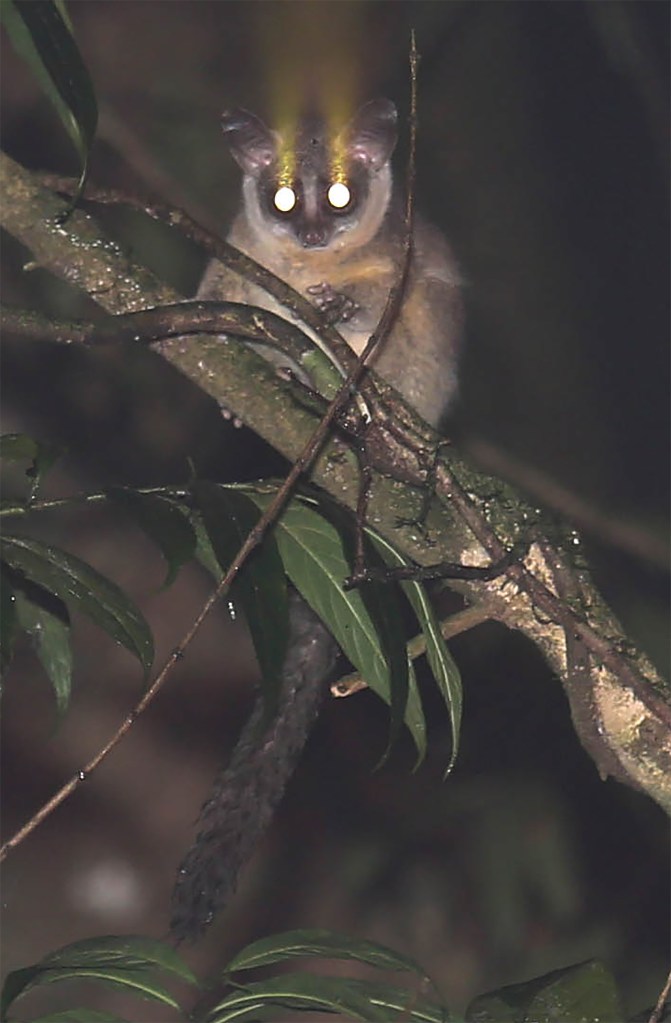
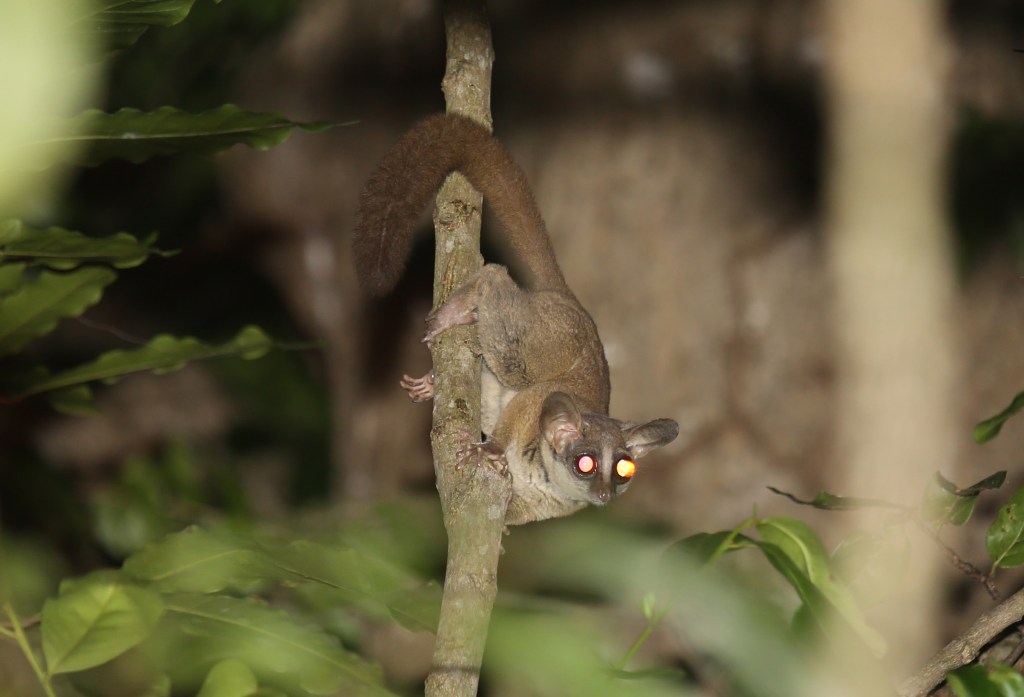
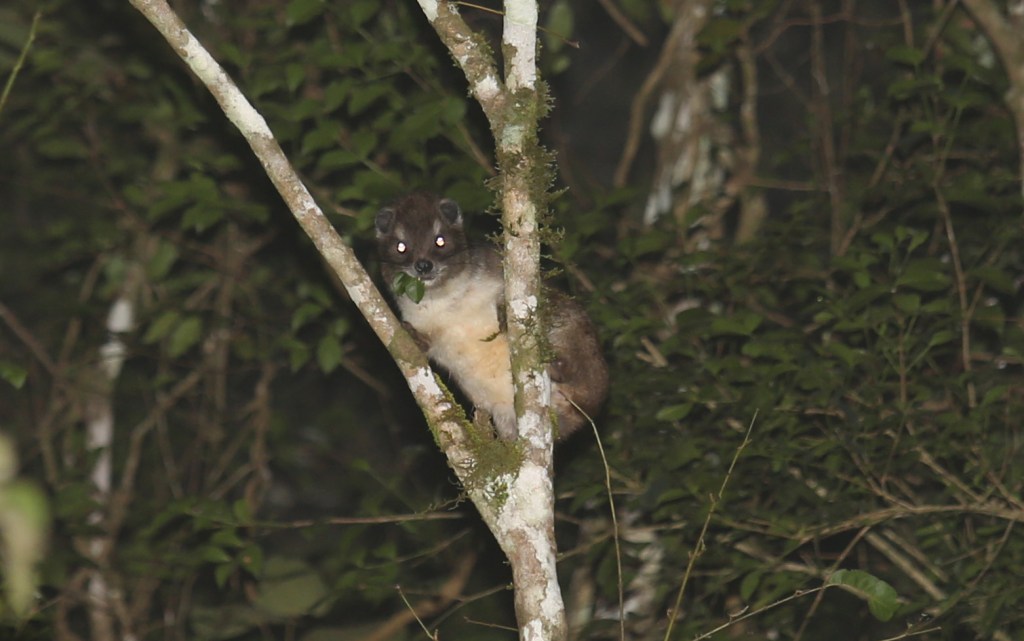
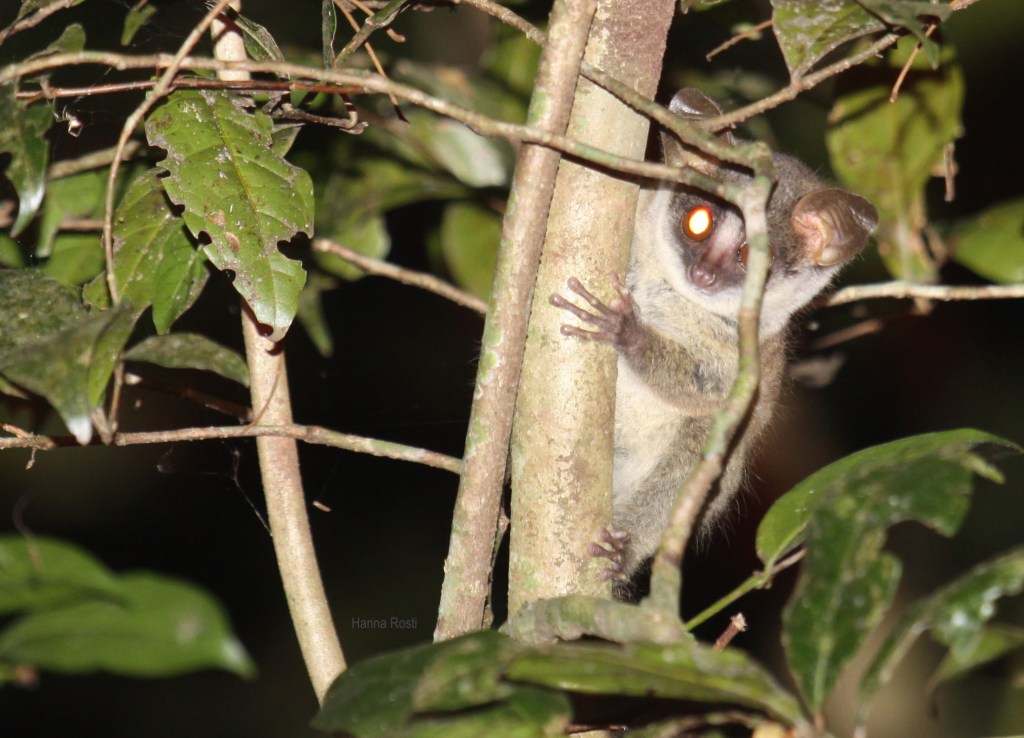
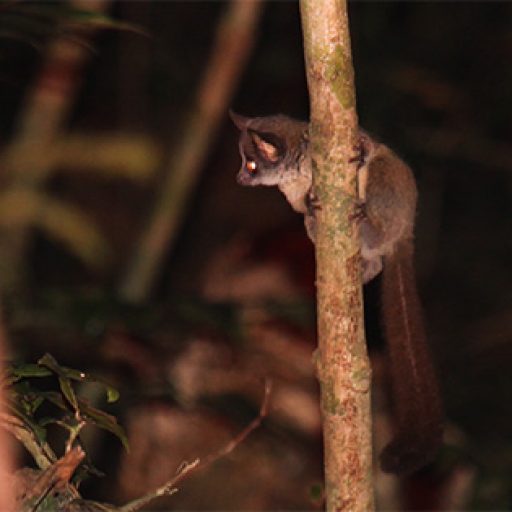
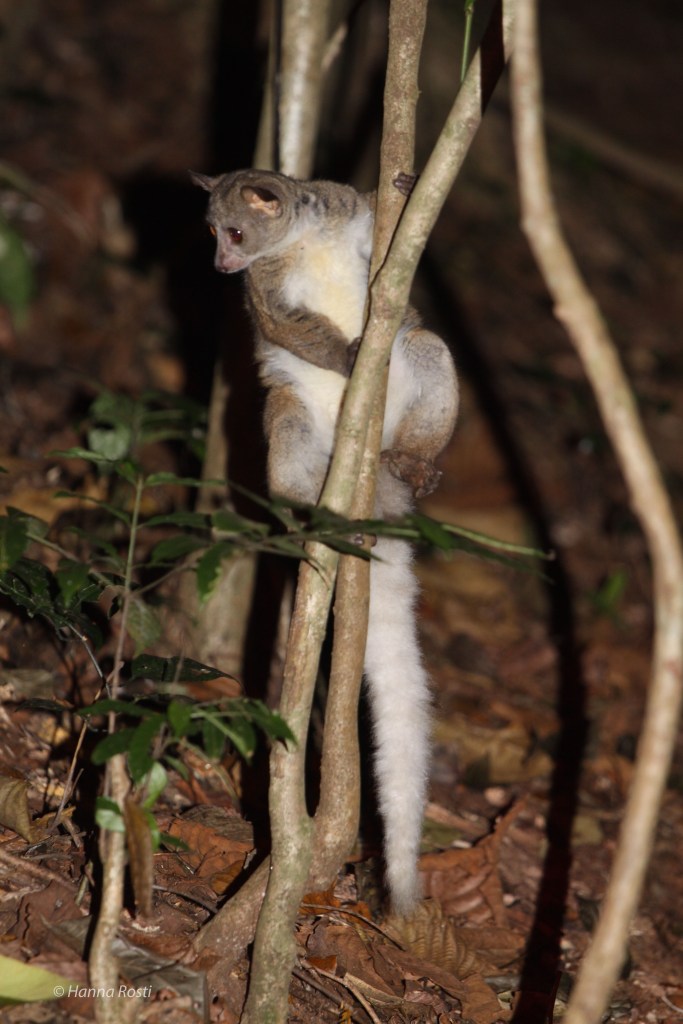
A) Taita dwarf galago from Mbololo forest, B) Taita dwarf galago from Ngangao forest, C) Kenya coast dwarf galago (Paragalago cocos) from Diani Beach, D) Kenya coast dwarf galago from Shimba Hills National Reserve.
Taxonomy of Taita dwarf galagos are still pending on DNA sample.
Reasons why Taita dwarf galago may be new primate species:
It lives in the elevations between 1550 and 1970 meters, where as Kenya coast dwarf galago has previously been found at highest from elevation 350 m.
The environment high up in the mountain is severely colder, and trees are much bigger.
Populations have been isolated for a very long time. Possibly arount 0.8-2 million years.
Why Taita dwarf galago may be same species as Kenya coast dwarf galagos:
Acoustic calls are quite similar, not completely, by quite close.
Dwarf galagos feed on insects, and insects should be, nutritiously, quite similar.
Long isolation time doesn’t always mean speciation, if species has not had the need to change to survive.
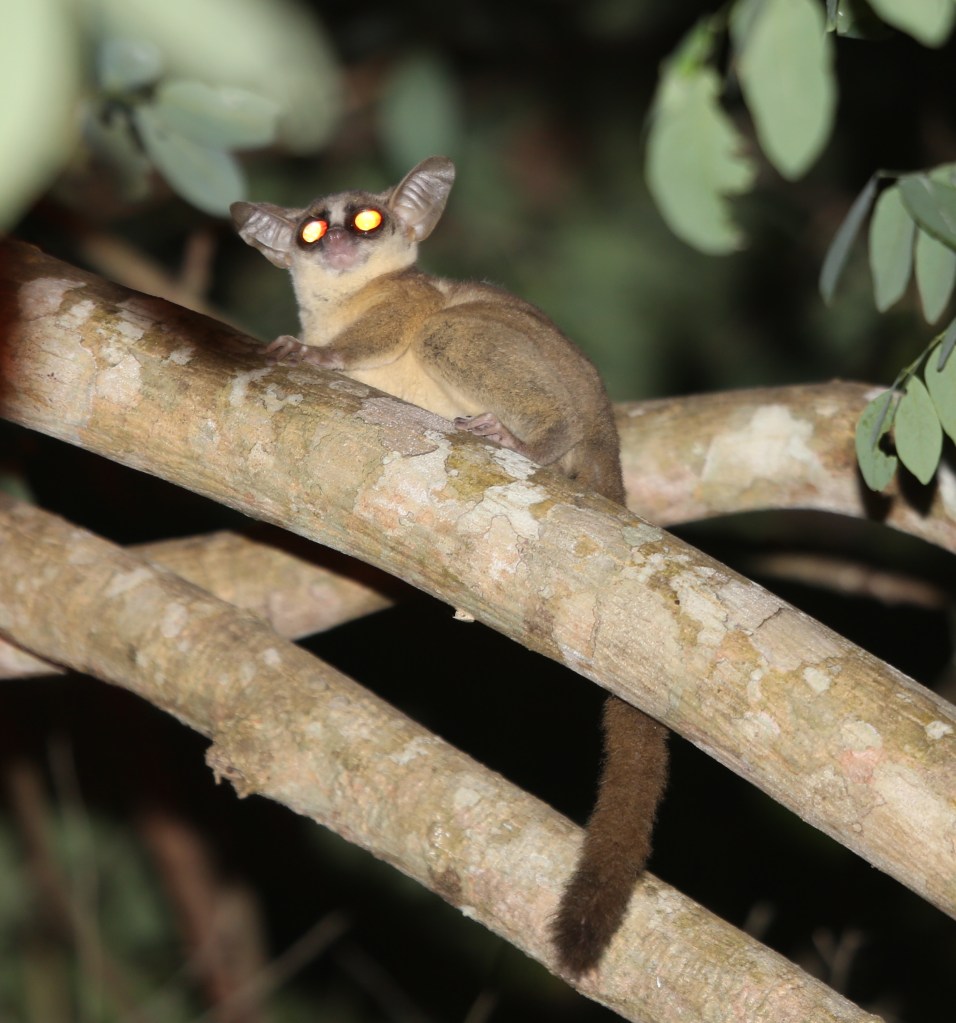
Kenya coast dwarf galago from Diani Beach. They too are under severe danger of going extinct, as the indigenous forests have been cleared.
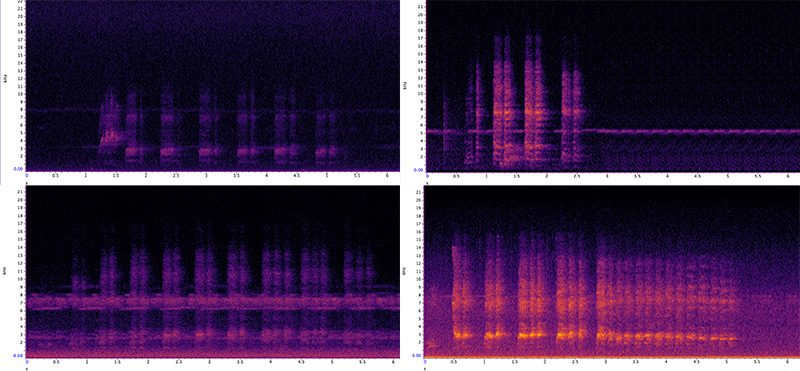
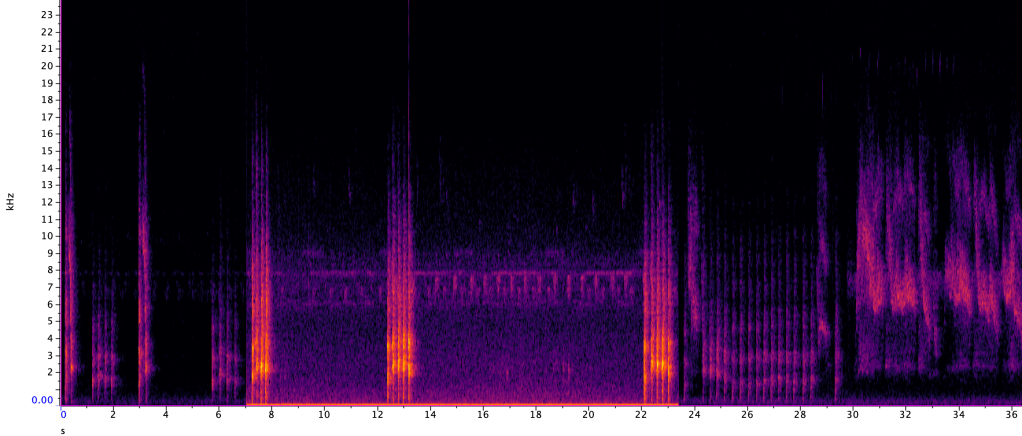
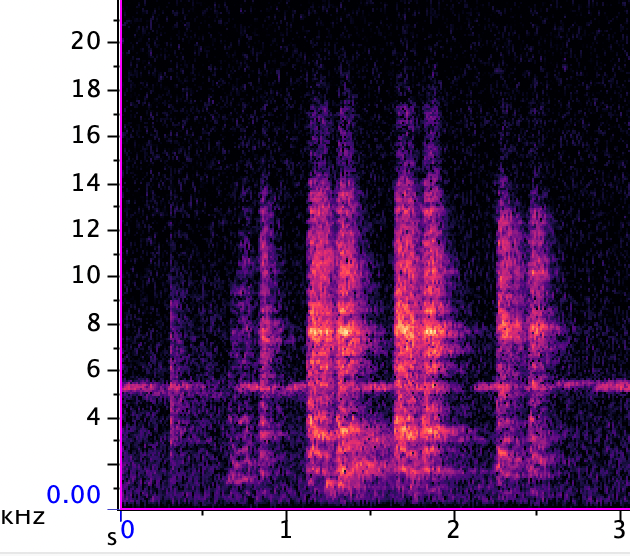
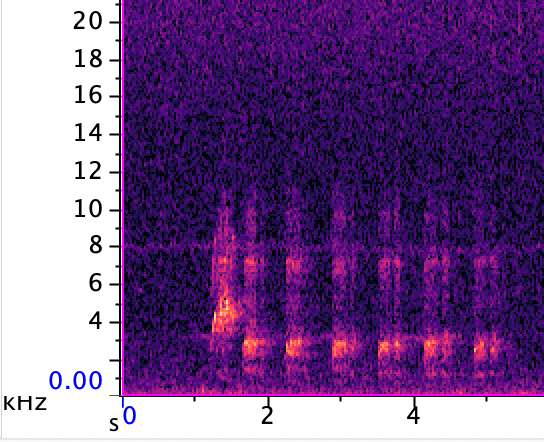
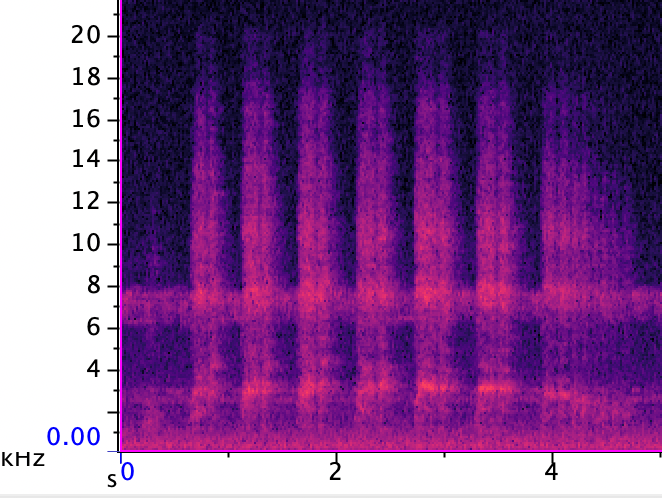
Spectrograms of the dwarf galago contact calls, up left Mbololo, up right Ngangao, down left Diani, down right Shimba Hills.
It seems, that typically in the contact calls have two connecting syllables. At the coast it typically (but not always) leads to longer incremental tail.
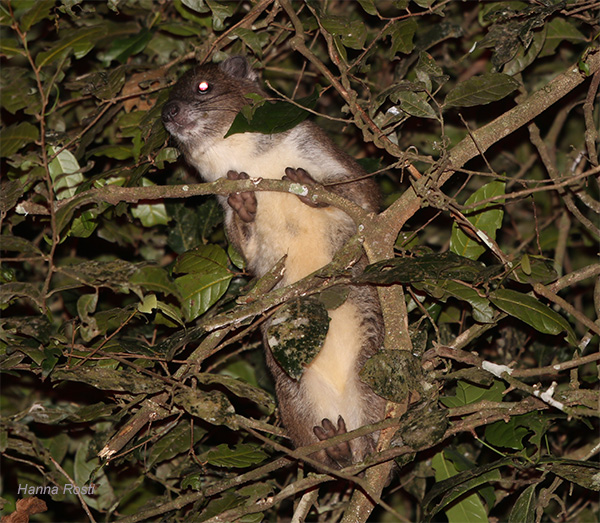
Mbololo dwarf galago is shy, and to my belief only few people, including me and my two assistants (Benson and Darius) have seen it. And these are only photographs of the Mbololo dwarf ever taken.
I sincerely hope that dwarf galago will have a future in Mbololo forest.
Dwarfs in Taita Hills are heading for extinction!
There is less than 10 individuals left in Ngangao forest.
In Mbololo, my rought guess is that there is about 50 individuals left.
Considering how different factors may kill individuals, these include predators, diseases, accidents, inbreeding…
This is not enough for healthy population.
Size of both forest has to be increased.
During 2023 I have done fieldwork in many different forests of East Africa. Comparing these forests to general conditions of forests in East Africa, these are the best forests.
Ngangao and Mbololo are primary forests, and this is very, very rare! Conservation and increase of the forest size should be of highest conservation priority.
Dwarf galago from Ngangao forest, Taita Hills, Kenya
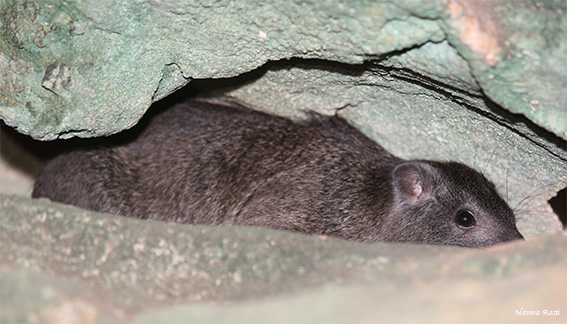
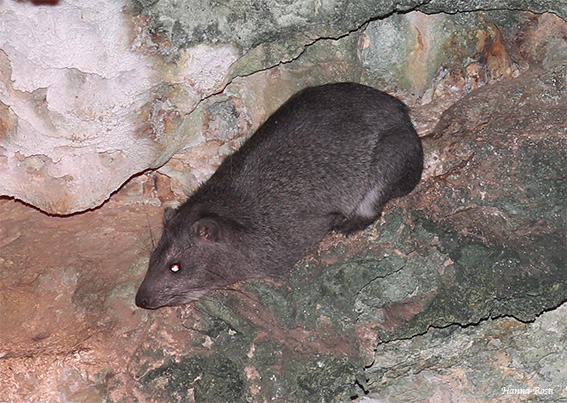
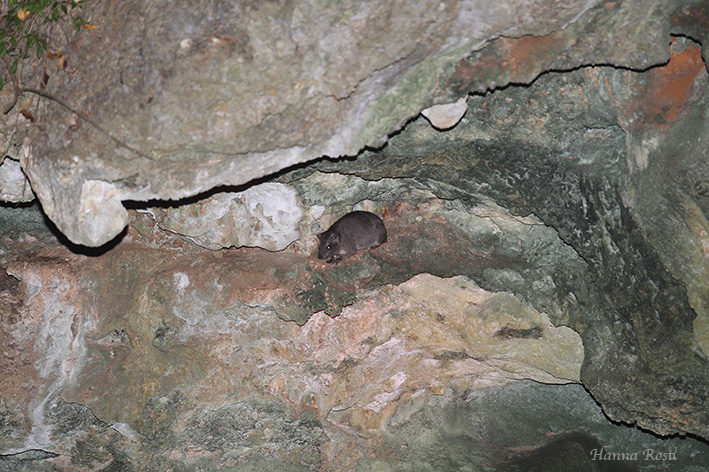
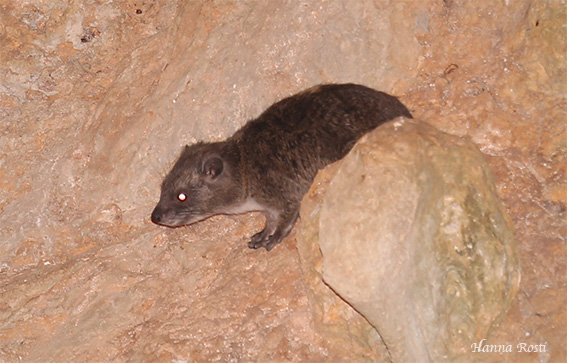
Tree hyraxes eat leaves of trees, thus they are browsers. They are excellent climbers in trees.
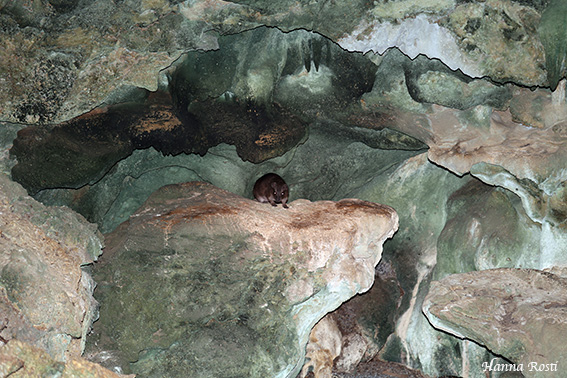
In some locations, tree hyraxes live in rocky formations, and caves.
Short 1 min video of the tree hyraxes living at the coast of Kenya
Tree hyraxes are related to rock hyraxes, that live in rocky formations. Perhaps coming down to rocky formations is not that difficult to tree hyraxes.
These are first photographs and video published (as far as we know) of the Eastern tree hyraxes (Dendrohyrax validus) from Kenya.
You can read the full peer reviewed article from Ecology and Evolution
Tree hyraxes can be found from Shimba Hills National Reserve. However, it is not found throughout the forest.
Tree hyraxes are easy to locate based on their calls. However, seeing them is another matter.
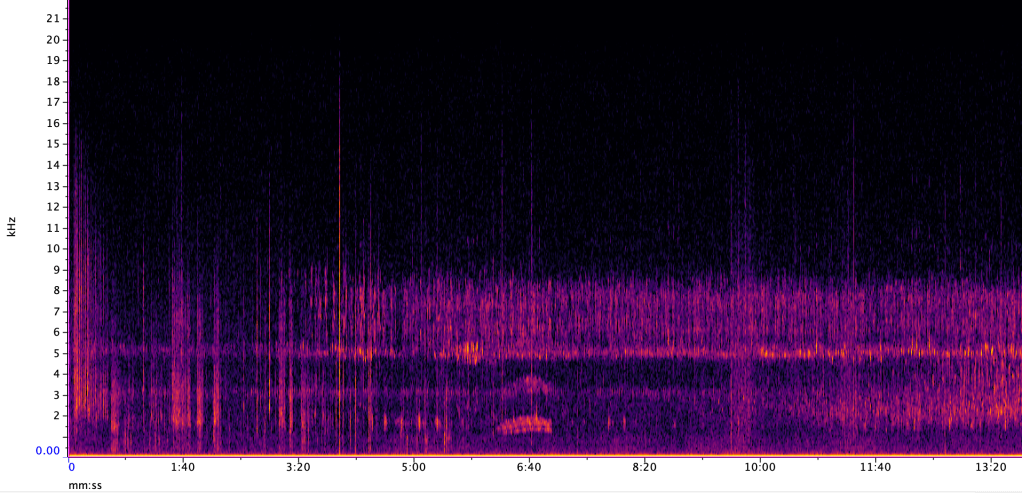
Spectrogram and combination of calls that tree hyraxes at the coast of Kenya are using.
Outside Shimba Hills, only few tiny fragments of forest remain. Tree hyraxes are dependent of moist natural forests. Even though they may be able to survive in small fragments with caves and rock for some time, these isolated populations are doomed for extinction if all forest is cleared.
Tree hyraxes in the caves are social. Also in Simba Hills, I could follow the movement of the tree hyrax group by their contact calls. I suspect that these tree hyraxes, belonging to species D. validus (as fas as we know at the moment), has similar type of social structure as rock hyraxes.
Tree hyraxes (Dendrohyrax validus) from the caves in 2022
Taxonomy and range of tree, bush and rock hyraxes is poorly known from Africa. We hope to collect information of hyraxes based on their calls and location. This information would be very useful in the study of hyrax taxonomy and conservation.
At the moment number of hyrax species is unknown.
If you would like to help us with this citizen science project, you could do following:
Send us recording of hyrax loud calls, phone recording is just fine or WAV of any other common form. With hyraxes loud calls mean that you can hear them loud and clear from a distance. These calls are different for each species.
For example:
Dendrohyrax arboreus calling in Nanuyki, Kenya
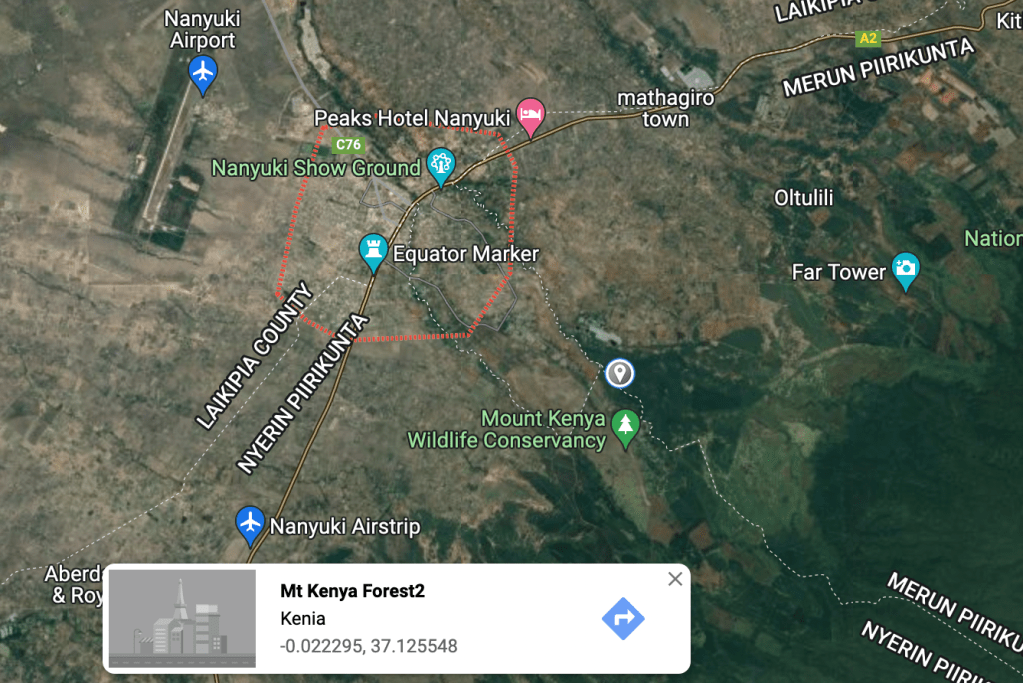
2. Location coordinates e.g. PIN with WhatsApp is great, or like this bellow with Google Maps. When you select location on Google Maps, you can simply share it https://goo.gl/maps/B33tF8Y2oeYnkPq69
With WhatsApp it looks like this, this is excellent way to map a location
3. Time of day, when recording was made
Time is important, as it helps us identify tree hyraxes. If the identification is difficult.
Photos are excellent addition, but not necessary. You don’t need to identify hyraxes, all though if you are certain that they are tree, rock or bush hyraxes it is helpful.
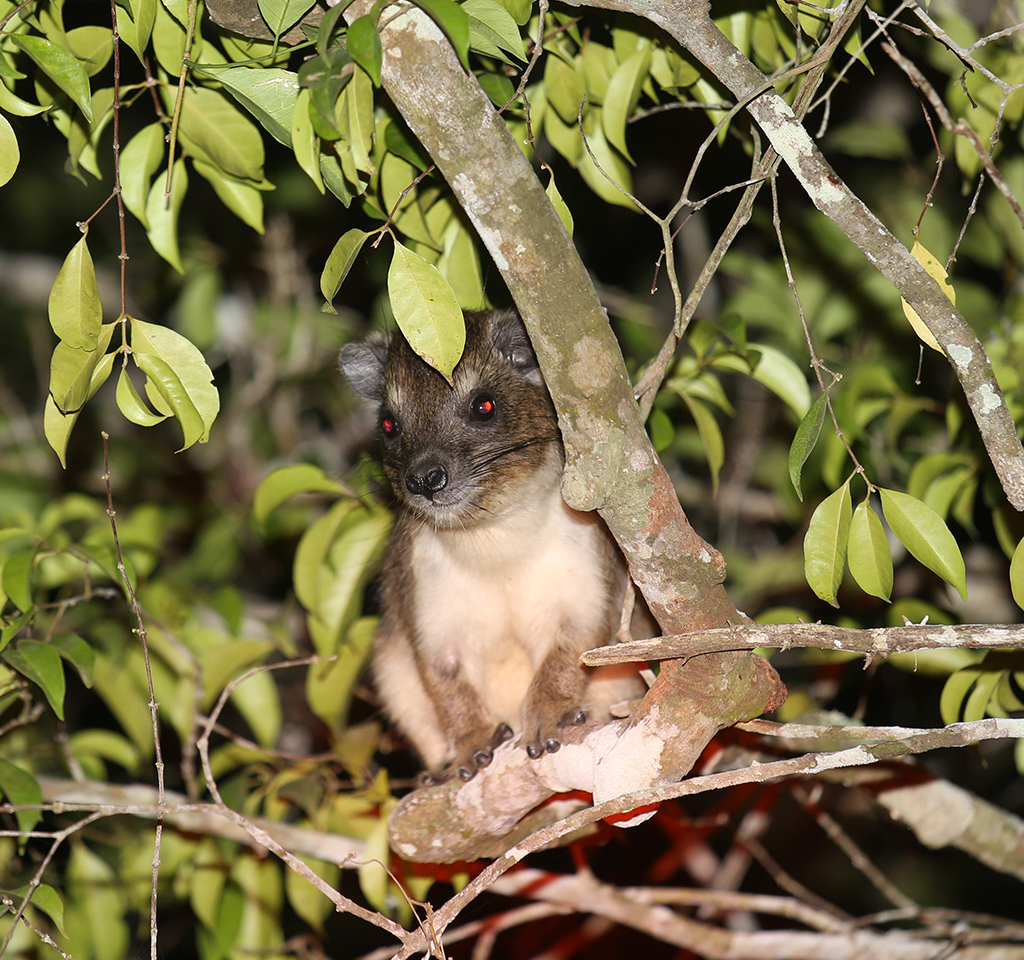
Souther tree hyrax (Dendrohyrax arboreus) can be encountered from South Africa to Kenya, Uganda and Congo.
Southern tree hyraxes live in forests, they feed on leaves.
Southern tree hyrax from Nanuyki, close to Mt Kenya.
Southern tree hyraxes are related to elephants. Very little is known about their lives from the canopies, as they are nocturnal and difficult to see.
Most commonly tree hyraxes are heard. Southern tree hyrax sounds like it’s halloween.
Call and spectrogram of the southern tree hyrax from Nanuyki, Kenya
Call and spectrogram of the southern tree hyrax from Nanuyki, Kenya
Southern tree hyrax is quite adaptable to different forests, it also lives in secondary forests. Poaching is largest threat, it is also hunted by large predator birds.
As a nocturnal animal, it mostly sleeps during the days. Tree hyraxes may also come to bask in the sun during the day.
If not disturbed by humans it will also seek safety under the roofs of warehouses.
They have also many social calls. Group is formed by more tightly bonded, and most likely related, females, and males that live on the outskirts of female group. There is hierarchy in the group between males and between females.
See and listen how chorus of tree hyraxes change into chorus of birds. This is recorded in Ngangao Forest, Taita Hills, Kenya on 8.1.2022 with SM4 recorder.
How many different animal species can you hear from this recording?
This is spectrogram video filmed from screen. It shows how spectrogram goes in Raven Pro software.
From this sequence you can hear how wide range of calls are used by tree hyraxes.
This spectrogram also shows how different species have adapted to use different frequencies to avoid acoustic competition.
At first forest is full of tree hyraxes. Tree hyraxes are related to elephants and they live in trees eating leaves. Their calling activity is incredible. These animals are almost unknown to science, as they are so difficult to study.
As tree hyraxes quiet down, as sun begins to raise, morning chorus of birds begin. This happens in January in Taita Hills about 5.45 in the morning.
Two remaining “larger” forests in Taita Hills are Mbololo 180 ha and Ngangao 120 ha. Taken together these forests are only three square kilometers in size.
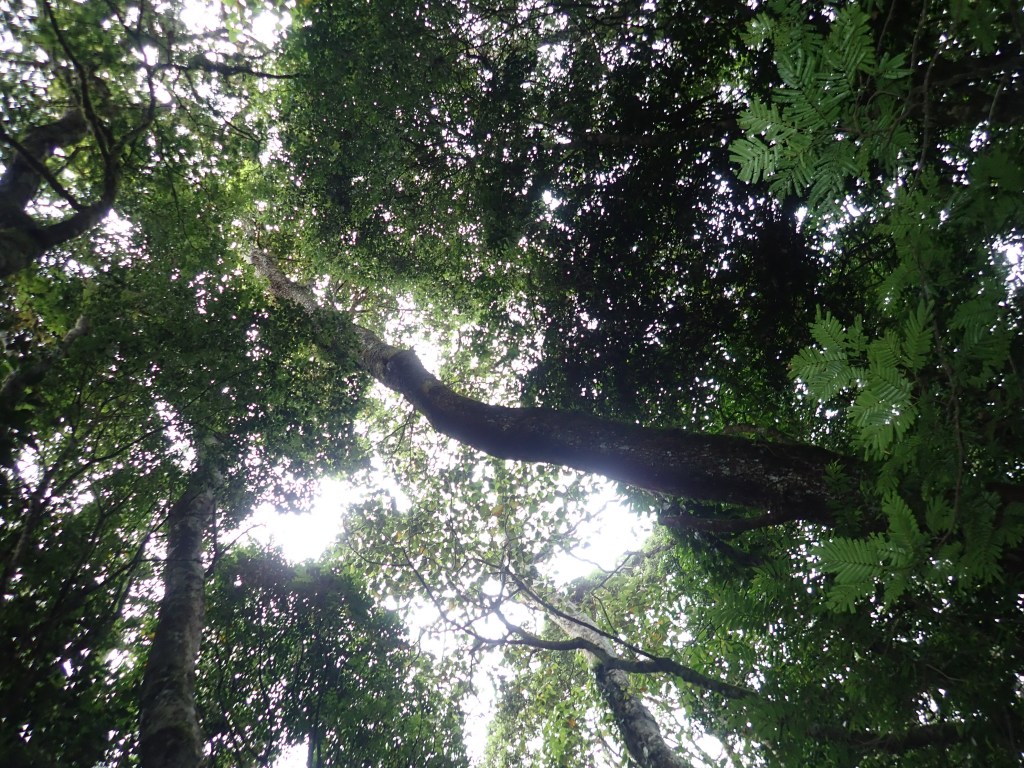
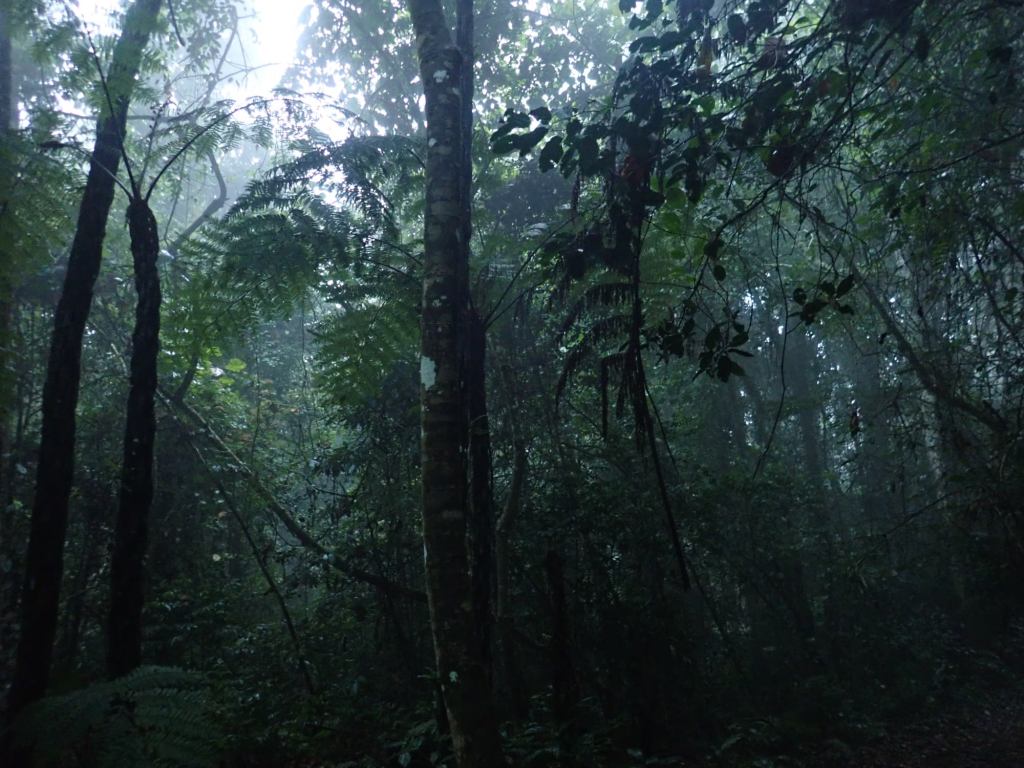
View to the canopy in Mbololo Forest
But they are full of amazing forms of life. Many (most) of them critically endangered, as their habitat, indigenous cloud forest has been almost entirely lost from Taita Hills.
These remaining forests could be made national park, as their biodiversity is astounding. Value of these forests as water towers and biodiversity hot spots are priceless.
Threats for Ngangao and Mbololo Forests
Even thought these forests have been conserved in some level they do still deteriorate due to human activities: harvesting of firewood, some (not much) illegal logging, and poaching.
Reduction of rainfall. Previously large cloud forests would draw and collect moisture, and this rainfall would deliver water to large areas surrounding the Taita Hills. Now these small forest fragments don’t have that kind of rainfall pull they used to have.
Edge effects, these are tied to both previous reasons for the deterioration of the forests. As these forests are small, and particularly Ngangao is very narrow, the forest that remains most intact, protected from edge effects is small. People come in from the edges, and this is where most damage is done.
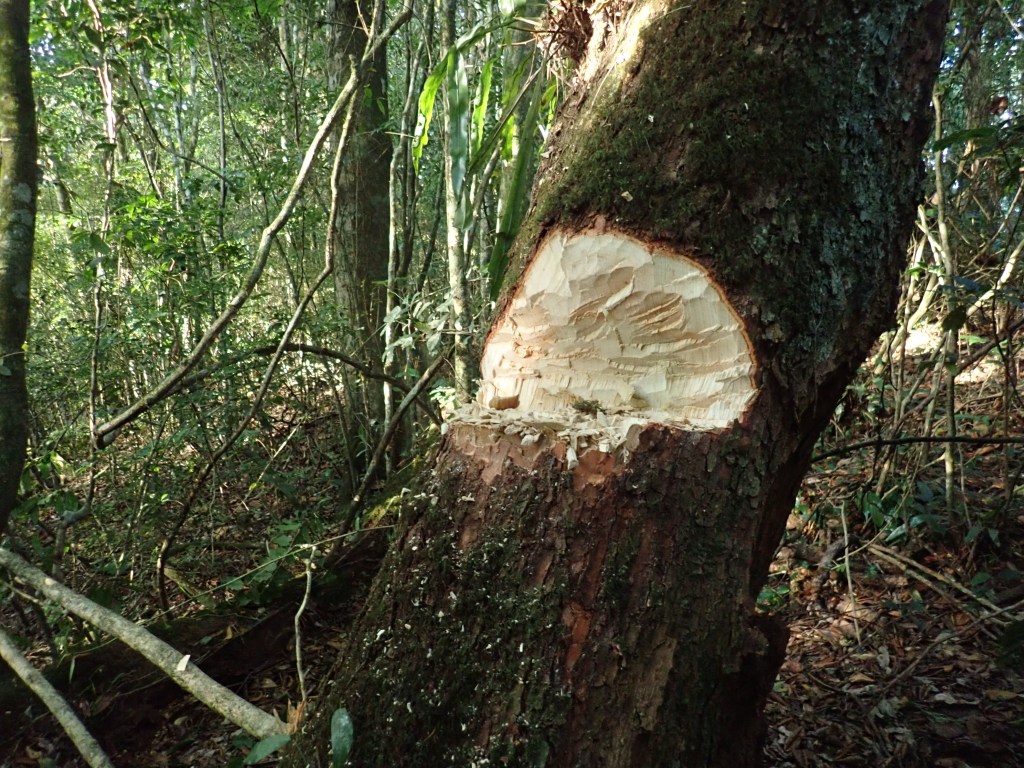
Ocotea usambarensis tree being cut illegally in January 2022. This tree doesn’t reproduce anymore in Taita Hills. It may have lost its pollinator. Only few Ocoteas remain in Taita Hills, as timber is very valuable and bark has medicinal properties.Ngangao Forest from Google Earth satellite image in April 2022. Forest is narrow, and only about 100 meters wide in the most narrow parts. Forest animals are isolated to this forest like island in the sea. They have no changes of dispersal to the other forests. It is possible that forest will simply dry out.
Means for conservation:
Increasing number of indigenous trees in all Taita Hills. Naturally increasing the size of the forest would have biggest impact, but any and all indigenous trees growing in local peoples land would be important addition.
Protection of the forests from firewood collection. It is very difficult to draw the line what is too much firewood collection. These forests are in such a state, that they should be conserved entirely. There are other means of cooking available. Sometimes firewood collection may be consequence of poverty, but to my understanding in these days it is more often result of doing things the way they were done before, some dishes taste better when cooked with wood (at least that is what people believe).
Increase in ecotourism. If these forests are conserved with their amazing species, galagos, tree hyraxes and endemic birds, they can be magnificent source of income to local people. This could provide number of different job opportunities. I have written a article about that: Enigmatic nocturnal mammals of Taita Hills and their potential role in sustainable eco-tourism Naturally, if these forests and their animals are lost, so is the opportunity for ecotourism.
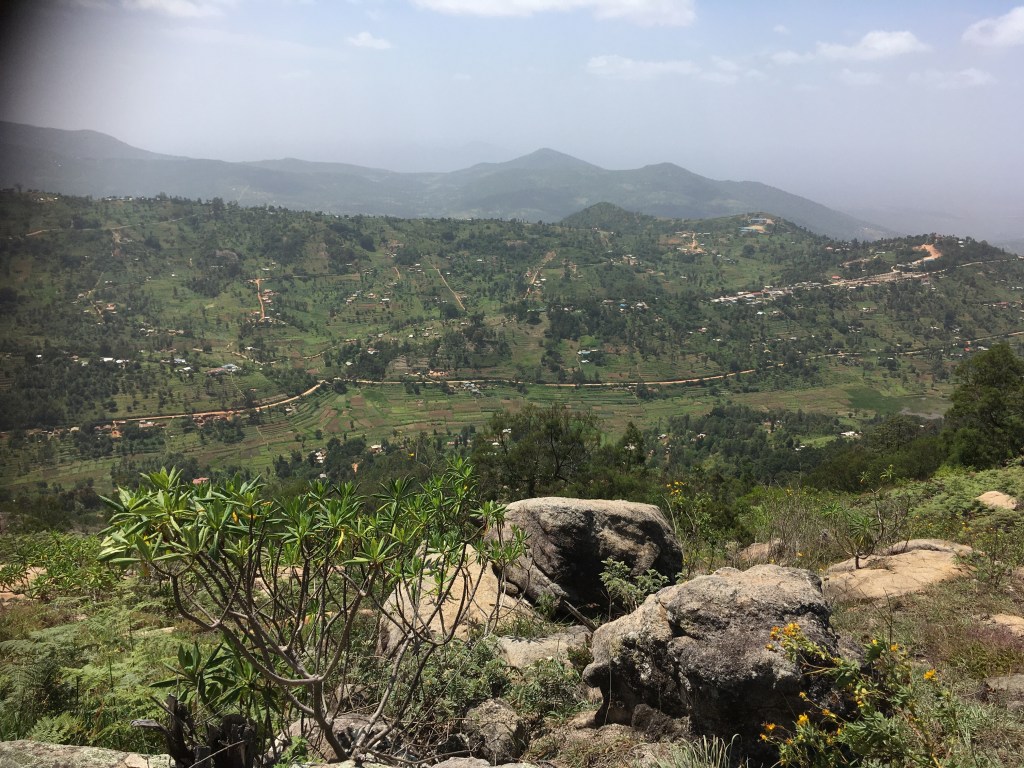
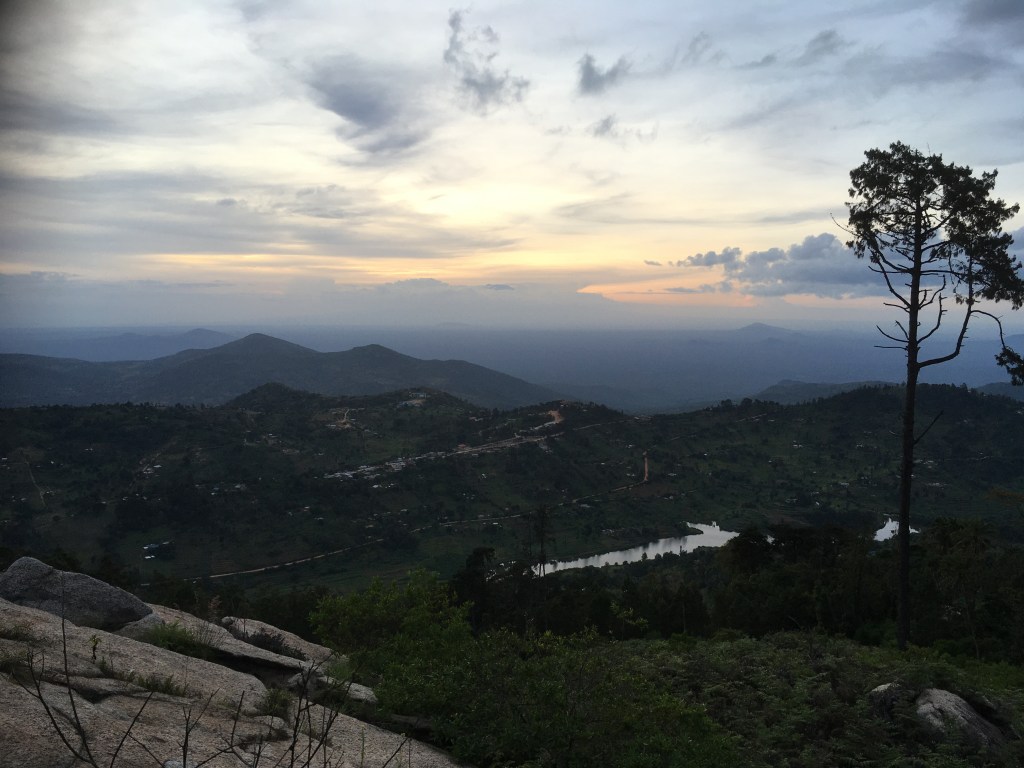
View from top of Nganagao Forest. All these hills used to be covered with 30 million year old forests.
Biodiversity hot spots
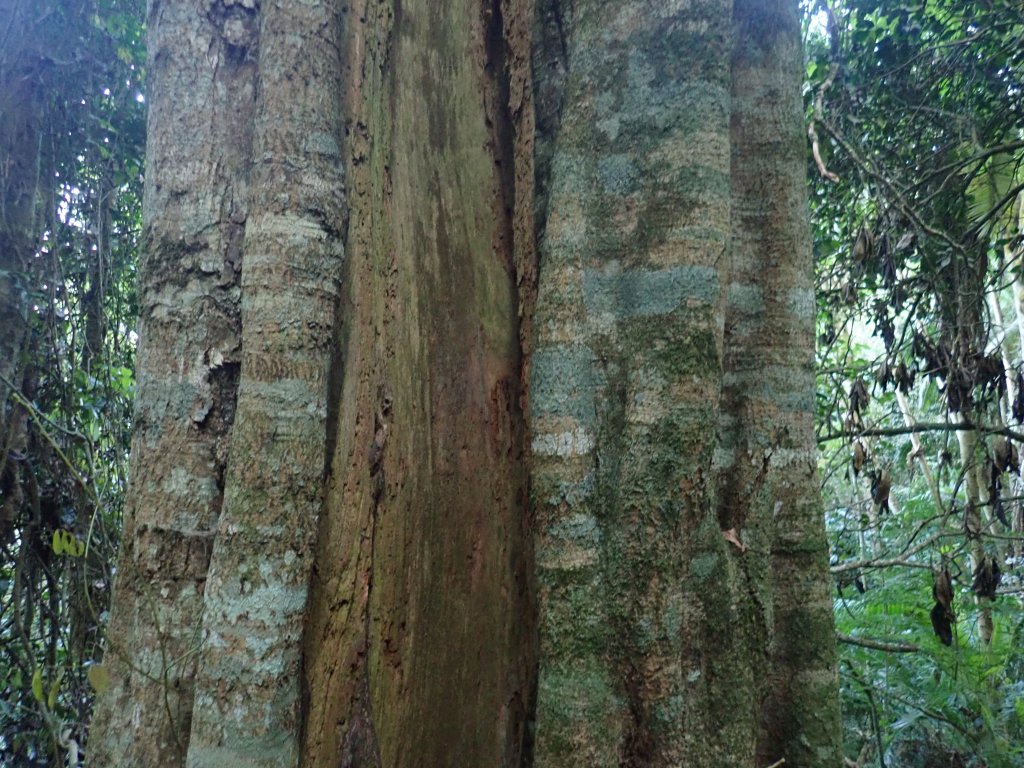
Biodiversity of fauna and flora in the Mbololo and Nganago forests is perhaps higher than anywhere else in the world. Gigantic trees, eg. Pauterias can reach 50 meters.
Key tree species in these forests are e.g. Tabernaemontana stapfliana, Pouteria adolfi-friedericii and Macaranga capensis.
Trunk of Pouteria adolfi-friedericii
These trees support life in all their levels and these forests are like cities with skyscrapers where each floor have their own inhabitants and families.
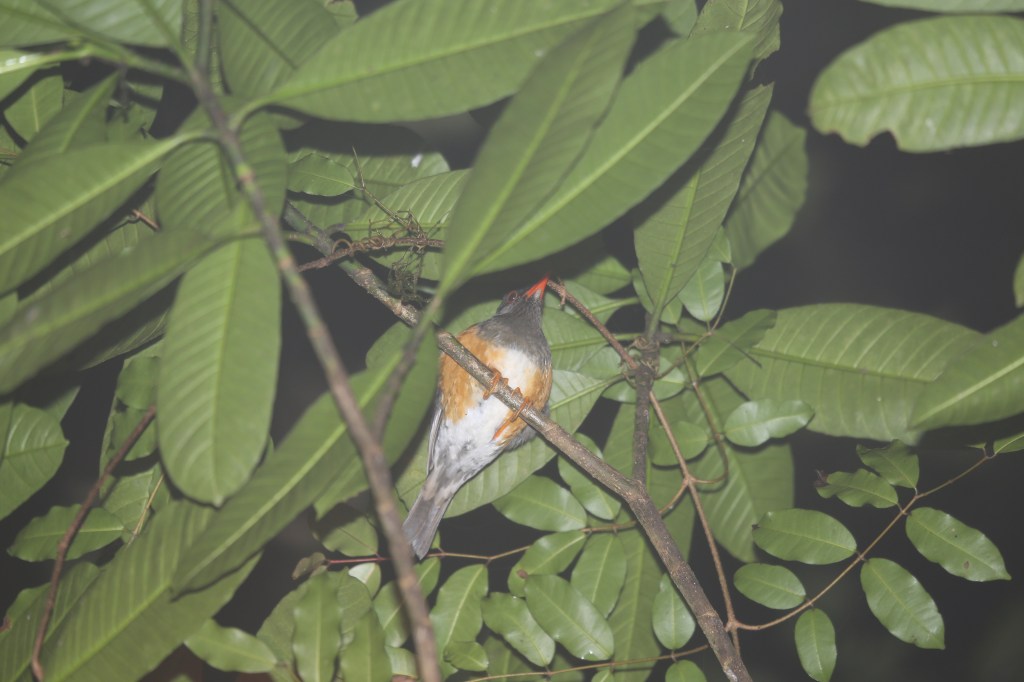
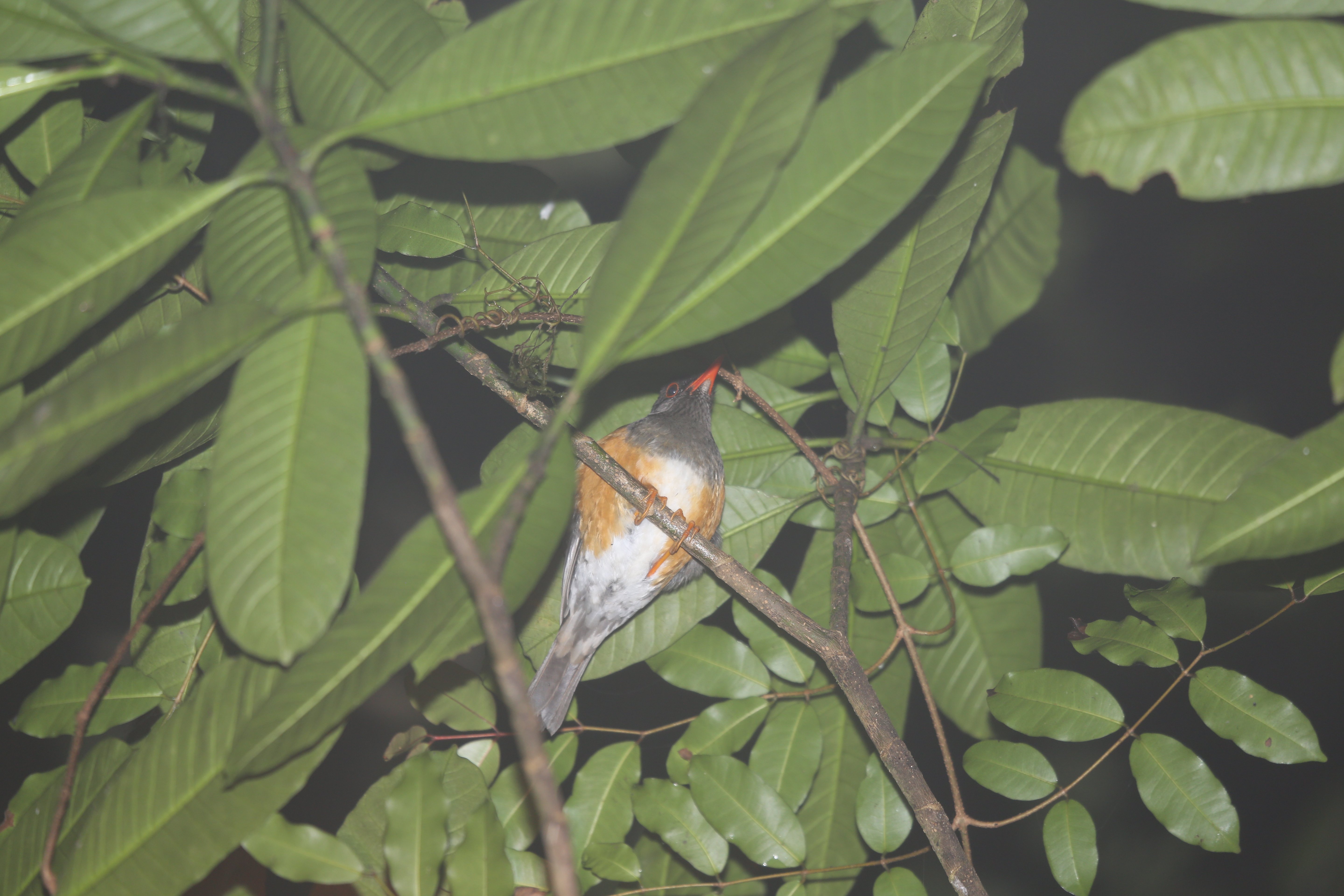
Taita Hills is famous of the endemic birds, these include Taita trush and Taita apalis. Unfortunately especially Taita apalis is declining.
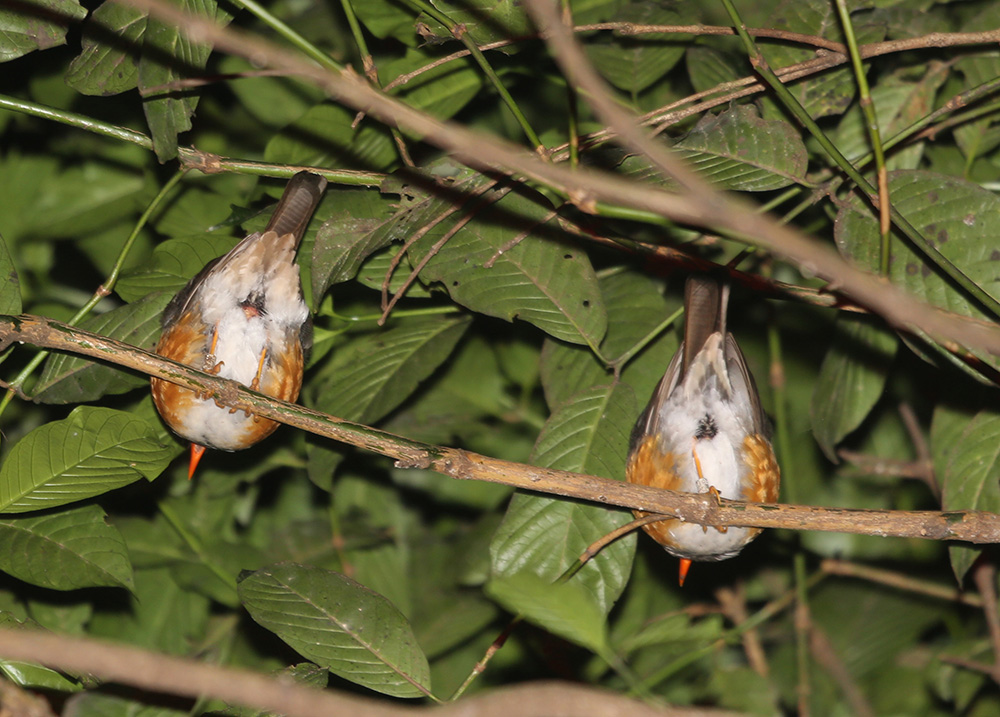
Taita trush at night
Harlaubs turaco is commonly seen and even more often heard in the forest. With its black and red colouring and calls that I often confuse with sykes monkeys calls it is fascinating bird.
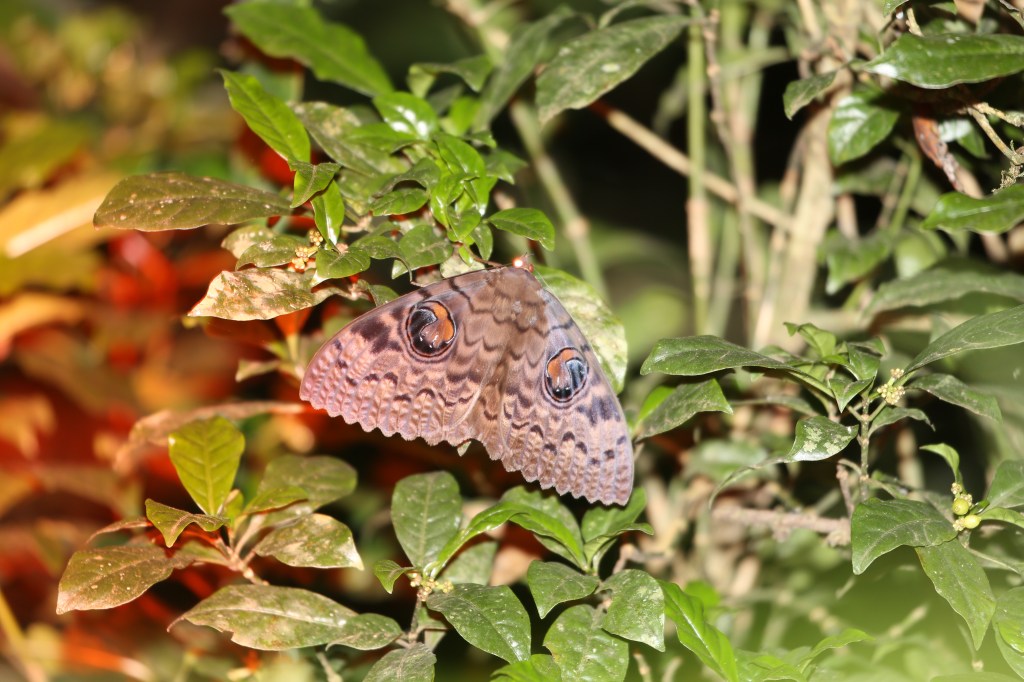
Butterfly and moth biodiversity is also amazing. Ngangao peaks are amazing sites to follow butterfly topping. Butterflies, some large like birds, in all colors fly playfully competing with one another over the top over and over again. That is truly fascinating to watch.
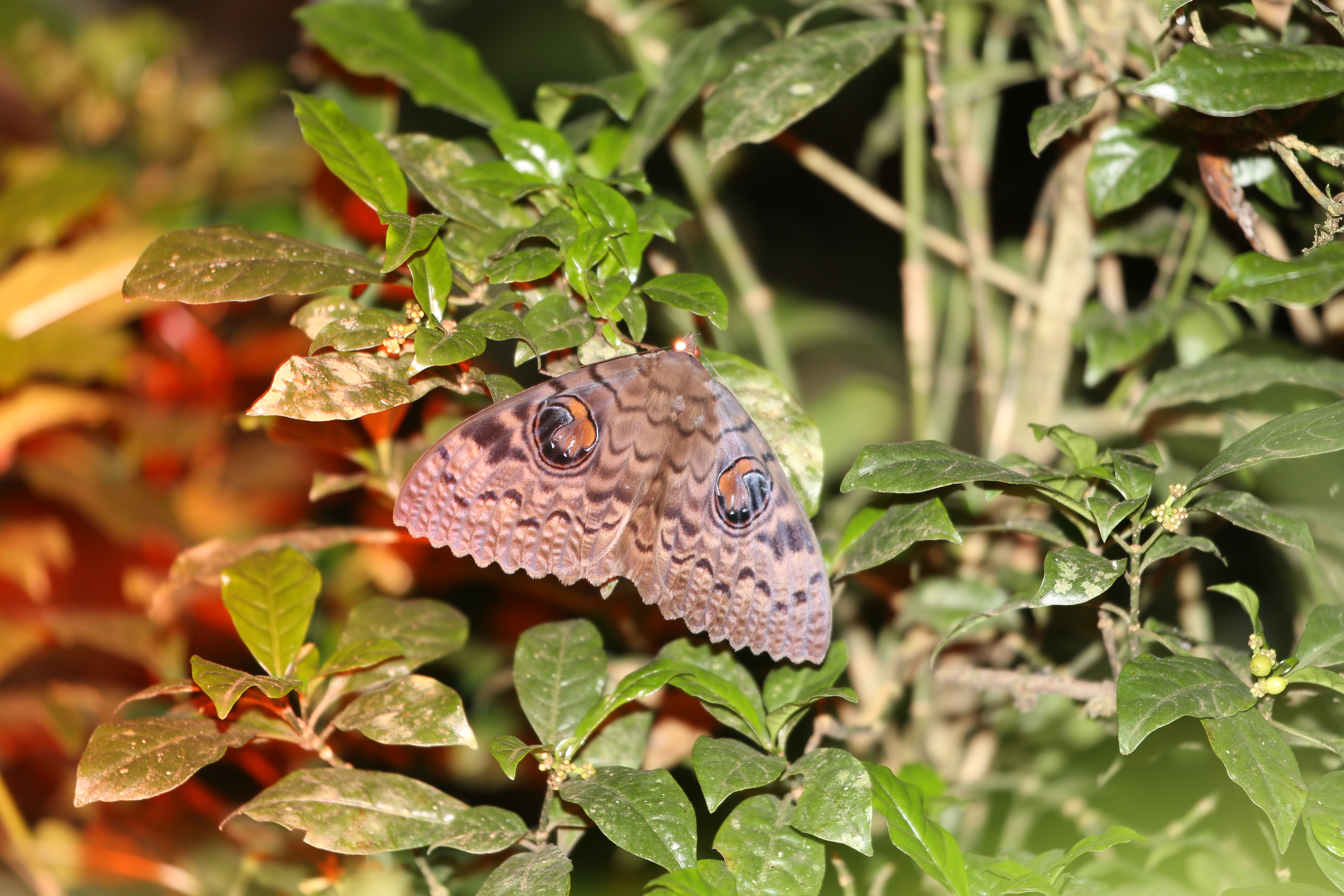
Erebus walkeri, large moth that lives in Mbololo and Ngangao
Biodiversity of nocturnal mammals
Nocturnal mammals, that no-one can not avoid to hear in the forests of Taita Hills are Taita tree hyrax (Dendrohyrax sp.) and small eared greater galago (Otolemur garnettii).
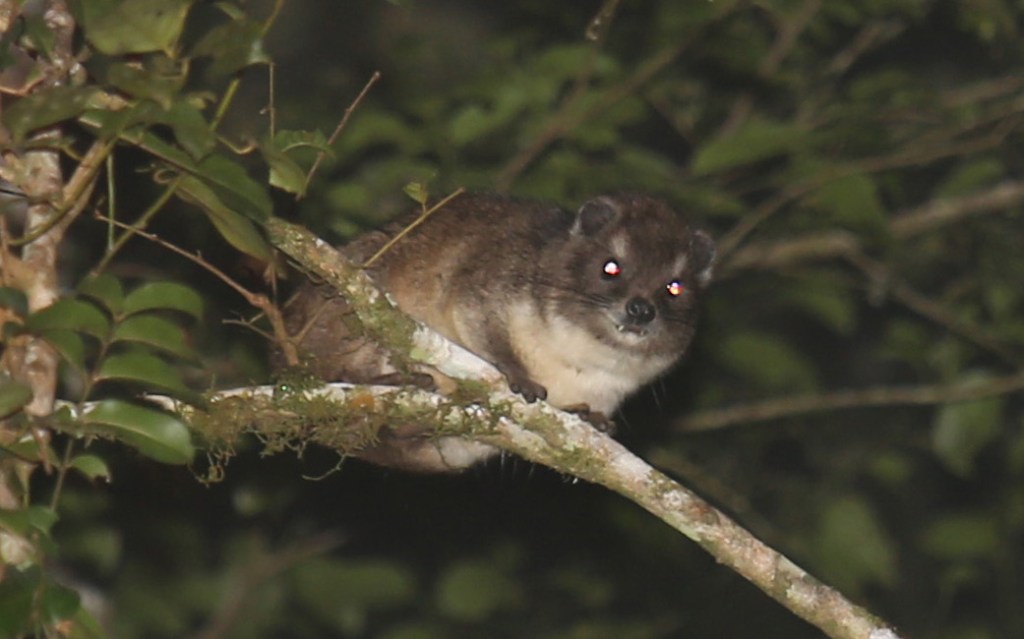
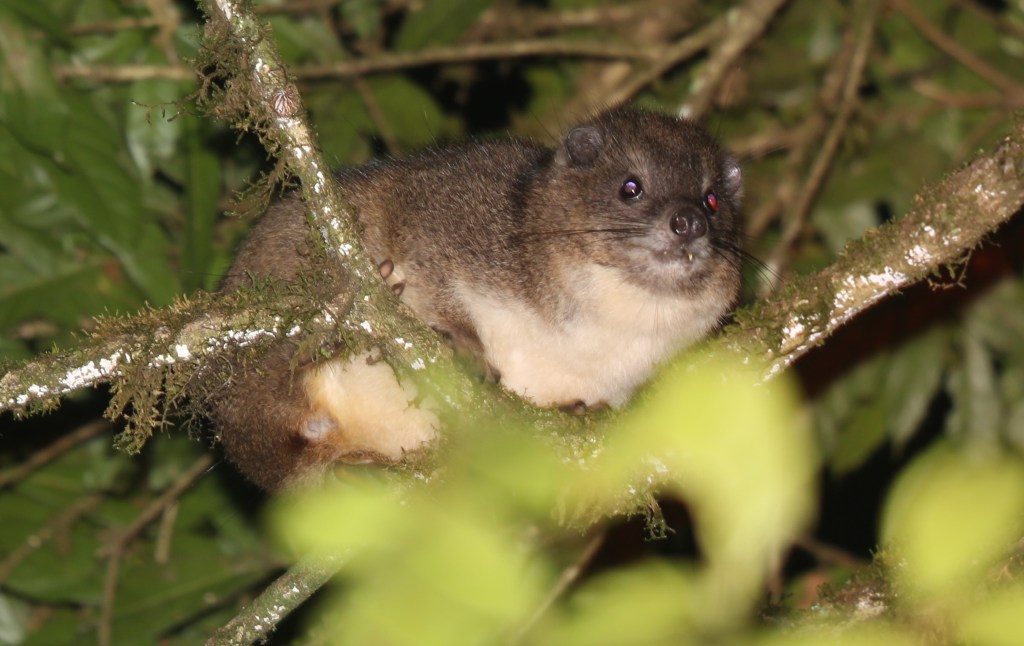
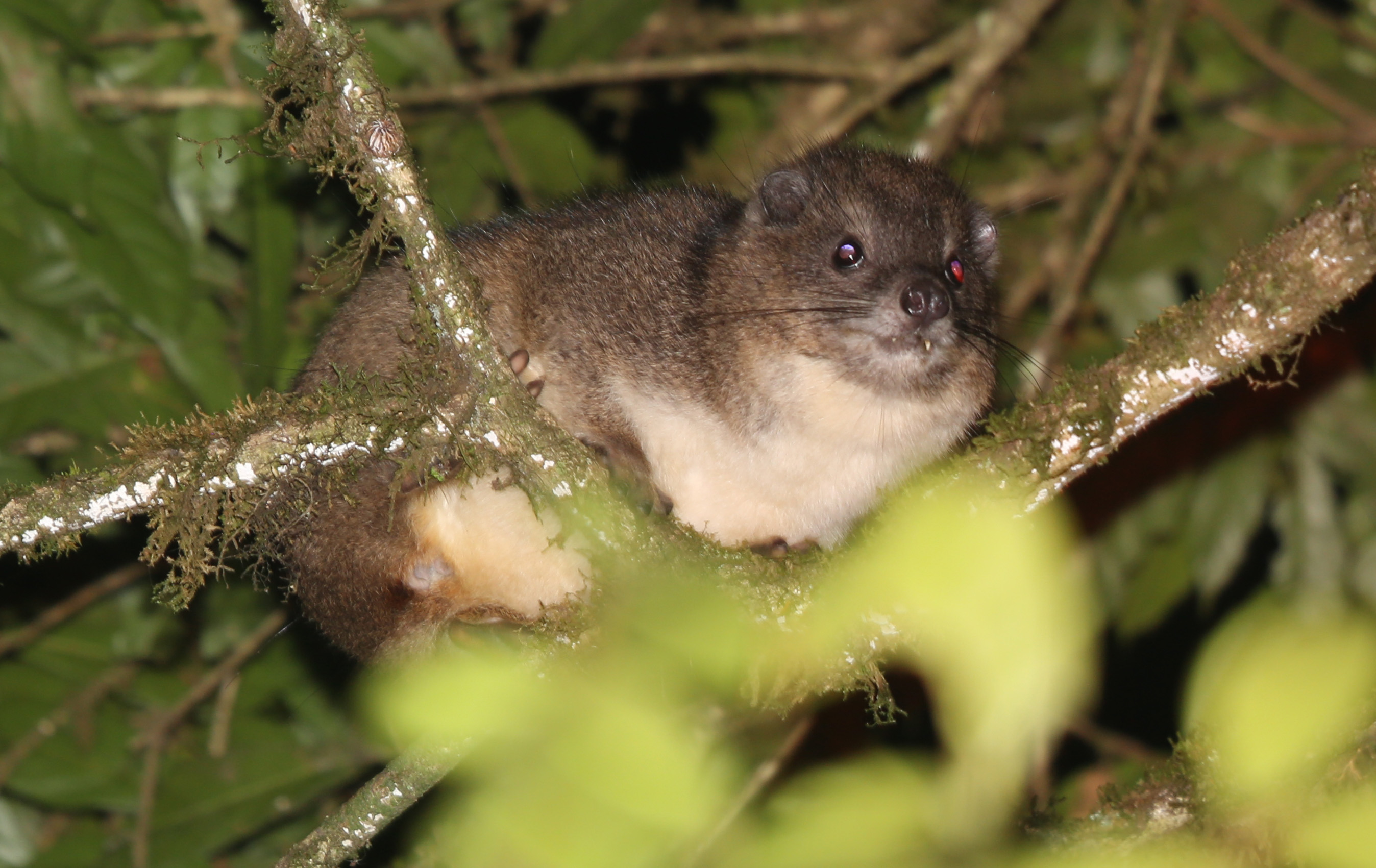
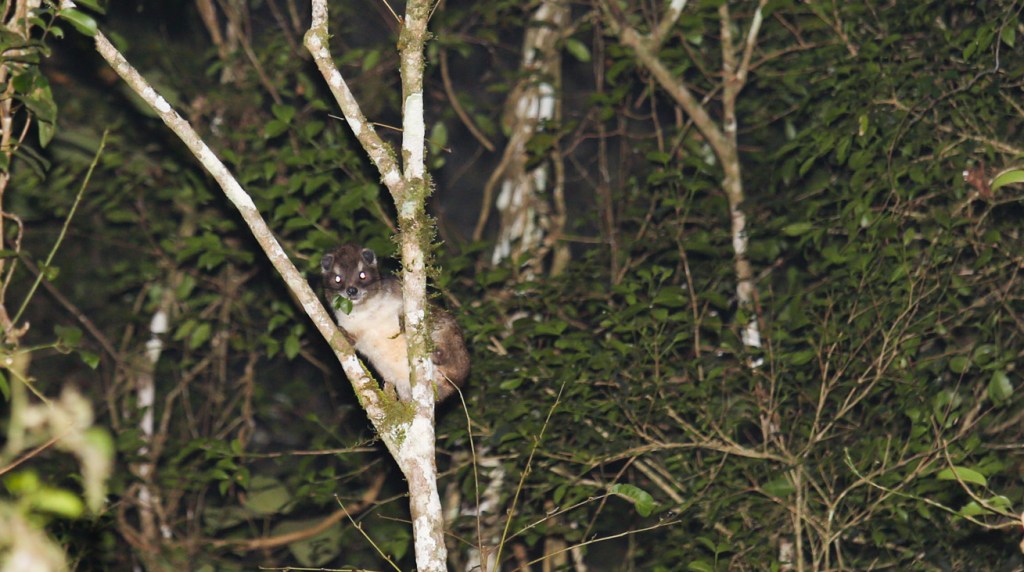
Sweet and special – Taita tree hyrax from Mbololo
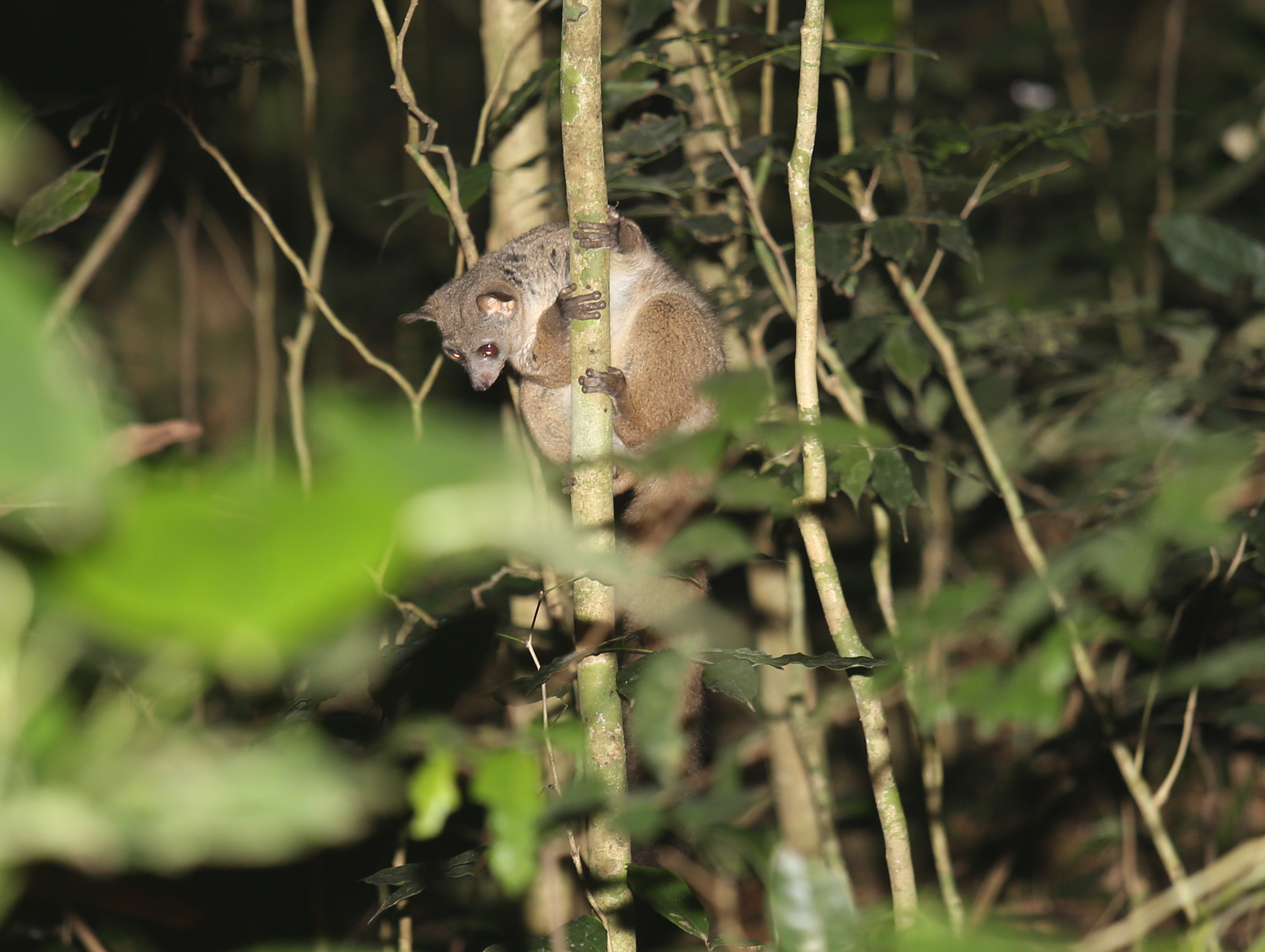
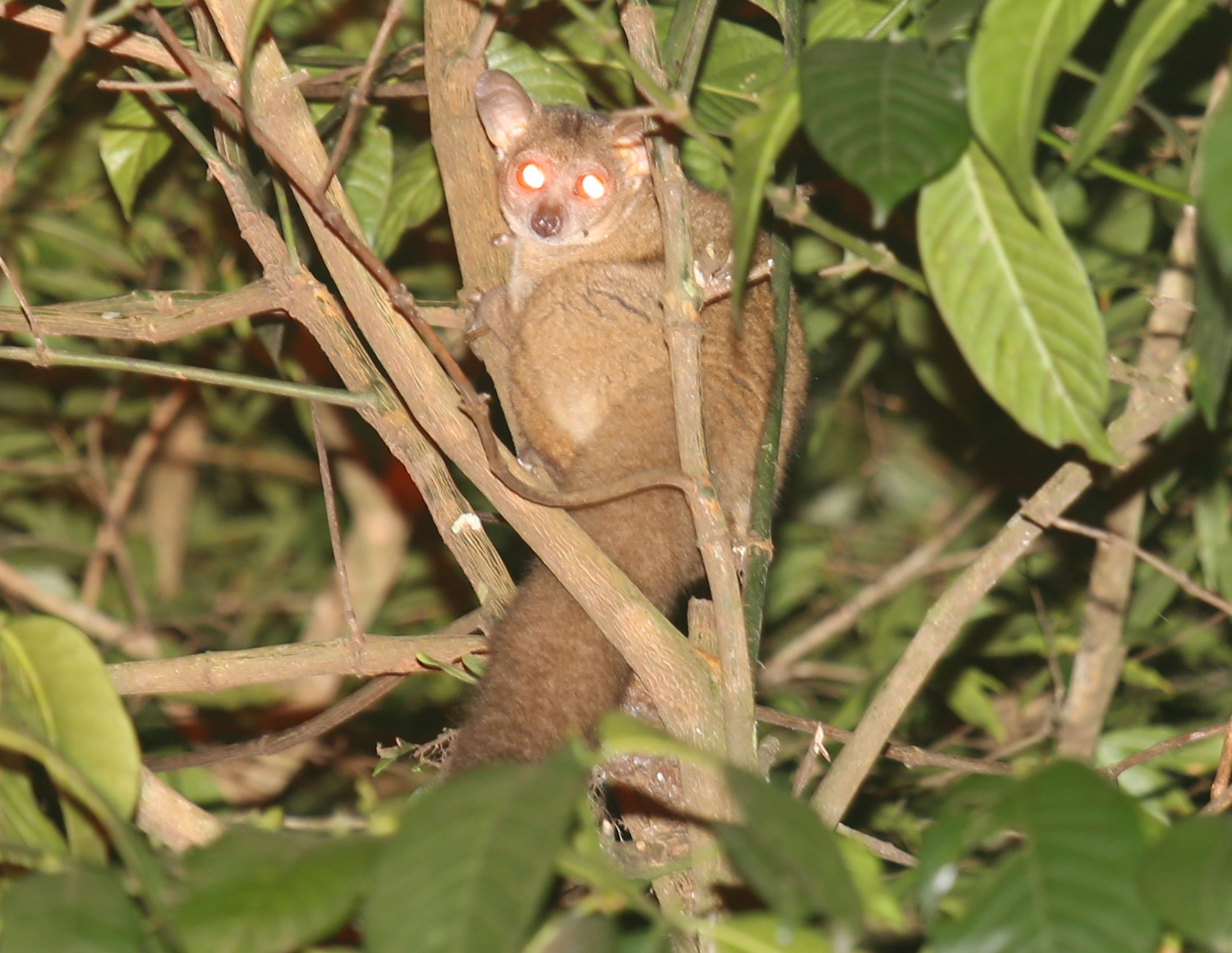
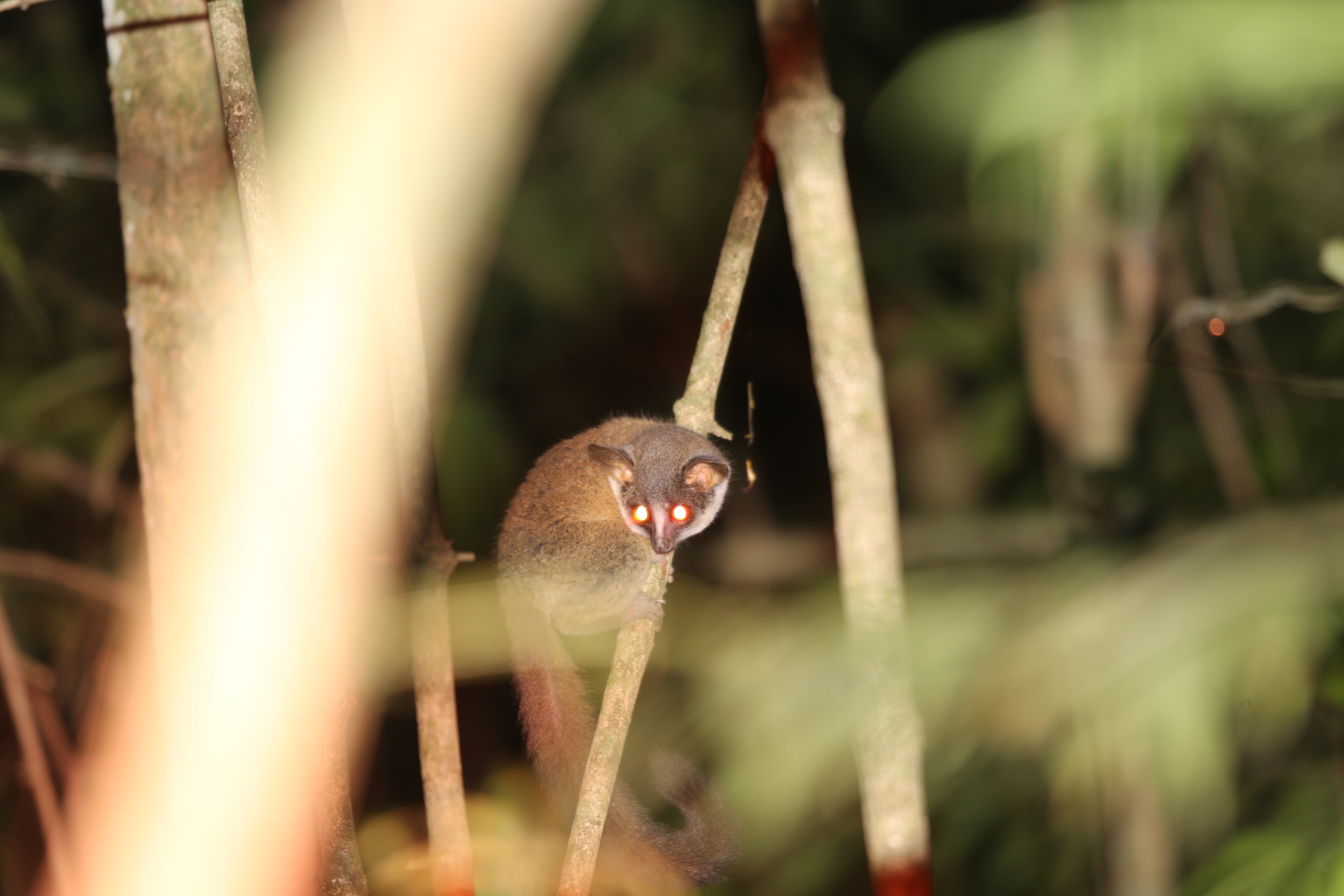
Dwarf galagos are incredible insectivores living in Ngangao and Mbololo forests. They may new species for the science. They may be differents species in Ngangao and in Mbololo forests.
Dwarf galago from Ngangao Forest, where less than 10 individuals are trying to survive.
Greater galago has adapted to live in villages and gardens, and it is easy to see. Interestingly greater galagos in Taita Hills have great variation in their coloring, some individuals are whitish with white tail and many of them are dark with black tip in the tail. There are also differences in the size and behavior.
Taita tree hyrax is very likely still officially undescribed species for the science. Its striking calls begin in the evening at 19 and ends at 06 in the morning.
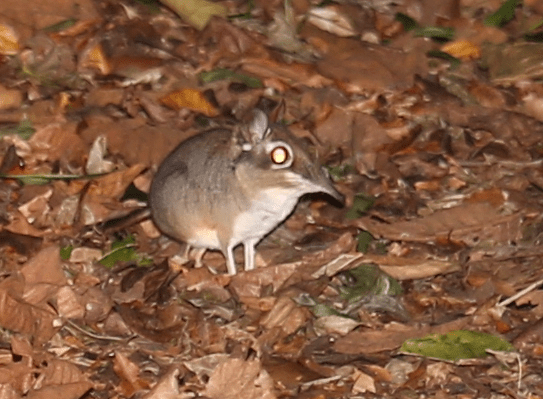
Sengi is in danger and almost extinct because it is easy pray for the dogs. January 2022.
The most interesting time to be in the forest is dusk and dawn. At those times one can observe change of sift between diurnal and nocturnal animals. Especially at dawn this moment is simply magical with first rays of light penetrating to the foggy cloud forest.
Mbololo Forest at dawn
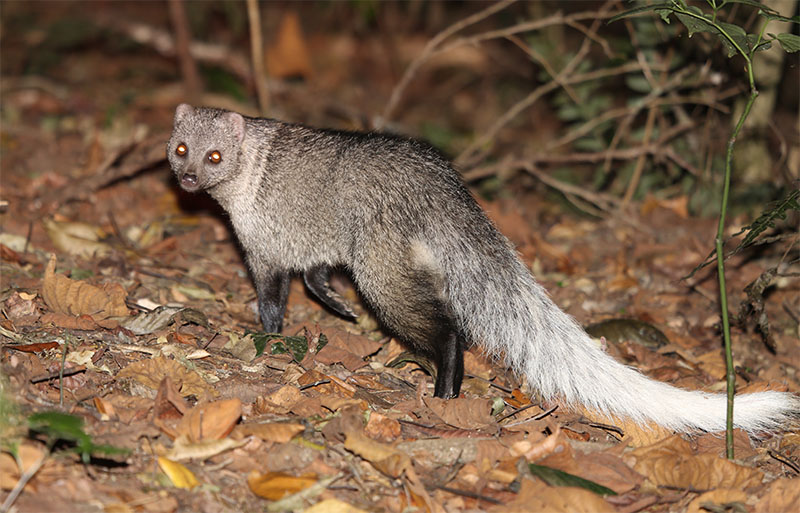
Other nocturnal animals, that are more rare and more shy, are dwarf galagos (Paragalago sp.), genet, white tail mongoose and suni antilope.
Hanna Rosti, Janne Heiskanen, Simon Bearder, Petri Pellikka and Jouko Rikkinen
Dwarf galago (Paragalago sp.) from Ngangao Forest in January 2022Spectrogram from incremental call from NgangaoMbololo dwarf galago, Paragalago sp. Photo Hanna Rosti, September 2021.
Calls from Mbololo Paragalagos:
Spectrogram from Mbololo ParagalagoParagalago cocos, Diani beach. Photo Hanna Rosti September 2021.Spectrogram from Paragalago cocos from Diani beach
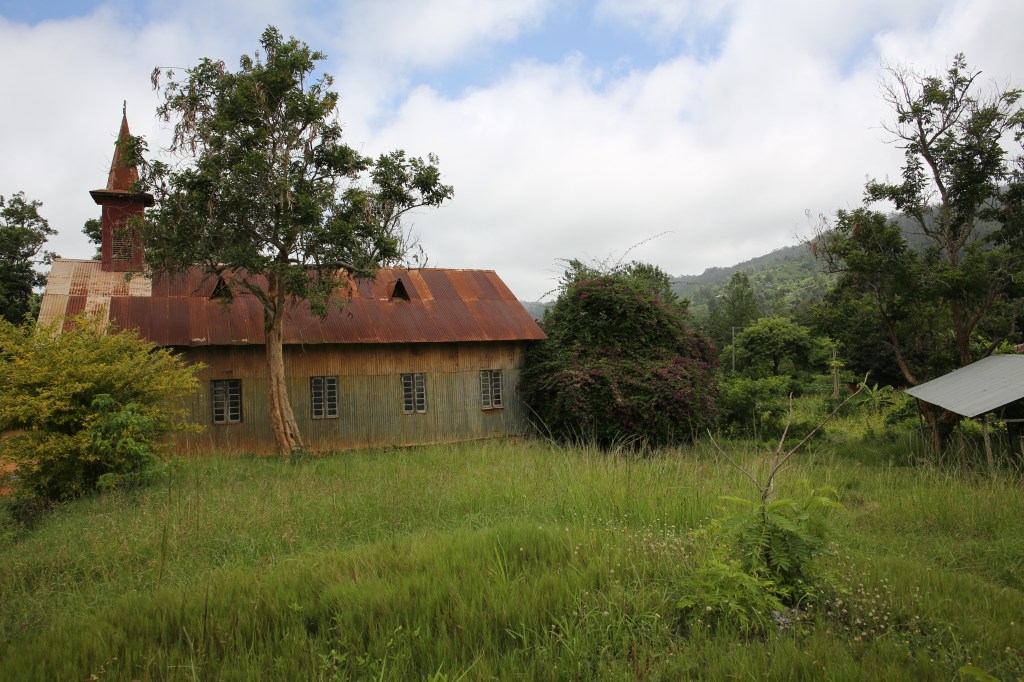
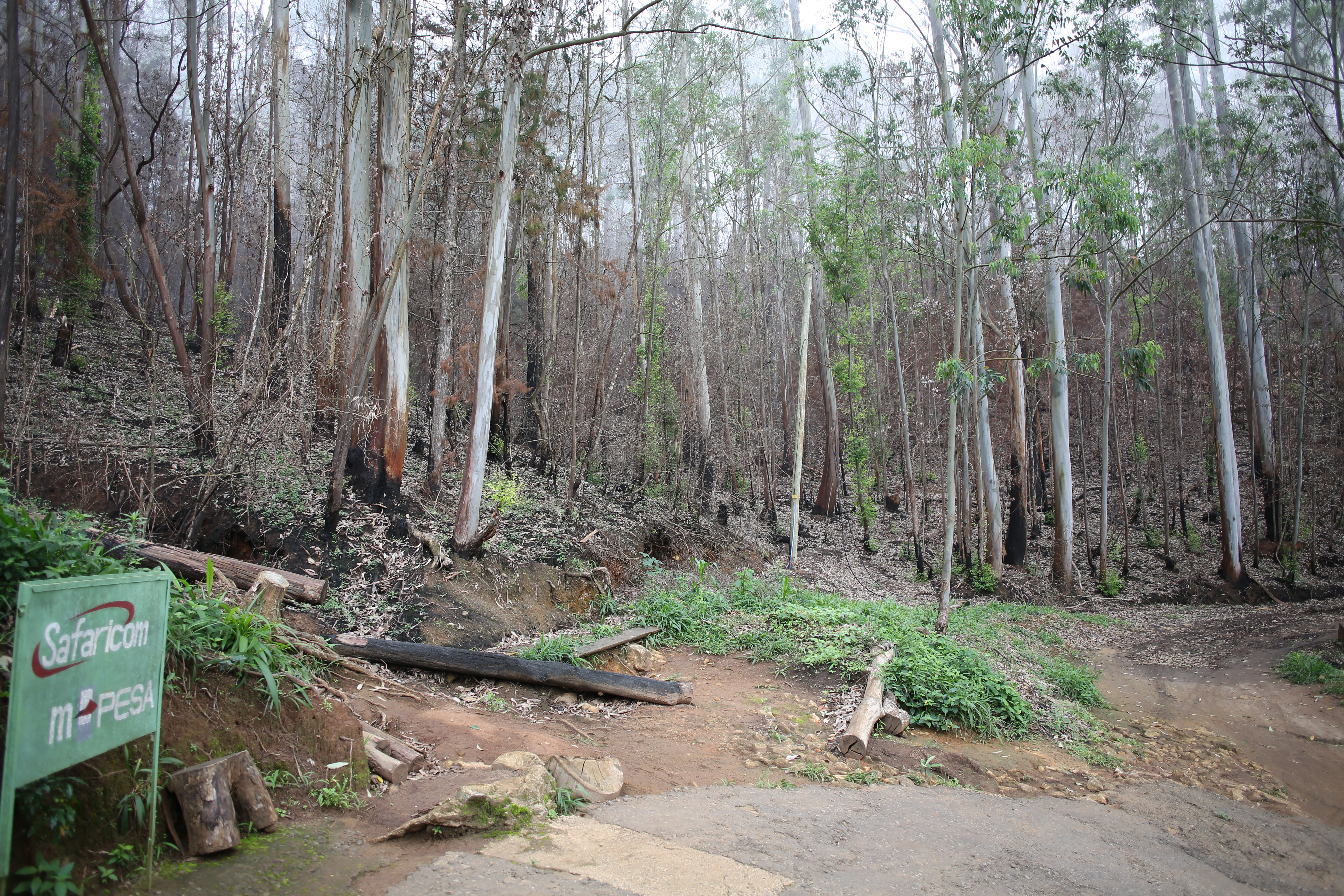
I visited Sagalla on 13.1.2021 with Benson Lombo and Peter Mwasi. We were looking for tree hyraxes. We didn’t find any tree hyraxes, but we came across a sad ecological disaster.
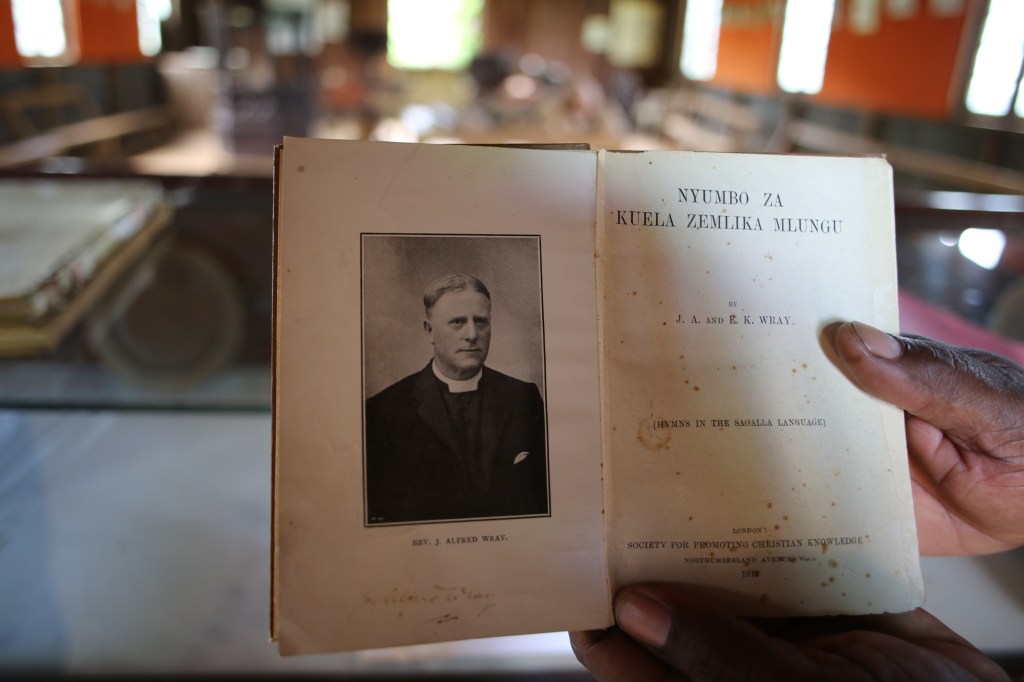
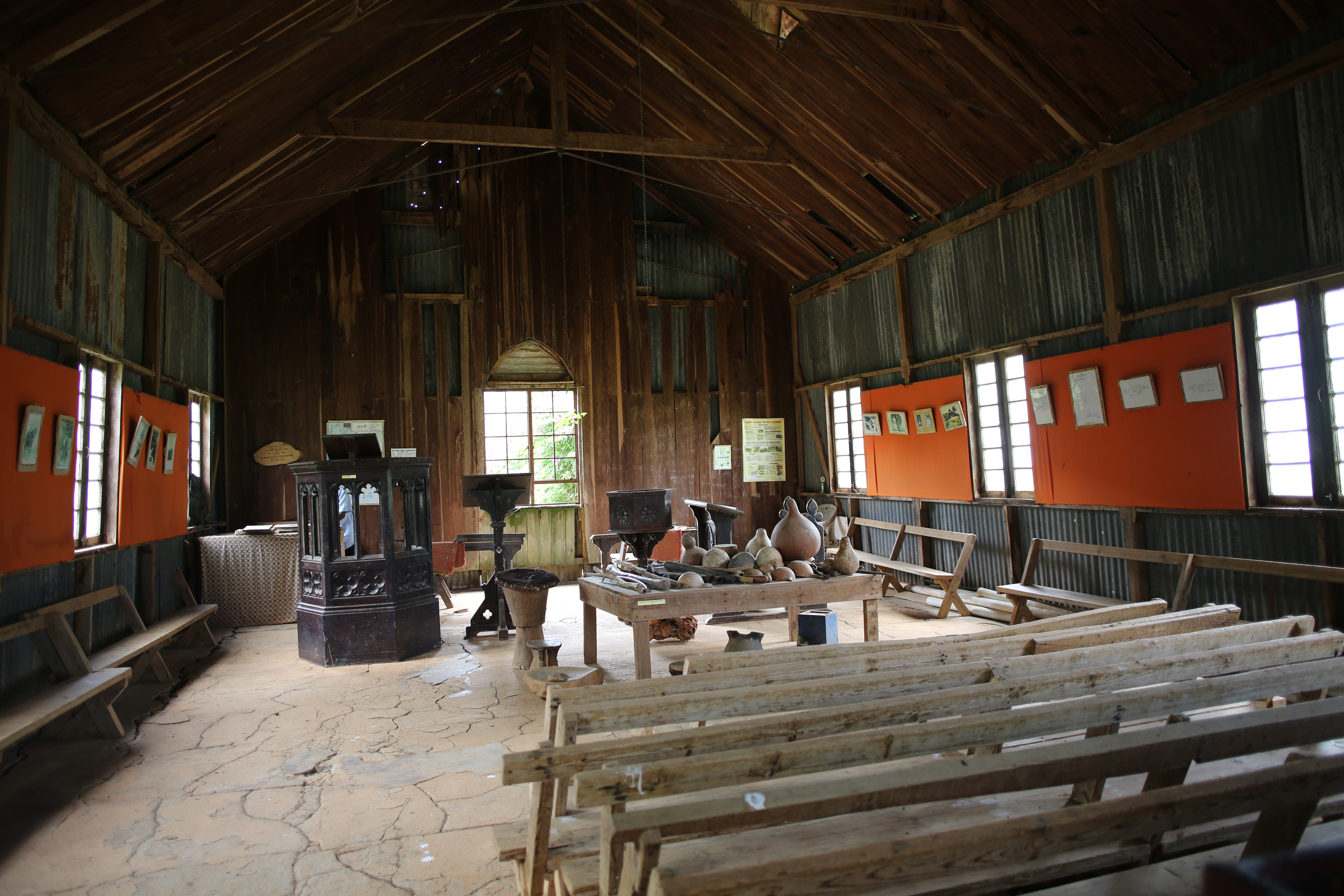
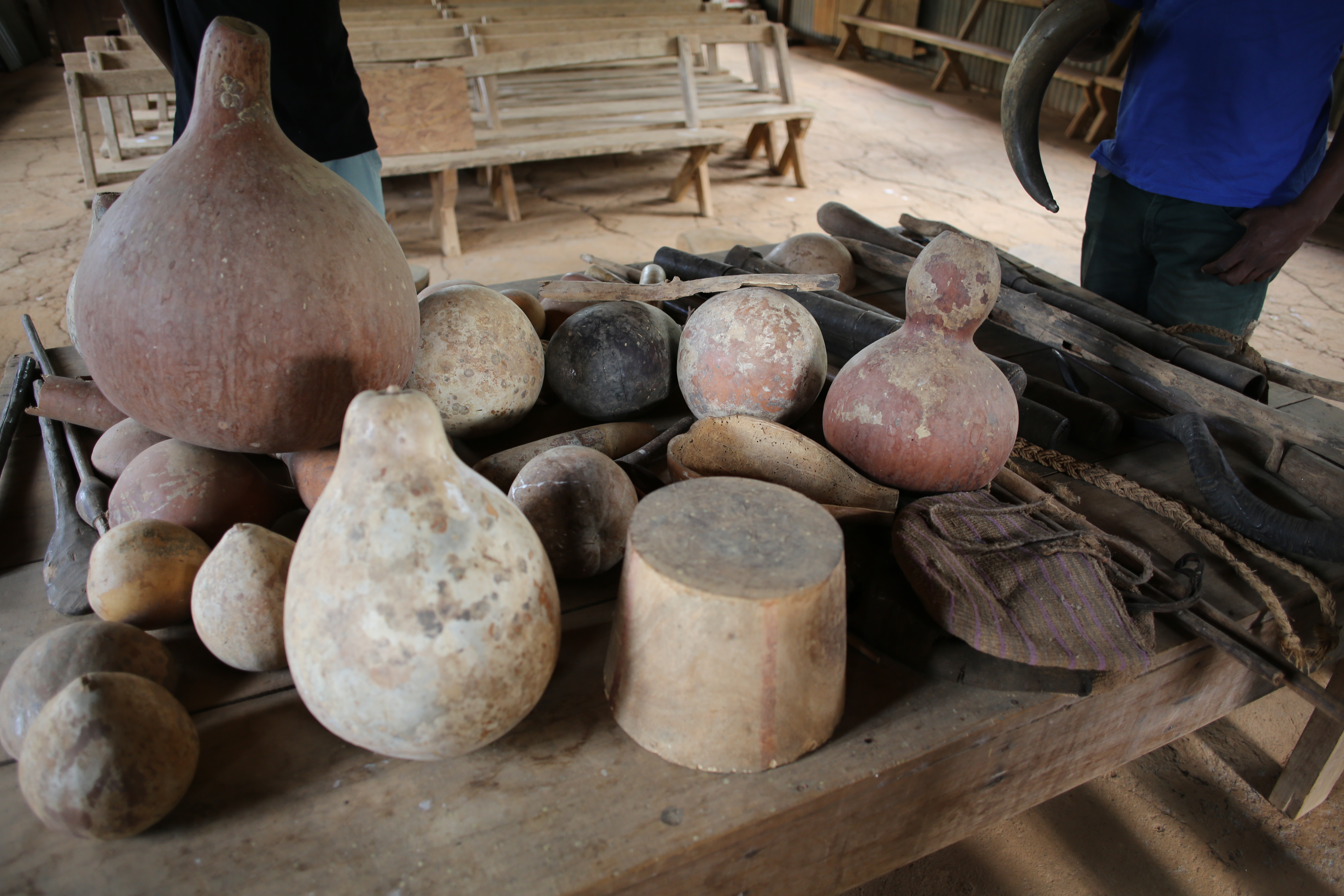
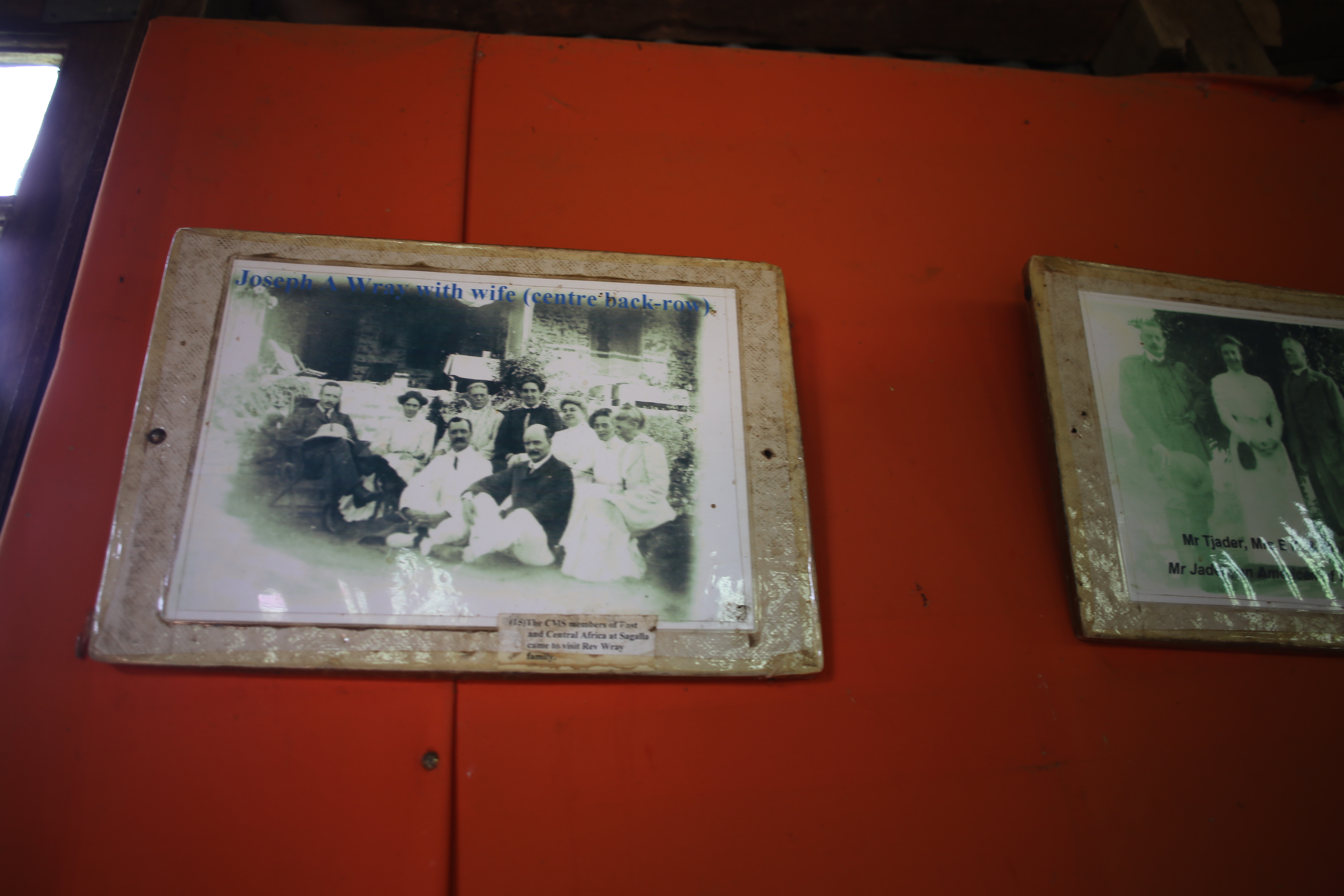
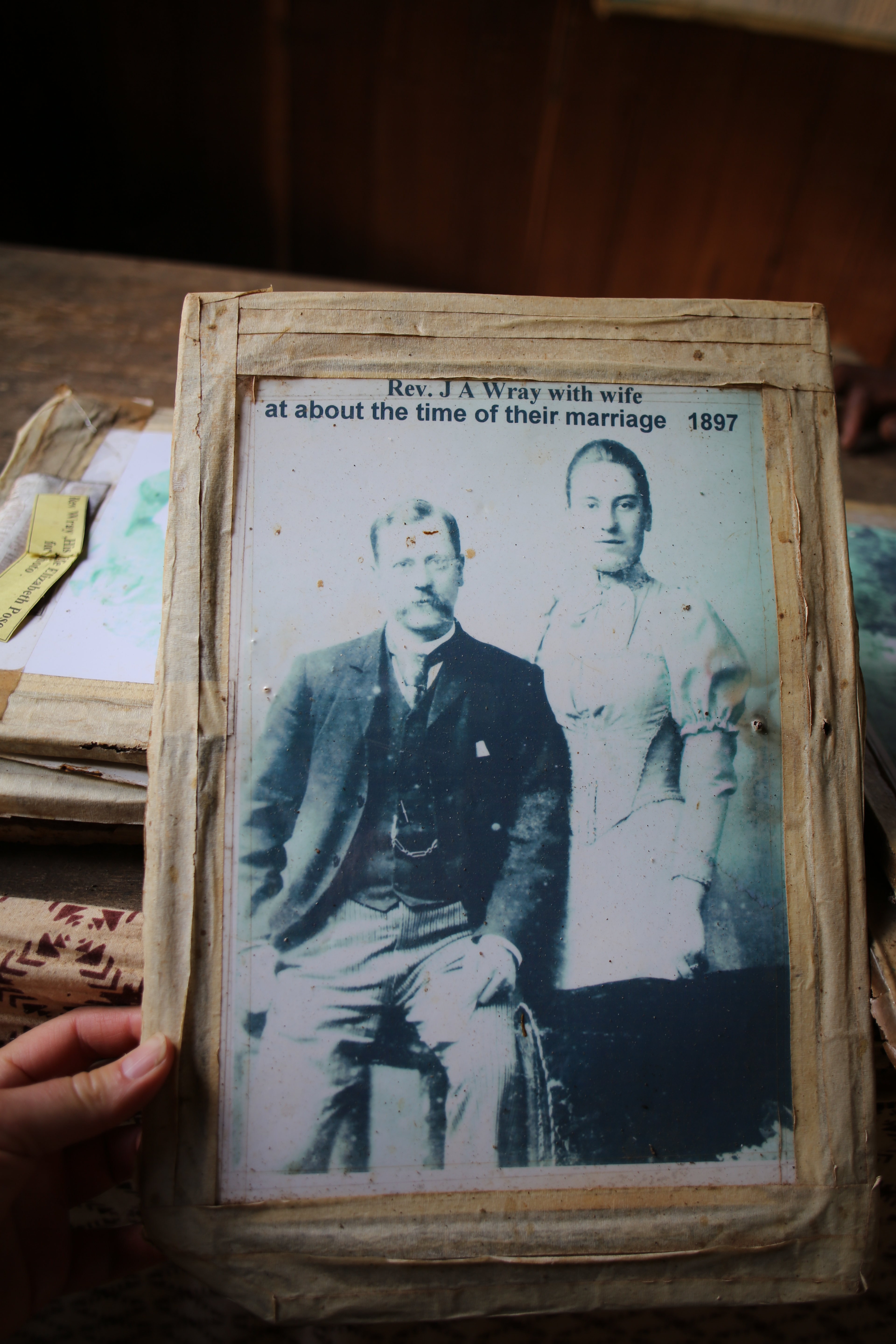
We visited also Wray’s memorial museum that is still in St Mark’s church in Sagalla. What I write next are from my notes while visiting in the museum.
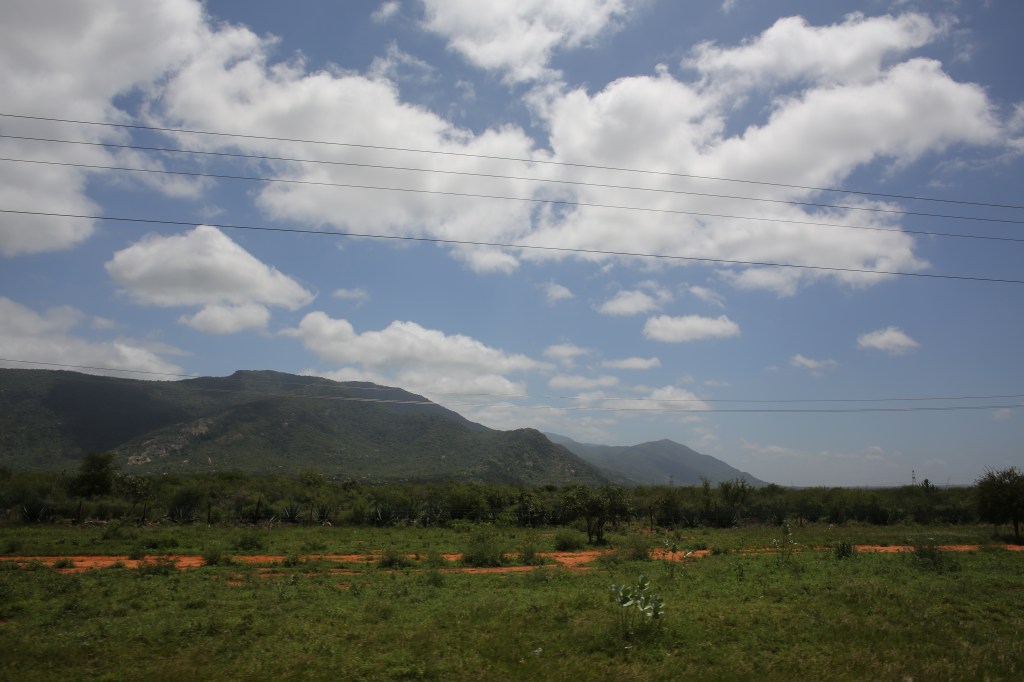
Sagalla hill from the distance
Missionary Andrew Wray arrived to Sagalla on the 19th century with his family. Beginning was not easy, but persistent work for the betterment of people in Sagalla did make significant improvements to peoples lives.
Andrew Wray was able to end the slave trade from the area. Before his arrival already 40 000 men had been taken to Arabics. Some of the former slaves returned and for them, freetown was build where mental and physical trauma of the former slaves could be treated.
Plaque had also killed 80 000 people from the area. Andrew Wray was able to educate people to kill the rats, and spreading of the plaque ceased.
Andrew Wray also helped people that were hungry, and hunger ceased to be a reason of dying in the area.
Andrew Wray build a St Mark’s church in 1901, and with his influence most people in the area became Christians.
Photographs from inside the church
All this sounds very good
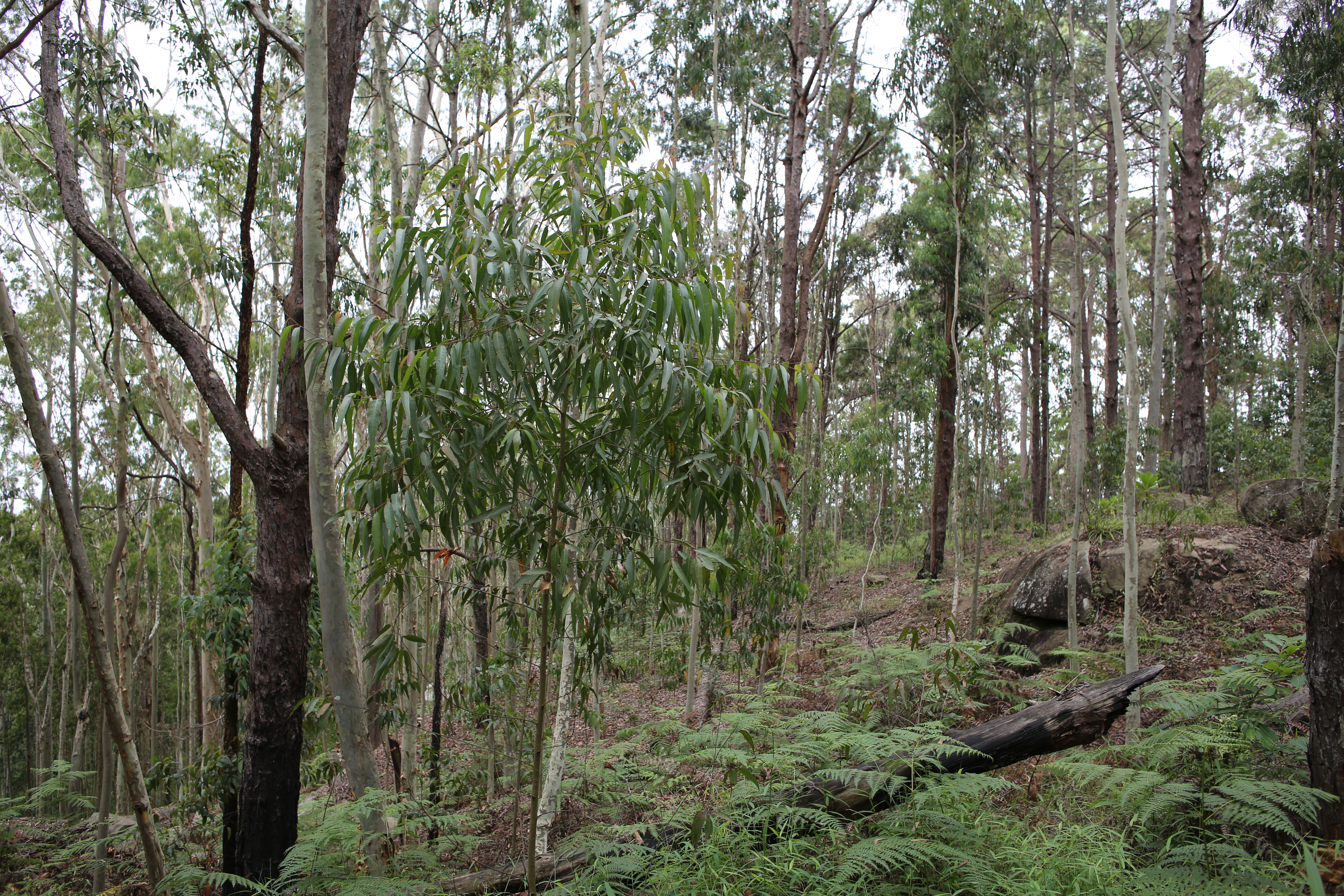
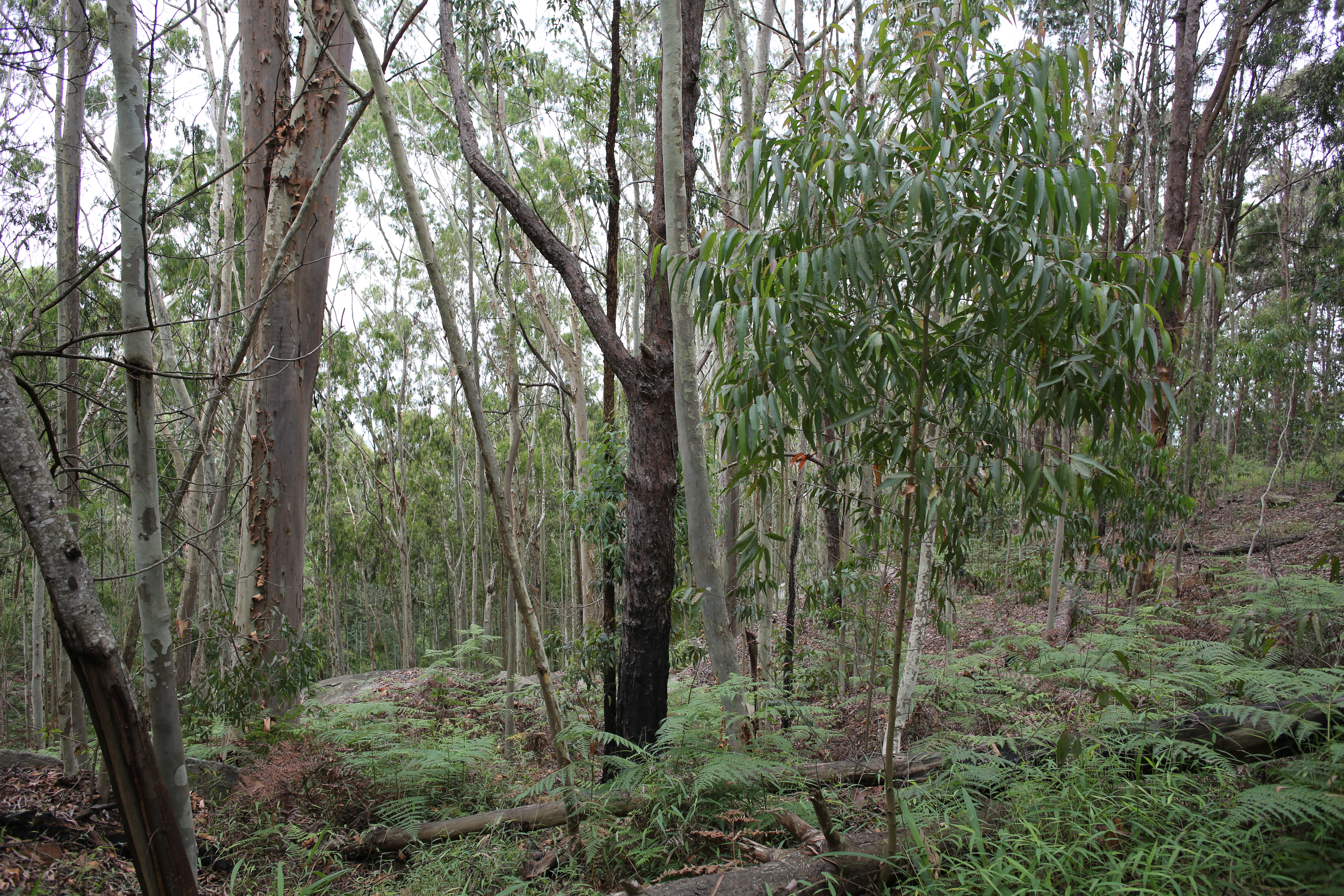
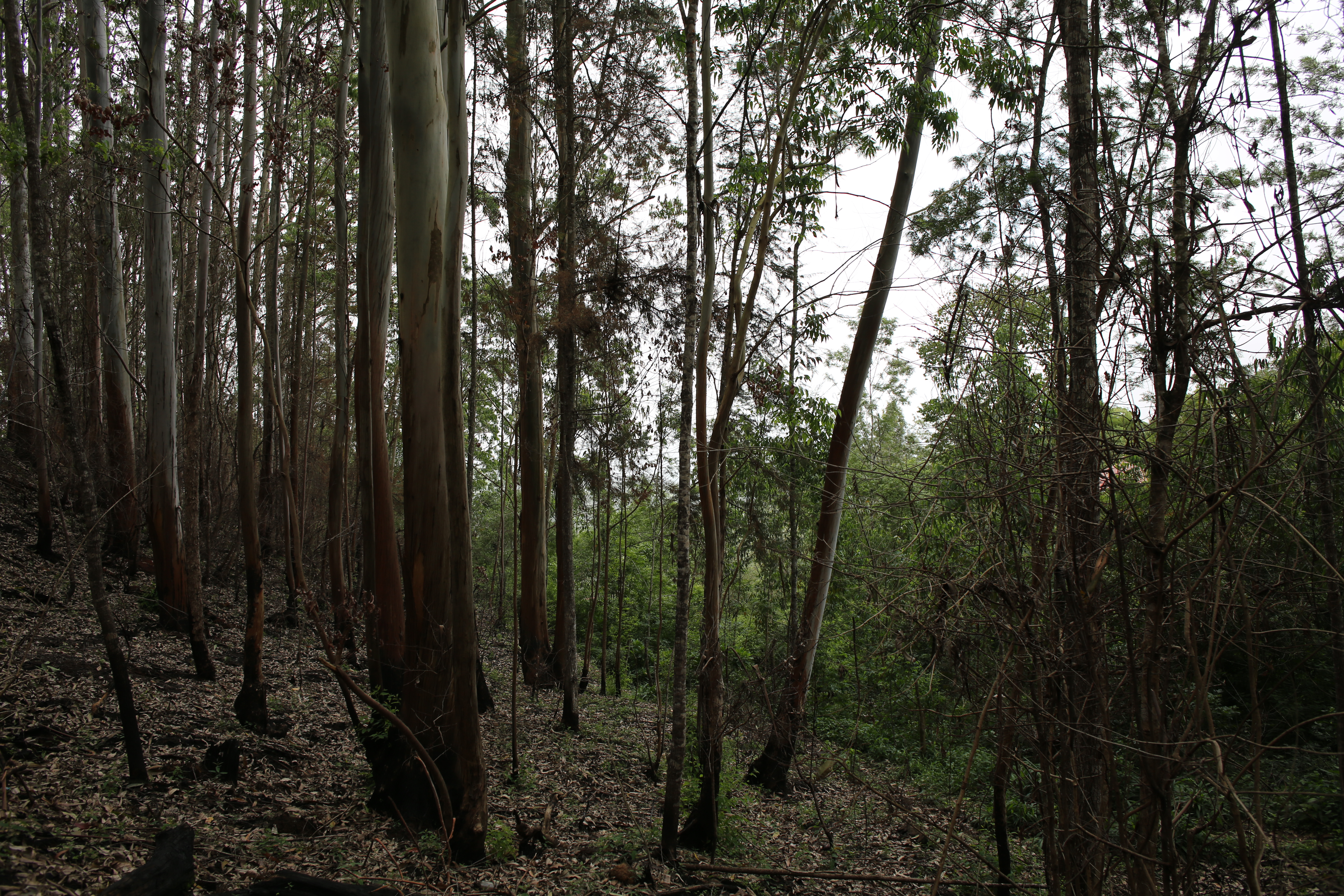
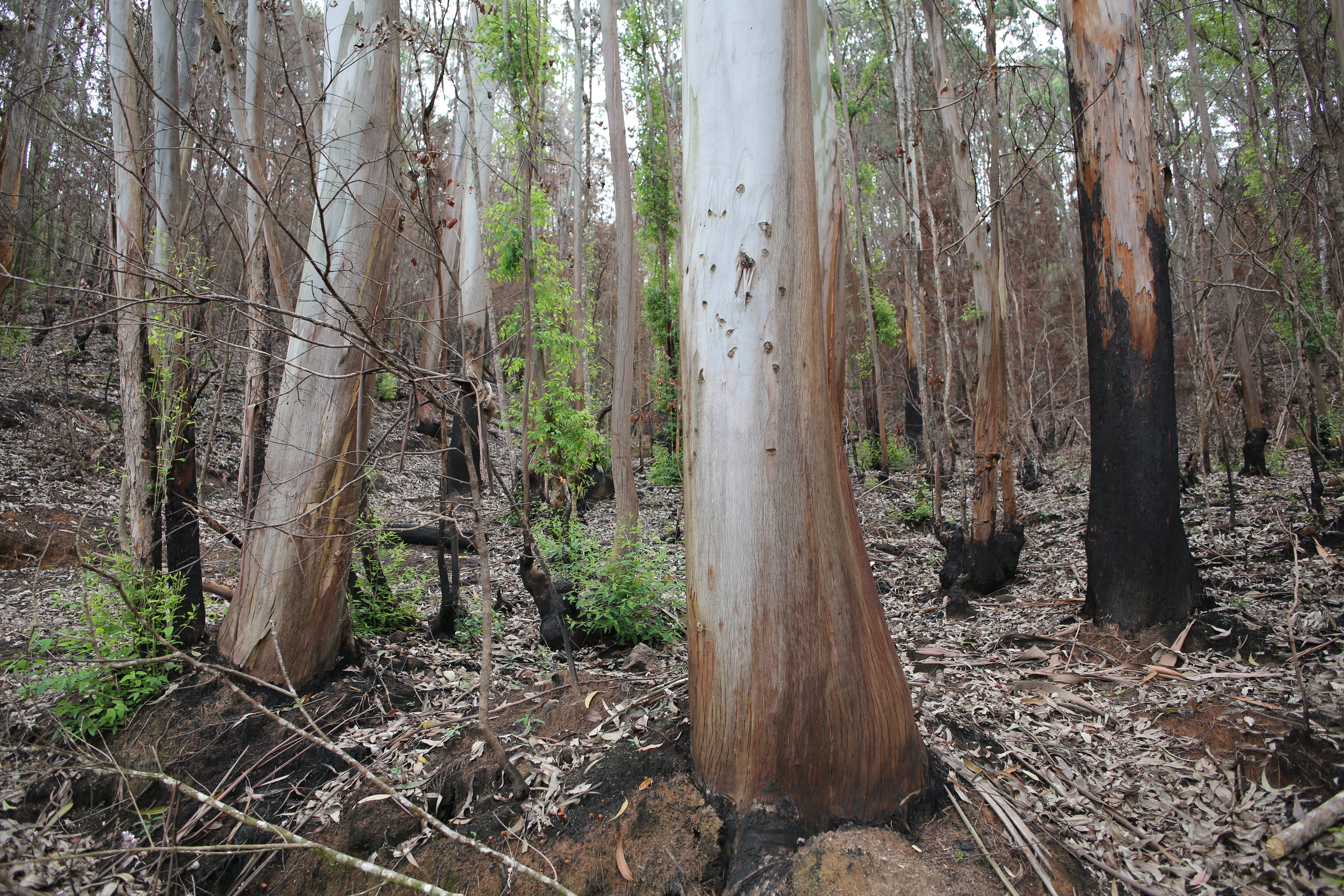
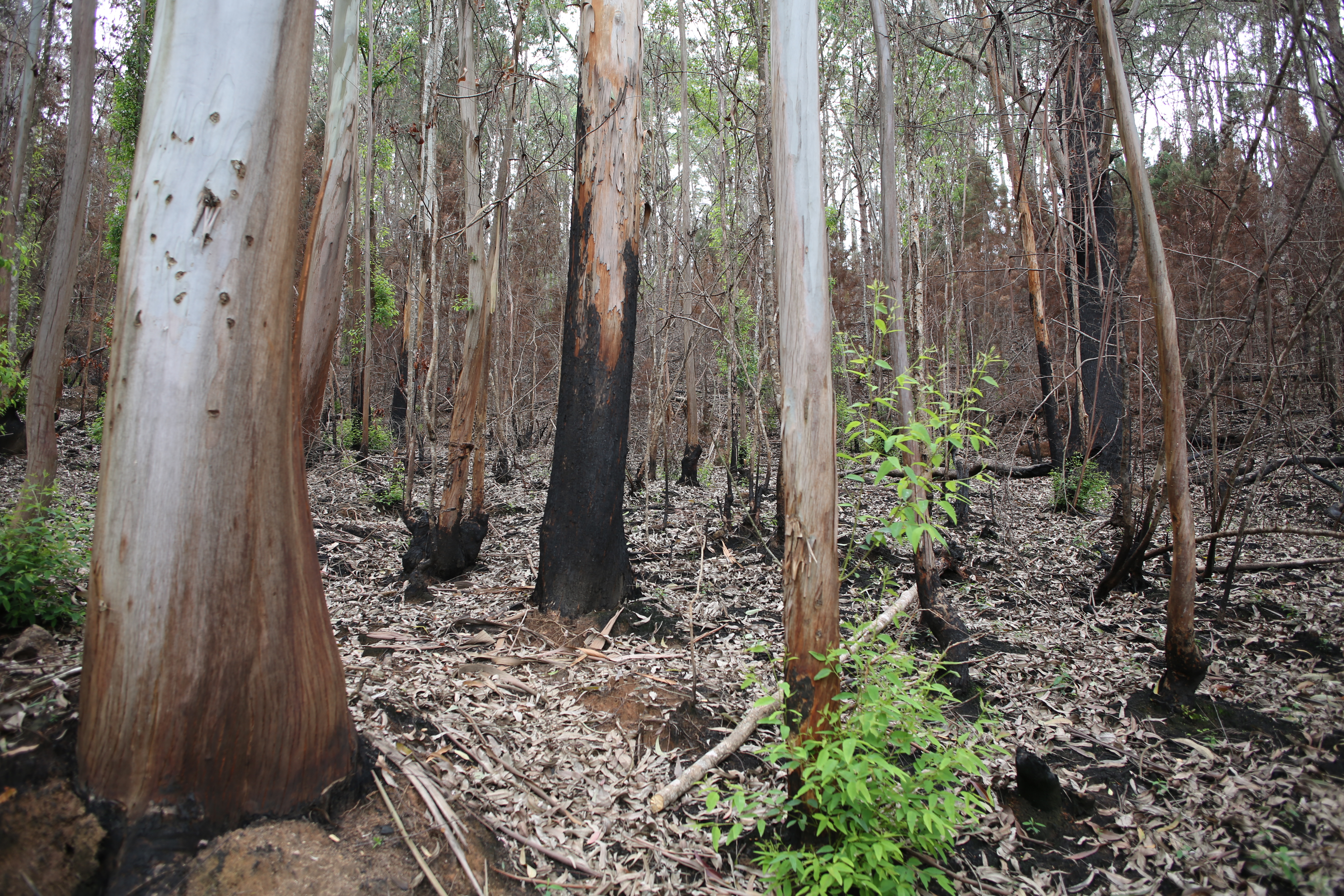
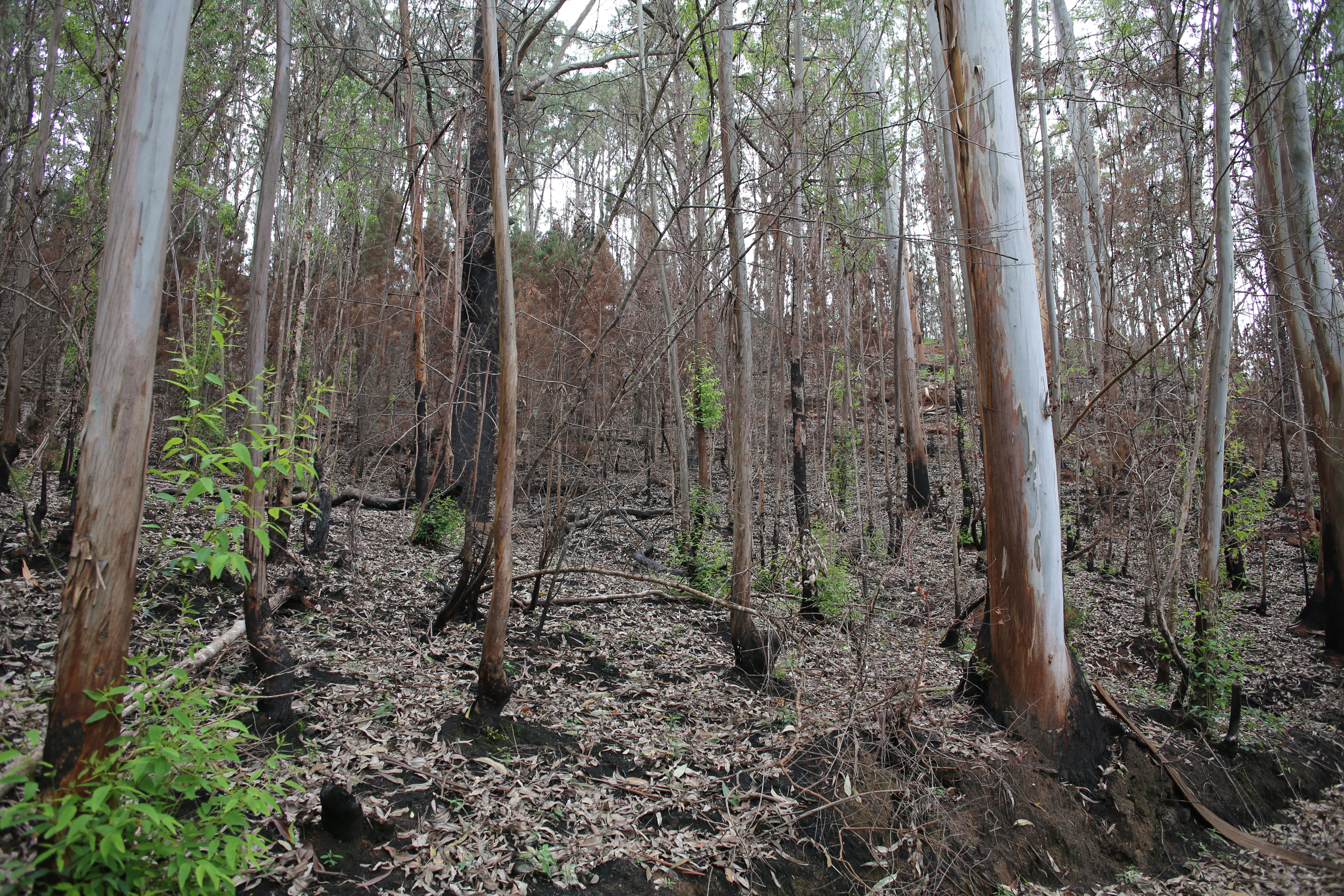
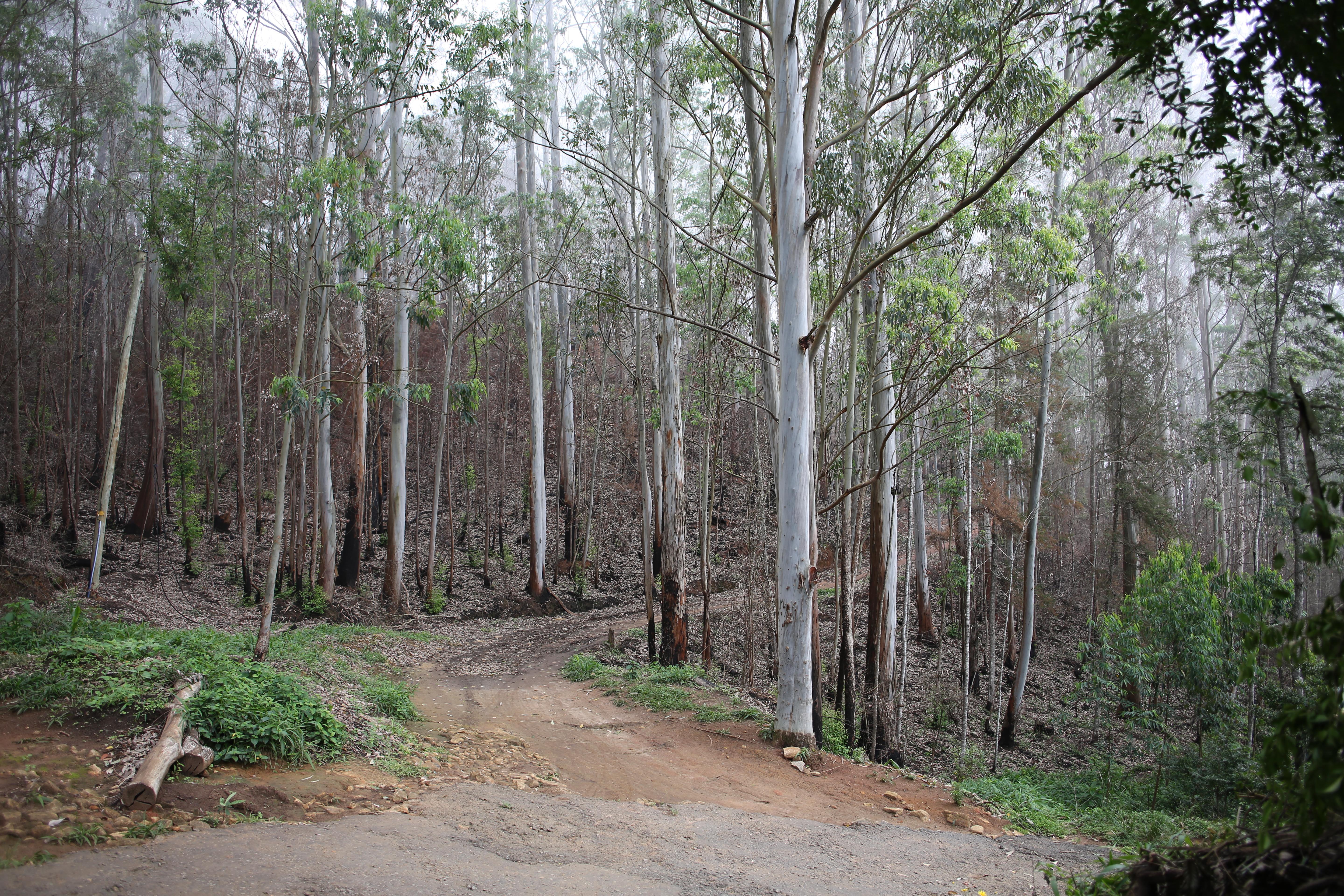
As there was too much rain in the area Andrew Wray began to clear indigenous forests and replace these forests with eucalyptus. It is hard to know all the reasons behind this. It was most likely done to get fast growing timber. Growing population needed timber for houses, furniture and other building material.
Now there is less than two hectares indigenous/mixed eucalyptus forest left in the whole Sagalla area. It was this tiny fragment where we searched for the tree hyraxes in vain. This remaining patch of forest is in the mountain side so steep that it is impossible to walk there. We were just standing above the forest.
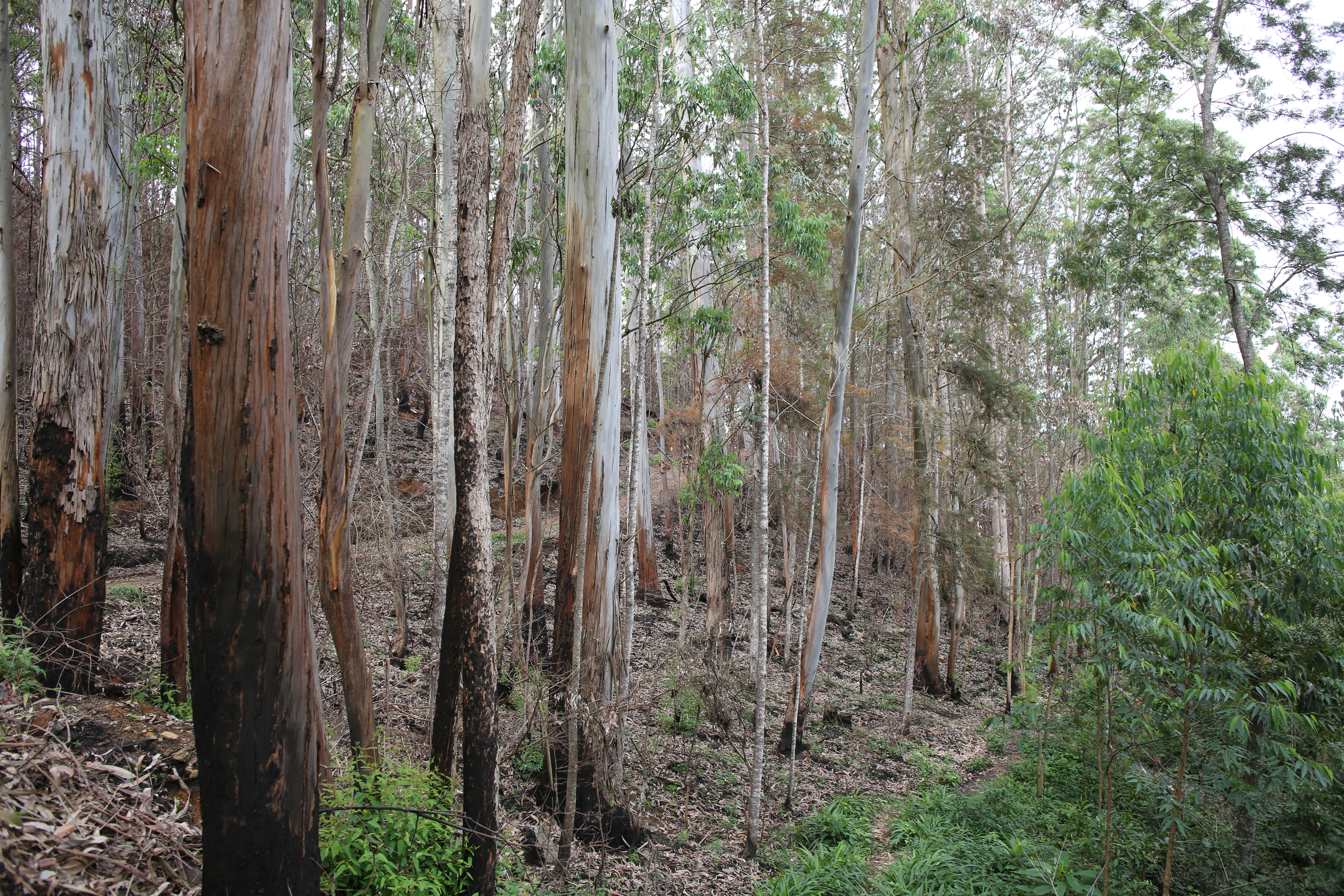
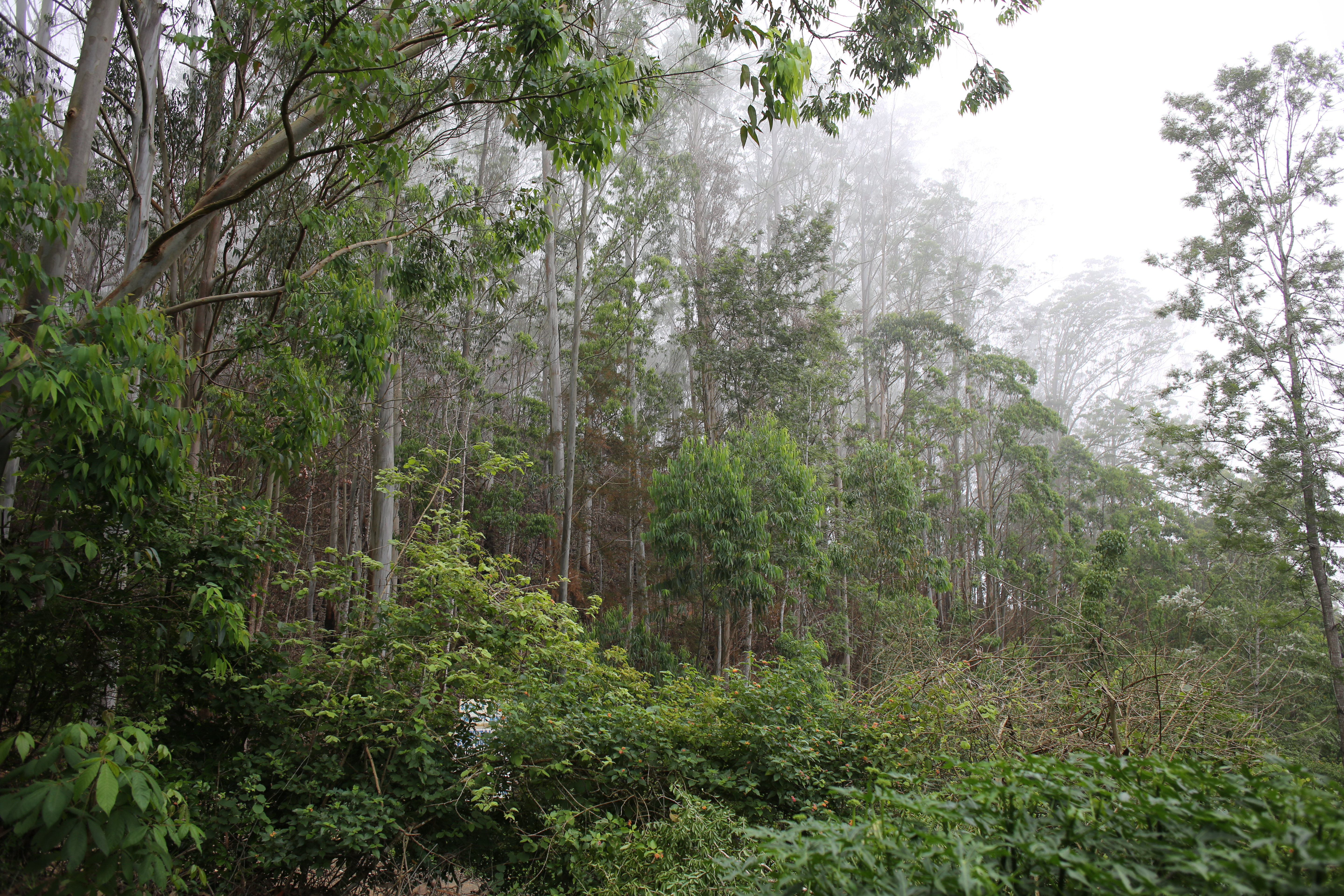
Eucalyptus has taken over most of the Sagalla hill. Eucalyptus forest is growing and spreading and there is no commercial use for it. It causes regular forest fires, that are completely unnatural for the area.
Local fauna has been almost entirely wiped out, as there are no species that can live in eucalyptus forests in east Africa. We did saw some birds and we heard greater galagos (Otolemur garnettii) that has adapted to village life.
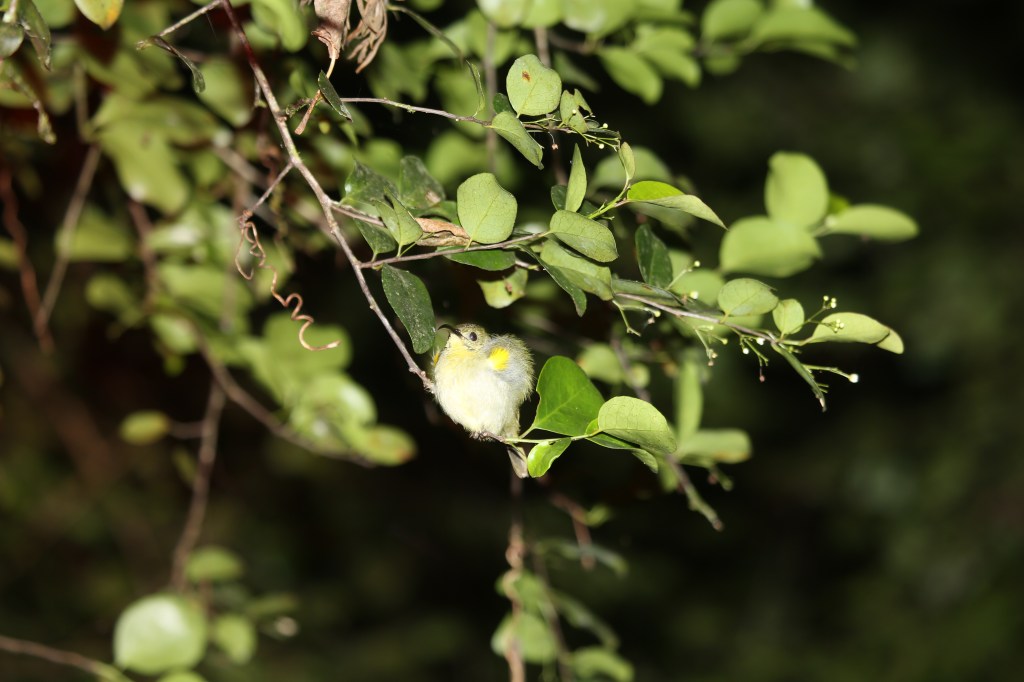
Sleeping sunbird
One famous endemic animal is Sagalla caecilian (Boulengerula niedeni) that was found 2005, and it is endangered.
We were told that local people contacted grandchildren of Andrew Wray and asked for their help in the massive problem with eucalyptus. They tried to help, but problem with the eucalyptus remains.
Eucalyptus is very strong competitor, it takes out water and nutrients from the soil. It spreads so efficiently that it can not be cleared by manual work. Also native flora and fauna have already been gone for almost hundred years, getting them back would take a long time.
However I am sure that this is clear problem, that could be solved with modern technology and money available for battle against climate change.
This rare footage shows Taita tree hyrax feeding and moving in the indigenous forest of Taita Hills 2020. Filmed by Benson Lombo, edited by Hanna Rosti.
EXTINCT (EX): A taxon is Extinct when there is no reasonable doubt that the last individual has died. A taxon is presumed Extinct when exhaustive surveys in known and/or expected habitat, at appropriate times (diurnal, seasonal, annual), throughout its historic range have failed to record an individual. Surveys should be over a time frame appropriate to the taxon’s life cycle and life form.
EXTINCT IN THE WILD (EW) A taxon is Extinct in the Wild when it is known only to survive in cultivation, in captivity or as a naturalized population (or populations) well outside the past range. A taxon is presumed Extinct in the Wild when exhaustive surveys in known and/or expected habitat, at appropriate times (diurnal, seasonal, annual), throughout its historic range have failed to record an individual. Surveys should be over a time frame appropriate to the taxon’s life cycle and life form.
CRITICALLY ENDANGERED (CR) A taxon is Critically Endangered when the best available evidence indicates that it meets any of the criteria A to E for Critically Endangered (see Section V), and it is therefore considered to be facing an extremely high risk of extinction in the wild.
Tree hyrax (Dendrohyrax sp.) Taita Hills, Kenya. This is most likely undescribed species for the science and thus doesn’t have IUCN assessment.
ENDANGERED (EN) A taxon is Endangered when the best available evidence indicates that it meets any of the criteria A to E for Endangered (see Section V), and it is therefore considered to be facing a very high risk of extinction in the wild.
VULNERABLE (VU) A taxon is Vulnerable when the best available evidence indicates that it meets any of the criteria A to E for Vulnerable (see Section V), and it is therefore considered to be facing a high risk of extinction in the wild.
NEAR THREATENED (NT) A taxon is Near Threatened when it has been evaluated against the criteria but does not qualify for Critically Endangered, Endangered or Vulnerable now, but is close to qualifying for or is likely to qualify for a threatened category in the near future.
LEAST CONCERN (LC) A taxon is Least Concern when it has been evaluated against the criteria and does not qualify for Critically Endangered, Endangered, Vulnerable or Near Threatened. Widespread and abundant taxa are included in this category.
DATA DEFICIENT (DD) A taxon is Data Deficient when there is inadequate information to make a direct, or indirect, assessment of its risk of extinction based on its distribution and/or population status. A taxon in this category may be well studied, and its biology well known, but appropriate data on abundance and/or distribution are lacking. Data Deficient is therefore not a category of threat. Listing of taxa in this category indicates that more information is required and acknowledges the possibility that future research will show that threatened classification is appropriate. It is important to make positive use of whatever data are available. In many cases great care should be exercised in choosing between DD and a threatened status. If the range of a taxon is suspected to be relatively circumscribed, and a considerable period of time has elapsed since the last record of the taxon, threatened status may well be justified.
NOT EVALUATED (NE) A taxon is Not Evaluated when it has not yet been evaluated against the criteria.
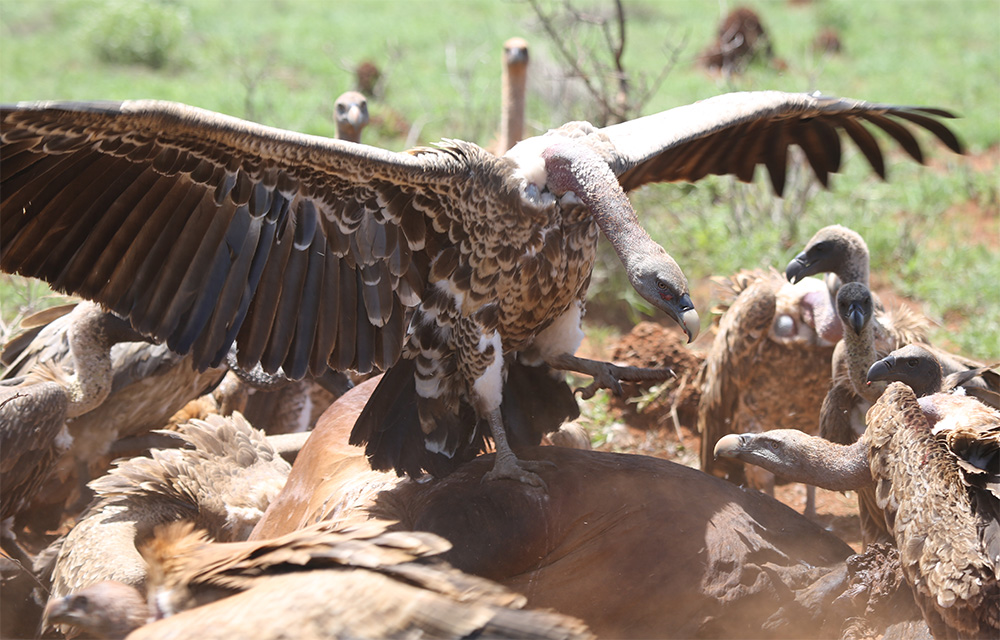
Critically Endangered (CR) vultures, Rüppells Vulture (Gyps rueppelli) and White-Backed Vulture (Gyps africanus) feeding on cow that has been killed by lions in Lumo conservancy Kenya in 2021.
Taita tree hyrax (Dendrohyrax sp.) and Taita dwarf galago (Paragalago cocos) fulfill following criteria for Critically Endangered species.
MORE DETAILED KNOWLEDGE ABOUT CRITICALLY ENDANGERED (CR)
An observed, estimated, inferred or suspected population size reduction of ≥90% over the last 10 years based on direct observation, decline in area of occupancy, extent of occurrence and/or quality of habitat
An observed, estimated, inferred or suspected population size reduction of ≥80% over the last 10 years where the reduction or its causes may not have ceased or may not be understood or may not be reversible.
B. Geographic range
Extent of occurrence estimated to be less than 100 km2
Area of occupancy estimated to be less than 10 km2
C. Population size estimated to number fewer than 250 mature individuals or
A continuing decline, observed, projected, or inferred, in numbers of mature individuals. Quantitative analysis showing the probability of extinction in the wild is at least 50% within 10 years or three generations, whichever is the longer (up to a maximum of 100 years).
How IUCN assessment and criteria is made?
UCN criteria are made based on peer reviewed scientific journals, and they are written by top scientist of the species. Before IUCN assessment can be done, species must be scientifically identified and named.
Assessment is based on research. Collecting substantial knowledge, preferably long-term knowledge of each species in the planet is not always possible. Species are very different, and methods that different species are studied vary accordingly. There is lack of data on most nocturnal animals, simply because they are so difficult to study.
Publishing scientific articles is time consuming and expensive. It means that species may go extinct, or their IUCN status may change faster than can be noticed, as humans are changing Earth in ever-growing speed.
Critically Endangered (CR) Taita thrush (Turdus helleri) from Taita Hills. Number of mature individuals 930.
Taita tree hyrax and Taita dwarf galago are already CR Critically endangered
However, Taita tree hyrax and Taita dwarf galago don’t yet have any IUCN criteria. In Taita Hills there is about 6 km2 of indigenous tropical cloud forest left. This means that these species are Critially Endangered based on B2, area of occupancy less than 10 km2.
Forests that are left in Taita Hills are severely fragmented, and not connected to each other. So they are like islands in the sea. Forests are remaining in the mountain tops of Taita Hills, and they are also called water towers, as local people understand the ability of indigenous forest of attract rainwater.
Most of Taita Hills forest have been cleared for agriculture and exotic tree (Eucalyptus, cyprus, pine etc.) plantations during last 100 years.
Largest forest fragments are Mbololo 1,8 km2, and Ngangao 1,2 km2 and Chawia 0,8 km2. These are very small forests – all of them. Only Mbololo and Ngangao still have dwarf galago populations. Tree hyrax is more common, and it also survives in smaller fragments.
These severy fragmented forests are still source of firewood for some local people. A price of electricity is very high in Kenya, and using gas is also too expensive to some people. Firewood is used for cooking. Collection of firewood decreases quality of the forest, and signs are clearly visible on the edges and around paths inside the forest.
This Kenya coast dwarf galago (Paragalago cocos), is interesting relict population from wider range of Kenya coast dwarf galago. Other populations are living in coast of Kenya. But in Taita Hills, it is only living on two mountain tops.
Populations are what matter!
All populations are worth conservation. Before species go extinct, population number may even increase in some area, if habitats are destroyed and animals are packed in remaining habitat. This is called extinction debt. Competition in remaining habitat will decrease number of animals.
If we wait with conservation efforts until 90 % of population is lost, it is too late!
Forms of life are connected to each other. What happens to one species, happens to many species. This is because species use other species as food sources and rely on other species as their habitat, reproduction, safety and habitat.
The web of life can decrease in countless ways that humans are unable to monitor, even with most high quality research.
In a another words, we can’t predict consequences to other species caused by one species of animal going Critically Endangered or Extinct.
All populations should be conserved in a level, where they have genetic biodiversity, resilience to changes and disease, capability to reproduce normally.
IUCN guidelines are necessary tool to evaluate and compare situations where species are.
However, more awareness should be given to each population, and conservation before species is Critically Endangered.
We are living sixth mass extinction, our responsibility is to protect other species, and keep populations of other species alive, resilient and strong.
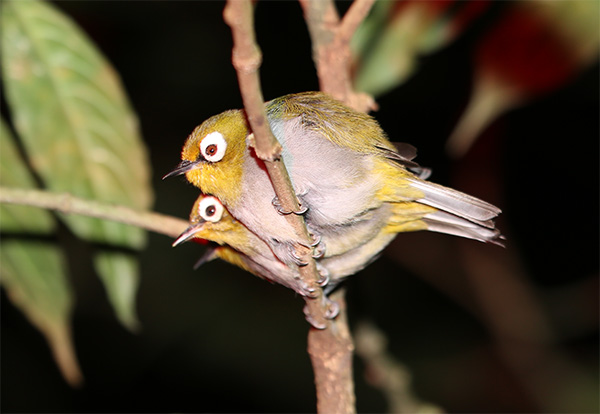
Taita white-eye (Zosterops silvanus) is categorized as Endangered (EN) by IUCN.
Short video introduction to tree hyraxes, with unique footage
Video of tree hyraxes filmed at night with night binoculars
As far as we know this is first video of tree hyraxes filmed at night. Tree hyraxes in East Africa are extremely shy, and difficult to observe. Usually they vanish in to the canopy when seen, or before humans can see them.
Mwalua Wildlife Trust was founded by Patrick Kilonzo to provide drinking water for animals suffering from lack of water during the dry season. As Water for Elephants has been success, many more work needs to be done. Volunteers from all over the world are welcome to join
Test if you identify animals from thermal imaging camera. Animals in the video are nocturnal and live in indigenous cloud forests of Taita Hills, Kenya. These animals are surviving on the last fragments of indigenous forest.
Tsavo West is one of most beautiful places in the world. And one of world largest conservation areas. This short film introduces scenery of Tsavo West and its most common animals. Peter also visits Chaimu crater and Mzima springs.
Guiding tours on the indigenous forests of Taita Hills, including Ngangao, Mbololo, Vuria, Chawia, and Iyale.
Taita white eye, endemic bird to Taita Hills
Also historical sites like Kenyatta caves, where first president of Kenya hide from colonialist, and Mwangeka caves where Mwangeka organized his group to fight against slavery in Taita Hills.
Birding
Beautiful scenaries to Tsavo and to Mt Kilimanjaro
Nocturnal animals, tree hyraxes, greater galagos and dwarf galagos
Nocturnal mammals of Taita Hills are extremely interesting and loud at night. By using red light it is possible to observe them in their natural habitat. This is truly unforgettable experience. As there are no large predators in Taita Hills, walking in the forest at night is safe.
Small-eared greater galago in Ngangao Forest
I have 20 years of experience with working with researchers in many different fields, including e.g. forestry, bat research, botany and mammals of Taita Hills.


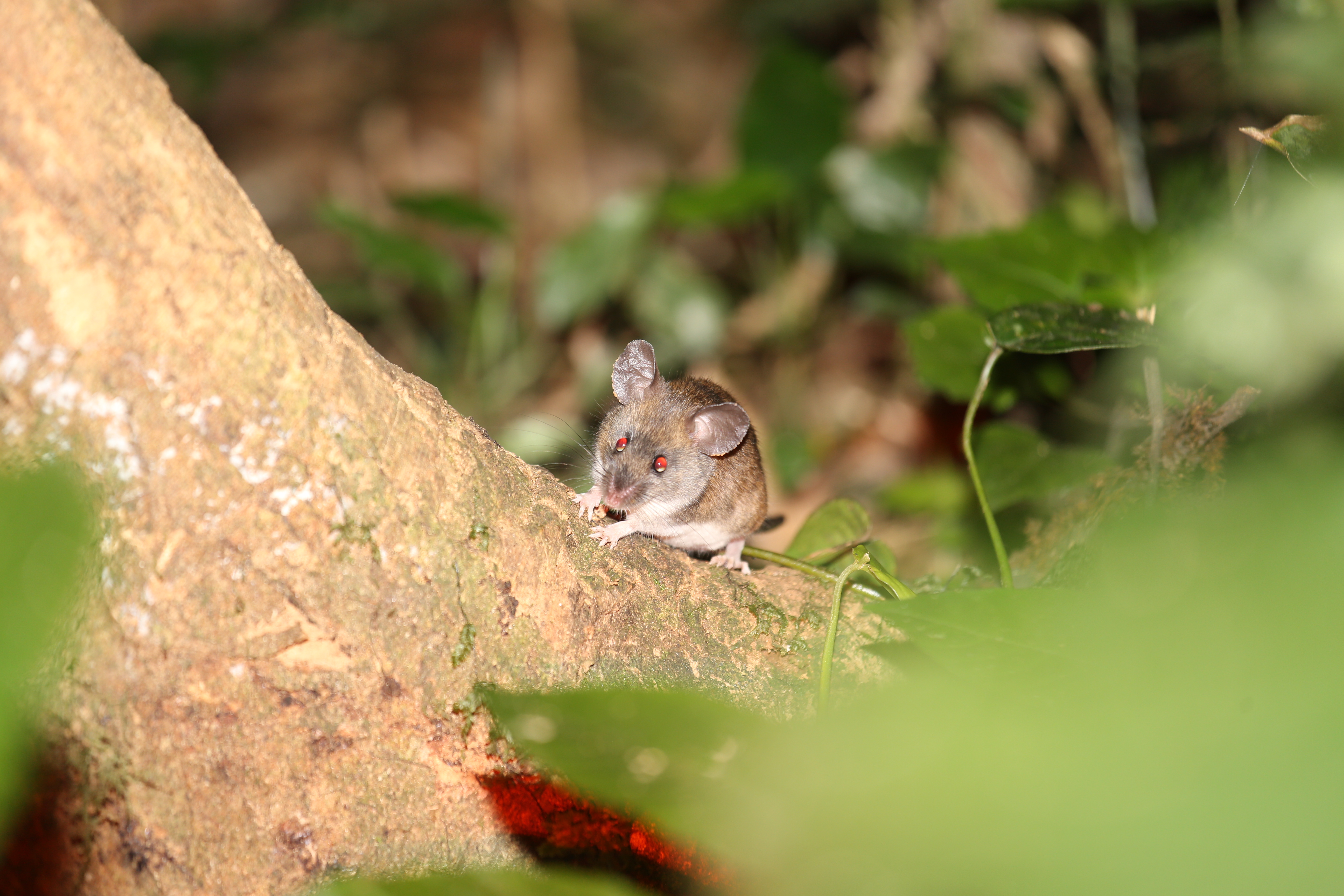
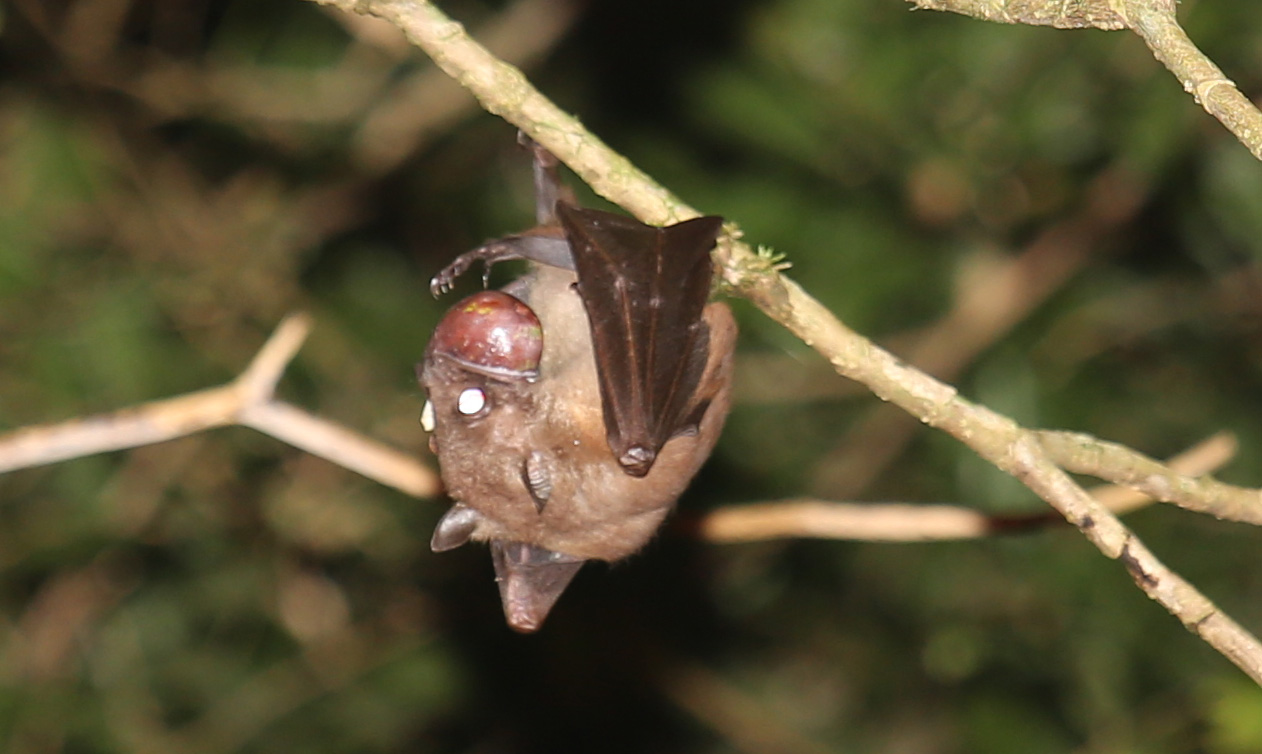
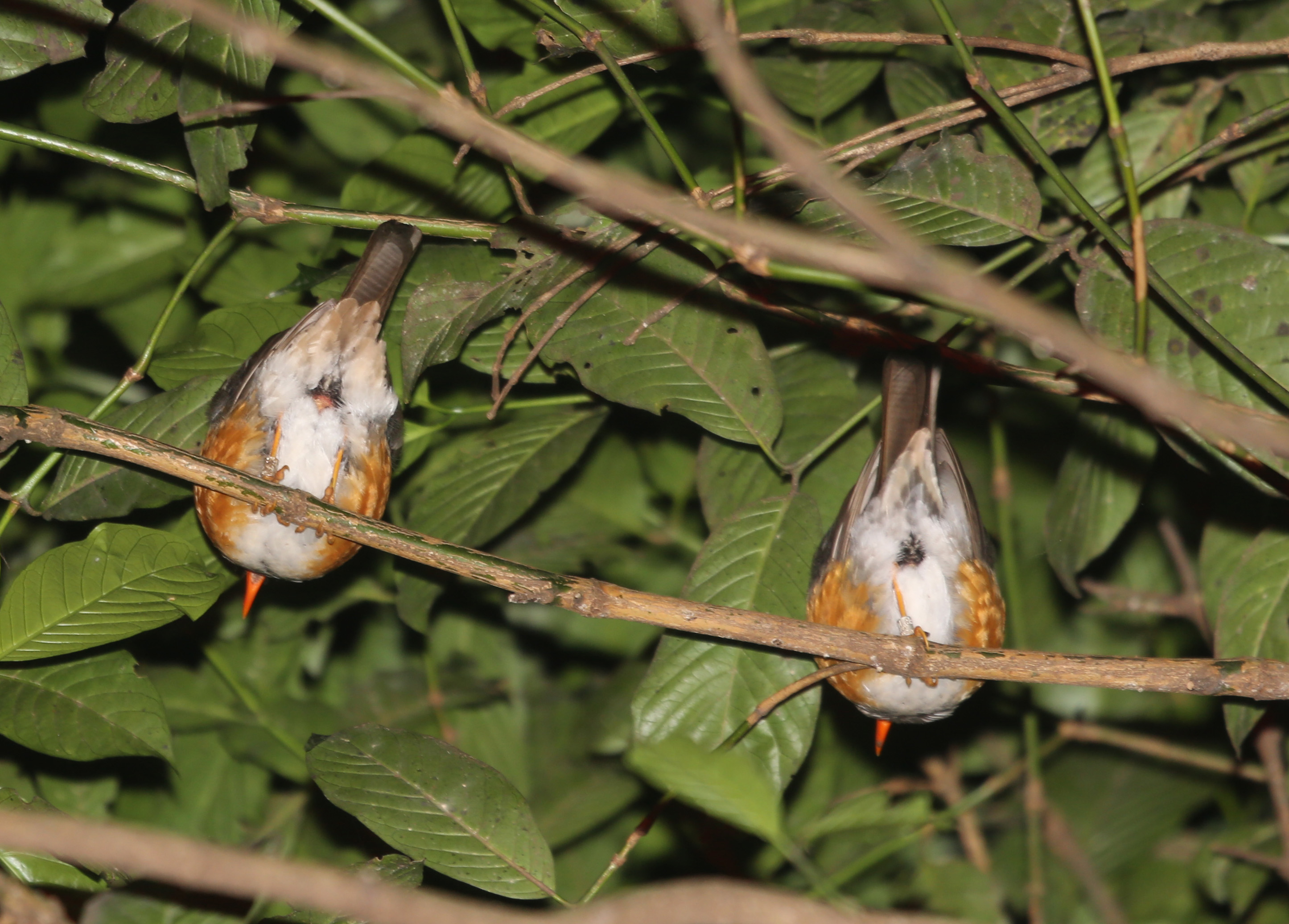
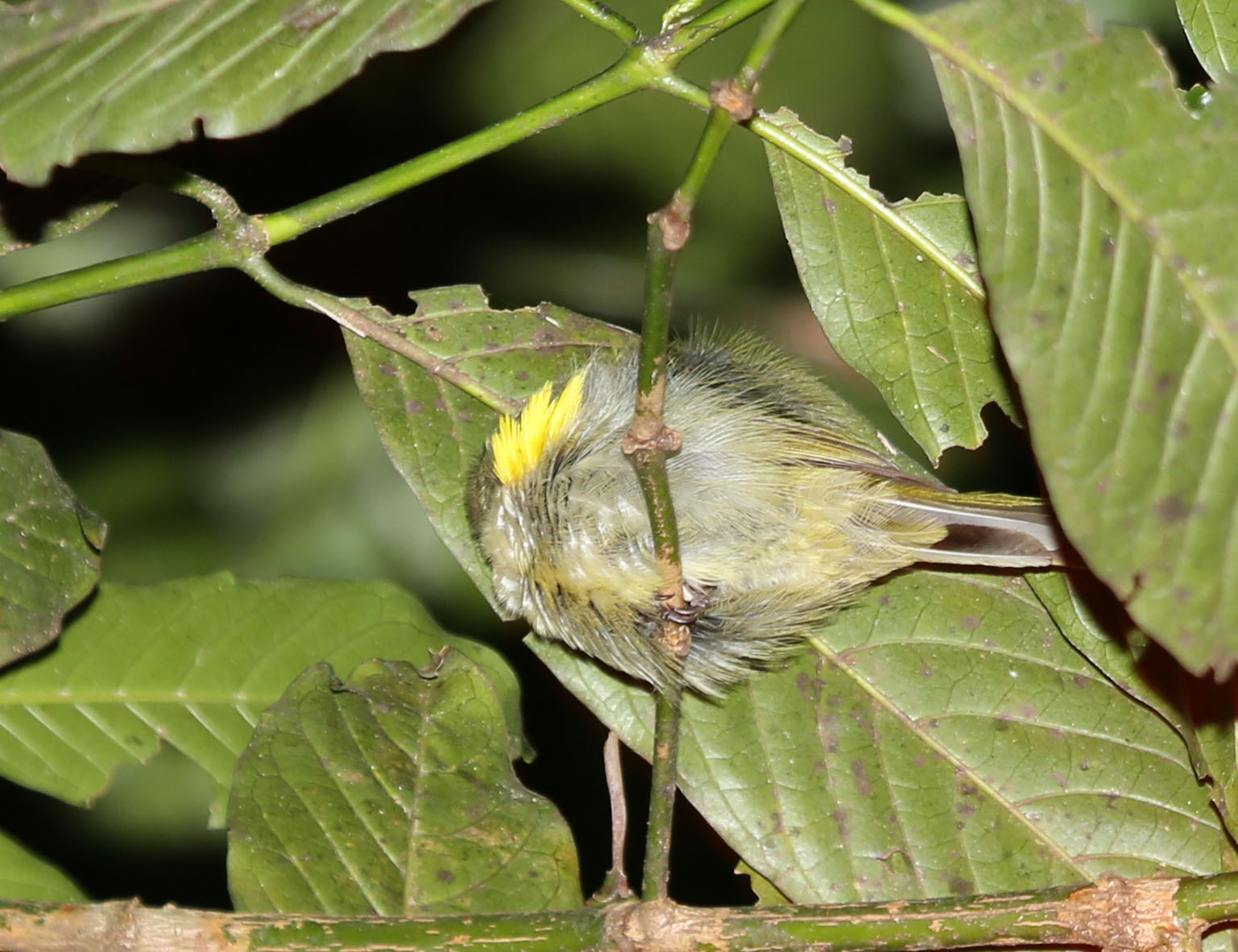

 Animals of Taita, Kenya