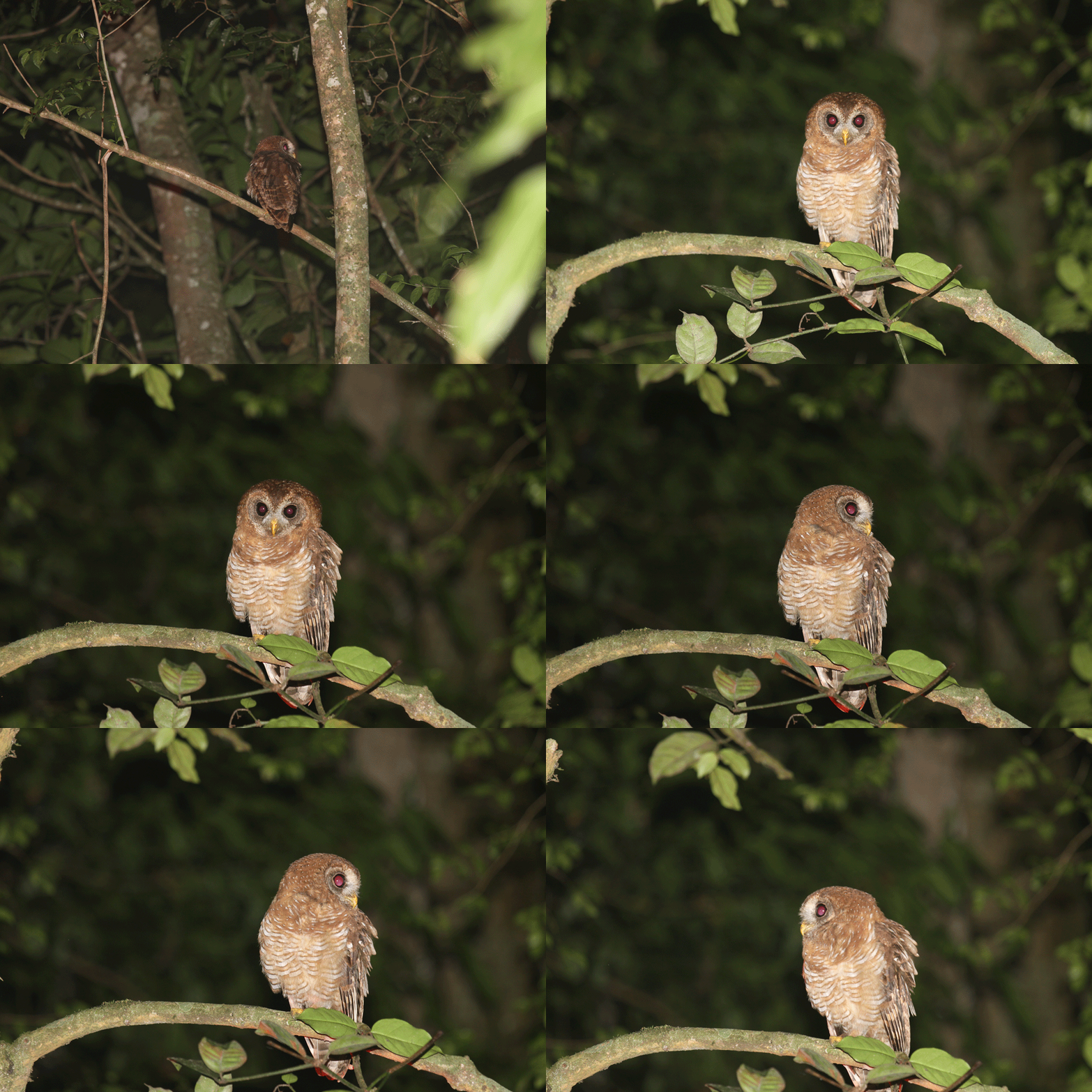
Tag: African wood owl

  • African wood owl in Taita Hills Kenya

    African wood owl in Taita Hills Kenya

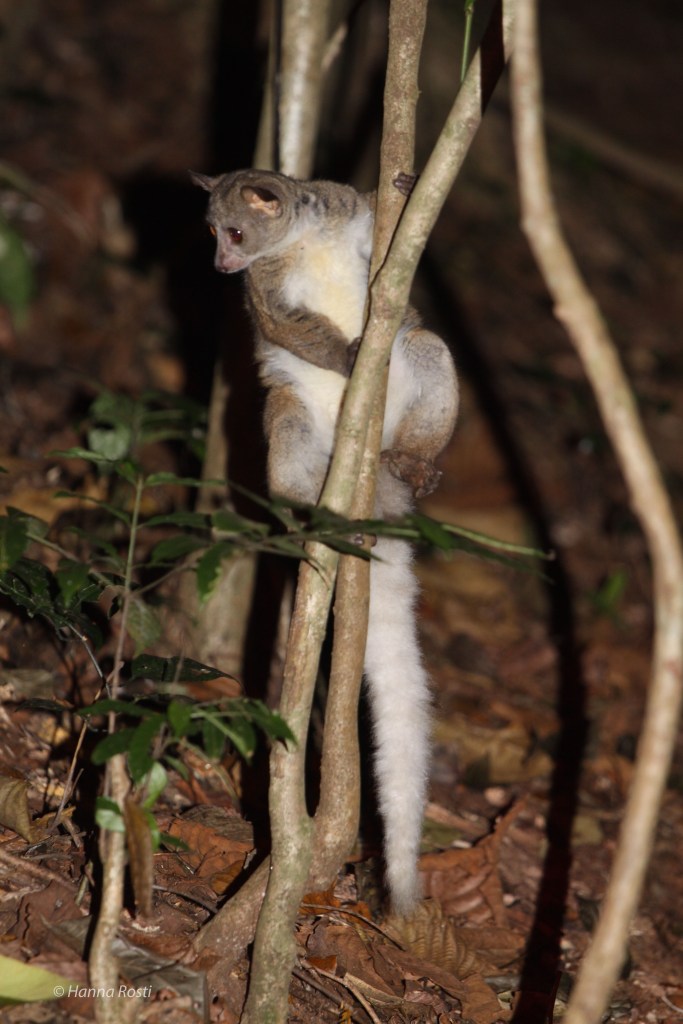
    African wood owl looking for Taita mountain dwarf galago, that just escaped from him.

    In Taita Hills of Kenya African wood owl (Strix woodfordii) is quite common. Owl couple keep contact with each other by calling. Interestingly male and female can counter call with similar calls, or female may use different call.
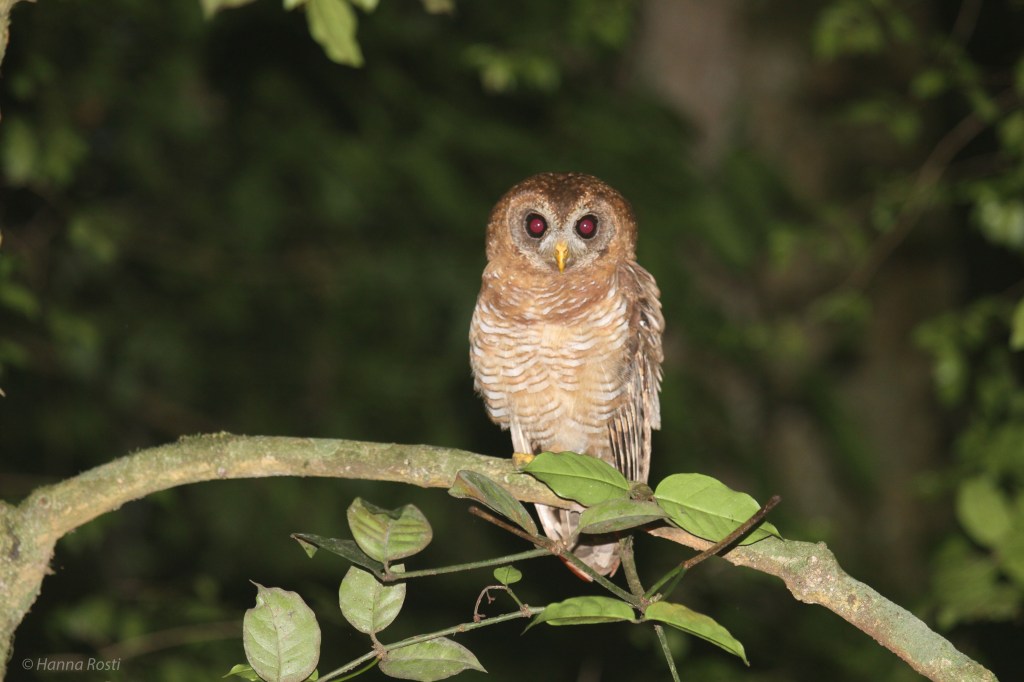
    African wood owl from Ngangao Forest Taita Hills in 2019.

    Counter calling of African wood owl couple from Taita Hills.

    African wood owl male and female counter calling

    Male makes a series of rapid, clear hoots, and the female answers with higher pitched, more leisurely hoots.
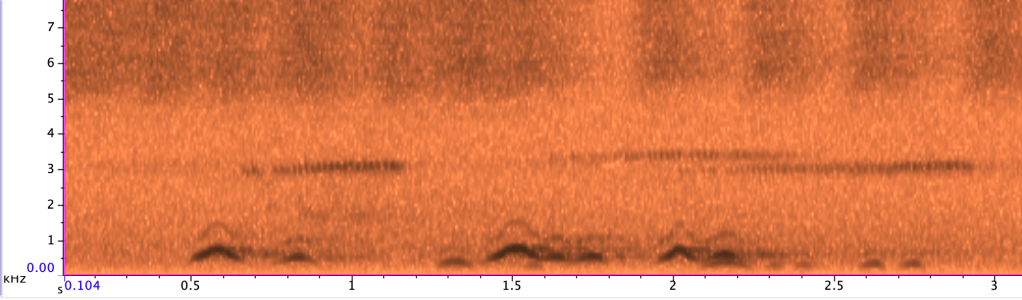
    This is spectrogram of the part of calling sequence above made with Raven 1.6 Pro. On vertical axel you can see frequency and on horizontal axel the time. African wood owl hoots have fundamental (lowest) harmonic (lowest line) bellow 1 kHz. Calls coming near the recorder have stronger spectrogram. Above African wood owl there is another bird? with long chirr, and above that there are cicadas. So owls and cicadas can be easily heard simultaneously, as they use different frequencies.

    Different call of a female African wood owl from Taita Hills
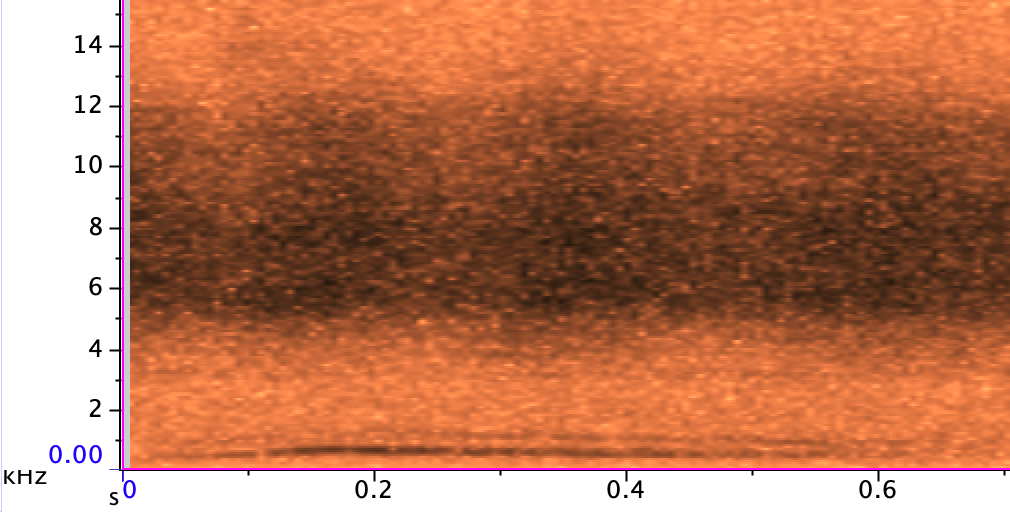
    Hoot of a African wood owl female with nice lowering pitch
    Spectrogram of a female African wood owl, a single hoof with slight rise in the middle. Given also as a response to call above. Call is using frequency about one kHz. Black belt between 5-12 kHz are cicada choir.

    African wood owls in Taita Hills are about the size of the crow, 30-35 cm, weighing 240-350 grams. African wood owl eats mainly insects.
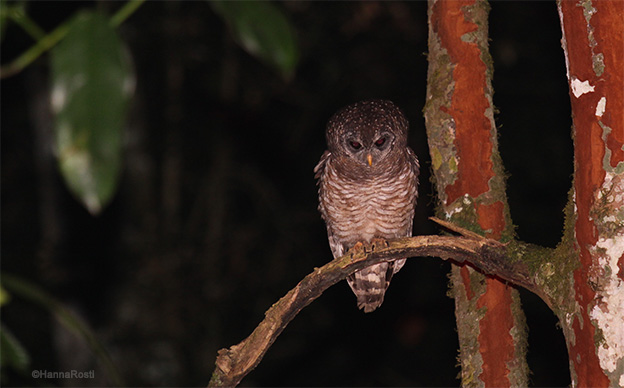
    African wood owl looking for prey. Taita Hills 2019.

    They can’t see red flashlight, which has enabled me to watch them without them without owls paying any attention for me.
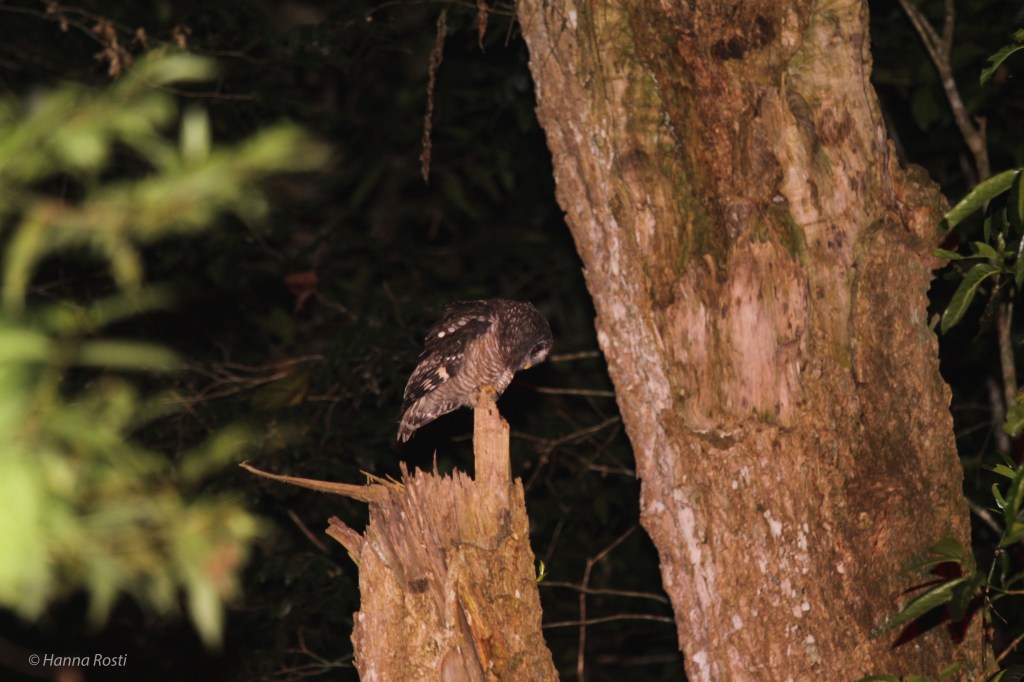
    African wood owl looking for insects or small mammals to prey on. Taita Hills 2019.

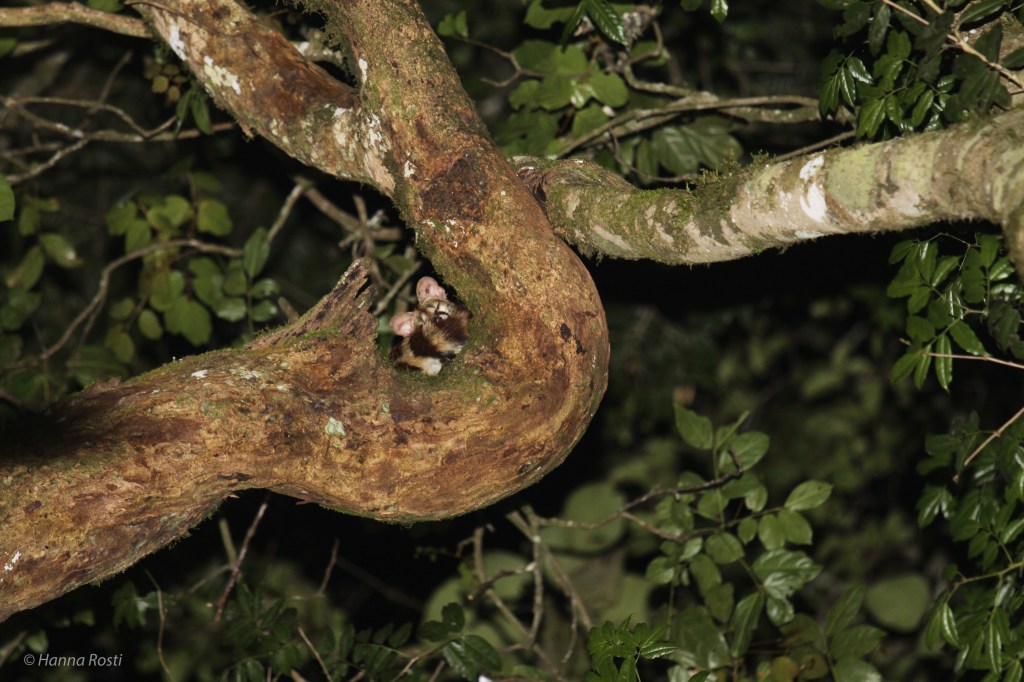
    Mainly insectivorous, however they also catch small mammals… In Taita Hills African wood owls hunt also Taita mountain dwarf galagos that are almost extinct. For dwarf galagos this owl may be the ultimate reason for extinction.
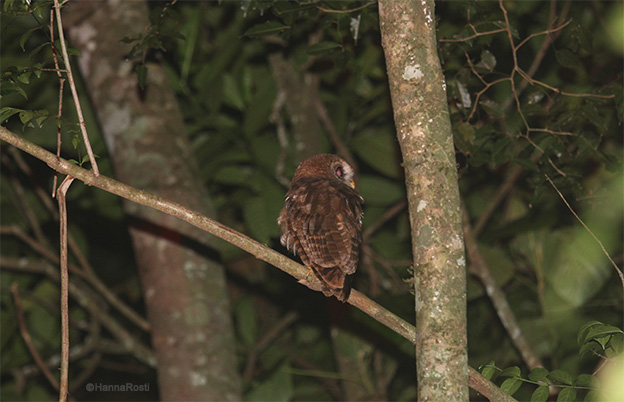
    From the behind coloring has beautiful shades of brown. Taita Hills 2019.

    Reason for extremely low population numbers in dwarf galagos is loss of habitat, as forests have been cleared for fields. However, in these small remaining patches of forest, the probability of dwarf galago being hunted by wood owl increases. They share same territories every night. Dwarf galagos are dependent on refugee sites in hollow trees. Only very old trees are have hollows or are completely hollow.

    Distribution and conservation status

    African wood owl has extremely large distribution in Africa. Conservation status is Least Concern LC. Populations seem to be stable. However there is no long term research about the species

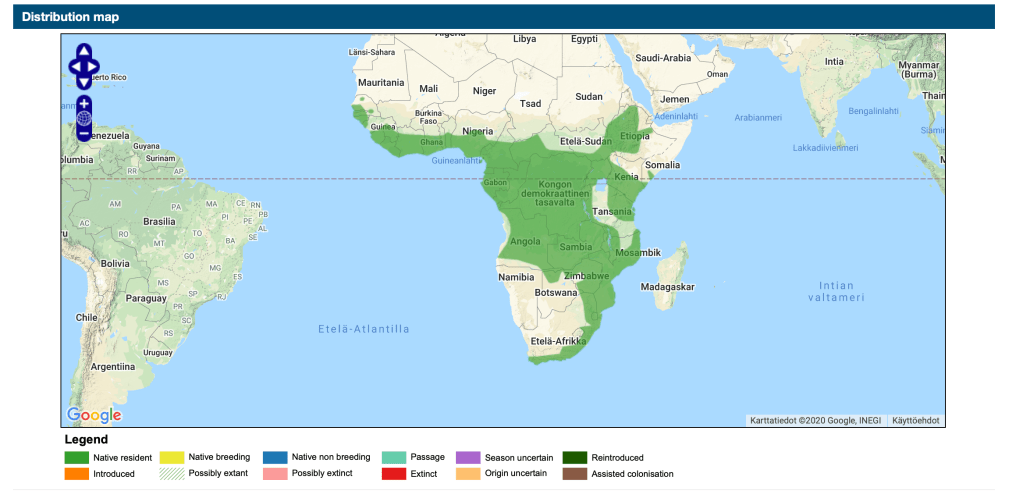
    IUCN RED LIST DESCRIPTION https://www.iucnredlist.org/species/22689166/93220349#population

    Distribution map of African wood owl by BirdLife International. BirdLife International (2020) Species factsheet: Strix woodfordii. Downloaded from http://www.birdlife.org on 08/05/2020.

    Geographic range from Avibase with four subspecies: These subspecies have considerable differences in their coloration.

    • Strix woodfordii woodfordii: southern Angola to southern Democratic Republic of the Congo, southwestern Tanzania, Botswana, and South Africa
    • Strix woodfordii nuchalis: Senegambia and Bioko Island to South Sudan, Uganda, western Democratic Republic of the Congo, and northern Angola
    • Strix woodfordii umbrina: Ethiopia and eastern South Sudan
    • Strix woodfordii nigricantior: southern Somalia to Kenya, Tanzania, Zanzibar, and eastern Democratic Republic of the Congo
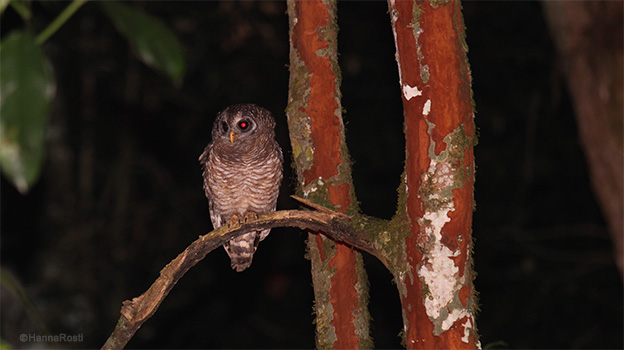
    African wood owl has horizontal stripes. Taita Hills 2019.

    Taxonomy

    Genus Strix was created by Linnaeus 1758 for earless owls. Strix owls do not have ear tufts. There are 22 species of genus Strix in the world. They are medium to large in size and live in forests. Strix owls are found around the world. African wood owl has four subspecies as described earlier.
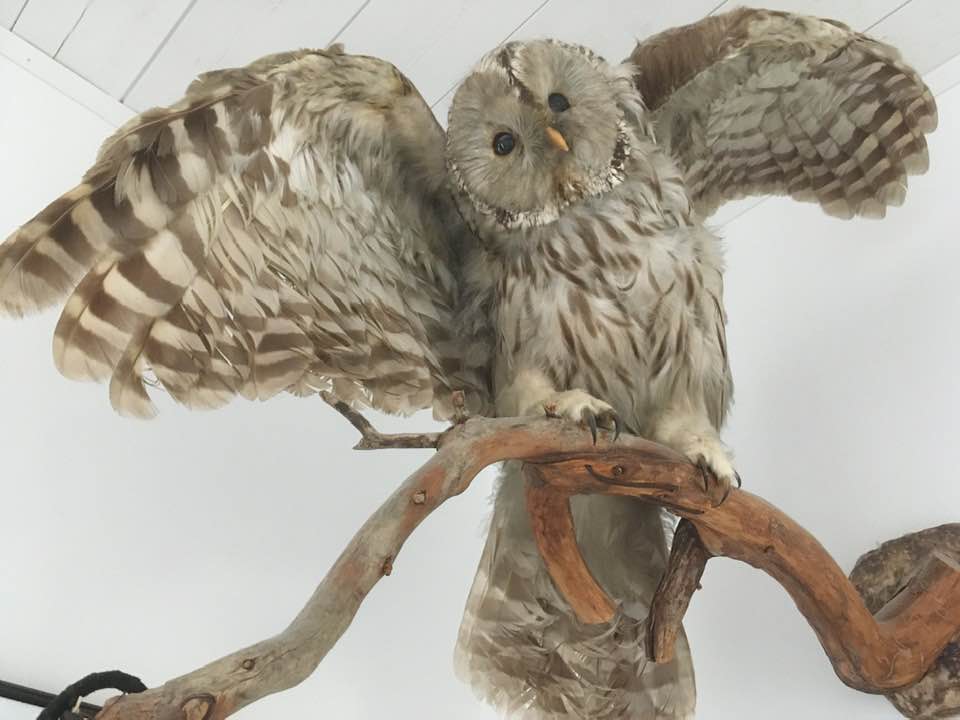
    Here is Ural owl (Strix uralensis) from my home. This owl was found dead by my father in Finland 1970 and stuffed. Ural owl is much bigger than African wood owl. In Finland these owls are known for their strong protective behavior against people who put rings to baby owls feet. As an adaptation to cold climate the feet have feathers also.

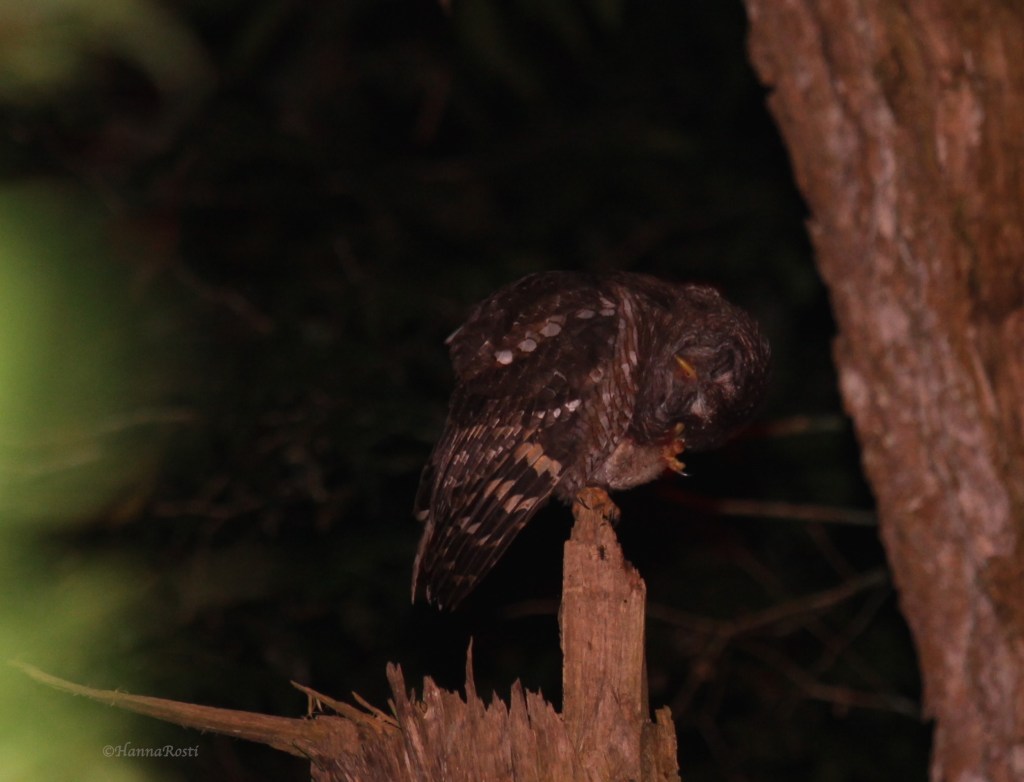
    African wood owl scratching his ear. Taita Hills 2019.

    Sources:

    Birdlife African wood owl: http://datazone.birdlife.org/species/factsheet/african-wood-owl-strix-woodfordii

    Avibase African wood owl: https://avibase.bsc-eoc.org/species.jsp?lang=FI&avibaseid=2E6575A8C8ECAD9B&sec=summary

    Iucn Red Lis Assessment: https://www.iucnredlist.org/species/22689166/93220349#population

    BirdLife International. 2016. Strix woodfordiiThe IUCN Red List of Threatened Species 2016: e.T22689166A93220349. https://dx.doi.org/10.2305/IUCN.UK.2016-3.RLTS.T22689166A93220349.en. Downloaded on 08 May 2020.
  • Night in Ngangao Forest

    Night in Ngangao Forest

    I have been incredibly blessed by having opportunity to spend about three months observing nightlife in Ngangao and other Taita forests.

    At night forest is magical beyond any words of describing it. Change in evening and in the morning from nightshift to dayshift is breathtaking. Whole forest changes in minutes.

    We use red light in the forest. Most animals can’t see red light, so they carry on their lives like we where not there.

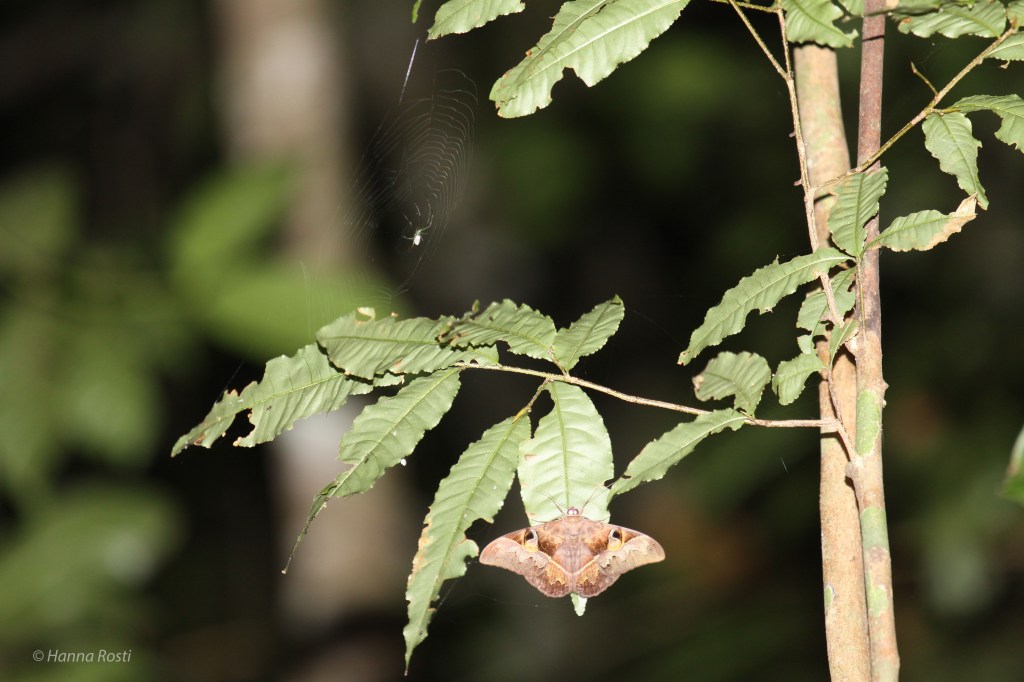
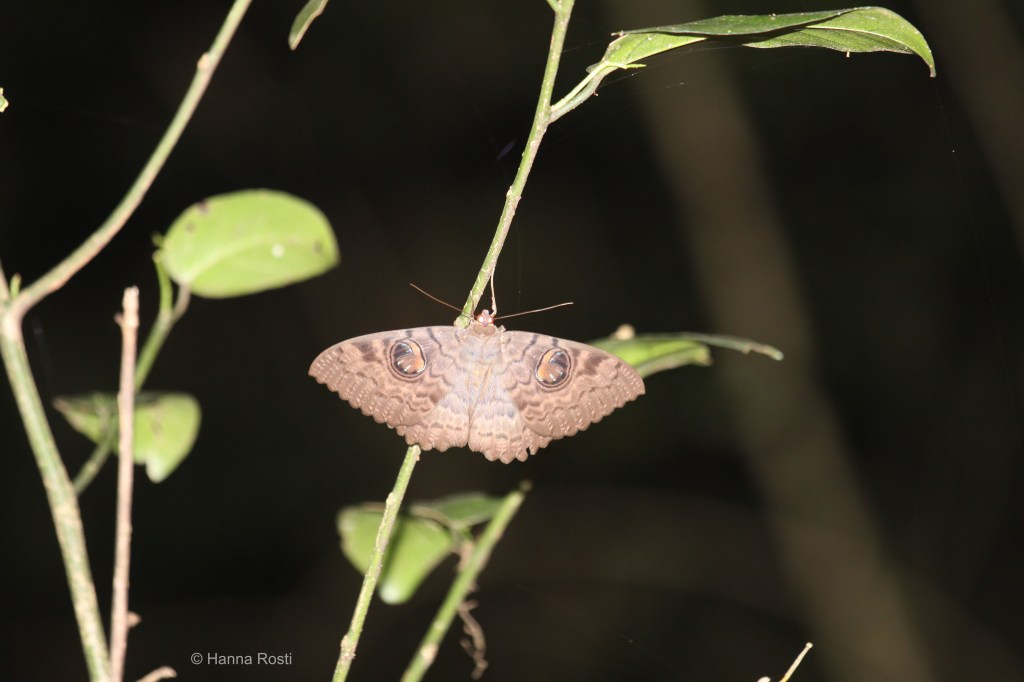
    There are bats flying in paths and openings. They fly almost to your face, but turn at the last moment. Only once I have been touched gently by a bat. There is abundant rodent life, rats and mouses of all sizes running around, digging the ground, climbing in the trees, grooming themselves. They look very cute in red light.

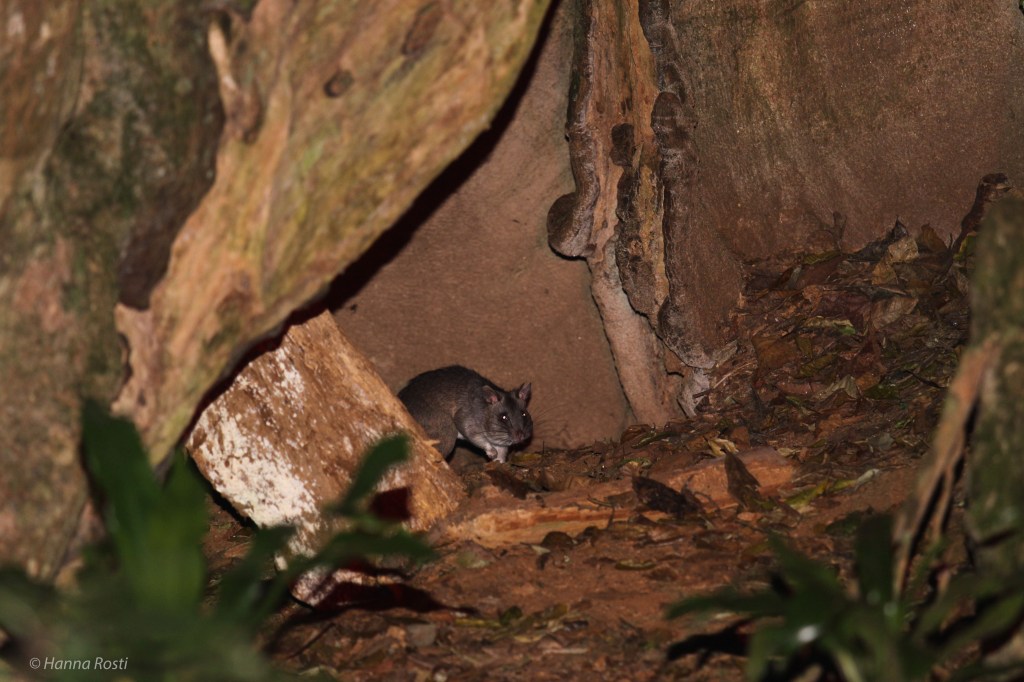
    Most Ngangao Forest visitors walk through gigantic cave tree, not knowing that they are actually visiting home of giant rat at the same time!

    Less common rodents are dormouse and elephant screw. We saw both several times though. We also saw ones Suni antelope.

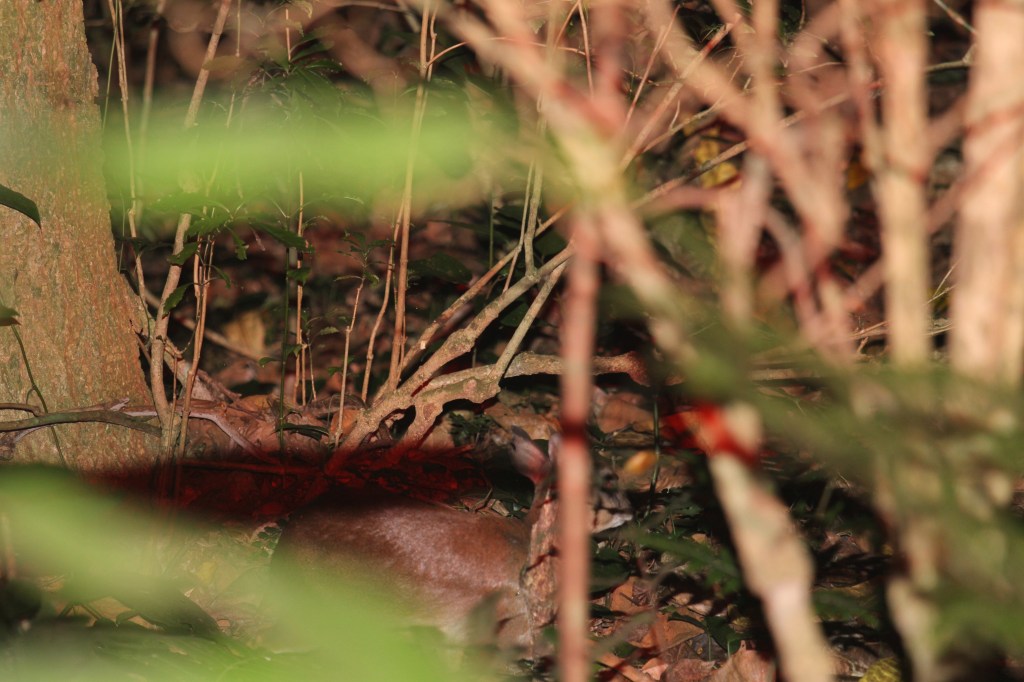
    We had funny encounters with the genet. This stunningly beautiful cat sometimes followed us, sometimes it appears out from the blue, just from the feet. I was never lucky enough to get picture of it. Until once we saw one sleeping in the tree. This cat didn’t look that good though, you can see ticks in the ear in the photograph.

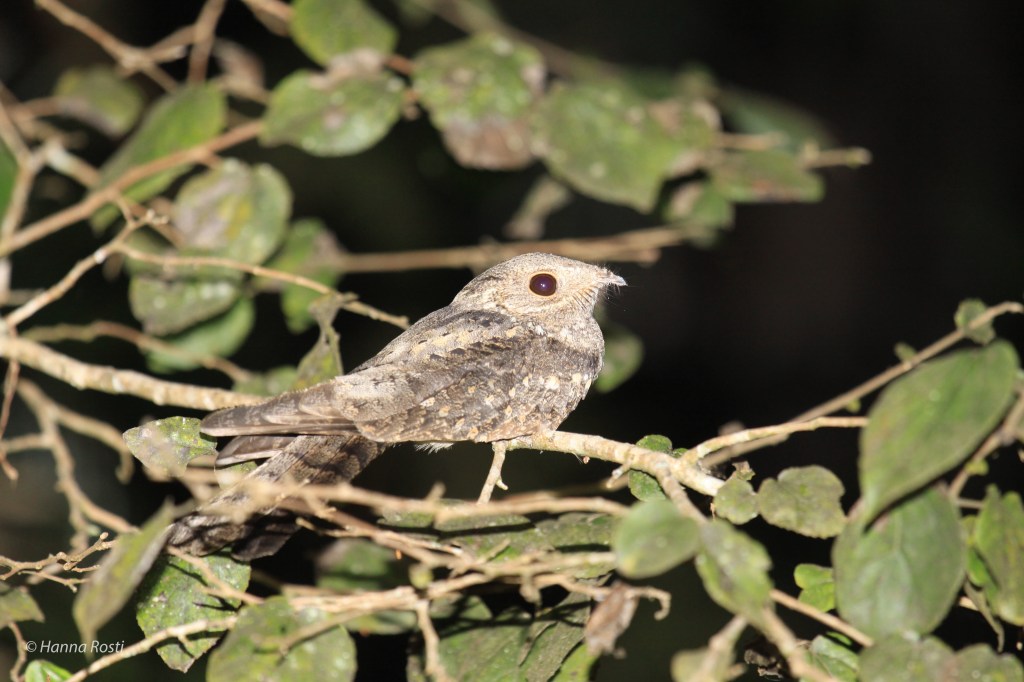
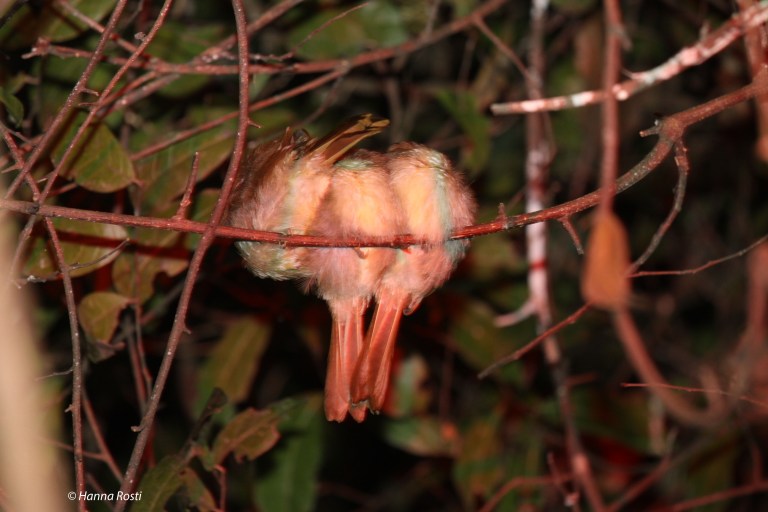
    These tree little birds were always in the exactly same place, same branch, sleeping and huddling together.

    In the darkness of the night animals communicate by calling to each other . These nocturnal animals are loud, and their calls are incredible. Later I will add photographs and recordings of these spectacular and endemic mammals that my research is focusing on.

    African wood owl is most common owl in the forest and couple calls to each other by using different calls.

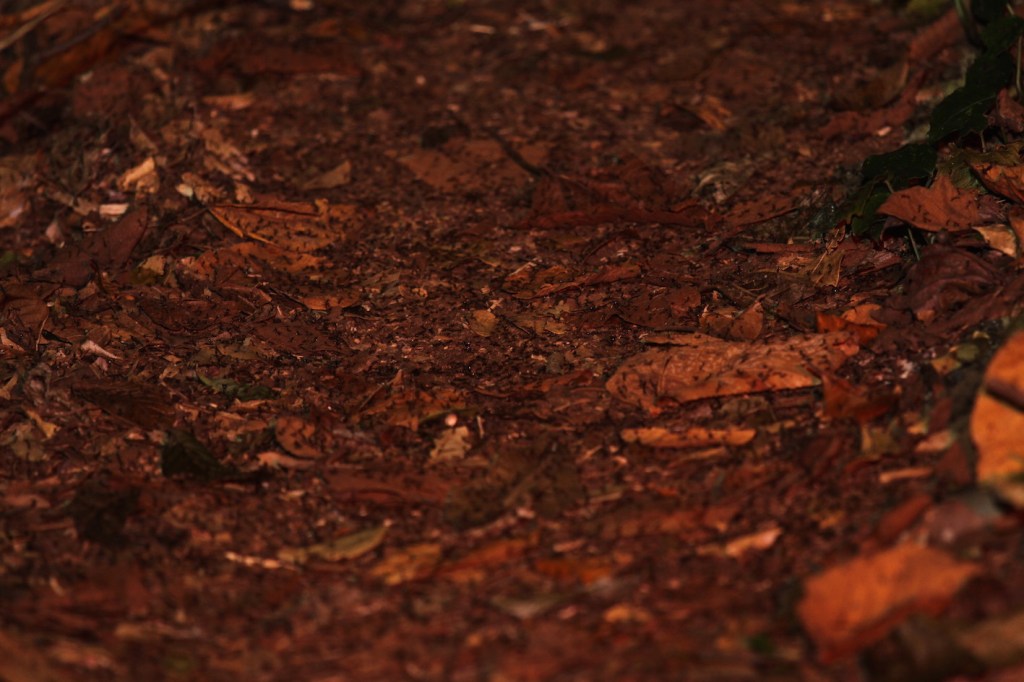
    I am often asked that is there anything to be afraid of in the forest? And yes there is – safari ants! There are some snakes and spiders, but I am not afraid of them. I have been colonized by safari ants twice. Ants climb on you when you stand on their way, and when they are all over your body they suddenly bite – all at once. There is no other way than to strip from the clothes. After that you definably learn to scan the ground couple times every minute, even when practically at sleep. Safari-ants can also be heard, as insects fleeing from them shake the dead leaves on the ground.

    Safari ants on color the ground

    There has not been much research in the forests at night. There is so much unknown. As Taita Hills is one of centers of endemic species in the world there are still so many species still unidentified. Only last fragments are remaining and conservation efforts for all indigenous trees are needed urgently! More indigenous trees need to be planted and corridors created between forest fragments.

    In the forest I have been always companied my assistant Benson Mwachola and occasionally also by Rechard Mwasi and Darius Mwambala from Taita Hills Research Station.

    In the morning scenery outside Ngangao is incredibly beautiful with yellow light coloring the snows of Kilimanjaro and savannas of Tsavo.