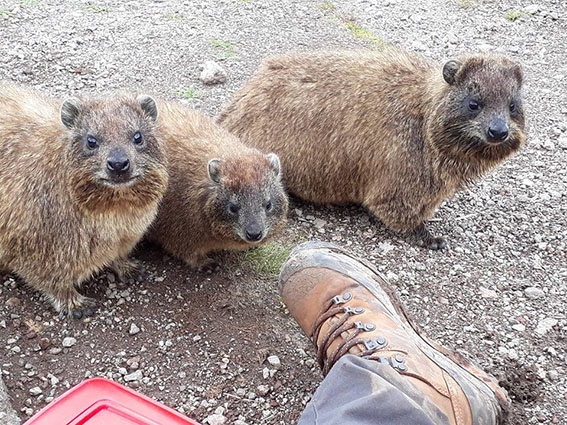
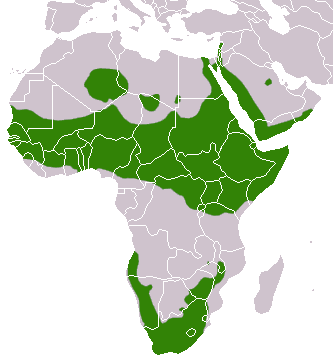
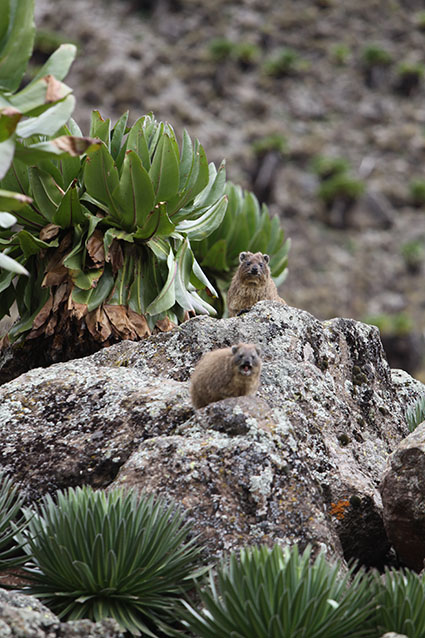
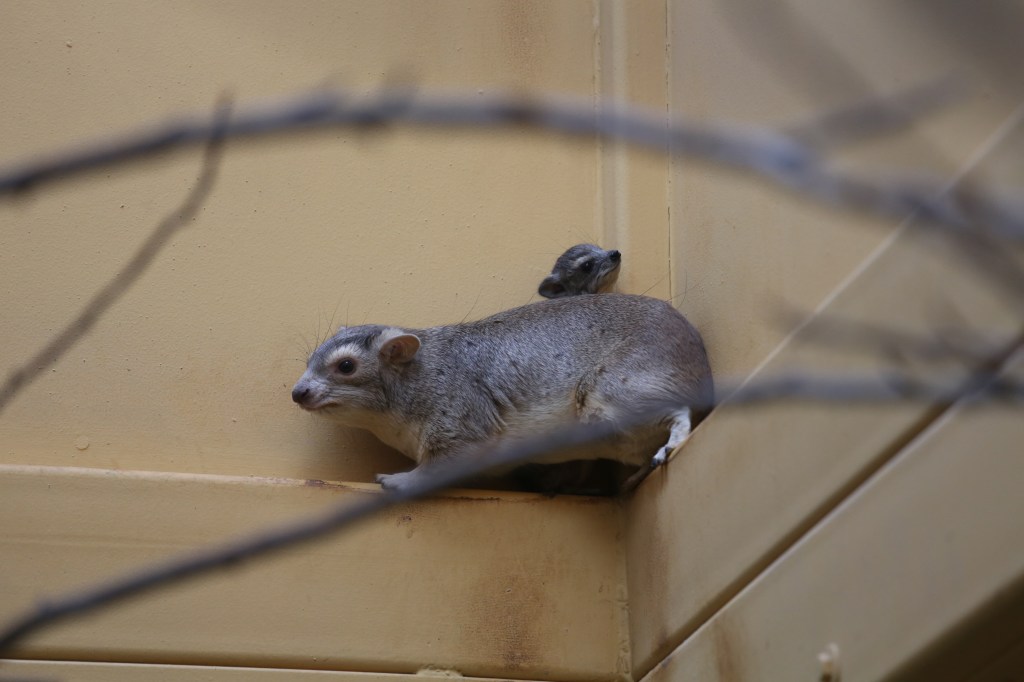
Three genuses are recognized:
- Dendrohyrax – tree hyraxes – 4 species at the moment – more to come
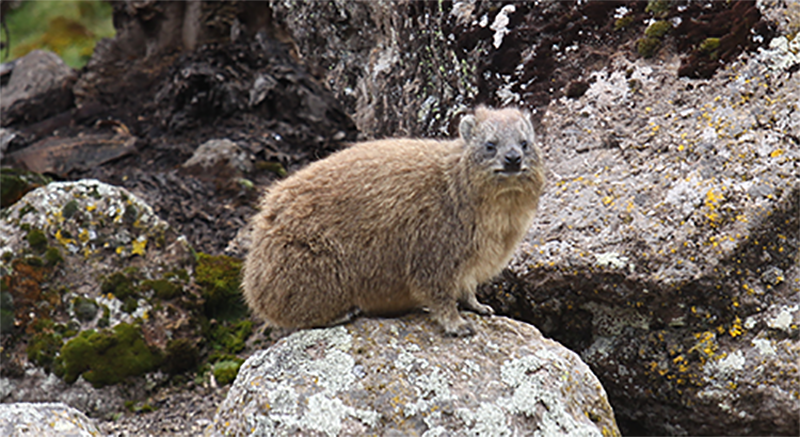
- Heterohyrax – bush hyrax – 1 species + 20+ subspecies
- Procavia – rock hyrax – 1 species +17 subspecies – and some of them are species
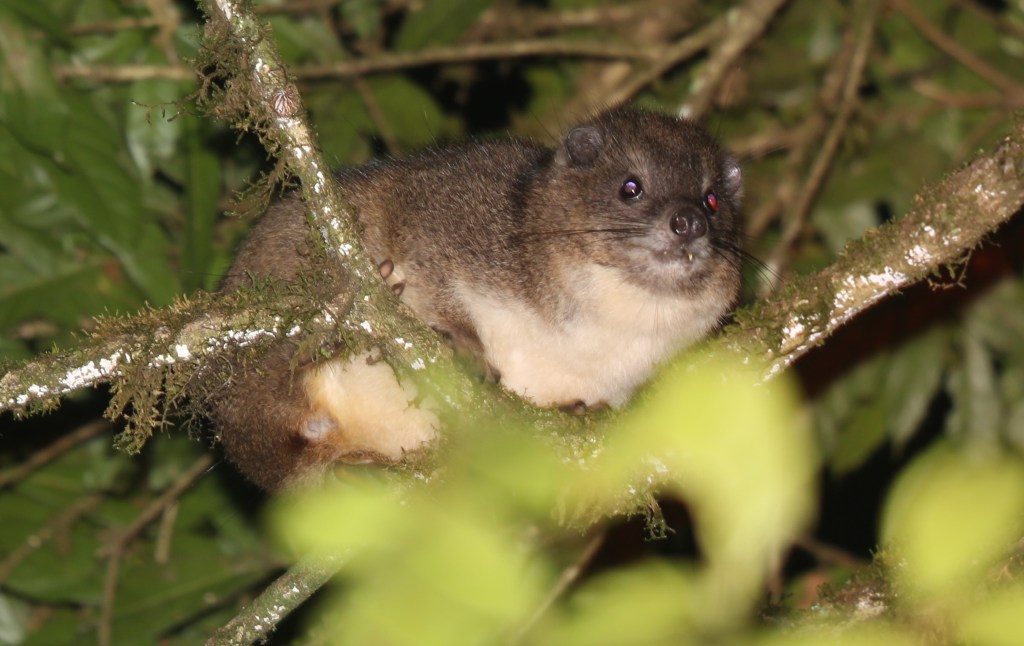
Some features
- small mammals 1.8-5.5 kg
- no visible tail
- coat dense and light grey to dark brown
- all three genera are highly vocal
Unusual features
- dorsal gland with hair with different color
- tactile hairs around the body (length up to 8 cm)
- forefoot has four digits and hindfoot three
- stomach divided into two chambers
- highly subdivided liver – plant food they use may be toxic
- internal testes
- unbranched caecum acts as a fermentation chamber that produces large amounts of volatile fatty acids that serve as an energy source
- effective kidney function, they have high capacity for concentrating urea, and excreting large amounts of undissolved calcium carbonate.
- many species defaecate to specific spots, and many species use latrines
- low metabolic rate
- they have poor ability to regulate their body temperature
- body temperature is is maintained by behavioral thermoregulation
- gestation period is long 6-8 months
Odd appearance has caused confusion
- First they were thought to be rodents, thus genus Procavia (cavia meaning before guinea pigs)
- Later called hyrax – equally wrong – as “shrew mouse”
- Dassie used in South Africa comes from Dutch badger – das
- 3000 years age Phoenician seamen found small mammals from Mediterrian and called the place “I-saphan-im” Island of the Hyrax. The Romans later modified the name to Hispania. That later became Spain. The animals were really rabbits! Not hyraxes, so the name “Spain” comes from faulty observation.
Related articles:
Taita tree hyraxes filmed at night
Acoustic communication of Taita tree hyrax
Western tree hyrax – Dendrohyrax dorsalis
Taita tree hyrax – mysterious relict species
Key reference: Shoshani, J., Bloomer, P., Seiffert, E. (2013) ‘Order Hyracoidea – Hyraxes’ in Mammals of Africa. London, Bloomsbury, pp. 148-151.
Other sources for Dendrohyraxes:
Cordeiro, N.J. et al. (2005) ‘Notes on the ecology and status of some forest mammals in four Eastern Arc Mountains, Tanzania’, Journal of East African Natural History, 94(1), pp. 175–189. doi:10.2982/0012-8317(2005)94[175:NOTEAS]2.0.CO;2.
Gaylard, A. and Kerley, G.I.H. (1997) ‘Diet of Tree Hyraxes Dendrohyrax arboreus (Hyracoidea: Procaviidae) in the Eastern Cape, South Africa’, Journal of Mammalogy, 78(1), pp. 213–221. doi:10.2307/1382654.
Gaylard, A. and Kerley, G.I.H. (2001) ‘Habitat assessment for a rare, arboreal forest mammal, the tree hyrax (Dendrohyrax arboreus)’, African Journal of Ecology, 39(2), pp. 205–212. doi:10.1046/j.0141-6707.2000.301.x.
Hoeck, H. (no date) ‘Some thoughts on the distribution of the tree hyraxes (genus Dendrohyrax) in Northern Tanzania’, 2017(13:47–49).
IUCN (2013) ‘Dendrohyrax arboreus: Butynski, T., Hoeck, H. & de Jong, Y.A.: The IUCN Red List of Threatened Species 2015: e.T6409A21282806’. International Union for Conservation of Nature. doi:10.2305/IUCN.UK.2015-2.RLTS.T6409A21282806.en.
IUCN (2014) ‘Dendrohyrax validus: Hoeck, H., Rovero, F., Cordeiro, N., Butynski, T., Perkin, A. & Jones, T.: The IUCN Red List of Threatened Species 2015: e.T136599A21288090’. International Union for Conservation of Nature. doi:10.2305/IUCN.UK.2015-2.RLTS.T136599A21288090.en.
Kundaeli, J.N. (1976) ‘Distribution of tree hyrax (Dendrohyrax validus validus True) on Mt Kilimanjaro, Tanzania’, African Journal of Ecology, 14(4), pp. 253–264. doi:10.1111/j.1365-2028.1976.tb00241.x.
Milner, J.M. and Harris, S. (1999) ‘Habitat use and ranging behaviour of tree hyrax, Dendrohyrax arboreus, in the Virunga Volcanoes, Rwanda: Habitat use by tree hyrax’, African Journal of Ecology, 37(3), pp. 281–294. doi:10.1046/j.1365-2028.1999.00185.x.
Oates, J.F. et al. (2021) ‘A new species of tree hyrax (Procaviidae: (Dendrohyrax) from West Africa and the significance of the Niger–Volta interfluvium in mammalian biogeography’, Zoological Journal of the Linnean Society, p. zlab029. doi:10.1093/zoolinnean/zlab029.
Opperman, E.J., Cherry, M.I. and Makunga, N.P. (2018) ‘Community harvesting of trees used as dens and for food by the tree hyrax (Dendrohyrax arboreus) in the Pirie forest, South Africa’, Koedoe, 60(1). doi:10.4102/koedoe.v60i1.1481.
Roberts, D., Topp-Jørgensen, E. and Moyer, D. (2013) ‘Dendrohyrax validus Eastern tree hyrax’, in Mammals of Africa. London, Bloomsbury, pp. 158–161.
Topp-Jørgensen, J.E. et al. (2008) ‘Quantifying the Response of Tree Hyraxes ( Dendrohyrax Validus ) to Human Disturbance in the Udzungwa Mountains, Tanzania’, Tropical Conservation Science, 1(1), pp. 63–74. doi:10.1177/194008290800100106.
True, F.W. (1890) ‘Description of two new species of mammals from Mt. Kilima-Njaro, East Africa’, Proceedings of the United States National Museum, 13(814), pp. 227–229. doi:10.5479/si.00963801.814.227.