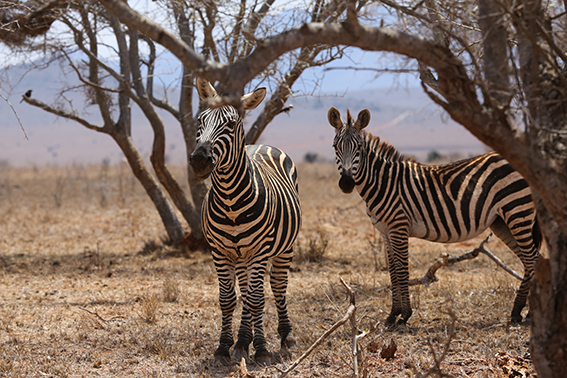
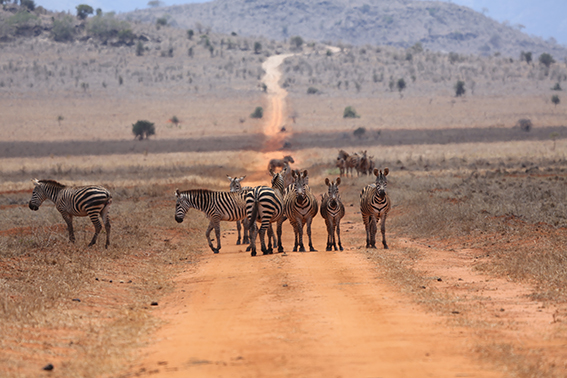
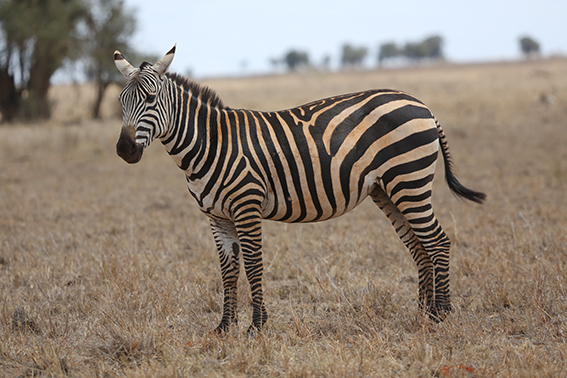
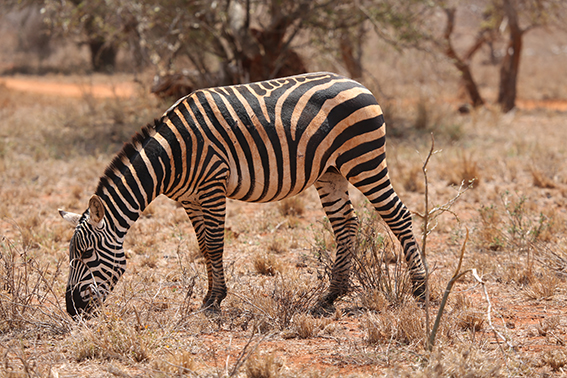
Many of the grazers are partly browsers, meaning that they shift to eating leaves during dry season, these are e.g. impalas and zebras.
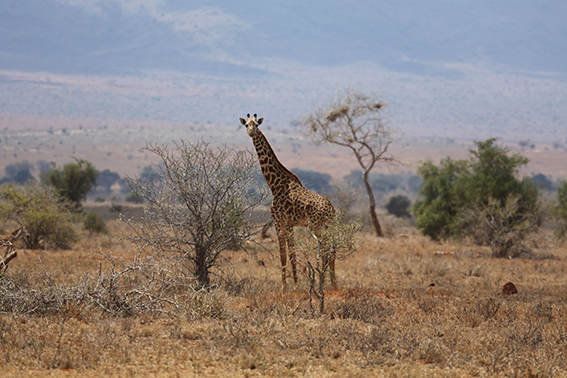
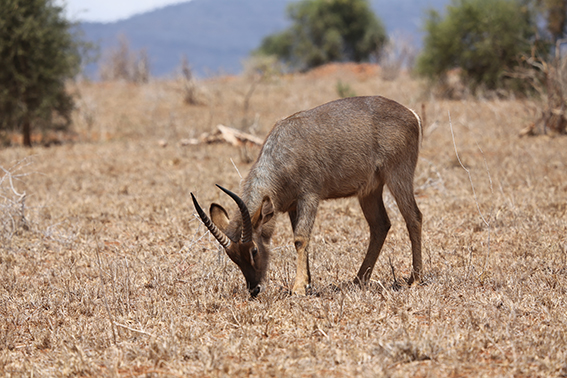
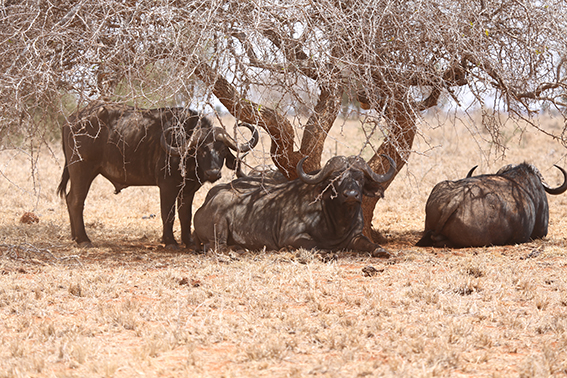
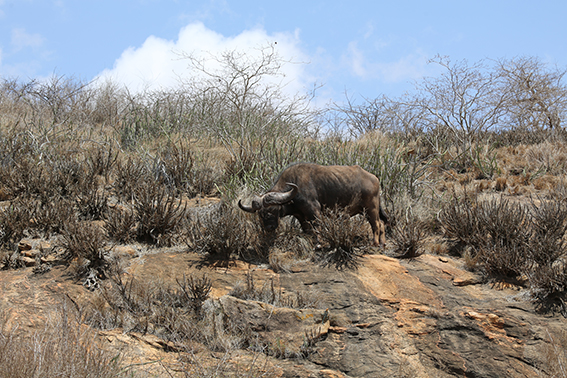
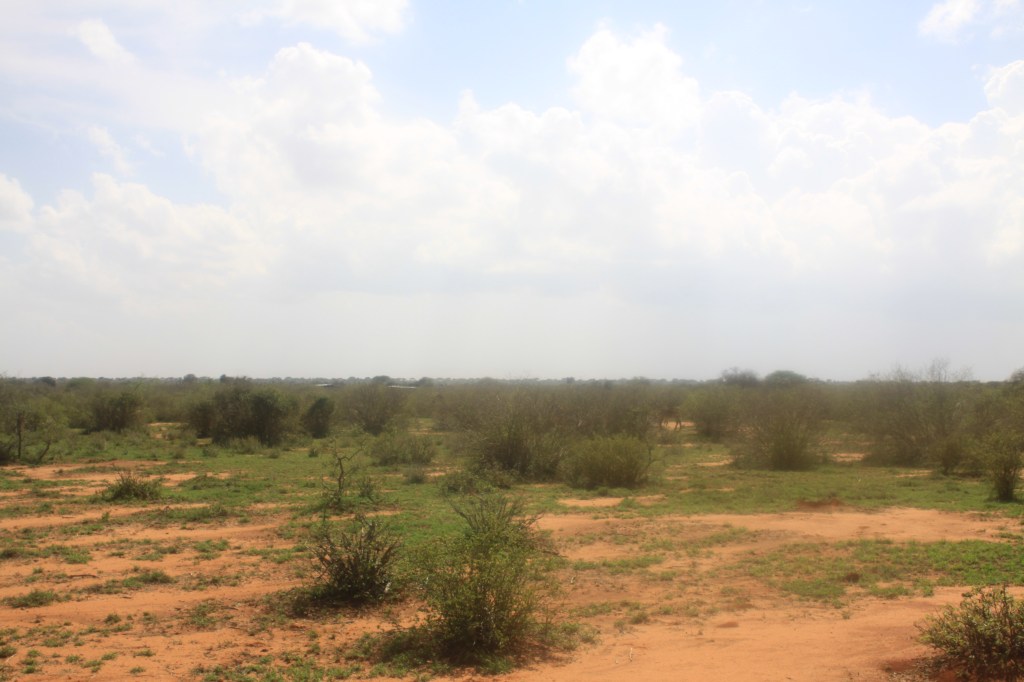
When there are less trees, there is less food. Especially green food during drought. You can see from this gallery of images how little trees and green there is in Lumo during drought.
However, I didn’t see any animals dying of hunger or thirst.
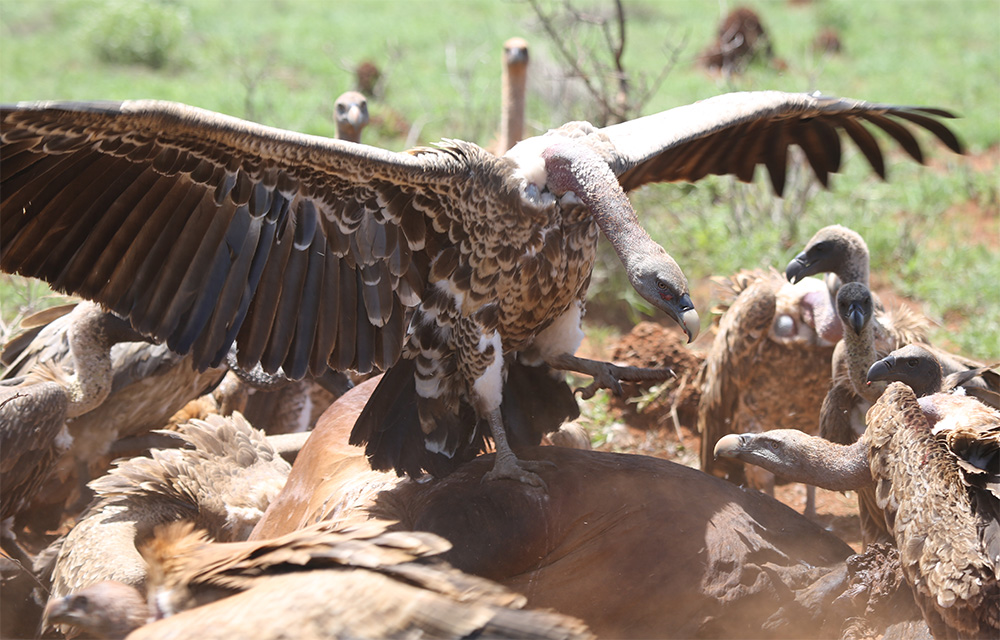
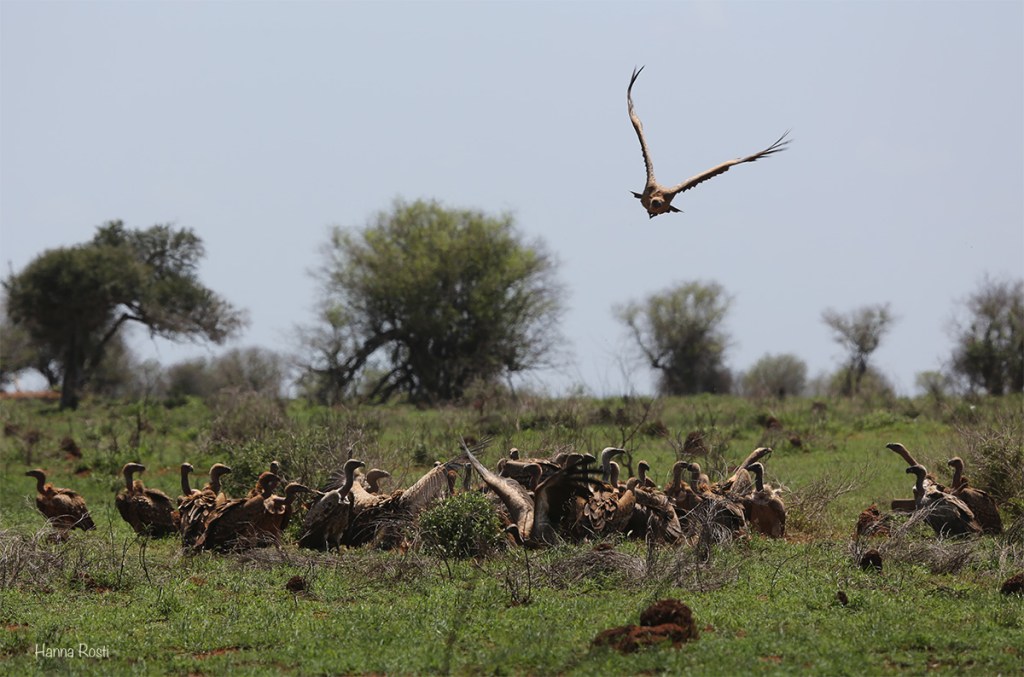
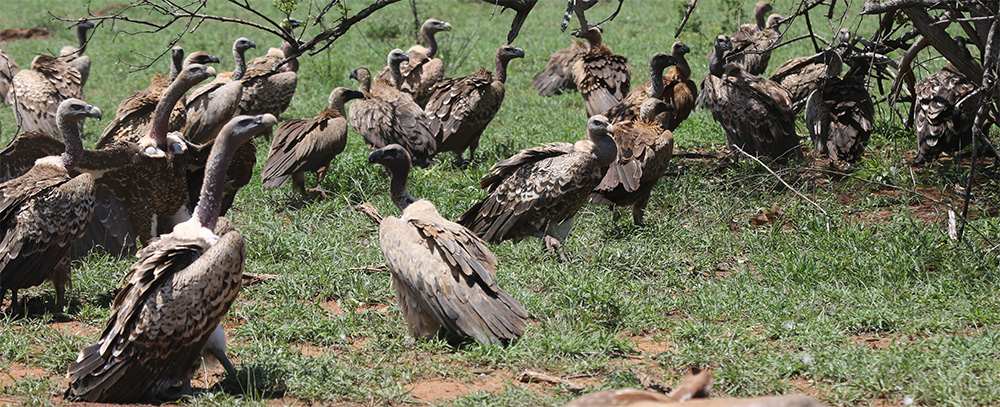
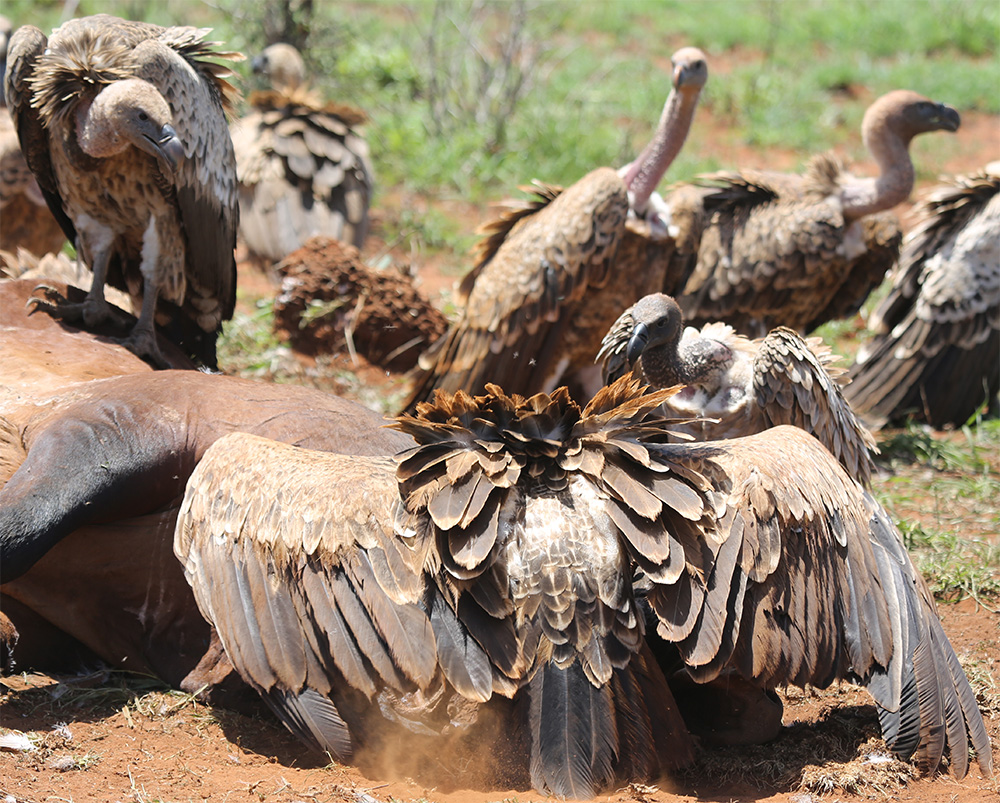
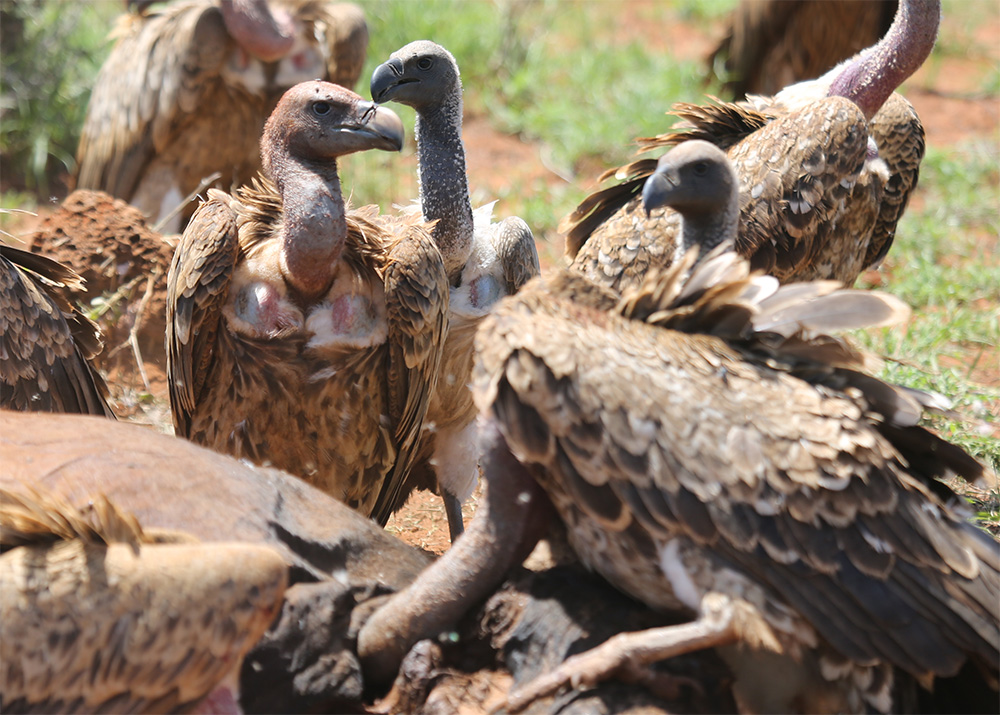
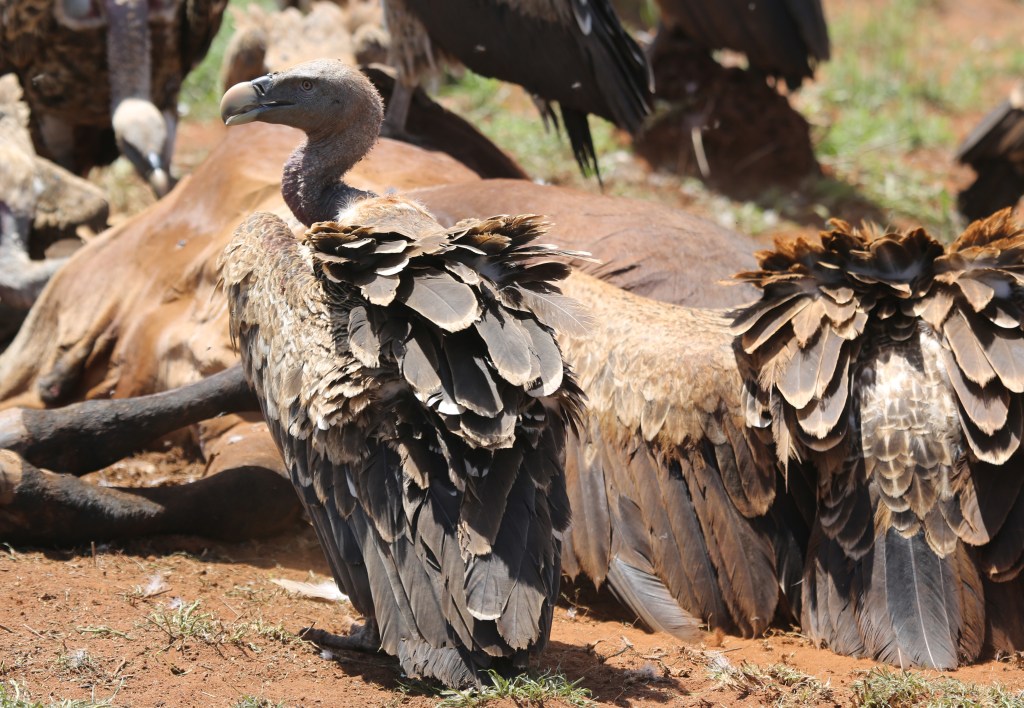
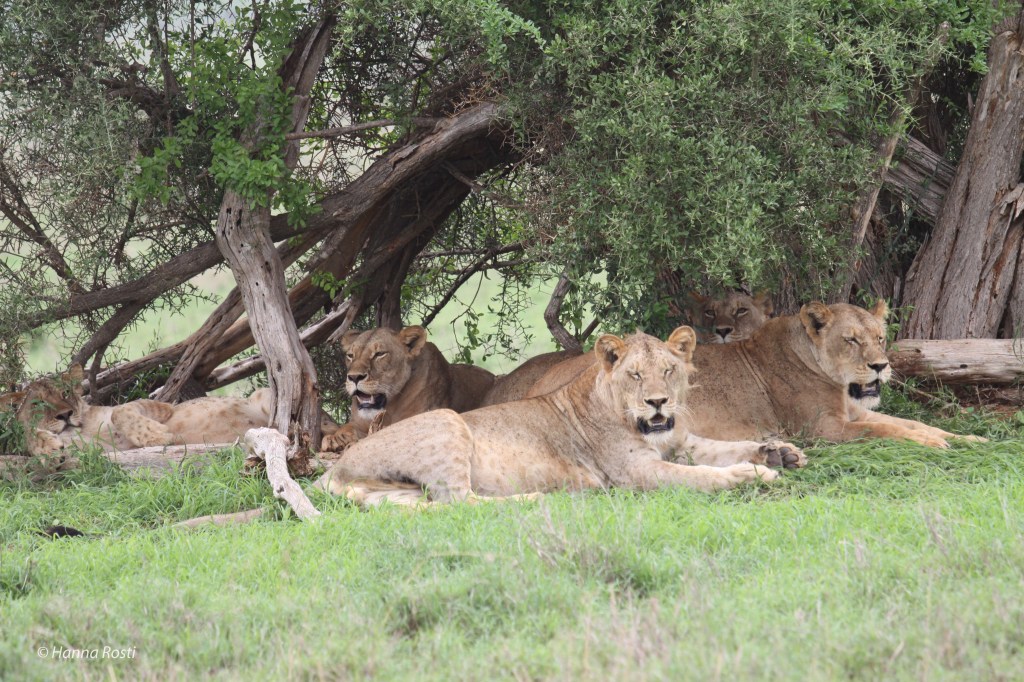
Critically Endangered (CR) vultures, Rüppells Vulture and White-Backed Vulture feeding on cow that has been killed by lions in Lumo conservancy Kenya in 2021. As they feed they make considerable noise, squealing.
This article shows how to identify these species and discusses reasons behing re, even though it is not always easy as their coloring changes with age.
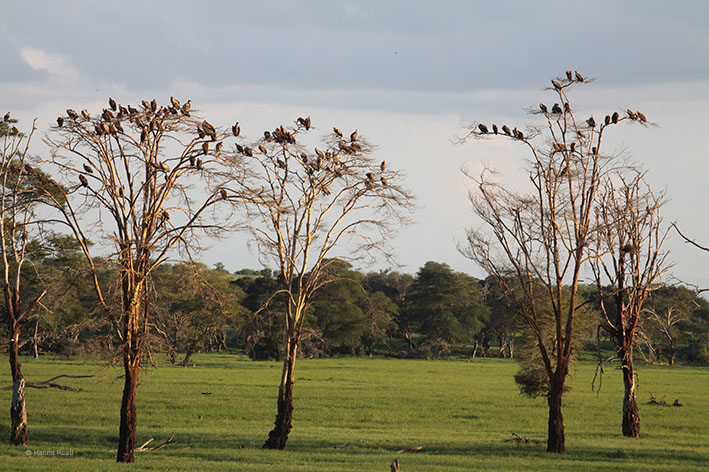
Magnificent sight in African savannas that has sadly become increasingly rare. These vultures have gathered here in Lumo conservancy, Taita, Kenya.
Rüppell’s Vulture (Gyps rueppelli)
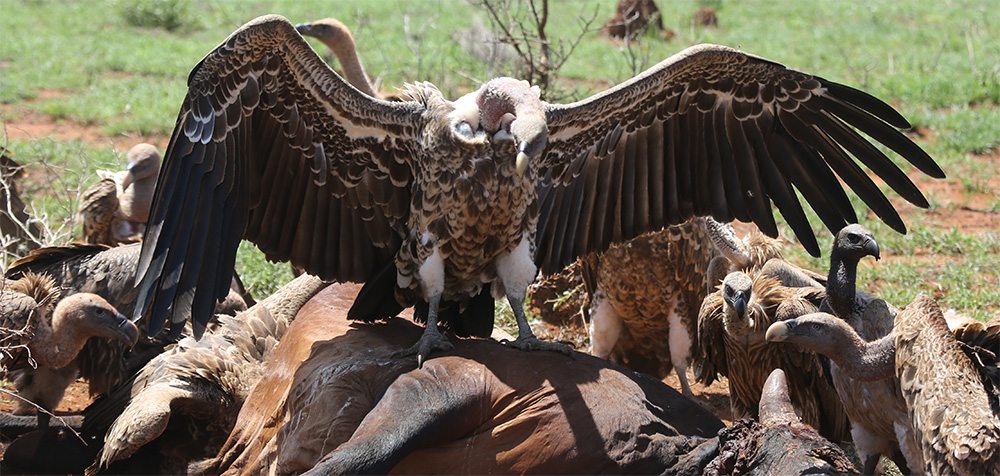
Larger species is Rüppells Vulture (Gyps rueppelli), with beautiful white decorations in the feathers and white collar.
Rüppells vulture (Gyps rueppelli) standing on a cow.Wingspan of this species is over two meters 226-255.
There are no feathers on the head or the neck. This allows birds to stick their heads inside carcasses. There was actually one fully in on this carcass.
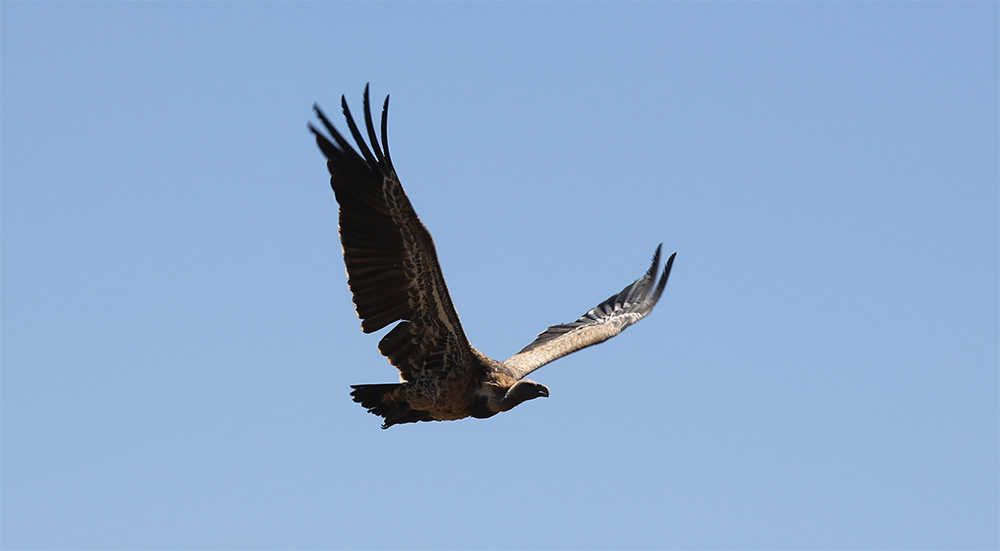
Rüppell’s vulture is a species that has flown in the altitude of 11300m. Individual died as it crashed with aeroplane. This is highest altitude where bird has ever been proven to be.
Rüppell’s vulture on flight
Rüppell’s vulture weighs 6.4-9 kg. Wingspan is 226-255.
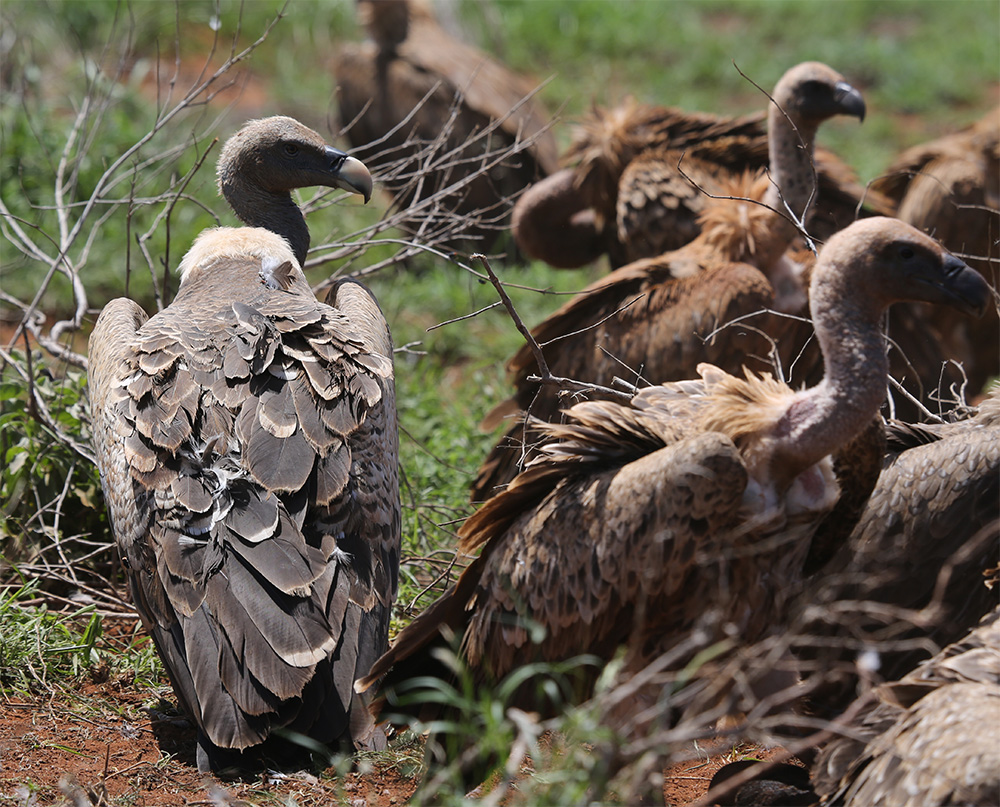
Rüppell’s Vulture from behind (on the left). Others are White-Backed Vultures.
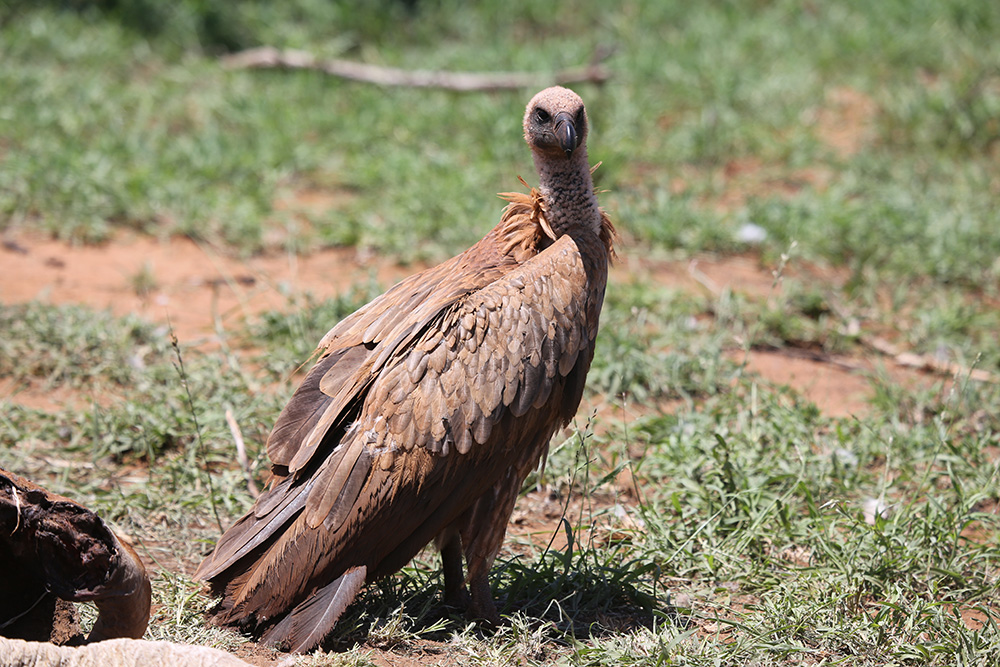
White-Backed Vulture (Gyps africanus)
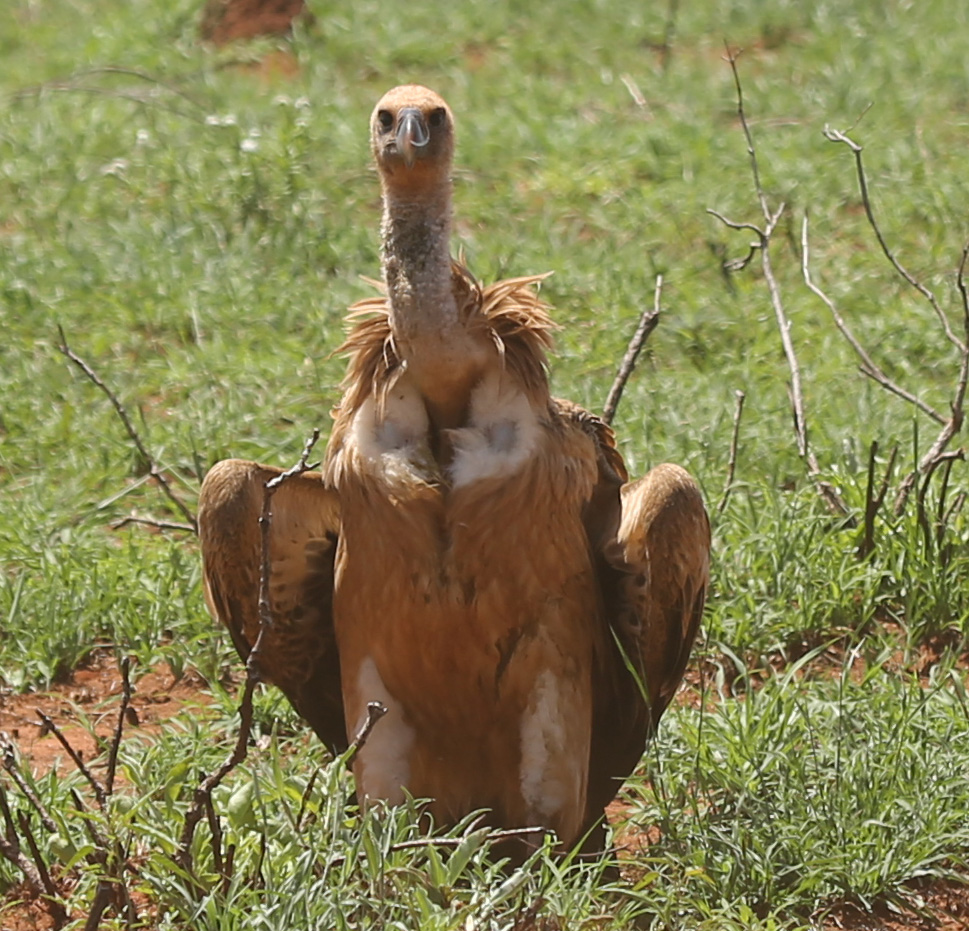
White-Backed Vulture is ligher brown and more even in coloring. It weighs 4.2-7.2 kilograms and wingspan is 192-225 cm.
White-Backed Vulture (Gyps africanus) is smaller than Rüppells Vulture and may avoid confrontation with larger species.
White-Backed Vulture from the front with nice light brown coloring.
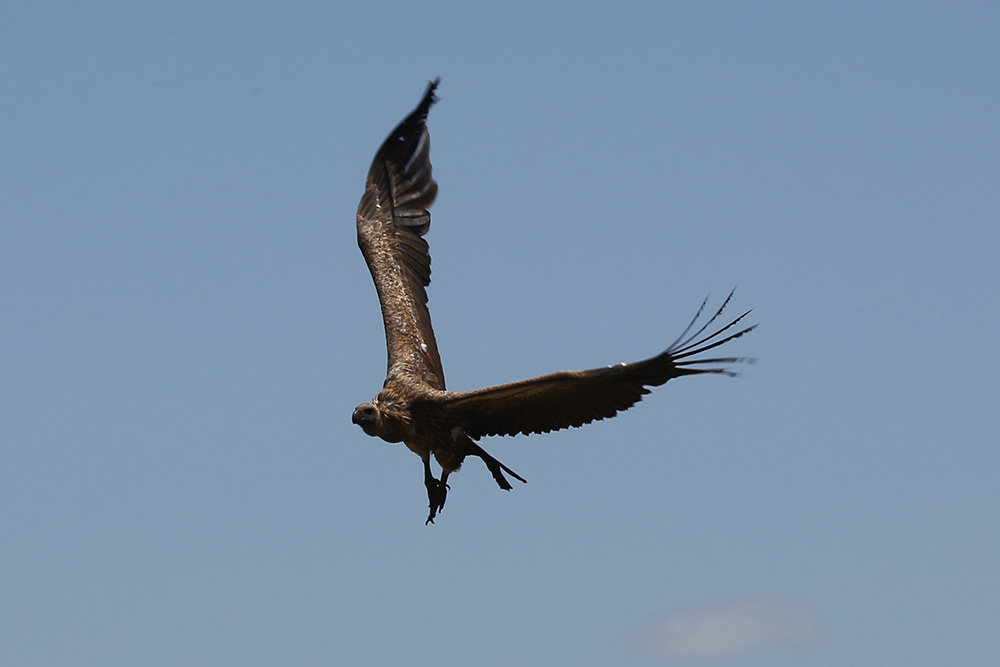
White-Backed Vulture on flight, its wingspan may also exceed two meters
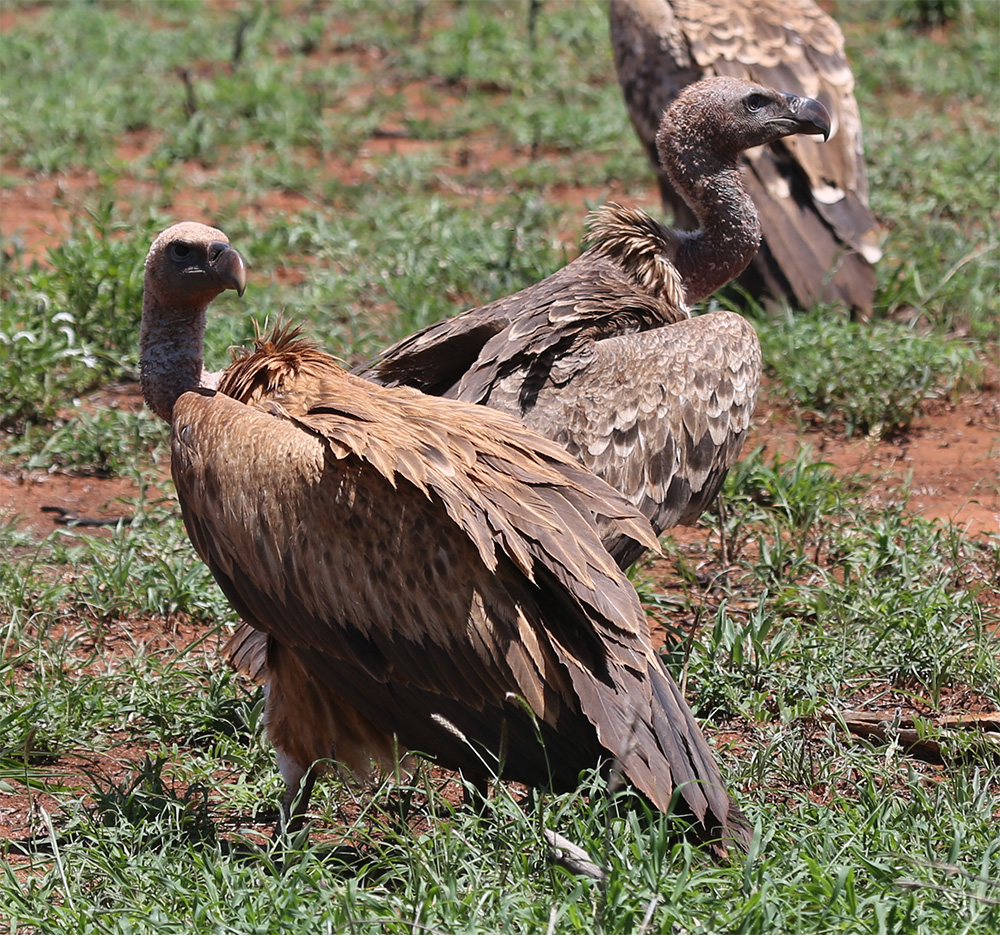
How to separate these two species? Here in the front is White-Backed Vulture and on the behind Rüppell’s Vulture. Coloring is different, with White-Backed being lighter brown. Rüppell’s is larger and sturdier.
Reasons for decrease of vultures
Loss of trees used for resting and nesting. Vultures need large trees (about 1m wide at breast height) in the places where they are not disturbed. These trees are rare in Africa.
These are trees in Taita Sanctuary where vultures used to sleep in 2018 and 2019. Now they have moved. These trees have died as they cant survive this treatment by vultures.These trees were only ones in the area large enough for vultures.
Pesticides and poisoning – as vultures are top carnivores – what ever their prey has been feeding on ends up in vultures and accumulates to their bodies causing serious consequences including death. These are heavy metals from pesticides, medicines used for cattle and direct poisons. Vultures have been poisoned accidentally and non-accidentally.
Loss of habitat, as ever increasing human population requires more and more land. Habitat suitable for vultures decrease all over Africa.
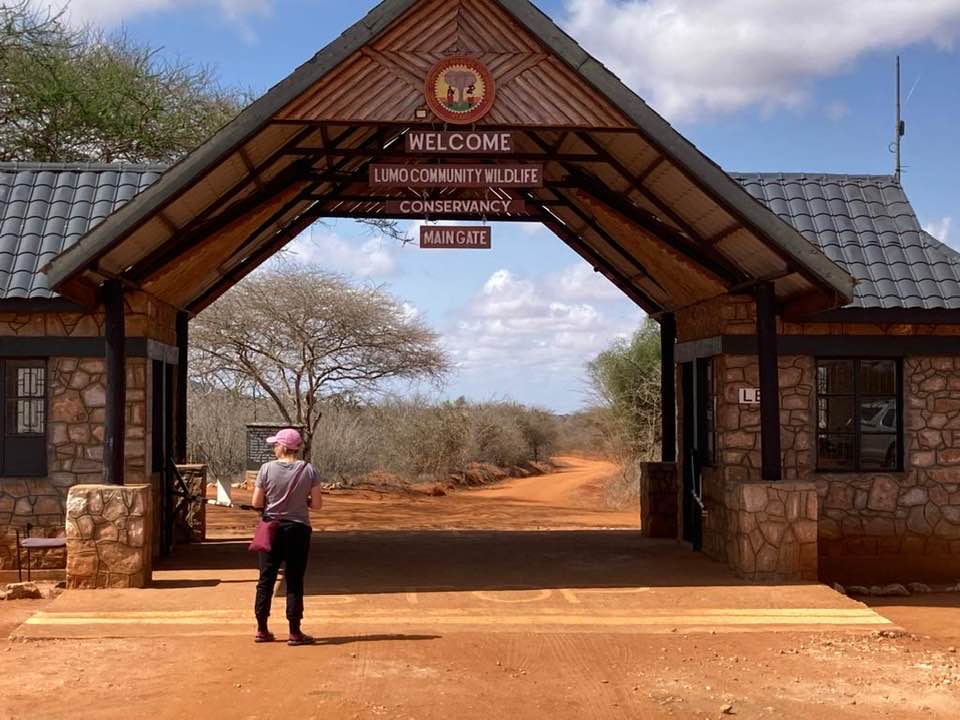
Lumo is community owned conservation area in Taita. It is bordered by Taita Hills and Tsavo National Park. On the other side Lumo is connected to Sarova Taita Hills Wildlife Sanctuary. Lumo is 50 000 hectare area owned by more than 5000 local people. Funds Lumo is able to gather by wildlife tourism is shared with local people. Most money goes to pay school bills for those children that would not be able to go to school otherwise.
Besides school bills, Lumo also supports local community by any means they have by having bank day, delivering firewood and food to schools, helping in fencing and so on.
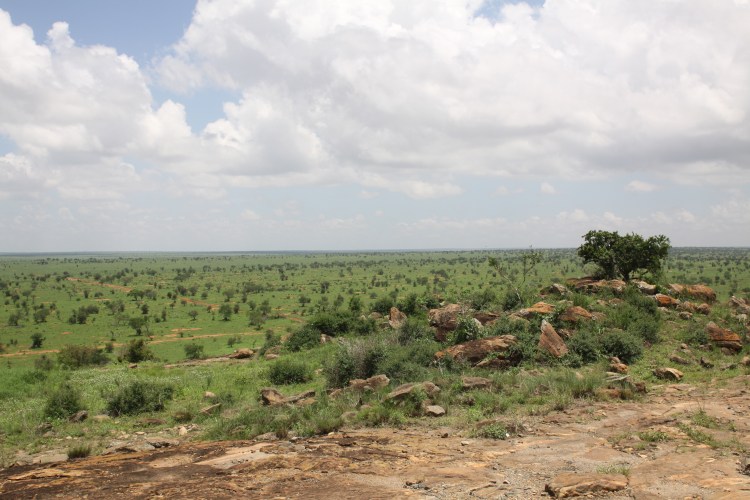
Lumo is strikingly beautiful savanna. Heart of the Lumo is Lions Rock. A rock formation that is popular among large cats, lions and leopards.
View from beautiful Lions Rock in Lumo
I spent four weeks in Lumo in 2018 as a volunteer. It was a five star safari with Lumo rangers. Accommodation was more moderate than what your would have expected in five star safari, but very good for me. We even had our own chef.
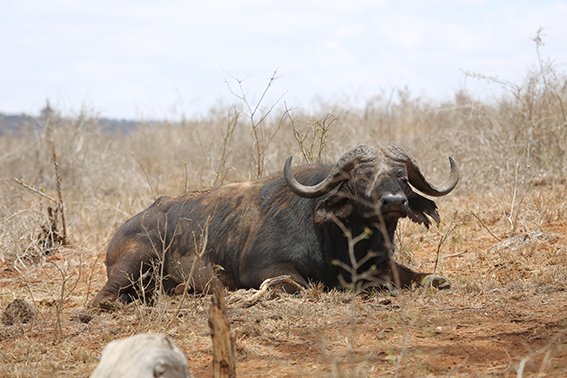
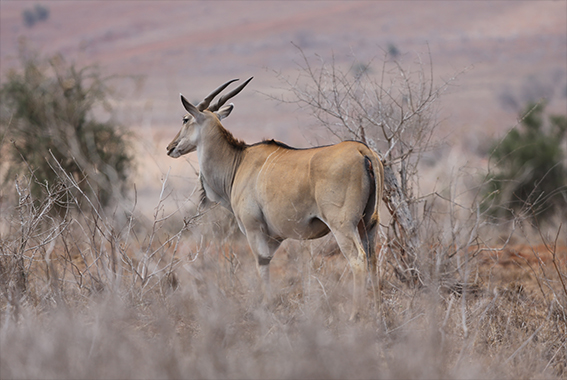
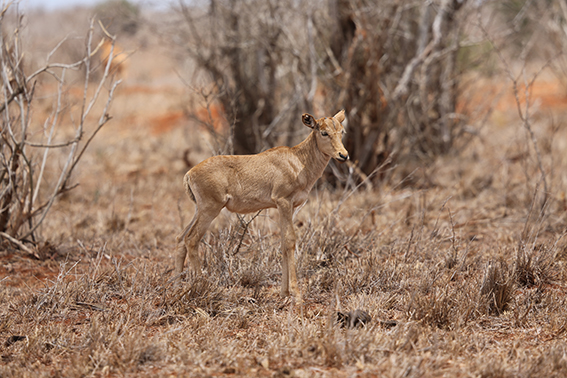
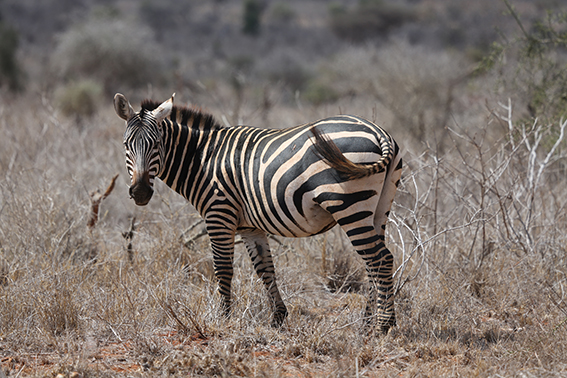
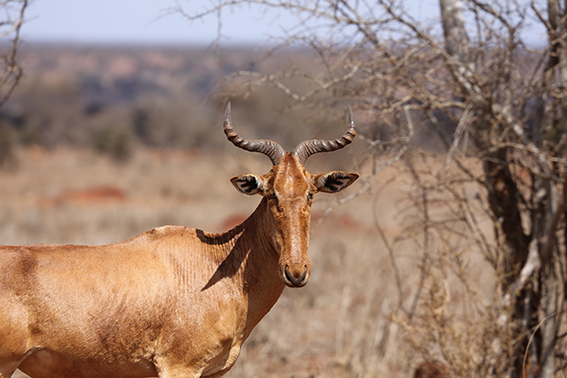
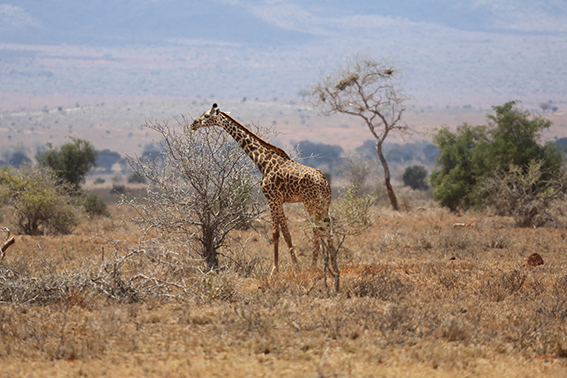
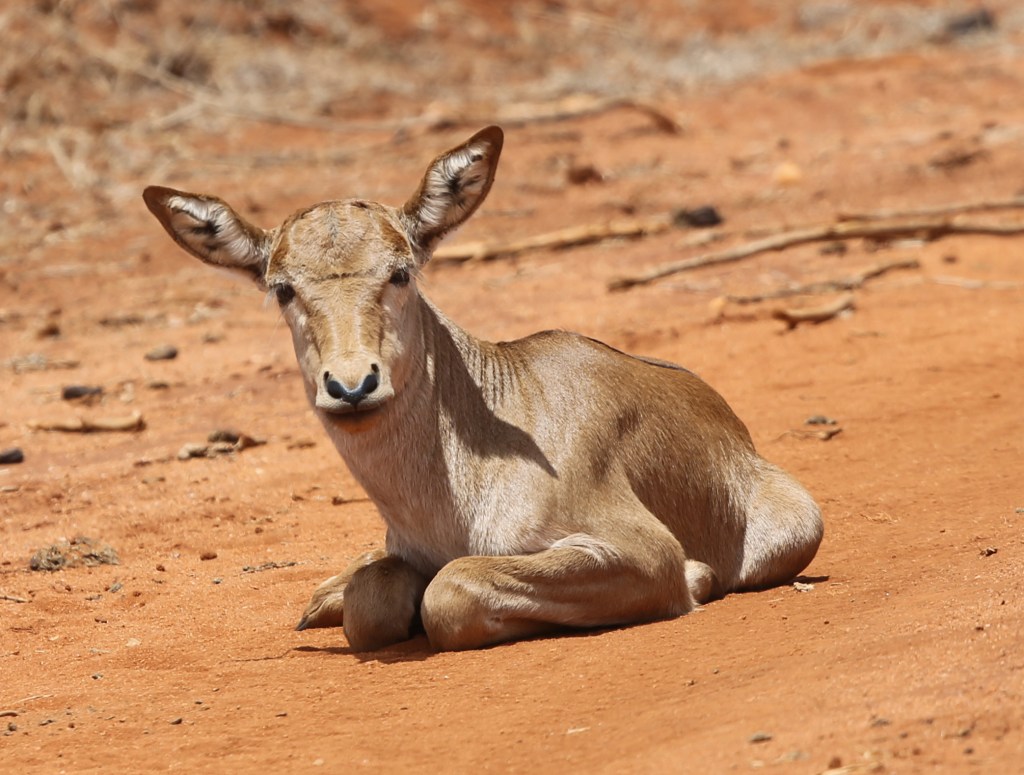
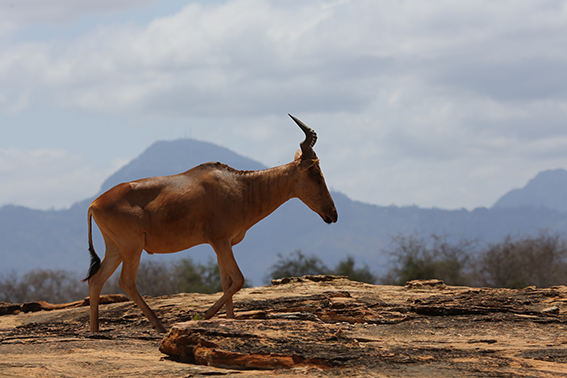
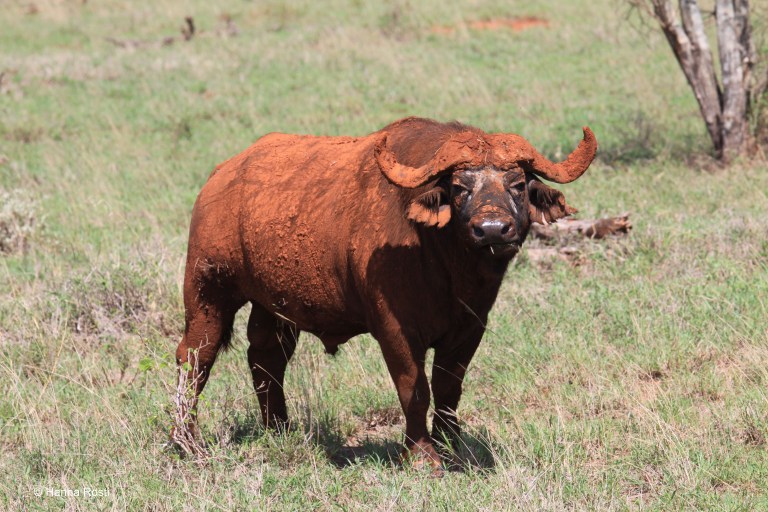
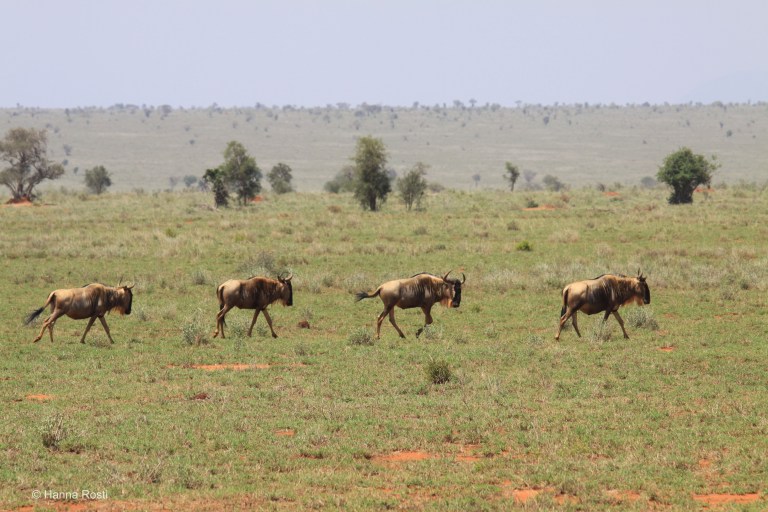
There is abundant wildlife in Lumo. Elephants, hartebeest, giraffe, water buffalos, zebras, grant gazelles, impalas, cheetahs, lions. All except the rhino.
I saw many very small baby elephants in Lumo in March 2018. Baby elephant was so small that they must have been born in Lumo.
This is photo gallery, larger images can be seen by clicking images
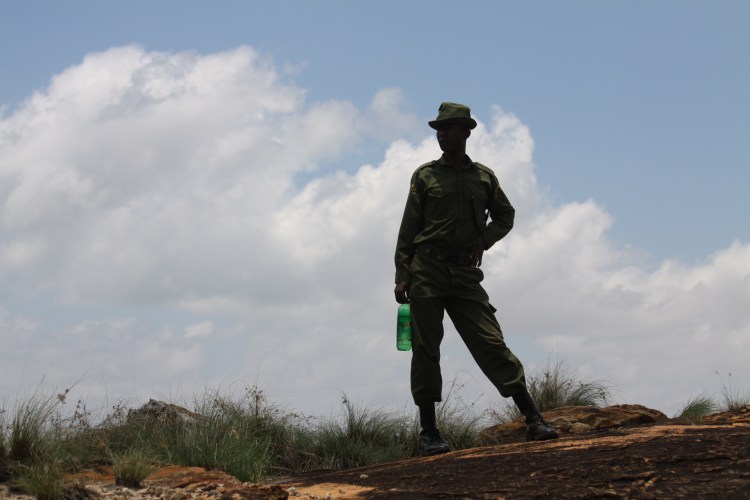
Dedicated rangers of Lumo are heroes of conservation. I have enormous respect on the work that they do every day, year after year. Many rangers in Lumo have worked there for 20 years. During this time poaching has been minimized.
Head ranger Elvis at Lions Rock
Lumo ranger patrol the area by foot and by car. This is important way to keep poaching away and observe possibly injured animals. Population numbers of animals are calculated with GPS locations. University of Helsinki also does research in the area.
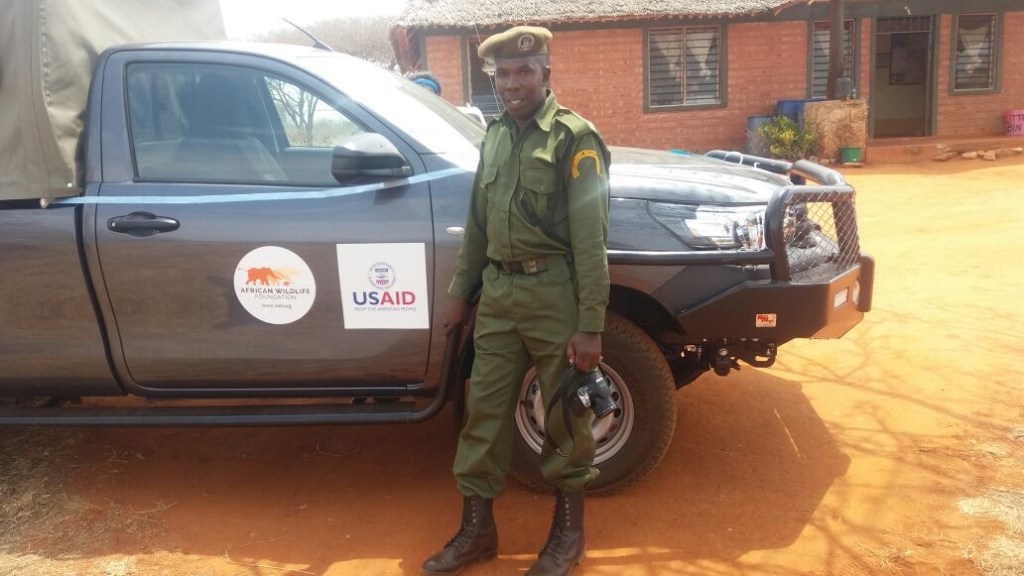
Lumo ranger and driver Dennis Kironge with new car in August 2018 in front of Lumo office.
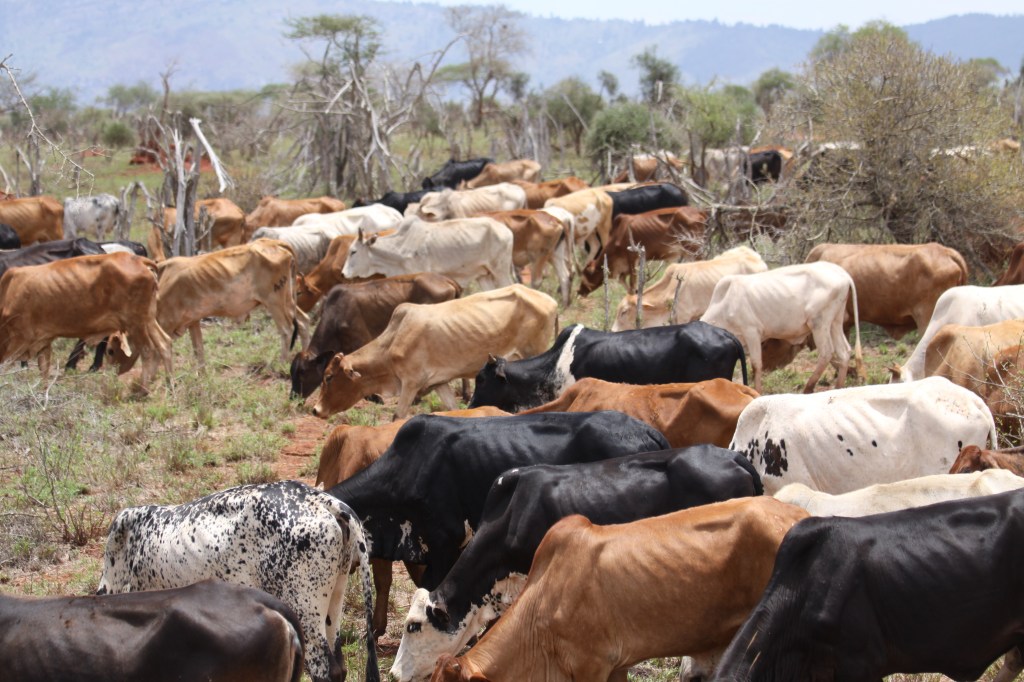
There are cattle grazing areas inside Lumo. As Lumo was founded all cattle farmers in the area didn’t join. Too many cows have caused serious erosion in the grazing area. The number of cows is too many. Markets for beef are small, and cows are living until old age, having young each year. Owners of the cows are not the ones that herd them.
These cows were grazing in wrong area and they where escorted away.
Having too much livestock has caused serious erasion in grazing areas. However having livestock inside conservation areas is not all bad. In fact humans have kept cattle in Africa for thousands of years. Many ungulates, zebras and impalas for example, prefer to eat shorter grass. In shorter grass nutrient level is higher. Cattle keeps grass low. In areas where there is no grazing hay may grow up to one meter high. These tall grass areas are usually quite empty of wildlife, as this tall grass is very low in nutrients.
Erosion in cattle grazing area.
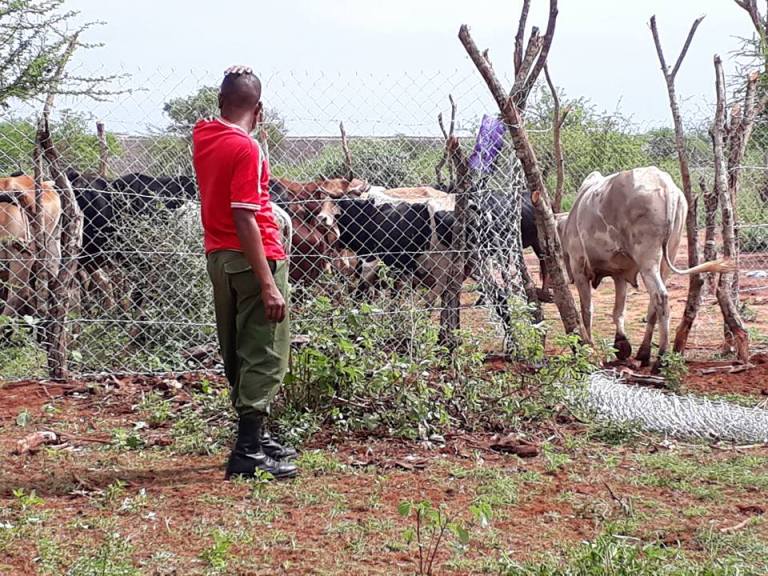
In March 2018 “cattle prison” was founded in Lumo. Now cattle found grazing in non grazing areas are herded to this fenced area. Owner of the cattle has to pay to get his cattle back. I was there when it was made, and there was not even a gate installed before first herd was in! Owner had to pay about 500 euros to get the cattle back. It changed the situation completely, and now there is no grazing inside areas dedicated for conservation. Lumo has also worked with local community to improve markets for different products made of cattle, like meat, skins, even bones can be used as jewelry. Goal is to decrease number of cows and improve lives of local people.
Cattle prison in February 2018.
More information about Lumo, including how to volunteer from their website bellow. If you are interested in volunteering I suggest that you contact Lumo directly. There are several agencies that act as middle man, however they take much of the money themselves. In Lumo great work is done with minimum funding.
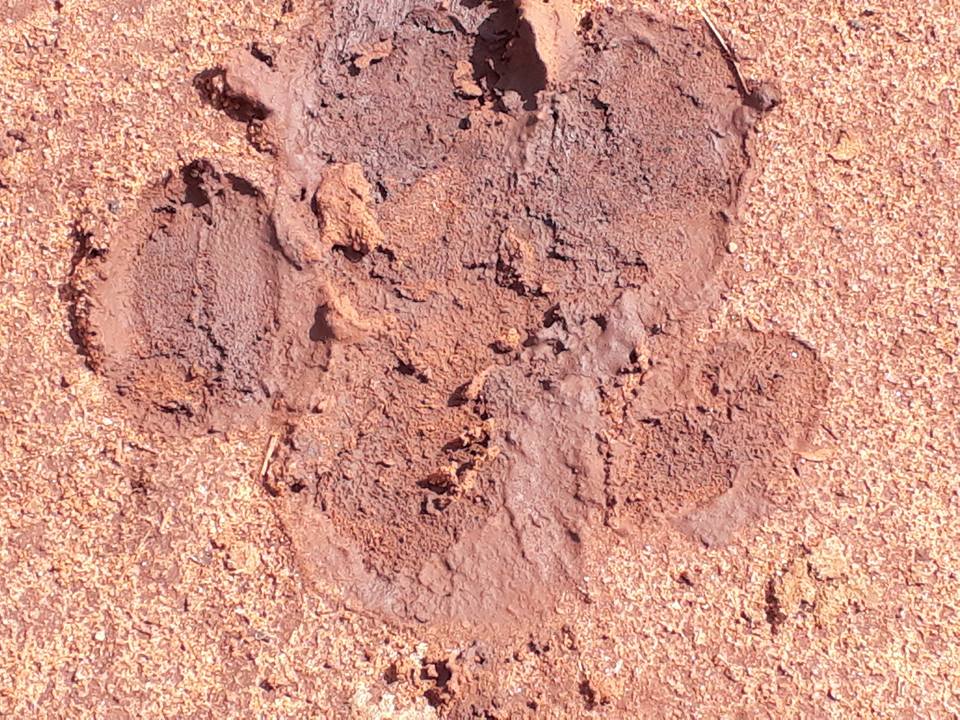
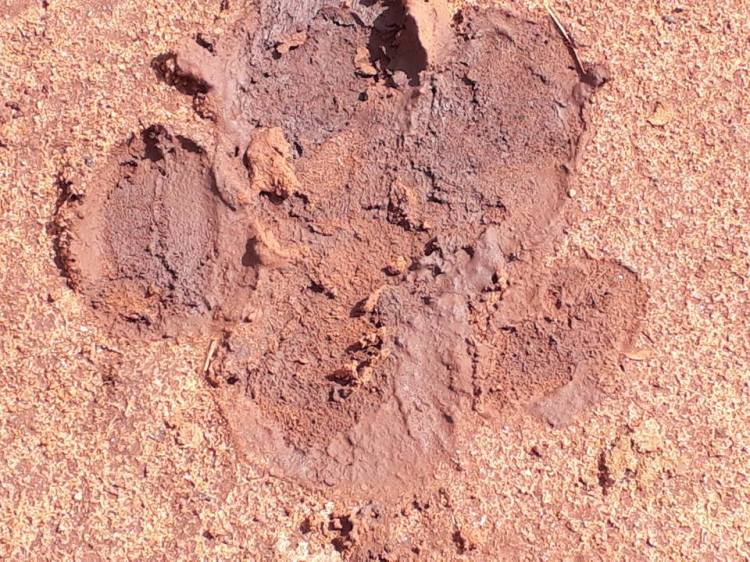
As I was volunteering in Lumo, one day we came across footprints on the road, quite close to Lions Rock. Head-ranger Elvis and others thought that there is camel, escaped from some local camel farm.
Mystery footprint
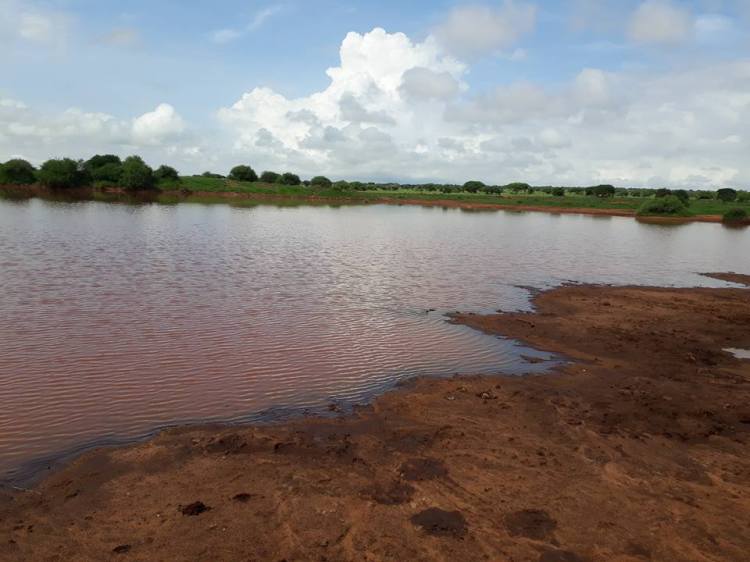
As we followed these foot prints for a day, they lead to small water bond, made for local cows and wildlife, called dam. It certainly could not be a camel! So we started to look for a Hippo instead.
Footprints leading to the water
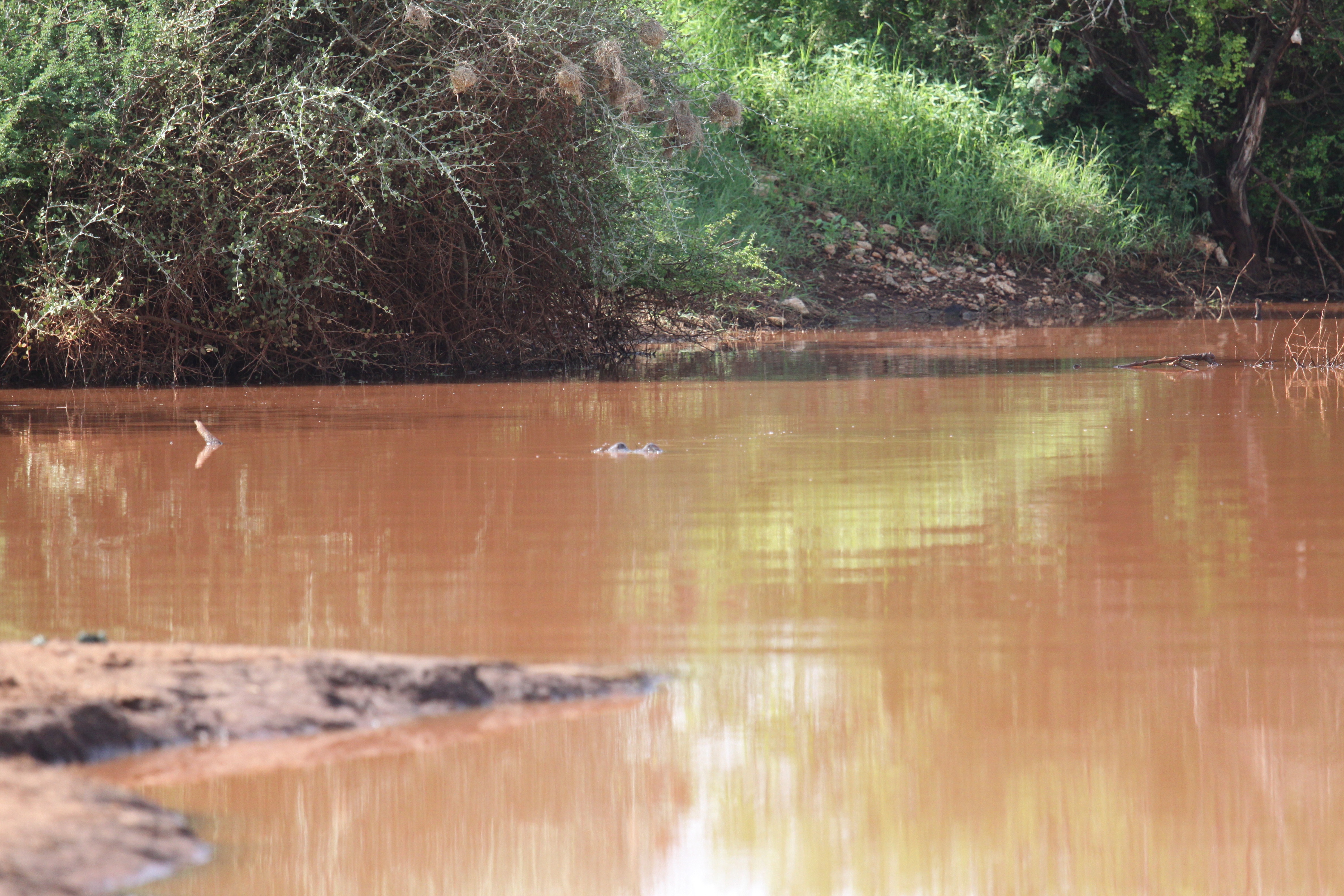
Footprints were going in and coming out of the water. Rangers went look for it from the nearby bushes, as I stayed by the bond, and kept eye on the brown surface of the water. After wait, that felt very long, I could see nostrils arising from water.
First Hippo in Lumo ever, and only photograph of it.
Kenya wildlife service (KWS) was informed, and they came the following day. Idea was to relocate Hippo to the area, where there would be space for it. This Hippo most probably was young male, that highly territorial males had chased away from Lake Jipe about 50 km away. A long walk for a large animal!
When KWS arrived, Hippo was no longer there. They and we searched for it everywhere with no luck. Day after that we heard sad news that Hippo had been shoot in Bura village. It had been aggressive towards people, and there had been no alternative. Somehow that Hippo had walked unnoticed from fenced Lumo all the way to the mountains. It had been very bad choice as in mountain slopes there are simply no places for Hippos to go underwater.
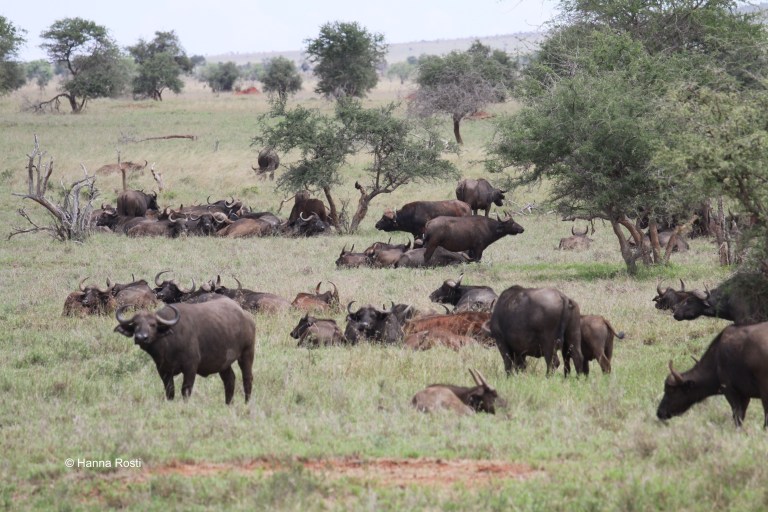
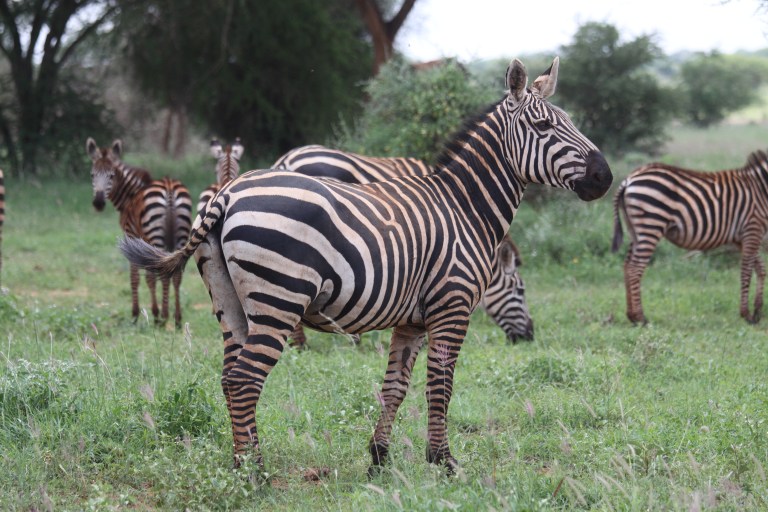
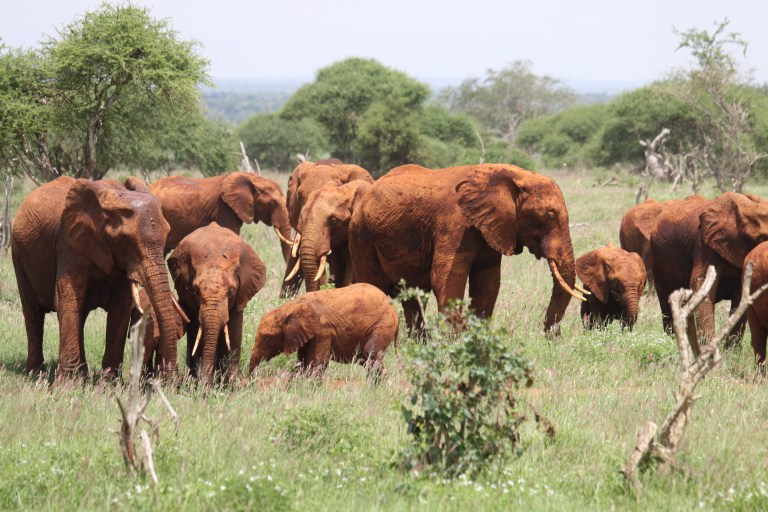
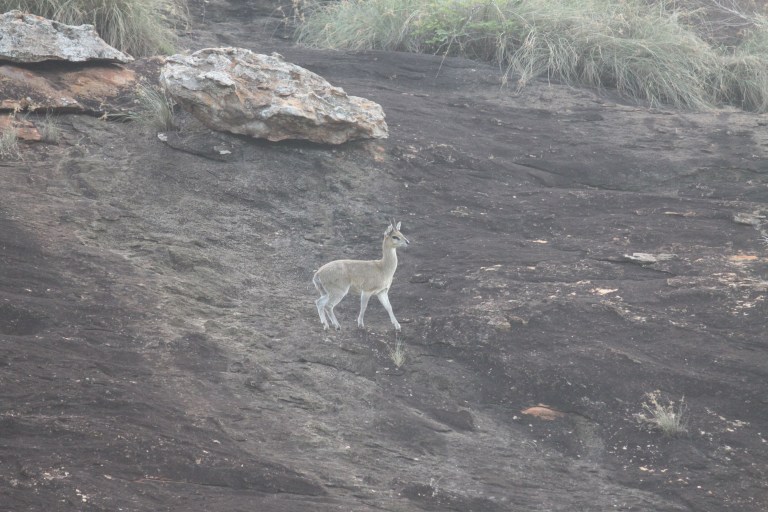
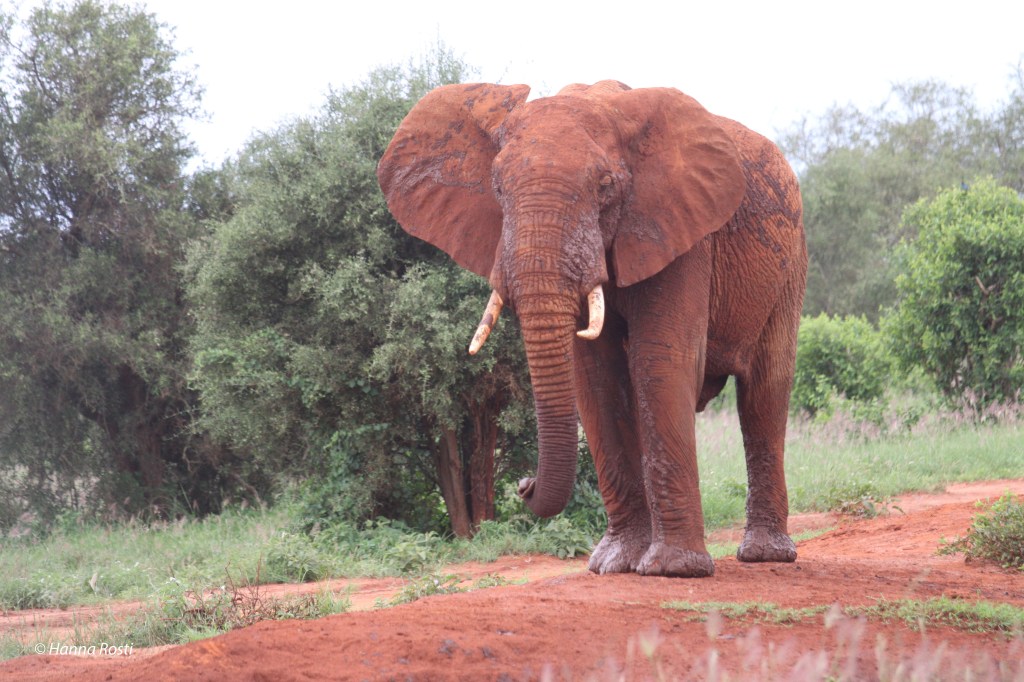
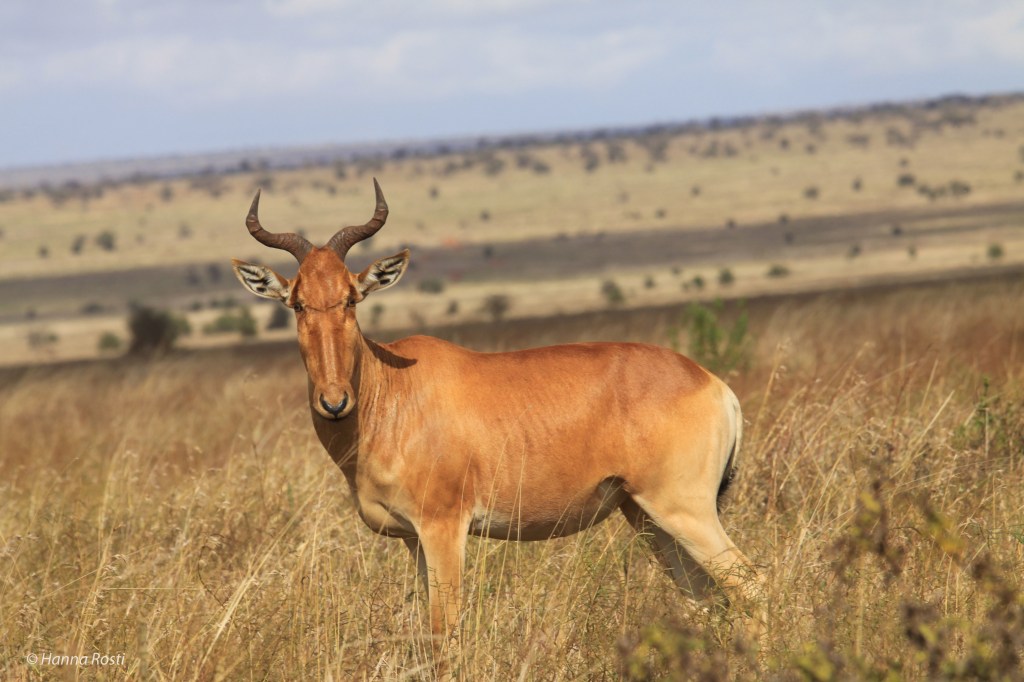
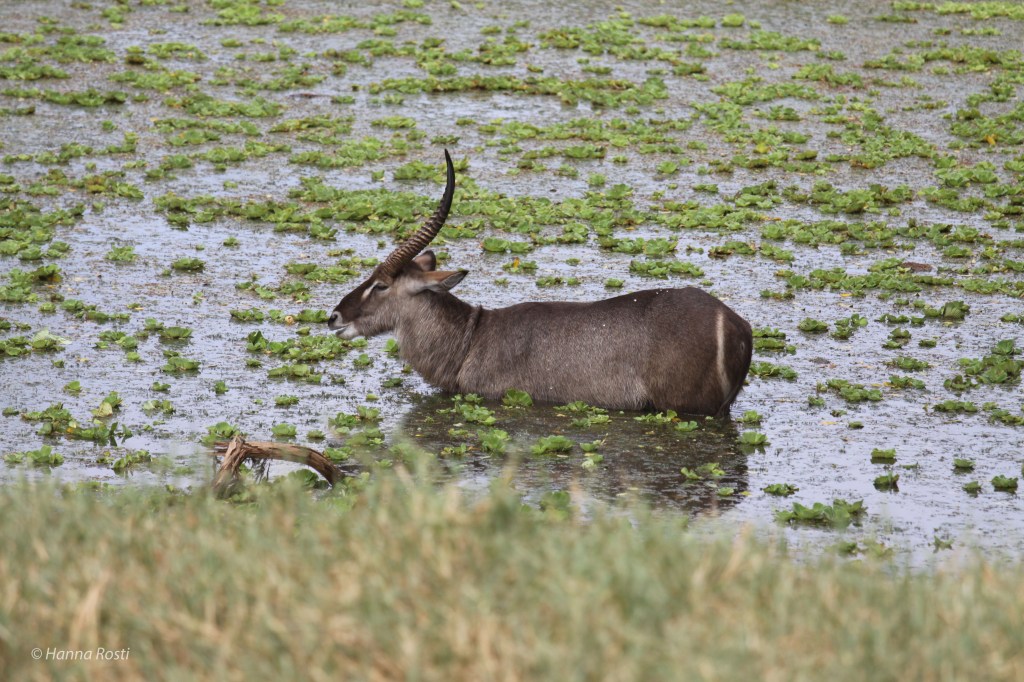
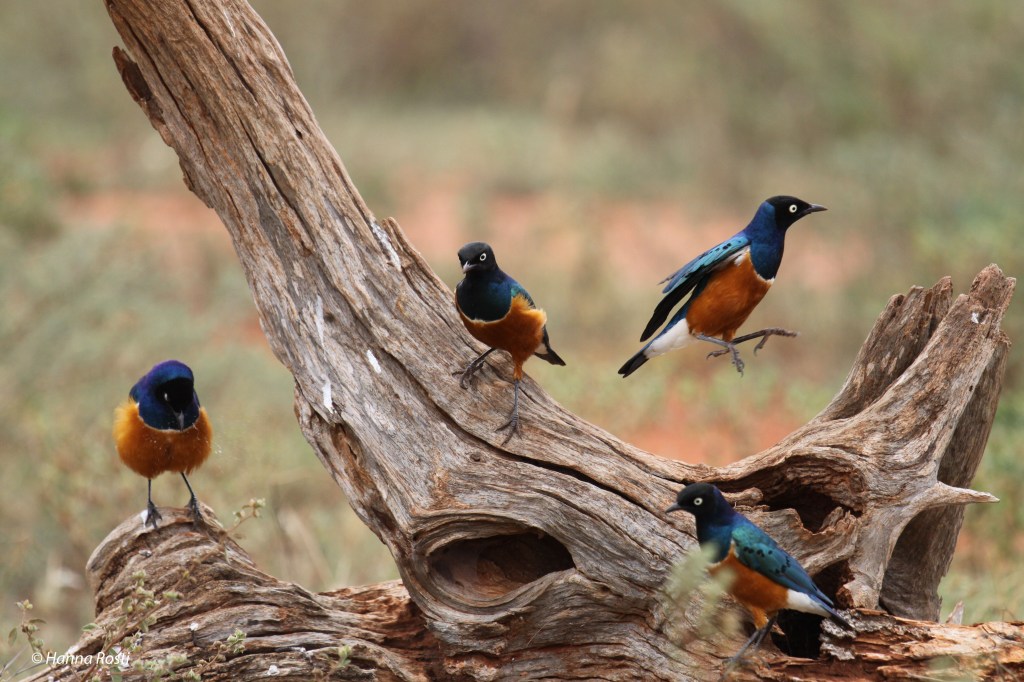
 Animals of Taita, Kenya