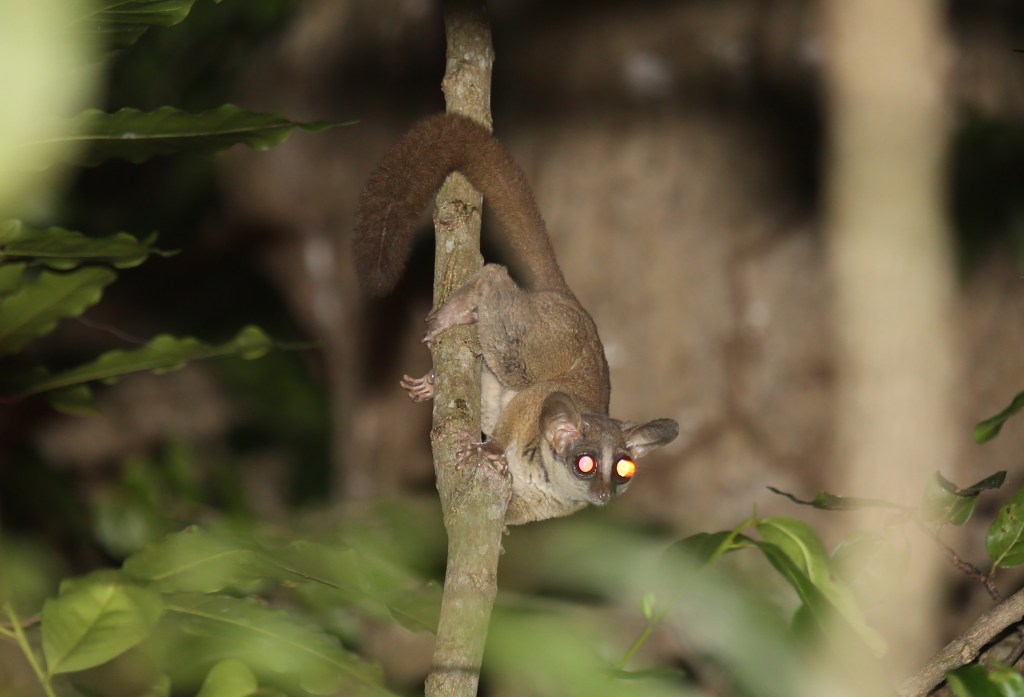
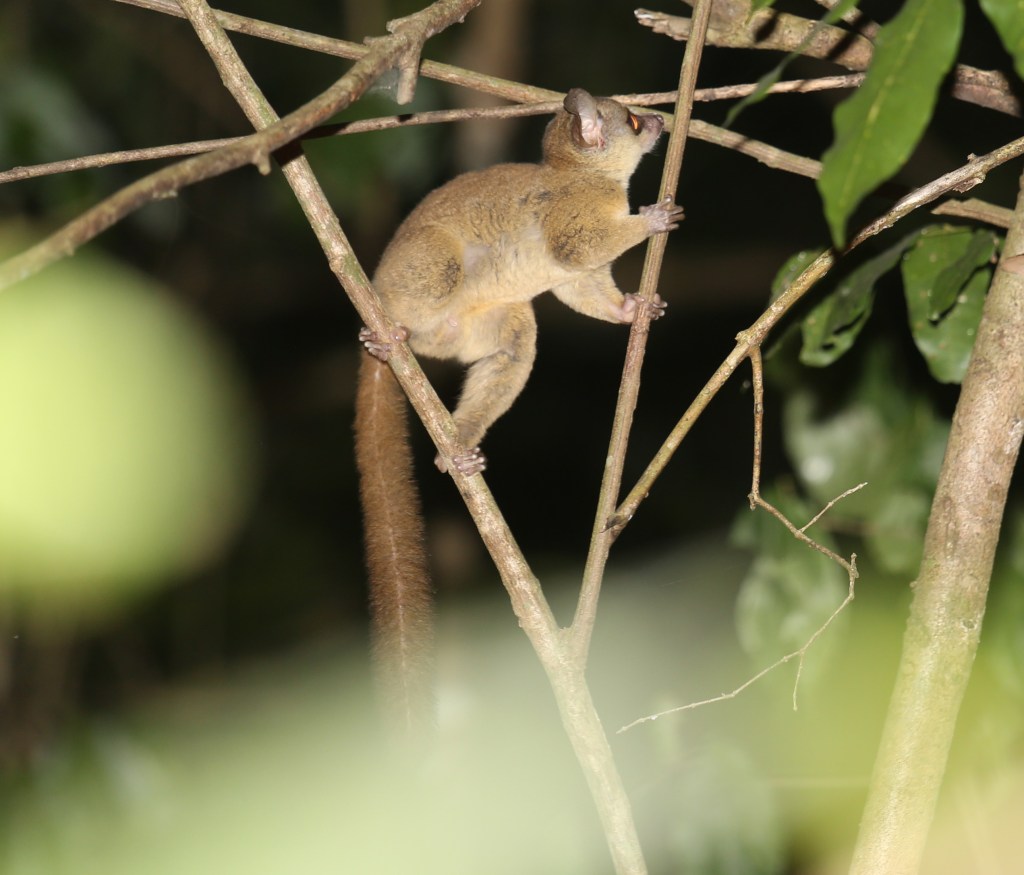
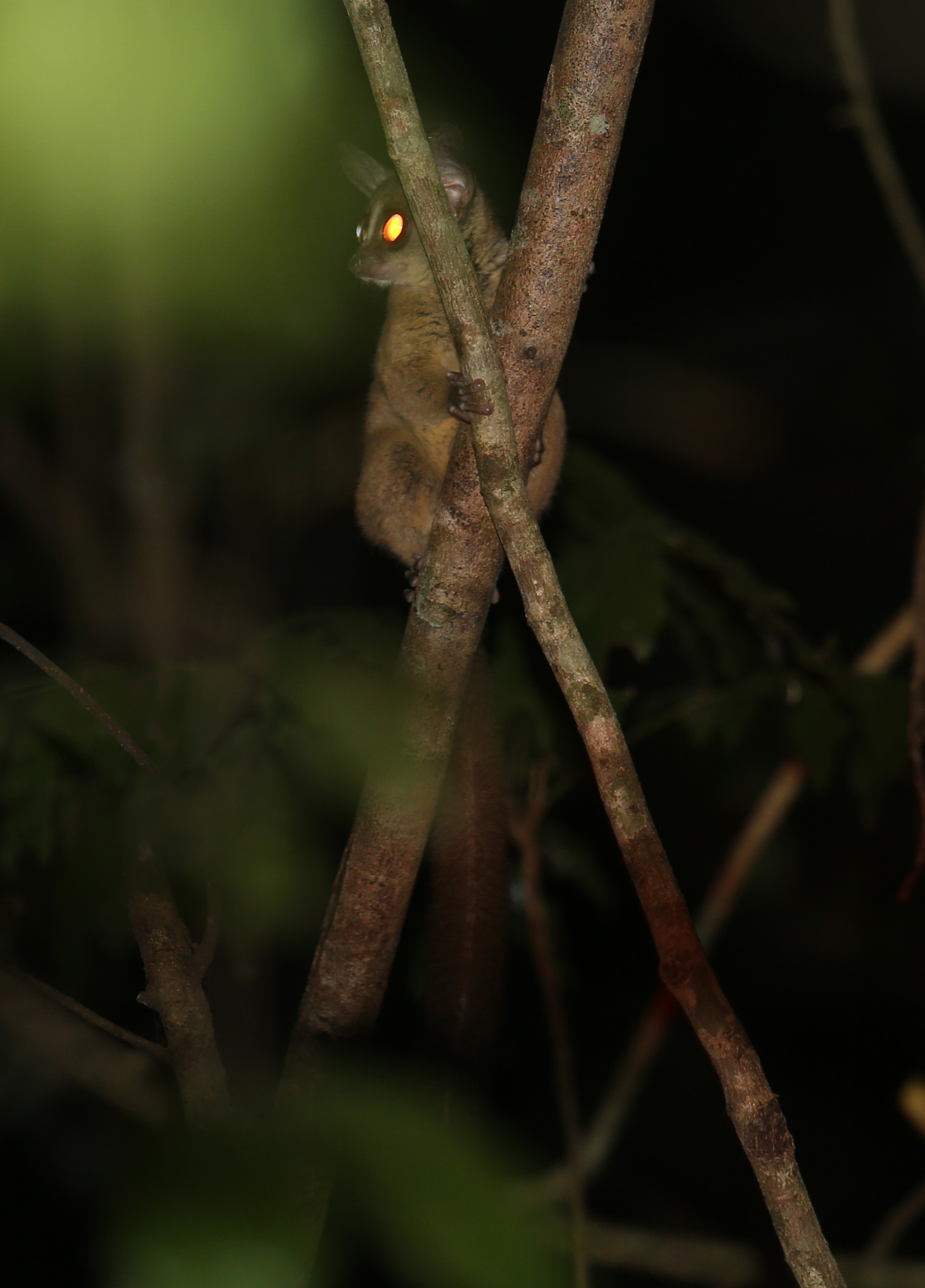
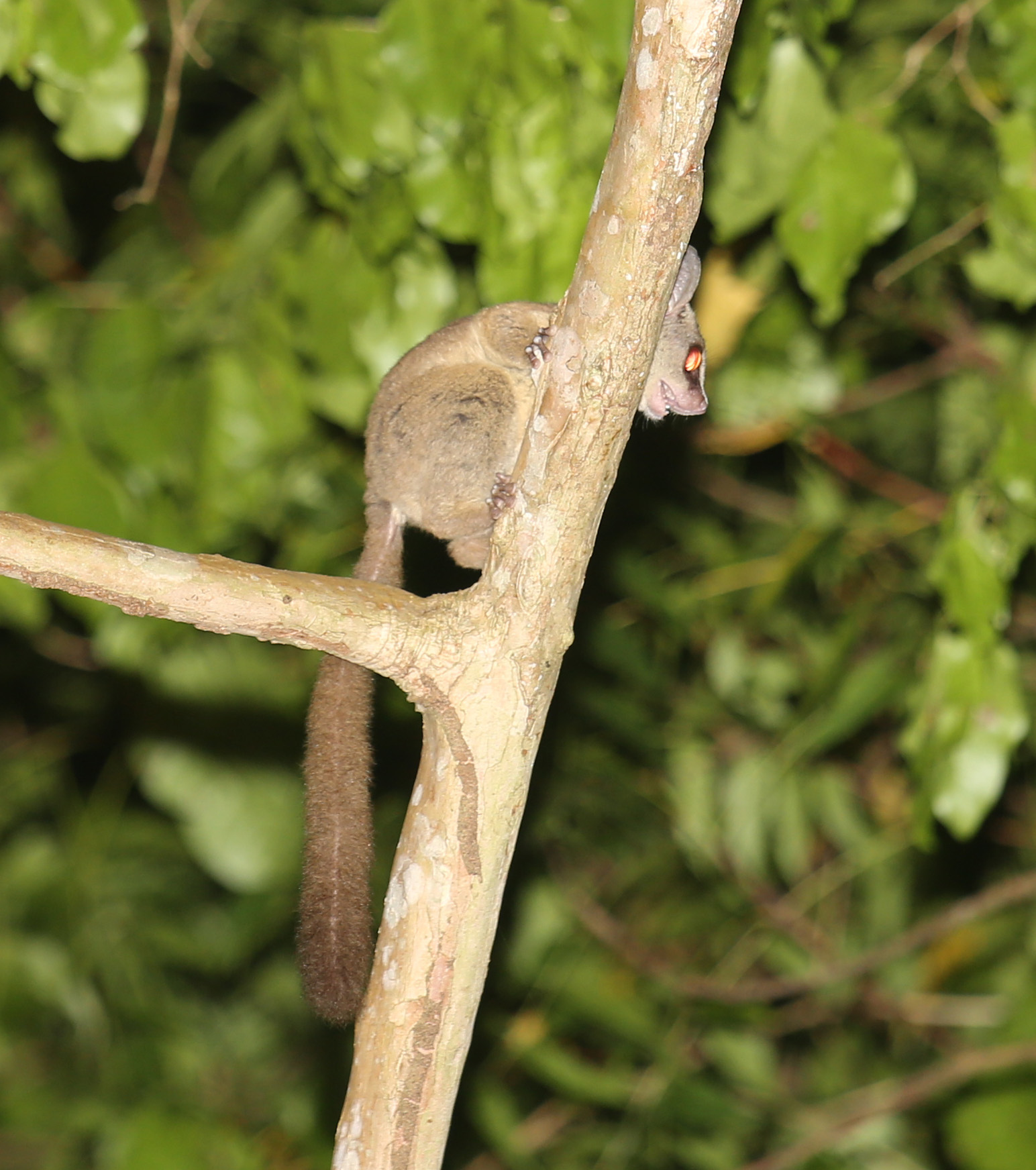
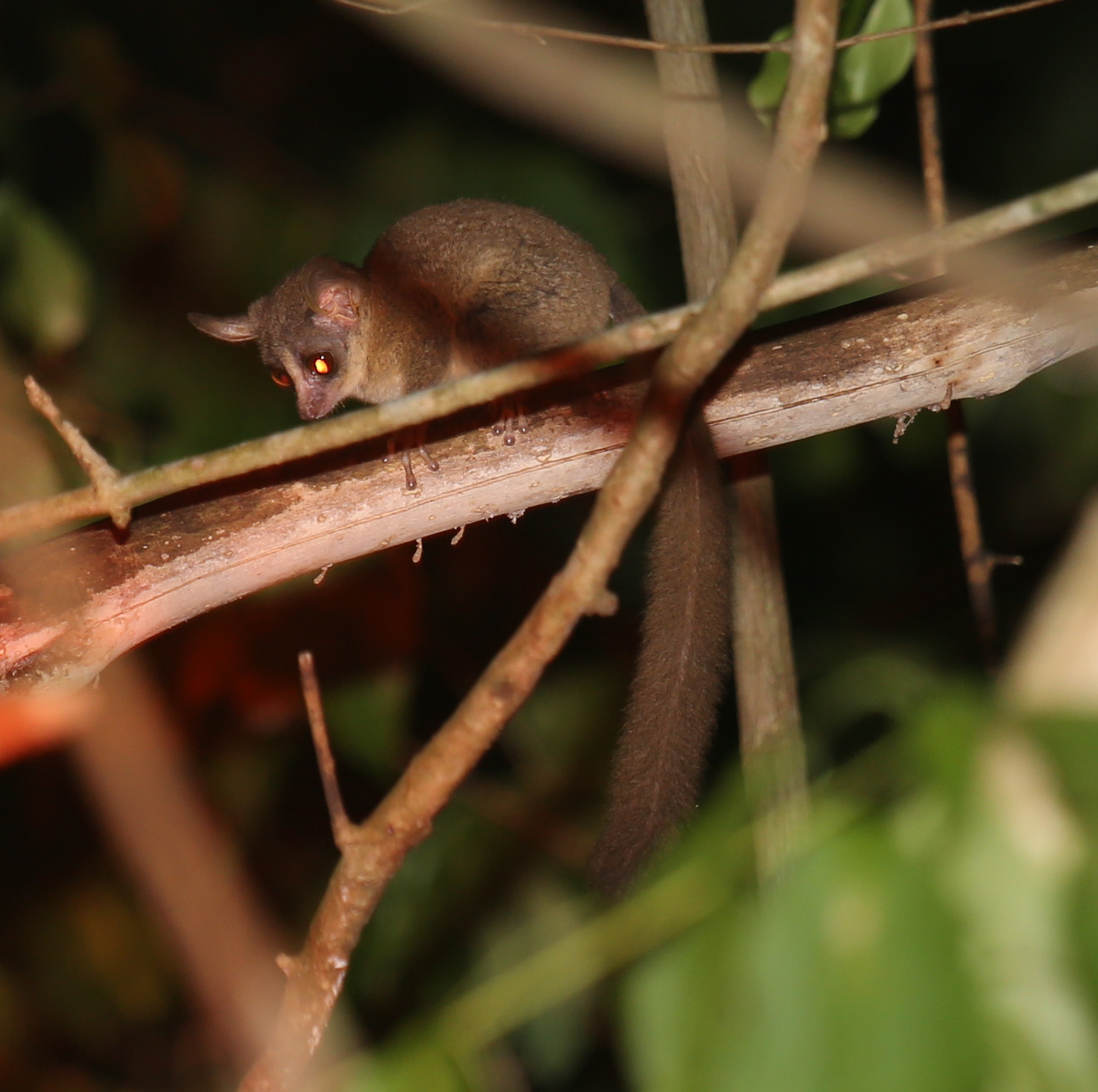
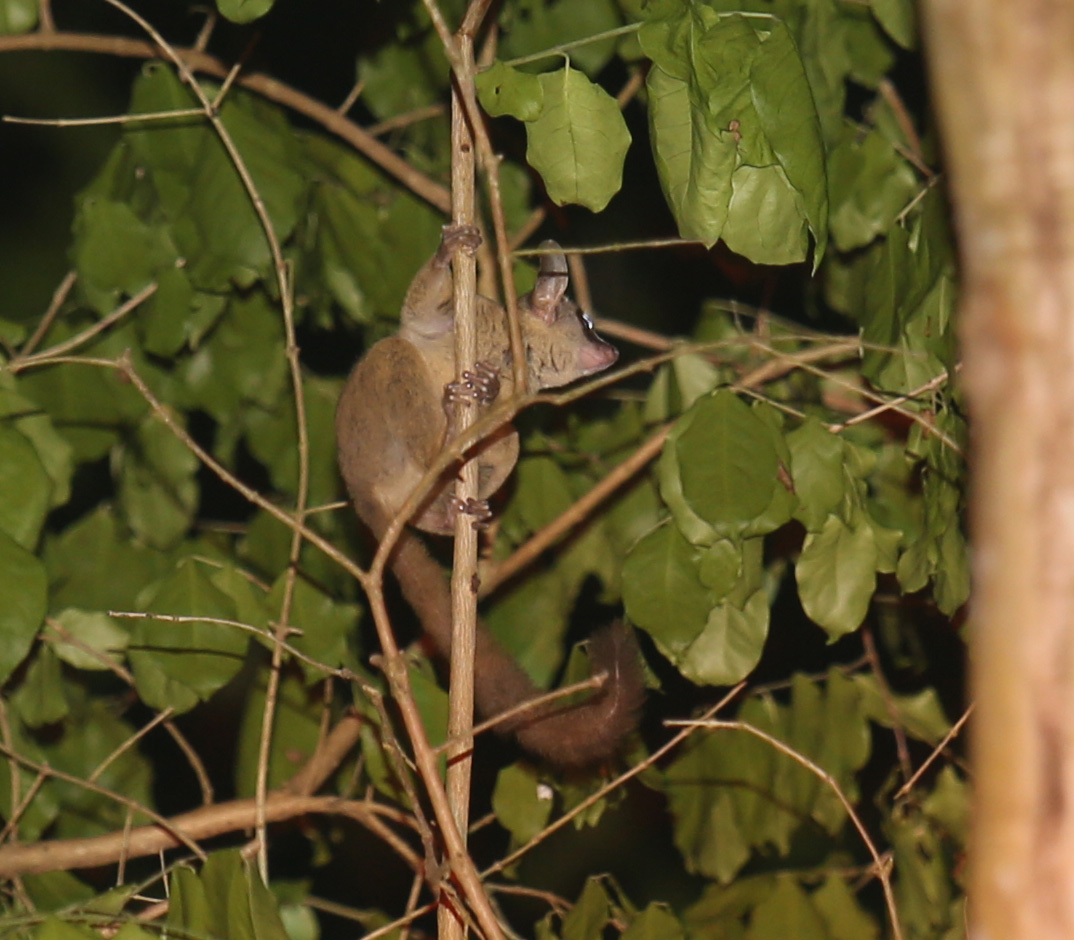
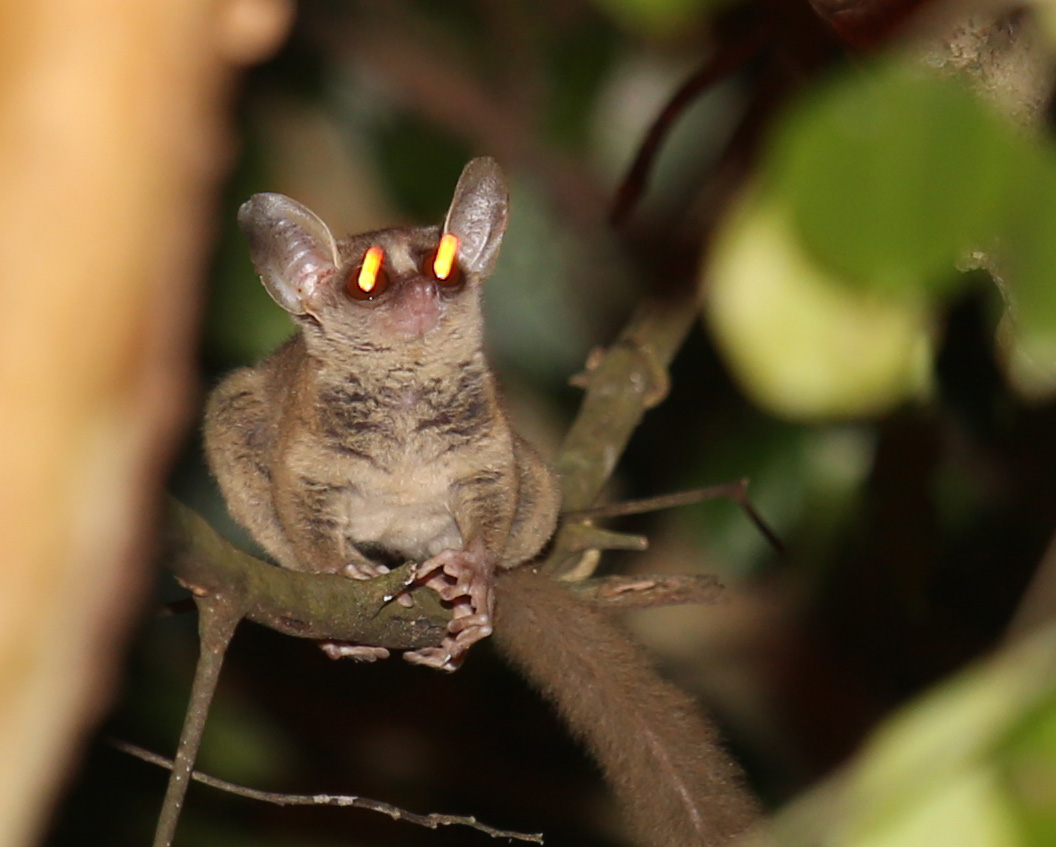
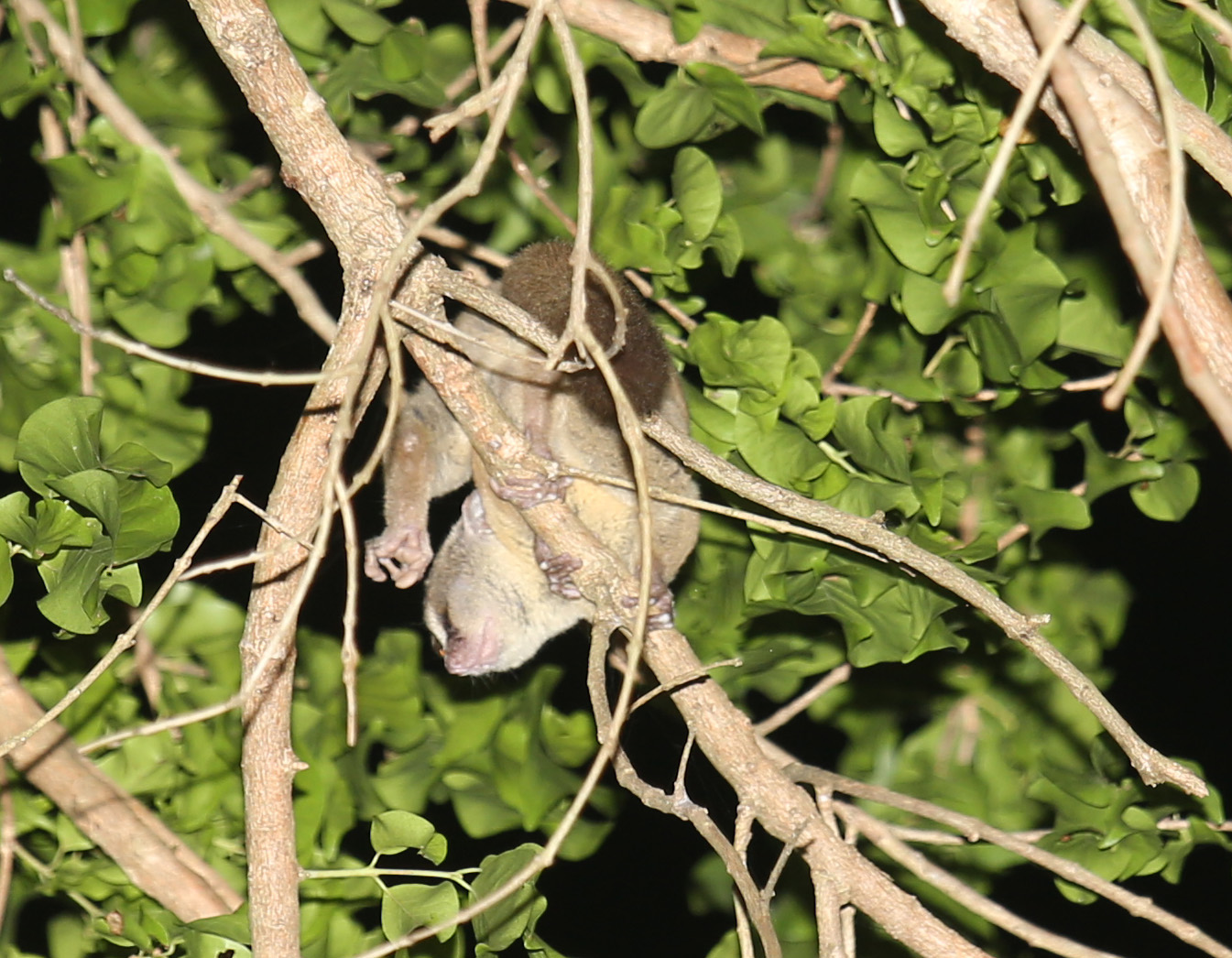
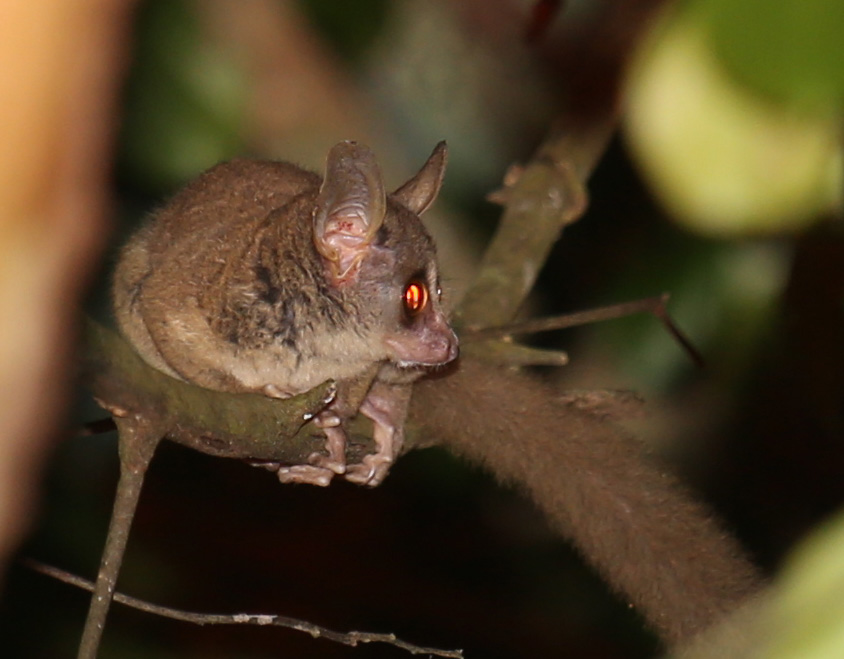
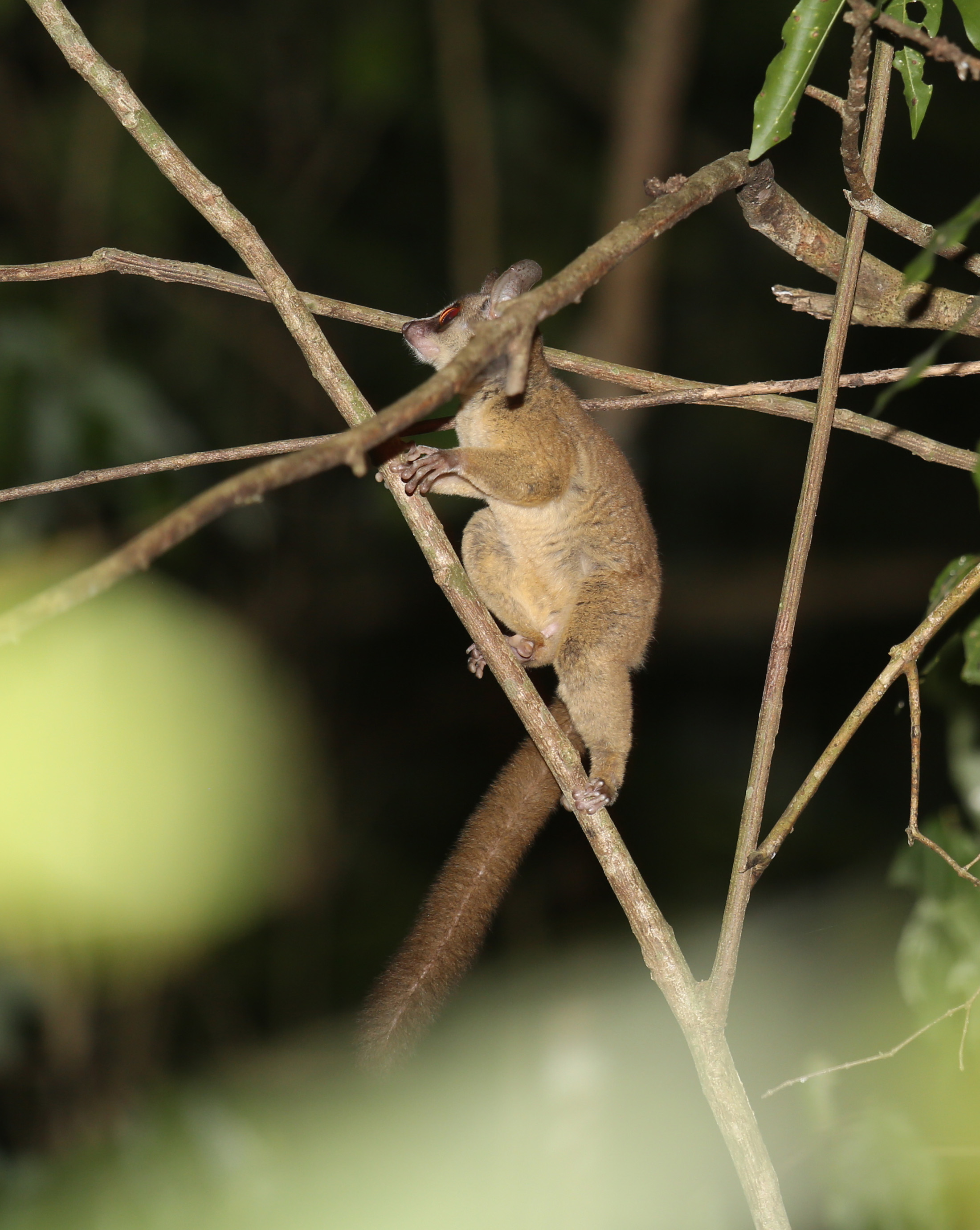
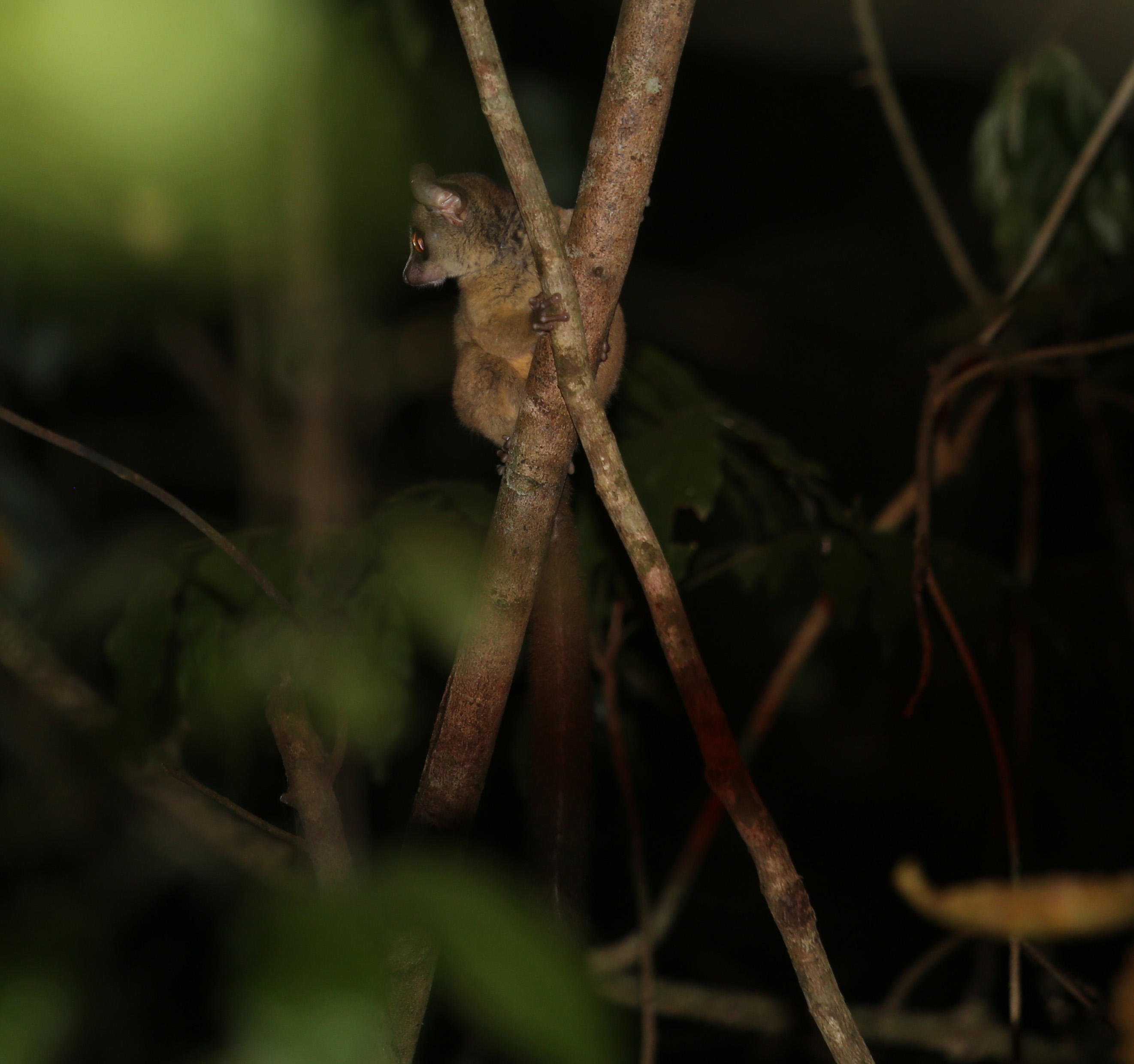
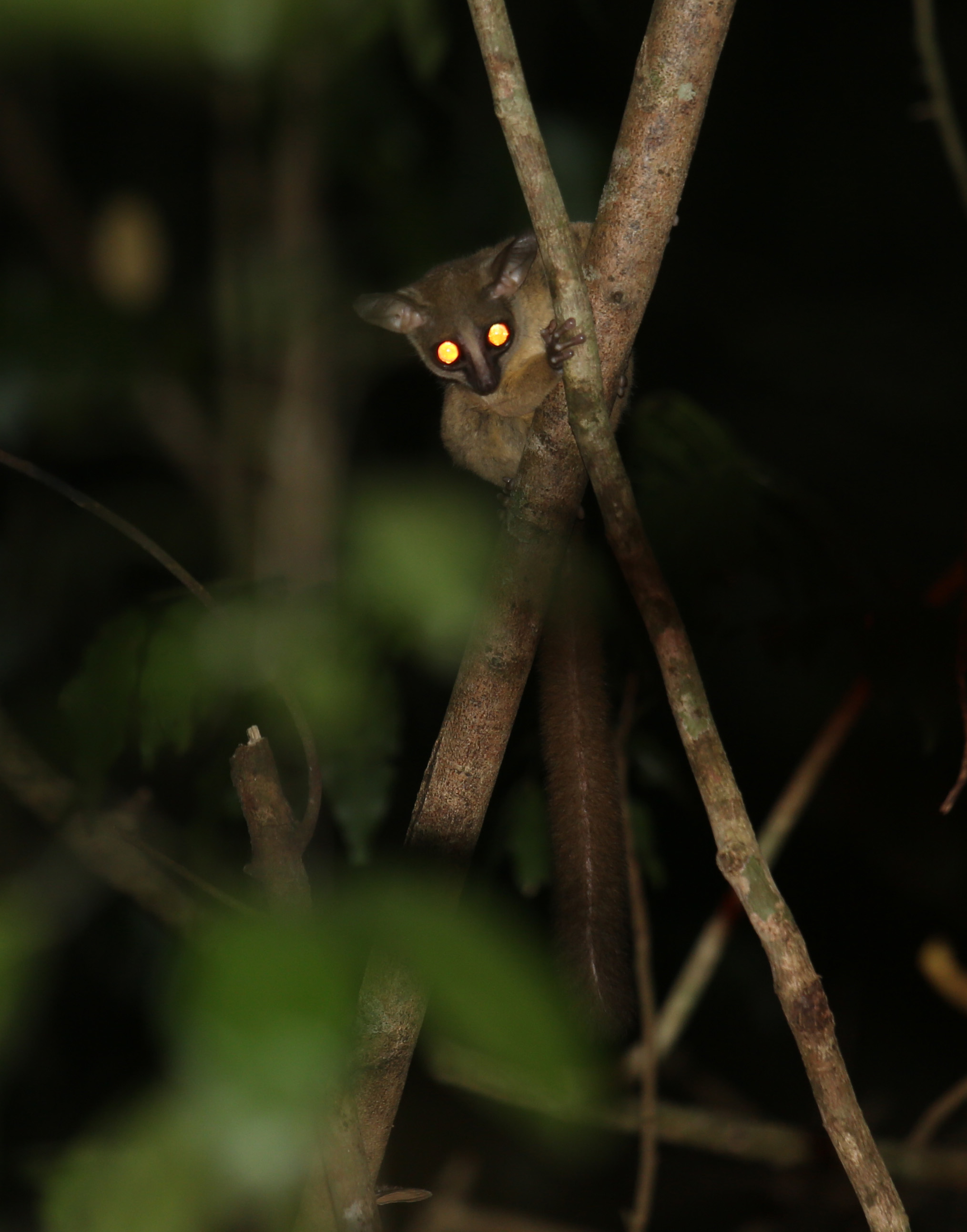
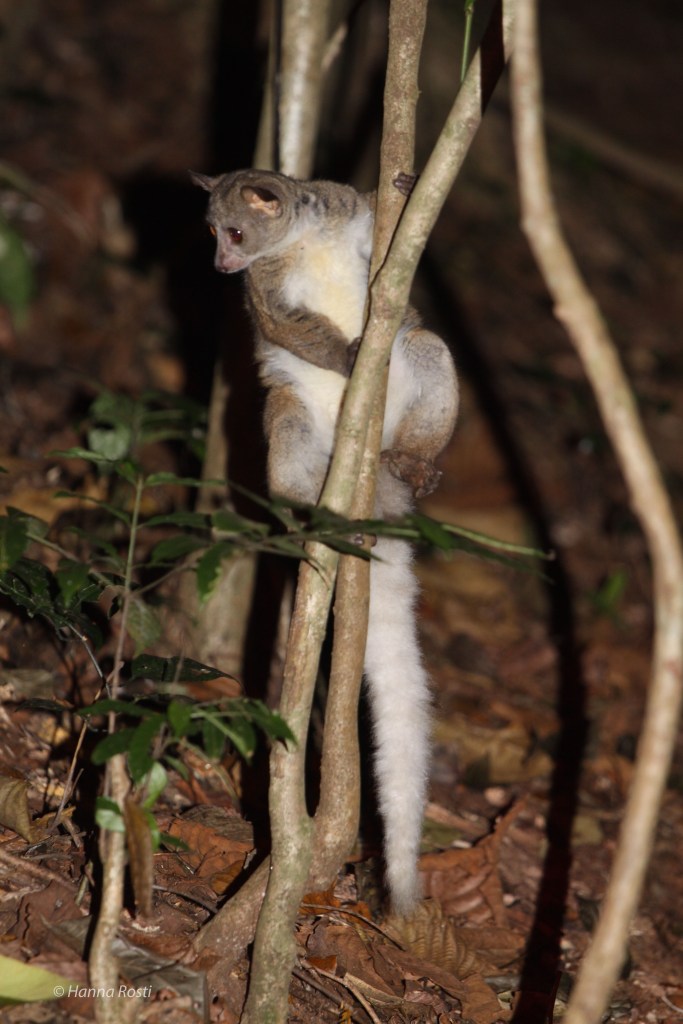
Kenya coast dwarf galago (Paragalago cocos) in Diani Beach
This tiny primate goes unnoticed by perhaps to almost all visitors in Diani Beach. When people see it for the first time it feels incredible. It is a very special moment.
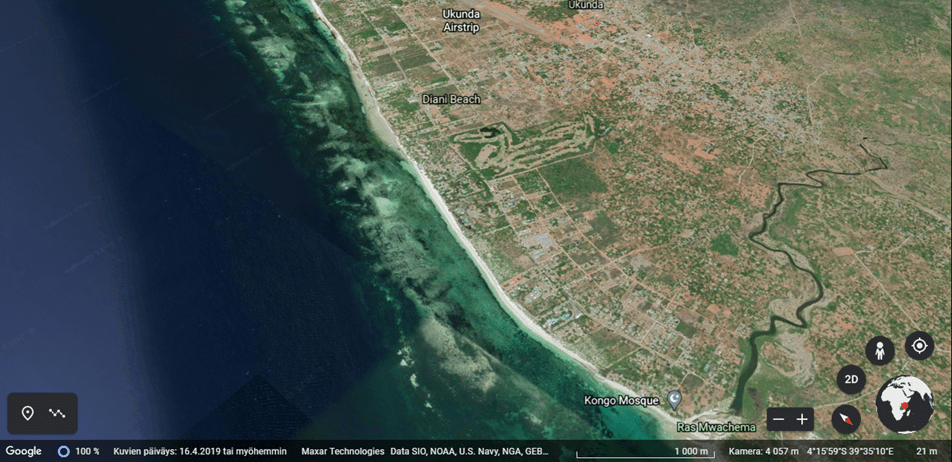
In Diani Beach dwarf galagos are living on the last small fragments of indigenous forest. Most of that forest has been cleared. Diani beach is densely populated and the beach is filled by hotels.
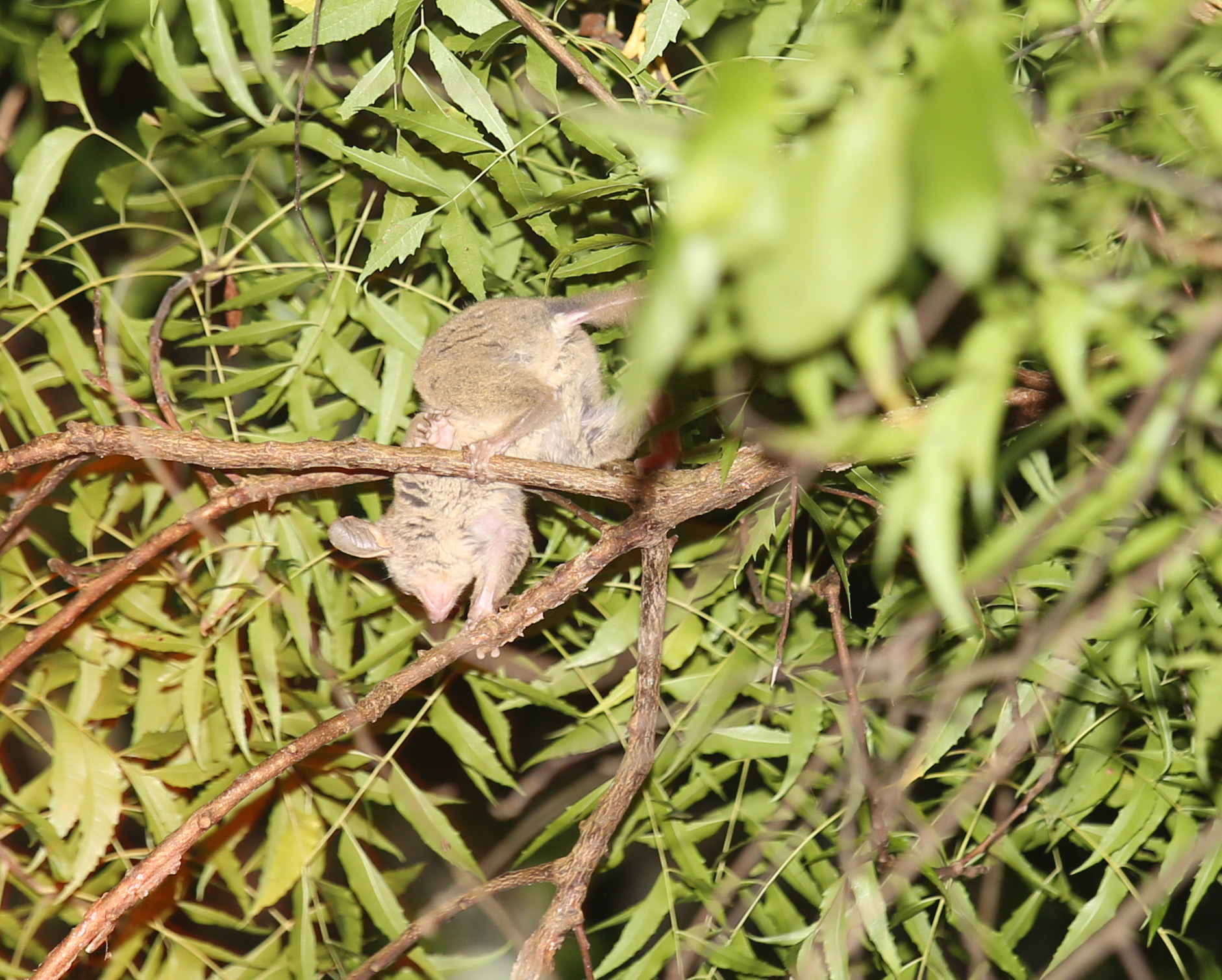
Dwarf galagos hunt insects in the tickets of the indigenous forest
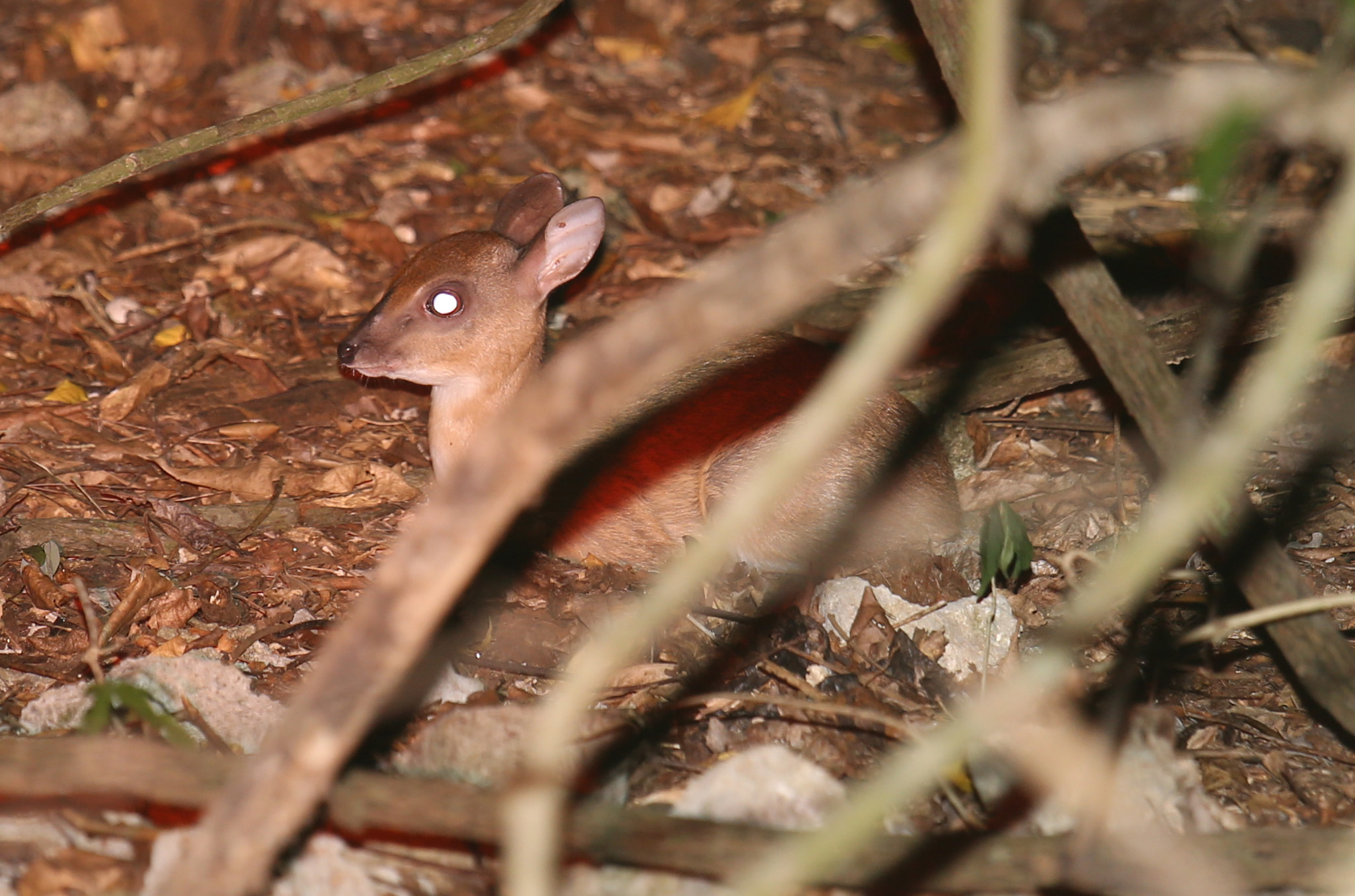
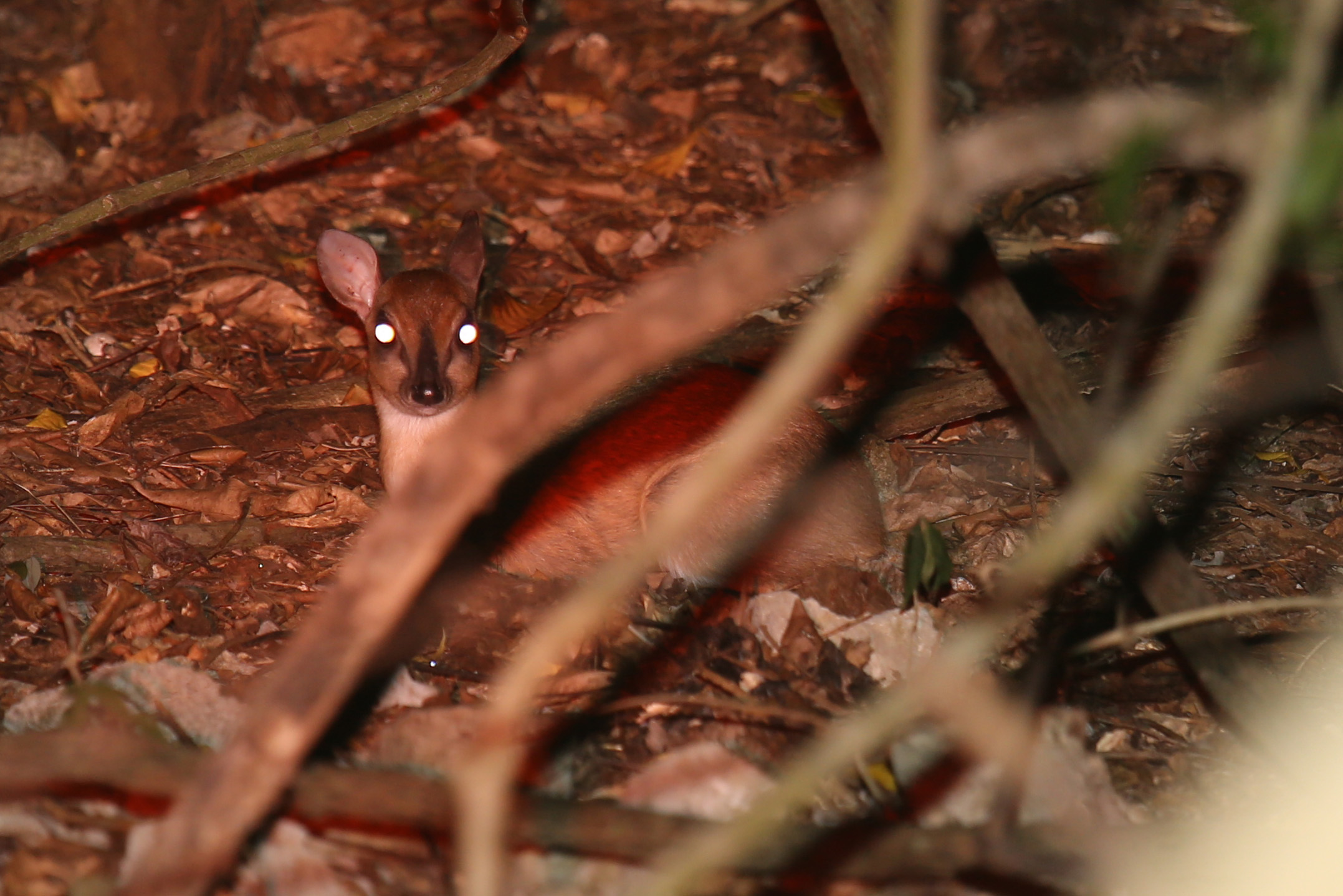
Few hotels have kept their indigenous forest. And now these forests are packed with animals. At night active are coastal sunis (tiny antelopes), genets, greater galagos and these dwarf galagos.
Are these small forest fragments enough to keep these populations alive in a long run, I guess nobody knows.
Kenya coast dwarf galagos are living on the very last fragments of indigenous forest in Diani Beach.
Dwarf galagos feed mainly on insects. In Diani Beach, indigenous forests are filled with insects of different kinds throughout the year.
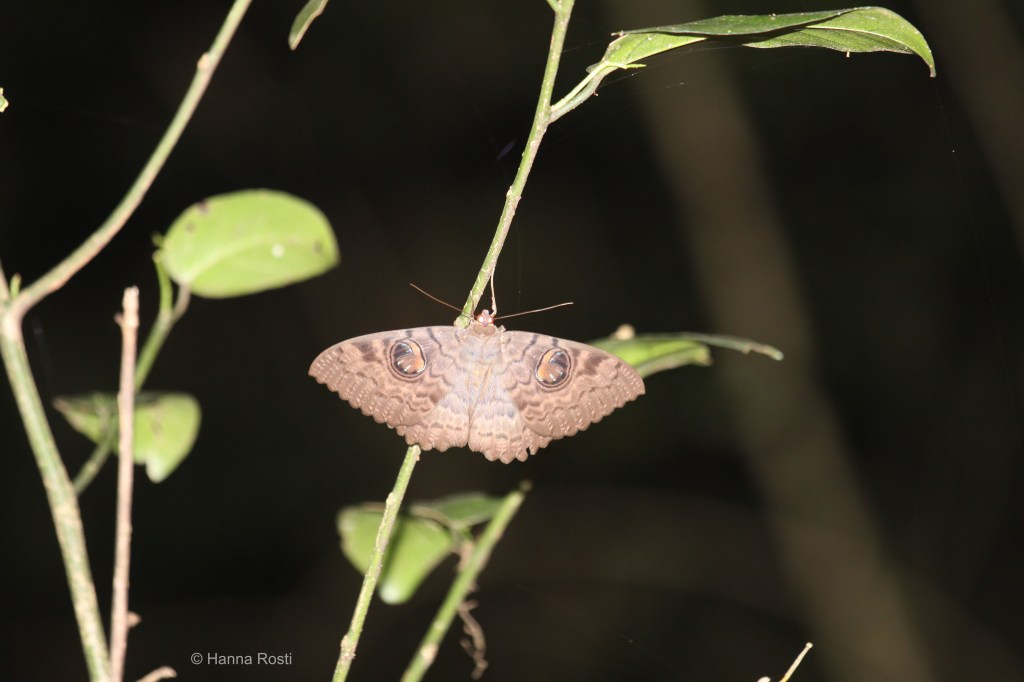
Other nocturnal species from forests of Diani Beach
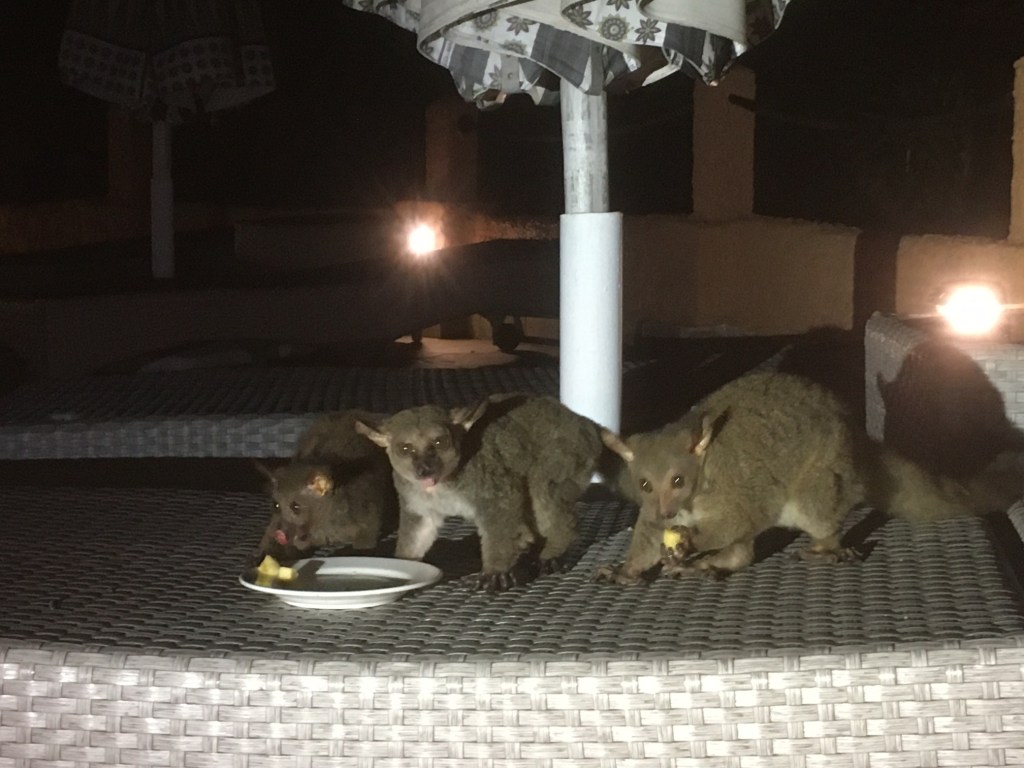
Also small eared greater galago (Otolemur garnettii) is common in Diani Beach and many hotels feed them in the evening with fruits. Bananas are favourite fruit of these cute primates
Greater galagos in by the pool enjoying their plate of fruits
I have been incredibly blessed by having opportunity to spend about three months observing nightlife in Ngangao and other Taita forests.
At night forest is magical beyond any words of describing it. Change in evening and in the morning from nightshift to dayshift is breathtaking. Whole forest changes in minutes.
We use red light in the forest. Most animals can’t see red light, so they carry on their lives like we where not there.
There are bats flying in paths and openings. They fly almost to your face, but turn at the last moment. Only once I have been touched gently by a bat. There is abundant rodent life, rats and mouses of all sizes running around, digging the ground, climbing in the trees, grooming themselves. They look very cute in red light.
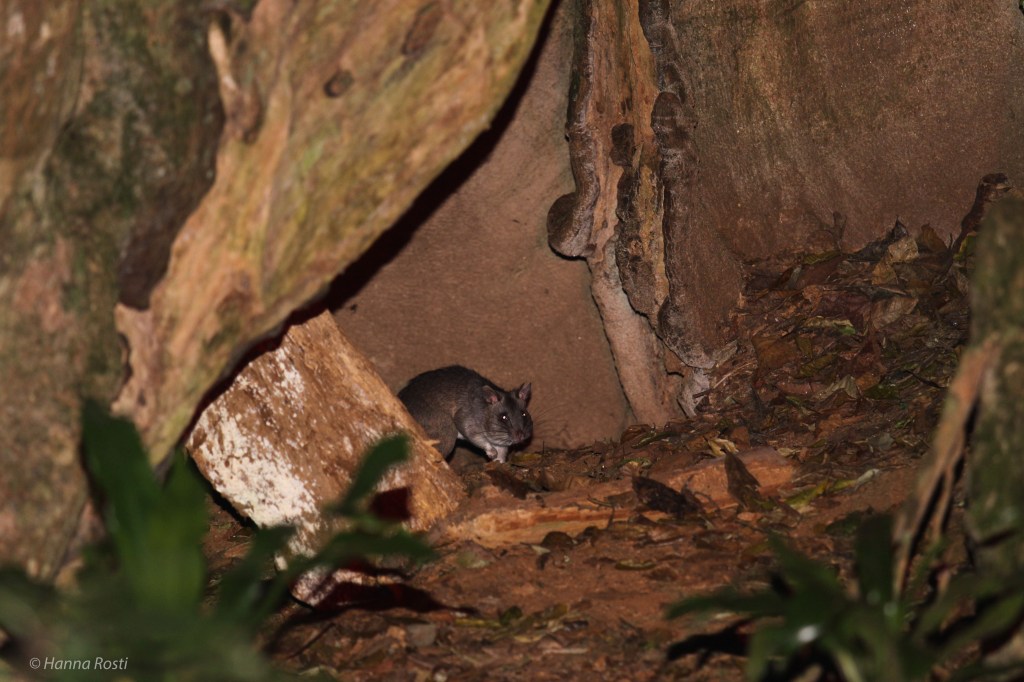
Most Ngangao Forest visitors walk through gigantic cave tree, not knowing that they are actually visiting home of giant rat at the same time!
This is photo gallery, click any of the pictures to enlarge. If you wish to buy photos contact me by email.
Less common rodents are dormouse and elephant screw. We saw both several times though. We also saw ones Suni antelope.
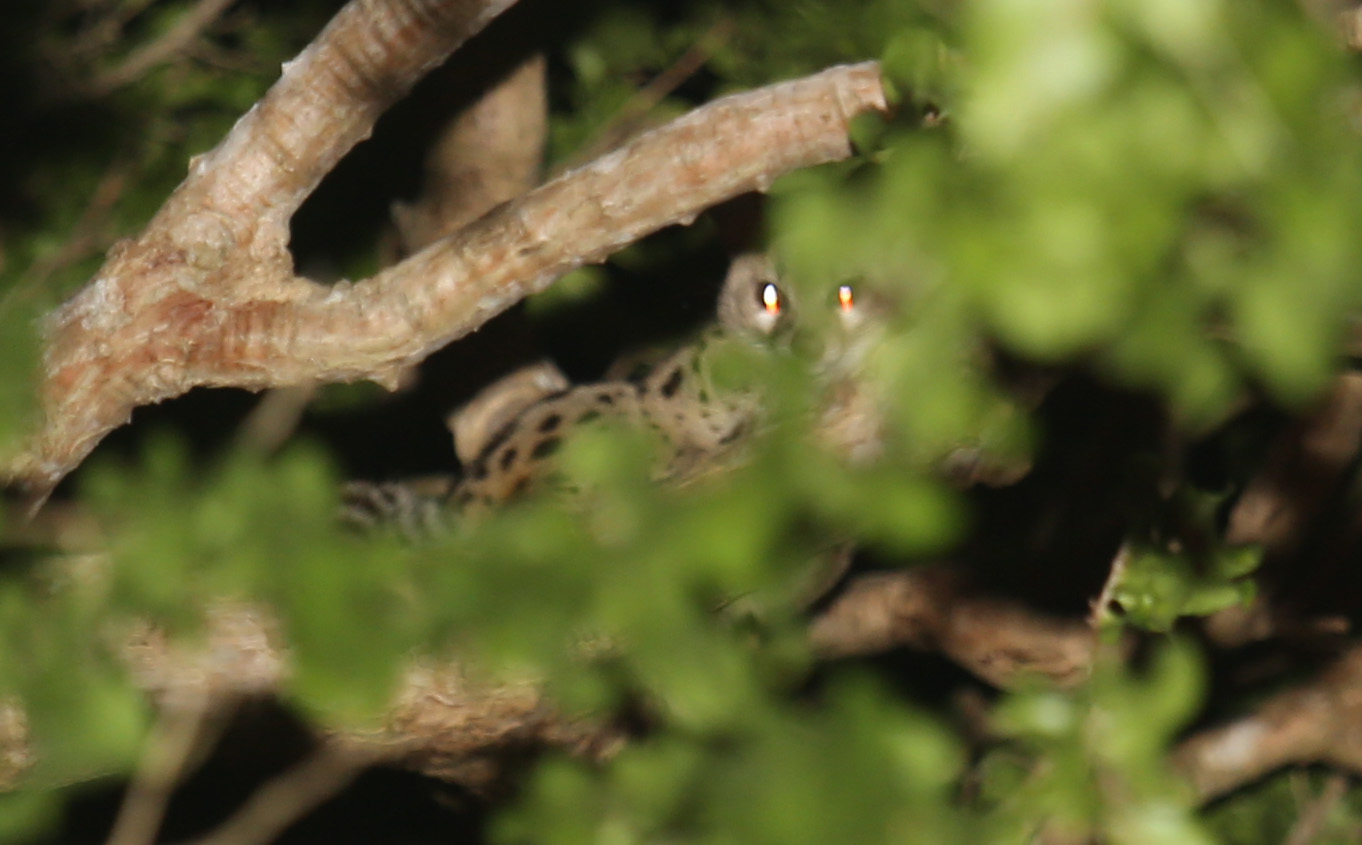
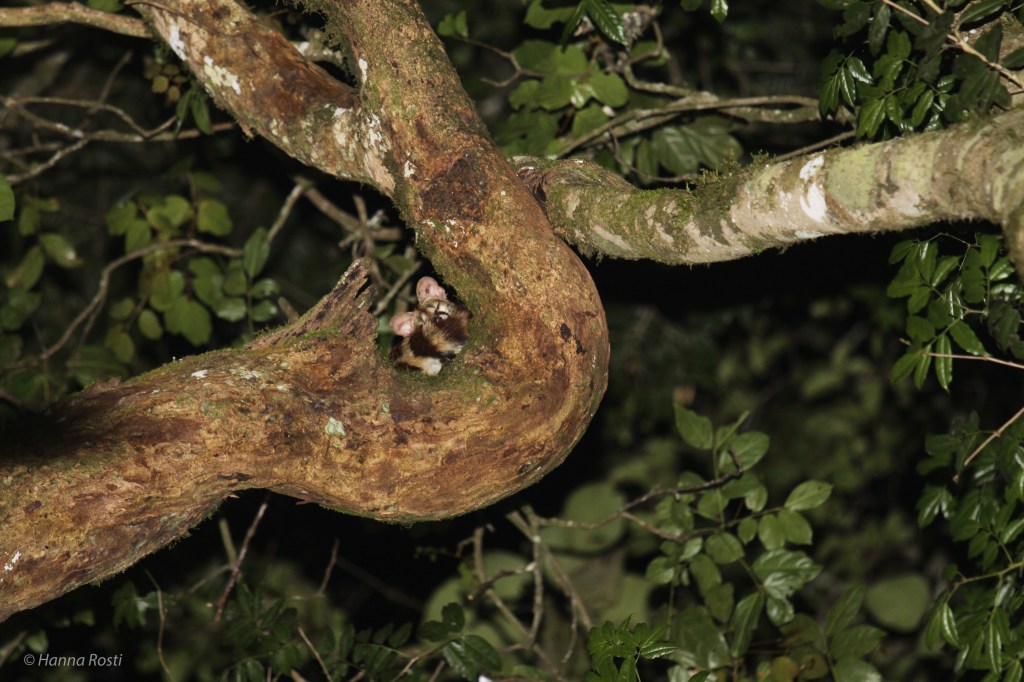
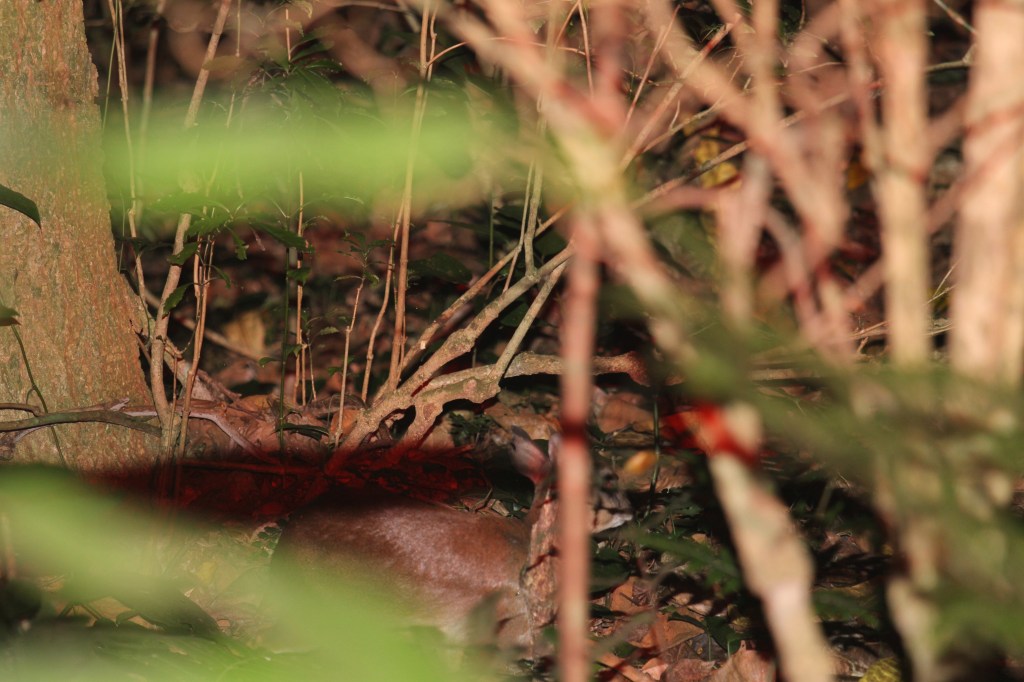
We had funny encounters with the genet. This stunningly beautiful cat sometimes followed us, sometimes it appears out from the blue, just from the feet. I was never lucky enough to get picture of it. Until once we saw one sleeping in the tree. This cat didn’t look that good though, you can see ticks in the ear in the photograph.
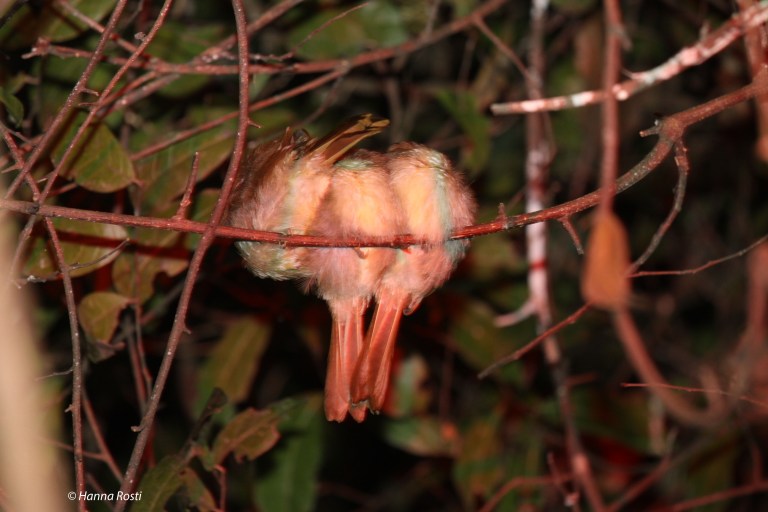
These tree little birds were always in the exactly same place, same branch, sleeping and huddling together.
In the darkness of the night animals communicate by calling to each other . These nocturnal animals are loud, and their calls are incredible. Later I will add photographs and recordings of these spectacular and endemic mammals that my research is focusing on.
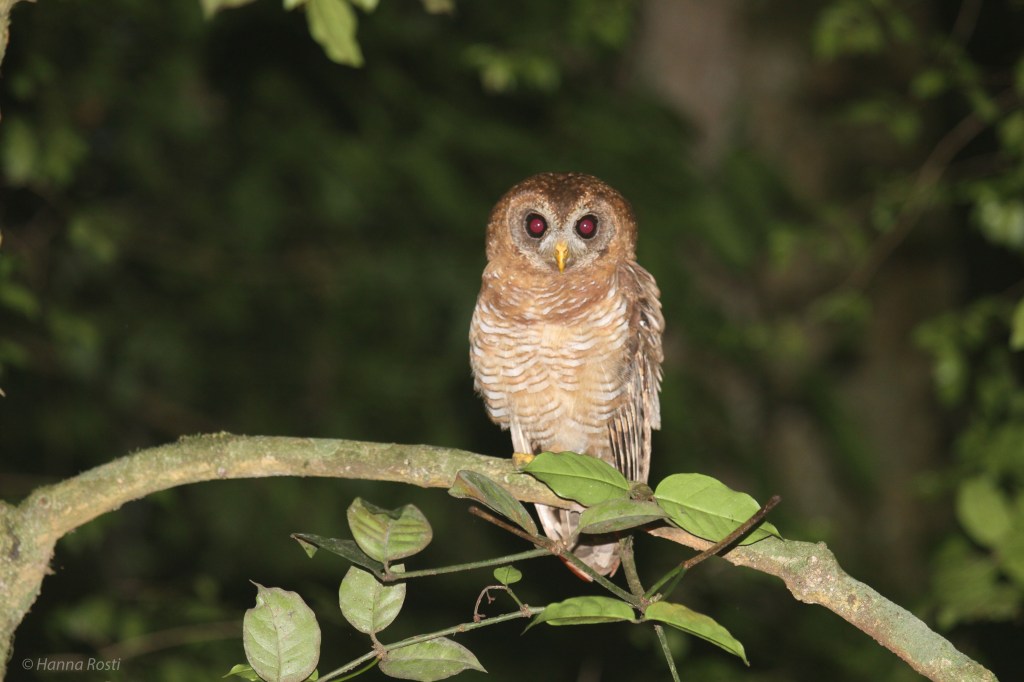
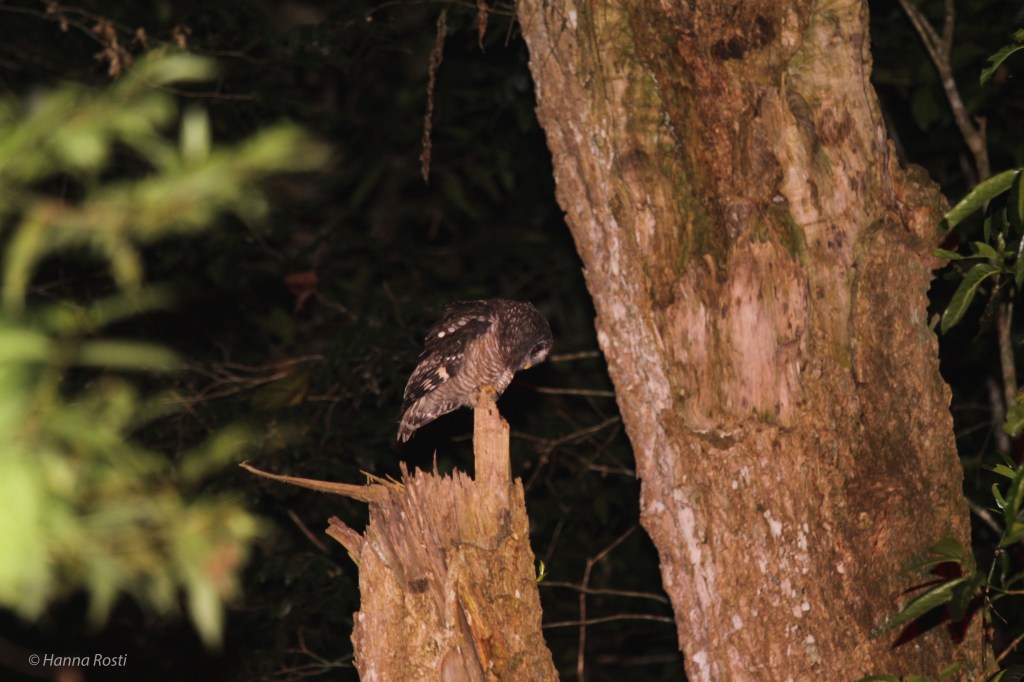
African wood owl is most common owl in the forest and couple calls to each other by using different calls.
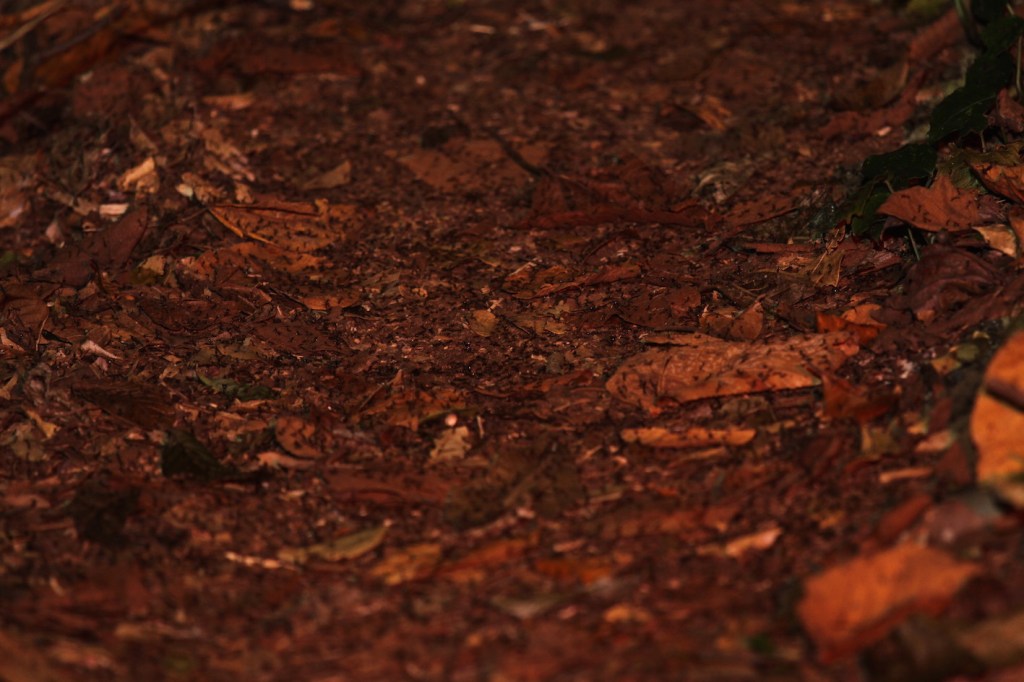
I am often asked that is there anything to be afraid of in the forest? And yes there is – safari ants! There are some snakes and spiders, but I am not afraid of them. I have been colonized by safari ants twice. Ants climb on you when you stand on their way, and when they are all over your body they suddenly bite – all at once. There is no other way than to strip from the clothes. After that you definably learn to scan the ground couple times every minute, even when practically at sleep. Safari-ants can also be heard, as insects fleeing from them shake the dead leaves on the ground.
Safari ants on color the ground
There has not been much research in the forests at night. There is so much unknown. As Taita Hills is one of centers of endemic species in the world there are still so many species still unidentified. Only last fragments are remaining and conservation efforts for all indigenous trees are needed urgently! More indigenous trees need to be planted and corridors created between forest fragments.
In the forest I have been always companied my assistant Benson Mwachola and occasionally also by Rechard Mwasi and Darius Mwambala from Taita Hills Research Station.
In the morning scenery outside Ngangao is incredibly beautiful with yellow light coloring the snows of Kilimanjaro and savannas of Tsavo.

 Animals of Taita, Kenya