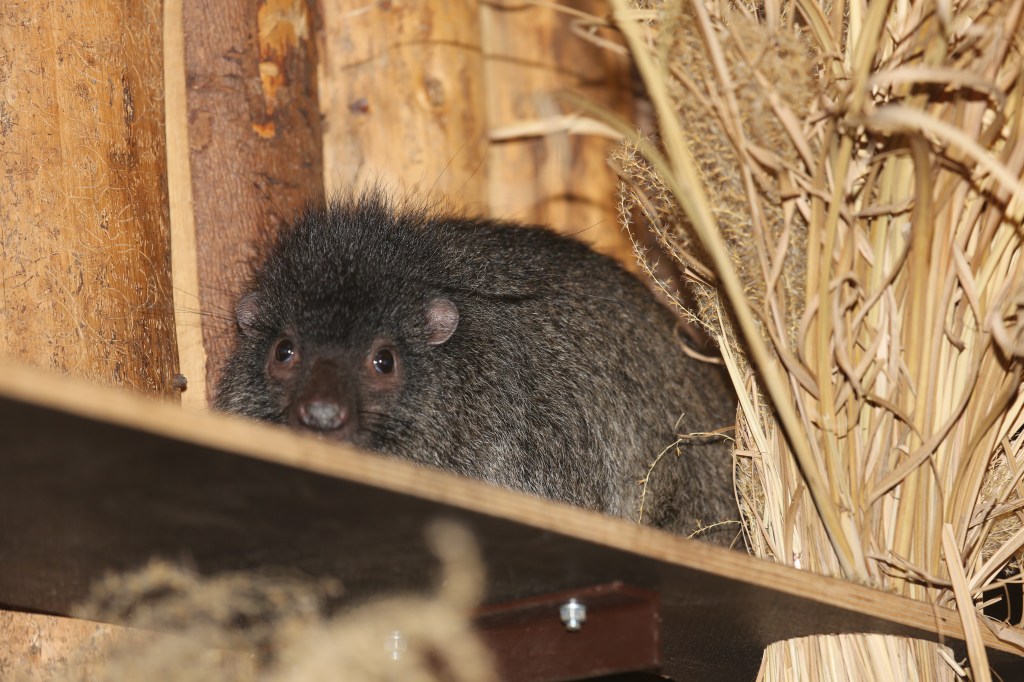
Dendrohyrax – tree hyraxes – 4 species at the moment – more to come
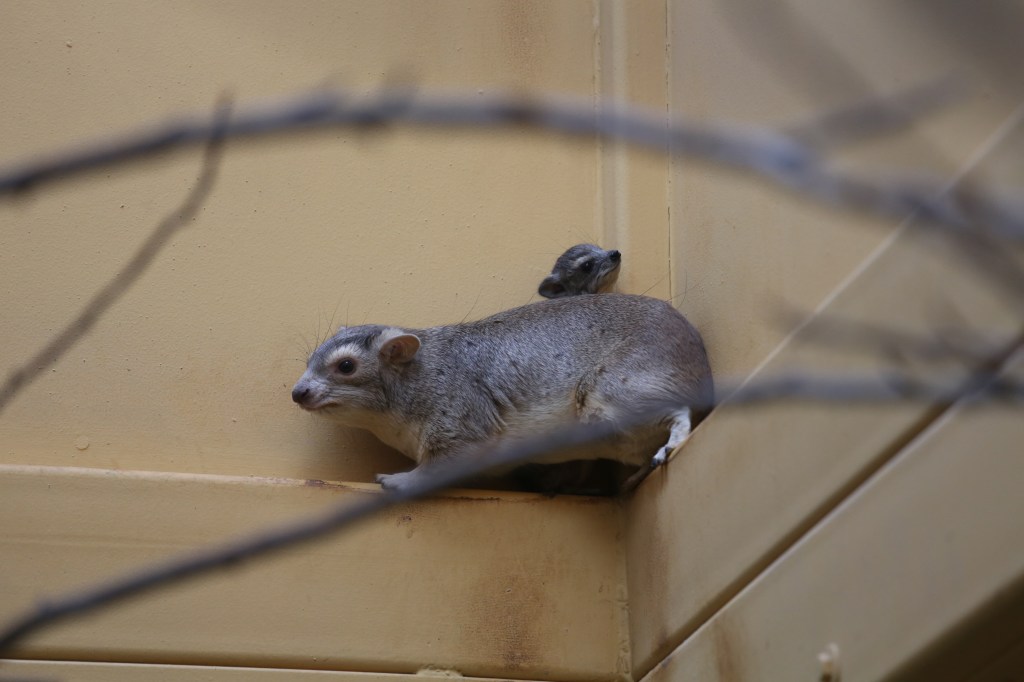
Heterohyrax – bush hyrax – 1 species + 20+ subspecies
Procavia – rock hyrax – 1 species +17 subspecies – and some of them are species
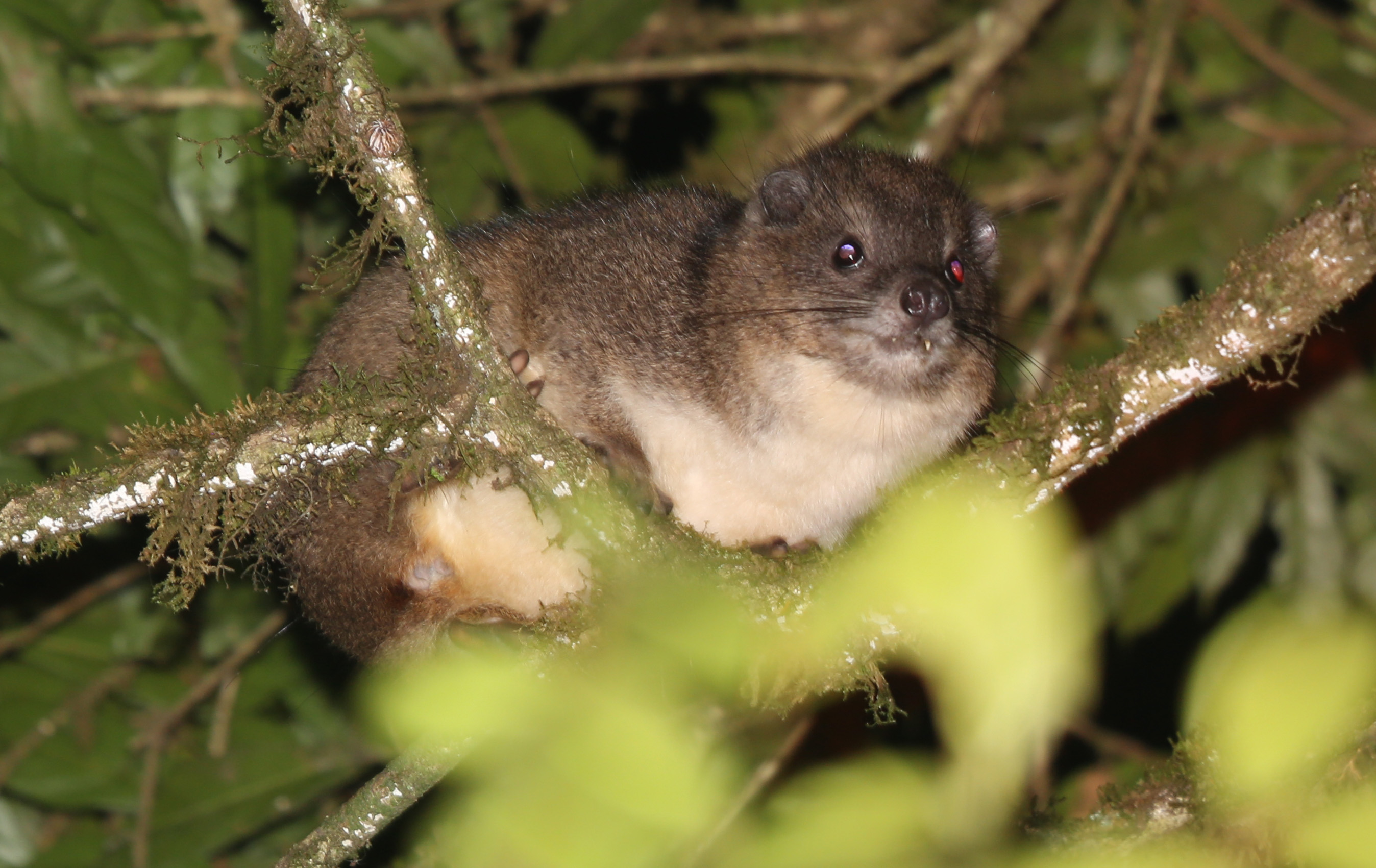
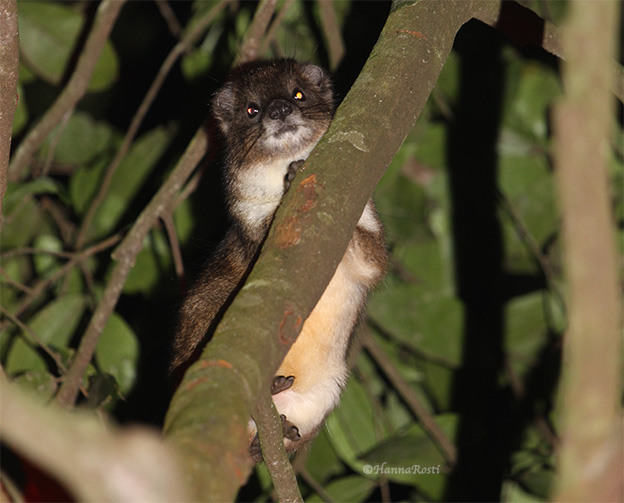
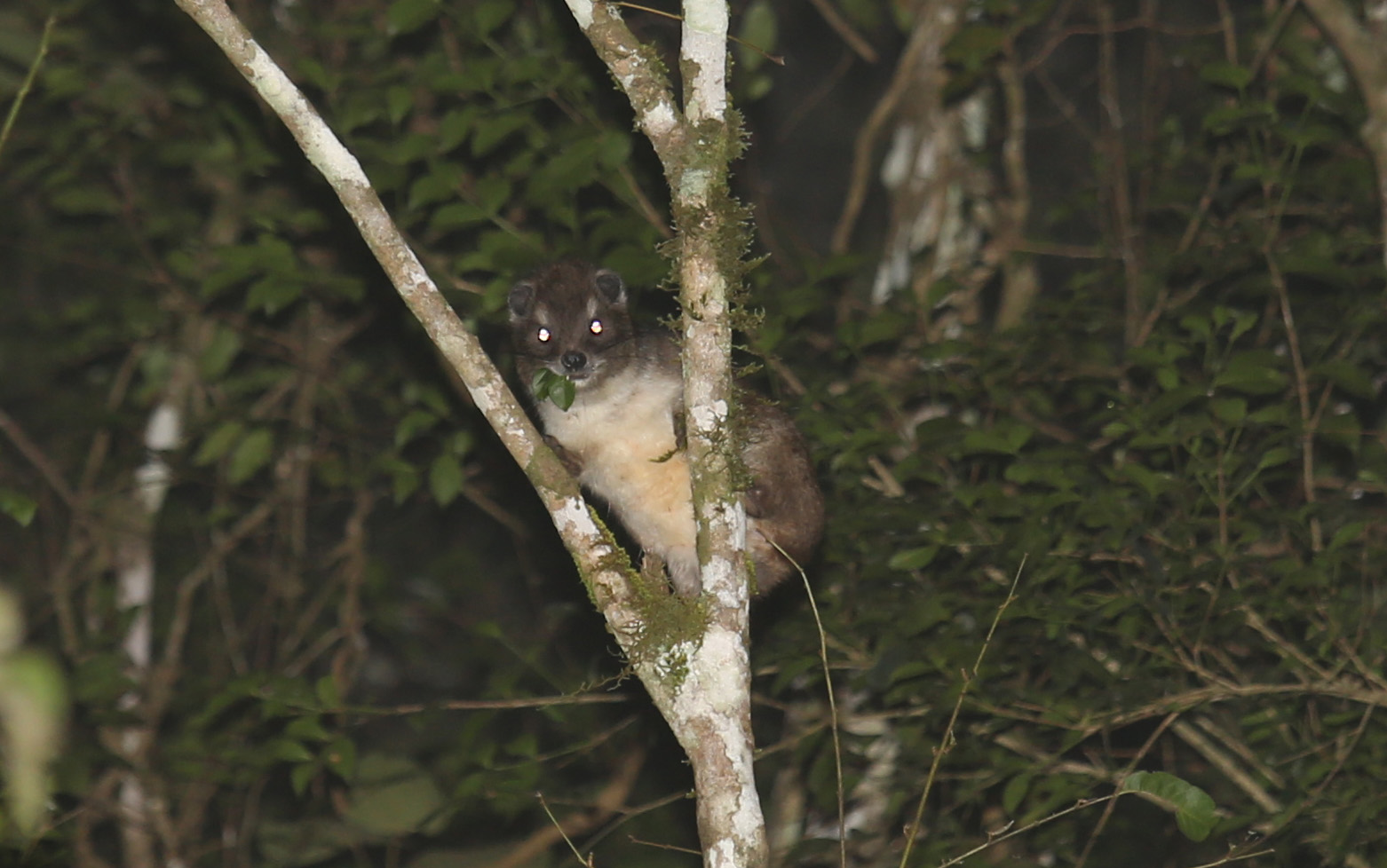
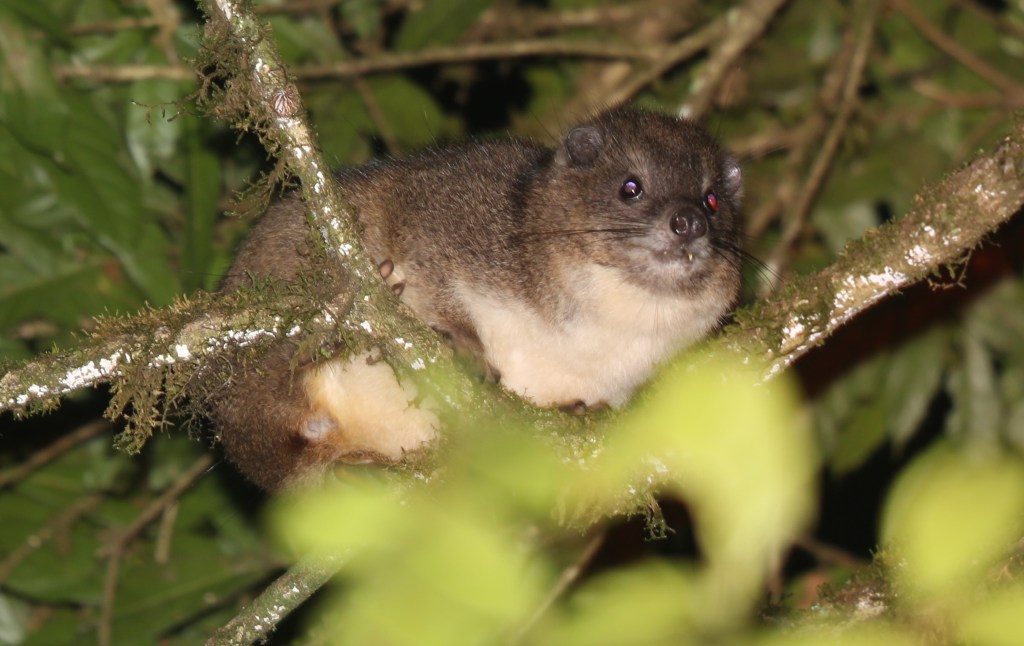
Taita tree hyrax (Dendrohyrax sp.)
Some features
small mammals 1.8-5.5 kg
no visible tail
coat dense and light grey to dark brown
all three genera are highly vocal
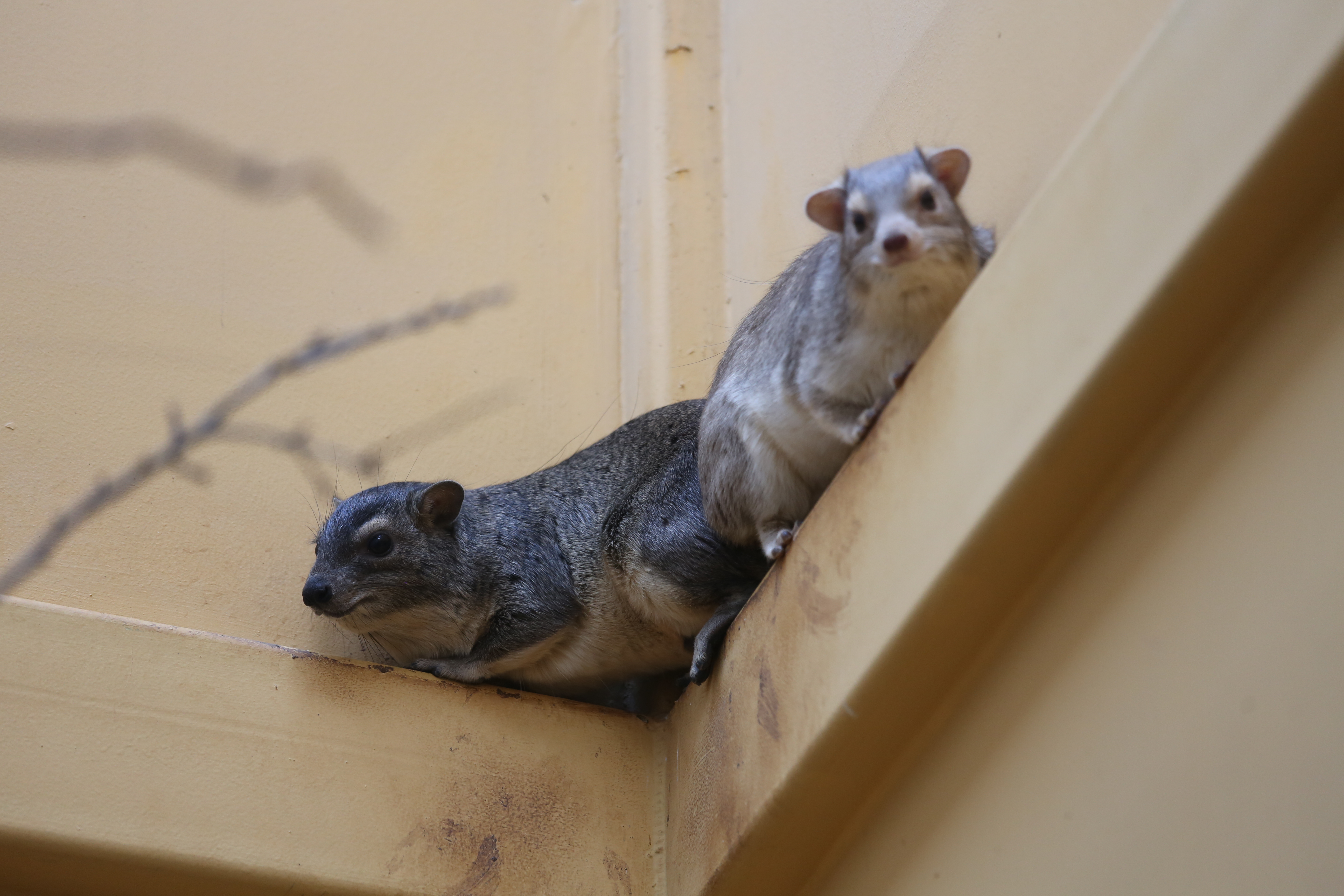
Bush hyrax from Plzen Zoo, Czech. They are smaller, grayish, and they have very strong white patches above the eyes. They are not as round as rock hyrax and tree hyraxes.
Unusual features
dorsal gland with hair with different color
tactile hairs around the body (length up to 8 cm)
forefoot has four digits and hindfoot three
stomach divided into two chambers
highly subdivided liver – plant food they use may be toxic
internal testes
unbranched caecum acts as a fermentation chamber that produces large amounts of volatile fatty acids that serve as an energy source
effective kidney function, they have high capacity for concentrating urea, and excreting large amounts of undissolved calcium carbonate.
many species defaecate to specific spots, and many species use latrines
low metabolic rate
they have poor ability to regulate their body temperature
body temperature is is maintained by behavioral thermoregulation
gestation period is long 6-8 months
Odd appearance has caused confusion
First they were thought to be rodents, thus genus Procavia (cavia meaning before guinea pigs)
Later called hyrax – equally wrong – as “shrew mouse”
Dassie used in South Africa comes from Dutch badger – das
3000 years age Phoenician seamen found small mammals from Mediterrian and called the place “I-saphan-im” Island of the Hyrax. The Romans later modified the name to Hispania. That later became Spain. The animals were really rabbits! Not hyraxes, so the name “Spain” comes from faulty observation.
Key reference: Shoshani, J., Bloomer, P., Seiffert, E. (2013) ‘Order Hyracoidea – Hyraxes’ in Mammals of Africa. London, Bloomsbury, pp. 148-151.
Other sources for Dendrohyraxes:
Cordeiro, N.J. et al. (2005) ‘Notes on the ecology and status of some forest mammals in four Eastern Arc Mountains, Tanzania’, Journal of East African Natural History, 94(1), pp. 175–189. doi:10.2982/0012-8317(2005)94[175:NOTEAS]2.0.CO;2.
Gaylard, A. and Kerley, G.I.H. (1997) ‘Diet of Tree Hyraxes Dendrohyrax arboreus (Hyracoidea: Procaviidae) in the Eastern Cape, South Africa’, Journal of Mammalogy, 78(1), pp. 213–221. doi:10.2307/1382654.
Gaylard, A. and Kerley, G.I.H. (2001) ‘Habitat assessment for a rare, arboreal forest mammal, the tree hyrax (Dendrohyrax arboreus)’, African Journal of Ecology, 39(2), pp. 205–212. doi:10.1046/j.0141-6707.2000.301.x.
Hoeck, H. (no date) ‘Some thoughts on the distribution of the tree hyraxes (genus Dendrohyrax) in Northern Tanzania’, 2017(13:47–49).
IUCN (2013) ‘Dendrohyrax arboreus: Butynski, T., Hoeck, H. & de Jong, Y.A.: The IUCN Red List of Threatened Species 2015: e.T6409A21282806’. International Union for Conservation of Nature. doi:10.2305/IUCN.UK.2015-2.RLTS.T6409A21282806.en.
IUCN (2014) ‘Dendrohyrax validus: Hoeck, H., Rovero, F., Cordeiro, N., Butynski, T., Perkin, A. & Jones, T.: The IUCN Red List of Threatened Species 2015: e.T136599A21288090’. International Union for Conservation of Nature. doi:10.2305/IUCN.UK.2015-2.RLTS.T136599A21288090.en.
Kundaeli, J.N. (1976) ‘Distribution of tree hyrax (Dendrohyrax validus validus True) on Mt Kilimanjaro, Tanzania’, African Journal of Ecology, 14(4), pp. 253–264. doi:10.1111/j.1365-2028.1976.tb00241.x.
Milner, J.M. and Harris, S. (1999) ‘Habitat use and ranging behaviour of tree hyrax, Dendrohyrax arboreus, in the Virunga Volcanoes, Rwanda: Habitat use by tree hyrax’, African Journal of Ecology, 37(3), pp. 281–294. doi:10.1046/j.1365-2028.1999.00185.x.
Oates, J.F. et al. (2021) ‘A new species of tree hyrax (Procaviidae: (Dendrohyrax) from West Africa and the significance of the Niger–Volta interfluvium in mammalian biogeography’, Zoological Journal of the Linnean Society, p. zlab029. doi:10.1093/zoolinnean/zlab029.
Opperman, E.J., Cherry, M.I. and Makunga, N.P. (2018) ‘Community harvesting of trees used as dens and for food by the tree hyrax (Dendrohyrax arboreus) in the Pirie forest, South Africa’, Koedoe, 60(1). doi:10.4102/koedoe.v60i1.1481.
Roberts, D., Topp-Jørgensen, E. and Moyer, D. (2013) ‘Dendrohyrax validus Eastern tree hyrax’, in Mammals of Africa. London, Bloomsbury, pp. 158–161.
Topp-Jørgensen, J.E. et al. (2008) ‘Quantifying the Response of Tree Hyraxes ( Dendrohyrax Validus ) to Human Disturbance in the Udzungwa Mountains, Tanzania’, Tropical Conservation Science, 1(1), pp. 63–74. doi:10.1177/194008290800100106.
True, F.W. (1890) ‘Description of two new species of mammals from Mt. Kilima-Njaro, East Africa’, Proceedings of the United States National Museum, 13(814), pp. 227–229. doi:10.5479/si.00963801.814.227.
According to Mammals of Africa (MOA) 2013 17 subspecies are recognized. However, many of these subspecies have been elevated to level of distinct species.
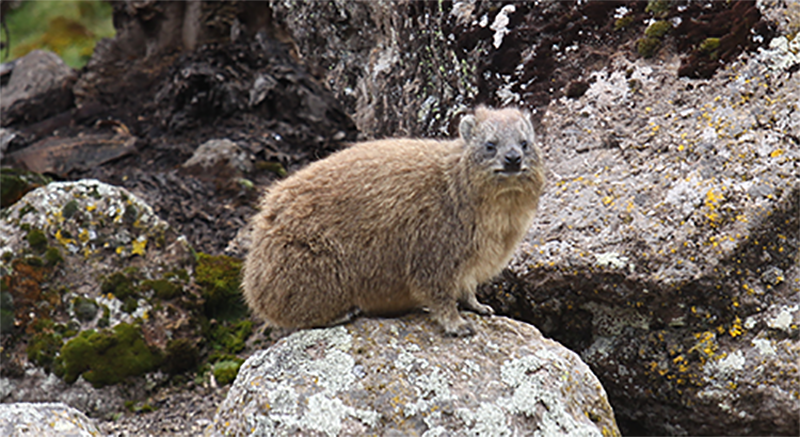
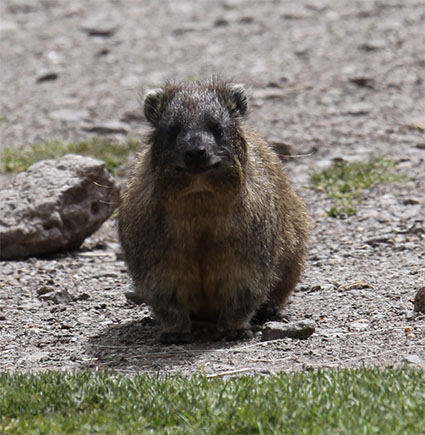
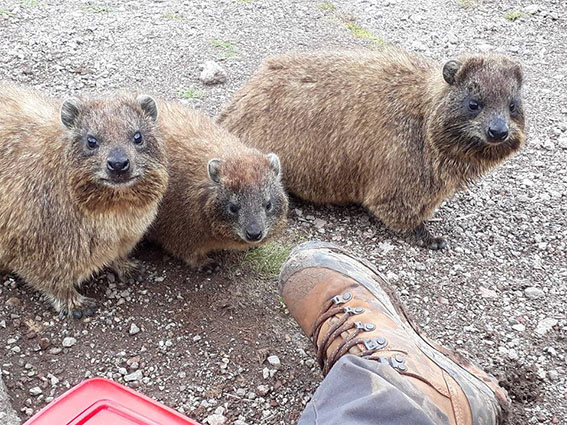
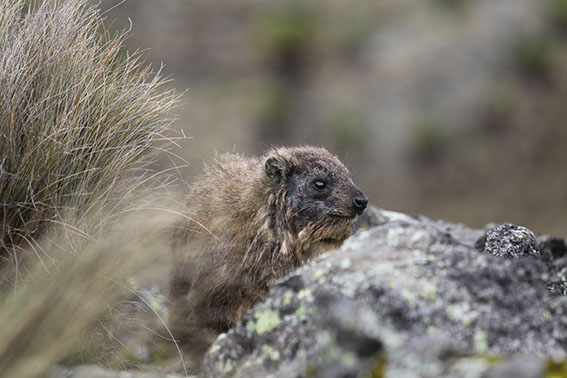
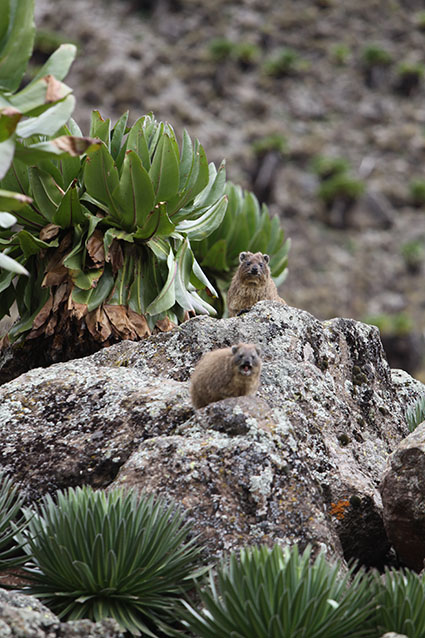
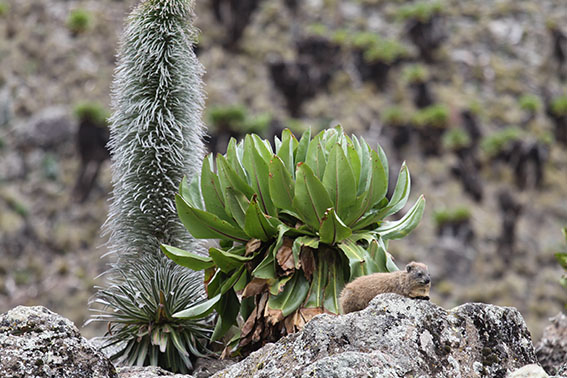
Rock hyraxes in Mt Kenya. These rock hyraxes live in the altitude of 4300 m asl. Many people climbing to Mt Kenya are first startled by their loud calls that seem to be coming from nowhere.
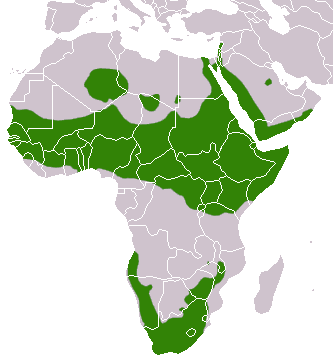
Rock hyraxes have wide distribution in Africa and in many countries in Middle East
Rock hyraxes are dependent on rocky outcrops, mountain cliffs or boulders that provide shelter for them.
From sea level to 4300m asl in Mt Kenya
Rock hyraxes are diurnal group living animals. One group may have even 80 individuals.
More than 90 % of the day is spent resting.
They feed on grasses, buds, fruits, berries.
Huddling behavior is most common interaction. During warmer times rock hyraxes may rest alone.
Rock hyraxes are highly vocal. Fourie (1977) recorded 21 vocal sound and 4 non-vocal sounds.
Rock hyraxes from Mt Kenya
Rock hyraxes singing songs, witch is rare phenomenon among mammals (Koren 2006, Koren & Geffren 2009, Demartsev et al. 2014). In rock hyraxes songs are sang by males. Most complicated and powerful songs are sang by strong males. These songs are most likely individual badges that males use to advertise their fitness to females.
With one breeding season, all females give birth to 1-4 within three weeks.
Weaning occurs within 1-5 months. Both sexes reach maturity at 28-29 months.
Allthough some habitats remain always occupied, in many locations rock hyraxes colonies may dissapear and then reappear according to metapopulation theory.
In some counties e.g. Saudi-Arabia rock hyraxes are hunted for sport, meat and skins.
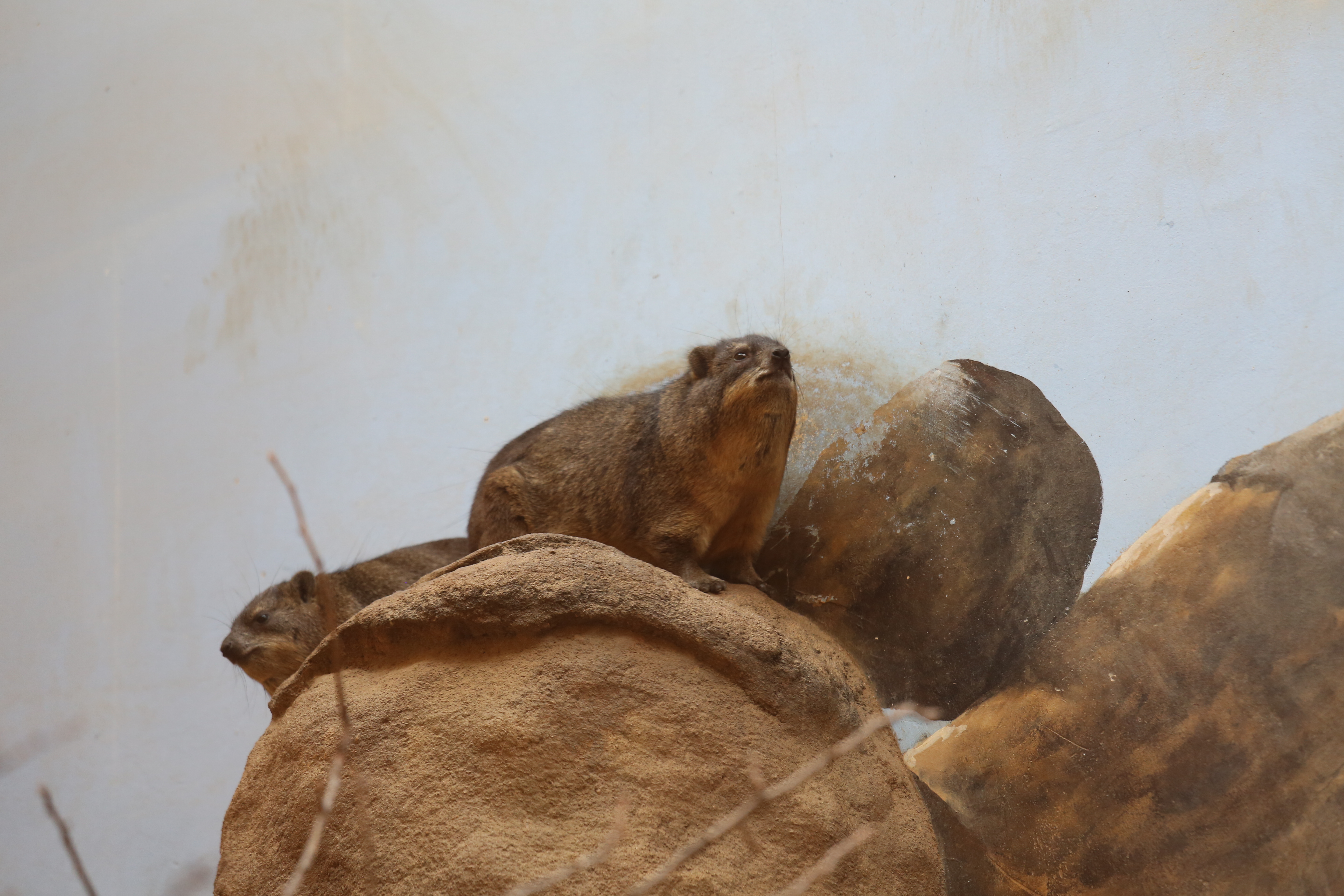
Rock hyraxes from Plzen Zoo, Czech
How do you recognize hyrax species from one another?
If they are diurnal, they are either rock hyraxes or bush hyraxes. These are quite different form their appearance.
If they are nocturnal, they are tree hyraxes. Tree hyraxes are usually seen in the proximity of trees as they only eat leaves. In West Africa they are D. dorsalis or D. interfluvialis. They can be separated by their calls. Most common tree hyrax is Dendrohyrax arboreus. This species can be found from equator to South Africa. Other tree hyraxes D. validus and Taita tree hyrax sound very different. D. arboreus sounds like halloween sound track. D. validus has simple hac calls and Taita tree hyraxes have strangled thwack as their main contact calls. You can listen to Taita tree hyrax from here
Key reference: Hoeck, H. Bloomer, P. (2013) ´Procavia capensis Rock hyrax (Klipdassie)’. In “Mammals of Africa” Vol 1. London Bloomsbury. pages 166-171
Demartsev, V. et al. (2014) ‘Male hyraxes increase song complexity and duration in the presence of alert individuals’, Behavioral Ecology, 25(6), pp. 1451–1458. doi:10.1093/beheco/aru155.
Butynski, T., Hoeck, H., Koren, L. & de Jong, Y.A. 2015. Procavia capensis. The IUCN Red List of Threatened Species 2015: e.T41766A21285876. http://dx.doi.org/10.2305/IUCN.UK.2015- 2.RLTS.T41766A21285876.en
Koren, L. (2006) Vocalization as an indicator of individual quality in the rock hyrax. PhD-thesis, Tel-Aviv University.
Koren, L. and Geffen, E. (2009) ‘Complex call in male rock hyrax (Procavia capensis): a multi-information distributing channel’, Behavioral Ecology and Sociobiology, 63(4), pp. 581–590. doi:10.1007/s00265-008-0693-2.
Oates, J.F. et al. (2021) ‘A new species of tree hyrax (Procaviidae: (Dendrohyrax) from West Africa and the significance of the Niger–Volta interfluvium in mammalian biogeography’, Zoological Journal of the Linnean Society, p. zlab029. doi:10.1093/zoolinnean/zlab029.
Most people who see hyraxes in Kenya or in Africa in general think that they are some sort of rodents, as they look like overgrown guinea pigs.
It is amazing that closest relatives to hyraxes are elephants!
Furry coat protects from cold temperature. Hyraxes have low body temperature. They rely on sun bathing to lift their body temperature. Grasses that they eat, are low nutrient food and hyraxes have several adaptations to allow them to cope with such low nutrient diet.
These animals are actually related to elephants and manatees. They belong to the and cohort Paenungulata – where also elephants, manatees and dugongs belong (Mammals of Africa 2013).
Strange appearance has lead to misleading name hyrax, which means “shrew mouse”. In South Africa they are called “dassie”, that is derived from Dutch word for badger, equally misleading.
In Hebrew hyraxes were known as shaphan, “meaning the hidden one”. As sailors came 3000 years ago to coast of Spain, they named it I-shaphan-im -Island of the Hyrax. As they saw many animals that they believed to be hyraxes. Animals were actually rabbits.
So country Spain derives its name from misunderstanding, it is named after animals that have never been there. Hyraxes are endemic to Africa.
More than 25 million years ago, there where many more species and hyraxes where largest group of medium sized herbivores. Now there are only three geniuses left and these are living in harsh conditions where competition from other herbivores is minimal.
Three genera of hyraxes:
Procavia – rock hyraxes
Heterohyrax – bush hyraxes
Dendrohyrax – tree hyraxes
In Mt Kenya, and also in some other places, rock hyraxes are getting used to people and hang around in hope of food
Incredible features of hyraxes
Hyraxes have tree toes, these cute soft toes are sausage like. Teeth of hyraxes are weird for small animals, resembling rhinos or horses. Upper incisors are tusk-like, larger in males than in females (Hoeck). These tusks remind of their large distant relatives, elephants.
Hyraxes have low body temperature, and they use sunshine to rise their body temperature. Hyraxes conserve energy by having low body temperature, getting warm in the sun and resting a lot. They are dependent on cavities of rock or trees for shelter to stay warm. Hyraxes have internal testes, as lower body temperature allows testes to remain inside the body.
The eye of rock hyrax has shield called “umbraculum” that allows them to stare at the sun. Perhaps this adaptation allows them to see attacks of eagles, as animals are exposed when they are basking in the sun.
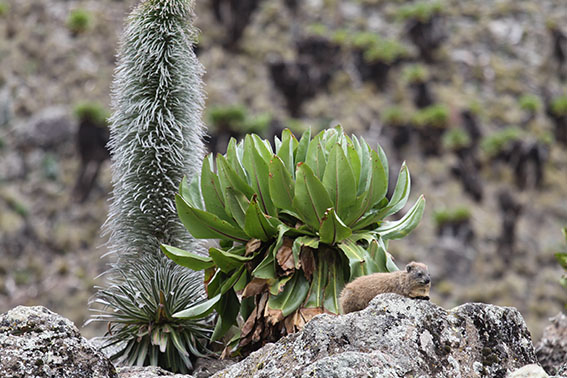
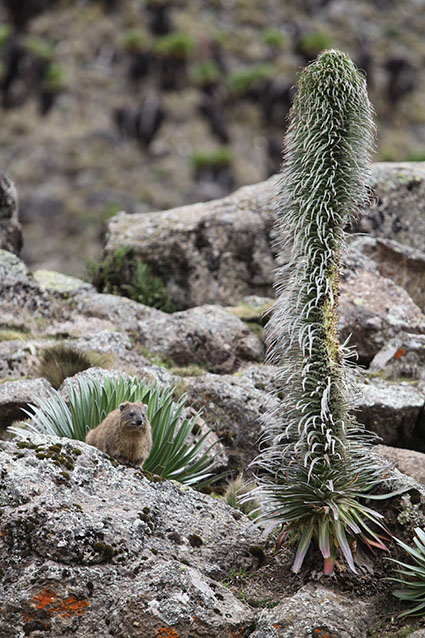
In Mt Kenya Senecio plant (in front) and Giant lobelia (behind) are largest plants. Hyraxes are living on small grasses. Their slow metabolic rate and capability to gather heat from the sun, allows them to live in such hard conditions.
Rock hyrax eats grasses. Hyraxes do not ruminate, but their ability to digest fibers is just as efficient. Morphology of digestive system is complex and unique to hyraxes. Efficient kidneys allow them to survive with minimal water intake.
Animal with cuts in the cheek. Grasses on the left are their diet in Mt Kenya.
Hyraxes have long vibrissae (tactile hairs) distributed around their bodies. Probably helping them to orient in rock holes or in the darkness of the forest canopy, with tree hyraxes.
Rock hyraxes are diurnal, group living animals. Main communication method for rock hyraxes is vocal communication. Complex vocal communication include songs that male sing to attract mates (Koren & Geffren 2009).
Sources and additional reading:
Demartsev, Vlad, Arik Kershenbaum, Amiyaal Ilany, Adi Barocas, Einat Bar Ziv, Lee Koren, and Eli Geffen. 2014. “Male Hyraxes Increase Song Complexity and Duration in the Presence of Alert Individuals.” Behavioral Ecology 25 (6): 1451–58. https://doi.org/10.1093/beheco/aru155.
Ilany, Amiyaal, Adi Barocas, Michael Kam, Tchia Ilany, and Eli Geffen. 2013. “The Energy Cost of Singing in Wild Rock Hyrax Males: Evidence for an Index Signal.” Animal Behaviour 85 (5): 995–1001. https://doi.org/10.1016/j.anbehav.2013.02.023.
Kershenbaum, Arik, Amiyaal Ilany, Leon Blaustein, and Eli Geffen. 2012. “Syntactic Structure and Geographical Dialects in the Songs of Male Rock Hyraxes.” Proceedings of the Royal Society B: Biological Sciences 279 (1740): 2974–81. https://doi.org/10.1098/rspb.2012.0322.
Kingdon, Jonathan, ed. 2013. Mammals of Africa. Vol. 1: Introductory Chapters and Afrotheria. London: Bloomsbury.
Koren, Lee, and Eli Geffen. 2009. “Complex Call in Male Rock Hyrax (Procavia Capensis): A Multi-Information Distributing Channel.” Behavioral Ecology and Sociobiology 63 (4): 581–90. https://doi.org/10.1007/s00265-008-0693-2.
Weissman, Yishai A, Vlad Demartsev, Amiyaal Ilany, Adi Barocas, Einat Bar-Ziv, Inbar Shnitzer, Eli Geffen, and Lee Koren. 2019. “Acoustic Stability in Hyrax Snorts: Vocal Tightrope-Walkers or Wrathful Verbal Assailants?” Behavioral Ecology 30 (1): 223–30. https://doi.org/10.1093/beheco/ary141.


 Animals of Taita, Kenya