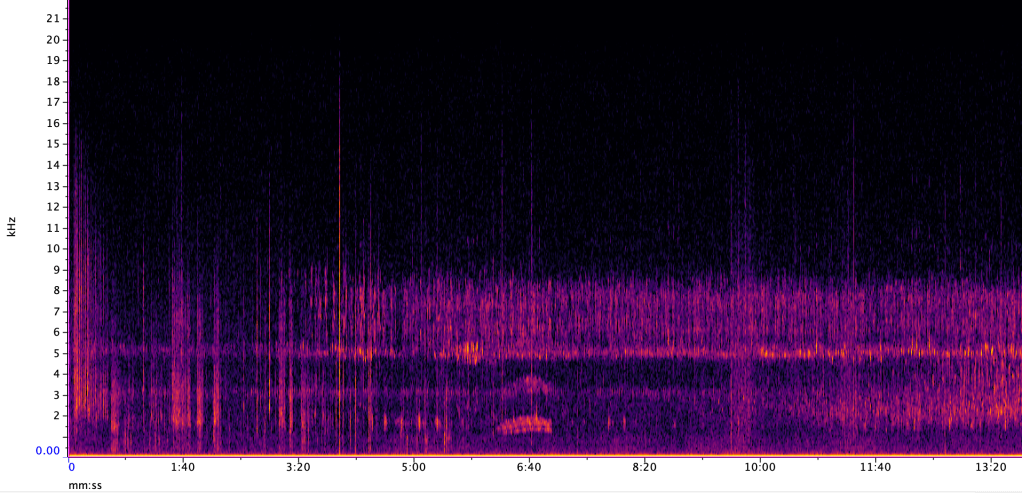
See and listen how chorus of tree hyraxes change into chorus of birds. This is recorded in Ngangao Forest, Taita Hills, Kenya on 8.1.2022 with SM4 recorder.
How many different animal species can you hear from this recording?
This is spectrogram video filmed from screen. It shows how spectrogram goes in Raven Pro software.
From this sequence you can hear how wide range of calls are used by tree hyraxes.
This spectrogram also shows how different species have adapted to use different frequencies to avoid acoustic competition.
At first forest is full of tree hyraxes. Tree hyraxes are related to elephants and they live in trees eating leaves. Their calling activity is incredible. These animals are almost unknown to science, as they are so difficult to study.
As tree hyraxes quiet down, as sun begins to raise, morning chorus of birds begin. This happens in January in Taita Hills about 5.45 in the morning.
This rare footage shows Taita tree hyrax feeding and moving in the indigenous forest of Taita Hills 2020. Filmed by Benson Lombo, edited by Hanna Rosti.
EXTINCT (EX): A taxon is Extinct when there is no reasonable doubt that the last individual has died. A taxon is presumed Extinct when exhaustive surveys in known and/or expected habitat, at appropriate times (diurnal, seasonal, annual), throughout its historic range have failed to record an individual. Surveys should be over a time frame appropriate to the taxon’s life cycle and life form.
EXTINCT IN THE WILD (EW) A taxon is Extinct in the Wild when it is known only to survive in cultivation, in captivity or as a naturalized population (or populations) well outside the past range. A taxon is presumed Extinct in the Wild when exhaustive surveys in known and/or expected habitat, at appropriate times (diurnal, seasonal, annual), throughout its historic range have failed to record an individual. Surveys should be over a time frame appropriate to the taxon’s life cycle and life form.
CRITICALLY ENDANGERED (CR) A taxon is Critically Endangered when the best available evidence indicates that it meets any of the criteria A to E for Critically Endangered (see Section V), and it is therefore considered to be facing an extremely high risk of extinction in the wild.
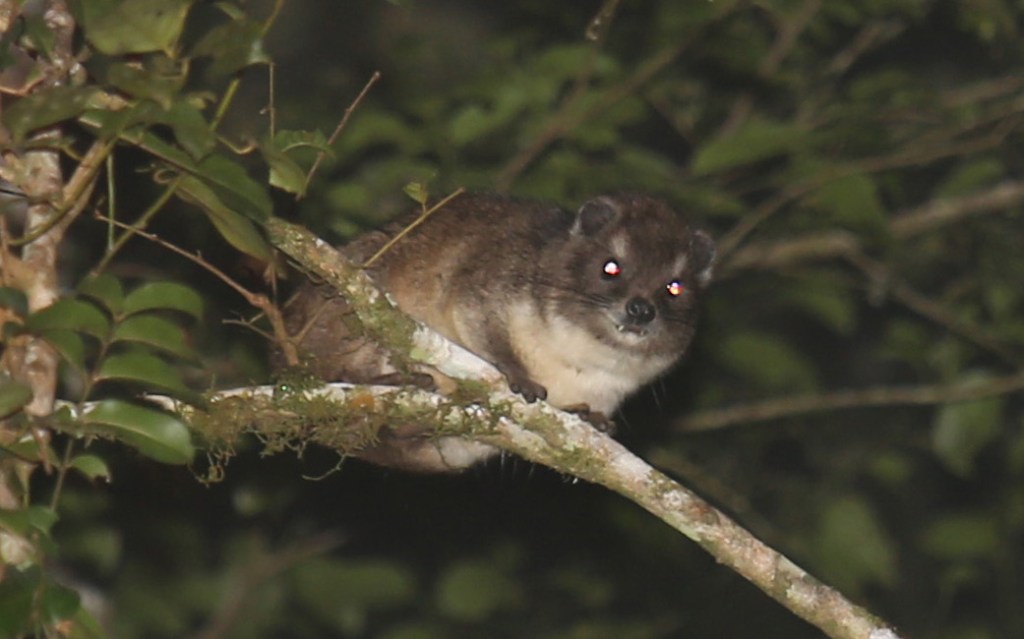
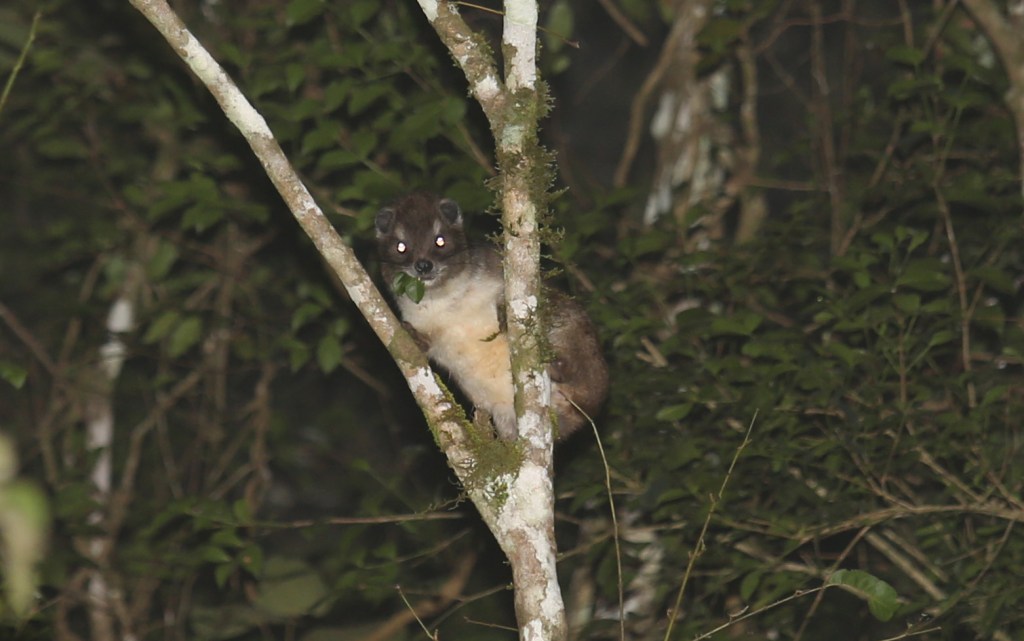
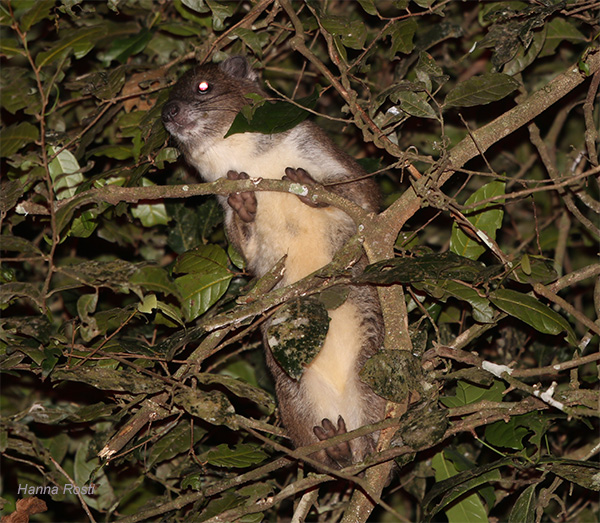
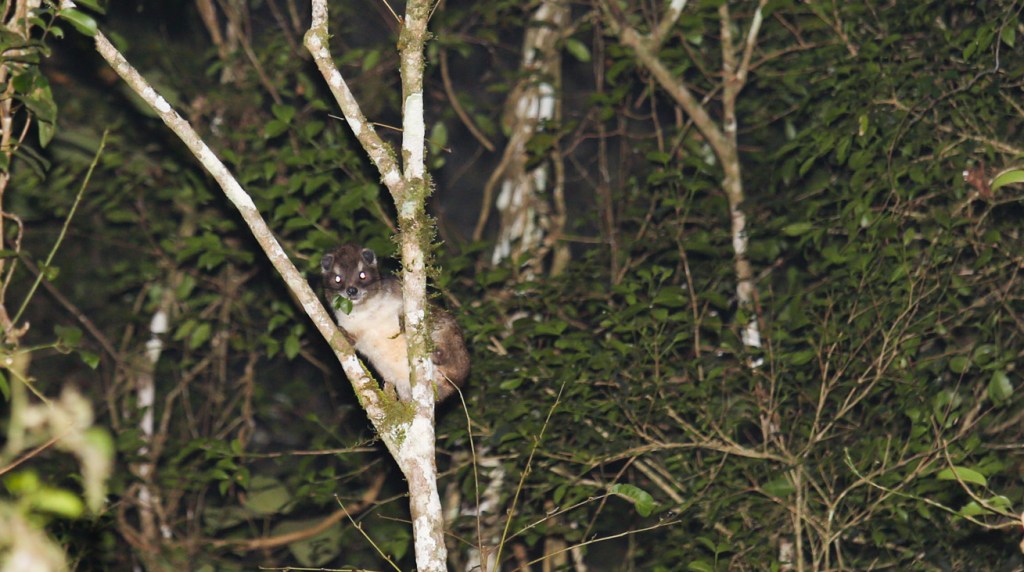
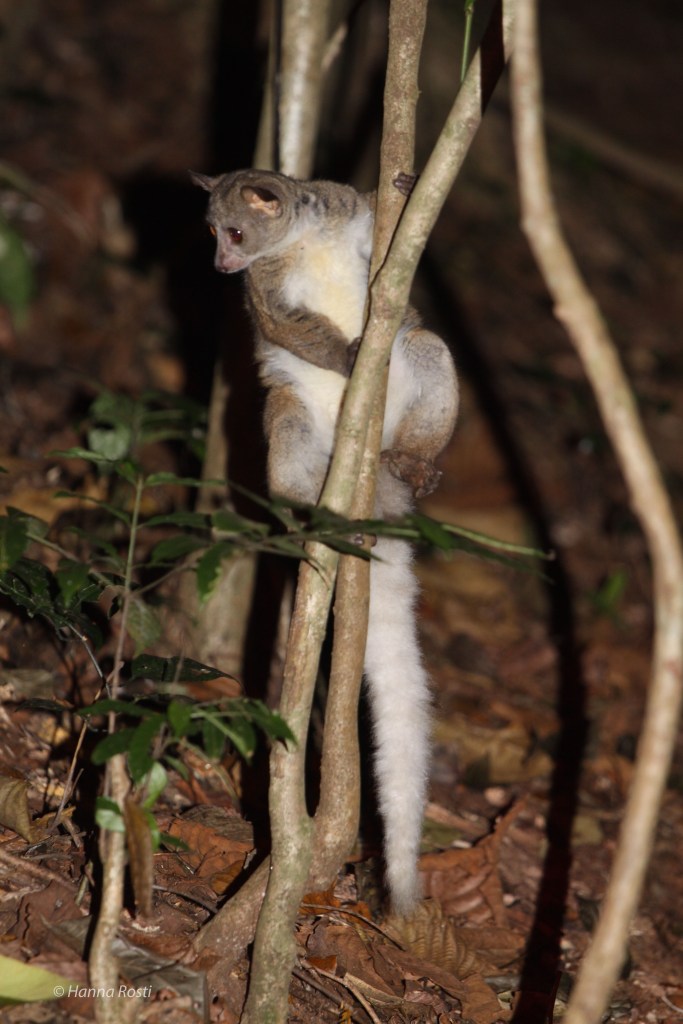
Tree hyrax (Dendrohyrax sp.) Taita Hills, Kenya. This is most likely undescribed species for the science and thus doesn’t have IUCN assessment.
ENDANGERED (EN) A taxon is Endangered when the best available evidence indicates that it meets any of the criteria A to E for Endangered (see Section V), and it is therefore considered to be facing a very high risk of extinction in the wild.
VULNERABLE (VU) A taxon is Vulnerable when the best available evidence indicates that it meets any of the criteria A to E for Vulnerable (see Section V), and it is therefore considered to be facing a high risk of extinction in the wild.
NEAR THREATENED (NT) A taxon is Near Threatened when it has been evaluated against the criteria but does not qualify for Critically Endangered, Endangered or Vulnerable now, but is close to qualifying for or is likely to qualify for a threatened category in the near future.
LEAST CONCERN (LC) A taxon is Least Concern when it has been evaluated against the criteria and does not qualify for Critically Endangered, Endangered, Vulnerable or Near Threatened. Widespread and abundant taxa are included in this category.
DATA DEFICIENT (DD) A taxon is Data Deficient when there is inadequate information to make a direct, or indirect, assessment of its risk of extinction based on its distribution and/or population status. A taxon in this category may be well studied, and its biology well known, but appropriate data on abundance and/or distribution are lacking. Data Deficient is therefore not a category of threat. Listing of taxa in this category indicates that more information is required and acknowledges the possibility that future research will show that threatened classification is appropriate. It is important to make positive use of whatever data are available. In many cases great care should be exercised in choosing between DD and a threatened status. If the range of a taxon is suspected to be relatively circumscribed, and a considerable period of time has elapsed since the last record of the taxon, threatened status may well be justified.
NOT EVALUATED (NE) A taxon is Not Evaluated when it has not yet been evaluated against the criteria.
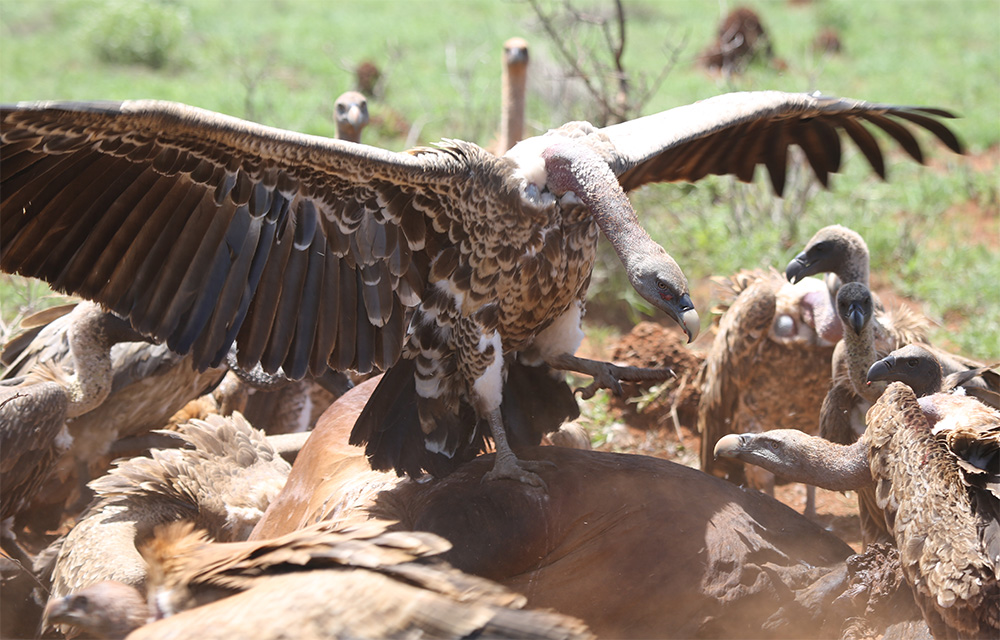
Critically Endangered (CR) vultures, Rüppells Vulture (Gyps rueppelli) and White-Backed Vulture (Gyps africanus) feeding on cow that has been killed by lions in Lumo conservancy Kenya in 2021.
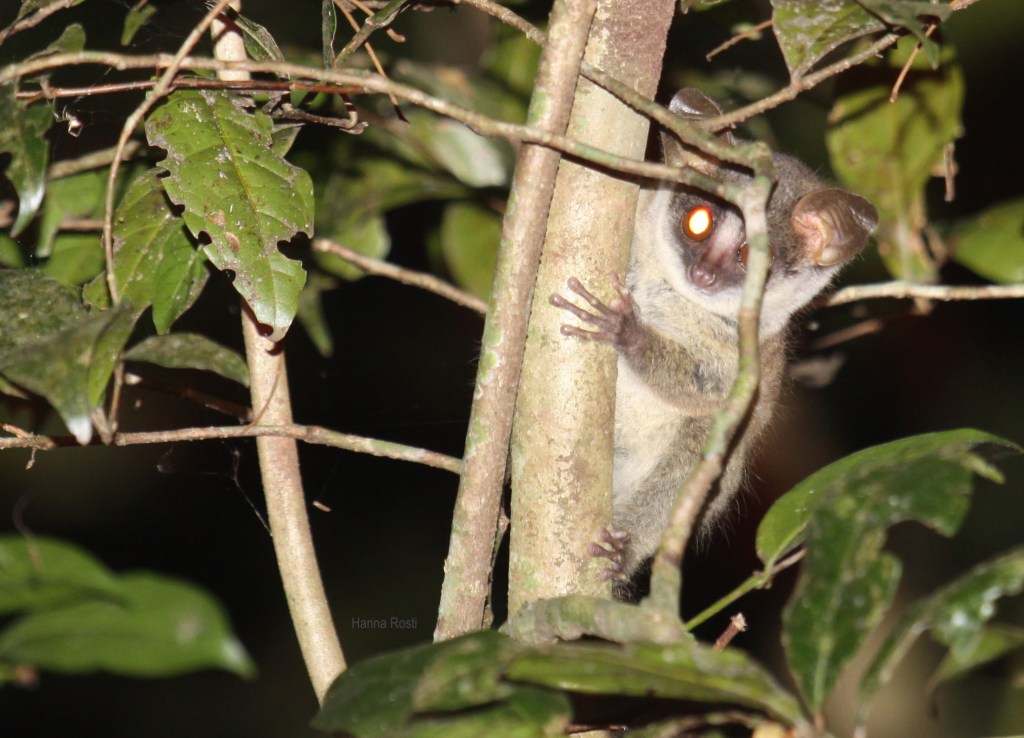
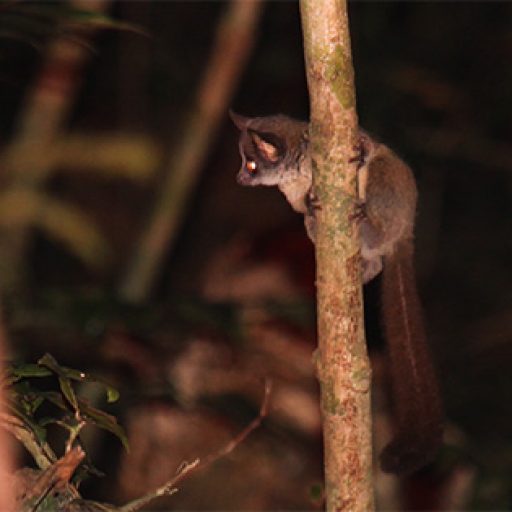
Taita tree hyrax (Dendrohyrax sp.) and Taita dwarf galago (Paragalago cocos) fulfill following criteria for Critically Endangered species.
MORE DETAILED KNOWLEDGE ABOUT CRITICALLY ENDANGERED (CR)
An observed, estimated, inferred or suspected population size reduction of ≥90% over the last 10 years based on direct observation, decline in area of occupancy, extent of occurrence and/or quality of habitat
An observed, estimated, inferred or suspected population size reduction of ≥80% over the last 10 years where the reduction or its causes may not have ceased or may not be understood or may not be reversible.
B. Geographic range
Extent of occurrence estimated to be less than 100 km2
Area of occupancy estimated to be less than 10 km2
C. Population size estimated to number fewer than 250 mature individuals or
A continuing decline, observed, projected, or inferred, in numbers of mature individuals. Quantitative analysis showing the probability of extinction in the wild is at least 50% within 10 years or three generations, whichever is the longer (up to a maximum of 100 years).
How IUCN assessment and criteria is made?
UCN criteria are made based on peer reviewed scientific journals, and they are written by top scientist of the species. Before IUCN assessment can be done, species must be scientifically identified and named.
Assessment is based on research. Collecting substantial knowledge, preferably long-term knowledge of each species in the planet is not always possible. Species are very different, and methods that different species are studied vary accordingly. There is lack of data on most nocturnal animals, simply because they are so difficult to study.
Publishing scientific articles is time consuming and expensive. It means that species may go extinct, or their IUCN status may change faster than can be noticed, as humans are changing Earth in ever-growing speed.
Critically Endangered (CR) Taita thrush (Turdus helleri) from Taita Hills. Number of mature individuals 930.
Taita tree hyrax and Taita dwarf galago are already CR Critically endangered
However, Taita tree hyrax and Taita dwarf galago don’t yet have any IUCN criteria. In Taita Hills there is about 6 km2 of indigenous tropical cloud forest left. This means that these species are Critially Endangered based on B2, area of occupancy less than 10 km2.
Forests that are left in Taita Hills are severely fragmented, and not connected to each other. So they are like islands in the sea. Forests are remaining in the mountain tops of Taita Hills, and they are also called water towers, as local people understand the ability of indigenous forest of attract rainwater.
Most of Taita Hills forest have been cleared for agriculture and exotic tree (Eucalyptus, cyprus, pine etc.) plantations during last 100 years.
Largest forest fragments are Mbololo 1,8 km2, and Ngangao 1,2 km2 and Chawia 0,8 km2. These are very small forests – all of them. Only Mbololo and Ngangao still have dwarf galago populations. Tree hyrax is more common, and it also survives in smaller fragments.
These severy fragmented forests are still source of firewood for some local people. A price of electricity is very high in Kenya, and using gas is also too expensive to some people. Firewood is used for cooking. Collection of firewood decreases quality of the forest, and signs are clearly visible on the edges and around paths inside the forest.
This Kenya coast dwarf galago (Paragalago cocos), is interesting relict population from wider range of Kenya coast dwarf galago. Other populations are living in coast of Kenya. But in Taita Hills, it is only living on two mountain tops.
Populations are what matter!
All populations are worth conservation. Before species go extinct, population number may even increase in some area, if habitats are destroyed and animals are packed in remaining habitat. This is called extinction debt. Competition in remaining habitat will decrease number of animals.
If we wait with conservation efforts until 90 % of population is lost, it is too late!
Forms of life are connected to each other. What happens to one species, happens to many species. This is because species use other species as food sources and rely on other species as their habitat, reproduction, safety and habitat.
The web of life can decrease in countless ways that humans are unable to monitor, even with most high quality research.
In a another words, we can’t predict consequences to other species caused by one species of animal going Critically Endangered or Extinct.
All populations should be conserved in a level, where they have genetic biodiversity, resilience to changes and disease, capability to reproduce normally.
IUCN guidelines are necessary tool to evaluate and compare situations where species are.
However, more awareness should be given to each population, and conservation before species is Critically Endangered.
We are living sixth mass extinction, our responsibility is to protect other species, and keep populations of other species alive, resilient and strong.
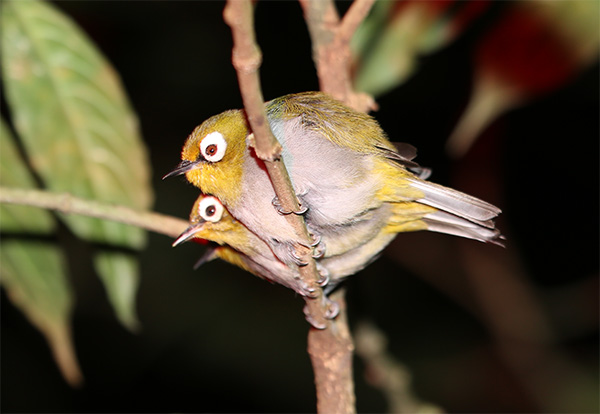
Taita white-eye (Zosterops silvanus) is categorized as Endangered (EN) by IUCN.
Short video introduction to tree hyraxes, with unique footage
Video of tree hyraxes filmed at night with night binoculars
As far as we know this is first video of tree hyraxes filmed at night. Tree hyraxes in East Africa are extremely shy, and difficult to observe. Usually they vanish in to the canopy when seen, or before humans can see them.
Mwalua Wildlife Trust was founded by Patrick Kilonzo to provide drinking water for animals suffering from lack of water during the dry season. As Water for Elephants has been success, many more work needs to be done. Volunteers from all over the world are welcome to join
Test if you identify animals from thermal imaging camera. Animals in the video are nocturnal and live in indigenous cloud forests of Taita Hills, Kenya. These animals are surviving on the last fragments of indigenous forest.
Tsavo West is one of most beautiful places in the world. And one of world largest conservation areas. This short film introduces scenery of Tsavo West and its most common animals. Peter also visits Chaimu crater and Mzima springs.
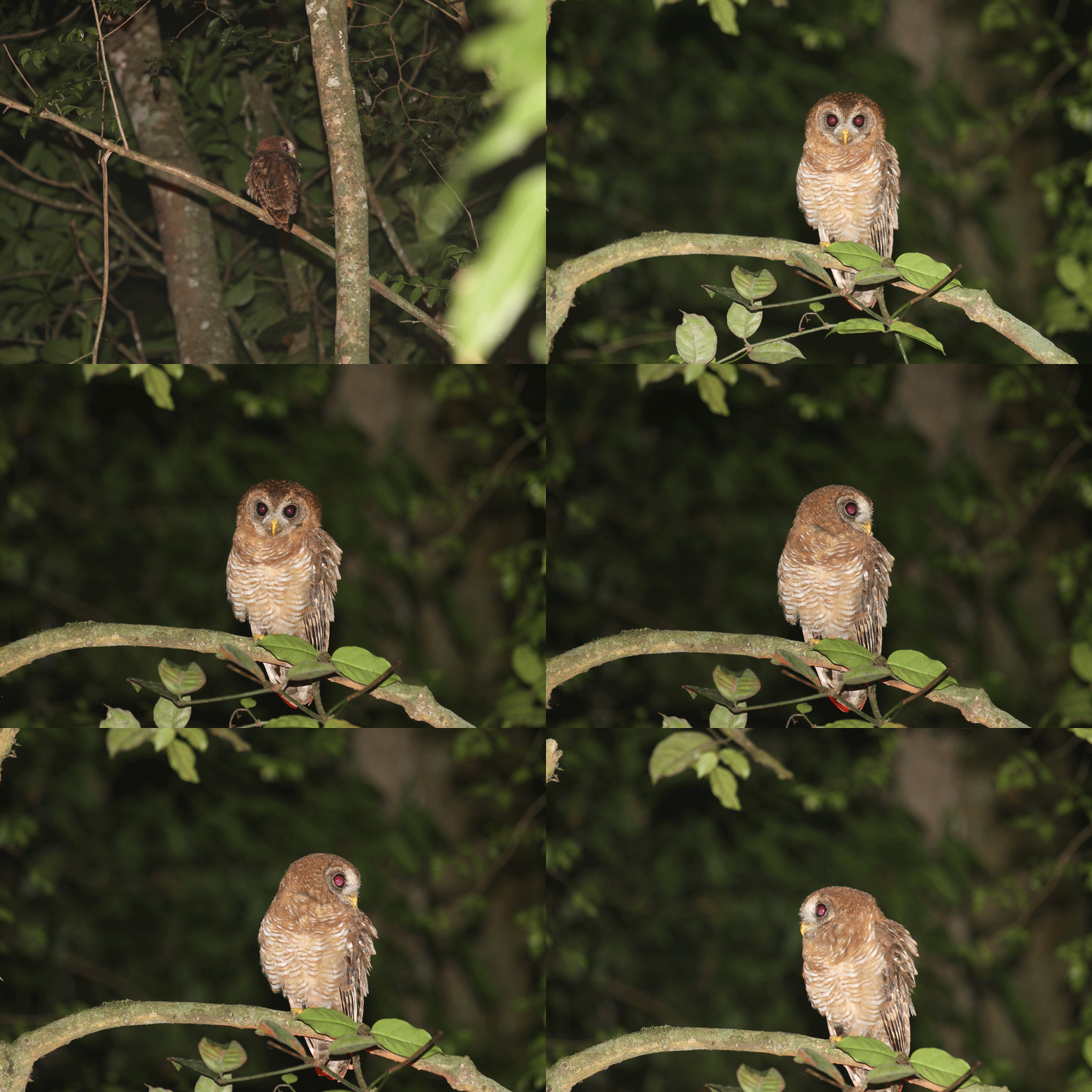
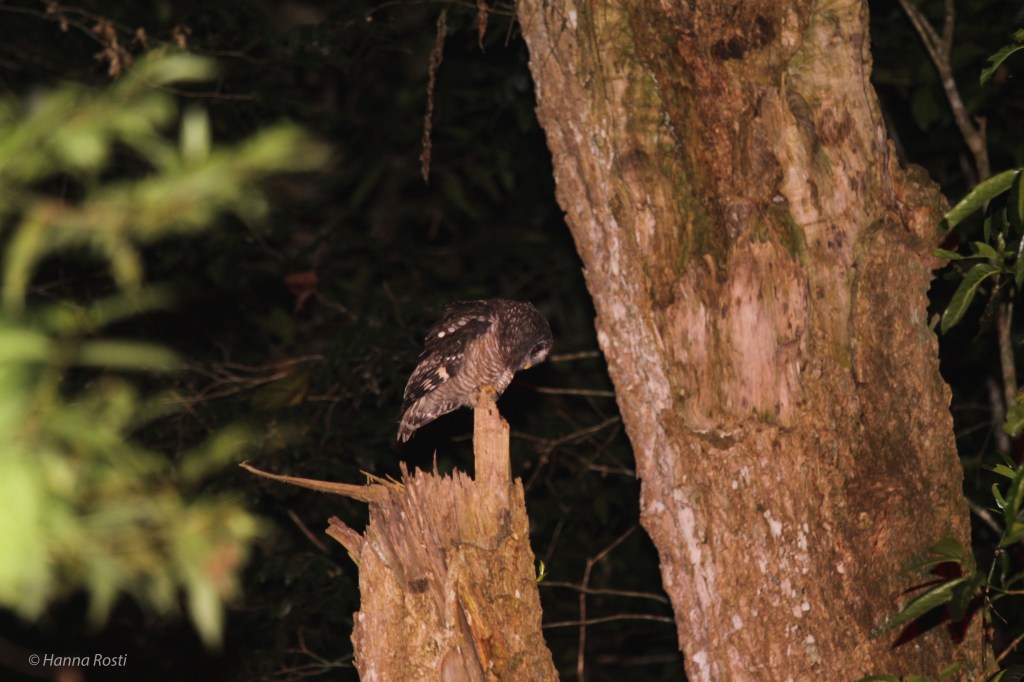
African wood owl looking for Taita mountain dwarf galago, that just escaped from him.
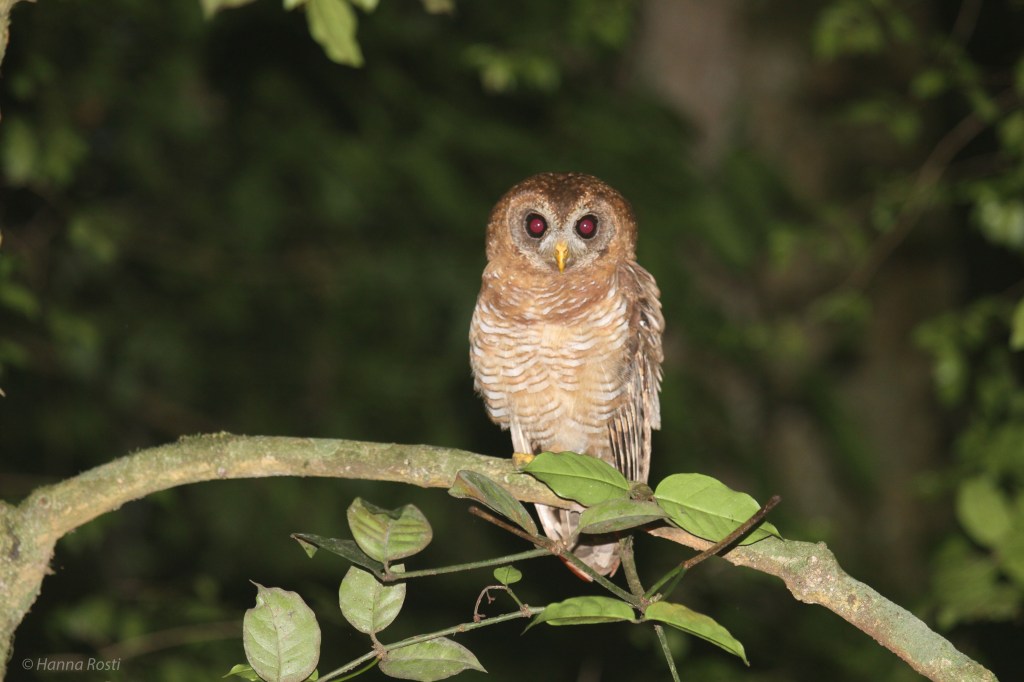
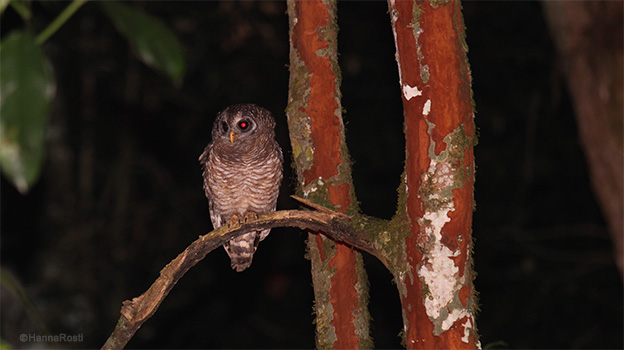
In Taita Hills of Kenya African wood owl (Strix woodfordii) is quite common. Owl couple keep contact with each other by calling. Interestingly male and female can counter call with similar calls, or female may use different call.
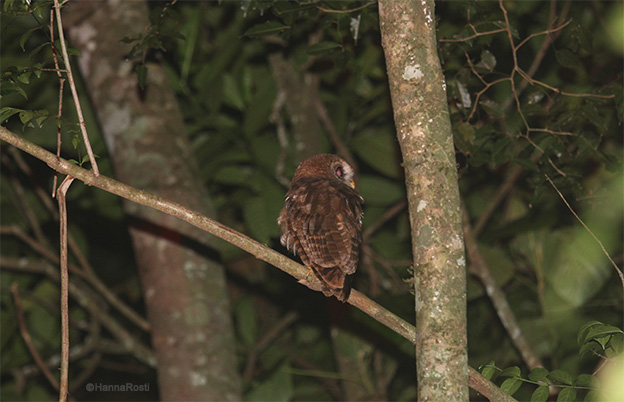
African wood owl from Ngangao Forest Taita Hills in 2019.
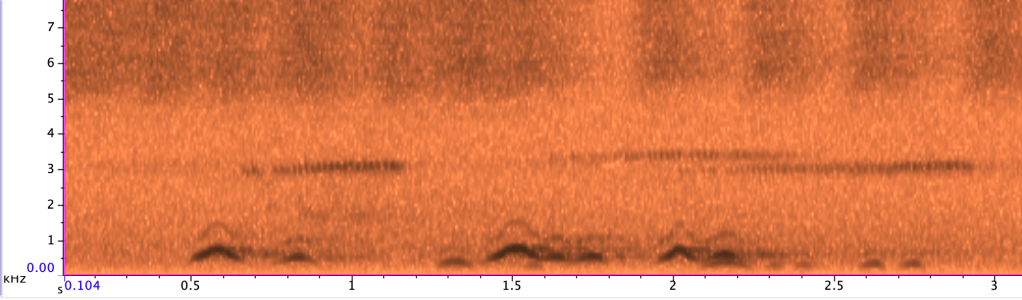
Counter calling of African wood owl couple from Taita Hills.
African wood owl male and female counter calling
Male makes a series of rapid, clear hoots, and the female answers with higher pitched, more leisurely hoots.
This is spectrogram of the part of calling sequence above made with Raven 1.6 Pro. On vertical axel you can see frequency and on horizontal axel the time. African wood owl hoots have fundamental (lowest) harmonic (lowest line) bellow 1 kHz. Calls coming near the recorder have stronger spectrogram. Above African wood owl there is another bird? with long chirr, and above that there are cicadas. So owls and cicadas can be easily heard simultaneously, as they use different frequencies.
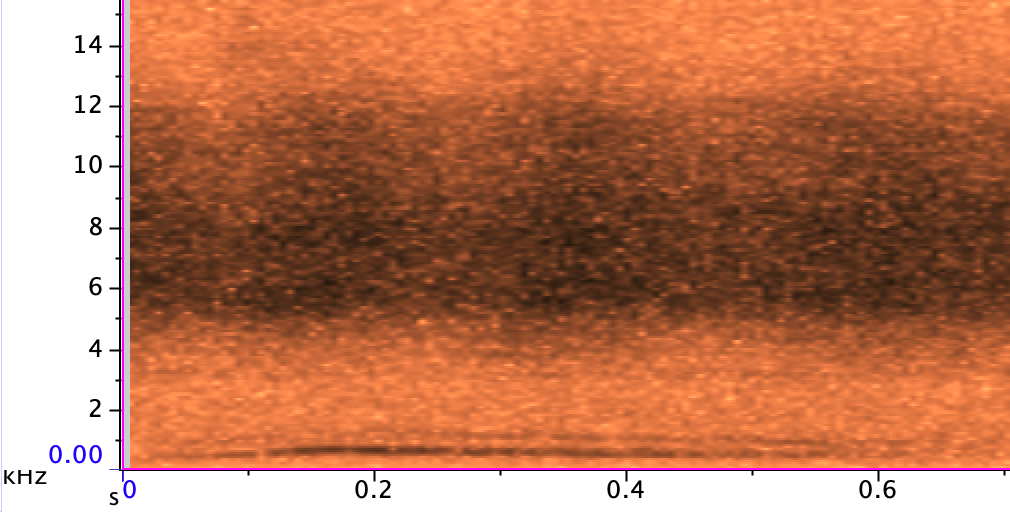
Different call of a female African wood owl from Taita Hills
Hoot of a African wood owl female with nice lowering pitchSpectrogram of a female African wood owl, a single hoof with slight rise in the middle. Given also as a response to call above. Call is using frequency about one kHz. Black belt between 5-12 kHz are cicada choir.
African wood owls in Taita Hills are about the size of the crow, 30-35 cm, weighing 240-350 grams. African wood owl eats mainly insects.
African wood owl looking for prey. Taita Hills 2019.
They can’t see red flashlight, which has enabled me to watch them without them without owls paying any attention for me.
African wood owl looking for insects or small mammals to prey on. Taita Hills 2019.
Mainly insectivorous, however they also catch small mammals… In Taita Hills African wood owls hunt also Taita mountain dwarf galagos that are almost extinct. For dwarf galagos this owl may be the ultimate reason for extinction.
From the behind coloring has beautiful shades of brown. Taita Hills 2019.
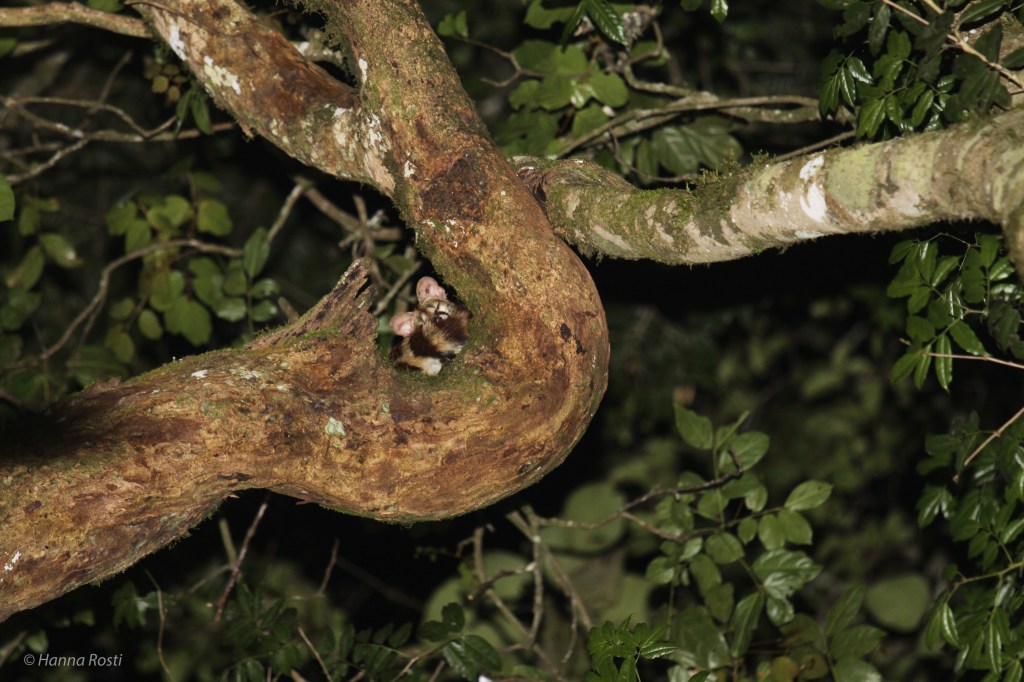
Reason for extremely low population numbers in dwarf galagos is loss of habitat, as forests have been cleared for fields. However, in these small remaining patches of forest, the probability of dwarf galago being hunted by wood owl increases. They share same territories every night. Dwarf galagos are dependent on refugee sites in hollow trees. Only very old trees are have hollows or are completely hollow.
Distribution and conservation status
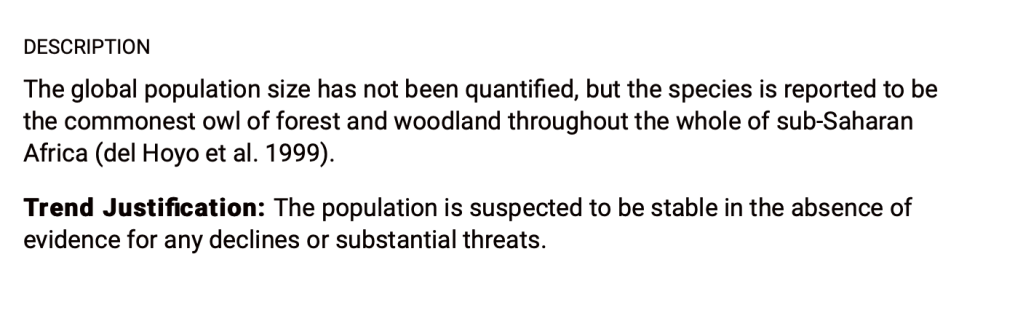
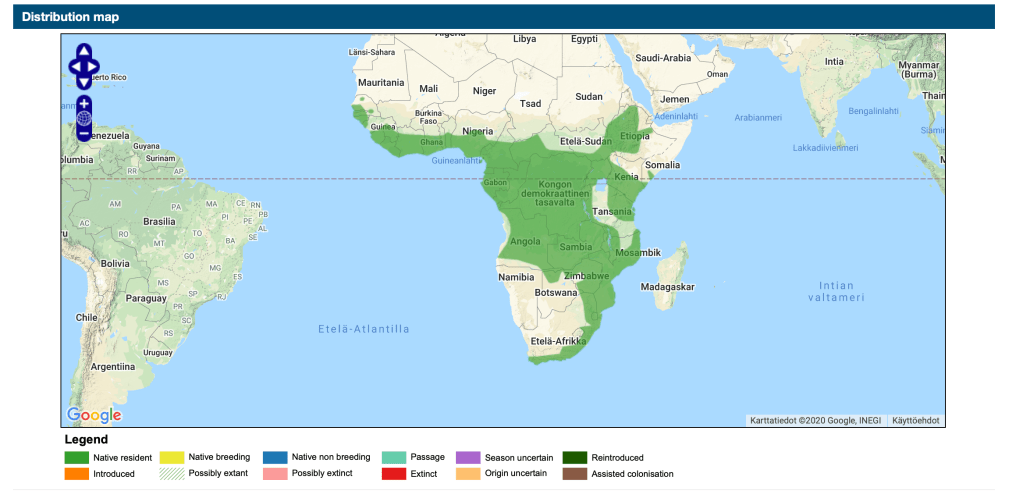
African wood owl has extremely large distribution in Africa. Conservation status is Least Concern LC. Populations seem to be stable. However there is no long term research about the species
Distribution map of African wood owl by BirdLife International. BirdLife International (2020) Species factsheet: Strix woodfordii. Downloaded from http://www.birdlife.org on 08/05/2020.
Geographic range from Avibase with four subspecies: These subspecies have considerable differences in their coloration.
Strix woodfordii woodfordii: southern Angola to southern Democratic Republic of the Congo, southwestern Tanzania, Botswana, and South Africa
Strix woodfordii nuchalis: Senegambia and Bioko Island to South Sudan, Uganda, western Democratic Republic of the Congo, and northern Angola
Strix woodfordii umbrina: Ethiopia and eastern South Sudan
Strix woodfordii nigricantior: southern Somalia to Kenya, Tanzania, Zanzibar, and eastern Democratic Republic of the Congo
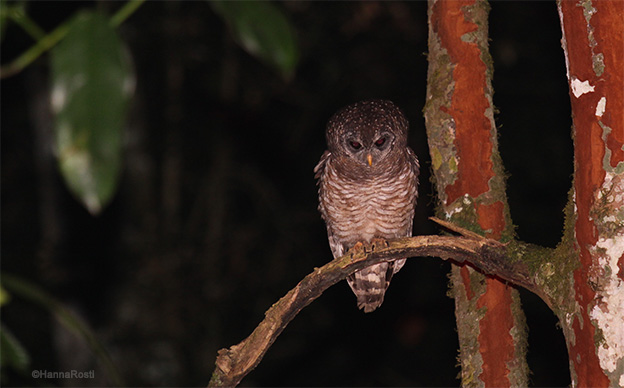
African wood owl has horizontal stripes. Taita Hills 2019.
Taxonomy
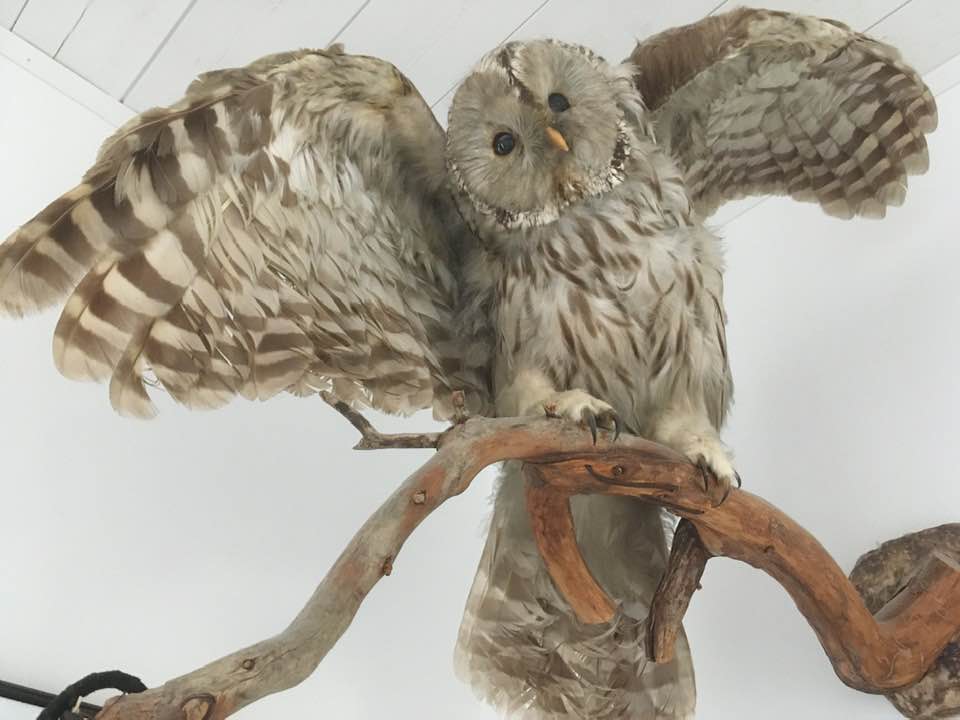
Genus Strix was created by Linnaeus 1758 for earless owls. Strix owls do not have ear tufts. There are 22 species of genus Strix in the world. They are medium to large in size and live in forests. Strix owls are found around the world. African wood owl has four subspecies as described earlier.
Here is Ural owl (Strix uralensis) from my home. This owl was found dead by my father in Finland 1970 and stuffed. Ural owl is much bigger than African wood owl. In Finland these owls are known for their strong protective behavior against people who put rings to baby owls feet.As an adaptation to cold climate the feet have feathers also.
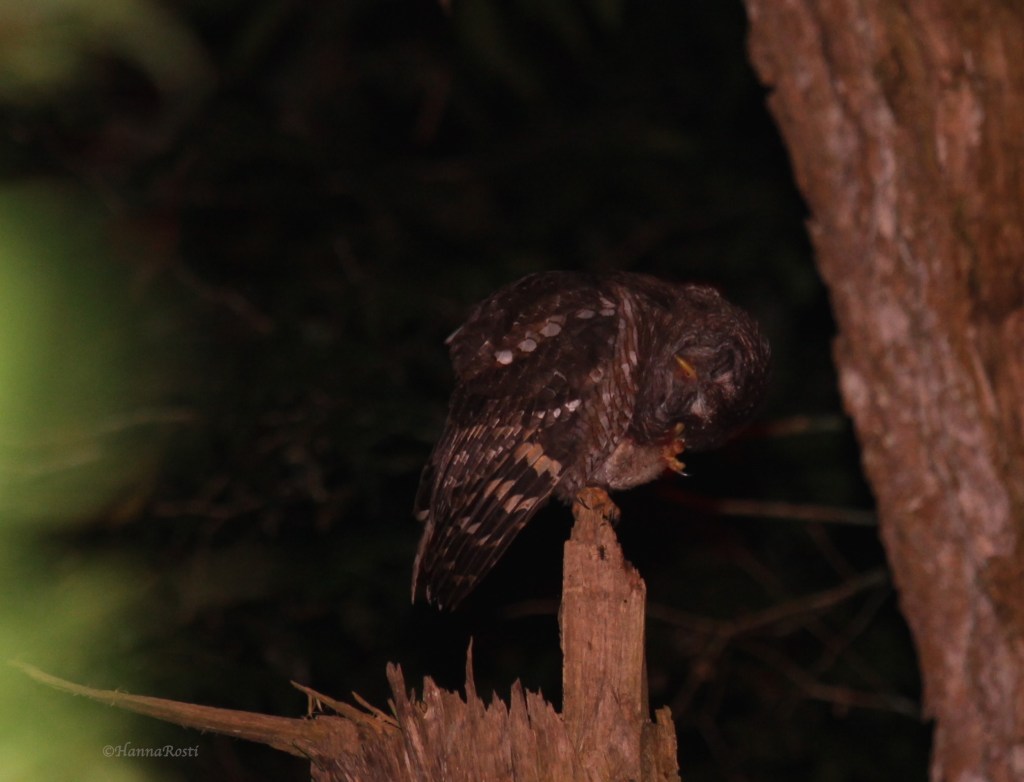
African wood owl scratching his ear. Taita Hills 2019.
I have been incredibly blessed by having opportunity to spend about three months observing nightlife in Ngangao and other Taita forests.
At night forest is magical beyond any words of describing it. Change in evening and in the morning from nightshift to dayshift is breathtaking. Whole forest changes in minutes.
We use red light in the forest. Most animals can’t see red light, so they carry on their lives like we where not there.
There are bats flying in paths and openings. They fly almost to your face, but turn at the last moment. Only once I have been touched gently by a bat. There is abundant rodent life, rats and mouses of all sizes running around, digging the ground, climbing in the trees, grooming themselves. They look very cute in red light.
Most Ngangao Forest visitors walk through gigantic cave tree, not knowing that they are actually visiting home of giant rat at the same time!
This is photo gallery, click any of the pictures to enlarge. If you wish to buy photos contact me by email.
Less common rodents are dormouse and elephant screw. We saw both several times though. We also saw ones Suni antelope.
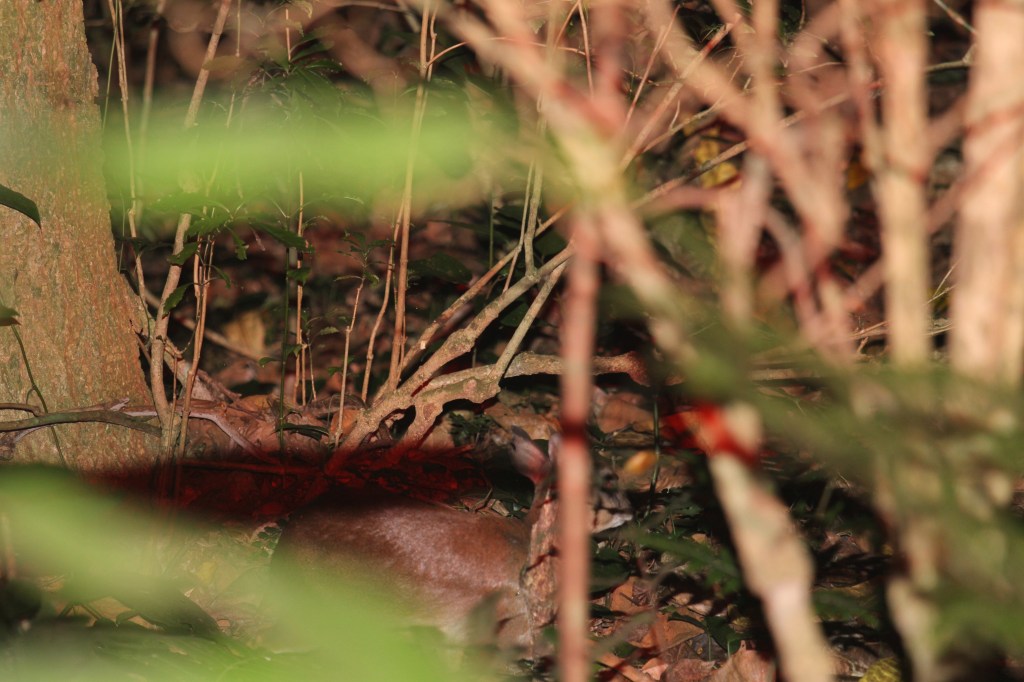
We had funny encounters with the genet. This stunningly beautiful cat sometimes followed us, sometimes it appears out from the blue, just from the feet. I was never lucky enough to get picture of it. Until once we saw one sleeping in the tree. This cat didn’t look that good though, you can see ticks in the ear in the photograph.
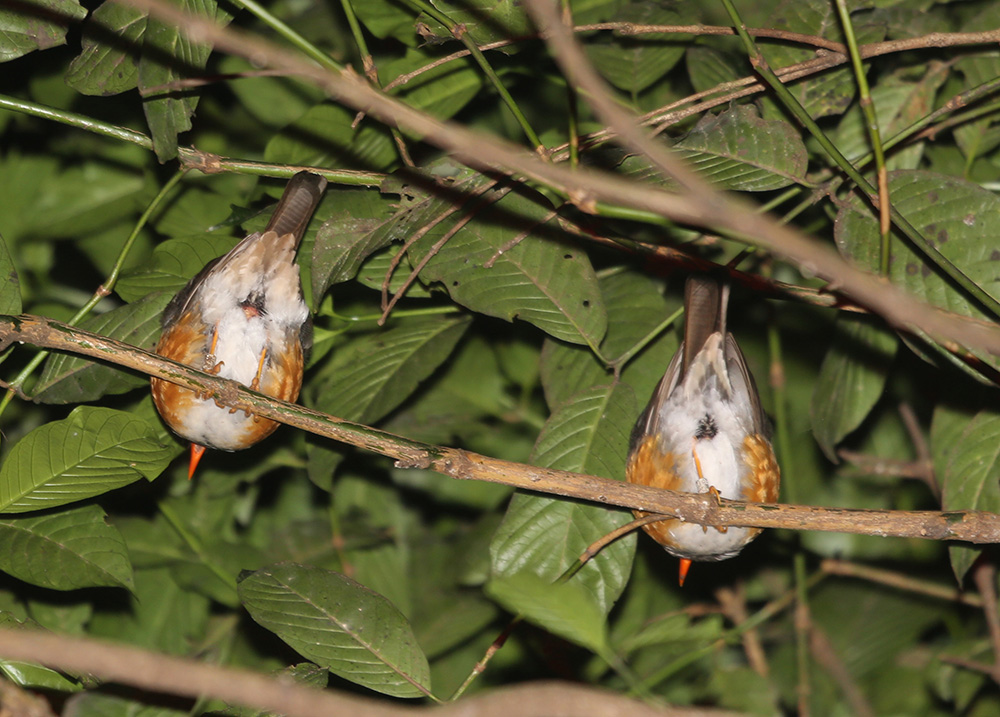
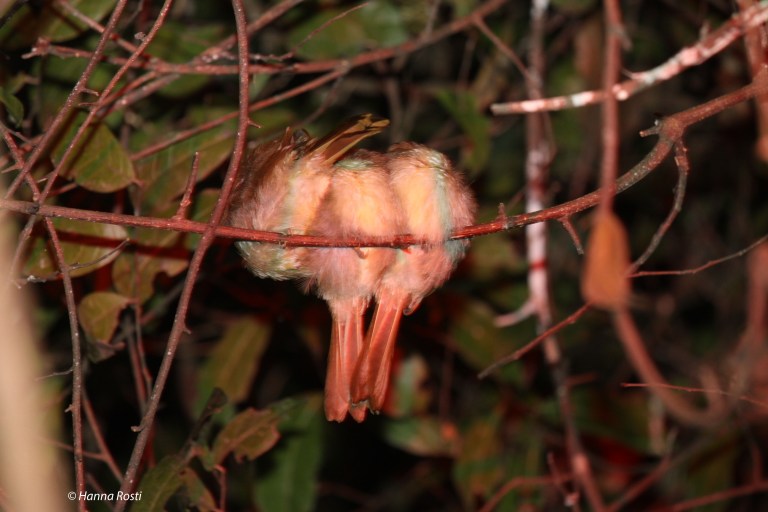
These tree little birds were always in the exactly same place, same branch, sleeping and huddling together.
In the darkness of the night animals communicate by calling to each other . These nocturnal animals are loud, and their calls are incredible. Later I will add photographs and recordings of these spectacular and endemic mammals that my research is focusing on.
African wood owl is most common owl in the forest and couple calls to each other by using different calls.
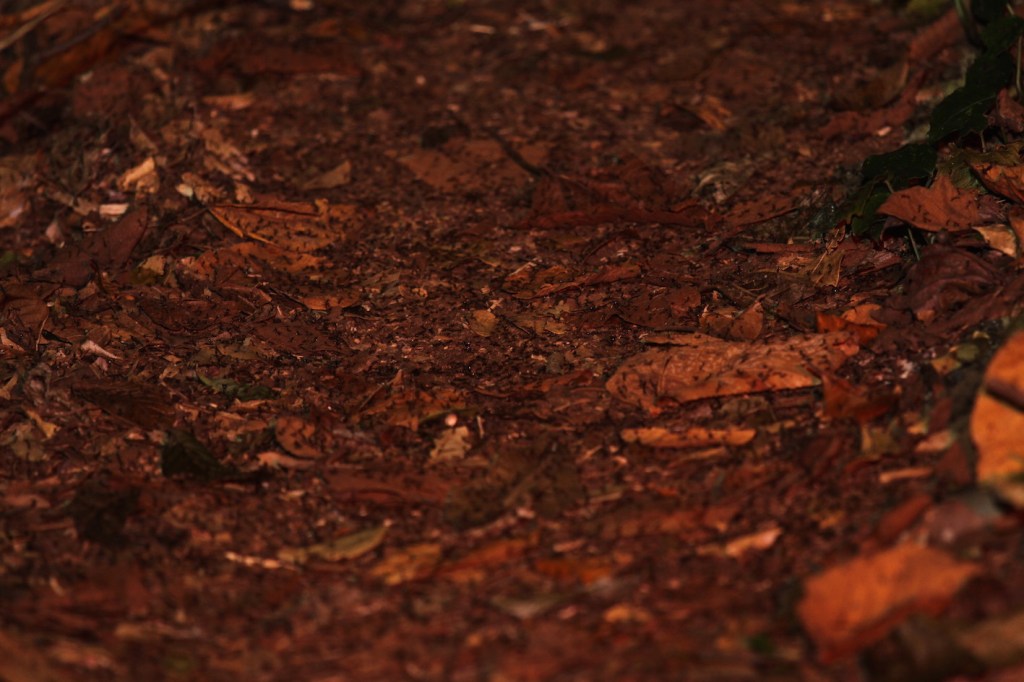
I am often asked that is there anything to be afraid of in the forest? And yes there is – safari ants! There are some snakes and spiders, but I am not afraid of them. I have been colonized by safari ants twice. Ants climb on you when you stand on their way, and when they are all over your body they suddenly bite – all at once. There is no other way than to strip from the clothes. After that you definably learn to scan the ground couple times every minute, even when practically at sleep. Safari-ants can also be heard, as insects fleeing from them shake the dead leaves on the ground.
Safari ants on color the ground
There has not been much research in the forests at night. There is so much unknown. As Taita Hills is one of centers of endemic species in the world there are still so many species still unidentified. Only last fragments are remaining and conservation efforts for all indigenous trees are needed urgently! More indigenous trees need to be planted and corridors created between forest fragments.
In the forest I have been always companied my assistant Benson Mwachola and occasionally also by Rechard Mwasi and Darius Mwambala from Taita Hills Research Station.
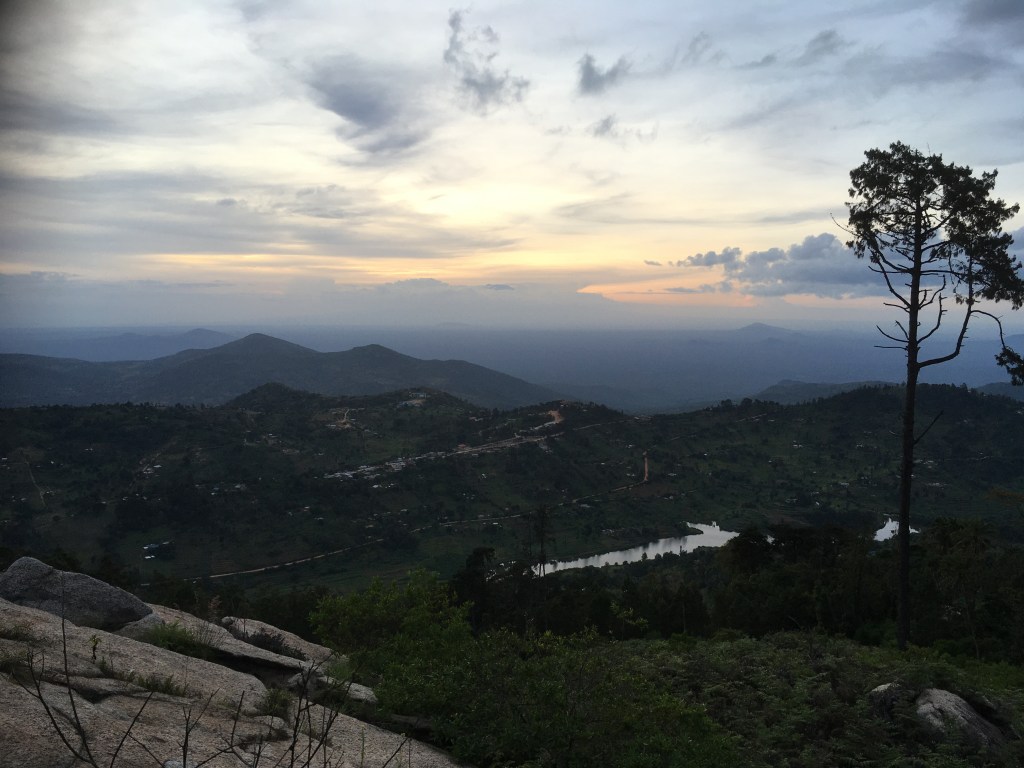
In the morning scenery outside Ngangao is incredibly beautiful with yellow light coloring the snows of Kilimanjaro and savannas of Tsavo.
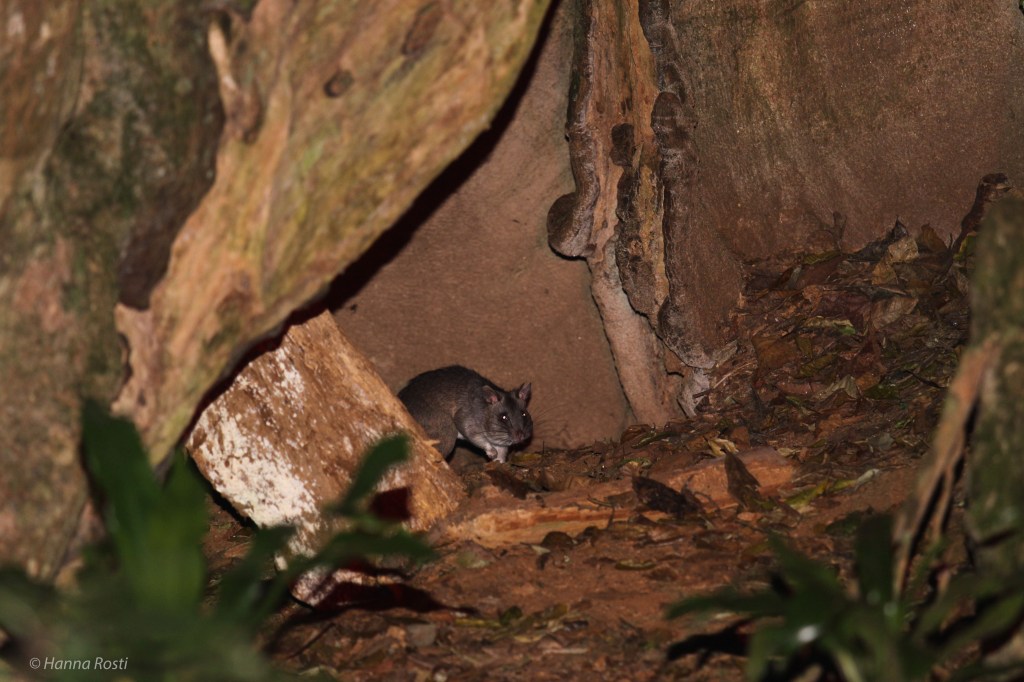
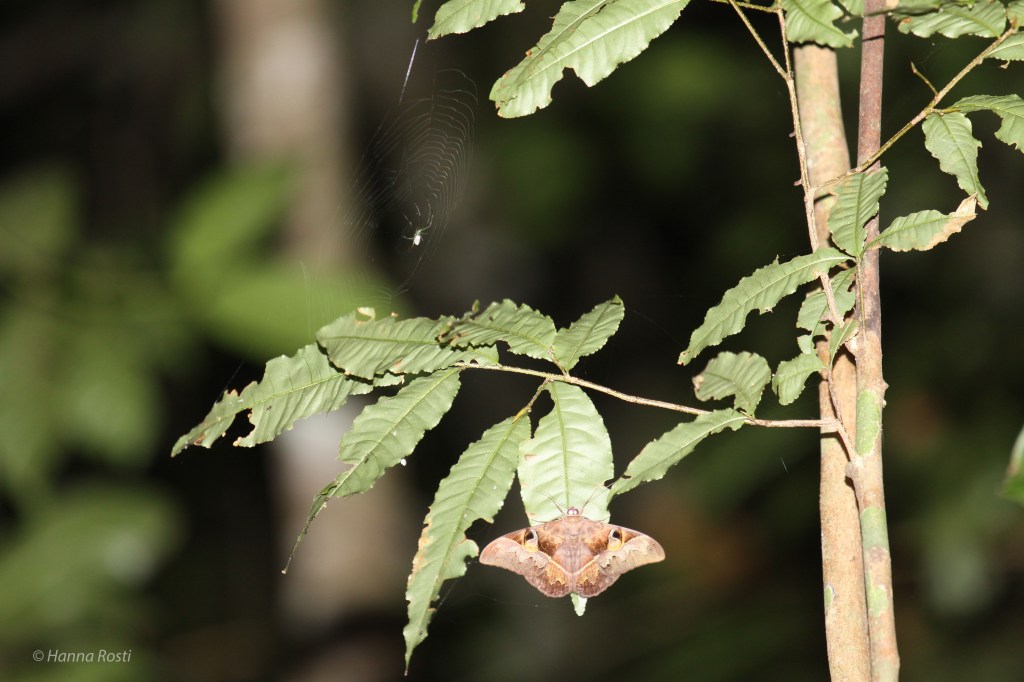
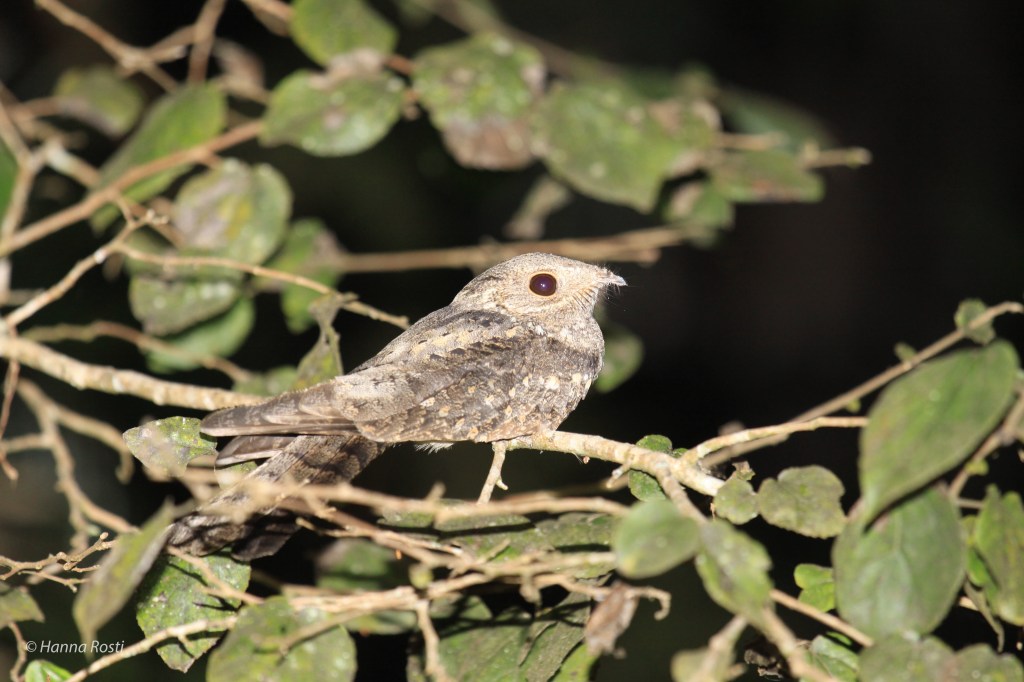
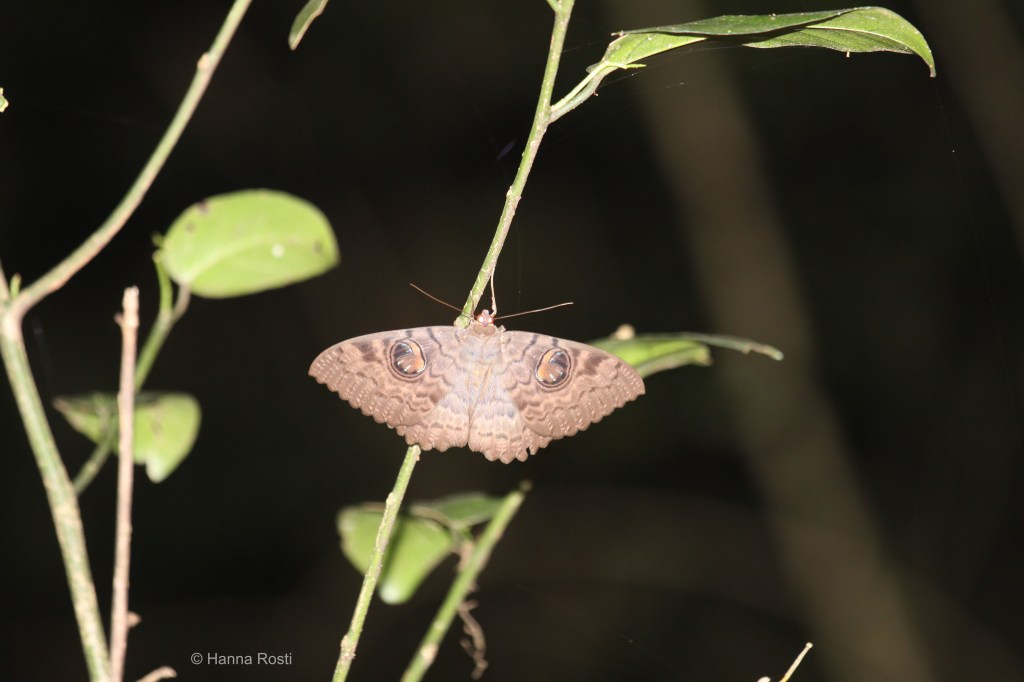

 Animals of Taita, Kenya