Category: Forests

  • Acoustic communication of Taita tree hyrax

    Acoustic communication of Taita tree hyrax

    Dendrohyrax sp.

    This article focuses on incredible variable acoustic communication of Taita tree hyrax. If you are interested in other peculiar features of tree hyraxes please read this previous article of Taita tree hyraxes.

    Taita tree hyrax is believed to be undescribed species for the science based on these calls. For nocturnal cryptic animals, that are difficult to observe, call analysis has been the typical method of making taxonomic evaluation. Each species have their typical calls, especially calls that are used for so called ‘advertising’. These are calls that are used to draw attention of other con-species.
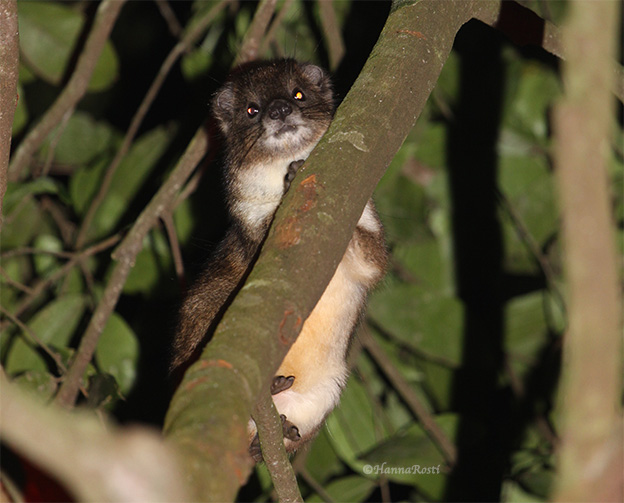
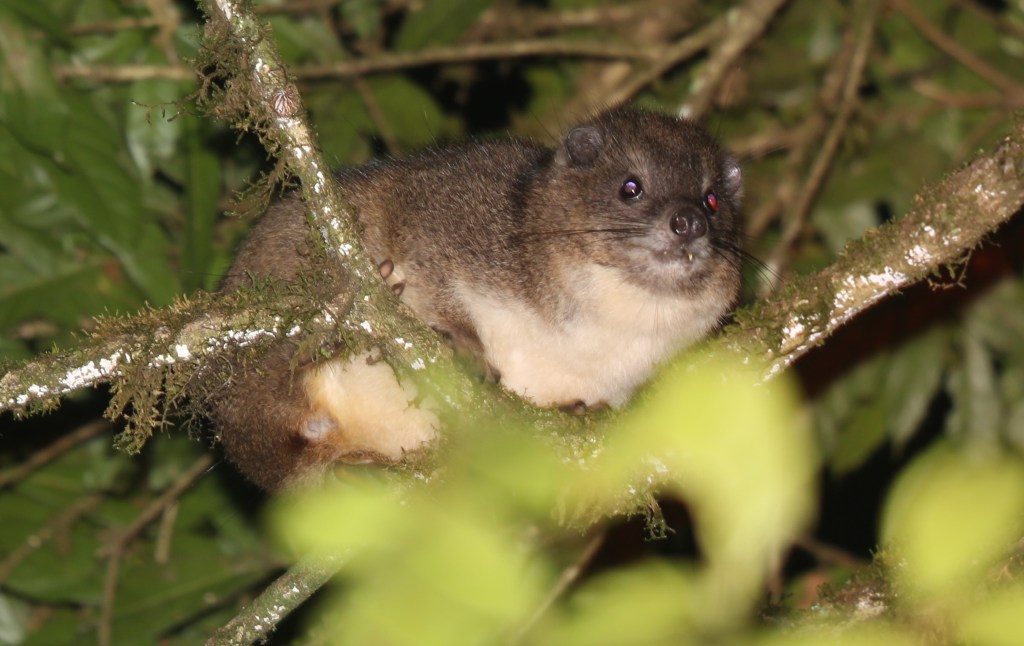
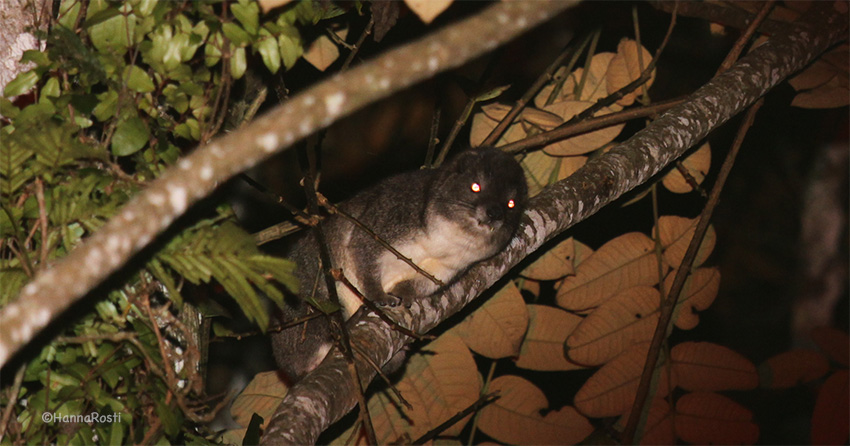
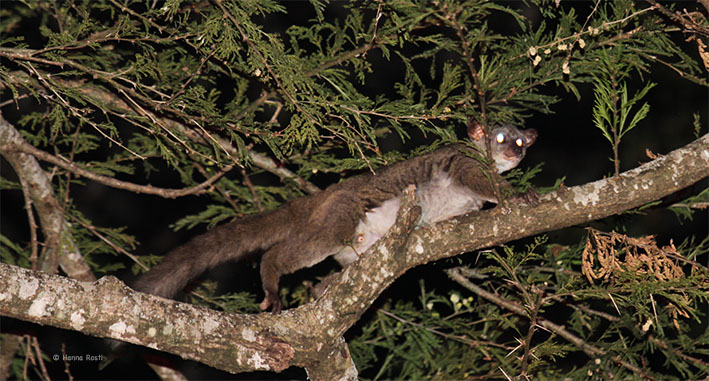
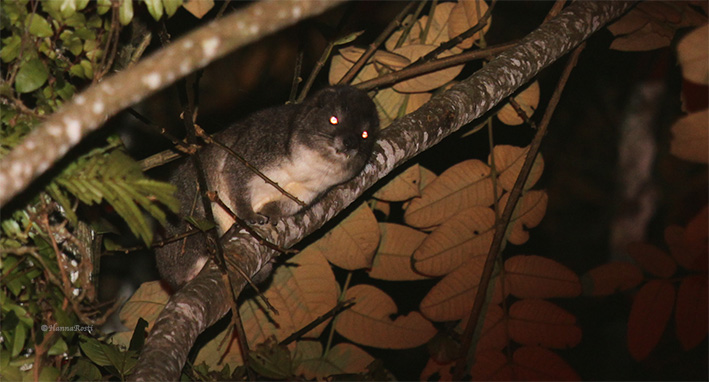
    Taita tree hyrax female. Life of tree hyraxes are almost completely unknown. We don’t know if both sexes are calling, or are they just males. Tree hyraxes are believed to be solitary, but continues calling is difficult to explain for animal that is believed to be solitary.

    Basic territorial call that is heard frequently in the forests of Taita Hills is ‘strangled thwack’. This call is most likely call that tree hyraxes use to claim their territory. Tree hyraxes eat leaves, and they are dependent on tree cavities for daytime sleeping sites.

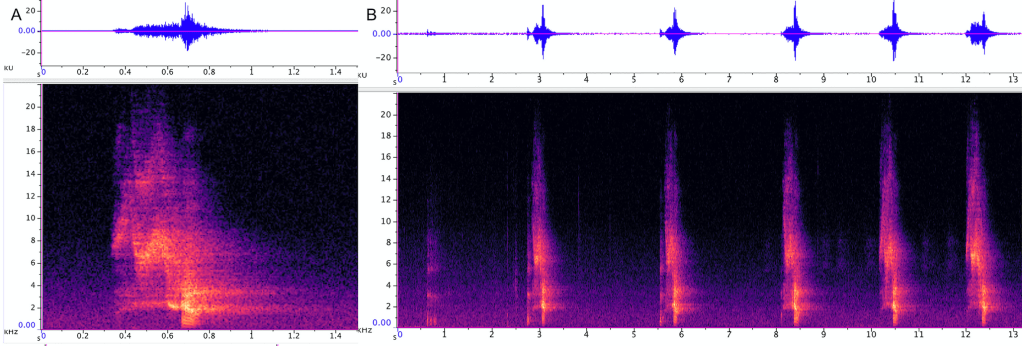
    Strangled thwack is more than 100 dB call. Twist in the call, and noisy elements make sure that this call doesn’t go unnoticed.

    Strangled thwacks are used in Taita Hills and in East Usambara Mountain. East Usambara Mountains are 160 km from Taita Hills. East Usambara Mountains are also part of Eastern Arch Mountains, and it is located in Tanzania.

    Based on this very unique call type, Taita tree hyrax is believed to be tree hyrax species that is not yet described scientifically (Rosti et al. 2020).
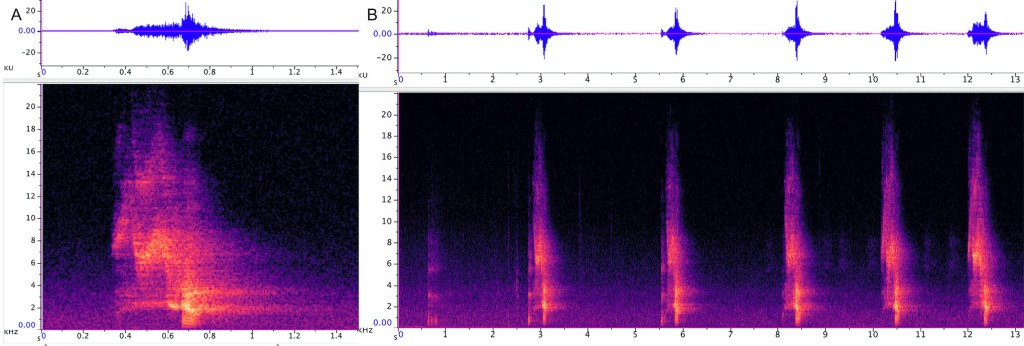
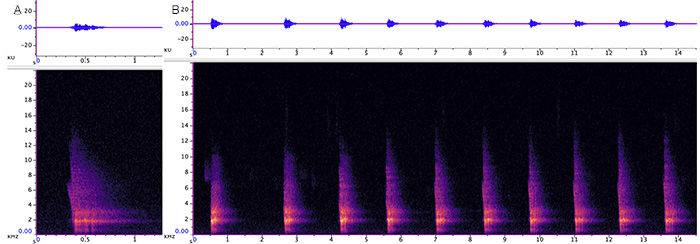
    Strangled thwack call from Taita Hills. Horizontal axel time (s), vertical axel frequency (kHz) A) One strangled thwack call. Call duration about 1 s. Notice changes (frequency modulation) in the strongest frequency of the call. B) Sequence of strangled thwacks. Usually tree hyraxes use these calls in about 10 call sequences where they counter call with other tree hyraxes.
    Strangled thwack sequence from one animal

    Usually tree hyraxes are counter calling with each other.

    Taita Tree hyrax counter-calling

    Another call type that tree hyraxes are using in Taita Hills is called hac. Hac call is used as territorial call. It is not quite as loud and frequency range is lower. Probably hac call is used when calling animal becomes little tired, or it want’s to use call type that is slightly less demanding.
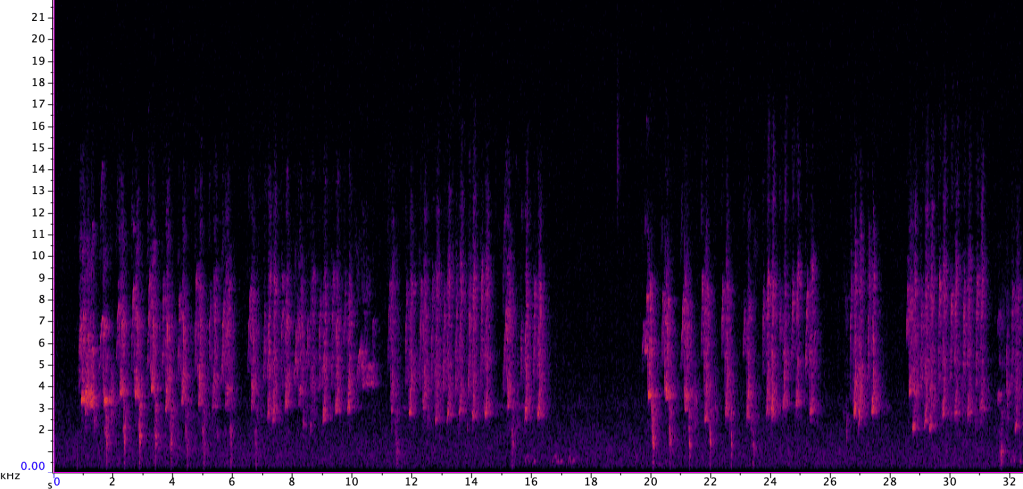
    Spectrograms of hac calls, time (s) on horizontal axel, frequency (kHz) on vertical axel. Hac call has smaller frequency range and it can be continued much longer, sometimes sequence may have more than hundred calls.

    Songs from Taita tree hyrax

    Taita tree hyrax sings songs. Songs have been previously found from rock hyrax (Procavia capensis) (Koren et al. 2008).

    Singing mammals are very rare. Gibbons and whales sing. But I don’t know other singing mammals.
    Singing Taita tree hyrax. Duration on horizontal axel (s) and frequency on vertical axel (kHz). These songs may last for more than 12 minutes.
    Sound sample from Taita tree hyrax song.
    Dendrohyrax song may begin like this.

    Purpose of these songs are unknown. Probably they are used by males as they advertise their fitness for females that might be available for mating. In Taita Hills, remaining forests are packed with tree hyraxes and most likely all available territories are taken. It might mean that moving from one place to another could be difficult. Tree hyraxes may have to take a risk and come down to the ground where they are in greater danger to be hunted by genets. Acoustic communication is used as means to communicate with other tree hyraxes.
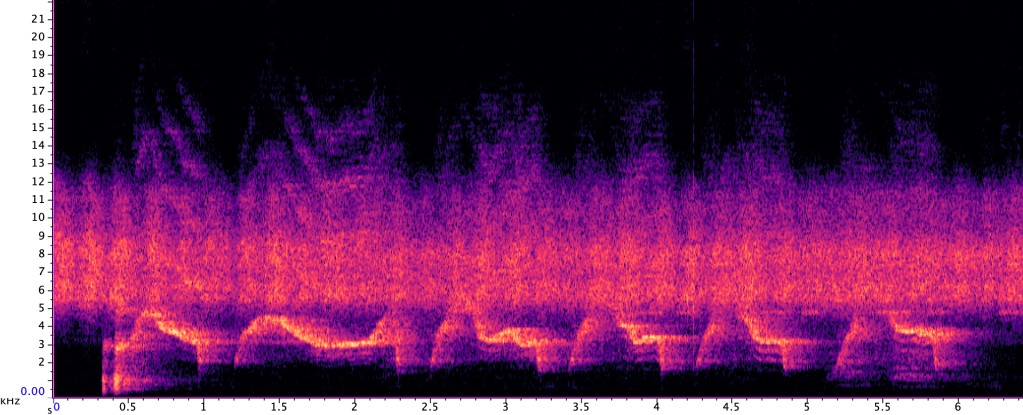
    Tree hyrax wheezes, wheeze may be used as part of a song or alone
    Taita tree hyrax wheezes with katytids on the background

    More reading about tree hyraxes:

    Demartsev, Vlad, Arik Kershenbaum, Amiyaal Ilany, Adi Barocas, Einat Bar Ziv, Lee Koren, and Eli Geffen. 2014. “Male Hyraxes Increase Song Complexity and Duration in the Presence of Alert Individuals.” Behavioral Ecology 25 (6): 1451–58. https://doi.org/10.1093/beheco/aru155.

    Hoeck, Hendrik. 2017. “Some Thoughts on the Distribution of the Tree Hyraxes (Genus Dendrohyrax) in Northern Tanzania.” Afrotherian Conservation, no. 13: 47–49.

    IUCN. 2014. “Dendrohyrax Validus: Hoeck, H., Rovero, F., Cordeiro, N., Butynski, T., Perkin, A. & Jones, T.: The IUCN Red List of Threatened Species 2015: E.T136599A21288090.” International Union for Conservation of Nature. https://doi.org/10.2305/IUCN.UK.2015-2.RLTS.T136599A21288090.en.

    Koren, Lee, Ofer Mokady, and Eli Geffen. 2008. “Social Status and Cortisol Levels in Singing Rock Hyraxes.” Hormones and Behavior 54 (1): 212–16. https://doi.org/10.1016/j.yhbeh.2008.02.020.

    Roberts, Diana, Elmer Topp-Jørgensen, and D.C. Moyer. 2013. “Dendrohyrax Validus Eastern Tree Hyrax.” In Mammals of Africa Vol I. Vol. 2013. Bloomsbury.
  • Vocalization Analyses of Nocturnal Arboreal Mammals of the Taita Hills, Kenya

    Vocalization Analyses of Nocturnal Arboreal Mammals of the Taita Hills, Kenya

    Article published 14.12.2020 in MDPI journal Diversity

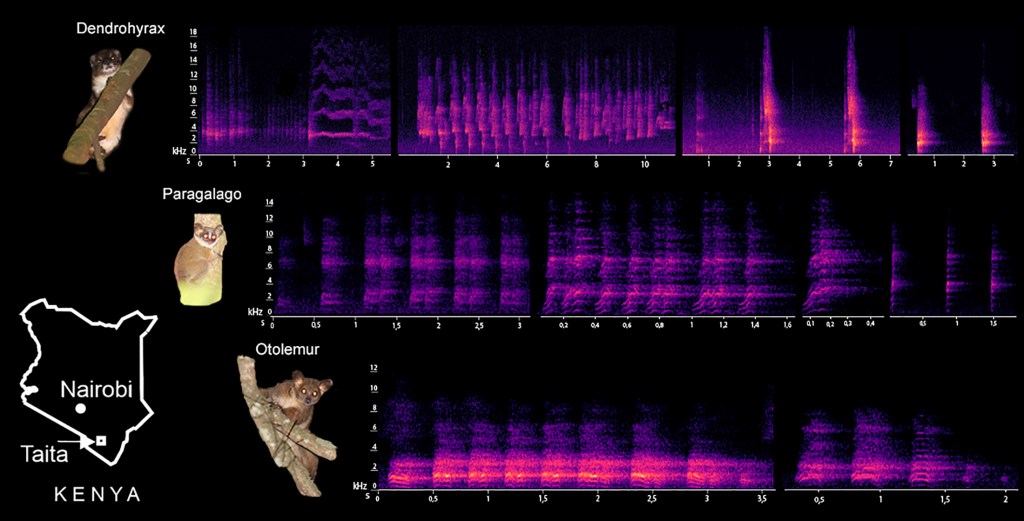
    This article describes acoustic communication of Taita tree hyrax (Dendrohyrax), dwarf galago (Paragalago) populations living in Taita Hills and small-eared greater galago (Otolemur garnettii lasiotis) population.

    Link to the open access article

    This article is written by Hanna Rosti, Jouko Rikkinen, Henry Pihlström, Simon Bearder and Petri Pellikka.

    Main findings:

    1. Tree hyraxes from Taita Hills most likely belong to previously undescribed species. This is based on call named ‘strangled thwack’ that is not heard from other tree hyrax species.
    Tree hyrax female from Taita Hills
    Spectrogram image of strangled thwack
    Sound sample of strangled thwack

    2. Taita tree hyraxes sing, these songs may last more than 12 minutes. In these songs several different syllables are combined in different order. Most likely these songs are used by males to attract females.

    Tree hyrax song sample from Taita Hills

    3. The other dwarf galago population is Kenya coast dwarf galago population (Paragalago cocos). This population is almost extinct with only about 10 individuals.

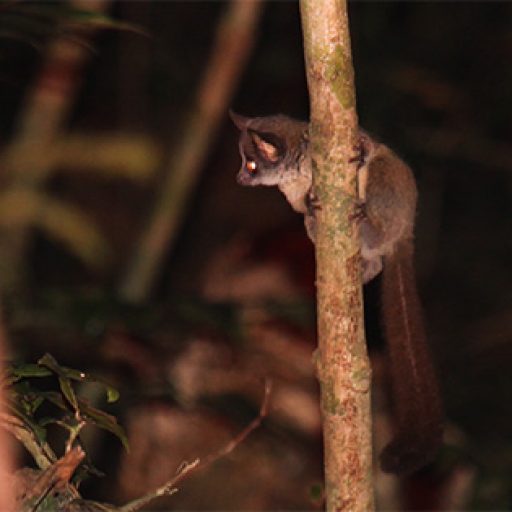
    Kenya coast dwarf galago is living on mountain of Taita Hills.
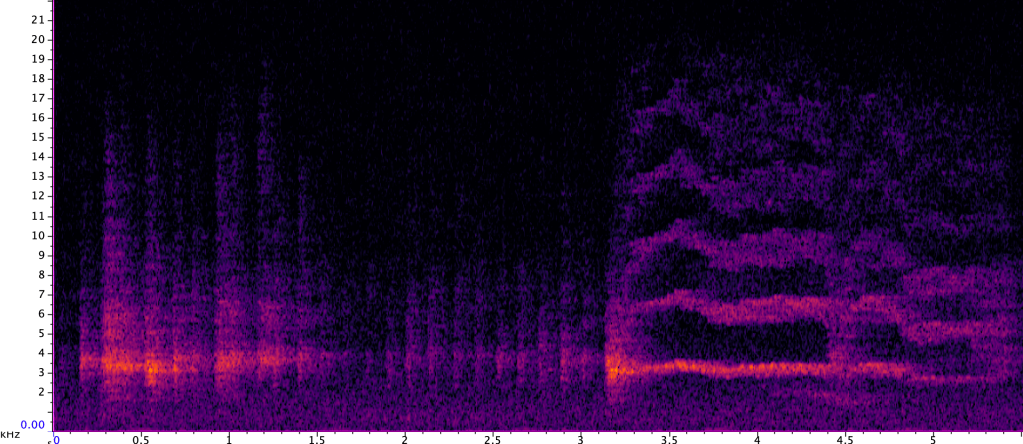
    Spectrogam of dwarf galago calls from Taita Hills
    Recording from population believed to be Kenya coast dwarf galago in Taita Hills

    4. Small-eared greater galagos in Taita Hills belong to subspecies Otolemur garnettii lasiotis. This was confirmed by comparing acoustical analysis from different subspecies.

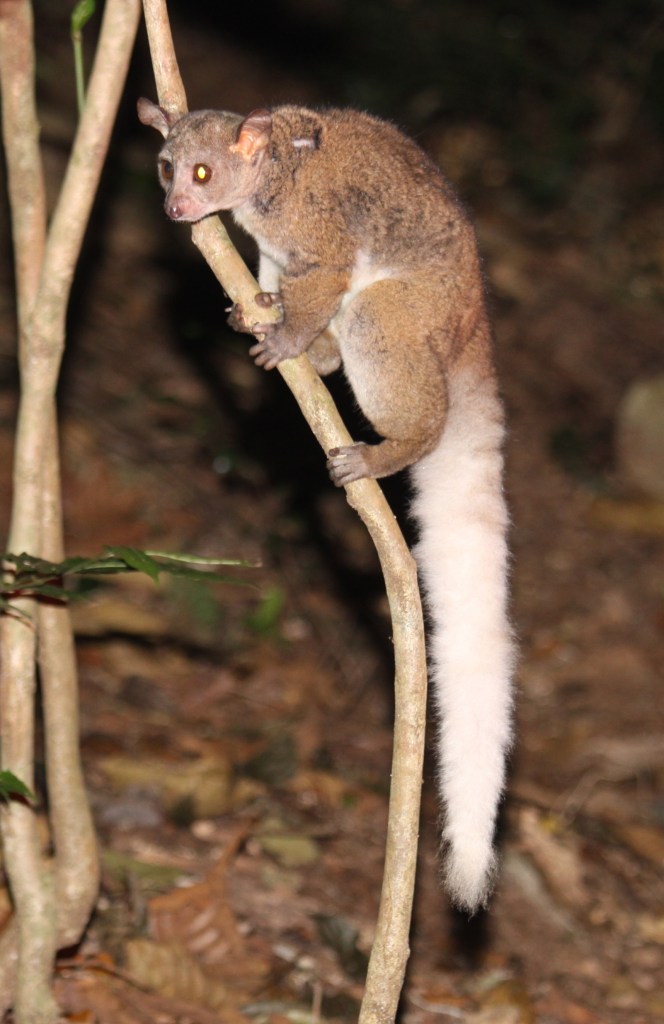
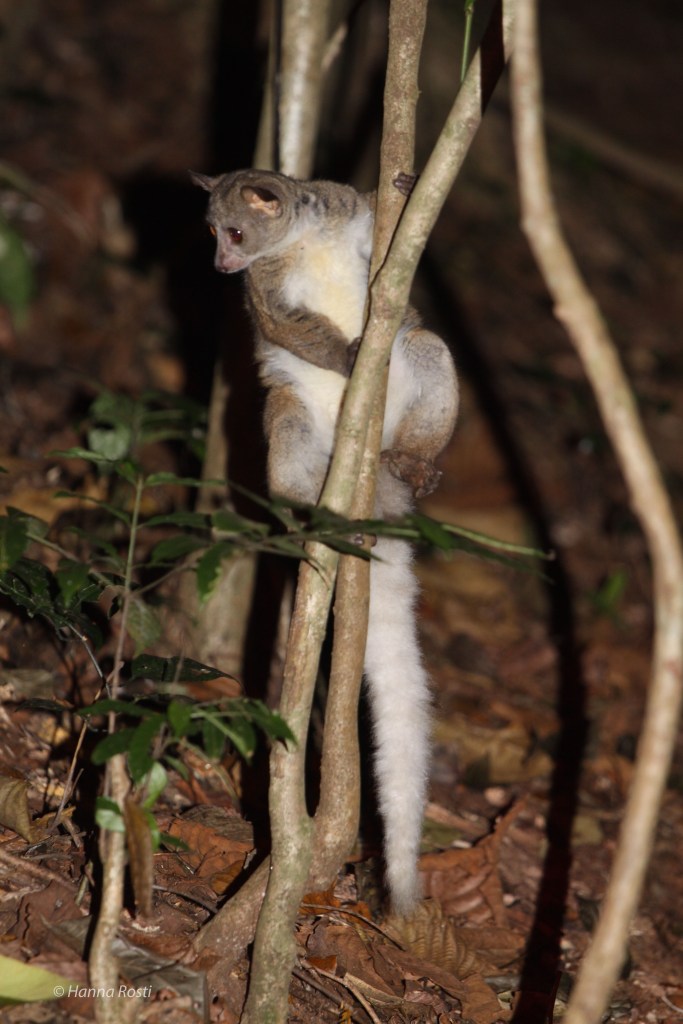
    Young male O. g. lasiotis with very white tail from Taita Hills
  • African wood owl in Taita Hills Kenya

    African wood owl in Taita Hills Kenya

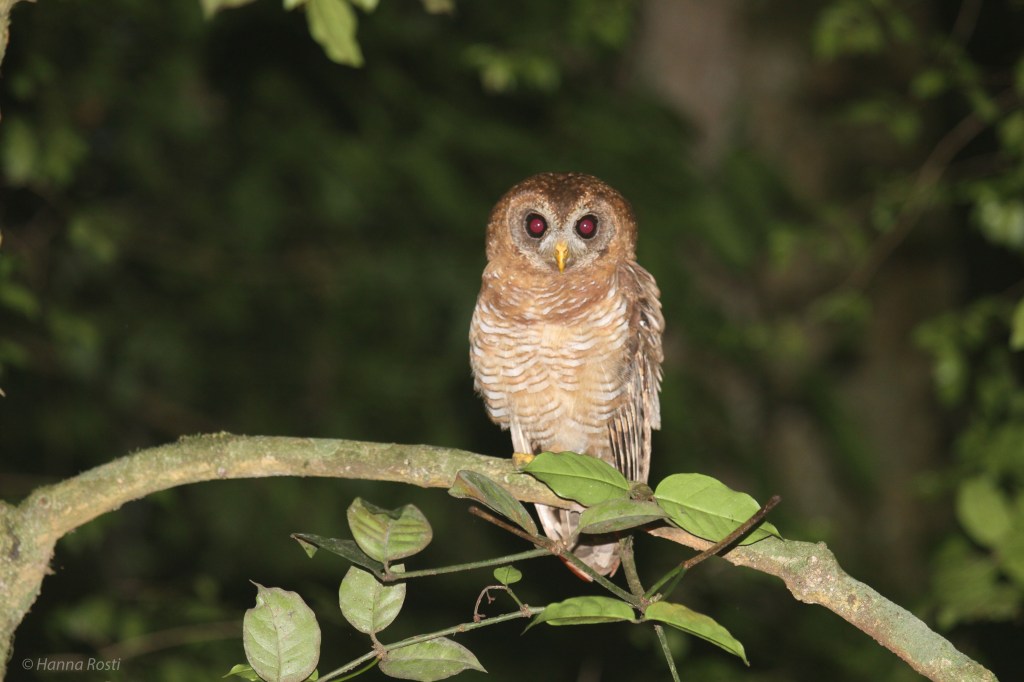
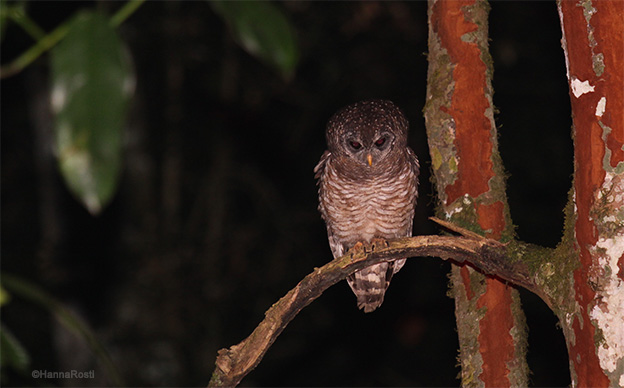
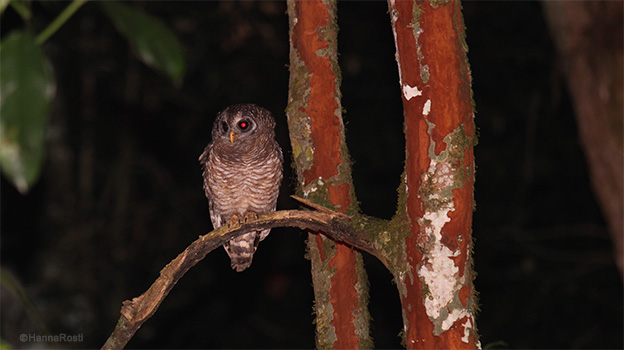
    African wood owl looking for Taita mountain dwarf galago, that just escaped from him.

    In Taita Hills of Kenya African wood owl (Strix woodfordii) is quite common. Owl couple keep contact with each other by calling. Interestingly male and female can counter call with similar calls, or female may use different call.

    African wood owl from Ngangao Forest Taita Hills in 2019.

    Counter calling of African wood owl couple from Taita Hills.

    African wood owl male and female counter calling

    Male makes a series of rapid, clear hoots, and the female answers with higher pitched, more leisurely hoots.

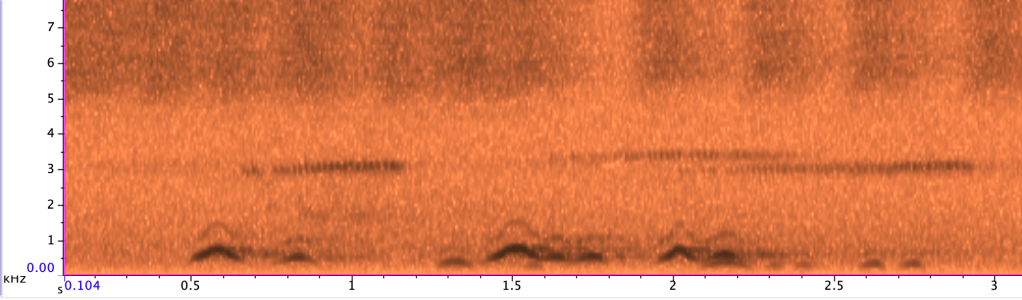
    This is spectrogram of the part of calling sequence above made with Raven 1.6 Pro. On vertical axel you can see frequency and on horizontal axel the time. African wood owl hoots have fundamental (lowest) harmonic (lowest line) bellow 1 kHz. Calls coming near the recorder have stronger spectrogram. Above African wood owl there is another bird? with long chirr, and above that there are cicadas. So owls and cicadas can be easily heard simultaneously, as they use different frequencies.

    Different call of a female African wood owl from Taita Hills

    Hoot of a African wood owl female with nice lowering pitch
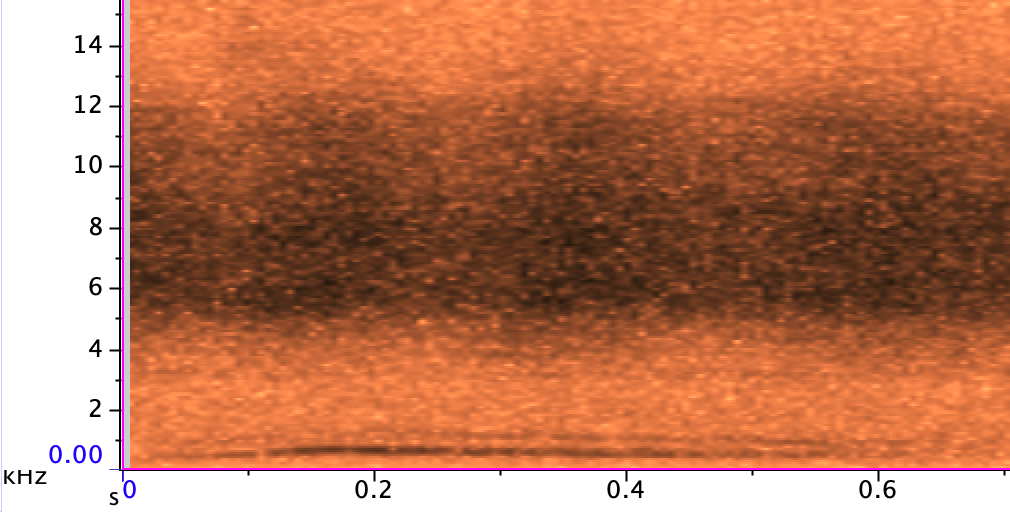
    Spectrogram of a female African wood owl, a single hoof with slight rise in the middle. Given also as a response to call above. Call is using frequency about one kHz. Black belt between 5-12 kHz are cicada choir.

    African wood owls in Taita Hills are about the size of the crow, 30-35 cm, weighing 240-350 grams. African wood owl eats mainly insects.

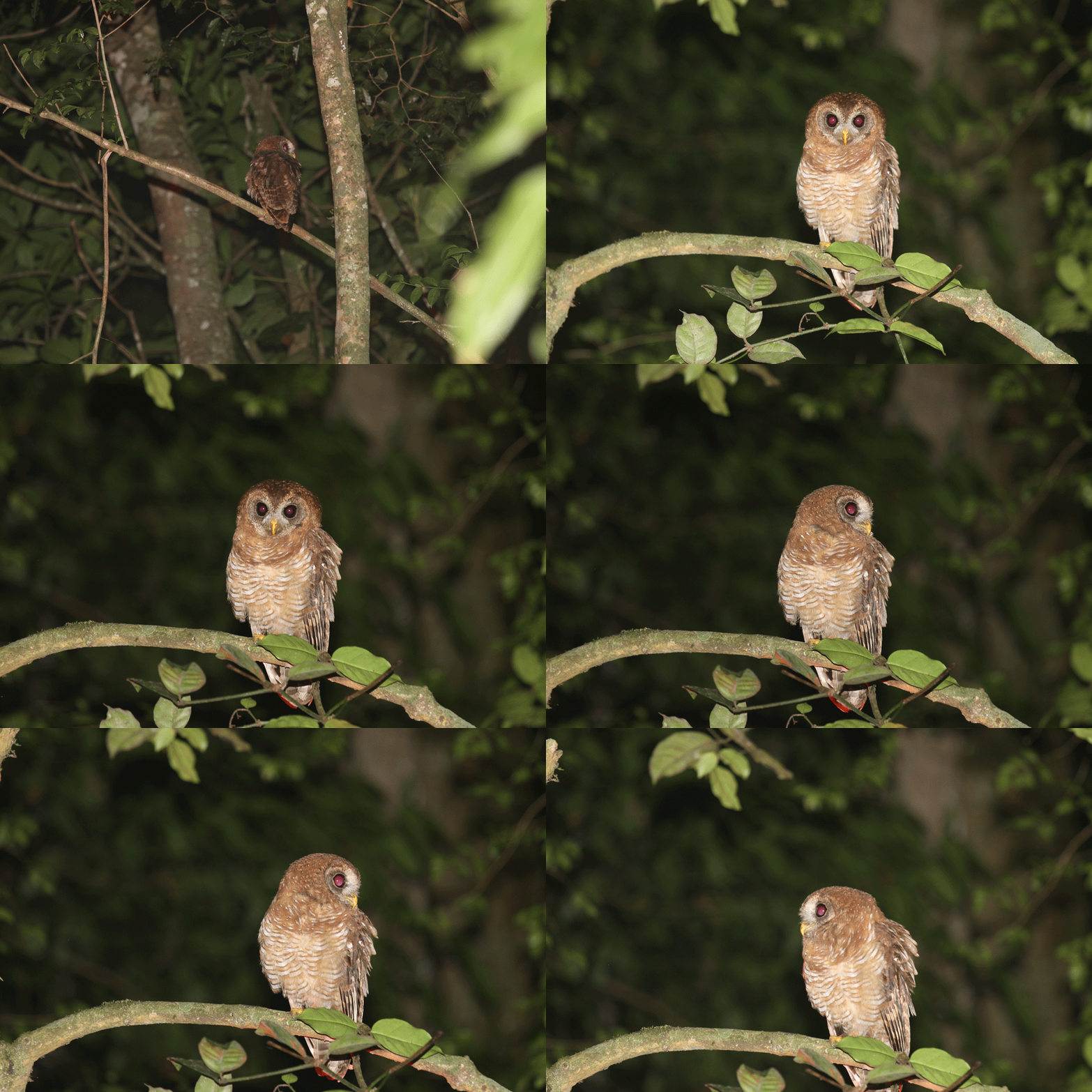
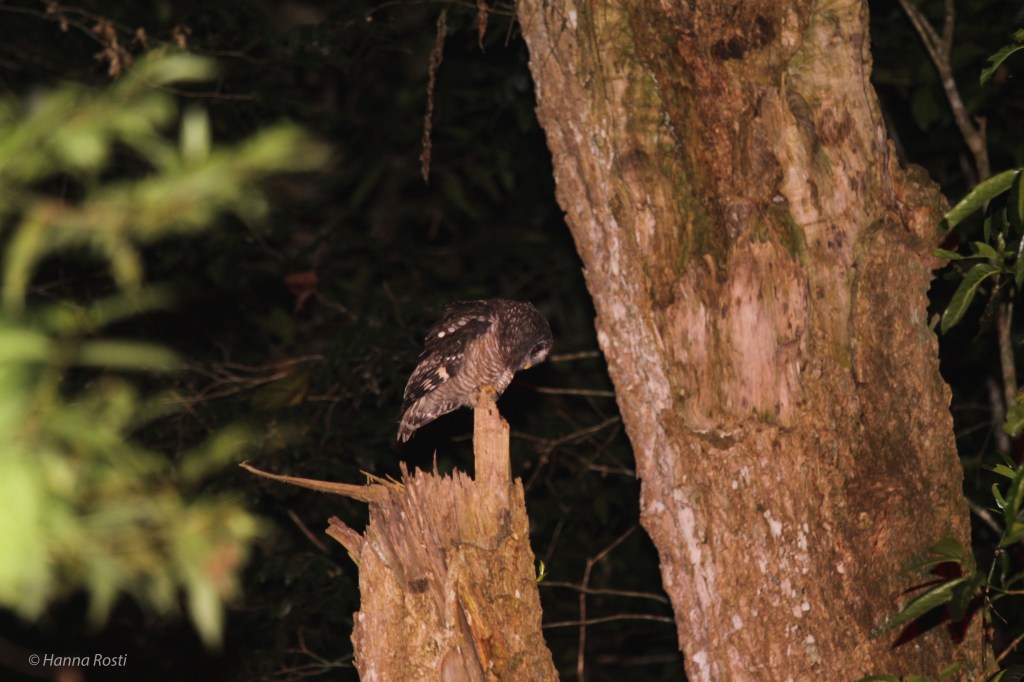
    African wood owl looking for prey. Taita Hills 2019.

    They can’t see red flashlight, which has enabled me to watch them without them without owls paying any attention for me.

    African wood owl looking for insects or small mammals to prey on. Taita Hills 2019.

    Mainly insectivorous, however they also catch small mammals… In Taita Hills African wood owls hunt also Taita mountain dwarf galagos that are almost extinct. For dwarf galagos this owl may be the ultimate reason for extinction.

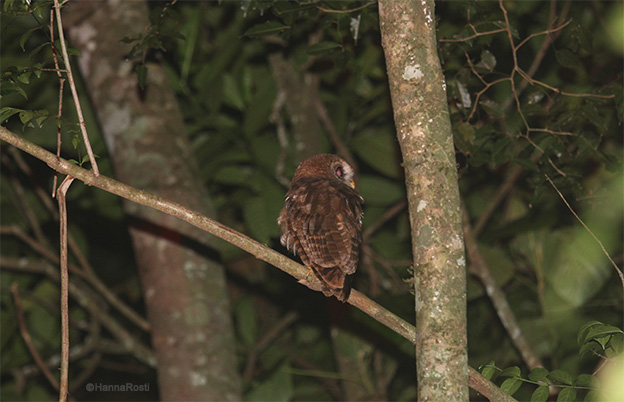
    From the behind coloring has beautiful shades of brown. Taita Hills 2019.

    Reason for extremely low population numbers in dwarf galagos is loss of habitat, as forests have been cleared for fields. However, in these small remaining patches of forest, the probability of dwarf galago being hunted by wood owl increases. They share same territories every night. Dwarf galagos are dependent on refugee sites in hollow trees. Only very old trees are have hollows or are completely hollow.

    Distribution and conservation status

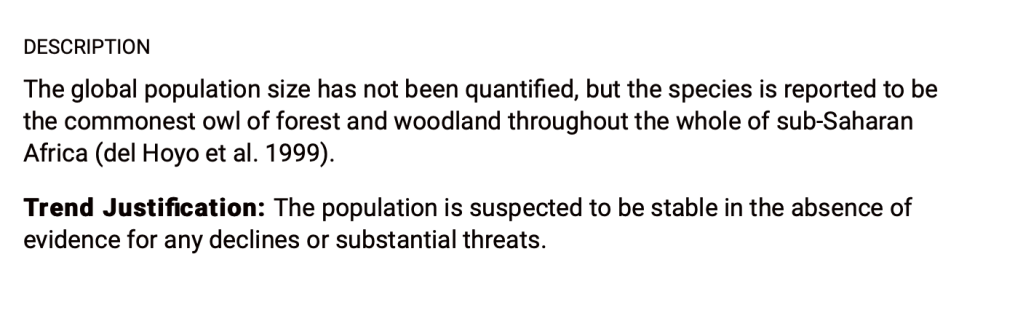
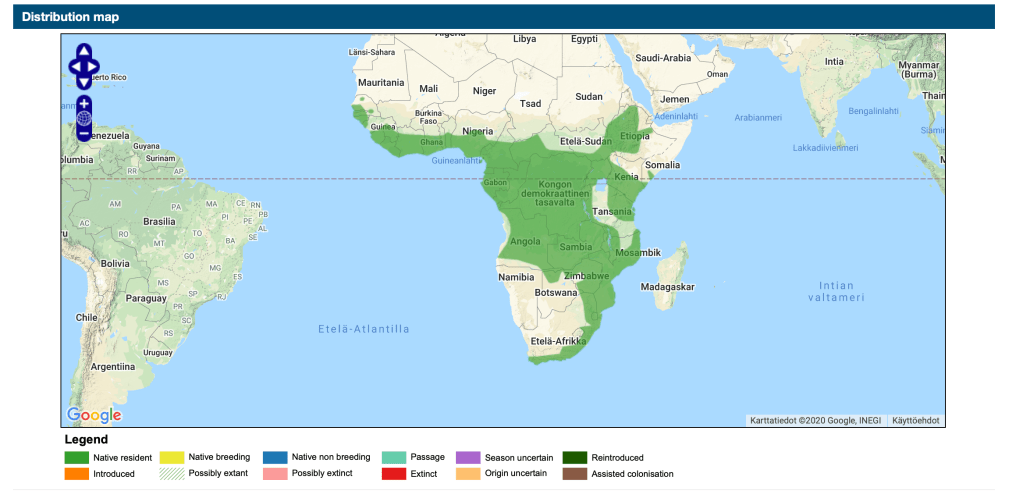
    African wood owl has extremely large distribution in Africa. Conservation status is Least Concern LC. Populations seem to be stable. However there is no long term research about the species

    IUCN RED LIST DESCRIPTION https://www.iucnredlist.org/species/22689166/93220349#population

    Distribution map of African wood owl by BirdLife International. BirdLife International (2020) Species factsheet: Strix woodfordii. Downloaded from http://www.birdlife.org on 08/05/2020.

    Geographic range from Avibase with four subspecies: These subspecies have considerable differences in their coloration.

    • Strix woodfordii woodfordii: southern Angola to southern Democratic Republic of the Congo, southwestern Tanzania, Botswana, and South Africa
    • Strix woodfordii nuchalis: Senegambia and Bioko Island to South Sudan, Uganda, western Democratic Republic of the Congo, and northern Angola
    • Strix woodfordii umbrina: Ethiopia and eastern South Sudan
    • Strix woodfordii nigricantior: southern Somalia to Kenya, Tanzania, Zanzibar, and eastern Democratic Republic of the Congo
    African wood owl has horizontal stripes. Taita Hills 2019.

    Taxonomy

    Genus Strix was created by Linnaeus 1758 for earless owls. Strix owls do not have ear tufts. There are 22 species of genus Strix in the world. They are medium to large in size and live in forests. Strix owls are found around the world. African wood owl has four subspecies as described earlier.

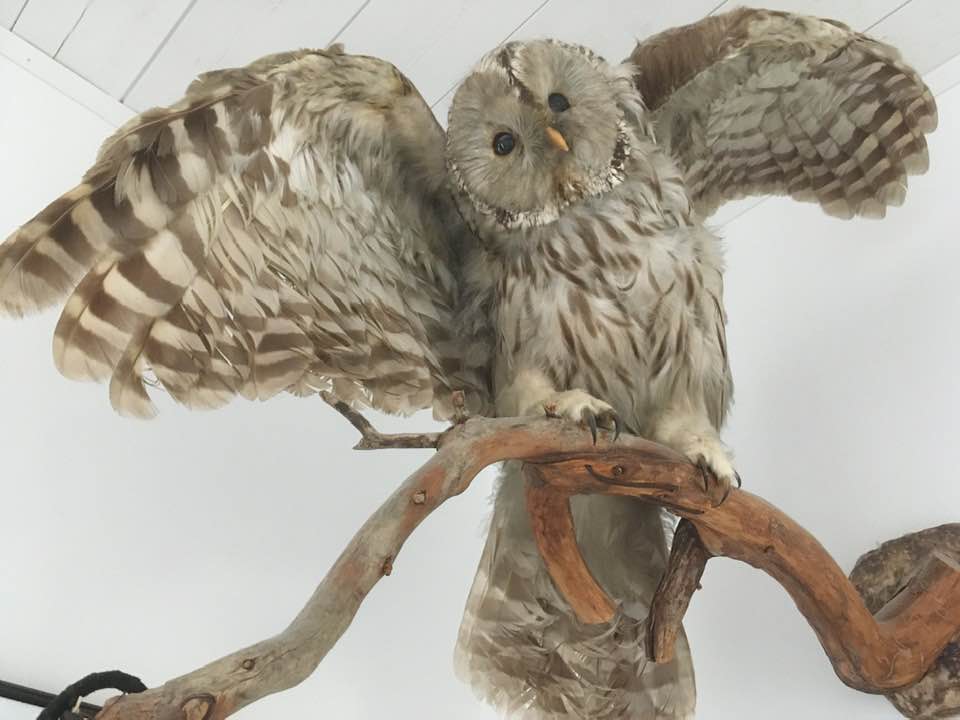
    Here is Ural owl (Strix uralensis) from my home. This owl was found dead by my father in Finland 1970 and stuffed. Ural owl is much bigger than African wood owl. In Finland these owls are known for their strong protective behavior against people who put rings to baby owls feet. As an adaptation to cold climate the feet have feathers also.

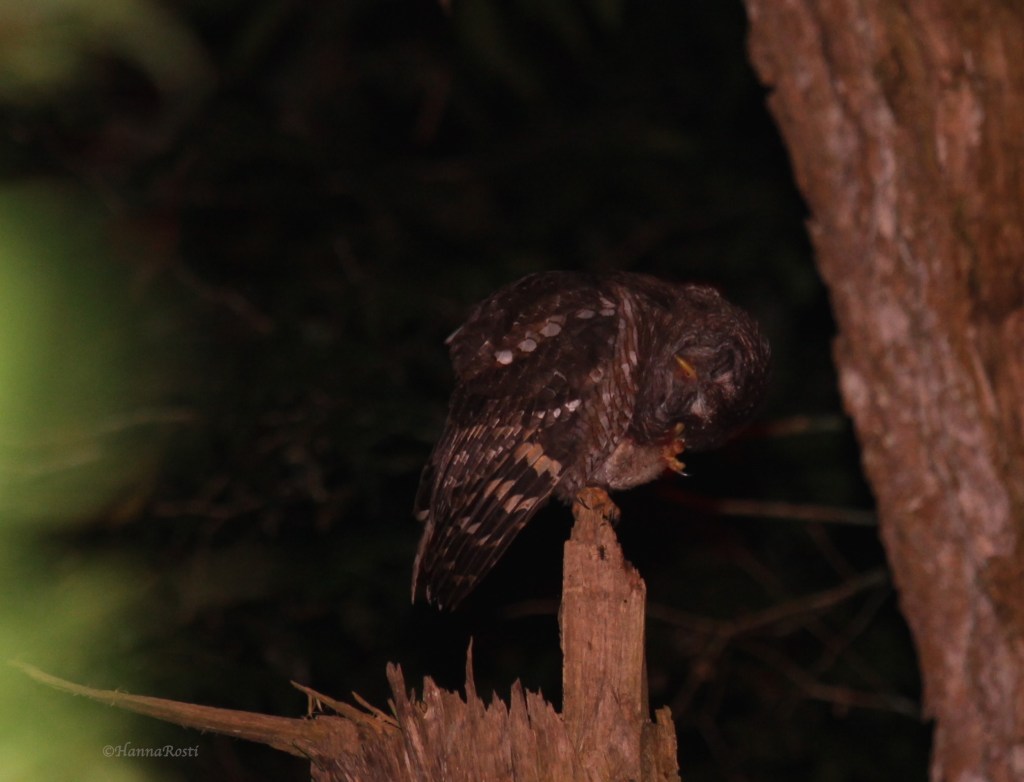
    African wood owl scratching his ear. Taita Hills 2019.

    Sources:

    Birdlife African wood owl: http://datazone.birdlife.org/species/factsheet/african-wood-owl-strix-woodfordii

    Avibase African wood owl: https://avibase.bsc-eoc.org/species.jsp?lang=FI&avibaseid=2E6575A8C8ECAD9B&sec=summary

    Iucn Red Lis Assessment: https://www.iucnredlist.org/species/22689166/93220349#population

    BirdLife International. 2016. Strix woodfordiiThe IUCN Red List of Threatened Species 2016: e.T22689166A93220349. https://dx.doi.org/10.2305/IUCN.UK.2016-3.RLTS.T22689166A93220349.en. Downloaded on 08 May 2020.

  • Taita tree hyrax – mysterious relict species

    Taita tree hyrax – mysterious relict species

    (Dendrohyrax sp.)

    I will never forget fist time that I heard tree hyrax. I was sitting on a log. It was first time I was in the forest after dark. I was companied by Kenya Forest Service ranger Jonam Mwandoe. Startling call, that seemed to come just to my ear, almost dropped me from the log. I asked what an earth was that?

    Jonam told me about tree hyraxes, but I really didn’t understand. I had no idea that there could be relatives of elephants in the trees. For some time I thought of them as some peculiar rodents, which they really are not!

    Each night in the forest had been filled with their vocalizations, where individuals counter call to another. But it took weeks to see one. At the time I had no idea how special this event was.

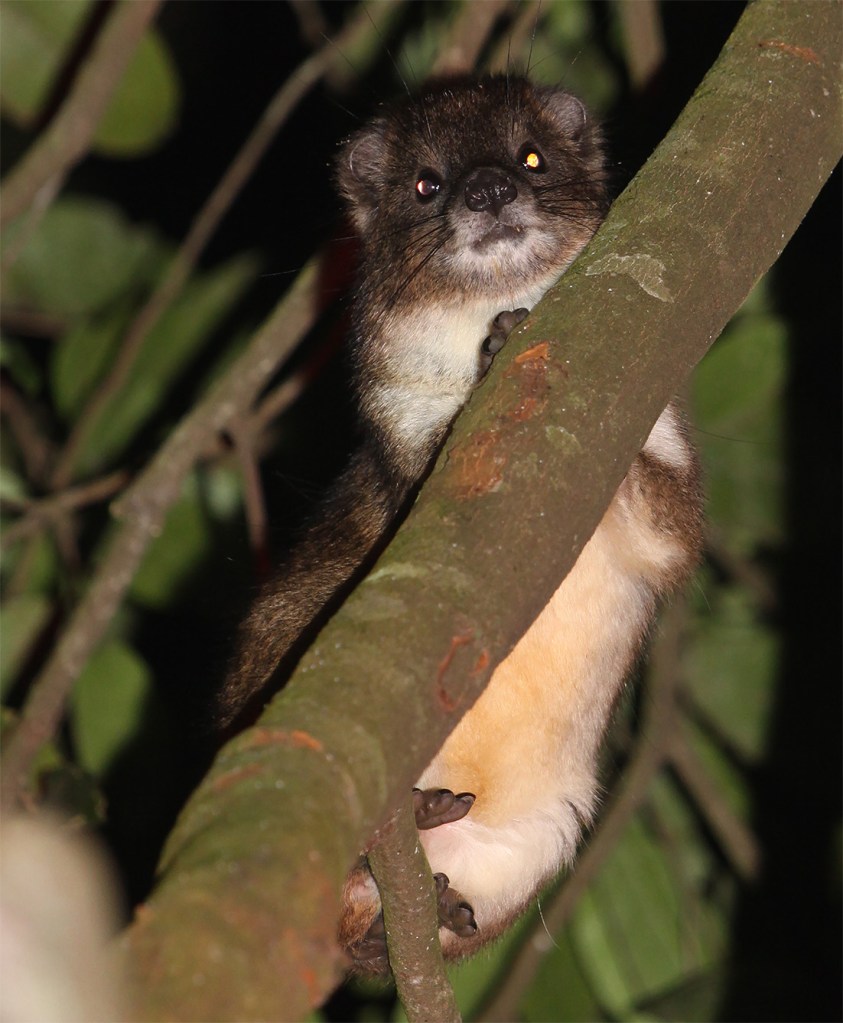
    This individual, probably young female was first tree hyrax I saw. It was resting just about 4 meters above the ground. Females have smaller and rounder tusks.

    Researchers just don’t see tree hyraxes. And this is probably why these animals are so neglected in science. Studying animals that you can’t see in difficult and challenging conditions and producing scientific articles with real data even more difficult.

    As time went on I gathered more pictures and tons of recordings of their vocalizations. I became more and more intrigued by these mysterious animals. Then it really hit me:

    Tree elephants!!!!

    Hyraxes belong to Paenungulata, their relatives are elephants and manatees. How amazing and unbelievable group!

    My supervisor, emeritus professor Simon Bearder pointed out from recordings, that these tree hyraxes are new species for the science.

    Special features of tree hyraxes

    • Belong to Paenungulata with elephants and manatees
    • Small tusks
    • Teeth like rhinos
    • Dense fur
    • Three toes
    • Round body
    • Eat leaves, fibrous, low calorie diet
    • Slow metabolic rate
    • Complicated digestion system
    • Low body temperature
    • Internal testes
    • Whiskers around the body
    • Scent gland
    • Spends days in tree holes
    • Use toilets
    • Extremely variable vocal communication
    • Solitary
    • Nocturnal

    Variable vocal communication suggests that this species has complex social behavior, even though they are solitary. Knowledge of these species and their behavior is very limited.

    This male is much larger and has bigger tusks.

    Ecological niche of tree hyrax is the same as koala and sloth

    In some two largest forests of Taita Hills, Ngangao and Mbololo tree hyrax density is high. However total area of these forests are only three square kilometers. As density is high, young animals are forced to move out of forest, where they easy food for dogs.

    Tree hyrax only lives in indigenous forest. It is dependent on tree cavities for safety

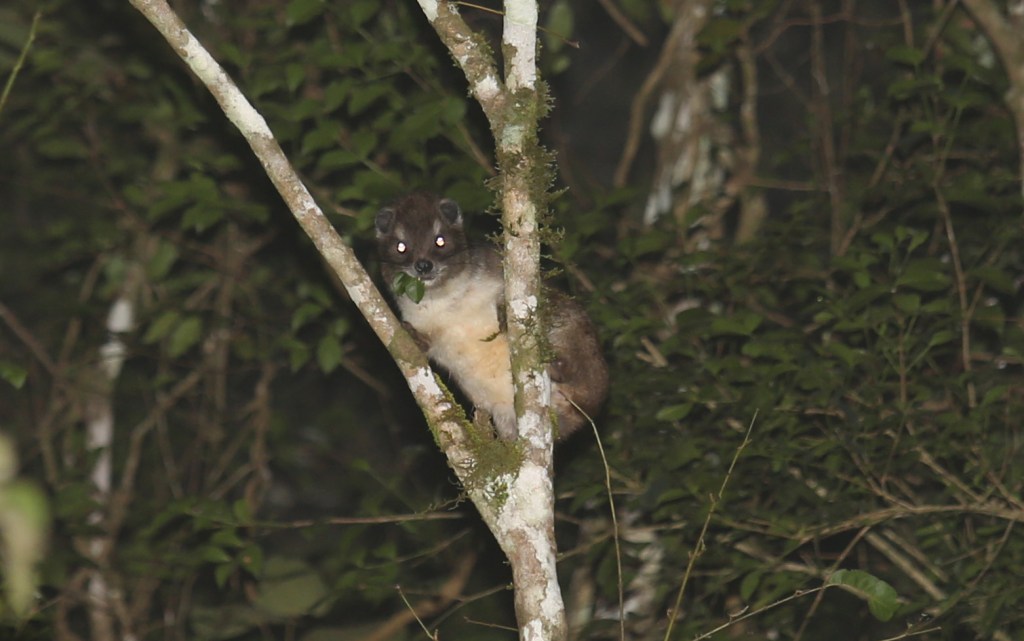
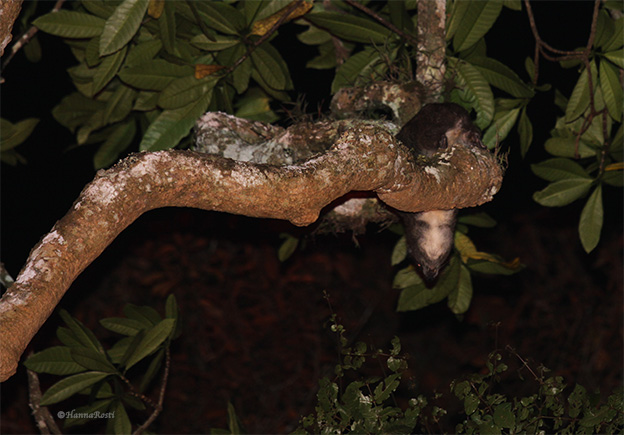
    Tree hyrax jumping from branch to another. Thinking and hesitating took minutes before actual jump.

    How tree hyraxes can live in the canopy of tall mountain rain forest is amazing. Animal is heavy, it has only tree toes. It seems like species that is taken out of their real environment.

    One form of protection for this species could be to build artificial nest in areas, where are trees, but no tree cavities. However replanting of indigenous forest and building corridors between fragments is necessary for long term survival of this species.

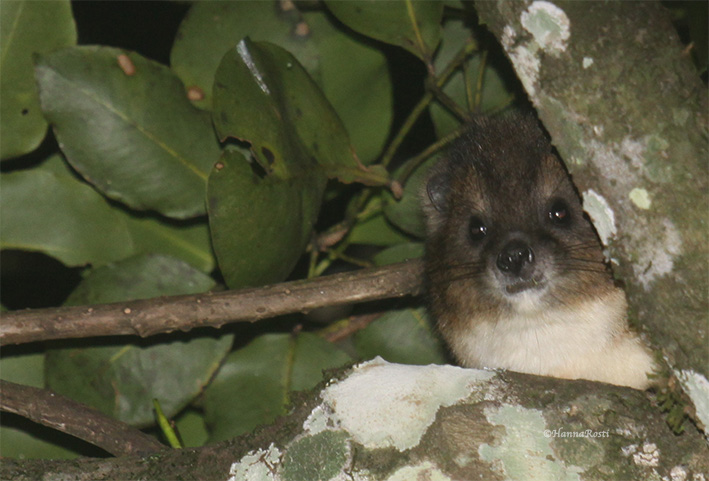
    This sweet female was observing us from close range, she was possibly moving on to new tree.

    These unknown tree hyraxes are in serious threat by human development all over Africa, not just in Taita Hills. Different species of tree hyraxes are possibly going extinct even before they are identified.

    Mammals of Africa (2013):

    “Major revision of this group is overdue”

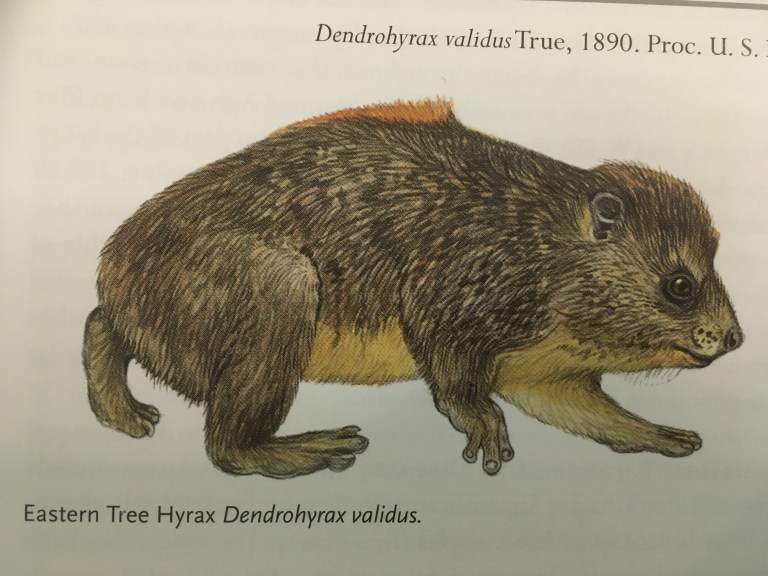
    Eastern tree hyrax (Dendrohyrax validus) drawing from Mammals of Africa (Kingdon 2013).

    “Taita tree hyrax desperately needs taxonomic identification and conservation”

    Read next: Conservation of Mbololo and Ngangao Forests

    Read next: Acoustic communication of Taita tree hyrax

    Read next: How to observe nocturnal animals in tropical forest?

    Sources:

    Cordeiro, Norbert J., Nathalie Seddon, David R. Capper, Jonathan M. M. Ekstrom, Kim M. Howell, Isabel S. Isherwood, Charles A. M. Msuya, et al. 2005. “NOTES ON THE ECOLOGY AND STATUS OF SOME FOREST MAMMALS IN FOUR EASTERN ARC MOUNTAINS, TANZANIA.” Journal of East African Natural History 94 (1): 175–89. https://doi.org/10.2982/0012-8317(2005)94%5B175:NOTEAS%5D2.0.CO;2.

    Hoeck, Hendrik. n.d. “Hyraxes, Order Hyracoidea. Biological Synopsis.” IUCN/SSC Afroteria Specialist Group. http://www.afrotheria.net/Hyracoidea.html (accessed 16.2.2020)

    IUCN. 2013. “Dendrohyrax Arboreus: Butynski, T., Hoeck, H. & de Jong, Y.A.: The IUCN Red List of Threatened Species 2015: E.T6409A21282806.” International Union for Conservation of Nature. https://doi.org/10.2305/IUCN.UK.2015-2.RLTS.T6409A21282806.en.

    IUCN. 2014. “Dendrohyrax Validus: Hoeck, H., Rovero, F., Cordeiro, N., Butynski, T., Perkin, A. & Jones, T.: The IUCN Red List of Threatened Species 2015: E.T136599A21288090.” International Union for Conservation of Nature. https://doi.org/10.2305/IUCN.UK.2015-2.RLTS.T136599A21288090.en.

    Kingdon, Jonathan, ed. 2013. Mammals of Africa. Vol. 1: Introductory Chapters and Afrotheria. London: Bloomsbury.
    Roberts, Diana. 2001. “GEOGRAPHIC VARIATION IN THE LOUDCALLS OF TREE HYRAX – DENDROHYRAX VALIDUS (TRUE 1890) – IN THE EASTERN ARC MOUNTAINS, EAST AFRICA: TAXONOMIC AND CONSERVATION IMPLICATIONS.” UNIVERSITY OF READING.

    Topp-Jørgensen, Elmer, Andrew R Marshall, Henry Brink, and Ulrik Pedersen. 2008. “Quantifying the Response of Tree Hyraxes (Dendrohyrax Validus) to Human Disturbance in the Udzungwa Mountains, Tanzania.” Tropical Conservational Science 2008 (1 (1):63-74). https://tropicalconservationscience.mongabay.com/content/v1/08-03-03-Yopp-Jorgensen.htm.

    Book about hyraxes can be uploaded from above

  • Taita mountain dwarf galago is Kenya coast dwarf galago (Paragalago cocos) or is it?

    Taita mountain dwarf galago is Kenya coast dwarf galago (Paragalago cocos) or is it?

    – it still exists in Taita Hills

    But is is now lost from Ngangao?

    In Taita Hills there is small primate species that was first seen in 2002 and then no observations were made until 2018. In 2023 we failed to find it from Ngangao forest.

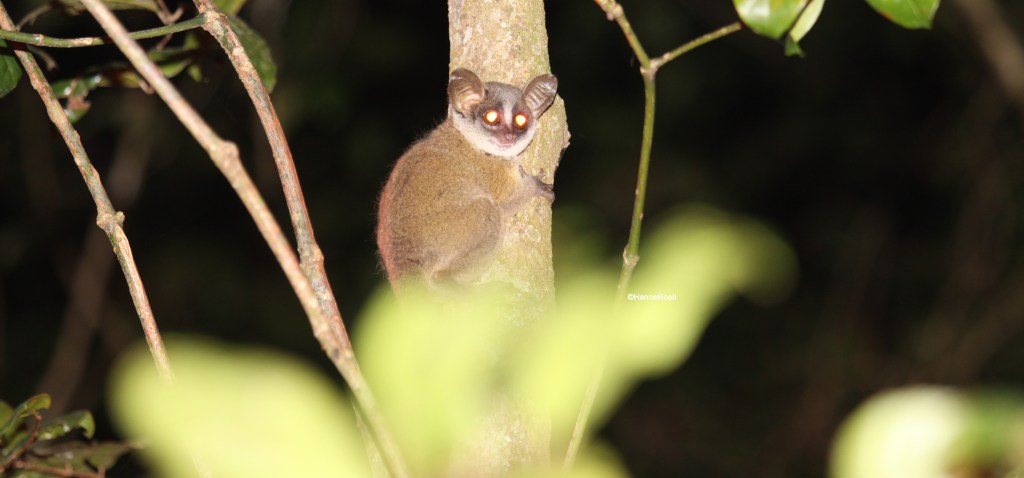
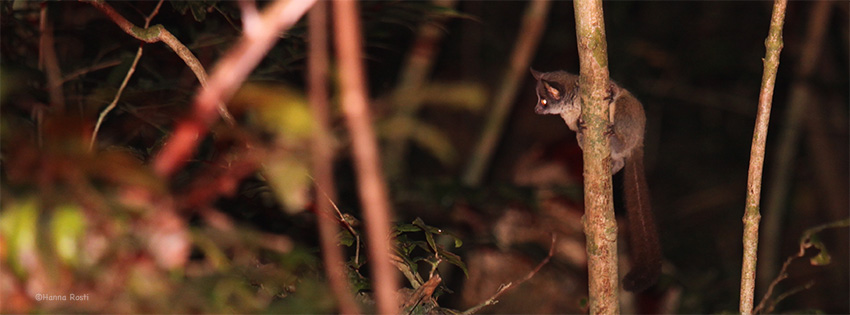
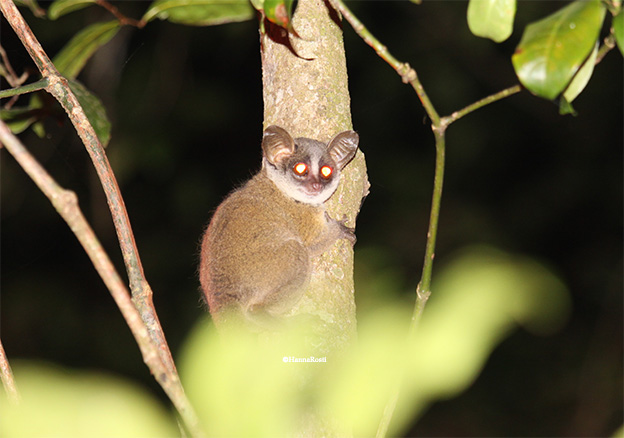
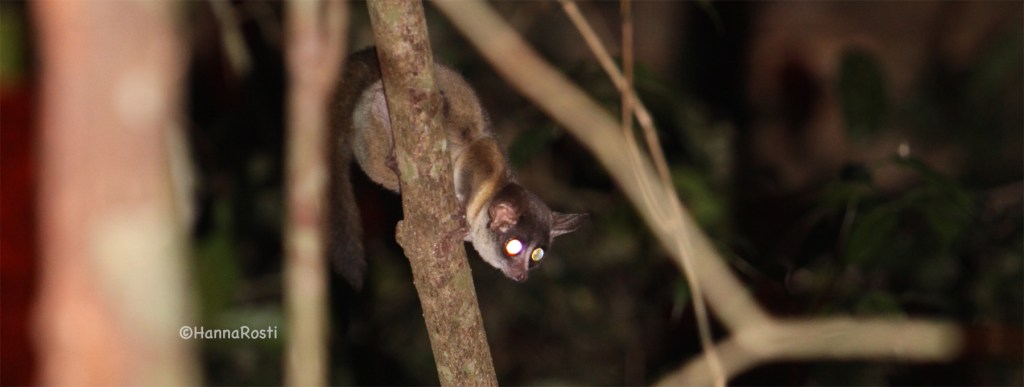
    Dwarf galagos hunt insects by jumping from small tree to another like its relatives makis in Madagascar. Photo Rosti 2019.

    This tiny -only 100-180 grams weighing dwarf galago eats insects in the hearts of most pristine parts of indigenous forests.

    Oryx – the International Journal of Conservation published 11.2020 conservation news about Taita mountain dwarf galago: Taita mountain dwarf galago is extant in Taita Hills of Kenya https://doi.org/10.1017/S003060531900142X

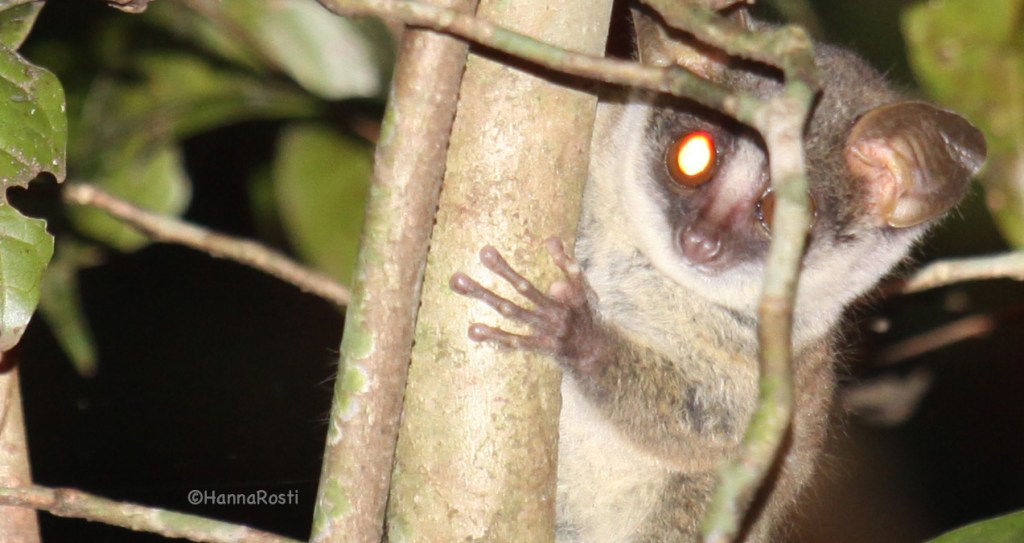
    Cryptic dwarf galagos have intriguing hand morphology. Photo Rosti 2019.
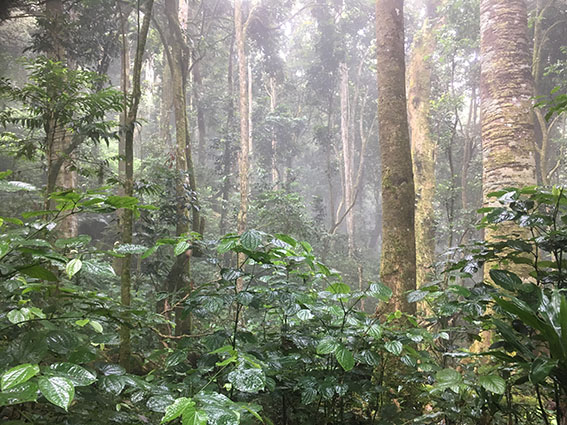
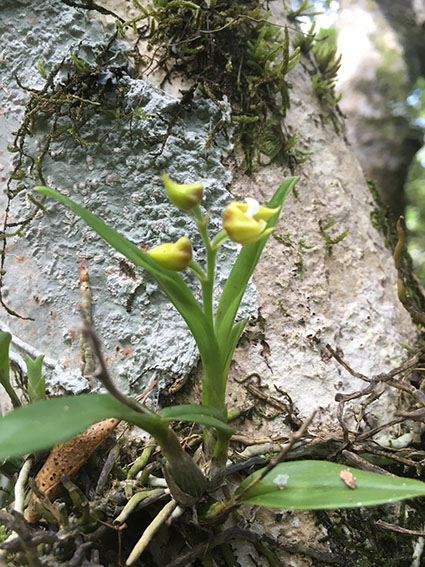
    Researcher from Nocturnal Primates Research Group identified calls of Taita mountain dwarf galago as Kenya Coast Dwarf Galago (Paragalago cocos). However these populations have been isolated for millions of years and live in completely different habitat. At the coast forest is low and temperatures high, in the mountains forest is high and temperatures low. All tree species are different between these forests. It seems that dwarf galagos in Taita Hills are relict population of once wider distribution of Kenya coast dwarf galagos.

    Dwarf galago species are cryptic, meaning that they all look almost the same. Their vocal communication reveals the species, in the darkness of the forest, vocal communication is most important means of communication.

    There is urgent need for conservation of forests and replanting of indigenous trees in Taita Hills.

    Tree hyraxes of Taita Hills are new species for the science

    This is first picture ever taken from Taita tree hyrax. They are highly vocal, but difficult to find. Photo Rosti 2019

    Tree hyraxes of Taita Hills should be conserved as Critically Endangered species

    Both species are dependent of indigenous trees as their habitat. Dwarf galagos eat insects and tree hyraxes eat leaves of indigenous trees. Both are dependent on tree cavities for daytime shelter.

    How these species were found

    Mysterious cryptic dwarf galagos was mentioned first in article in Journal of East African Natural History 91: 1–13 (2002) by Andrew Perkin, Thomas Butynski, Simon Bearder, Bernard Agwanda and Benny Bytebier 2002. Nothing happened after the article and nobody knew if this species existed any more.

    Taita Hills research station has been the base of the research. Director of research station and professor of Helsinki University Petri Pellikka has contributed enormously to this research even before the beginning.

    Professor from University of Helsinki, Jouko Rikkinen told me about this species, as he had been intrigued by it and its survival for years. Professor Rikkinen has been studying biodiversity of Taita Hills since 2009. Knowledge and insights of Jouko Rikkinen has been backbone of this research.

    In August 2018 I began searching for these small primates, as no-one knew about their fate. My assistant in the forest was and still is Benson Mwakachola. He has been reliable and supportive companion in sometimes challenging conditions.

    After search for several nights, we got super lucky and tiny animal with reddish eyes were looking at us in just few meters away. This dwarf galago seemed interested about us. And we were so happy to see it.
    Emeritus professor Simon Bearder from Oxford Brookes University has contributed in many ways as he is expert on nocturnal mammals and primatology. Simon had been one of writers of first article about Taita mountain dwarf galago in 2002.

    From the recordings Simon Bearder, who has 40 years of experience from nocturnal animal research in Africa, understood that tree hyrax in Taita Hills is different species than it had been thought to be.

    Helsingin Sanomat, largest newspaper in Finland published also article about Taita mountain dwarf galago and tree hyrax https://www.hs.fi/tiede/art-2000006404013.html

    Also press release from University of Helsinki:

    https://www.helsinki.fi/en/news/life-science-news/enigmatic-small-primate-finally-caught-on-film-in-taita-kenya

    News in Daily Mail: Adorable 3.5OUNCE African primate the Taita mountain dwarf galago is caught on camera for the first time in nearly 20 years as the species faces extinction

    News in AMED POST:

    Elusive tiny primate is captured on camera for the first time in nearly 20 years

    Related articles:

    Night in Nganagao Forest

    Owl butterflies of Ngangao night

  • Mt Kasigau – ancient indigenous forest

    Mt Kasigau – ancient indigenous forest

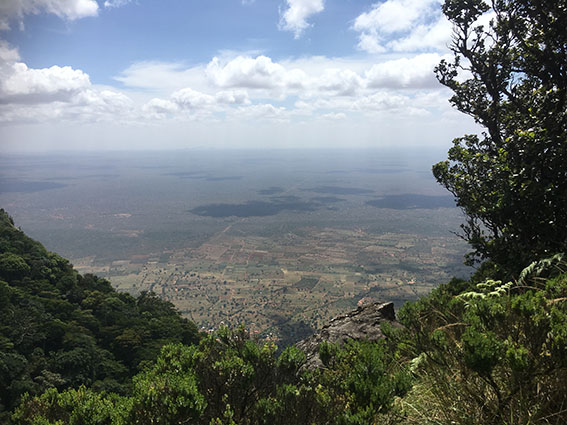
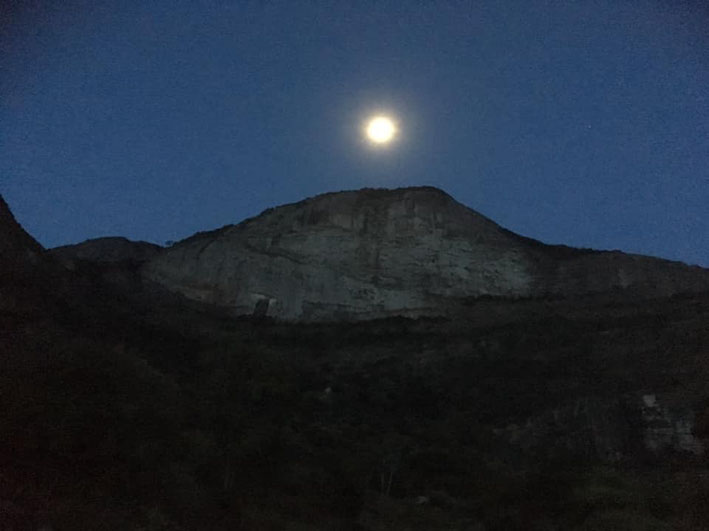
    Mt Kasigau is one of Eastern Arc Mountains, belonging to world HOT SPOT areas of biodiversity. Indigenous forest that covers Mt Kasigau is amazing and mysterious remnant of forests that have been almost cleared.

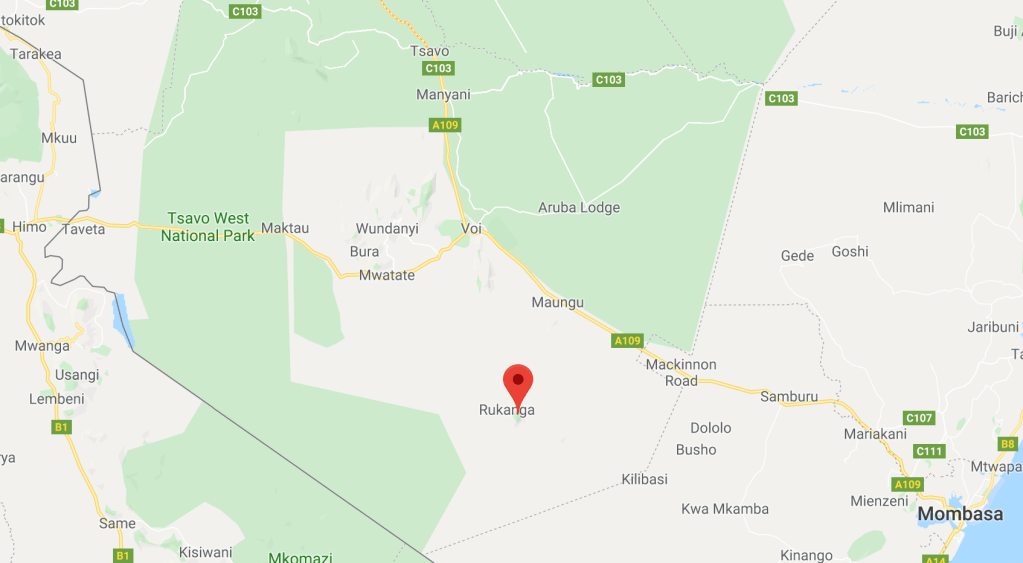
    Mt Kasigau is located in Taita, about 45 min drive from Voi.

    I have visited Mt Kasigau with plant biology course and later I came back to camp in Mt Kasigau Base Camp for three days. About 1600 meters high Mt Kasigau is easily walkable day-trip with good paths. It takes about 2,5 hours to reach the indigenous forest. It is strenuous hike under African sun with beautiful views. Wide path to follow begins close to Rukanga village and Mt Kasigau Base Camp.

    Best time to walk up is in the morning. During the day lower part of the mountain, where is no shade by the forest is extremely hot.

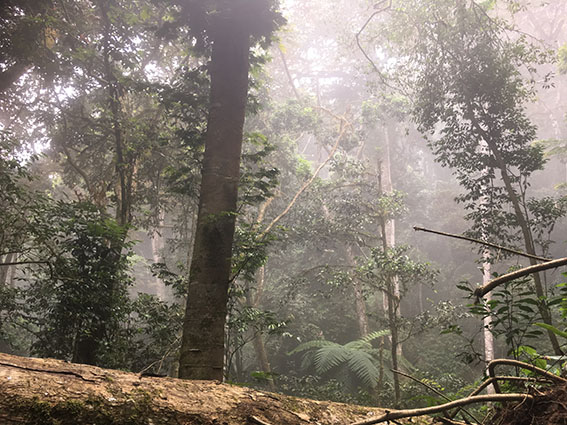
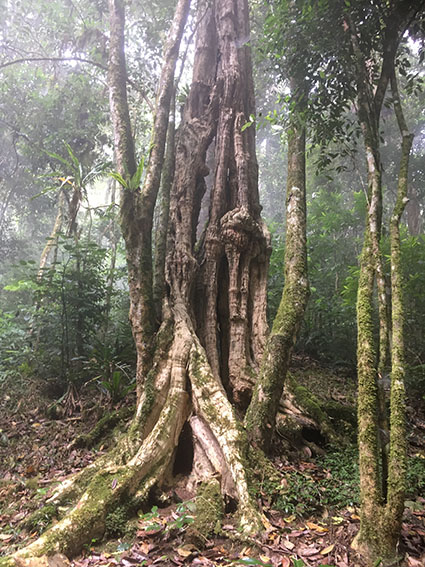
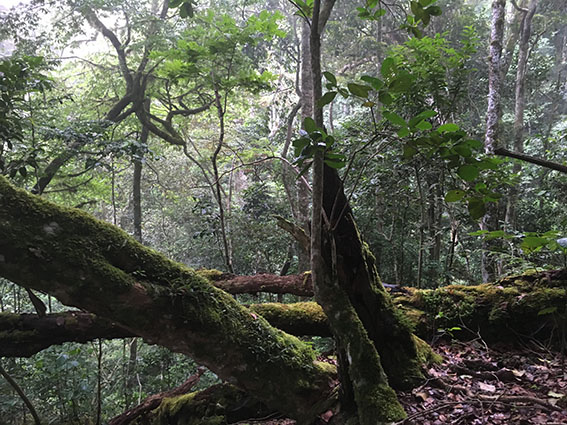
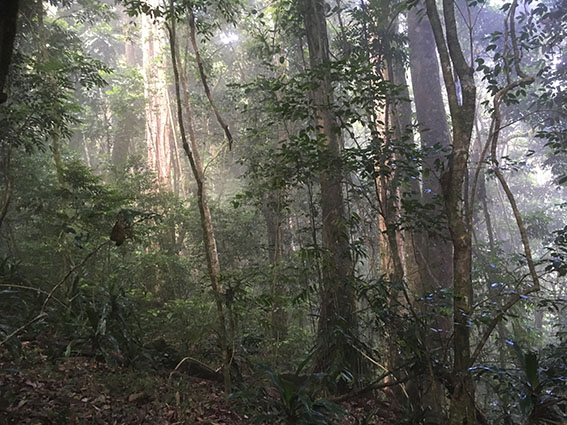
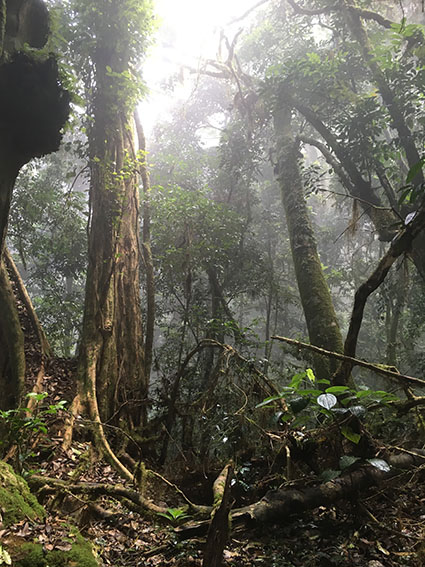
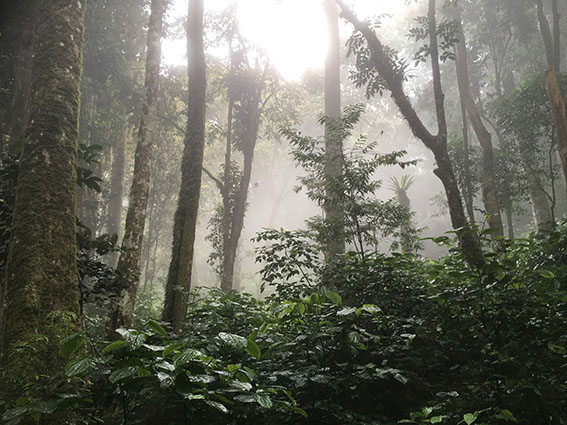
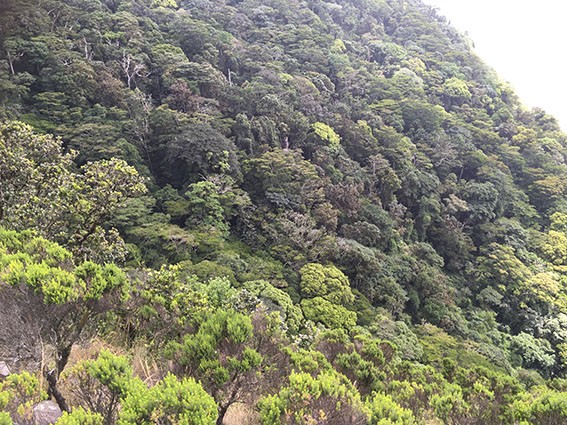
    Indigenous forest is incredible mystical and beautiful.

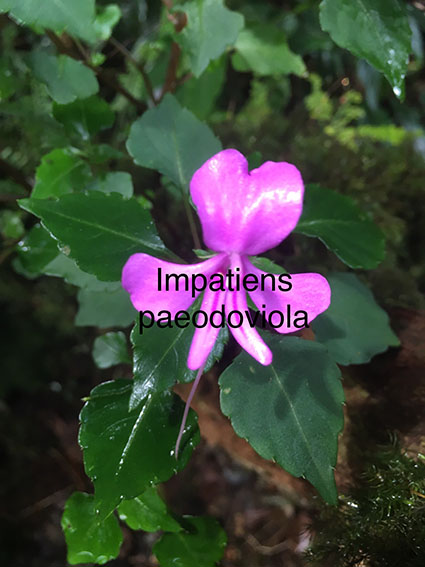
    Forest of Mt Kasigau is incredibly diverse with endemic orchids and impatiens flowers.

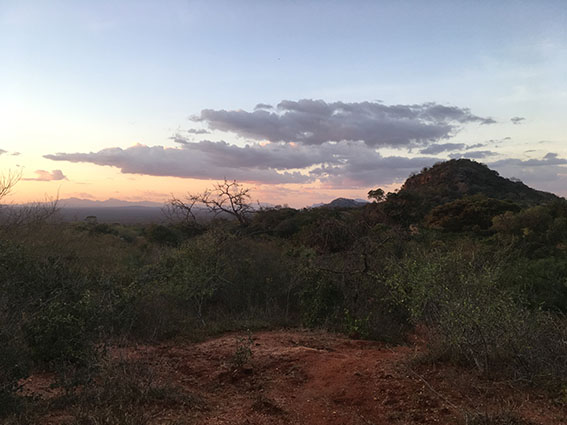
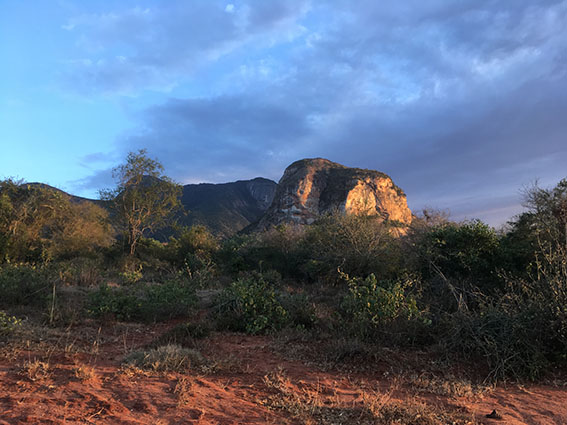
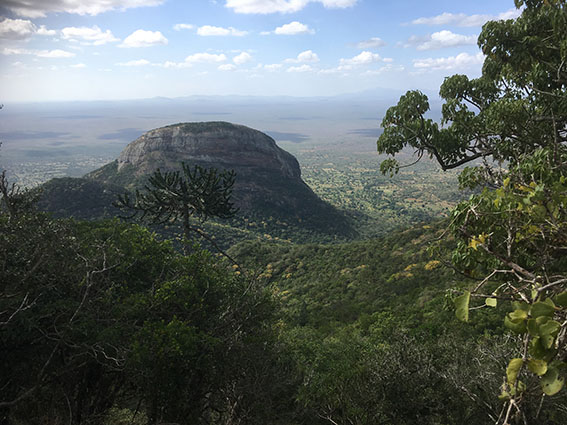
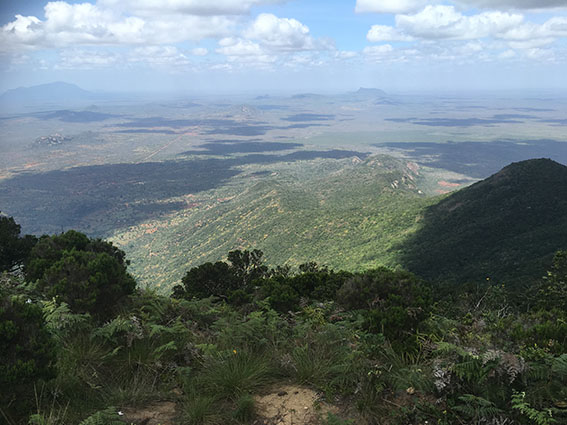
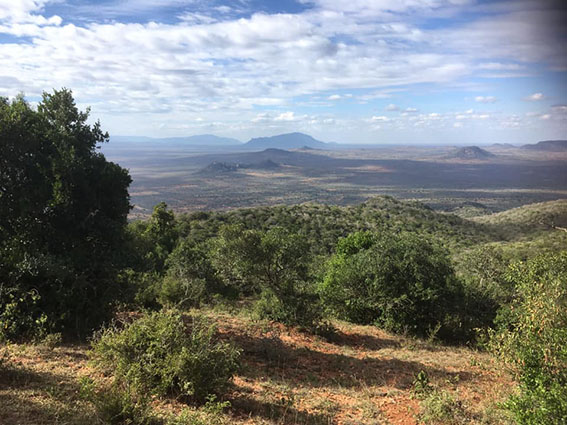
    Views to Mt Kasigau and from Mt Kasigau are strikingly beautiful.

    During WW1 German and Brittish troops were fighting in Mt Kasigau. There is memorial place on the mountain close to Jora village.

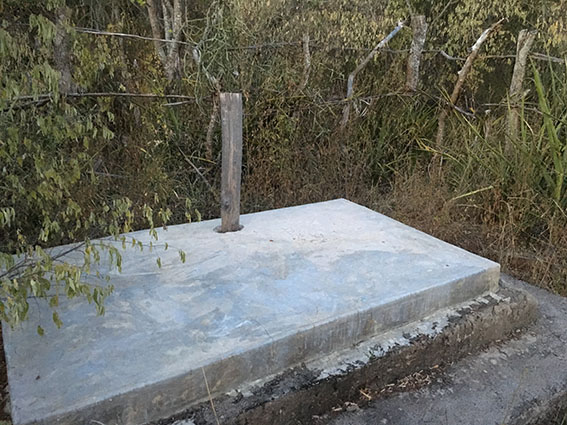
    Memorial stone for soldiers who died in Mt Kasigau during WW1.

    Mt Kasigau Base Camp has relaxing timeless atmosphere, and it is great place to stay when exploring Mt Kasigau and surroundings. Jackson, who works in Kasigau Base Camp can arrange everything. There are also climbing routes. I stayed in tent. I appreciate option to just close zipper and leave smaller animals outside.

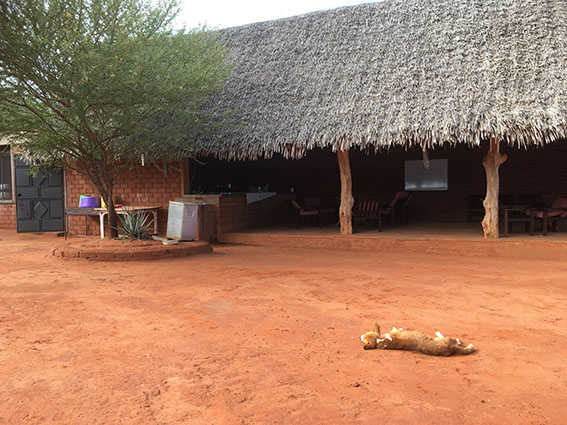
    Main kitchen area of Mt Kasigau base camp. There is no electricity, but it can be arranged from across the road. Skinny, mistreated dog is not from the camp, camp visitors are probably only ones that feed him occasionally.

    I was there to look for nocturnal mammals. There was not much to be seen. I have discussed this with experienced researchers and conservationist. What we consider to be most likely reason, is that there was drier period sometime during the Pleistocene. This dry period was too much for some mammalian species, e.g dwarf galagos and tree hyraxes. As these species are poor to colonize new forest, they have not been able to return.

    Some greater galagos (Otolemur garnettii) and rock hyrax live in Mt Kasiagau. I also heard that there is still one group of red colobus monkeys, but strikingly beautiful black colobus has been hunted until extinction.

    Large, dark, male greater galago in Mt Kasigau February 2019.
    Rechard Mwasi, me and Benson Mwakachola walking up from Jora, where path is much steeper in February 2019.
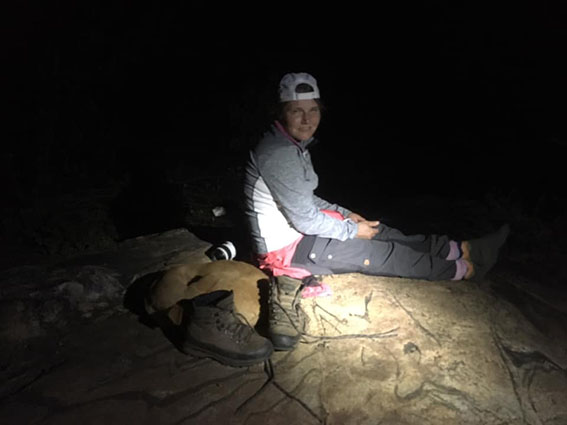
    Me and little dog taking a brake during the night February 2019.
  • Owl butterflies of Ngangao night

    Owl butterflies of Ngangao night

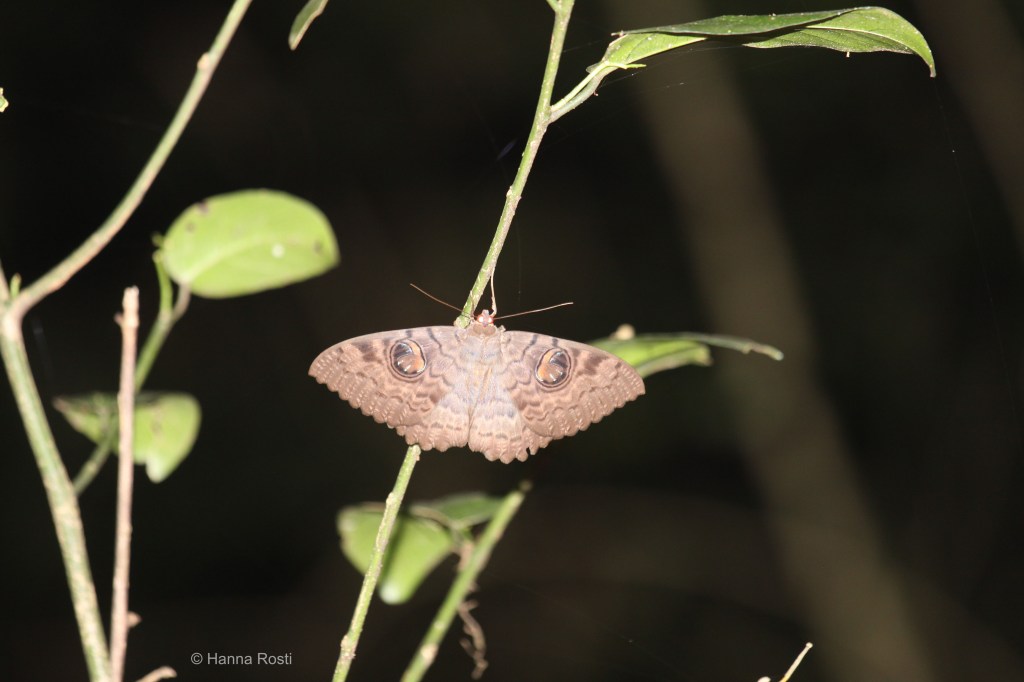
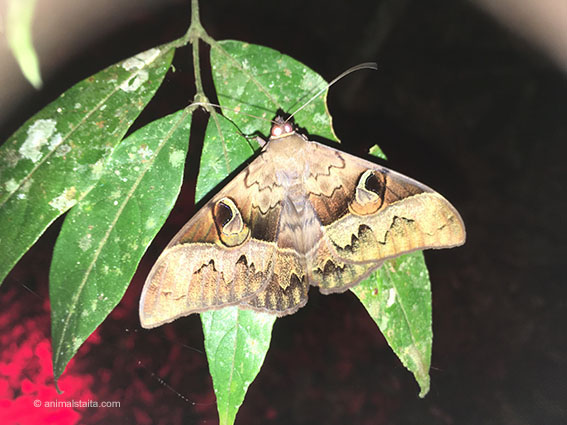
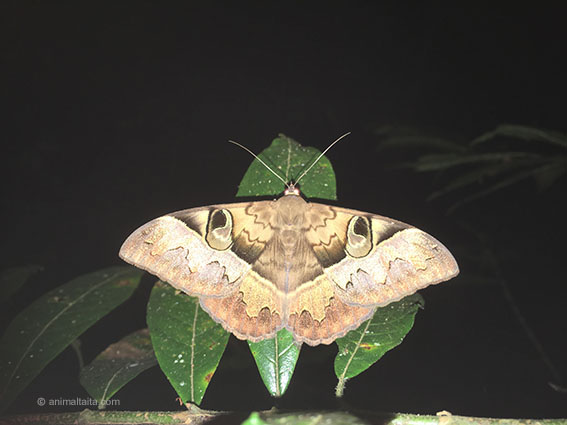
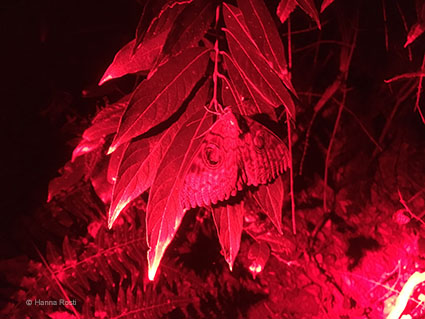
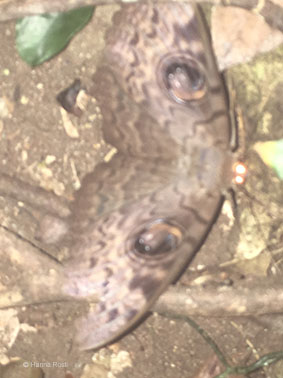
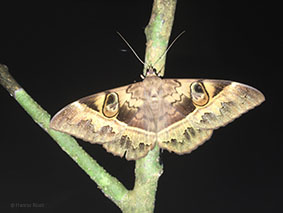
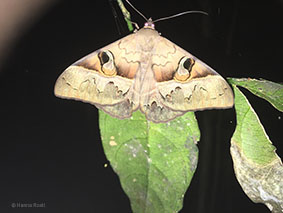
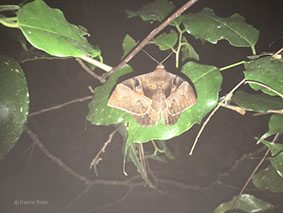
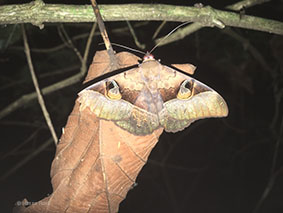
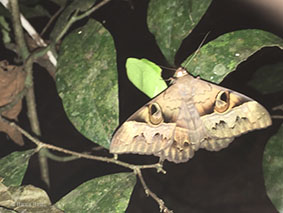
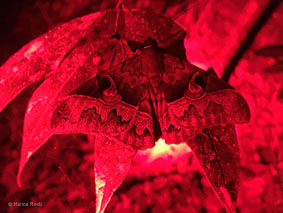
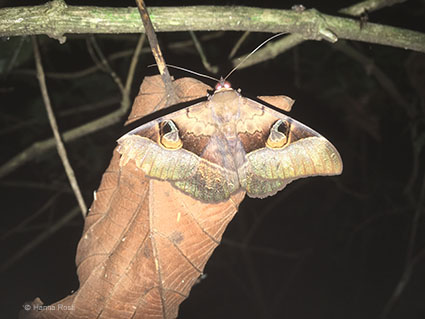
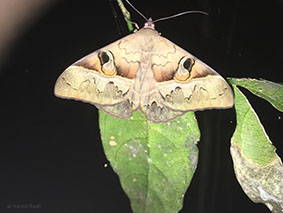
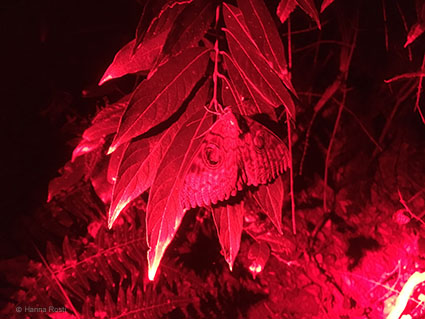
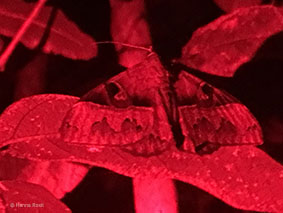
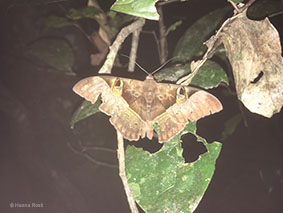
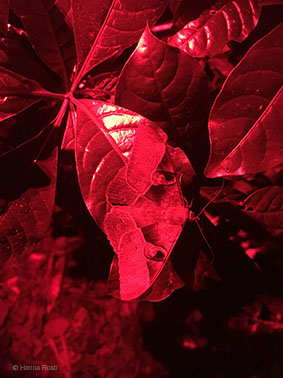
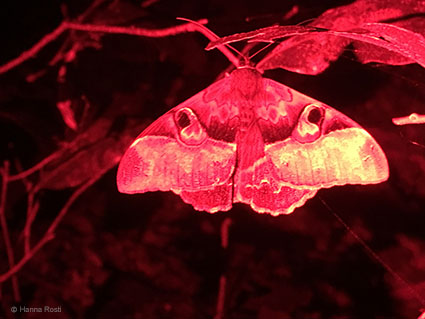
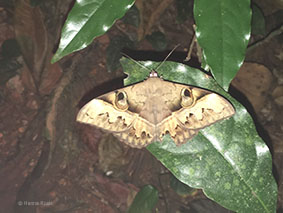
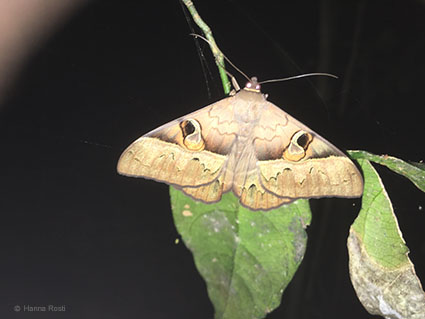
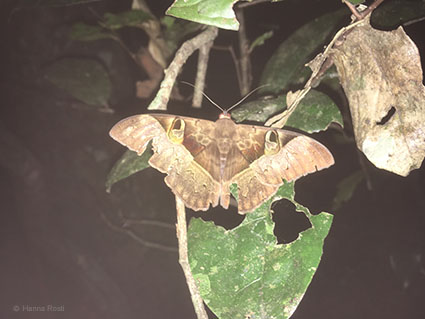
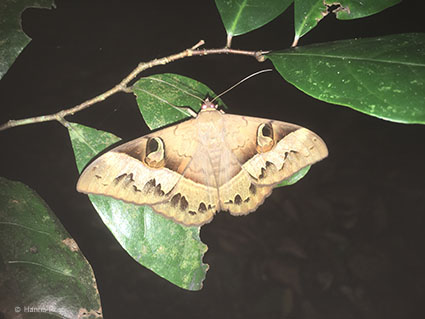
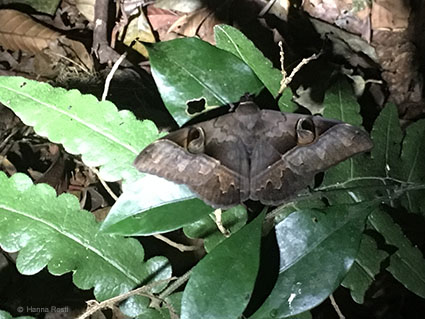
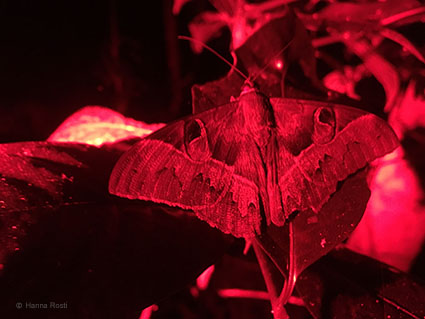
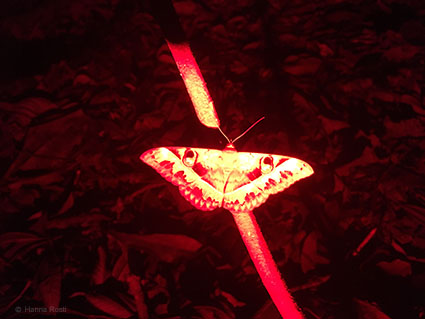
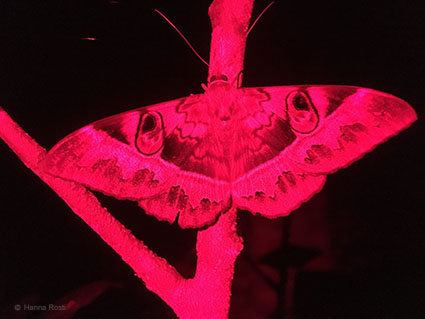
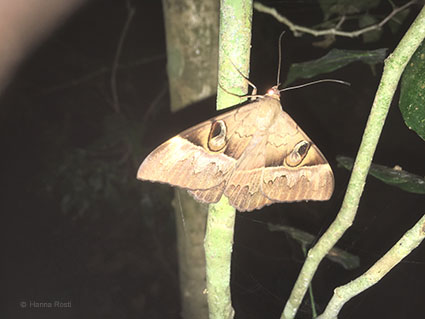
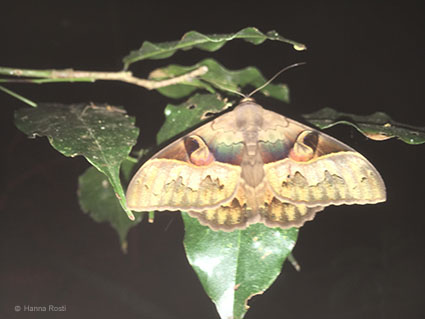
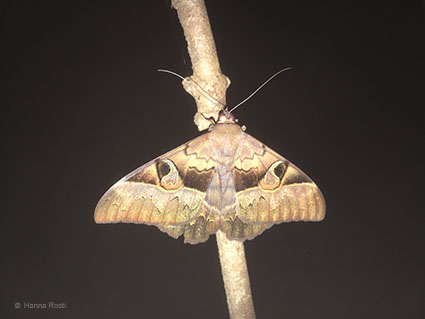
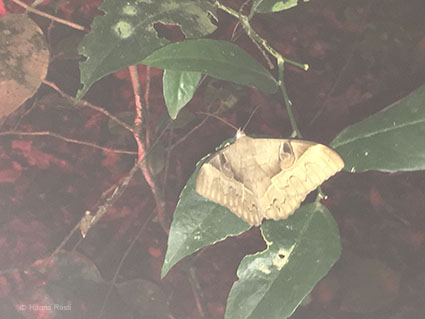
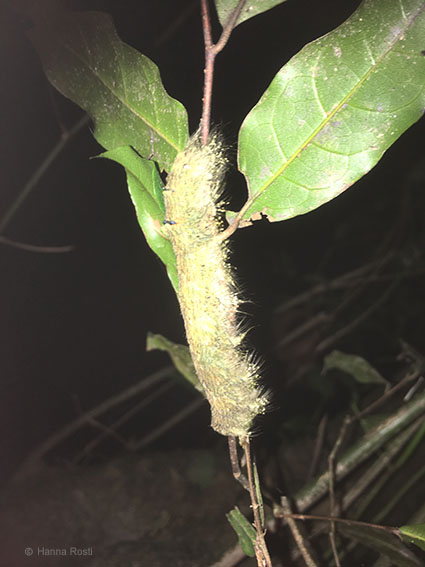
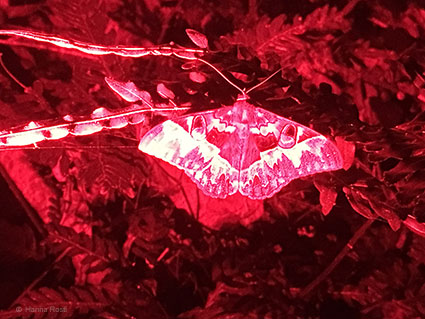
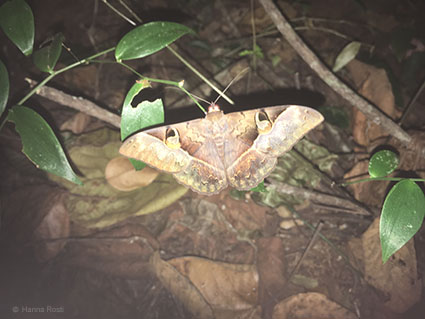
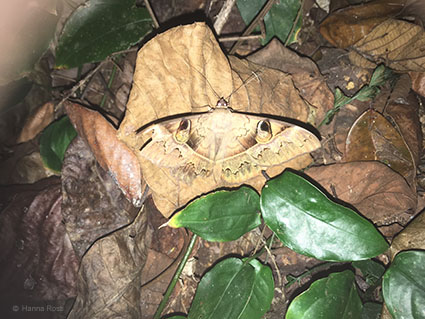
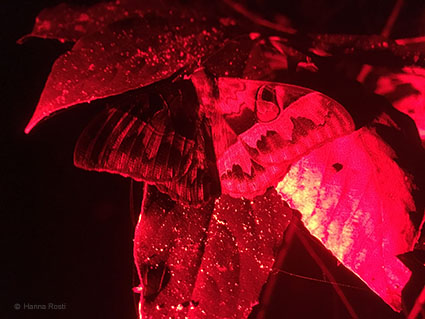
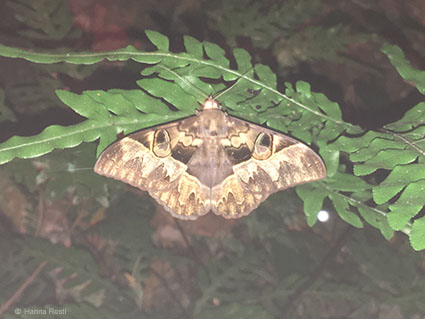
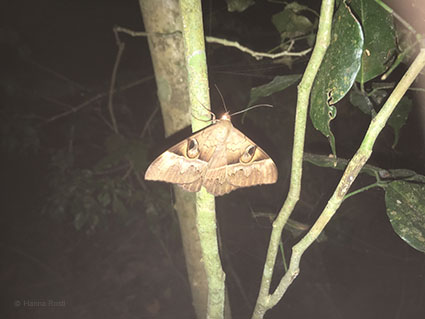
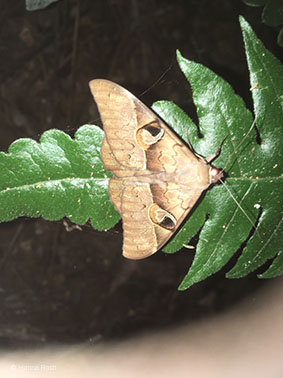
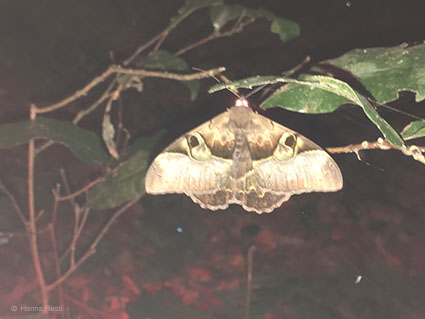
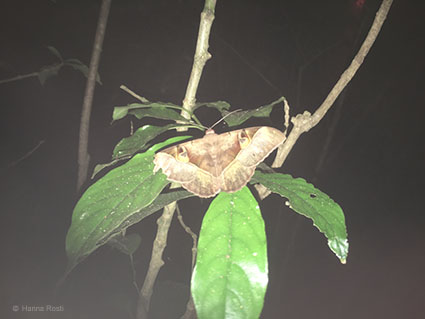
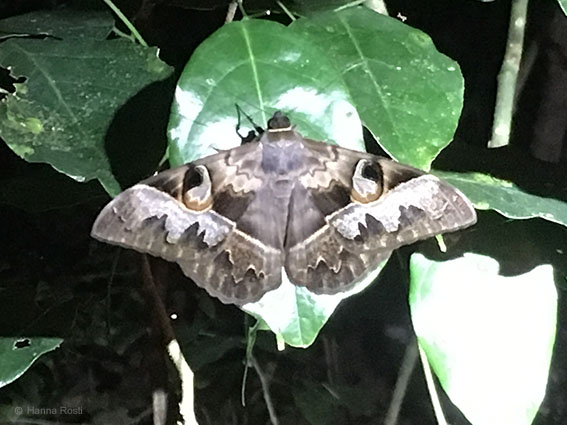
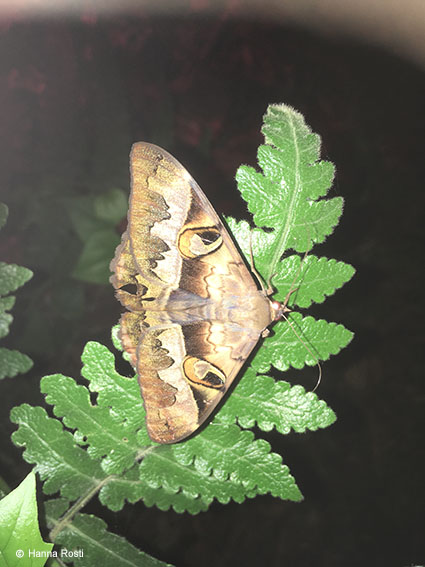
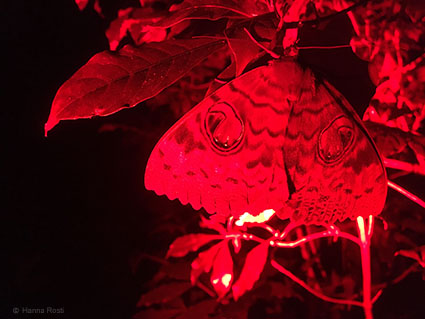
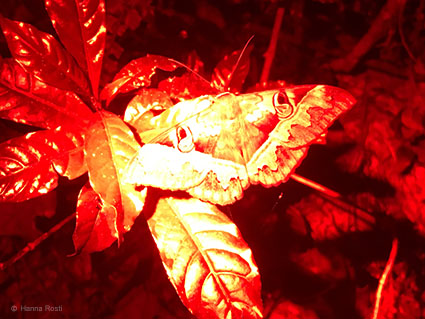
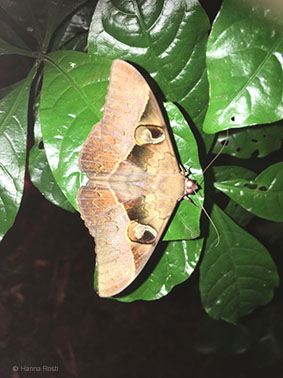
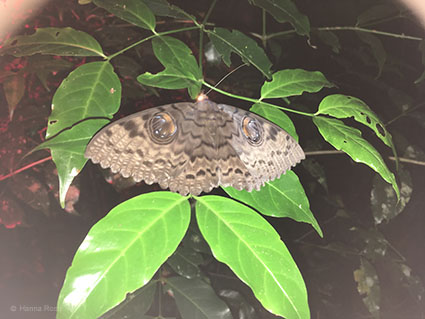
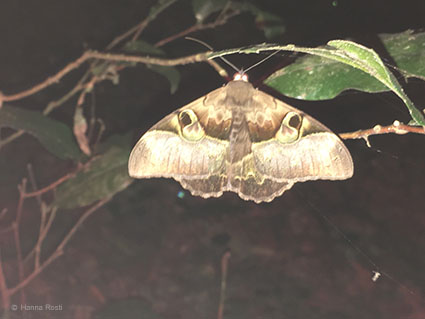
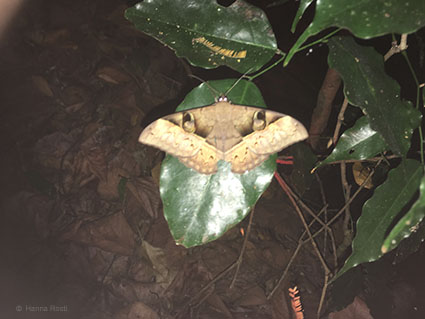
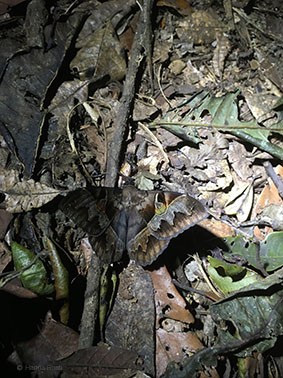
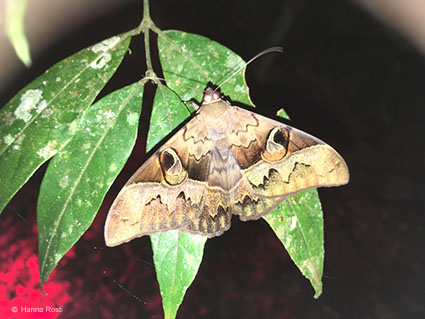
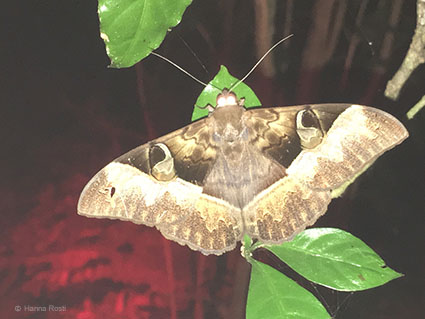
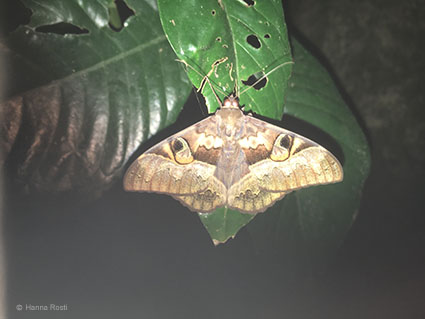
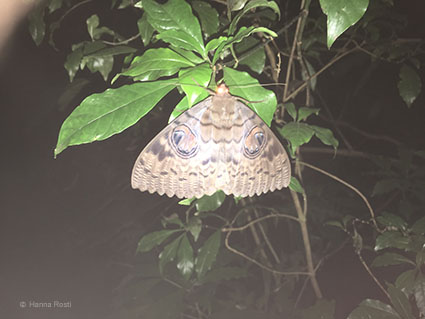
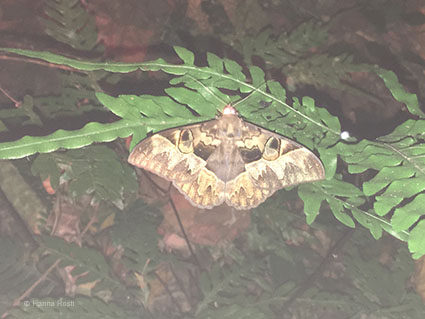
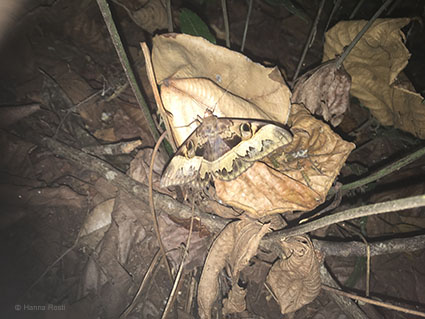
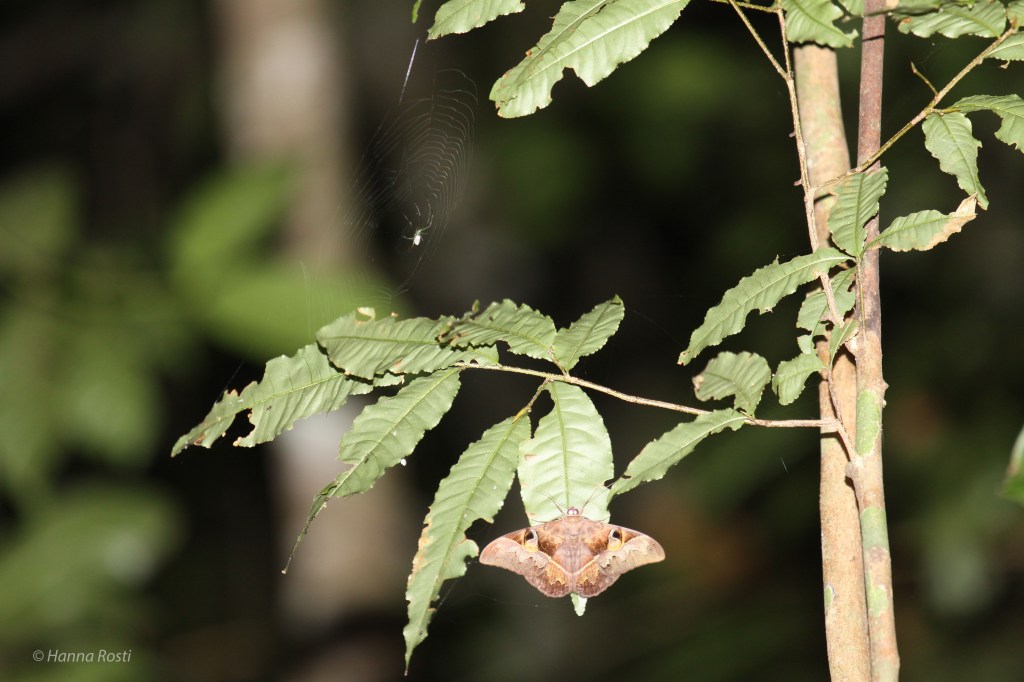
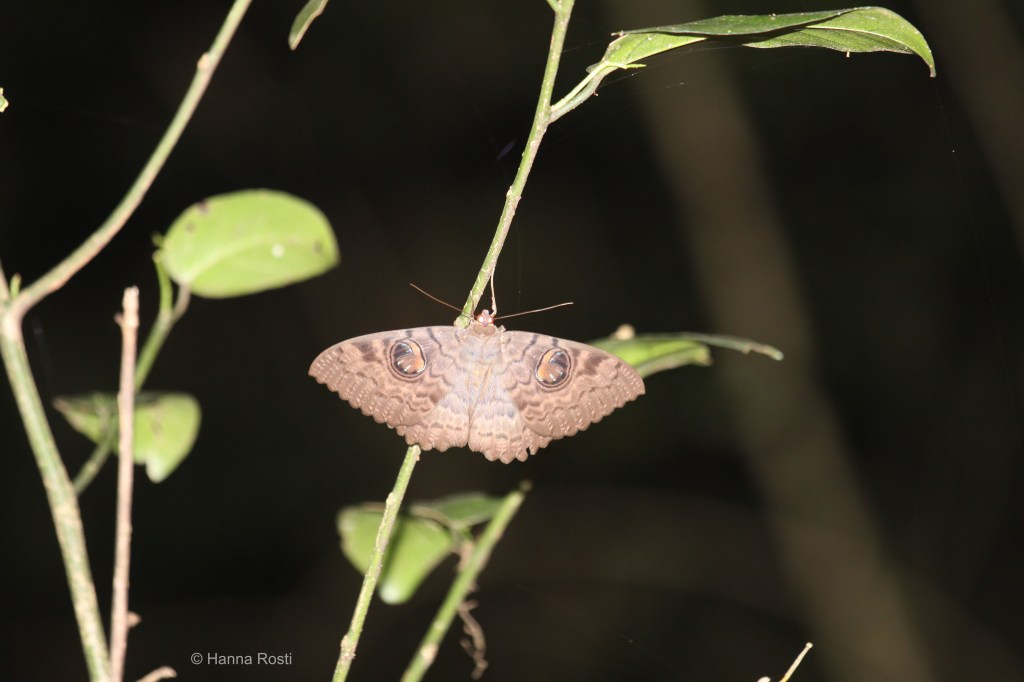
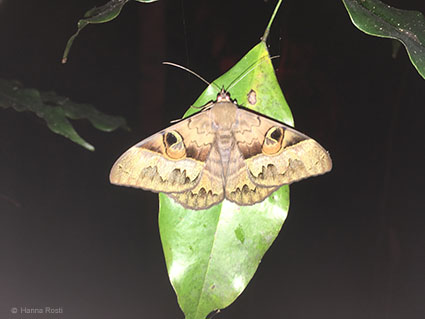
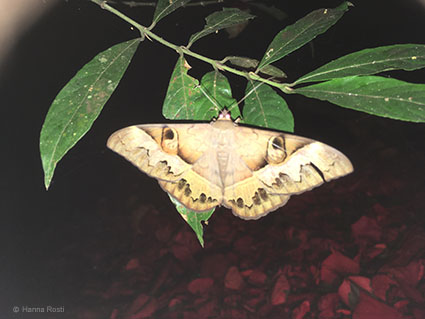
    I had lots of spear time in the forest. During this time I took pictures of moths. These moths that fly during the night are large. One up above the title is as large as my hand. This beautiful butterfly is less common, but strikingly beautiful.

    The other, way more common moth, is slightly smaller, and very common in Ngangao Forest. In Mbololo there is less these very common owl butterflies.

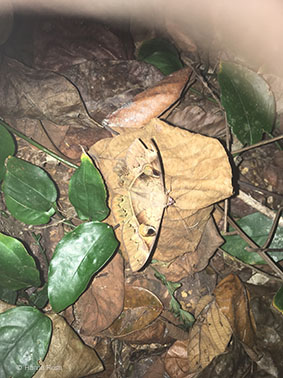
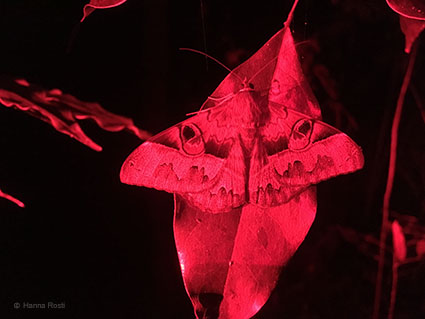
    These large moths were flying majestically in the air, or they rested on the leaves, branches or on the ground.

    What are these species and what is their role in the forest?

    Please comment bellow, or send me email hanna.z.rosti@helsinki.fi

  • Night in Ngangao Forest

    Night in Ngangao Forest

    I have been incredibly blessed by having opportunity to spend about three months observing nightlife in Ngangao and other Taita forests.

    At night forest is magical beyond any words of describing it. Change in evening and in the morning from nightshift to dayshift is breathtaking. Whole forest changes in minutes.

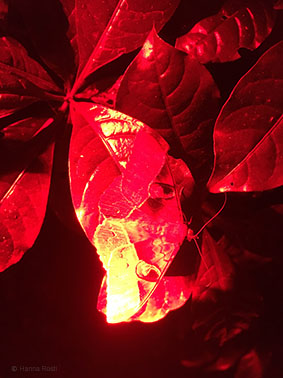
    We use red light in the forest. Most animals can’t see red light, so they carry on their lives like we where not there.

    There are bats flying in paths and openings. They fly almost to your face, but turn at the last moment. Only once I have been touched gently by a bat. There is abundant rodent life, rats and mouses of all sizes running around, digging the ground, climbing in the trees, grooming themselves. They look very cute in red light.

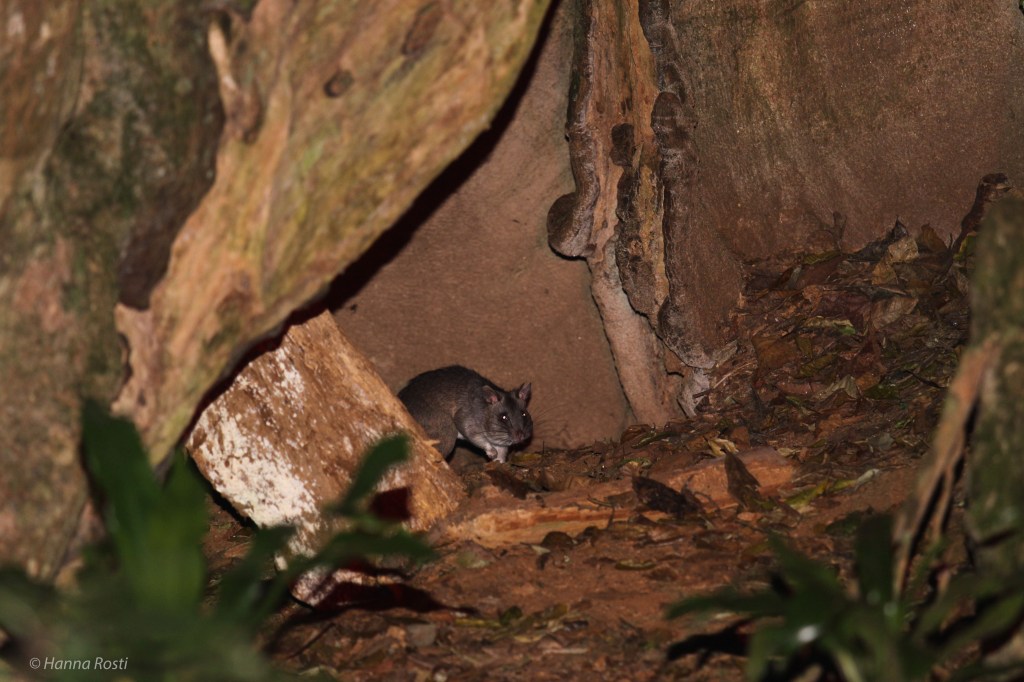
    Most Ngangao Forest visitors walk through gigantic cave tree, not knowing that they are actually visiting home of giant rat at the same time!

    Less common rodents are dormouse and elephant screw. We saw both several times though. We also saw ones Suni antelope.

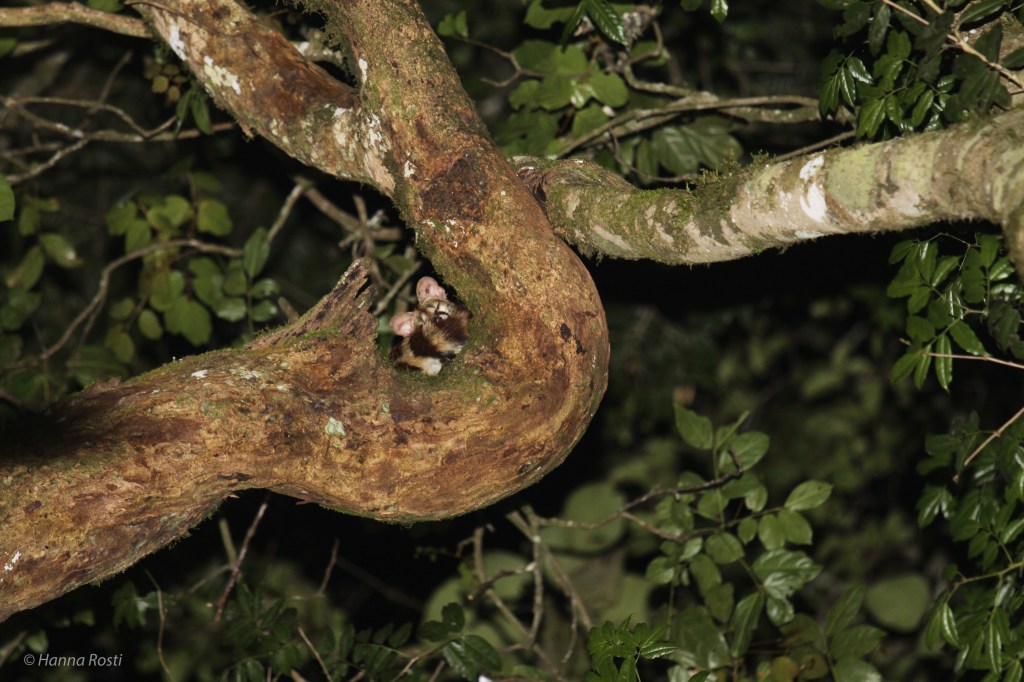
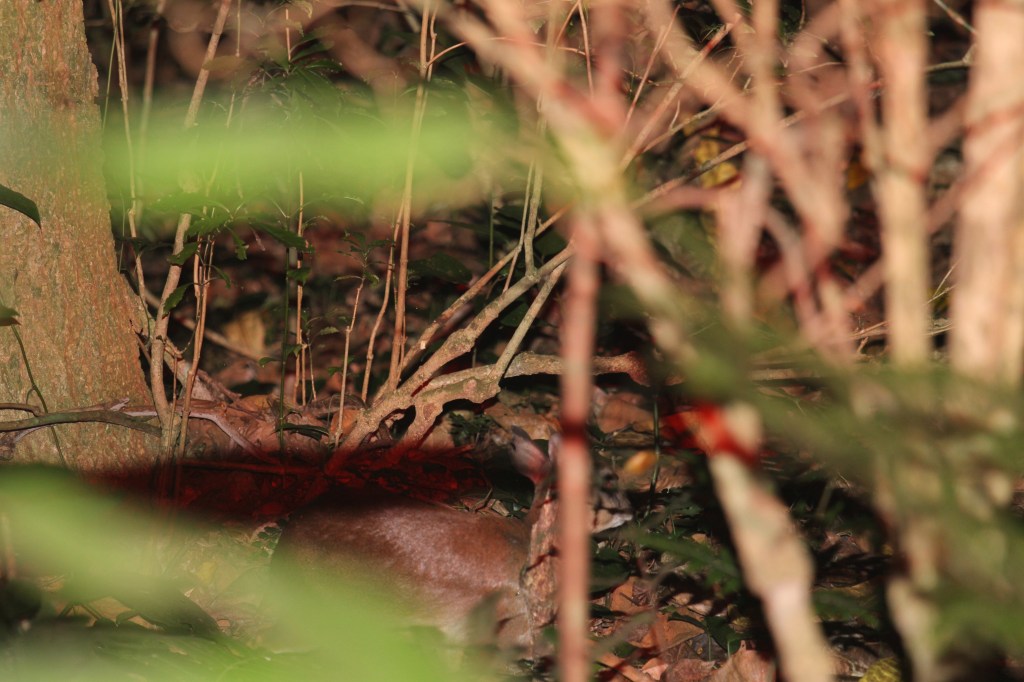
    We had funny encounters with the genet. This stunningly beautiful cat sometimes followed us, sometimes it appears out from the blue, just from the feet. I was never lucky enough to get picture of it. Until once we saw one sleeping in the tree. This cat didn’t look that good though, you can see ticks in the ear in the photograph.

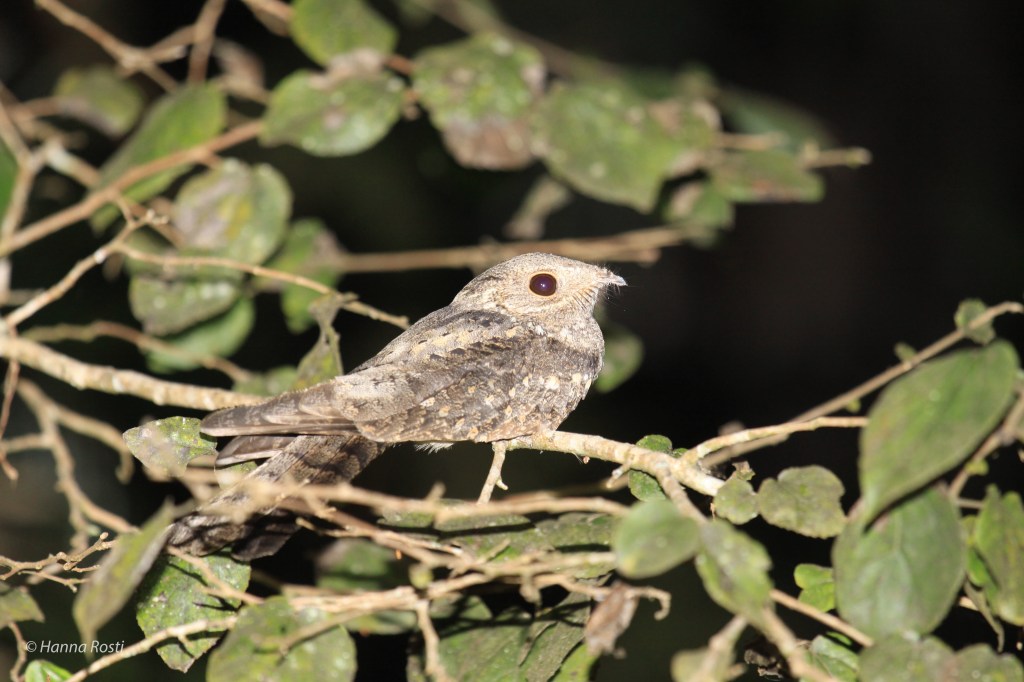
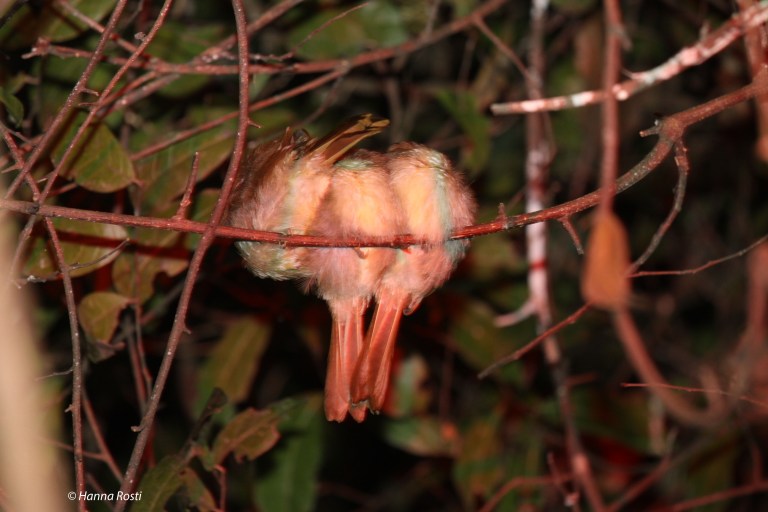
    These tree little birds were always in the exactly same place, same branch, sleeping and huddling together.

    In the darkness of the night animals communicate by calling to each other . These nocturnal animals are loud, and their calls are incredible. Later I will add photographs and recordings of these spectacular and endemic mammals that my research is focusing on.

    African wood owl is most common owl in the forest and couple calls to each other by using different calls.

    I am often asked that is there anything to be afraid of in the forest? And yes there is – safari ants! There are some snakes and spiders, but I am not afraid of them. I have been colonized by safari ants twice. Ants climb on you when you stand on their way, and when they are all over your body they suddenly bite – all at once. There is no other way than to strip from the clothes. After that you definably learn to scan the ground couple times every minute, even when practically at sleep. Safari-ants can also be heard, as insects fleeing from them shake the dead leaves on the ground.

    Safari ants on color the ground

    There has not been much research in the forests at night. There is so much unknown. As Taita Hills is one of centers of endemic species in the world there are still so many species still unidentified. Only last fragments are remaining and conservation efforts for all indigenous trees are needed urgently! More indigenous trees need to be planted and corridors created between forest fragments.

    In the forest I have been always companied my assistant Benson Mwachola and occasionally also by Rechard Mwasi and Darius Mwambala from Taita Hills Research Station.

    In the morning scenery outside Ngangao is incredibly beautiful with yellow light coloring the snows of Kilimanjaro and savannas of Tsavo.