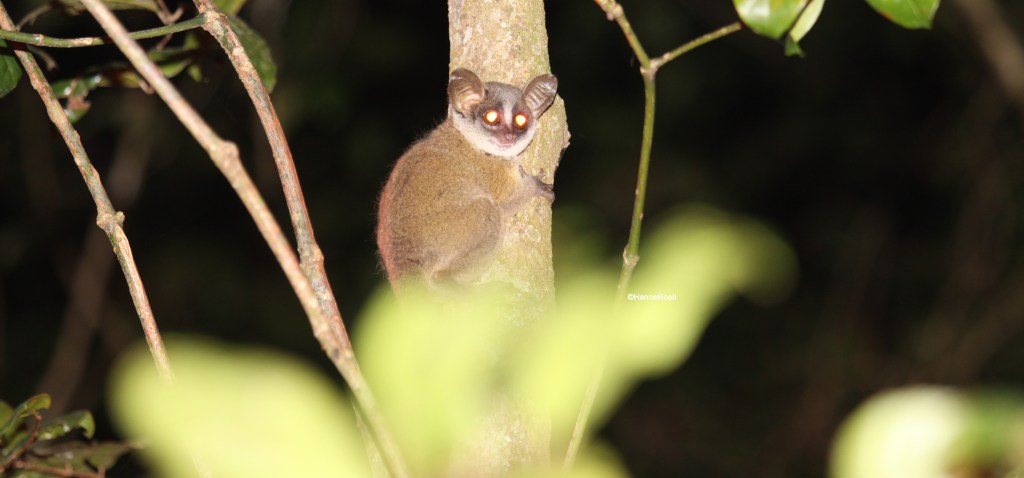
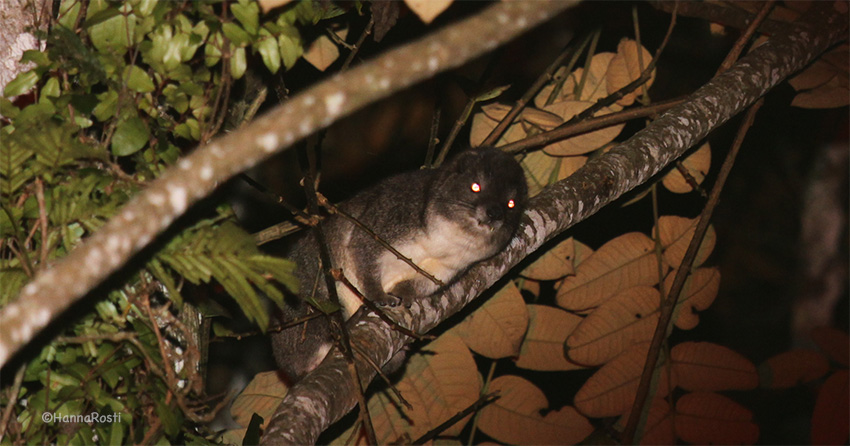
Taitan pikkugalago (Paragalago sp.) on äärimmäisen uhanalainen kädellinen. Lajia esiintyy ainoastaan kahdessa metsäsaarekkeessa, noin kolmen neliökilometrin alueella.
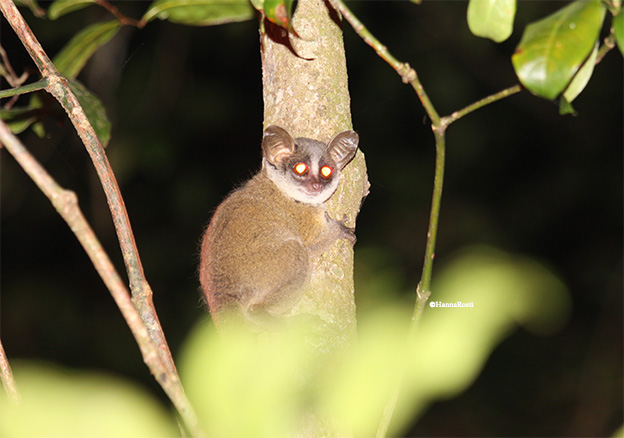
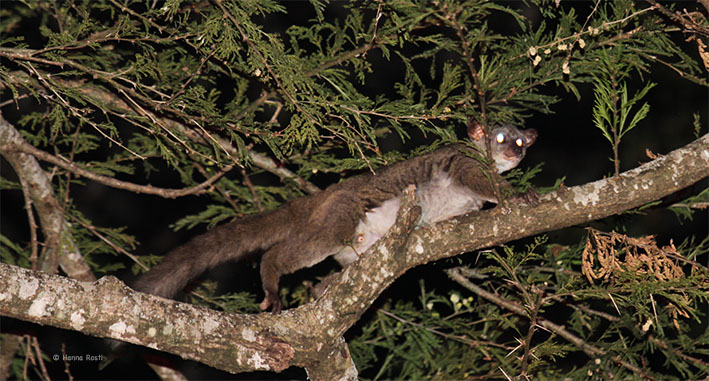
Taitan pikkugalago, kuvassa näkyvä puunrunko on vain noin 2-3 cm halkaisijaltaan. Eläin painaa vain noin 80-140 grammaa.
Lajia ei ole virallisesti tunnistettu.
Taitan pikkugalagon havaitsivat ensimmäisen kerran Andrew Perkin, Simon Bearder, Thomas Butynski, Benny Bytebier, Bernard Agwanda vuonna 2002. Tässä linkki ensimmäiseen artikkeliin: The Taita Mountain Dwarf Galago Galagoides Sp: A New Primate for Kenya Artikkeli julkaistiin Journal of East African Natural History lehdessä.
Pikkugalagon tunnistuksella olisi kiire, sillä pikkugalago saattaa kuolla sukupuuttoon.
Lajin tunnistaminen ja uhanalaisuus-statuksen saaminen edistäisi merkittävästi luonnonsuojelutyötä.
Lajien tunnistus pikkugalagoilla perustuu erityisesti äänteiden, morfologian ja DNA:n vertailuun.
Taitan pikkugalago kuulostaan Kenian rannikkopikkugalagolta (Paragalago cocos). Mutta koska lajit ovat olleet erillään toisistaan jo miljoonia vuosia, on mahdollista että ne eroavat muilla tavoilla.
Taitan pikkugalagon esiintyminen kaukana ja eristyneenä Kenian rannikkopikkugalagon alueista antaa sille jo Kansainvälisen luonnonsuojeluliiton (IUCN) ohjeiden mukaan alalajin statuksen.
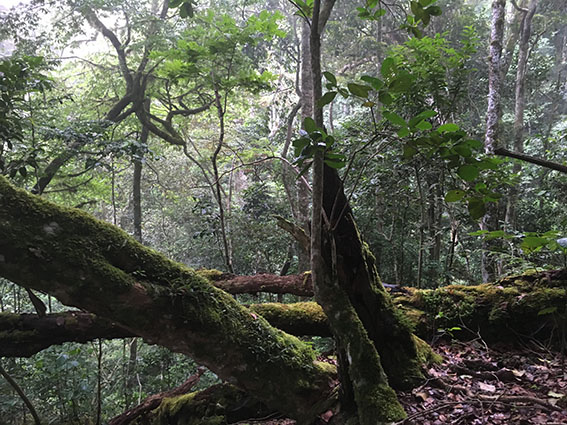
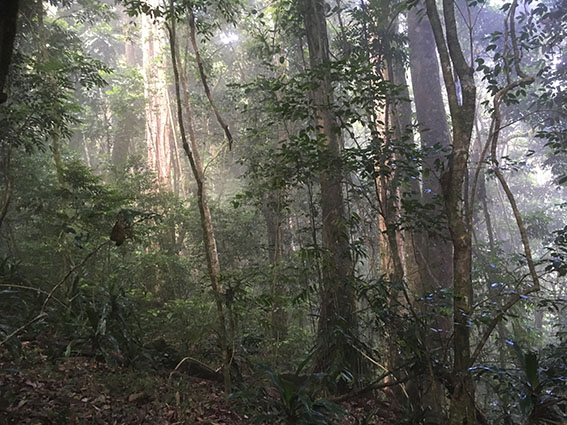
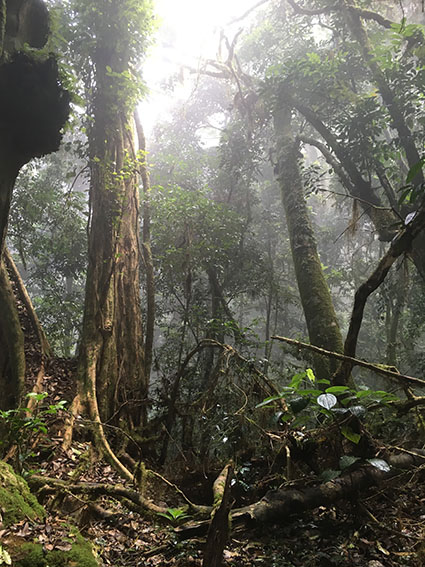
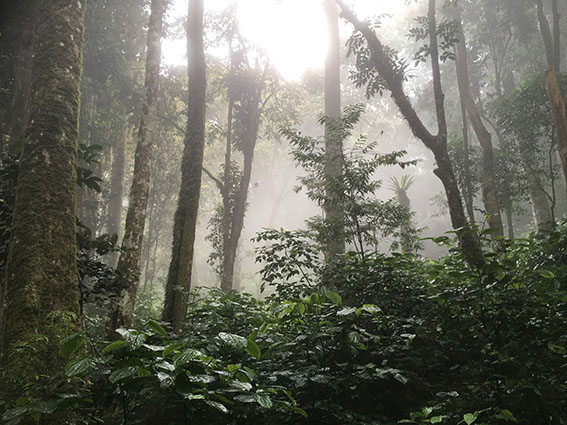
Taitan pikkugalago elää kahdessa suuremmassa jäljellä olevassa metsäsaarekkeessa. Nämä metsät ovat vuorten huipuilla 1400-1950 metrin korkeudessa.
Lajia tavataan vain alkuperäismetsien parhaimmin säilyneissä osissa.
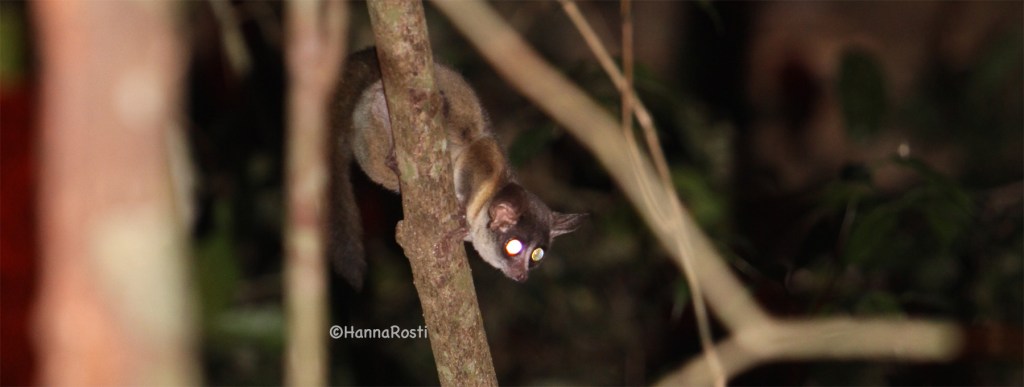
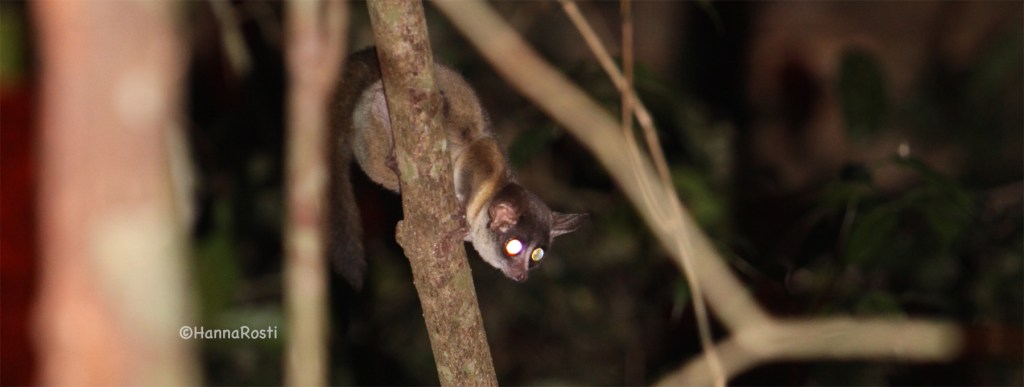
Taitan pikkugalagon näkee useimmiten saalistamassa hyönteisiä. Ne hyppivät ketterästi pieneltä puunrungolta toiselle.
Vuorilla on usein öisin aika kylmä, ja Taitan pikkugalagolla onkin varsin vahva turkki muihin lämpimämmillä alueilla eläviin galagoihin verrattuna.
Väitöskirjatyöni tavoitteena on saada Taitan pikkugalago tunnistettua ja suojeltua.
Suojelu tarkoittaa erityisesti sen elinalueiden, alkuperäisten metsien suojelua ja uudelleenmetsitystä.
I will never forget fist time that I heard tree hyrax. I was sitting on a log. It was first time I was in the forest after dark. I was companied by Kenya Forest Service ranger Jonam Mwandoe. Startling call, that seemed to come just to my ear, almost dropped me from the log. I asked what an earth was that?
Jonam told me about tree hyraxes, but I really didn’t understand. I had no idea that there could be relatives of elephants in the trees. For some time I thought of them as some peculiar rodents, which they really are not!
Each night in the forest had been filled with their vocalizations, where individuals counter call to another. But it took weeks to see one. At the time I had no idea how special this event was.
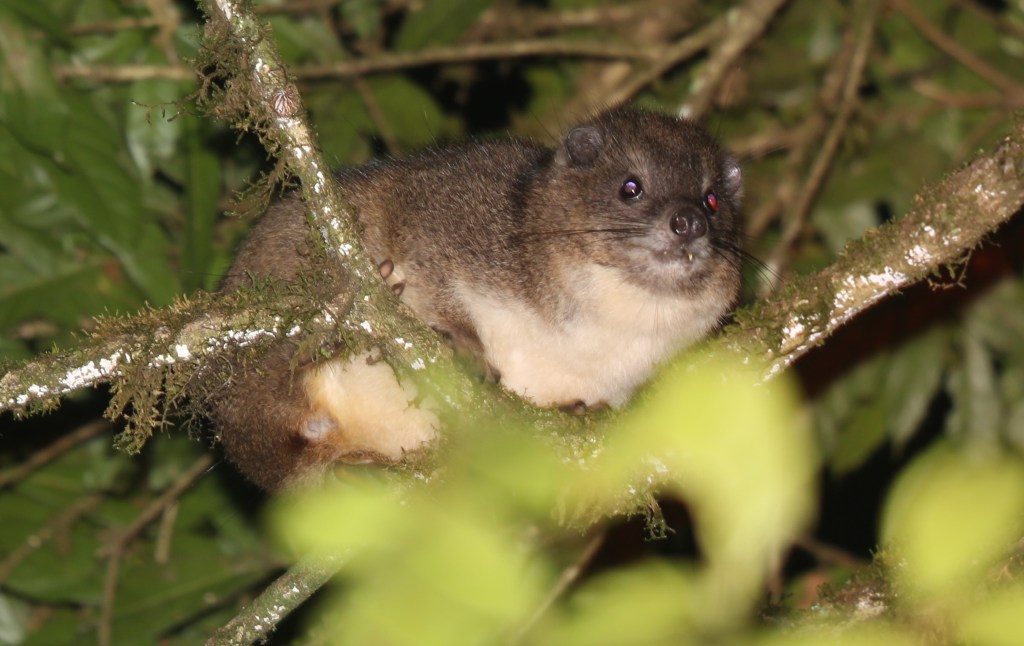
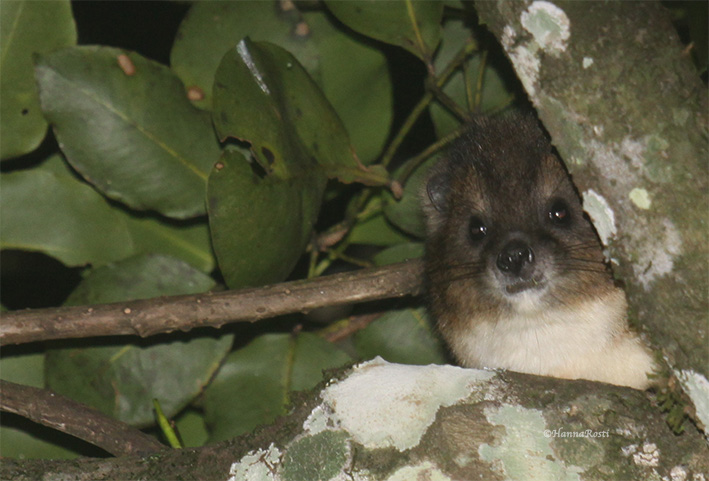
This individual, probably young female was first tree hyrax I saw. It was resting just about 4 meters above the ground. Females have smaller and rounder tusks.
Researchers just don’t see tree hyraxes. And this is probably why these animals are so neglected in science. Studying animals that you can’t see in difficult and challenging conditions and producing scientific articles with real data even more difficult.
As time went on I gathered more pictures and tons of recordings of their vocalizations. I became more and more intrigued by these mysterious animals. Then it really hit me:
Tree elephants!!!!
Hyraxes belong to Paenungulata, their relatives are elephants and manatees. How amazing and unbelievable group!
My supervisor, emeritus professor Simon Bearder pointed out from recordings, that these tree hyraxes are new species for the science.
Special features of tree hyraxes
Belong to Paenungulata with elephants and manatees
Small tusks
Teeth like rhinos
Dense fur
Three toes
Round body
Eat leaves, fibrous, low calorie diet
Slow metabolic rate
Complicated digestion system
Low body temperature
Internal testes
Whiskers around the body
Scent gland
Spends days in tree holes
Use toilets
Extremely variable vocal communication
Solitary
Nocturnal
Variable vocal communication suggests that this species has complex social behavior, even though they are solitary. Knowledge of these species and their behavior is very limited.
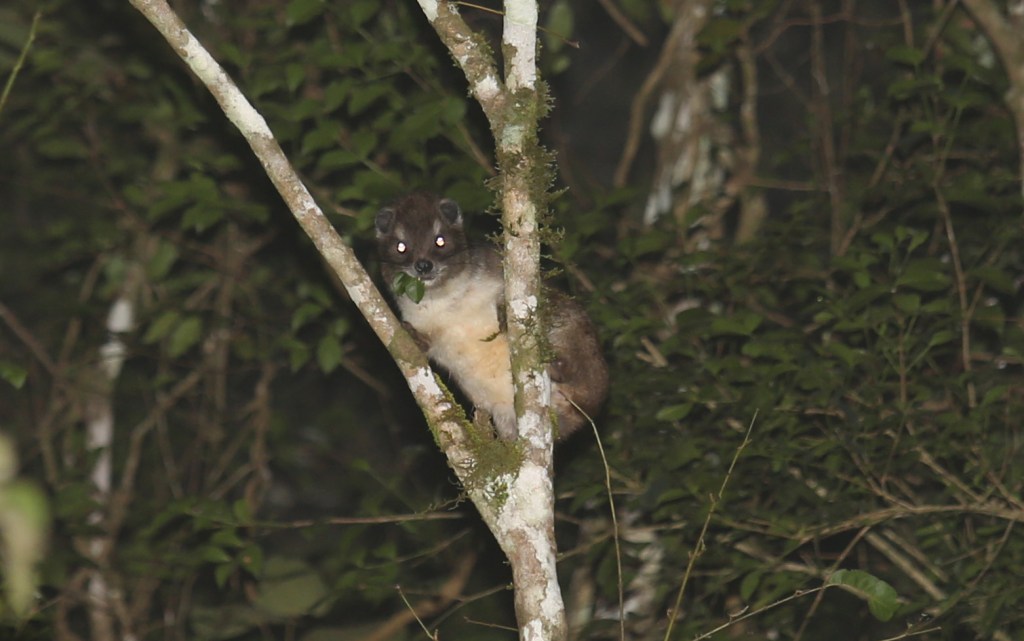
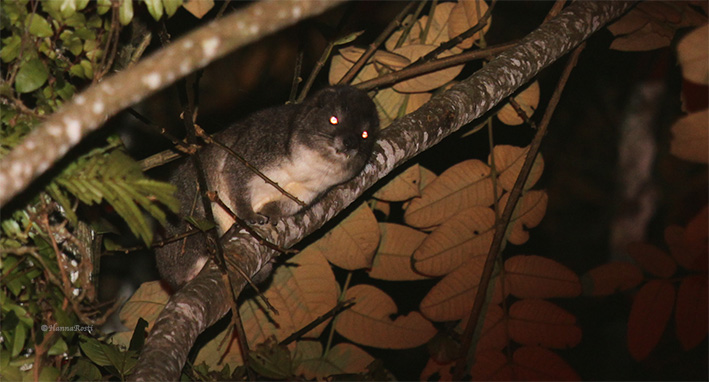
This male is much larger and has bigger tusks.
Ecological niche of tree hyrax is the same as koala and sloth
In some two largest forests of Taita Hills, Ngangao and Mbololo tree hyrax density is high. However total area of these forests are only three square kilometers. As density is high, young animals are forced to move out of forest, where they easy food for dogs.
Tree hyrax only lives in indigenous forest. It is dependent on tree cavities for safety
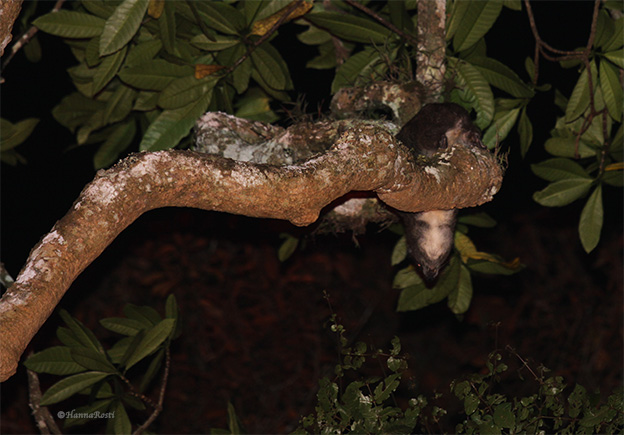
Tree hyrax jumping from branch to another. Thinking and hesitating took minutes before actual jump.
How tree hyraxes can live in the canopy of tall mountain rain forest is amazing. Animal is heavy, it has only tree toes. It seems like species that is taken out of their real environment.
One form of protection for this species could be to build artificial nest in areas, where are trees, but no tree cavities. However replanting of indigenous forest and building corridors between fragments is necessary for long term survival of this species.
This sweet female was observing us from close range, she was possibly moving on to new tree.
These unknown tree hyraxes are in serious threat by human development all over Africa, not just in Taita Hills. Different species of tree hyraxes are possibly going extinct even before they are identified.
Mammals of Africa (2013):
“Major revision of this group is overdue”
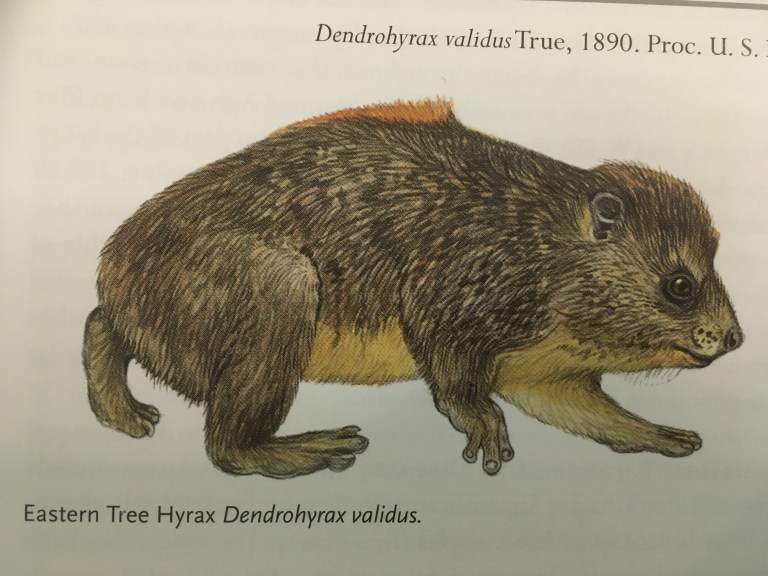
Eastern tree hyrax (Dendrohyrax validus) drawing from Mammals of Africa (Kingdon 2013).
“Taita tree hyrax desperately needs taxonomic identification and conservation”
Cordeiro, Norbert J., Nathalie Seddon, David R. Capper, Jonathan M. M. Ekstrom, Kim M. Howell, Isabel S. Isherwood, Charles A. M. Msuya, et al. 2005. “NOTES ON THE ECOLOGY AND STATUS OF SOME FOREST MAMMALS IN FOUR EASTERN ARC MOUNTAINS, TANZANIA.” Journal of East African Natural History 94 (1): 175–89. https://doi.org/10.2982/0012-8317(2005)94%5B175:NOTEAS%5D2.0.CO;2.
IUCN. 2013. “Dendrohyrax Arboreus: Butynski, T., Hoeck, H. & de Jong, Y.A.: The IUCN Red List of Threatened Species 2015: E.T6409A21282806.” International Union for Conservation of Nature. https://doi.org/10.2305/IUCN.UK.2015-2.RLTS.T6409A21282806.en.
IUCN. 2014. “Dendrohyrax Validus: Hoeck, H., Rovero, F., Cordeiro, N., Butynski, T., Perkin, A. & Jones, T.: The IUCN Red List of Threatened Species 2015: E.T136599A21288090.” International Union for Conservation of Nature. https://doi.org/10.2305/IUCN.UK.2015-2.RLTS.T136599A21288090.en.
Kingdon, Jonathan, ed. 2013. Mammals of Africa. Vol. 1: Introductory Chapters and Afrotheria. London: Bloomsbury.
Roberts, Diana. 2001. “GEOGRAPHIC VARIATION IN THE LOUDCALLS OF TREE HYRAX – DENDROHYRAX VALIDUS (TRUE 1890) – IN THE EASTERN ARC MOUNTAINS, EAST AFRICA: TAXONOMIC AND CONSERVATION IMPLICATIONS.” UNIVERSITY OF READING.
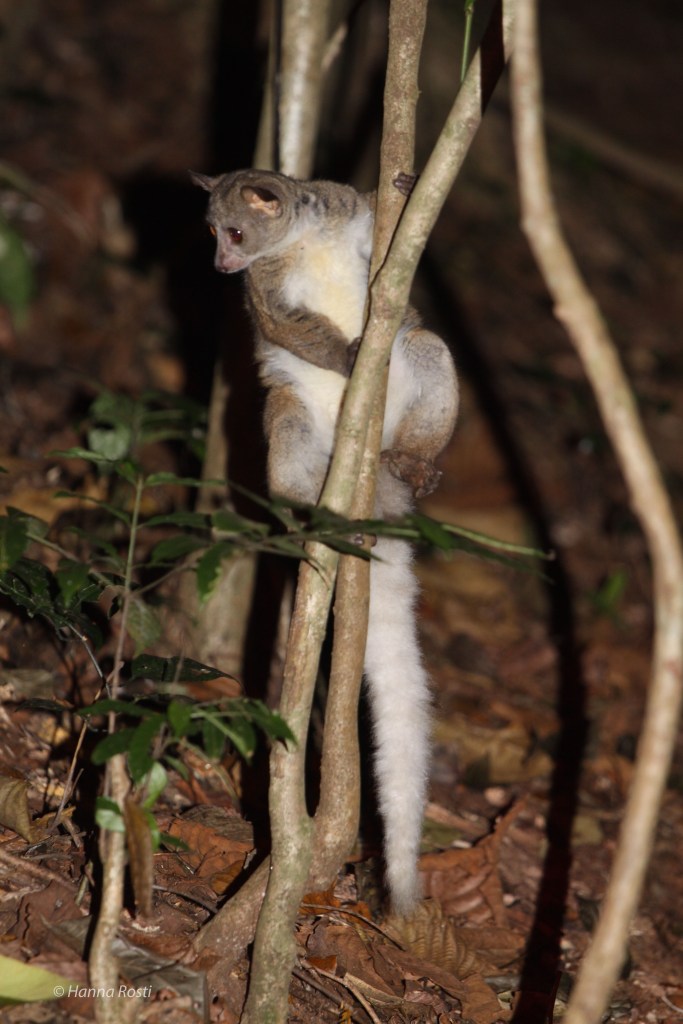
In Taita Hills there is small primate species that was first seen in 2002 and then no observations were made until 2018. In 2023 we failed to find it from Ngangao forest.
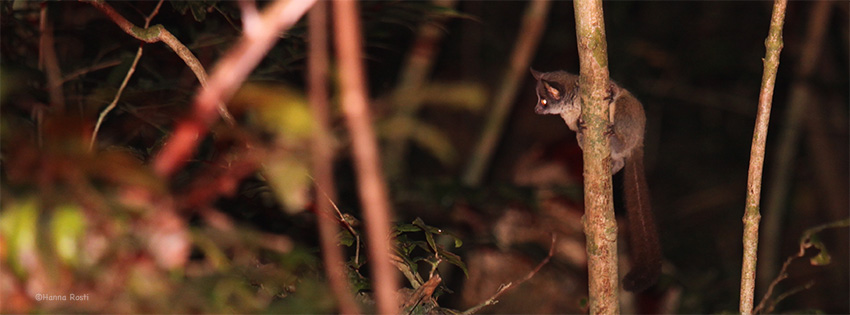
Dwarf galagos hunt insects by jumping from small tree to another like its relatives makis in Madagascar. Photo Rosti 2019.
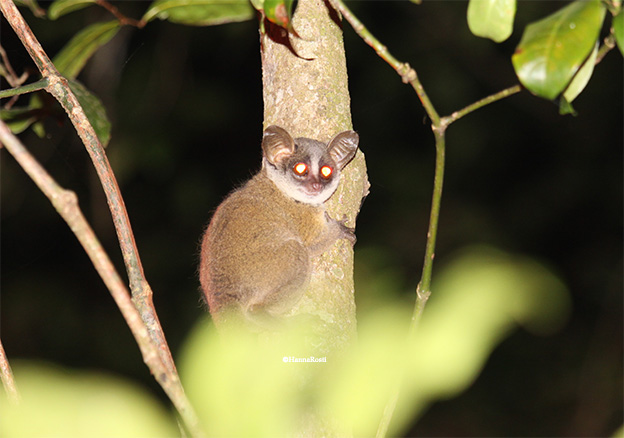
This tiny -only 100-180 grams weighing dwarf galago eats insects in the hearts of most pristine parts of indigenous forests.
Oryx – the International Journal of Conservation published 11.2020 conservation news about Taita mountain dwarf galago: Taita mountain dwarf galago is extant in Taita Hills of Kenya https://doi.org/10.1017/S003060531900142X
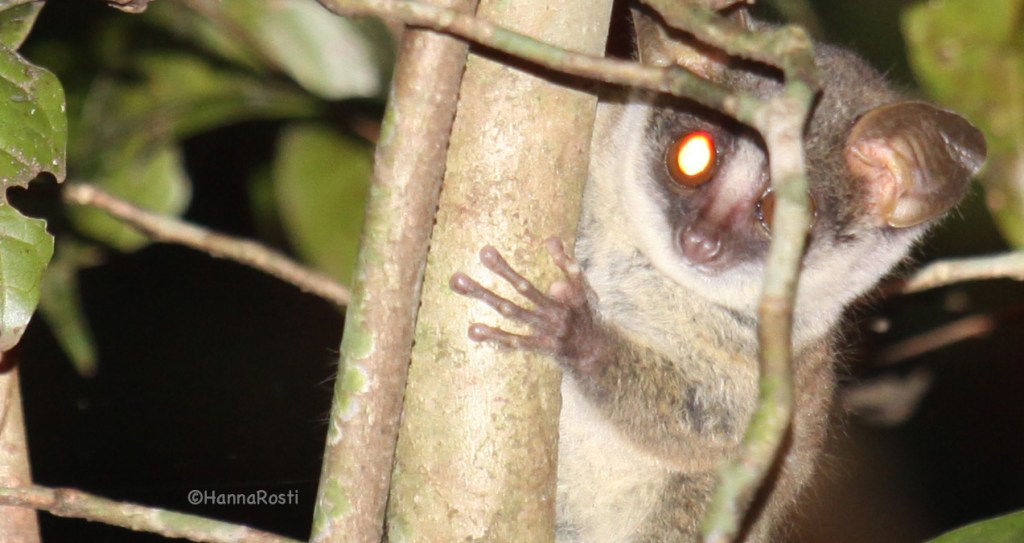
Cryptic dwarf galagos have intriguing hand morphology. Photo Rosti 2019.
Researcher from Nocturnal Primates Research Group identified calls of Taita mountain dwarf galago as Kenya Coast Dwarf Galago (Paragalago cocos). However these populations have been isolated for millions of years and live in completely different habitat. At the coast forest is low and temperatures high, in the mountains forest is high and temperatures low. All tree species are different between these forests. It seems that dwarf galagos in Taita Hills are relict population of once wider distribution of Kenya coast dwarf galagos.
Dwarf galago species are cryptic, meaning that they all look almost the same. Their vocal communication reveals the species, in the darkness of the forest, vocal communication is most important means of communication.
There is urgent need for conservation of forests and replanting of indigenous trees in Taita Hills.
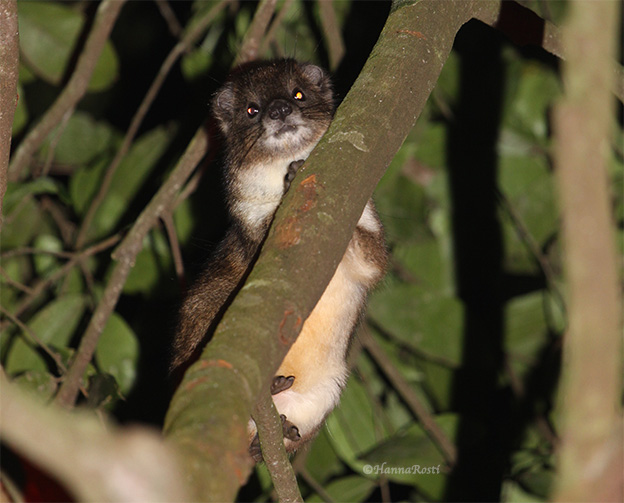
Tree hyraxes of Taita Hills are new species for the science
This is first picture ever taken from Taita tree hyrax. They are highly vocal, but difficult to find. Photo Rosti 2019
Tree hyraxes of Taita Hills should be conserved as Critically Endangered species
Both species are dependent of indigenous trees as their habitat. Dwarf galagos eat insects and tree hyraxes eat leaves of indigenous trees. Both are dependent on tree cavities for daytime shelter.
How these species were found
Mysterious cryptic dwarf galagos was mentioned first in article in Journal of East African Natural History 91: 1–13 (2002) by Andrew Perkin, Thomas Butynski, Simon Bearder, Bernard Agwanda and Benny Bytebier 2002. Nothing happened after the article and nobody knew if this species existed any more.
Taita Hills research station has been the base of the research. Director of research station and professor of Helsinki University Petri Pellikka has contributed enormously to this research even before the beginning.
Professor from University of Helsinki, Jouko Rikkinen told me about this species, as he had been intrigued by it and its survival for years. Professor Rikkinen has been studying biodiversity of Taita Hills since 2009. Knowledge and insights of Jouko Rikkinen has been backbone of this research.
In August 2018 I began searching for these small primates, as no-one knew about their fate. My assistant in the forest was and still is Benson Mwakachola. He has been reliable and supportive companion in sometimes challenging conditions.
After search for several nights, we got super lucky and tiny animal with reddish eyes were looking at us in just few meters away. This dwarf galago seemed interested about us. And we were so happy to see it.
Emeritus professor Simon Bearder from Oxford Brookes University has contributed in many ways as he is expert on nocturnal mammals and primatology. Simon had been one of writers of first article about Taita mountain dwarf galago in 2002.
From the recordings Simon Bearder, who has 40 years of experience from nocturnal animal research in Africa, understood that tree hyrax in Taita Hills is different species than it had been thought to be.
News in Daily Mail: Adorable 3.5OUNCE African primate the Taita mountain dwarf galago is caught on camera for the first time in nearly 20 years as the species faces extinction
Most people who see hyraxes in Kenya or in Africa in general think that they are some sort of rodents, as they look like overgrown guinea pigs.
It is amazing that closest relatives to hyraxes are elephants!
Furry coat protects from cold temperature. Hyraxes have low body temperature. They rely on sun bathing to lift their body temperature. Grasses that they eat, are low nutrient food and hyraxes have several adaptations to allow them to cope with such low nutrient diet.
These animals are actually related to elephants and manatees. They belong to the and cohort Paenungulata – where also elephants, manatees and dugongs belong (Mammals of Africa 2013).
Strange appearance has lead to misleading name hyrax, which means “shrew mouse”. In South Africa they are called “dassie”, that is derived from Dutch word for badger, equally misleading.
In Hebrew hyraxes were known as shaphan, “meaning the hidden one”. As sailors came 3000 years ago to coast of Spain, they named it I-shaphan-im -Island of the Hyrax. As they saw many animals that they believed to be hyraxes. Animals were actually rabbits.
So country Spain derives its name from misunderstanding, it is named after animals that have never been there. Hyraxes are endemic to Africa.
More than 25 million years ago, there where many more species and hyraxes where largest group of medium sized herbivores. Now there are only three geniuses left and these are living in harsh conditions where competition from other herbivores is minimal.
Three genera of hyraxes:
Procavia – rock hyraxes
Heterohyrax – bush hyraxes
Dendrohyrax – tree hyraxes
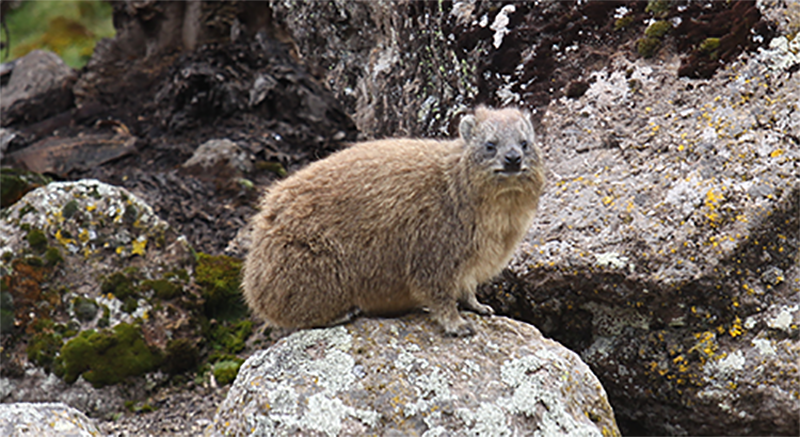
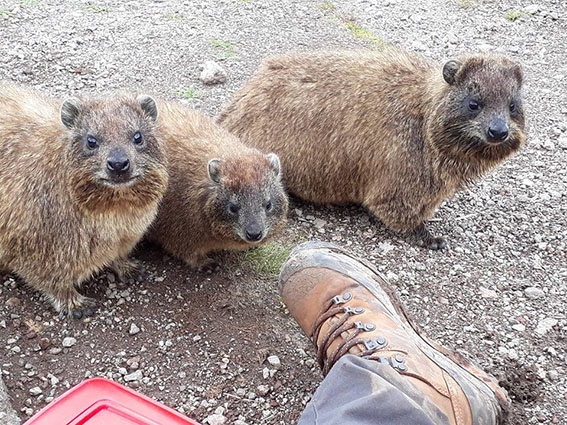
In Mt Kenya, and also in some other places, rock hyraxes are getting used to people and hang around in hope of food
Incredible features of hyraxes
Hyraxes have tree toes, these cute soft toes are sausage like. Teeth of hyraxes are weird for small animals, resembling rhinos or horses. Upper incisors are tusk-like, larger in males than in females (Hoeck). These tusks remind of their large distant relatives, elephants.
Hyraxes have low body temperature, and they use sunshine to rise their body temperature. Hyraxes conserve energy by having low body temperature, getting warm in the sun and resting a lot. They are dependent on cavities of rock or trees for shelter to stay warm. Hyraxes have internal testes, as lower body temperature allows testes to remain inside the body.
The eye of rock hyrax has shield called “umbraculum” that allows them to stare at the sun. Perhaps this adaptation allows them to see attacks of eagles, as animals are exposed when they are basking in the sun.
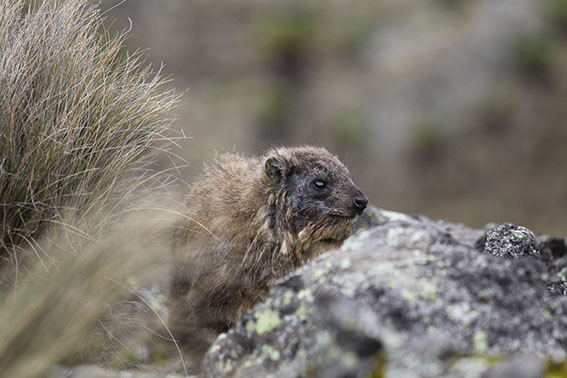
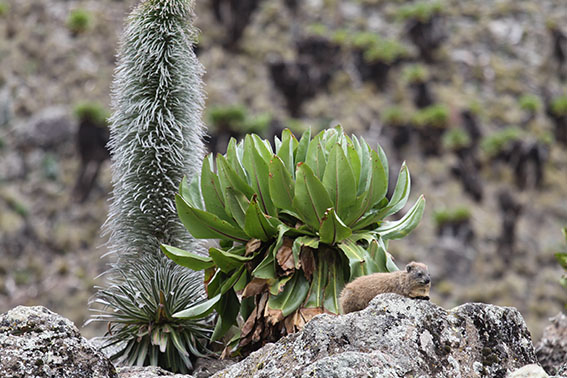
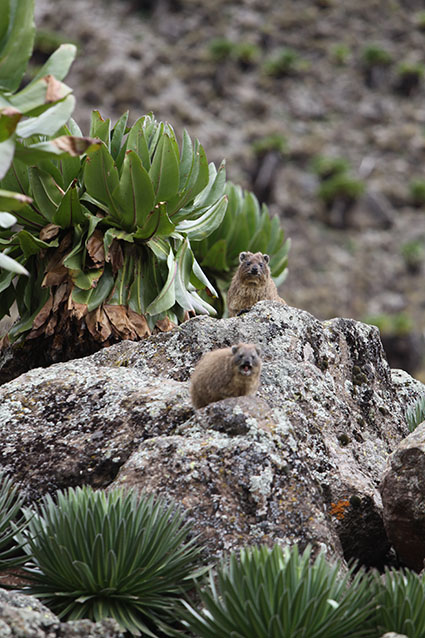
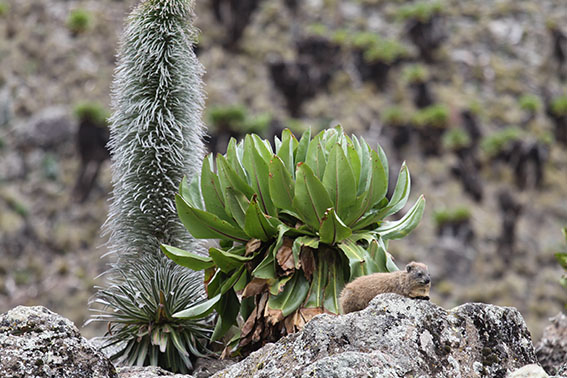
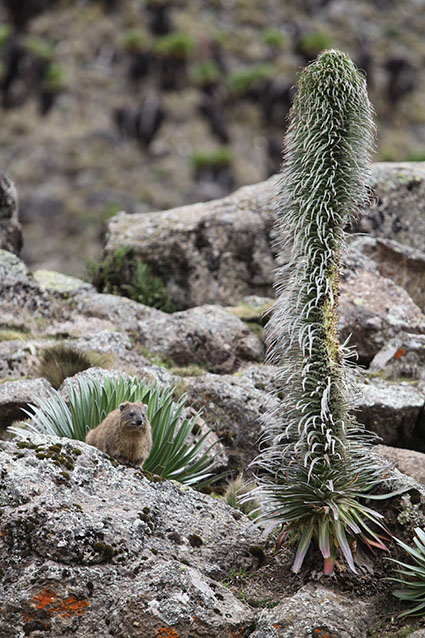
In Mt Kenya Senecio plant (in front) and Giant lobelia (behind) are largest plants. Hyraxes are living on small grasses. Their slow metabolic rate and capability to gather heat from the sun, allows them to live in such hard conditions.
Rock hyrax eats grasses. Hyraxes do not ruminate, but their ability to digest fibers is just as efficient. Morphology of digestive system is complex and unique to hyraxes. Efficient kidneys allow them to survive with minimal water intake.
Animal with cuts in the cheek. Grasses on the left are their diet in Mt Kenya.
Hyraxes have long vibrissae (tactile hairs) distributed around their bodies. Probably helping them to orient in rock holes or in the darkness of the forest canopy, with tree hyraxes.
Rock hyraxes are diurnal, group living animals. Main communication method for rock hyraxes is vocal communication. Complex vocal communication include songs that male sing to attract mates (Koren & Geffren 2009).
Sources and additional reading:
Demartsev, Vlad, Arik Kershenbaum, Amiyaal Ilany, Adi Barocas, Einat Bar Ziv, Lee Koren, and Eli Geffen. 2014. “Male Hyraxes Increase Song Complexity and Duration in the Presence of Alert Individuals.” Behavioral Ecology 25 (6): 1451–58. https://doi.org/10.1093/beheco/aru155.
Ilany, Amiyaal, Adi Barocas, Michael Kam, Tchia Ilany, and Eli Geffen. 2013. “The Energy Cost of Singing in Wild Rock Hyrax Males: Evidence for an Index Signal.” Animal Behaviour 85 (5): 995–1001. https://doi.org/10.1016/j.anbehav.2013.02.023.
Kershenbaum, Arik, Amiyaal Ilany, Leon Blaustein, and Eli Geffen. 2012. “Syntactic Structure and Geographical Dialects in the Songs of Male Rock Hyraxes.” Proceedings of the Royal Society B: Biological Sciences 279 (1740): 2974–81. https://doi.org/10.1098/rspb.2012.0322.
Kingdon, Jonathan, ed. 2013. Mammals of Africa. Vol. 1: Introductory Chapters and Afrotheria. London: Bloomsbury.
Koren, Lee, and Eli Geffen. 2009. “Complex Call in Male Rock Hyrax (Procavia Capensis): A Multi-Information Distributing Channel.” Behavioral Ecology and Sociobiology 63 (4): 581–90. https://doi.org/10.1007/s00265-008-0693-2.
Weissman, Yishai A, Vlad Demartsev, Amiyaal Ilany, Adi Barocas, Einat Bar-Ziv, Inbar Shnitzer, Eli Geffen, and Lee Koren. 2019. “Acoustic Stability in Hyrax Snorts: Vocal Tightrope-Walkers or Wrathful Verbal Assailants?” Behavioral Ecology 30 (1): 223–30. https://doi.org/10.1093/beheco/ary141.
Mt Kenya is amazingly beautiful mountain with incredible plant fauna. There are several routes to choose from, so climber can ascend and descend from different directions.
I had always been fascinated by walking up the mountain, as you can basically walk from Equator to the North Pole, and see all different vegetation zones from forest to the glacier in few days.
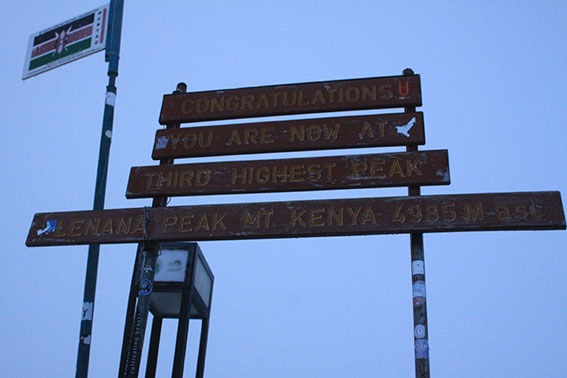
Highest peak, that can be reached without climbing gear is Point Lenana 4985 meters. This takes five days when leaving from Nairobi. It can be made faster, but this beautiful mountain deserves the time and you are less likely to have altitude issues.
I walked up the mountain using Sirimon and descended using Chogoria route. This is described as most beautiful route, and I can really verify that.
I climbed Mt Kenya in March 2018. It was during short rainy season. I was lucky, there was no rain when I was on the mountain.
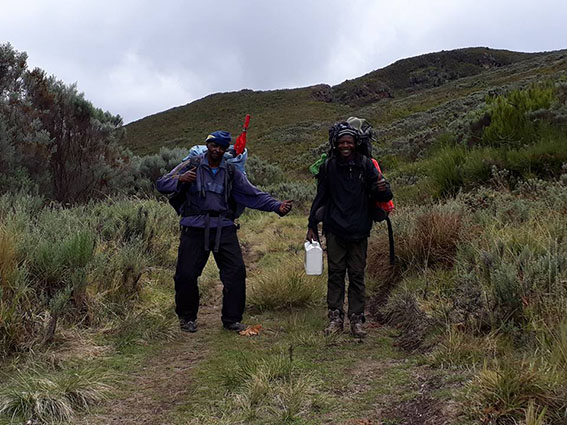
I made my booking through Gracepatt Ecotours Kenya. I had my own two guides with me Martin and Charles.
I met few climbers in the huts, so I had company during evenings. But during the days I had the mountain for myself. It was special five day meditative experience.
Meals that are prepared in the mountain put whole new standard on camp cooking! For me, and for also other travelers chefs we’re preparing full meals with soup as appetizer, main course, and deserts. It was simply delicious. Food in Mt Kenya is excellent. I had no idea that such gorgeous meals can even be cooked in so simple and basic settings.
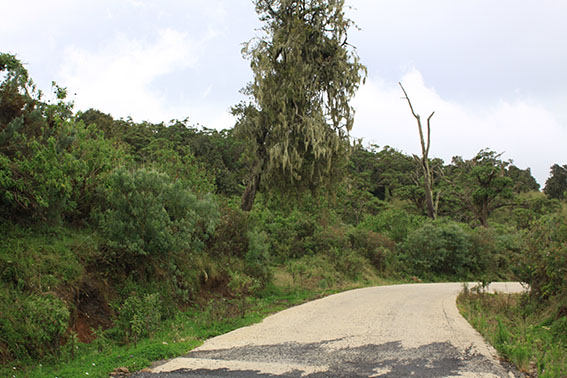
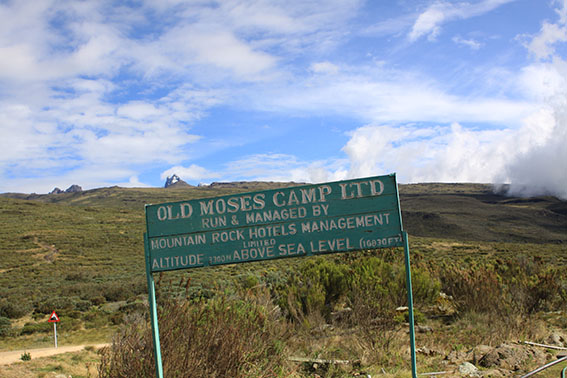
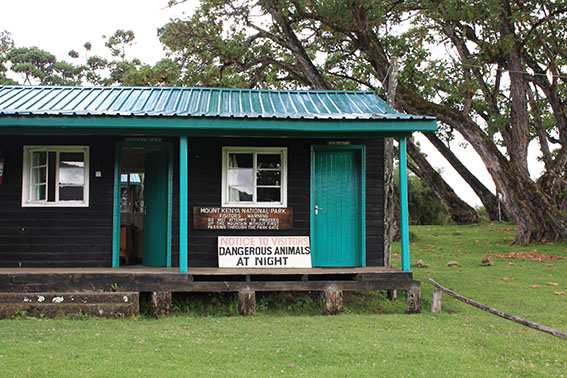
First day hike is by using tarmac road, that leads from Mt Kenya National Park Gate to Old Moses Camp. It is just about three hour hike.
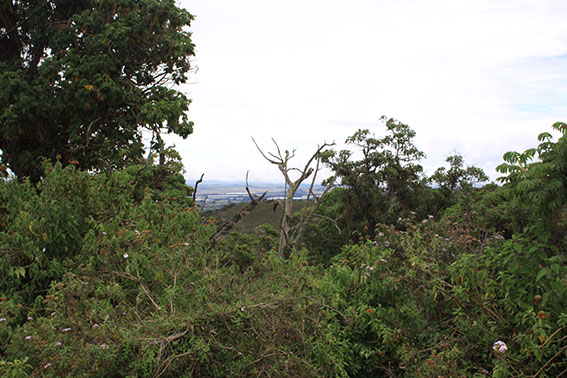
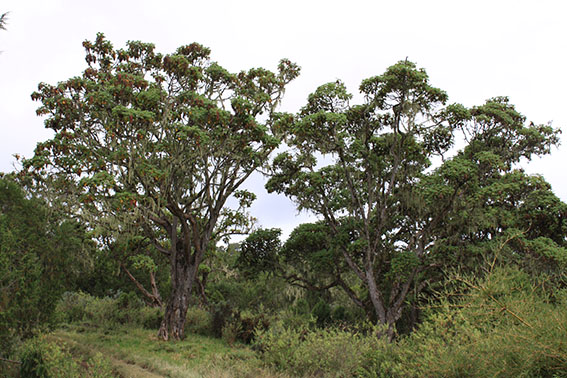
Walk begins with beautiful montane forest, continues in bamboo forest and changes again to giant heather.
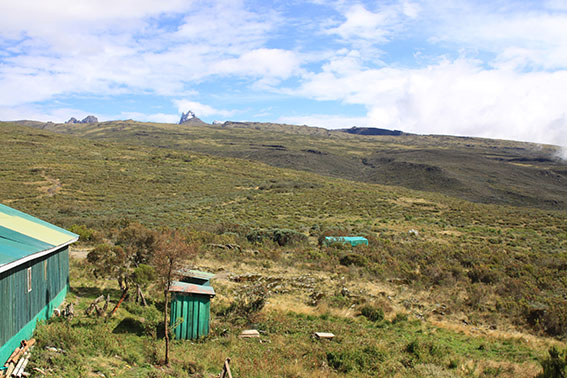
Photos from Tarmac road on the way to Old Moses Camp
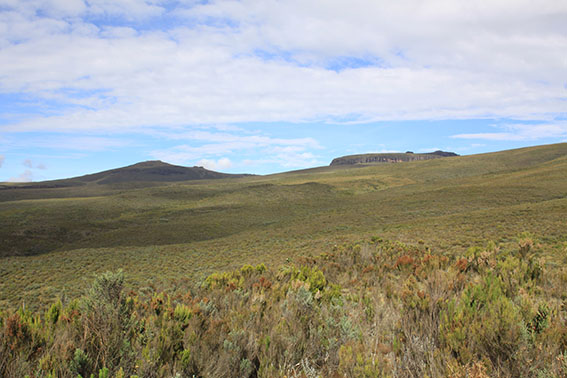
Photographs from Old Moses Camp, it almost looks like Scotland.
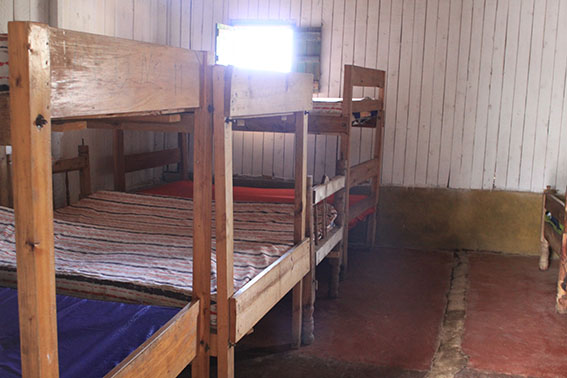
Old Moses Camp is basic camp with bunkbeds. There I met Mohammed from Jordania, who had just missed the peak as his guide had malaria fever episode, and he had to carry him down. Mohammed also gave me some tips how to adjust to make climb as easy as possible. Here they are:
As you reach your destination for the day, have a short brake, but then move on little more. Walk maybe 200-500 even further, stay there for half an hour and come back. It tells your body in advance what it has to prepare for.
Also, there is no electricity in the mountain. Using airplane mode in the phone saves battery. Mohammed actually gave more battery for me, as my phone was already going down on first day.
Old Moses camp is already above the clouds
Ascend to Shiptons camp is amazingly beautiful as vegetation in Mt Kenya is incredibly beautiful.
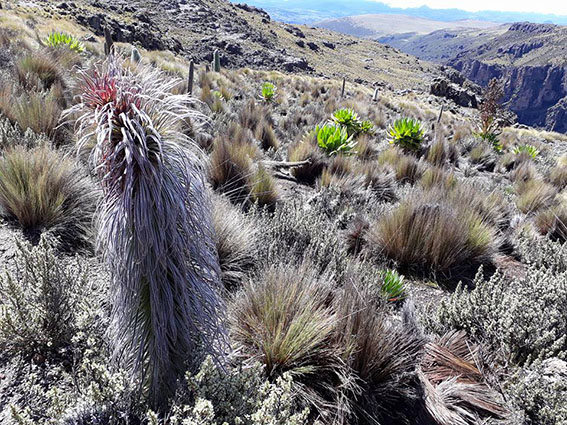
Endemic Giant Lobelia “ostrich plume plant” is only found from Mt Kenya. “Hairs” are needed for insulation to protect the flowers and the plant itself. Another strange looking plant is Senecio in the background.
Shipton Camp is basic camp to stay for additional day for adaptation to higher altitude.
In Shiptons Camp, and also elsewhere in the mountain there are groups of rock hyraxes (Procavia capensis). Hyraxes are incredible animals. Their closest relatives are elephants, they have three toes, internal testes, and teeth like rhinos. Hyrax communication is extremely variable and many climbers have been startled by their “ear splitting” screams, coming from just a meter away behind the rocks.
Having lunch with hyraxes. This time I had no idea, that later in life I would do PhD of tree hyraxes. There is whole post about hyraxes in Mt Kenya.
Rock hyrax, Senecio and Giant Lobelia.
I was there in March, during rainy season, there was no rain, however it was really cold. Temperature was close to zero during the day and bellow zero during the night. I mostly stayed in my winter sleeping bag. I was sitting in the sleeping bag during dinner. My guides were so cold they could not sleep.
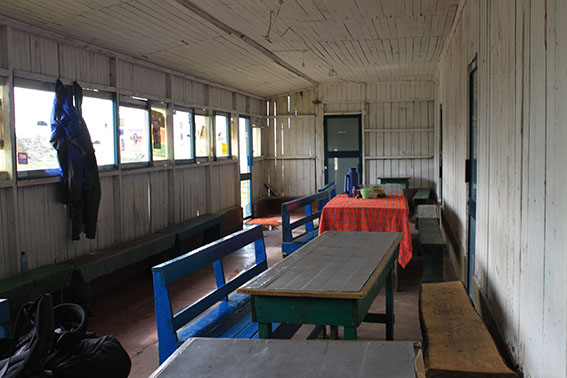
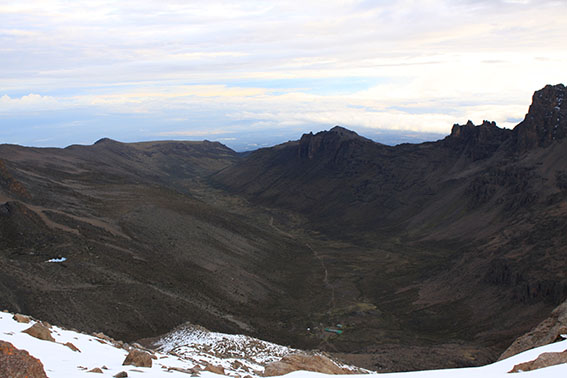
Shiptons Camp living room and view to Shiptons Camp from Point Lenana path.
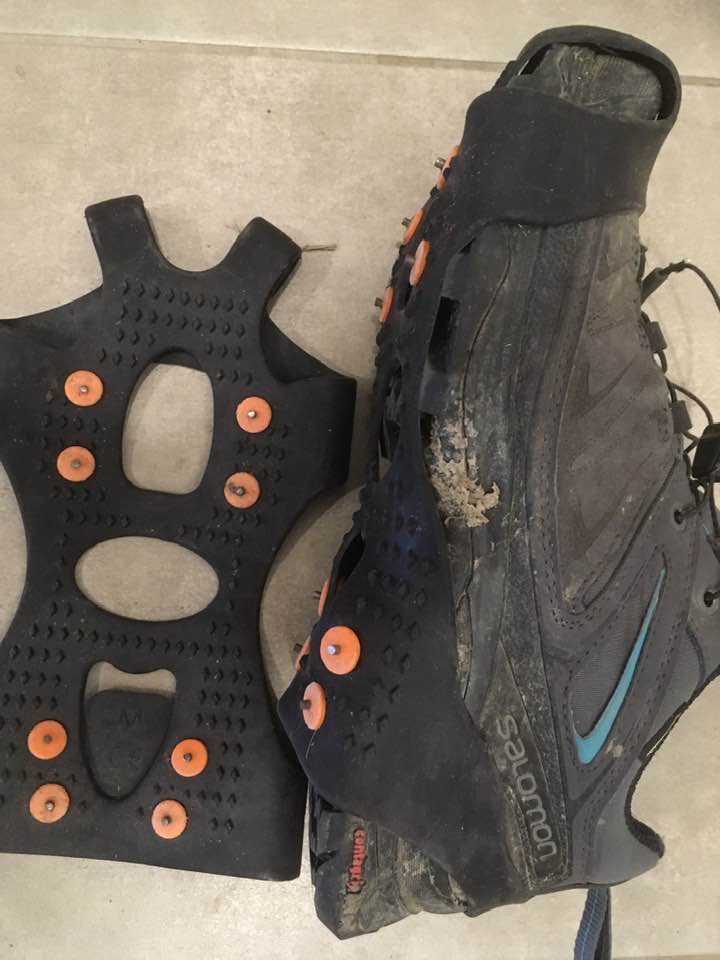
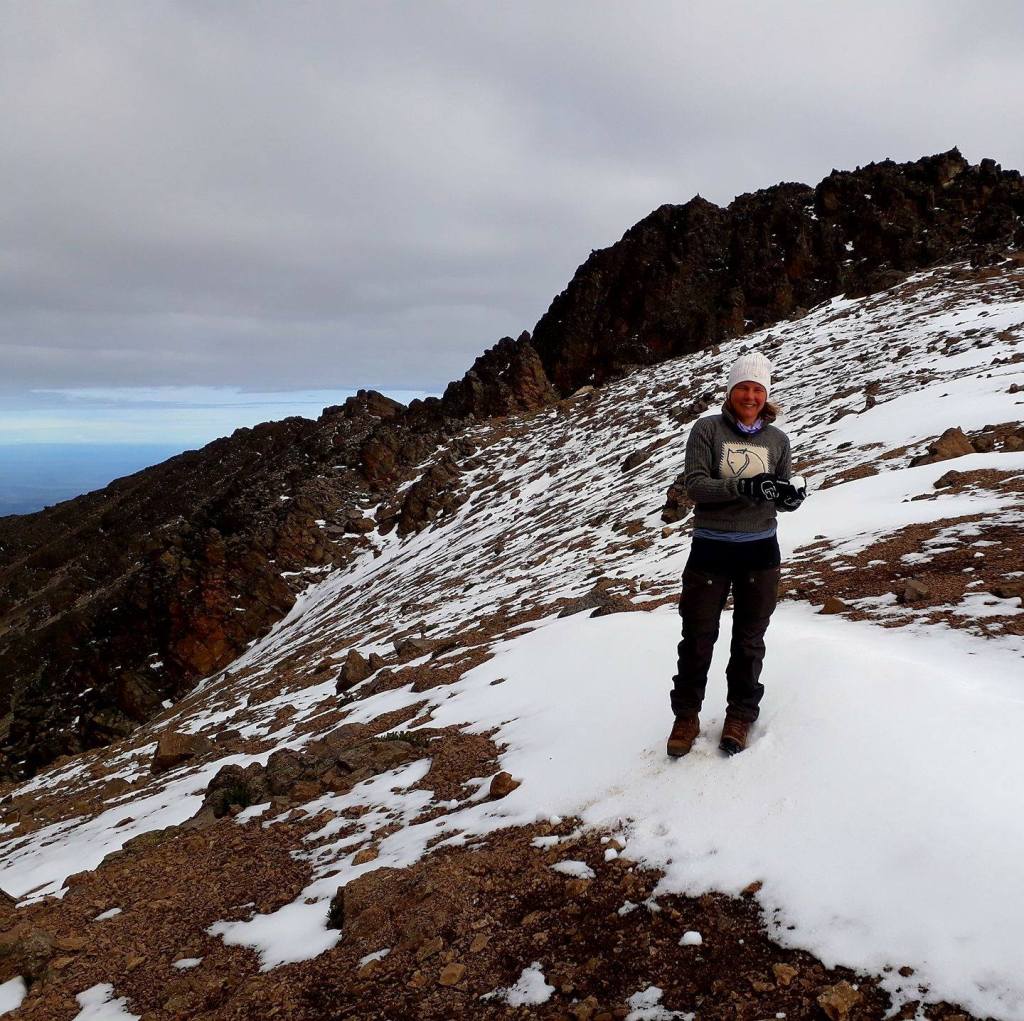
Ascent to Point Lenana takes few hours from Shiptons camp. Closer to the peak path becomes icy. At that point I wished I had taken my grips for shoes with me. One slip, and there would have been zero chance of survival.
As I was up in March, peak of Point Lenana was icy. Walking to the top was dangerous, as there was only ice, and nothing to hold on. One slip, and the fall would have been hundreds of meters. Simple spikes, the ones that can just be put on top of the shoe would have been great solution.
There were people who were not able to reach the top because of altitude symptoms. Some of them were very fit young men. I guess you can do best you can to help your body to adapt and then just hope it is enough. For me this was just a long walk, my body was just fine.
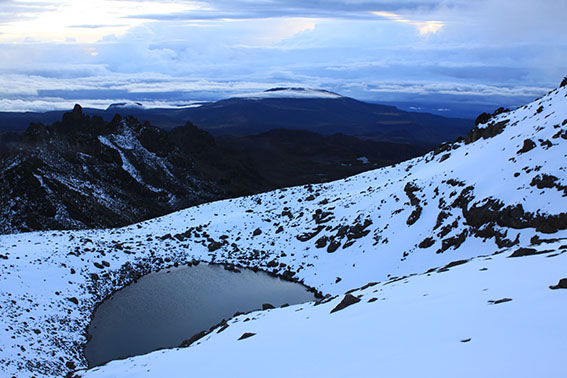
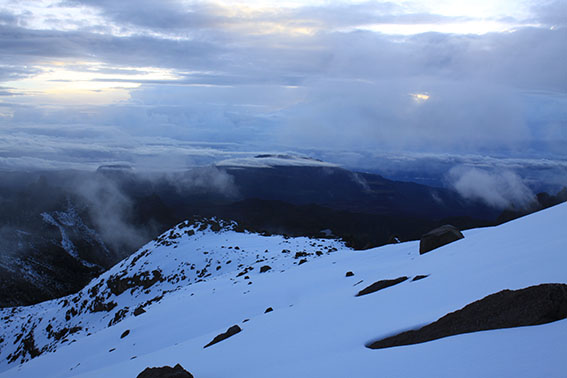
I was not lucky to see the sun set as it was cloudy. But when I began descending to the other side of the mountain clouds cleared and I had most beautiful walk of my entire life.
Going down from Point Lenana up to Mt Kenya Bandas is a long walk, about 28 kilometers. But as you are going down and view is all the time spectacular, it is a gorgeous day.
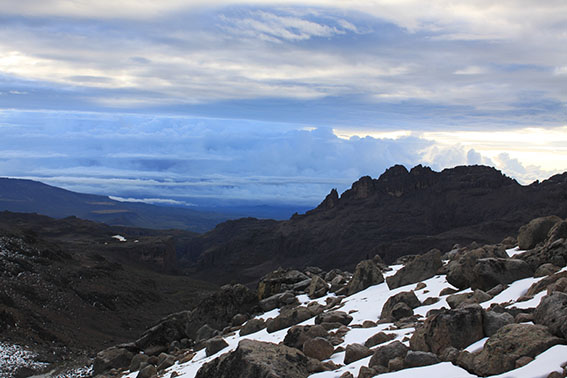
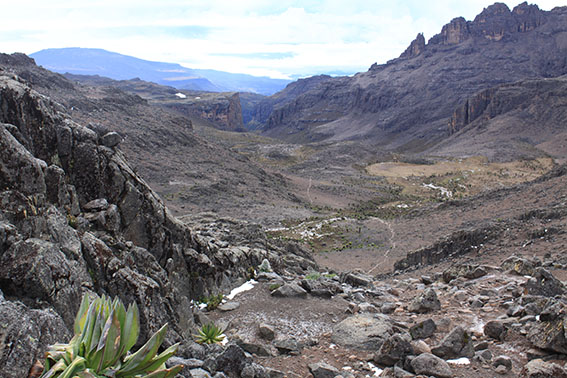
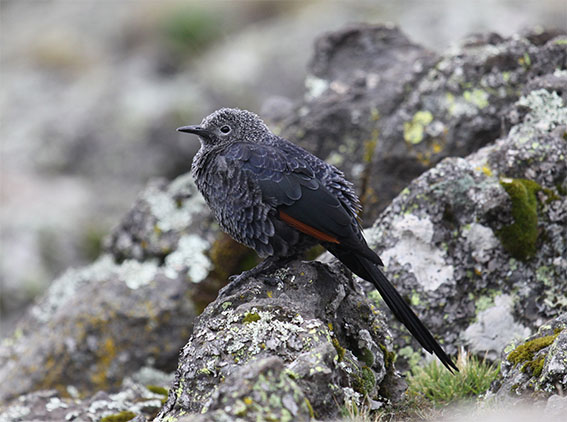
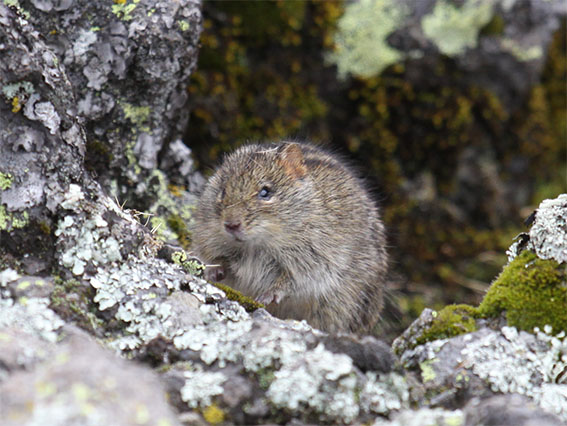
Animals from the way down
As day passes, scenery changes back to giant heather.
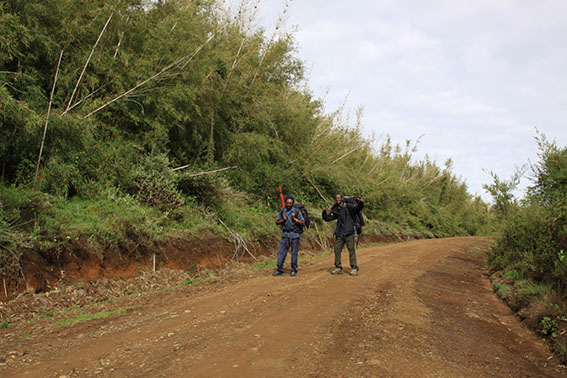
Then heather is behind and bamboo forest is around, and now you are back walking on the road that eventually leads to Mt Kenya Bandas.
My guide Charles and chef Martin Njure Kinyua. They took excellent care for me. They both enjoyed greatly their work going up and down Mt Kenya. It certainly would keep anyone lean and strong.
Mt Kenya bandas have very nice cabins and even hot shower! It is water warmed in barrel with wood.
Surroundings of Mt Kenya Bandas have a lot of wildlife, so keep your eyes open for sweet kudus.
Getting adapted to higher climate before heading up to the peak.
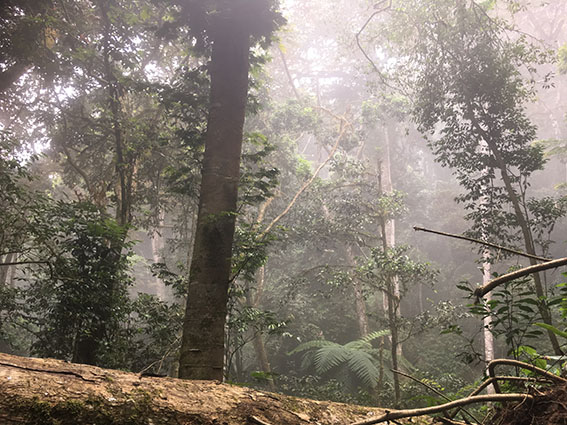
Mt Kasigau is one of Eastern Arc Mountains, belonging to world HOT SPOT areas of biodiversity. Indigenous forest that covers Mt Kasigau is amazing and mysterious remnant of forests that have been almost cleared.
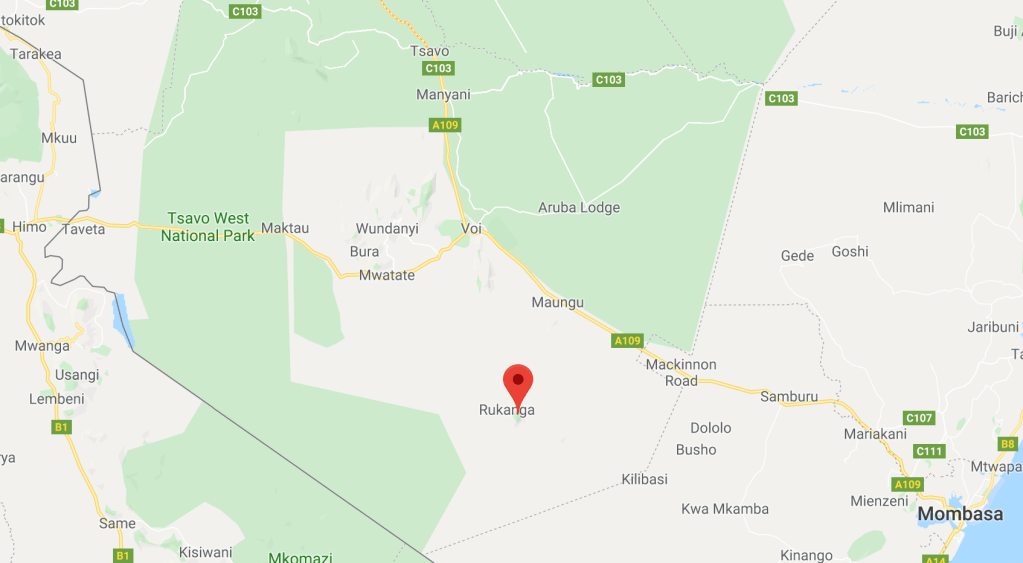
Mt Kasigau is located in Taita, about 45 min drive from Voi.
I have visited Mt Kasigau with plant biology course and later I came back to camp in Mt Kasigau Base Camp for three days. About 1600 meters high Mt Kasigau is easily walkable day-trip with good paths. It takes about 2,5 hours to reach the indigenous forest. It is strenuous hike under African sun with beautiful views. Wide path to follow begins close to Rukanga village and Mt Kasigau Base Camp.
Best time to walk up is in the morning. During the day lower part of the mountain, where is no shade by the forest is extremely hot.
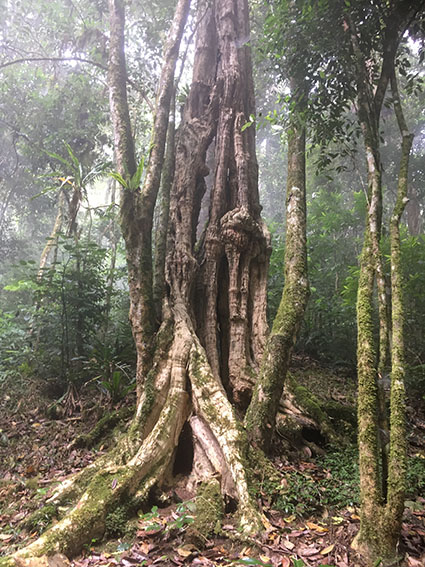
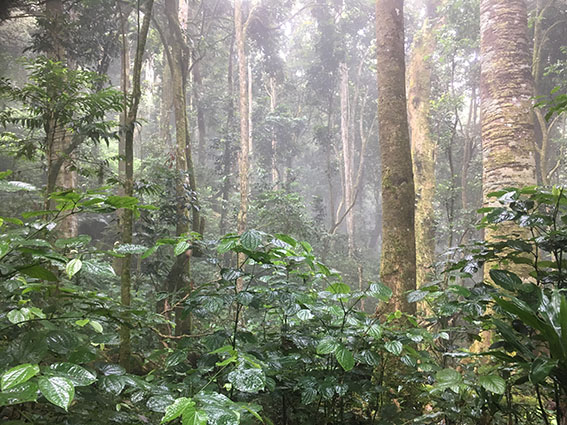
Indigenous forest is incredible mystical and beautiful.
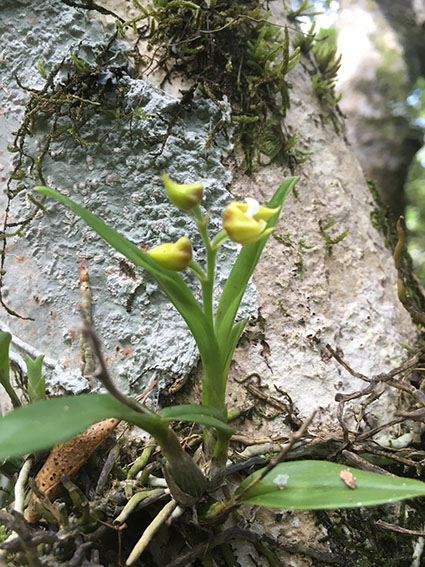
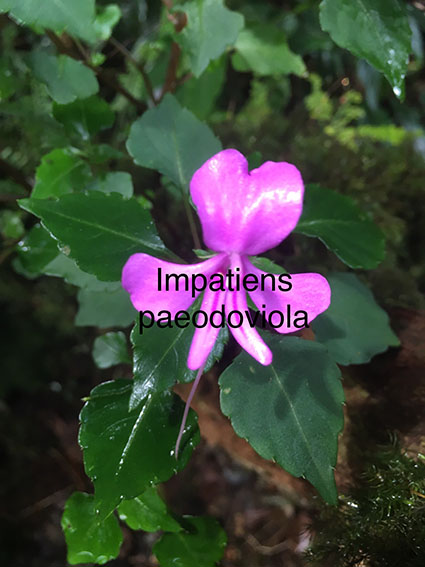
Forest of Mt Kasigau is incredibly diverse with endemic orchids and impatiens flowers.
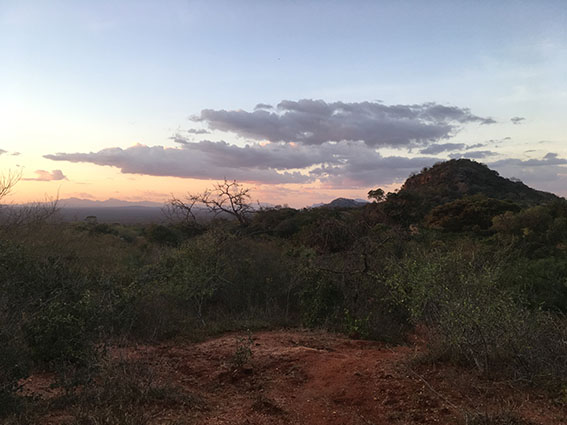
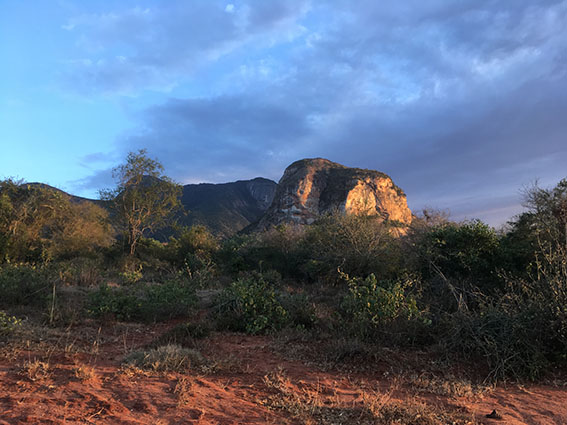
Views to Mt Kasigau and from Mt Kasigau are strikingly beautiful.
During WW1 German and Brittish troops were fighting in Mt Kasigau. There is memorial place on the mountain close to Jora village.
Memorial stone for soldiers who died in Mt Kasigau during WW1.
Mt Kasigau Base Camp has relaxing timeless atmosphere, and it is great place to stay when exploring Mt Kasigau and surroundings. Jackson, who works in Kasigau Base Camp can arrange everything. There are also climbing routes. I stayed in tent. I appreciate option to just close zipper and leave smaller animals outside.
Main kitchen area of Mt Kasigau base camp. There is no electricity, but it can be arranged from across the road. Skinny, mistreated dog is not from the camp, camp visitors are probably only ones that feed him occasionally.
I was there to look for nocturnal mammals. There was not much to be seen. I have discussed this with experienced researchers and conservationist. What we consider to be most likely reason, is that there was drier period sometime during the Pleistocene. This dry period was too much for some mammalian species, e.g dwarf galagos and tree hyraxes. As these species are poor to colonize new forest, they have not been able to return.
Some greater galagos (Otolemur garnettii) and rock hyrax live in Mt Kasiagau. I also heard that there is still one group of red colobus monkeys, but strikingly beautiful black colobus has been hunted until extinction.
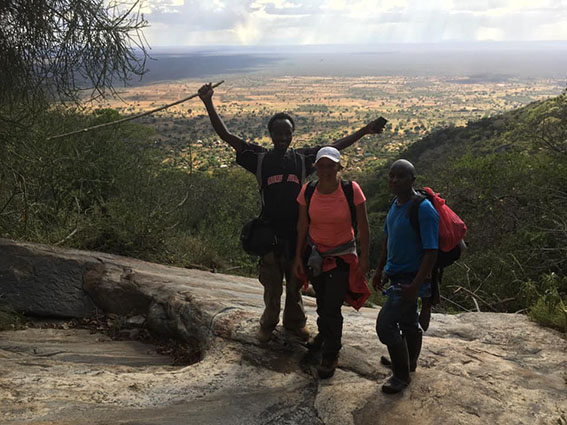
Large, dark, male greater galago in Mt Kasigau February 2019.Rechard Mwasi, me and Benson Mwakachola walking up from Jora, where path is much steeper in February 2019.Me and little dog taking a brake during the night February 2019.
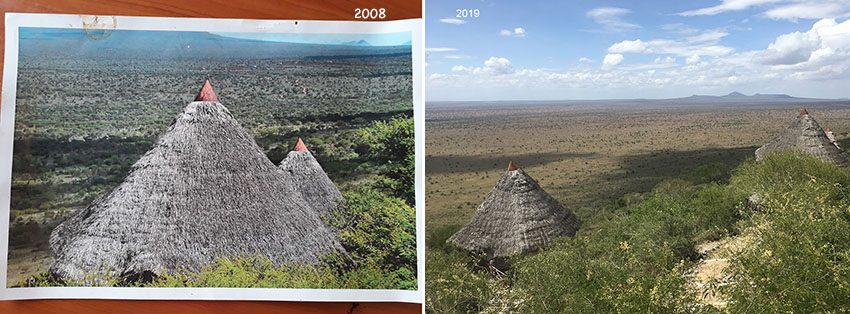
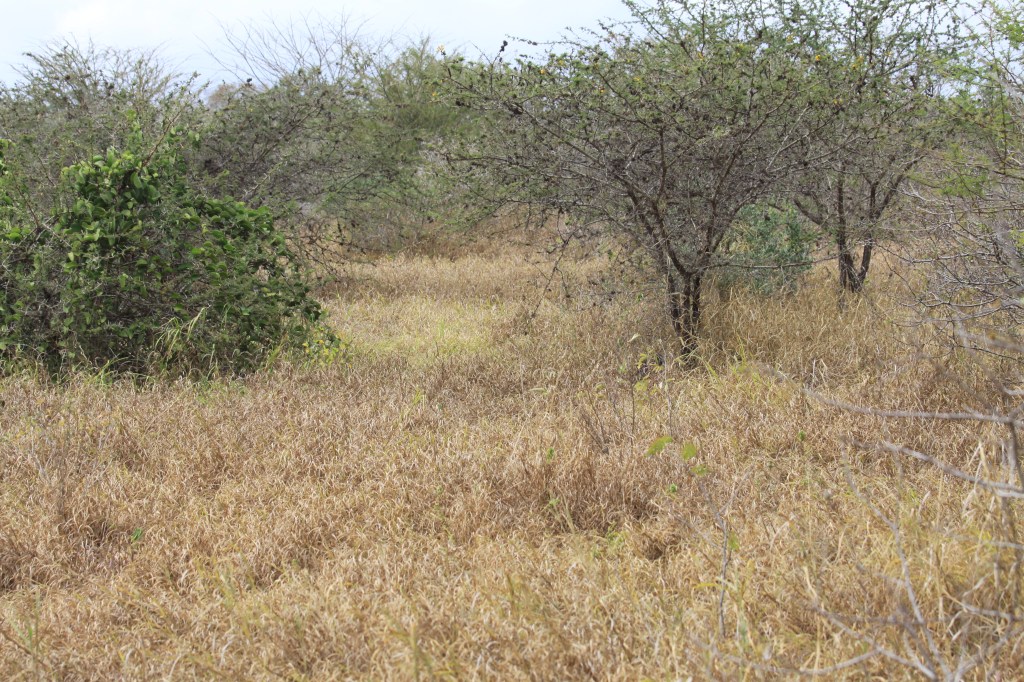
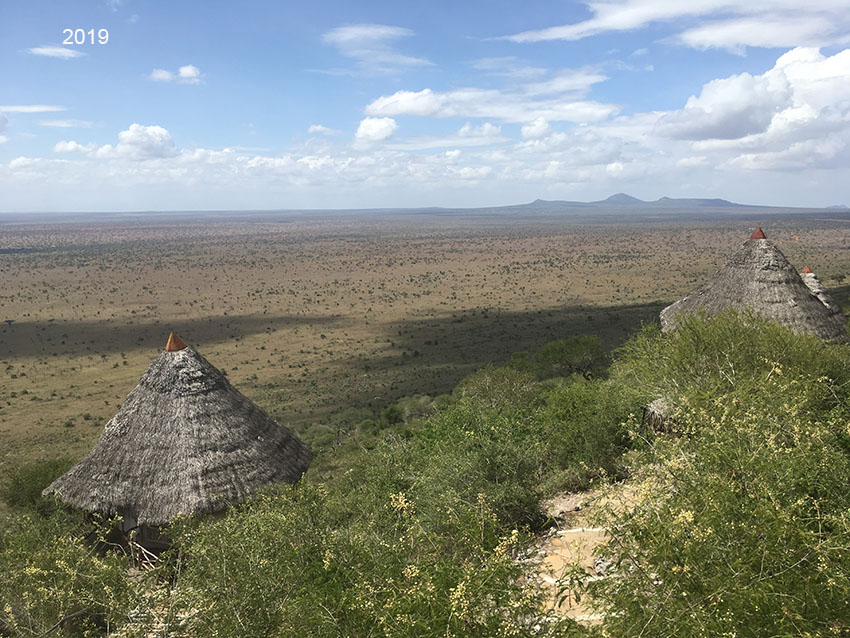
View to Lumo from Lions Bluff Hotel 2008 and 2019. Change in tree cover due to elephants is significant and leads to loss of biodiversity. Trees are habitats for many insects, birds need trees for nest sites and many herbivores are browsers during dry season.
Elephants in Tsavo and Lumo were severy poached, hunted for ivory for decades. Elephant poaching is less severe in many areas of Kenya at the moment, but it happens, as can be seen from orphan stories from Sheldric foundation. Drought and human wildlife conflict are also common reasons for baby elephant to be orphaned.
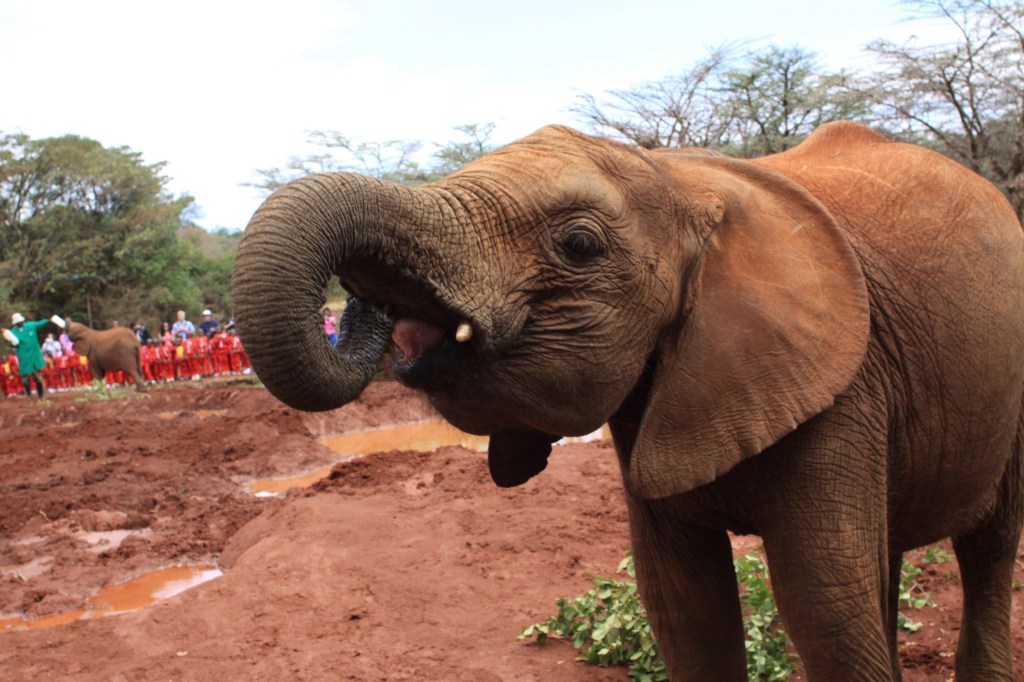
Baby orphan in Sheldrick elephant orphanage in Nairobi.
This article explains reasons behind worsening drought and human wildlife conflict in Taita area Kenya. What are consequences to the savanna, and also what could and should be done for protection of all species, humans, and local way of life.
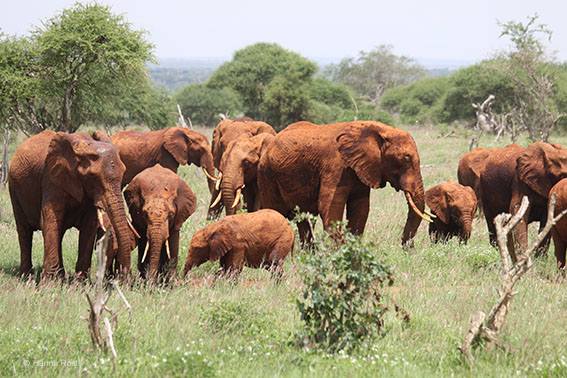
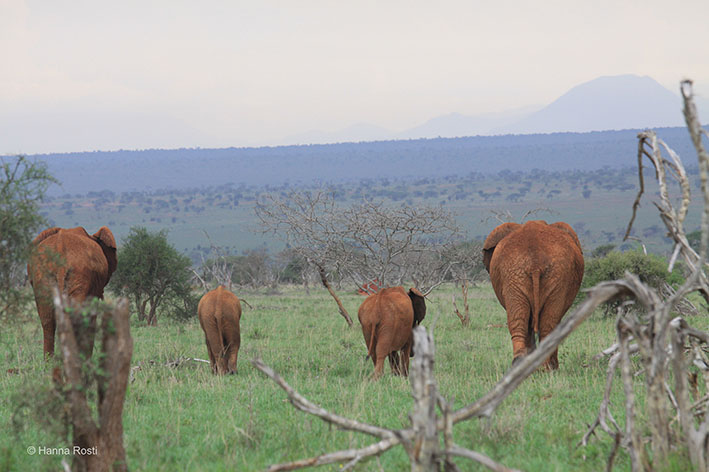
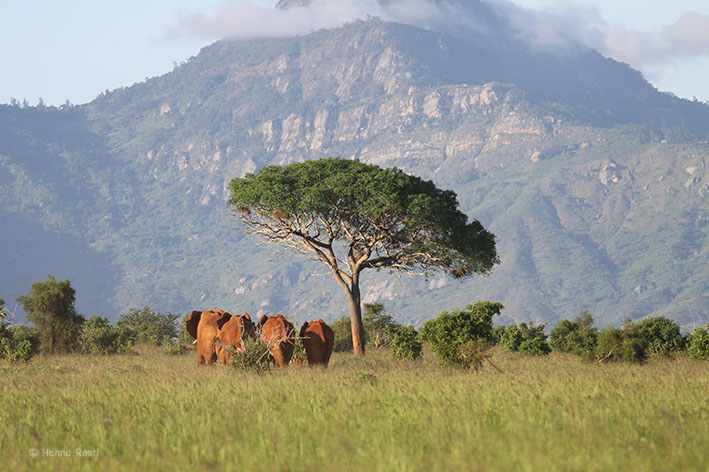
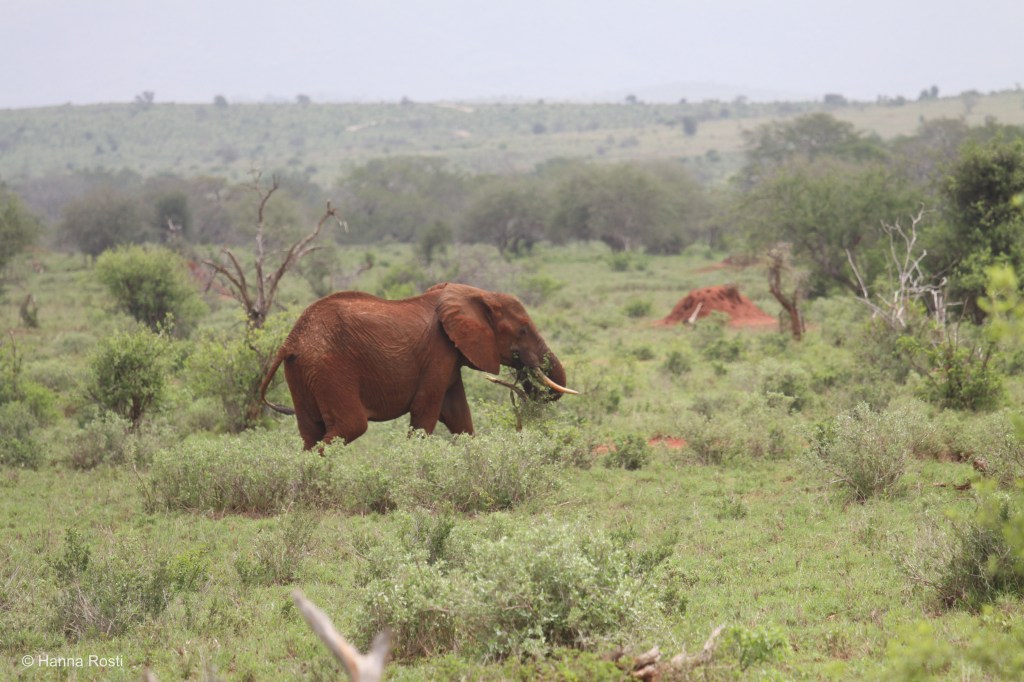
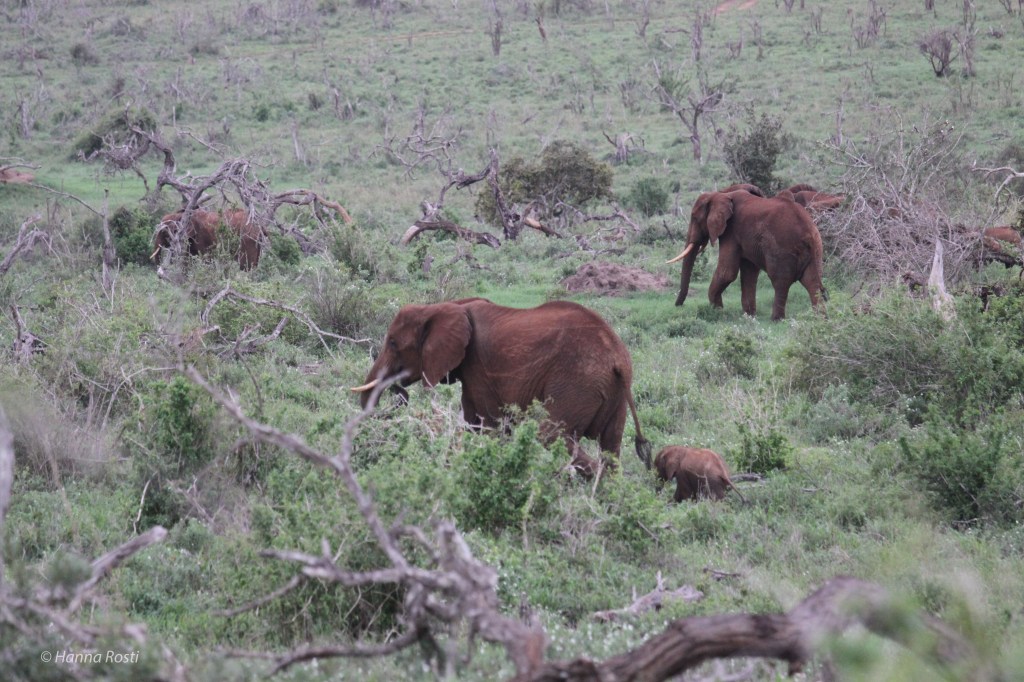
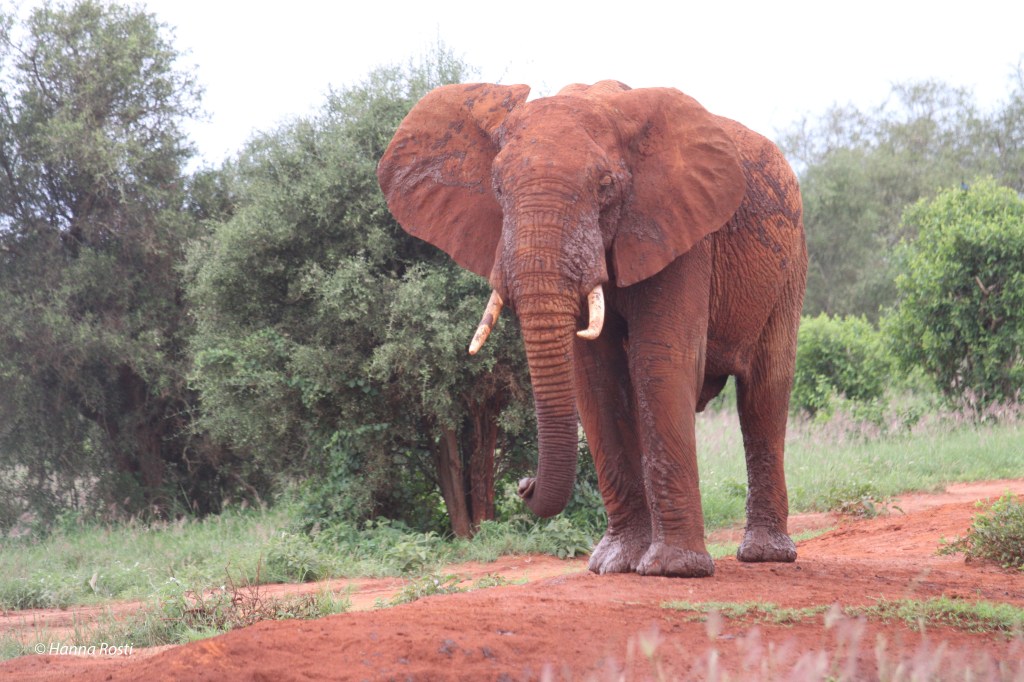
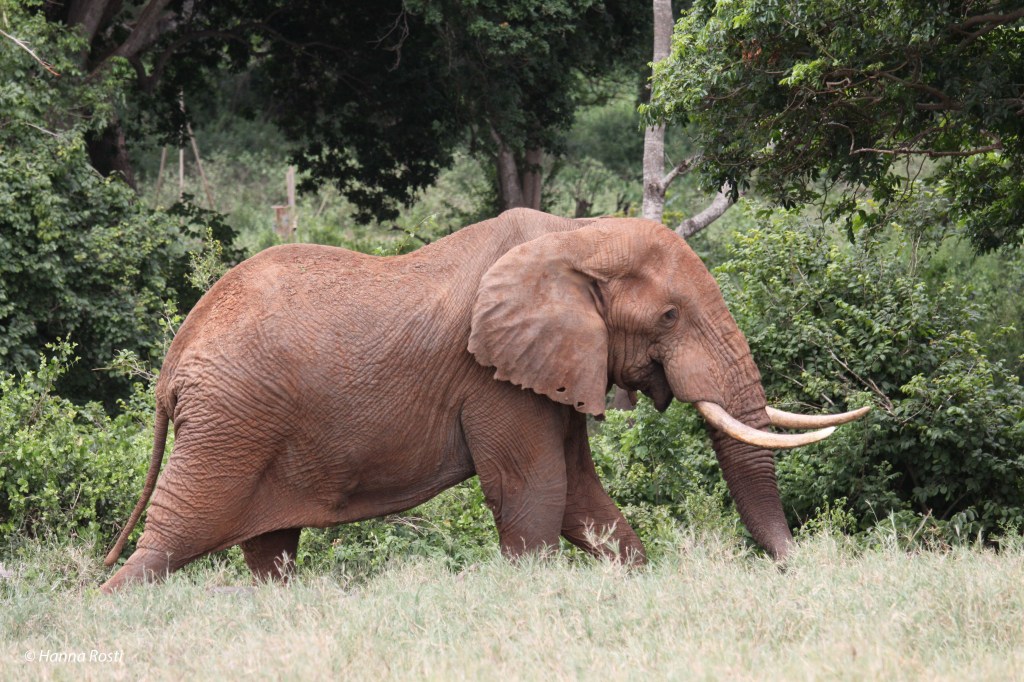
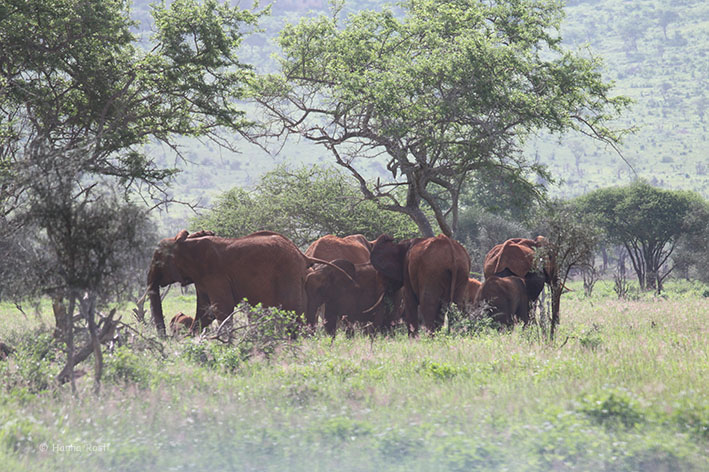
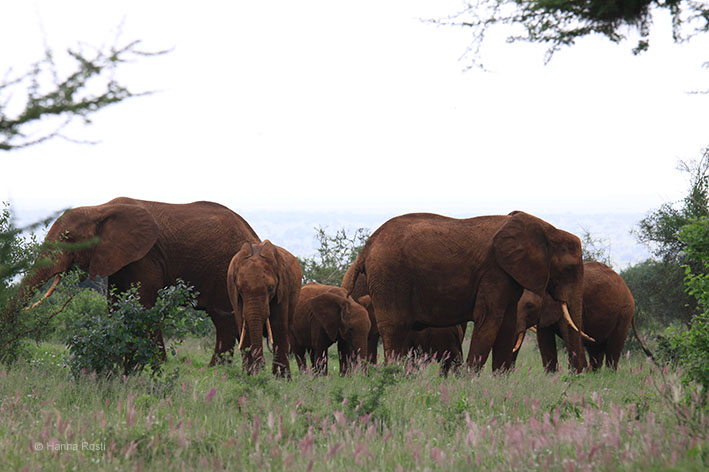
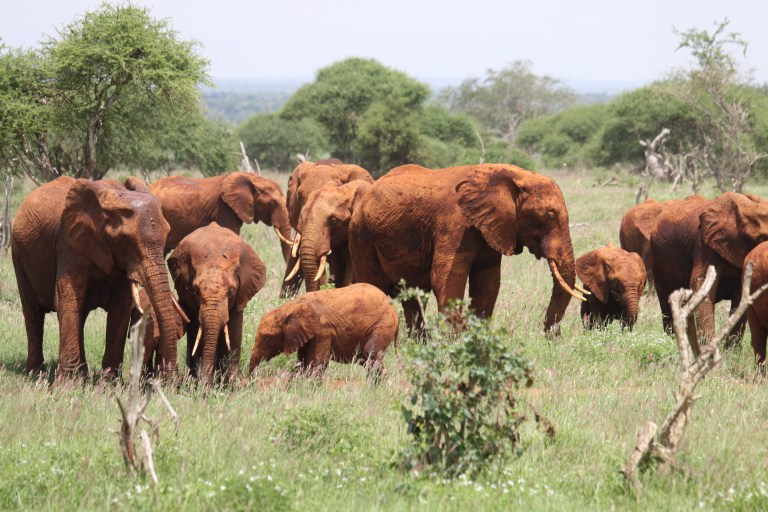
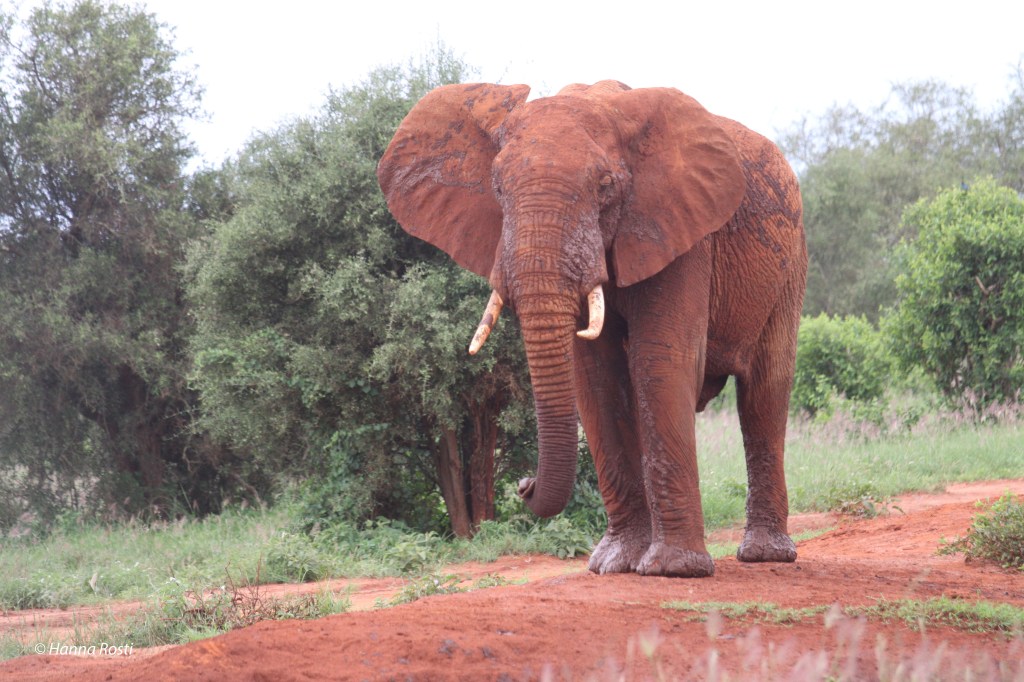
Elephant herd just outside Lumo Latika gate March 2018. Brown coloring comes from the soil.
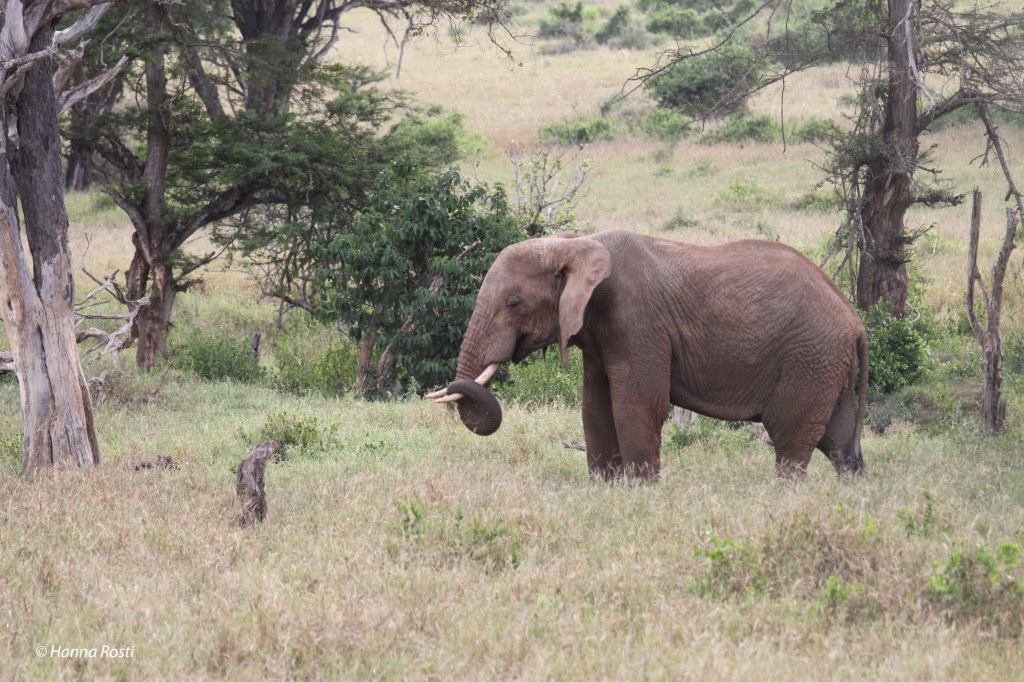
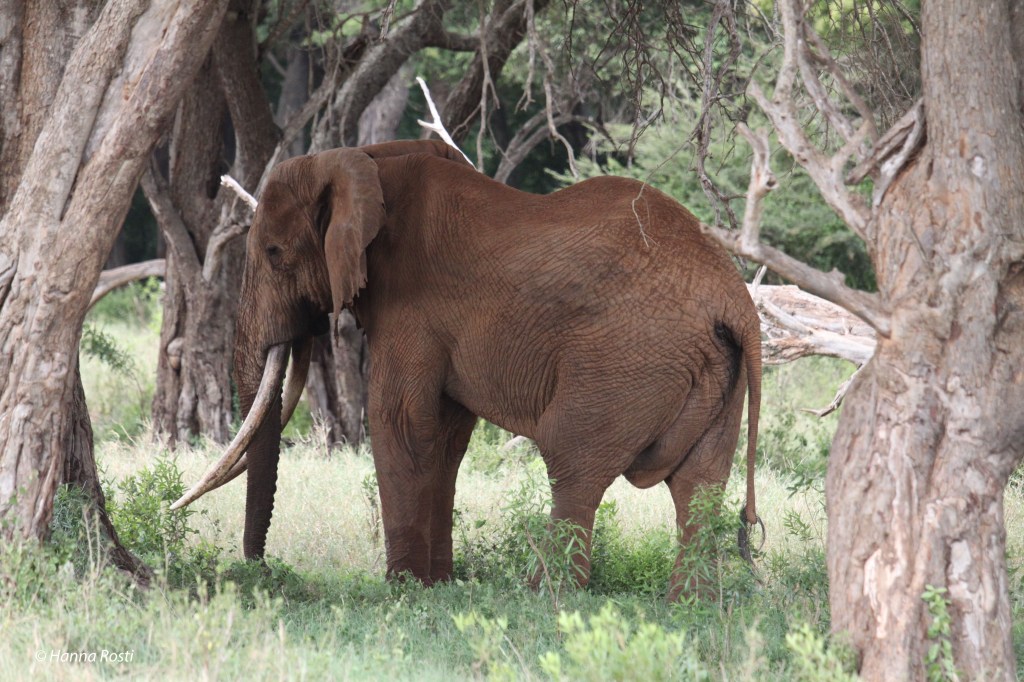
Kenya does not allow trophy hunting for money like some other African countries. Sometimes elephants are transported to other areas when there are too many elephants in certain area. I personally value and respect Kenya for this.
In 2018 there was 18500 elephants in Tsavo and number is increasing.
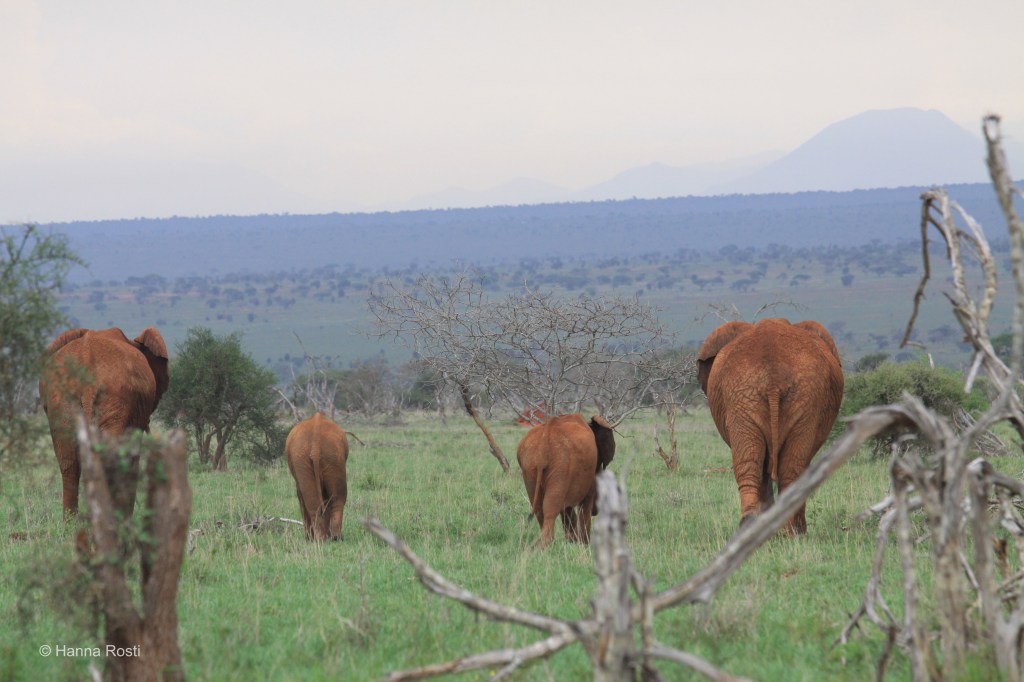
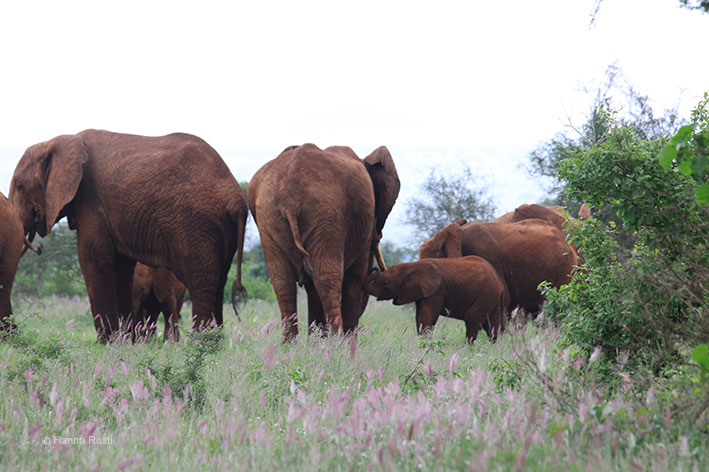
Elephants that are living in Tsavo and Lumo area still show some fearful behaviors that were caused by poaching. Most large males don’t react to people or cars, but many herds with small baby elephants begin to walk away, sometimes running, when humans are approaching.
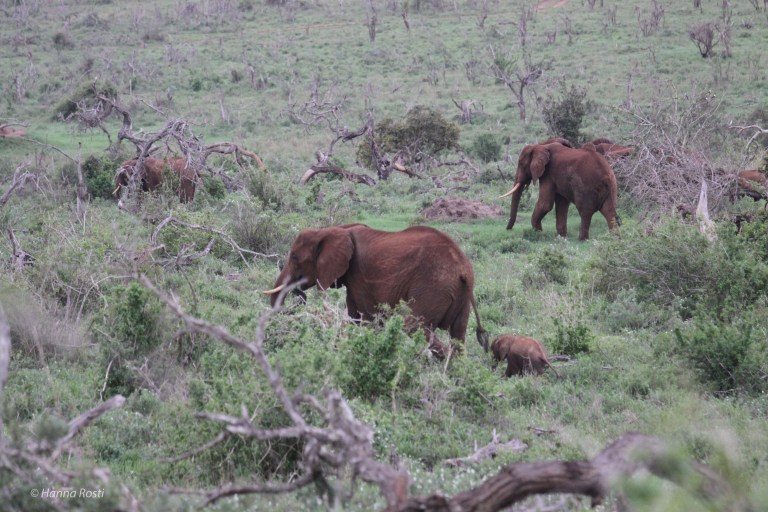
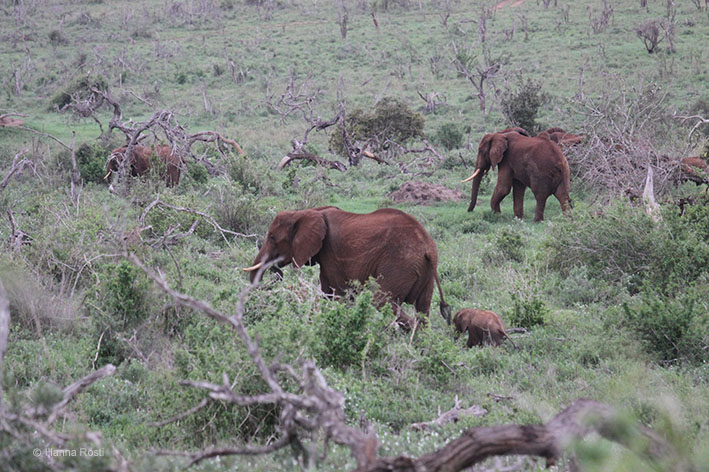
Very tiny baby elephant in Lumo March 2018. Dead trees are everywhere
Trees are pushed down by elephants
Increasing numbers of elephants are devastating to trees during dry season. Hungry and thirsty animals push the trees down. There has been dramatic change in the tree cover of savanna during just last 10 years, as can be seen in the image above.
Conversation with local rangers or other conservation people always goes for the trees, and worry about what is happening to the savanna as trees are vanishing. People love elephants and having healthy elephant population is great pride.
Elephants were hit so hard by people during worse poaching years, that it is wonderful to see the return of these majestic, emotional and intelligent animals. However, we also need to help savanna to stay inhabitable for the elephants and all other savanna lifeforms.
Tsavo and Lumo are fenced by tall electric fence. (Although I have never seen electricity running in it.) I have countless time seen how impalas jump through the fence to go browsing outside the Lumo area. Fence keeps elephants in the conservation areas up to certain point. However nothing stops elephants, if they are really going for it.
Human wildlife conflict between humans and elephants leads to loss of harvest and sometimes also loss of human lives. Local people can truly lose everything they have when elephants raide their farm.
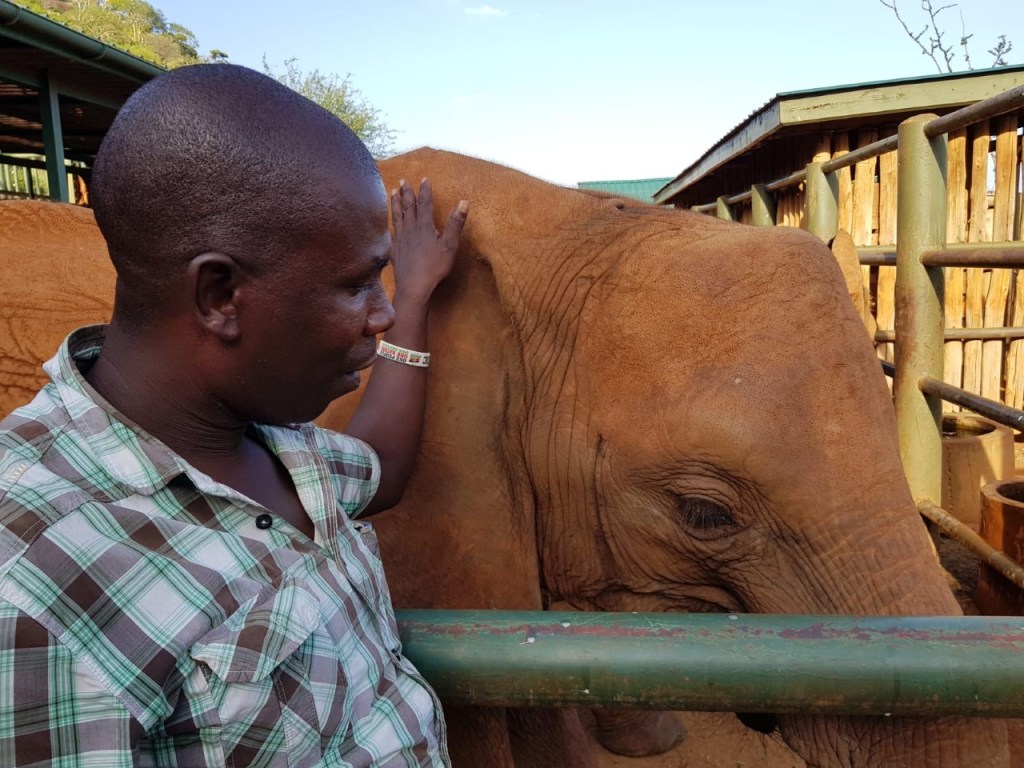
Orphan from Bura orphanage, his mom was killed by elephants as she was protecting the crop.
Elephants may also be killed or poisoned during these raids to farms. Baby elephants may be separated from their mothers during the chaos when whole village chases elephants out of the fields. This is how human-wildlife conflict creates elephant orphans.
Maktao, (born 2017) orphaned by human wildlife conflict close to Maktau. He was rescued by Lumo ranger Dennis Kironge. Maktao is being looked after by Sheldric Foundation in Tsavo.
Forests of Taita Hills were replaced by farms, causing reduction in rainfall and scarcity of water
Reason why elephants become so thirsty and hungry is also related to changes in land use patterns and growth of human population. Surrounding Taita Hills is densely inhabited and old, about 30 million year old forests have been changed into fields for farming. Population growth has forced people to cultivate areas that are not very suitable for cultivation, like steep hills and areas with poor soil, or too dry areas. Fields and villages don’t attract rainwater like indigenous forest. When it rains, water runs down quickly.
Daphne Sheldric describes in her magnificent book An African Love Story, how during the most intense clearing time of Taita Hills elephants were drowning in to mud in Tsavo as soil from Taita Hills were flushed down from the hills! They were saving elephants by pulling them from the mud by cars.
Rivers bringing water to lowland savanna areas are born in Taita Hills. These old mountains used to be covered with forests – 30 million year old ancient forest. Biodiversity of those forests were incredible. During last 100 years almost all forests have been cleared for fields or forests have been replaced by exotic trees, like eucalyptus that cause even more drought. Now there is not much water left for savannas.
Now conflicts about water are common between people, and many people face difficult time during dry season, when community wells are far away.
Remnants of indigenous forests are called water towers, their significance for attracting rainwater is now understood. However 98 % of these forests have been destroyed, most during last 100 years.
When there is not enough water for people, there is even less for wildlife during dry season.
So current issue of lack of water during dry season is more severe because there is less water to begin with, and also less space for the elephants.
Hungry and thirsty elephants push trees down.
Dead trees are everywhere in Lumo March 2018. Kilimanjaro can be seen behind elephant family.
When trees disappear, biodiversity dives down
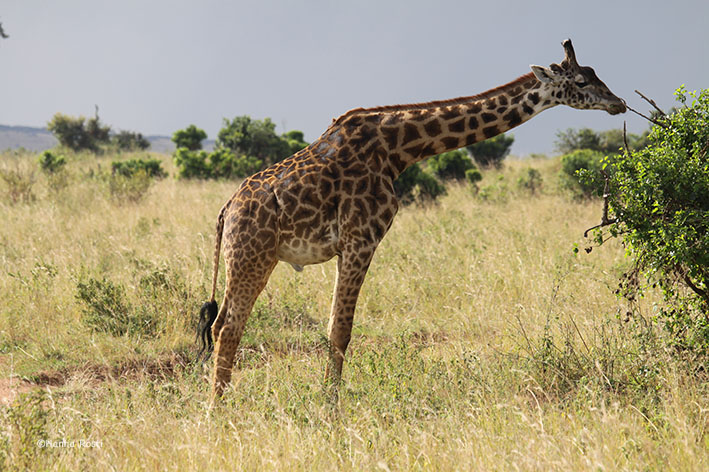
Loss of trees lead to loss of biodiversity as trees are habitats for countless insects, that are consumed by birds, that also use trees as nest sites. Large vultures and eagles need large trees. Many antelopes, like impalas, kudus, duikers, eland, and gazelles also feed on leaved during dry season when grass becomes yellow and low in nutrients. During this time leaves of many trees stay green as root system enables trees to gather water deeper from the soil. Giraffes and gerenuks are dependent on trees. Also black rhino is a browser, so in order to keep savannas good for return of black rhino, there must be trees.
Giraffes are dependent of trees, Masai Mara August 2018.
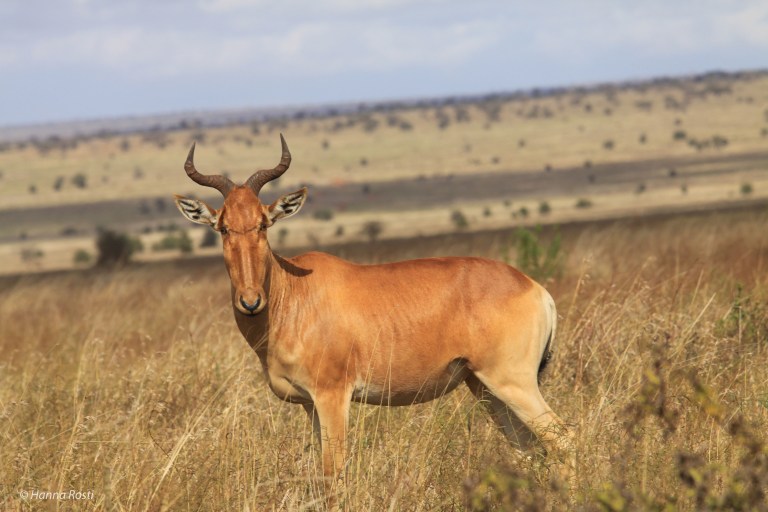
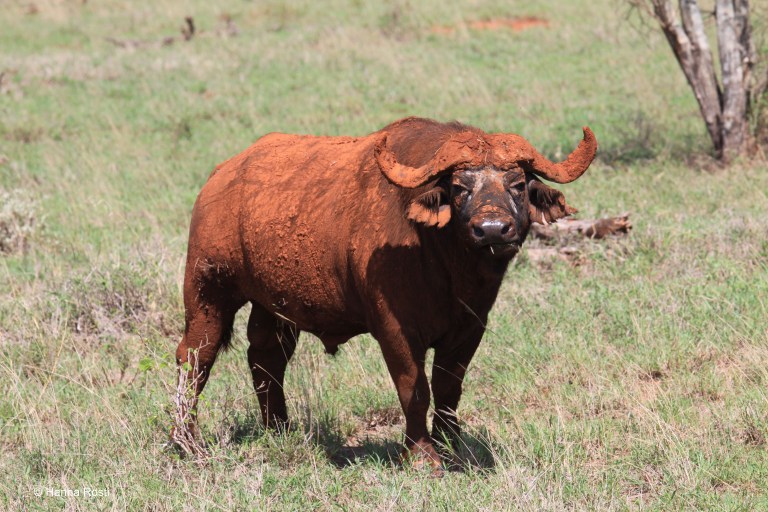
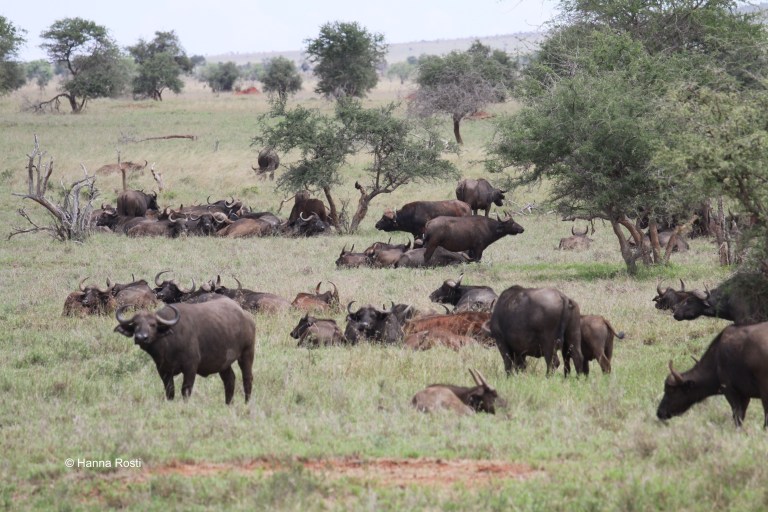
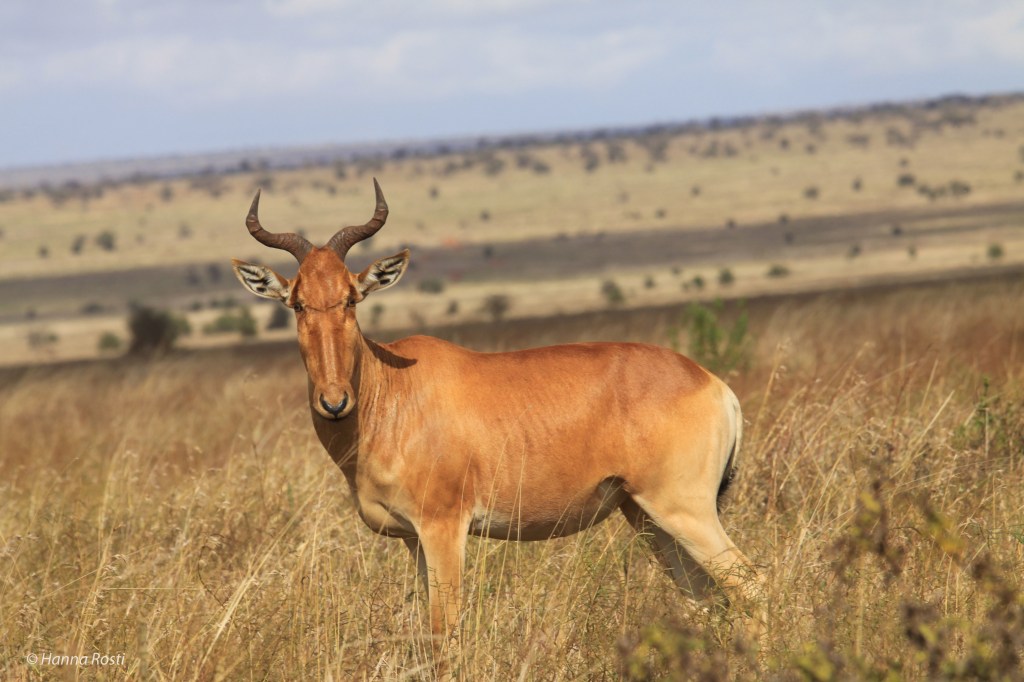
Water buffalo and hartebeest are fine with just eating grass, and there is abundant populations of both in Lumo.
Hardebeest in Lumo August 2018
Keeping trees in the savanna is important for biodiversity as all these species have intrinsic value on their own. However in Lumo people are also worried for loss of biodiversity as less animals will mean less income. As Lumo is community owned and income is spread with 5000 local people, this is extremely important for them. Most of income Lumo is bringing to local community is used for school fees, for children who could not other wise go to school at all. Will tourists come if many species disappear with trees?
How to help elephants and savanna
Mwalua Wildlife Trust http://www.mwaluawildlifetrust.org works actively to distribute water for the wildlife during dry season, and is also engaged in many other activities that help elephants and other wildlife and also mitigate human wildlife conflict. Mwalua Wildlife Trust in Facebook https://www.facebook.com/mwaluawildlifetrust/.
Sheldric Foundation takes care of baby elephants and releases them to Tsavo. Baby elephant, like Maktao here, can be adopted for 50 dollars a year. https://www.sheldrickwildlifetrust.org/orphans
There is also reforestation project in Taita Hills Wildlife Sanctuary, that belongs to Sarova Hotel. This is fenced area, that was established about 2009. Areas where reforestation takes place, need to be fenced and trees need to be watered during dry season, otherwise trees will die. This makes reforestation much more expansive, as it requires expensive fencing and long term labour.
Trees inside fenced area in Taita Hills Wildlife Sanctuary. There are abundant bird and insect fauna.
However, fence can be moved once trees are large enough to stand on their own.
Biodiversity in the enclosed area is significantly higher than right outside the fence. I have spent a day there observing insects and birds, while geographers I was with were identifying and measuring trees. Also view from higher place shows that areas outside conservation areas are growing trees and bushes.
Large enterprices could use their carbon footprint compensations for reforestations of savannas.
To keep savanna biodiversity and elephant populations healthy in current situation where water and space is limited for elephants reforestation is needed.
Large companies, including e.g. airline companies, are planting trees to compensate their carbon emissions. This would be excellent way to solve problem of elephants causing loss of biodiversity.
Fenced reforestation areas should be used and fence should be relocated in about 15 years as trees grow to keep savanna biodiversity.
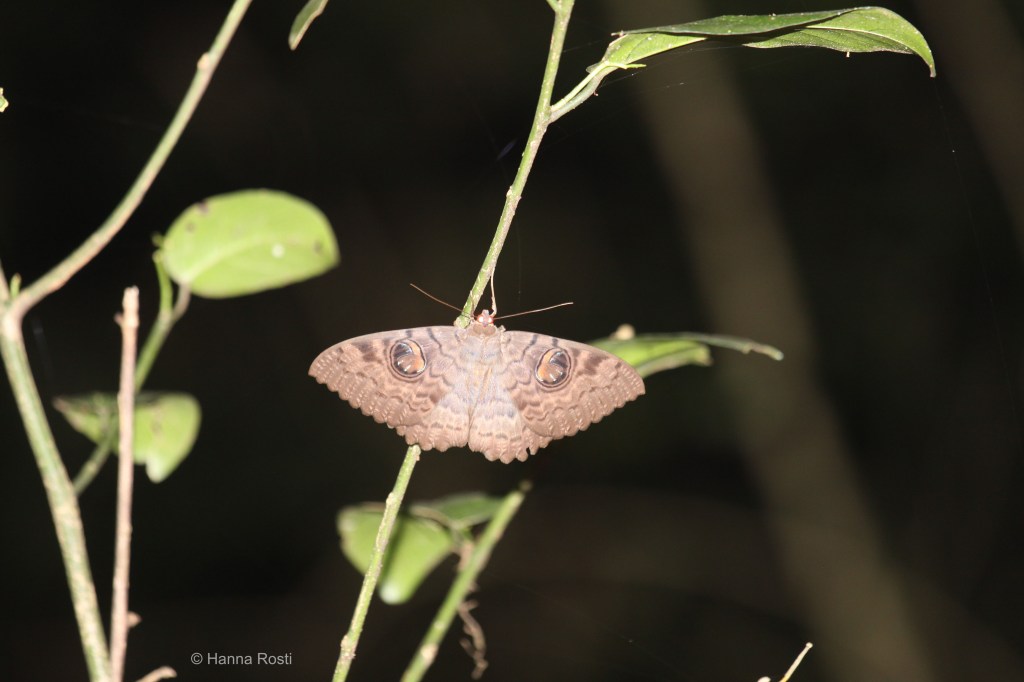
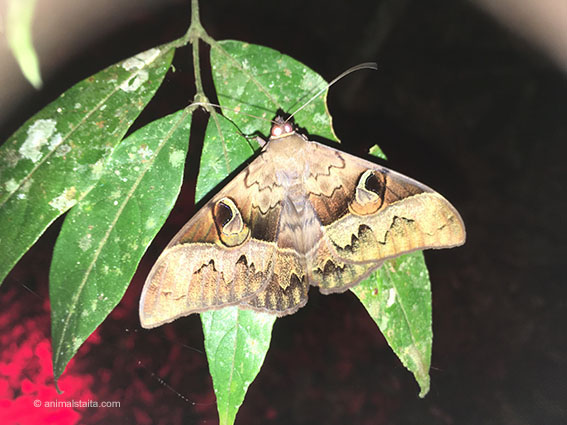
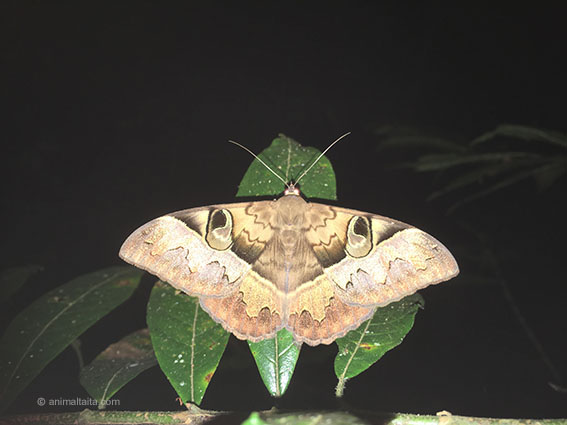
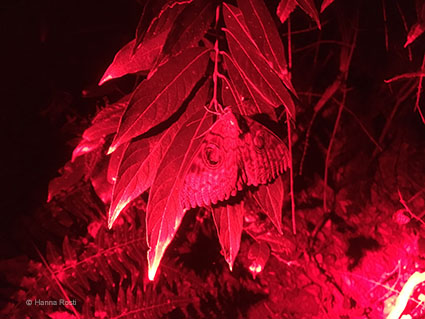
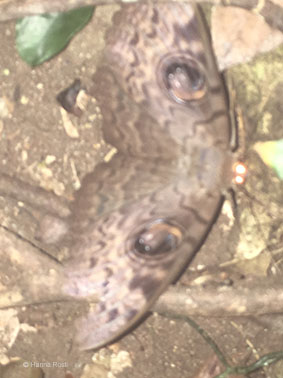
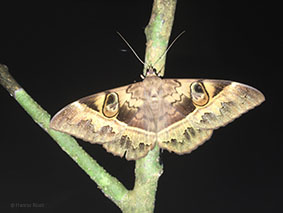
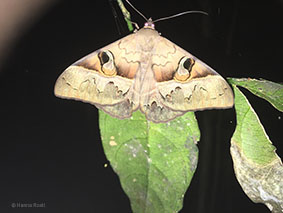
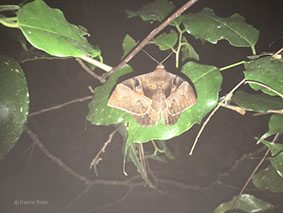
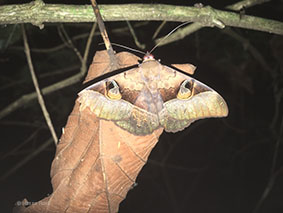
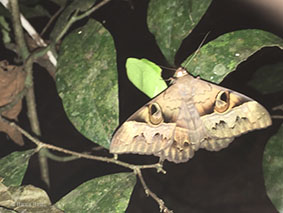
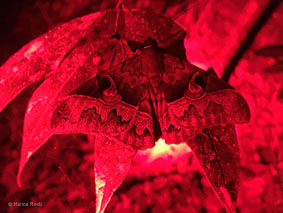
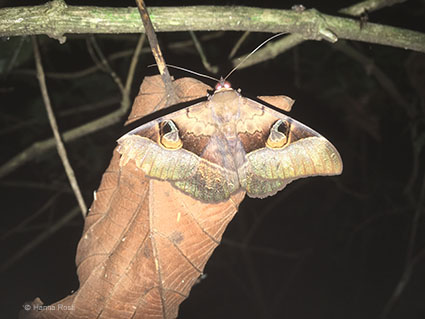
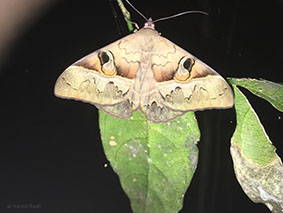
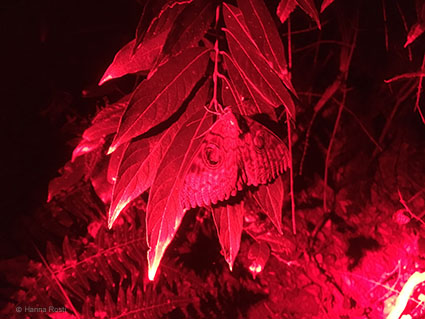
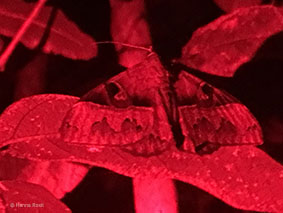
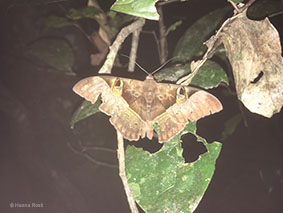
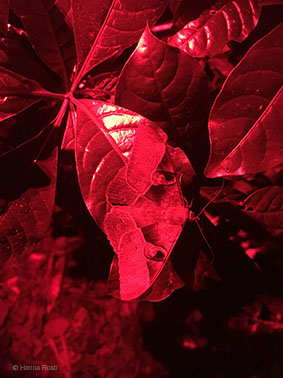
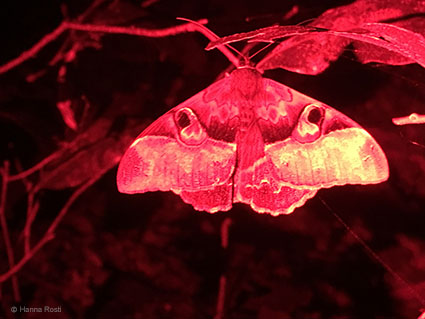
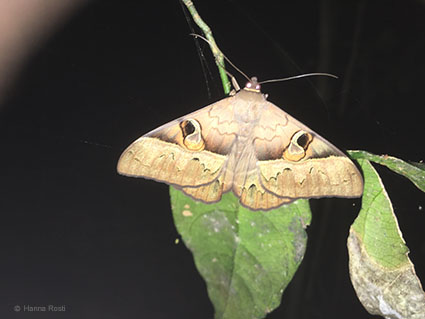
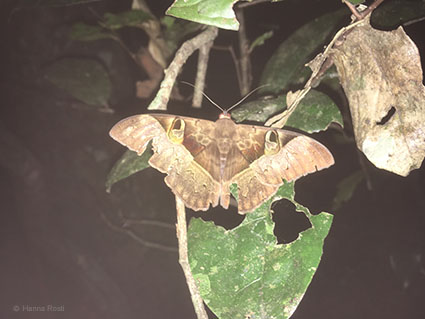
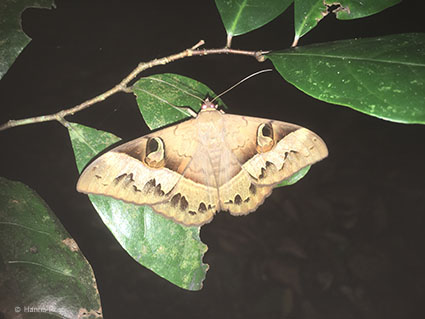
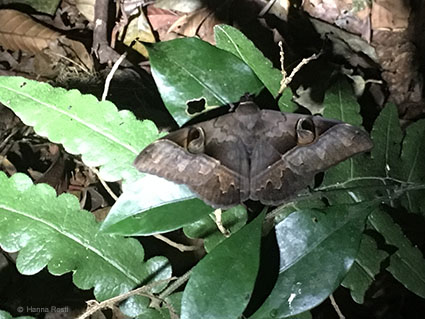
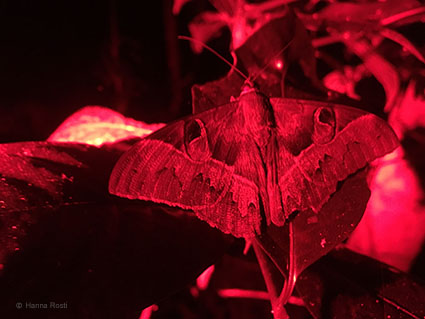
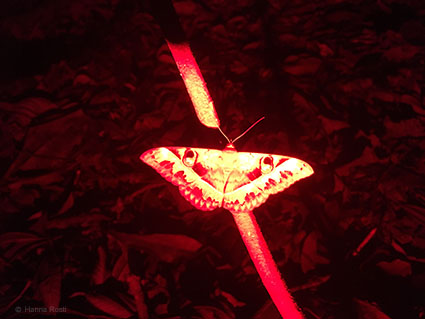
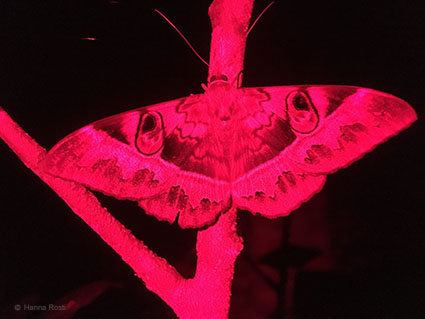
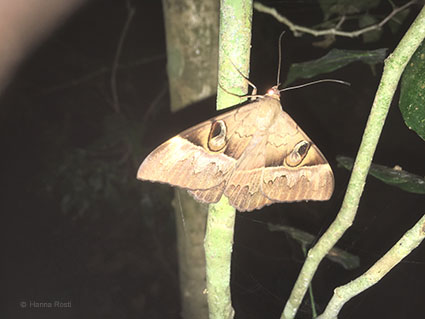
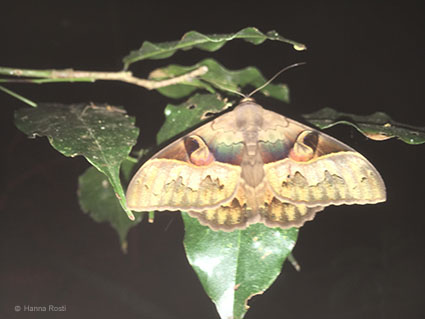
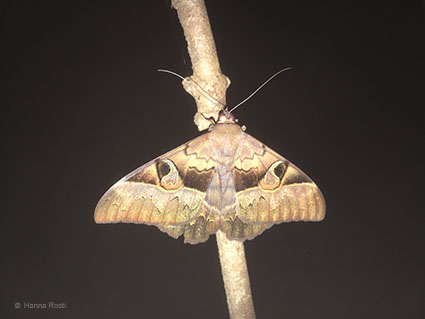
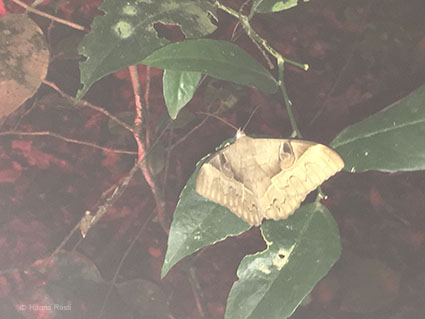
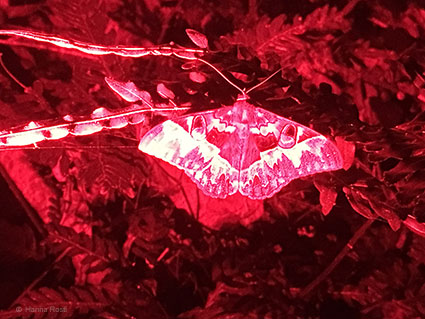
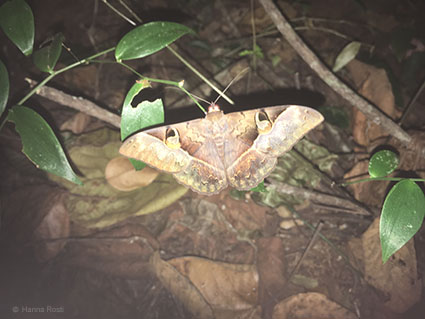
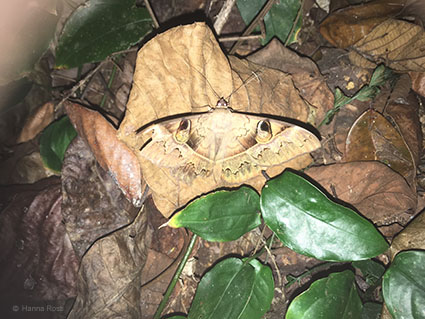
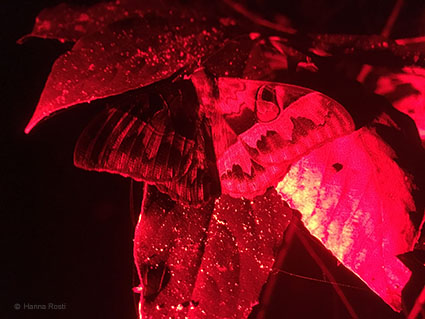
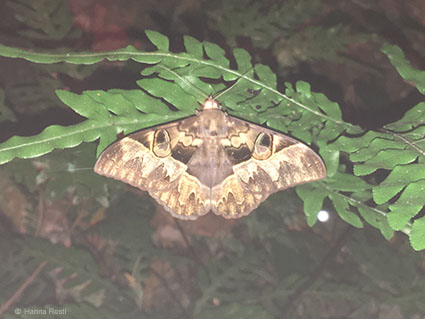
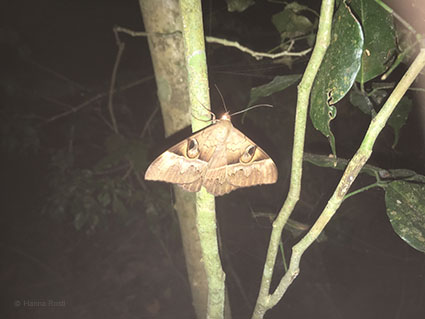
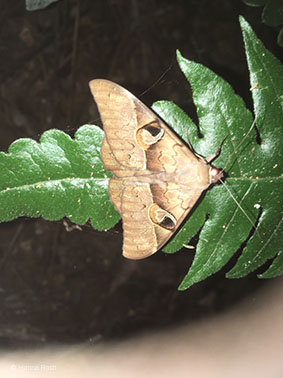
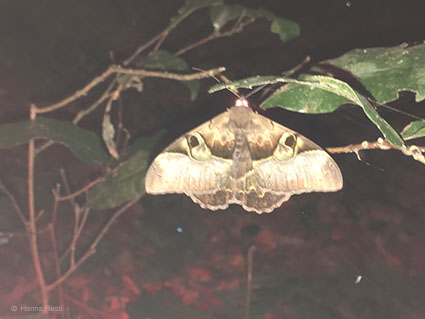
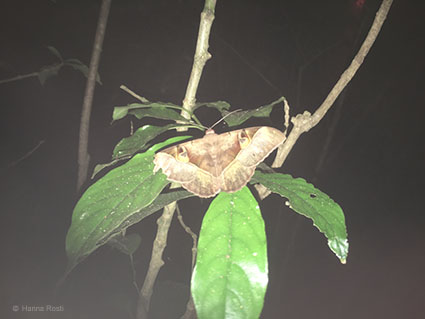
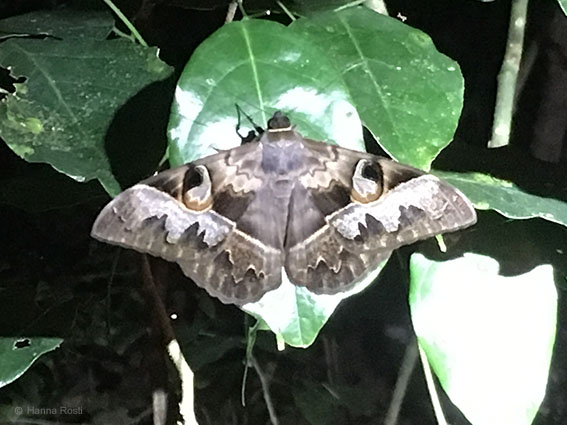
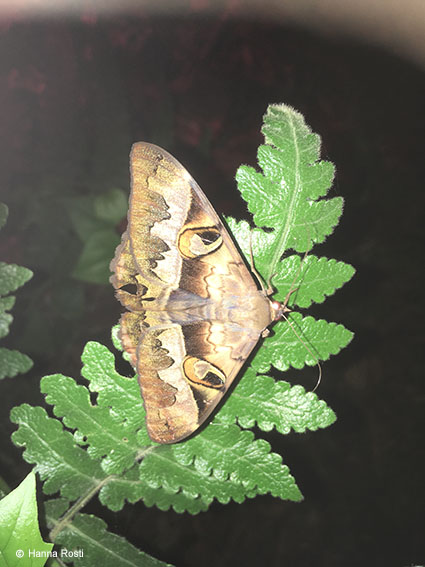
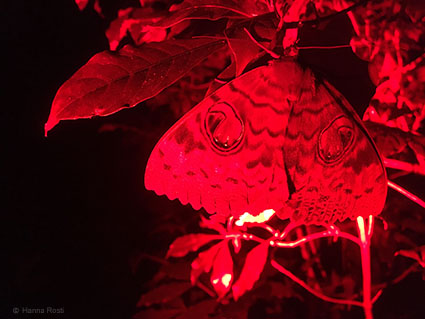
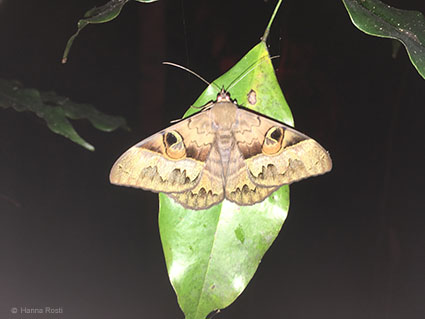
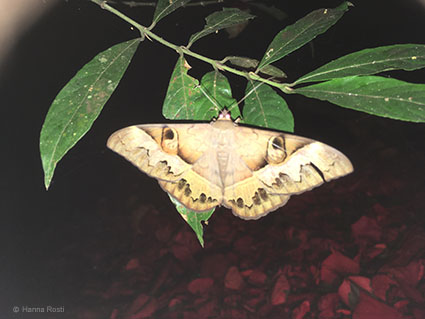
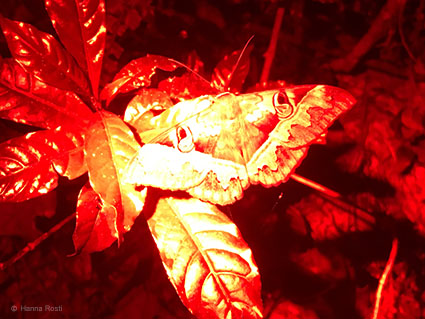
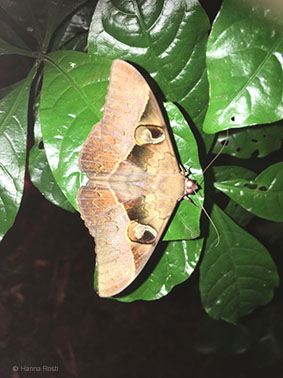
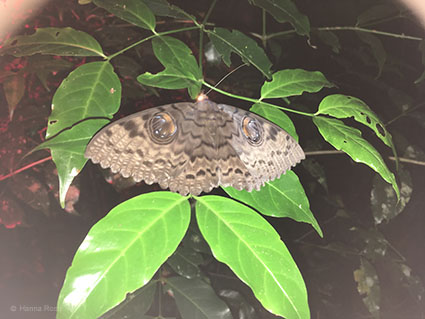
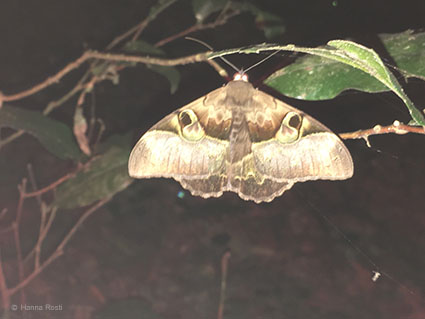
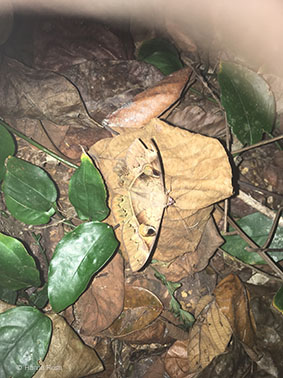
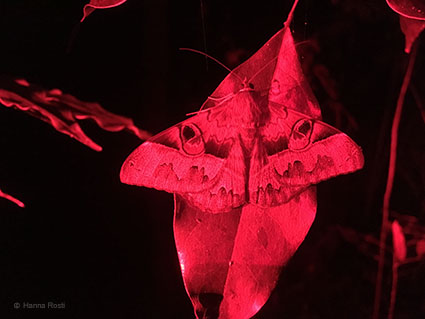
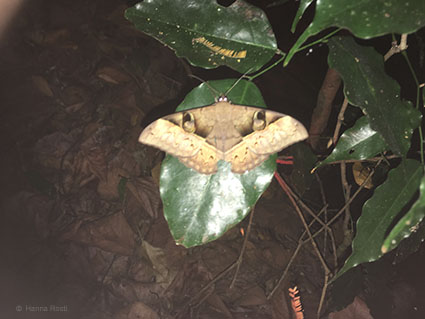
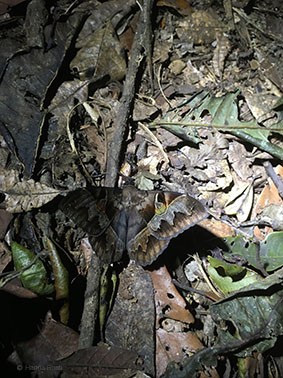
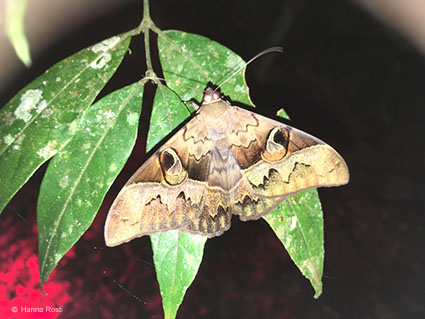
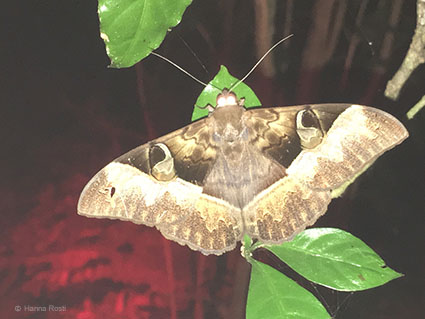
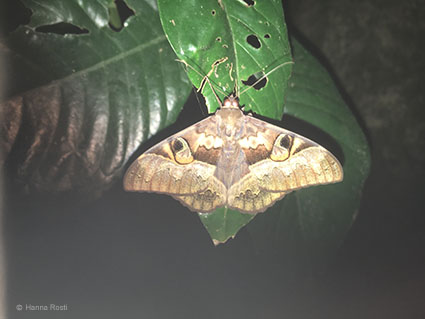
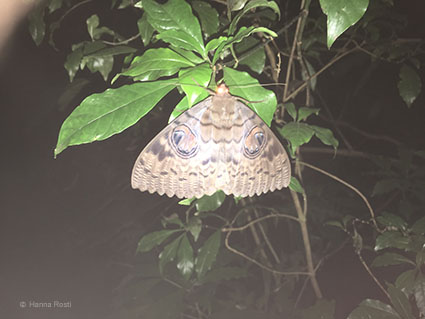
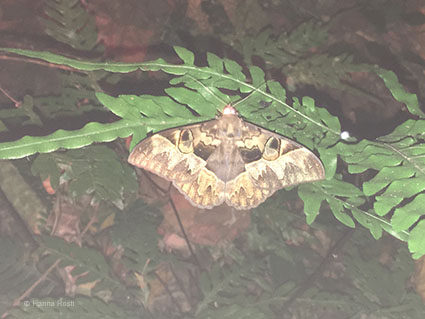
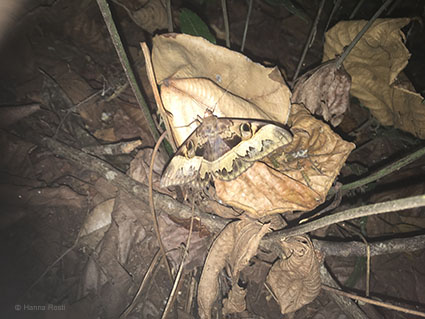
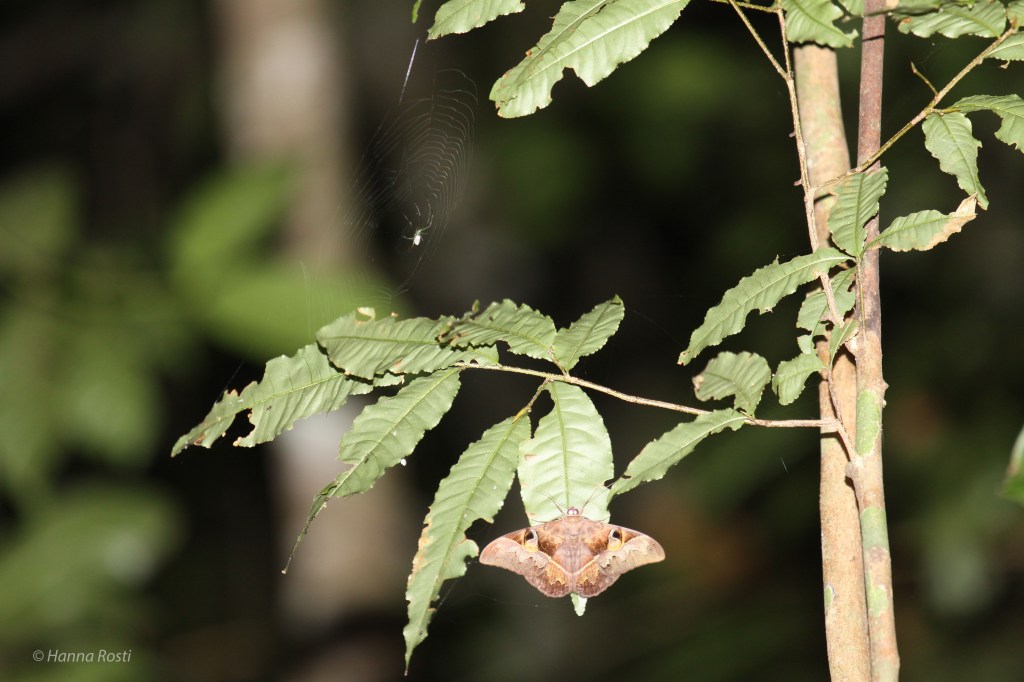
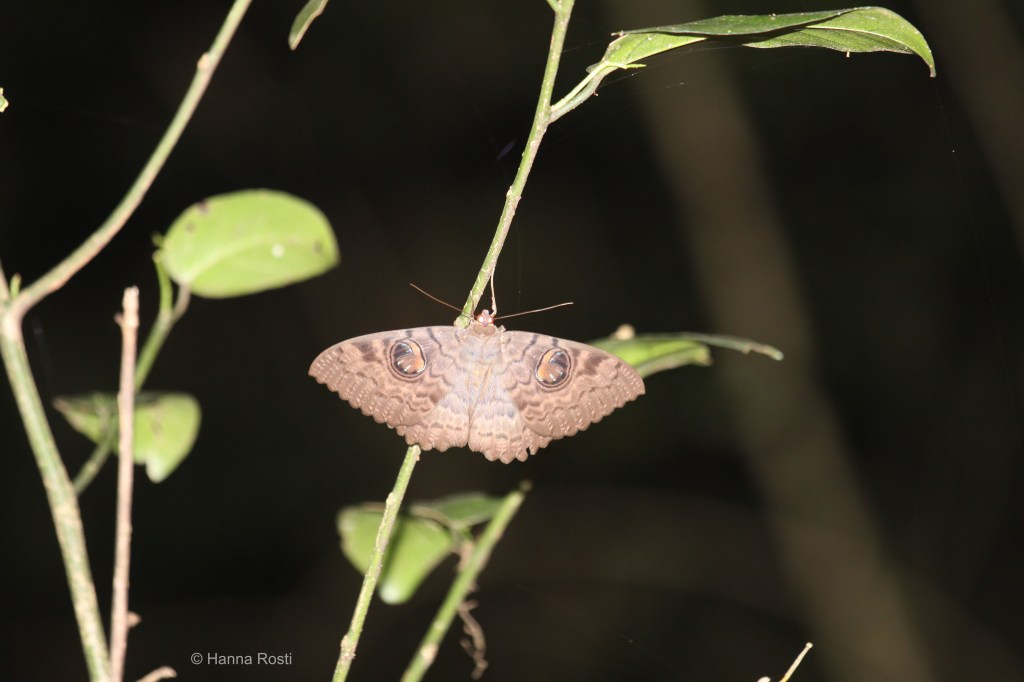
I had lots of spear time in the forest. During this time I took pictures of moths. These moths that fly during the night are large. One up above the title is as large as my hand. This beautiful butterfly is less common, but strikingly beautiful.
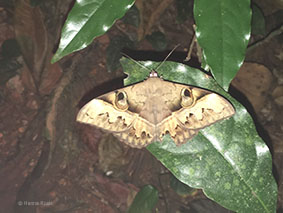
The other, way more common moth, is slightly smaller, and very common in Ngangao Forest. In Mbololo there is less these very common owl butterflies.
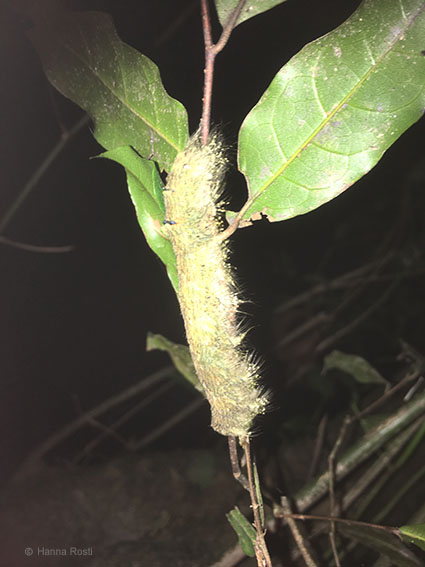
These large moths were flying majestically in the air, or they rested on the leaves, branches or on the ground.
What are these species and what is their role in the forest?
Please comment bellow, or send me email hanna.z.rosti@helsinki.fi
I have been incredibly blessed by having opportunity to spend about three months observing nightlife in Ngangao and other Taita forests.
At night forest is magical beyond any words of describing it. Change in evening and in the morning from nightshift to dayshift is breathtaking. Whole forest changes in minutes.
We use red light in the forest. Most animals can’t see red light, so they carry on their lives like we where not there.
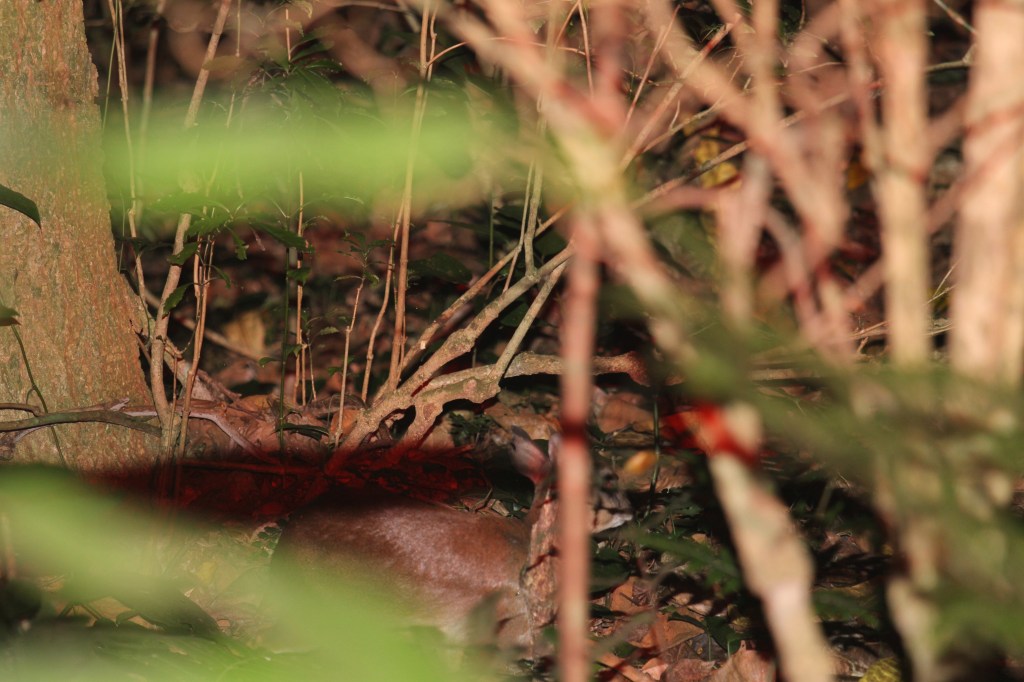
There are bats flying in paths and openings. They fly almost to your face, but turn at the last moment. Only once I have been touched gently by a bat. There is abundant rodent life, rats and mouses of all sizes running around, digging the ground, climbing in the trees, grooming themselves. They look very cute in red light.
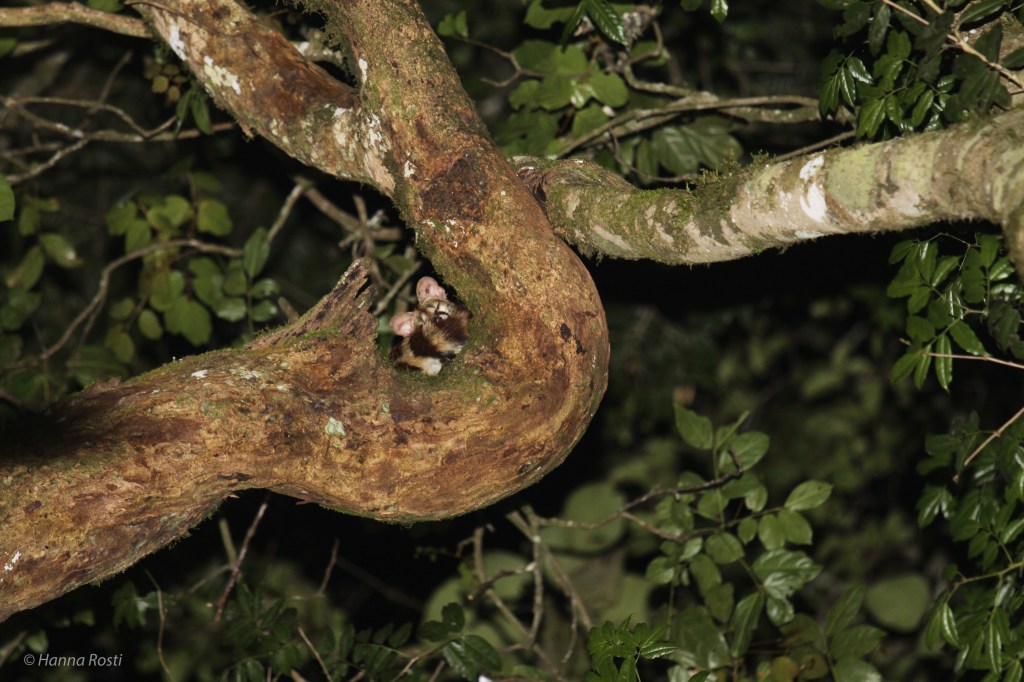
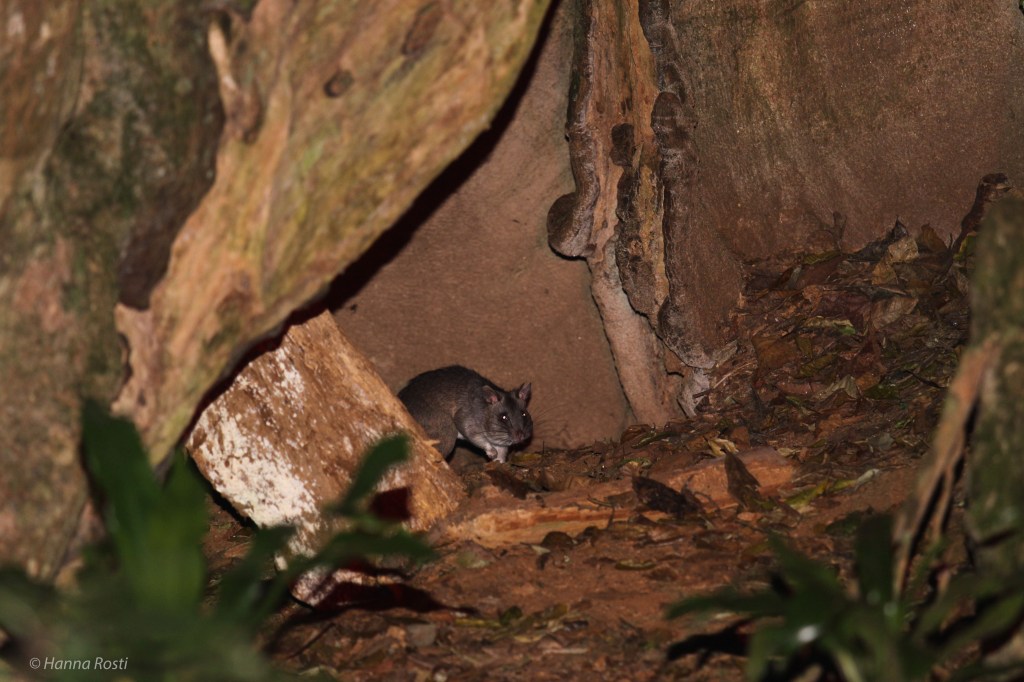
Most Ngangao Forest visitors walk through gigantic cave tree, not knowing that they are actually visiting home of giant rat at the same time!
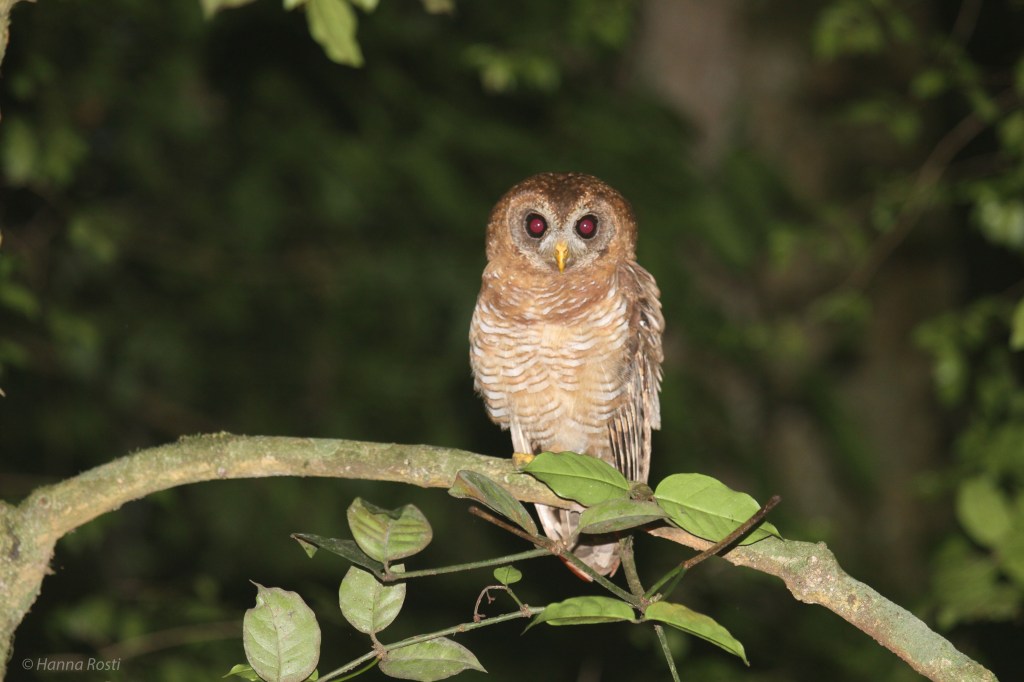
This is photo gallery, click any of the pictures to enlarge. If you wish to buy photos contact me by email.
Less common rodents are dormouse and elephant screw. We saw both several times though. We also saw ones Suni antelope.
We had funny encounters with the genet. This stunningly beautiful cat sometimes followed us, sometimes it appears out from the blue, just from the feet. I was never lucky enough to get picture of it. Until once we saw one sleeping in the tree. This cat didn’t look that good though, you can see ticks in the ear in the photograph.
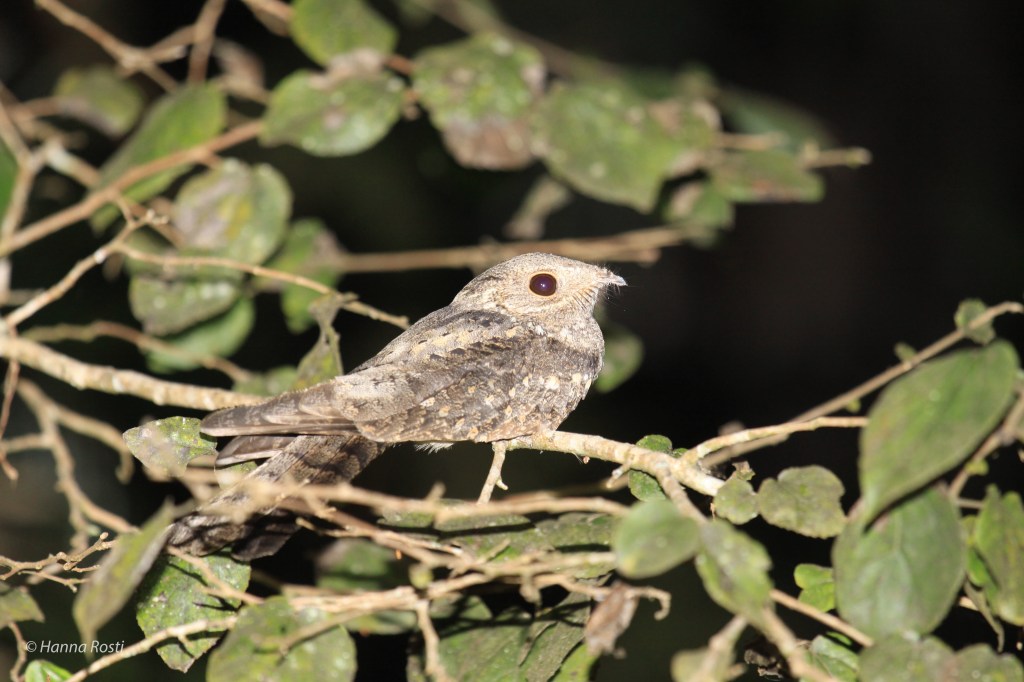
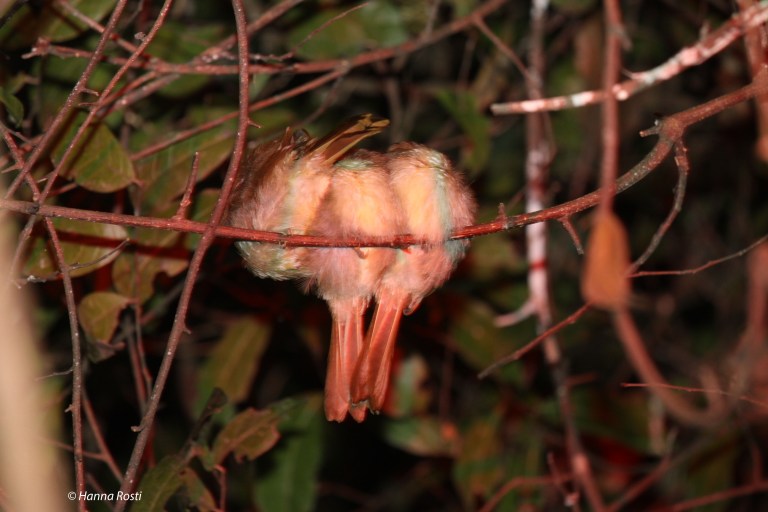
These tree little birds were always in the exactly same place, same branch, sleeping and huddling together.
In the darkness of the night animals communicate by calling to each other . These nocturnal animals are loud, and their calls are incredible. Later I will add photographs and recordings of these spectacular and endemic mammals that my research is focusing on.
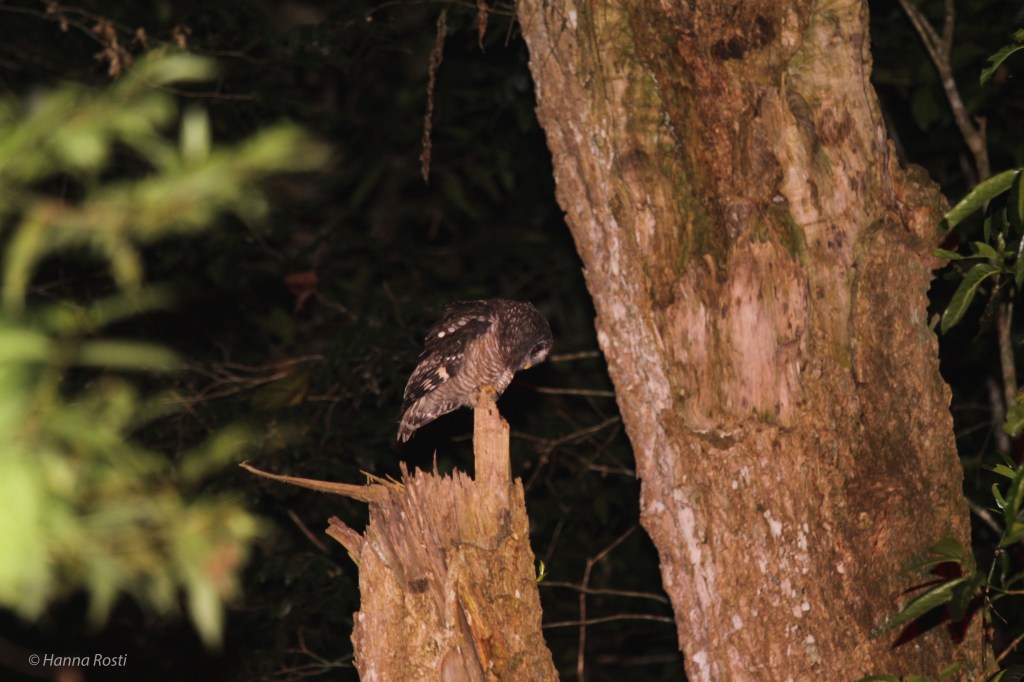
African wood owl is most common owl in the forest and couple calls to each other by using different calls.
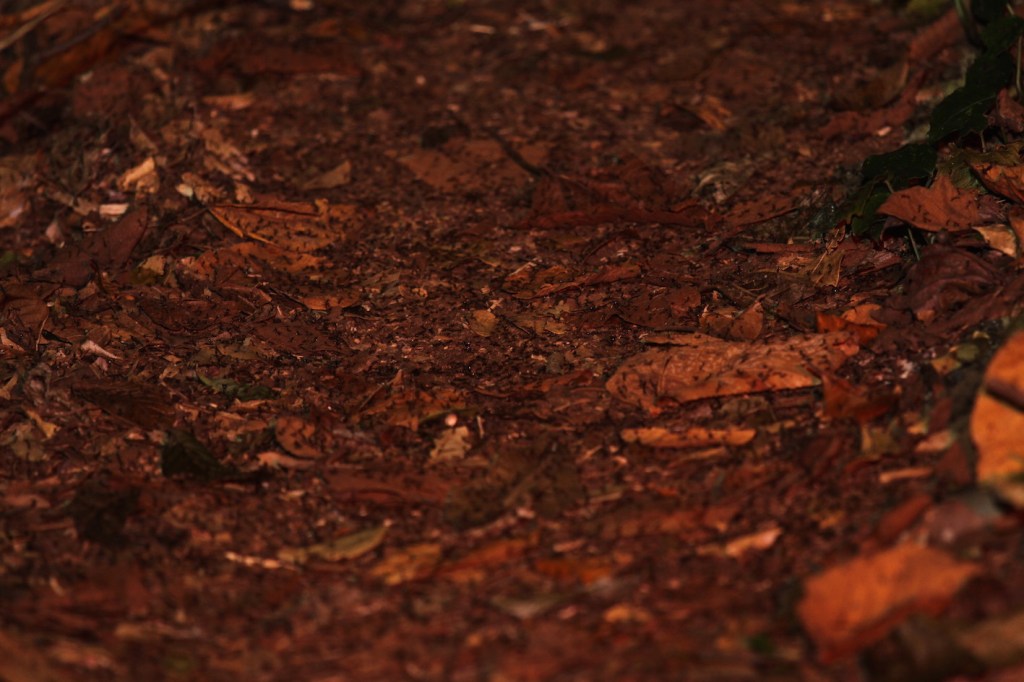
I am often asked that is there anything to be afraid of in the forest? And yes there is – safari ants! There are some snakes and spiders, but I am not afraid of them. I have been colonized by safari ants twice. Ants climb on you when you stand on their way, and when they are all over your body they suddenly bite – all at once. There is no other way than to strip from the clothes. After that you definably learn to scan the ground couple times every minute, even when practically at sleep. Safari-ants can also be heard, as insects fleeing from them shake the dead leaves on the ground.
Safari ants on color the ground
There has not been much research in the forests at night. There is so much unknown. As Taita Hills is one of centers of endemic species in the world there are still so many species still unidentified. Only last fragments are remaining and conservation efforts for all indigenous trees are needed urgently! More indigenous trees need to be planted and corridors created between forest fragments.
In the forest I have been always companied my assistant Benson Mwachola and occasionally also by Rechard Mwasi and Darius Mwambala from Taita Hills Research Station.
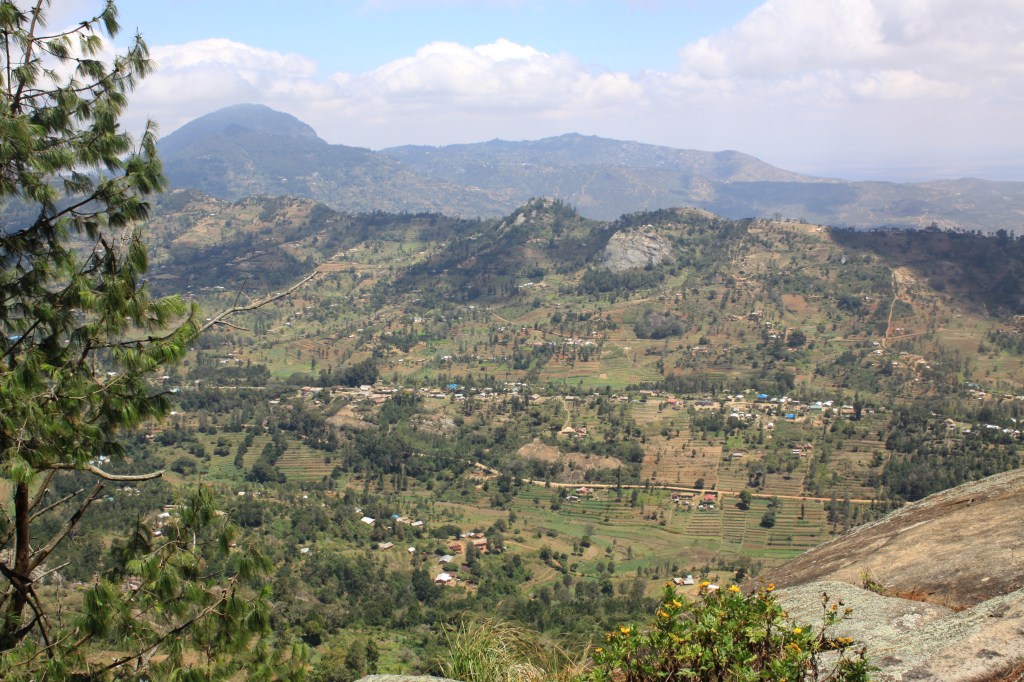
In the morning scenery outside Ngangao is incredibly beautiful with yellow light coloring the snows of Kilimanjaro and savannas of Tsavo.
Lumo is community owned conservation area in Taita. It is bordered by Taita Hills and Tsavo National Park. On the other side Lumo is connected to Sarova Taita Hills Wildlife Sanctuary. Lumo is 50 000 hectare area owned by more than 5000 local people. Funds Lumo is able to gather by wildlife tourism is shared with local people. Most money goes to pay school bills for those children that would not be able to go to school otherwise.
Besides school bills, Lumo also supports local community by any means they have by having bank day, delivering firewood and food to schools, helping in fencing and so on.
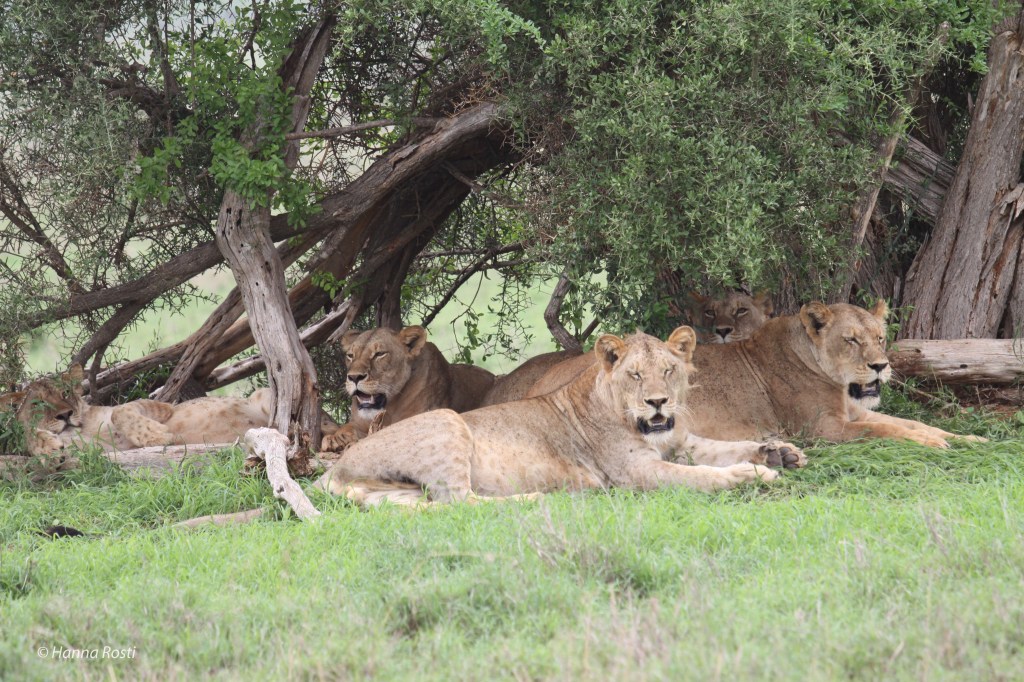
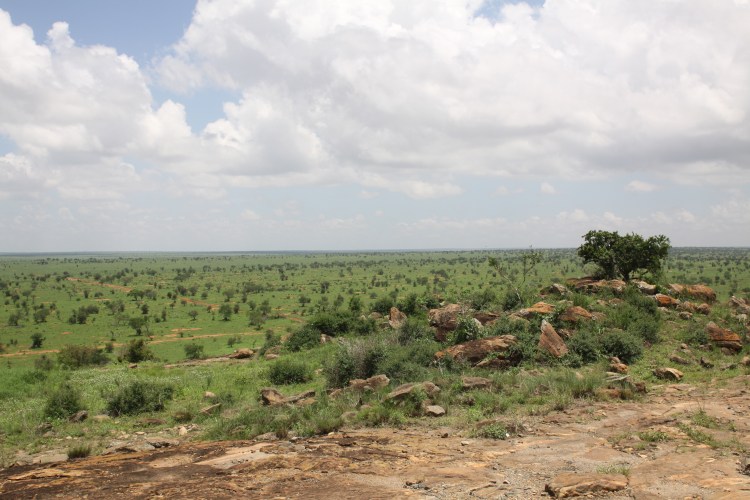
Lumo is strikingly beautiful savanna. Heart of the Lumo is Lions Rock. A rock formation that is popular among large cats, lions and leopards.
View from beautiful Lions Rock in Lumo
I spent four weeks in Lumo in 2018 as a volunteer. It was a five star safari with Lumo rangers. Accommodation was more moderate than what your would have expected in five star safari, but very good for me. We even had our own chef.
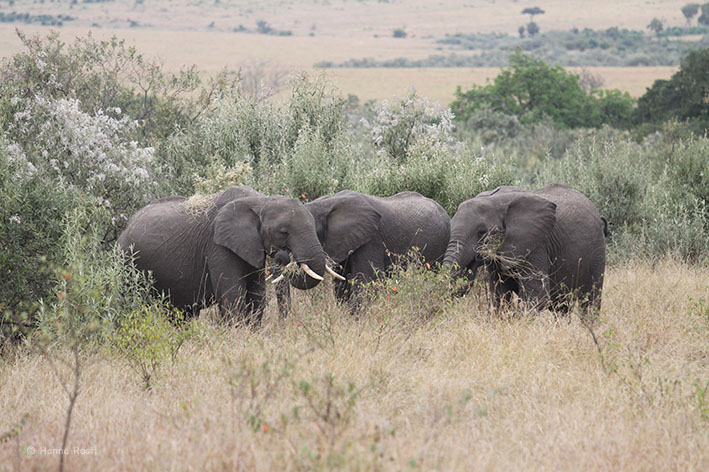
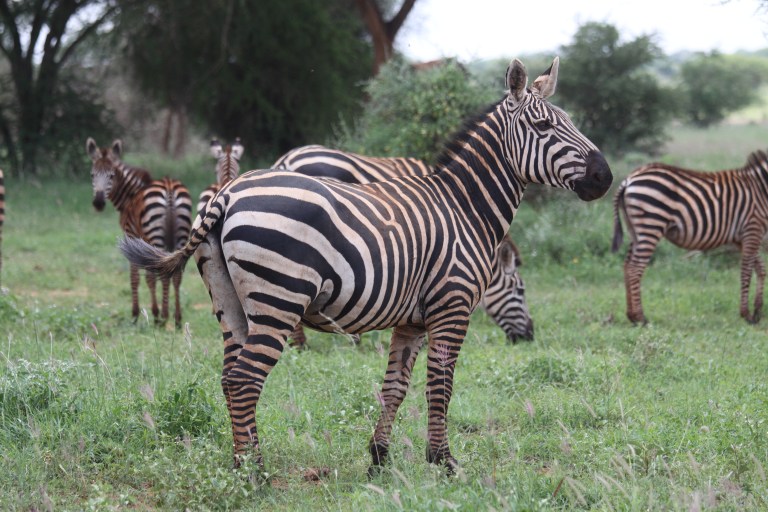
There is abundant wildlife in Lumo. Elephants, hartebeest, giraffe, water buffalos, zebras, grant gazelles, impalas, cheetahs, lions. All except the rhino.
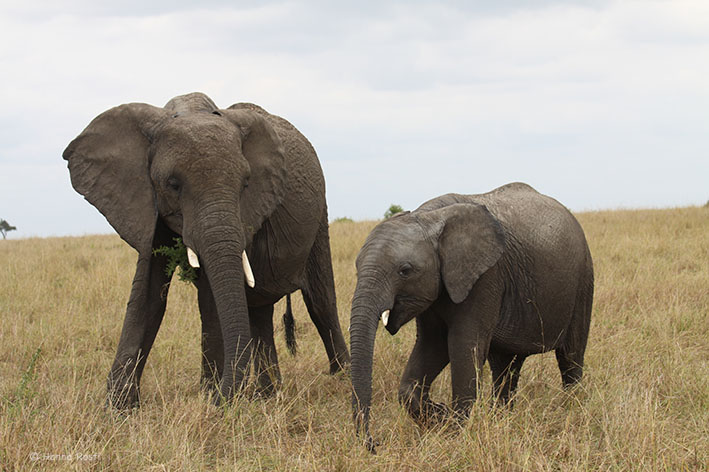
I saw many very small baby elephants in Lumo in March 2018. Baby elephant was so small that they must have been born in Lumo.
This is photo gallery, larger images can be seen by clicking images
Dedicated rangers of Lumo are heroes of conservation. I have enormous respect on the work that they do every day, year after year. Many rangers in Lumo have worked there for 20 years. During this time poaching has been minimized.
Head ranger Elvis at Lions Rock
Lumo ranger patrol the area by foot and by car. This is important way to keep poaching away and observe possibly injured animals. Population numbers of animals are calculated with GPS locations. University of Helsinki also does research in the area.
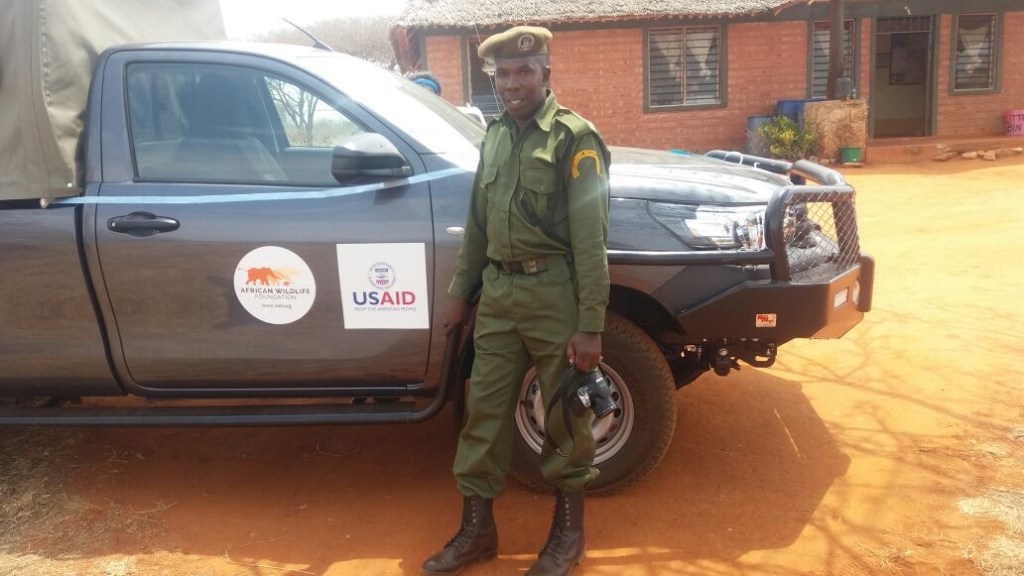
Lumo ranger and driver Dennis Kironge with new car in August 2018 in front of Lumo office.
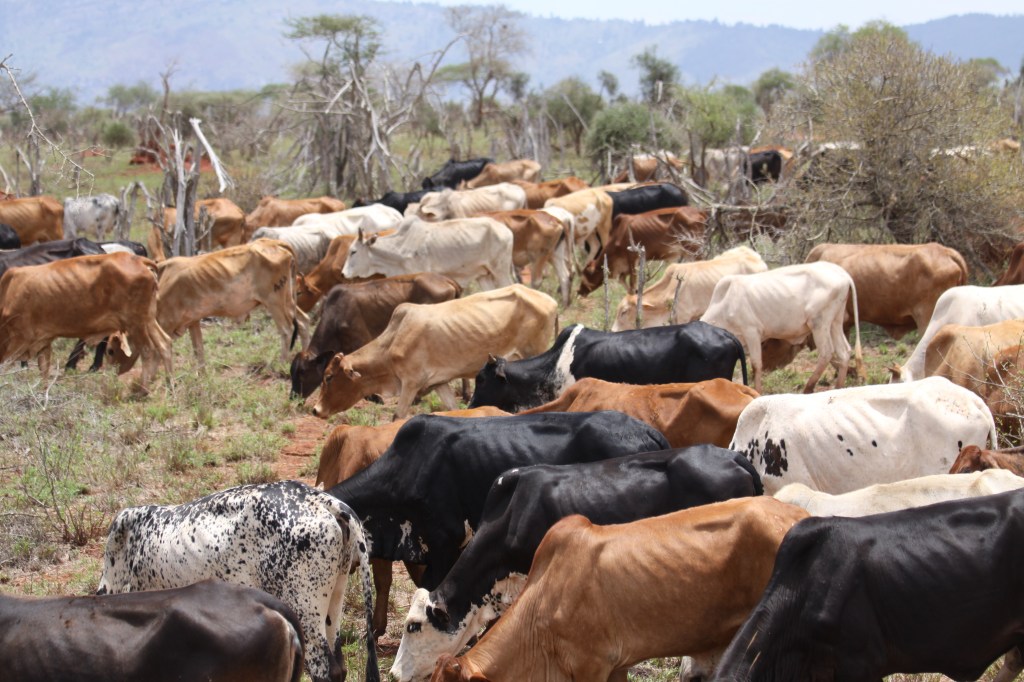
There are cattle grazing areas inside Lumo. As Lumo was founded all cattle farmers in the area didn’t join. Too many cows have caused serious erosion in the grazing area. The number of cows is too many. Markets for beef are small, and cows are living until old age, having young each year. Owners of the cows are not the ones that herd them.
These cows were grazing in wrong area and they where escorted away.
Having too much livestock has caused serious erasion in grazing areas. However having livestock inside conservation areas is not all bad. In fact humans have kept cattle in Africa for thousands of years. Many ungulates, zebras and impalas for example, prefer to eat shorter grass. In shorter grass nutrient level is higher. Cattle keeps grass low. In areas where there is no grazing hay may grow up to one meter high. These tall grass areas are usually quite empty of wildlife, as this tall grass is very low in nutrients.
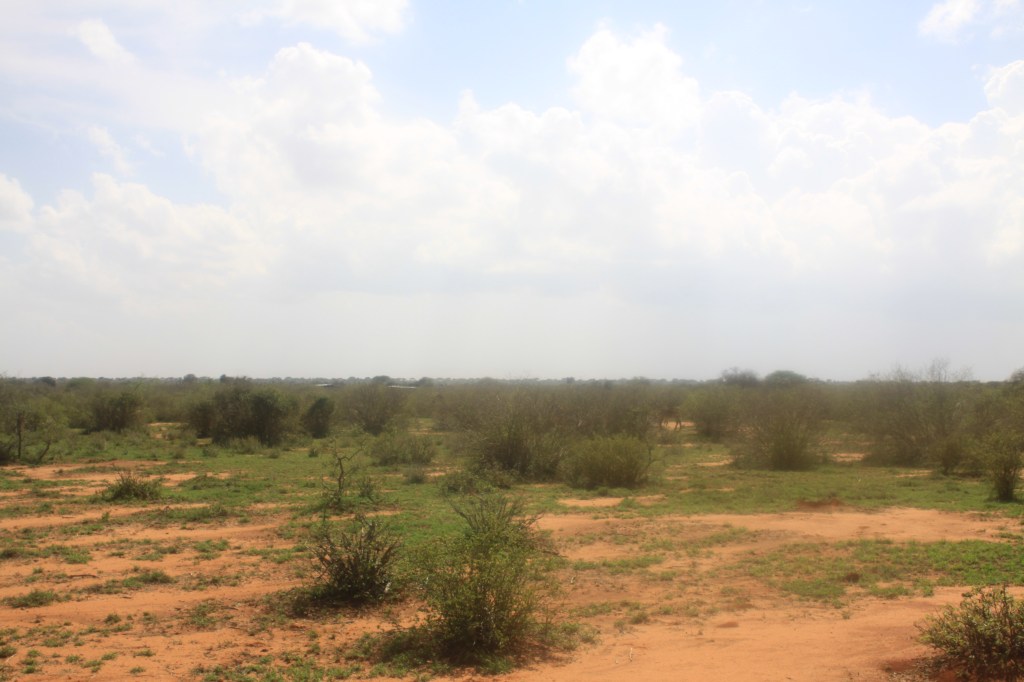
Erosion in cattle grazing area.
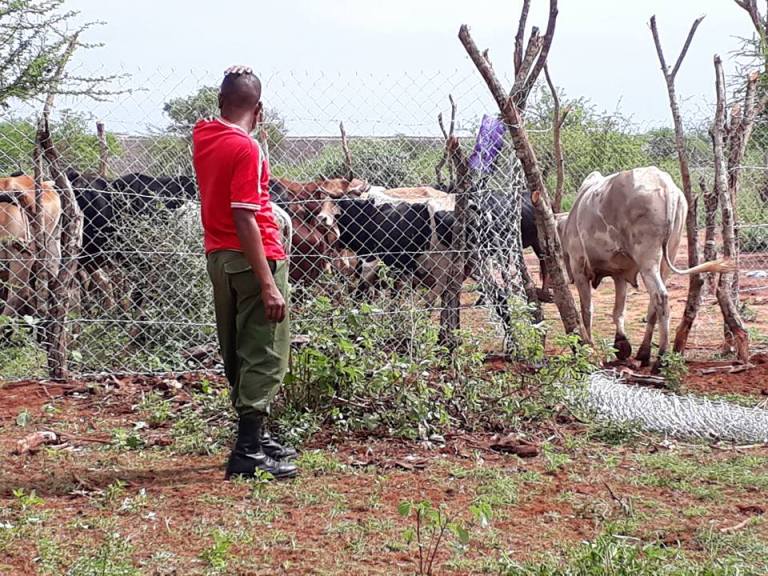
In March 2018 “cattle prison” was founded in Lumo. Now cattle found grazing in non grazing areas are herded to this fenced area. Owner of the cattle has to pay to get his cattle back. I was there when it was made, and there was not even a gate installed before first herd was in! Owner had to pay about 500 euros to get the cattle back. It changed the situation completely, and now there is no grazing inside areas dedicated for conservation. Lumo has also worked with local community to improve markets for different products made of cattle, like meat, skins, even bones can be used as jewelry. Goal is to decrease number of cows and improve lives of local people.
Cattle prison in February 2018.
More information about Lumo, including how to volunteer from their website bellow. If you are interested in volunteering I suggest that you contact Lumo directly. There are several agencies that act as middle man, however they take much of the money themselves. In Lumo great work is done with minimum funding.
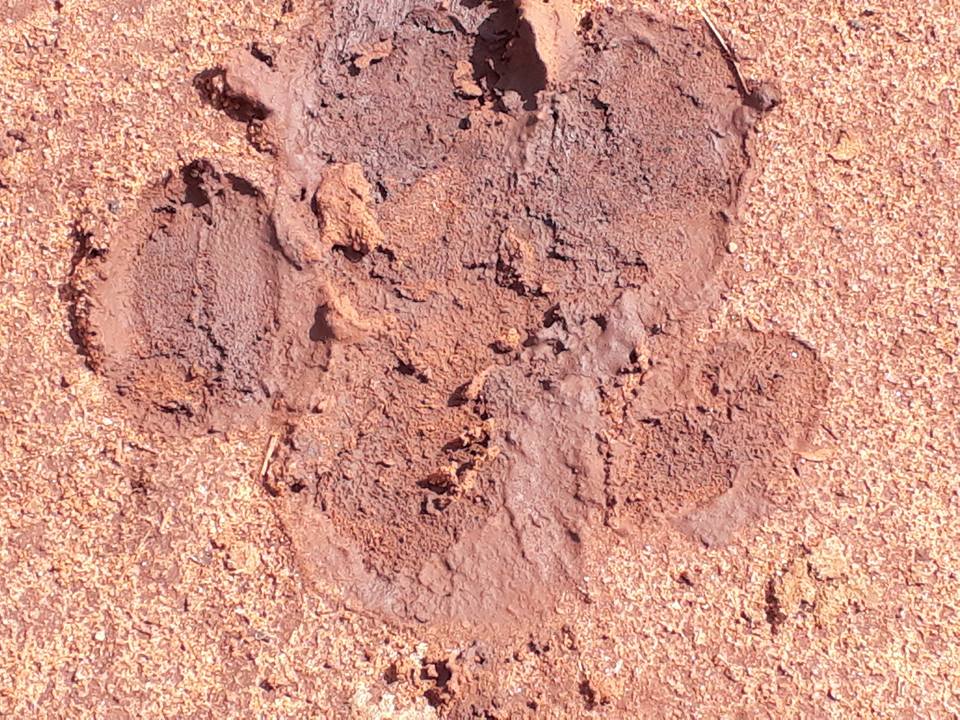
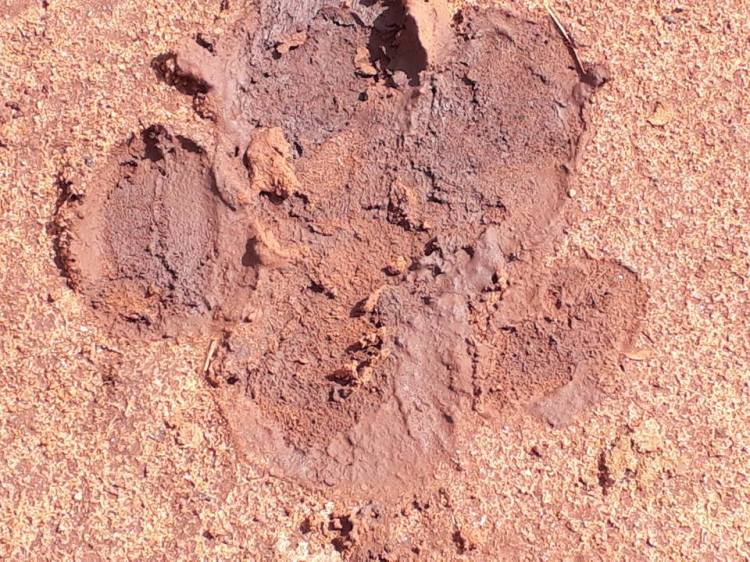
As I was volunteering in Lumo, one day we came across footprints on the road, quite close to Lions Rock. Head-ranger Elvis and others thought that there is camel, escaped from some local camel farm.
Mystery footprint
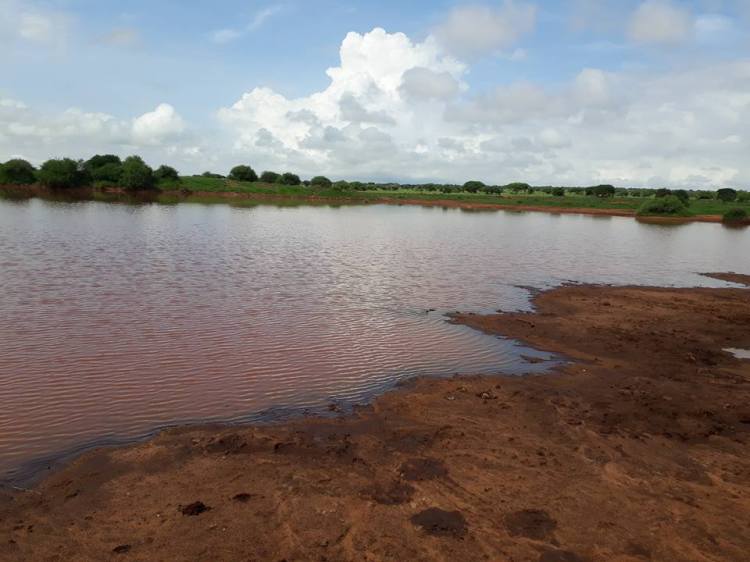
As we followed these foot prints for a day, they lead to small water bond, made for local cows and wildlife, called dam. It certainly could not be a camel! So we started to look for a Hippo instead.
Footprints leading to the water
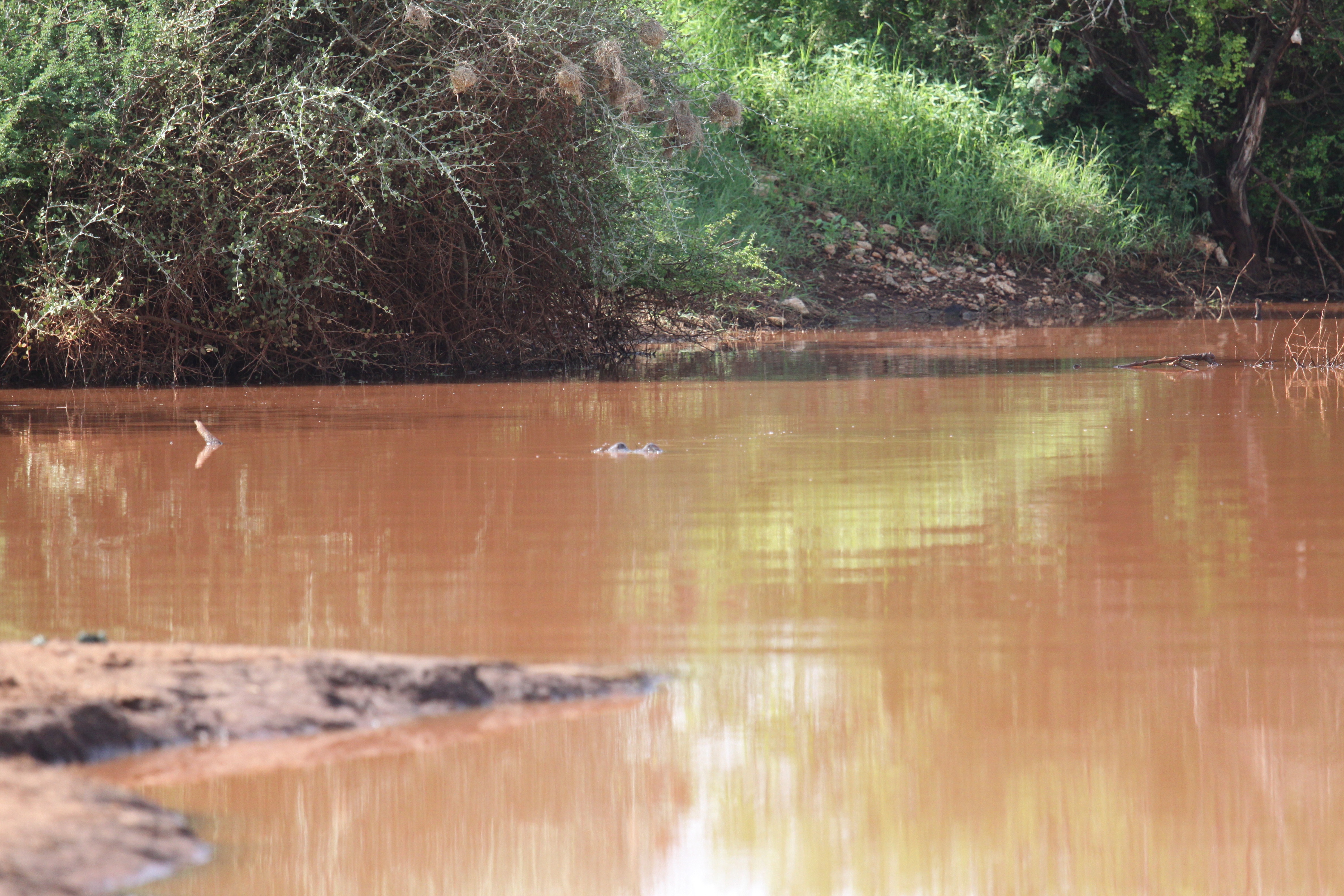
Footprints were going in and coming out of the water. Rangers went look for it from the nearby bushes, as I stayed by the bond, and kept eye on the brown surface of the water. After wait, that felt very long, I could see nostrils arising from water.
First Hippo in Lumo ever, and only photograph of it.
Kenya wildlife service (KWS) was informed, and they came the following day. Idea was to relocate Hippo to the area, where there would be space for it. This Hippo most probably was young male, that highly territorial males had chased away from Lake Jipe about 50 km away. A long walk for a large animal!
When KWS arrived, Hippo was no longer there. They and we searched for it everywhere with no luck. Day after that we heard sad news that Hippo had been shoot in Bura village. It had been aggressive towards people, and there had been no alternative. Somehow that Hippo had walked unnoticed from fenced Lumo all the way to the mountains. It had been very bad choice as in mountain slopes there are simply no places for Hippos to go underwater.

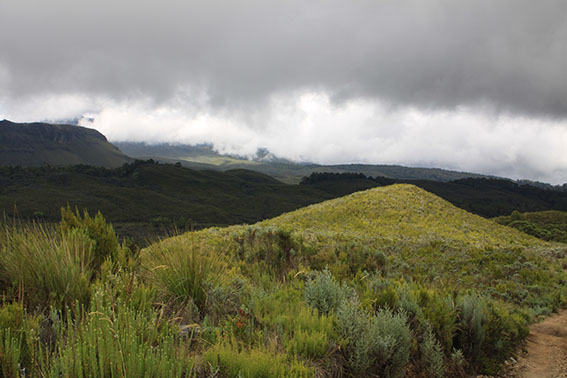
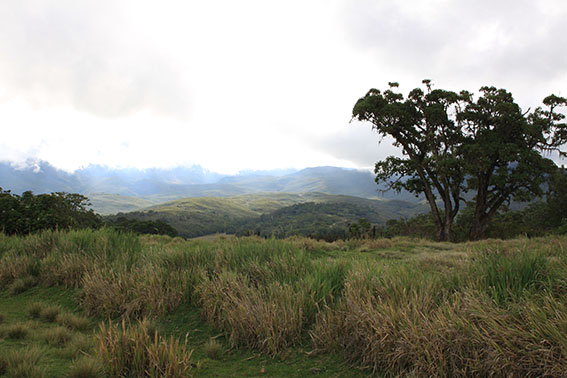
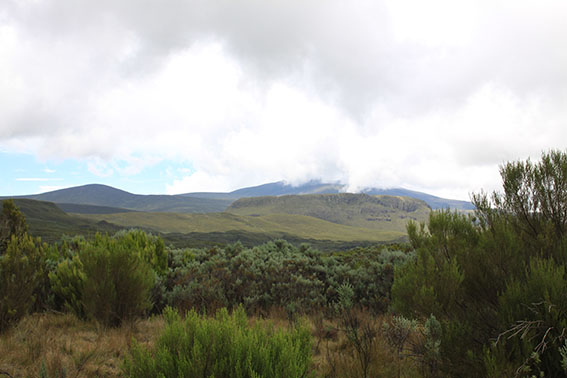
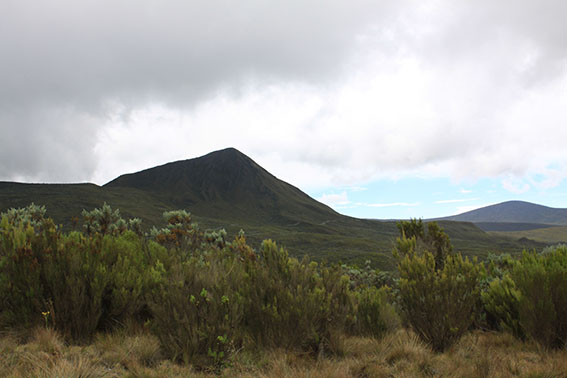
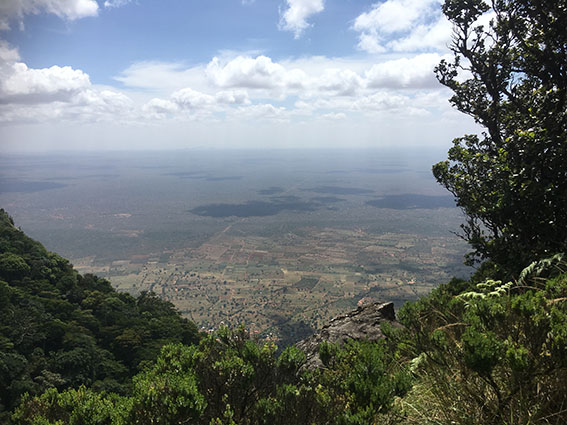
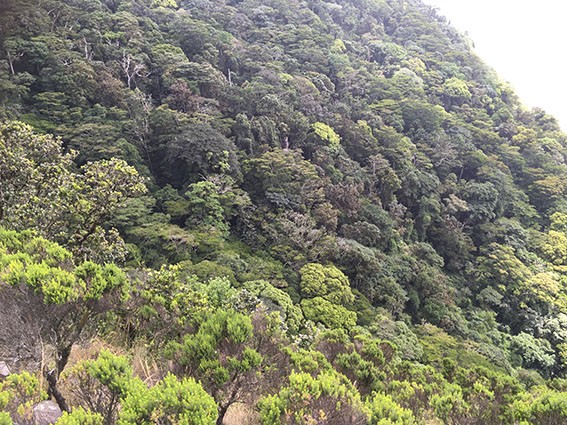
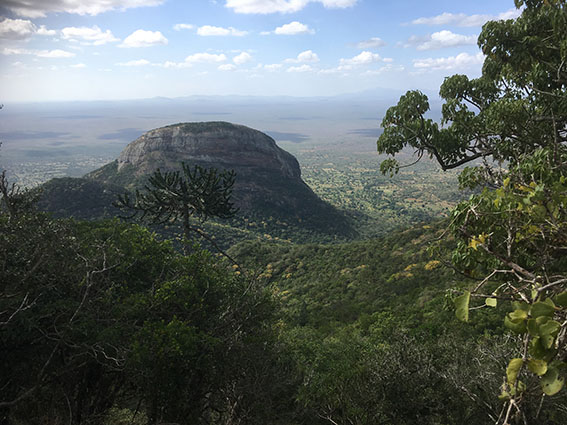
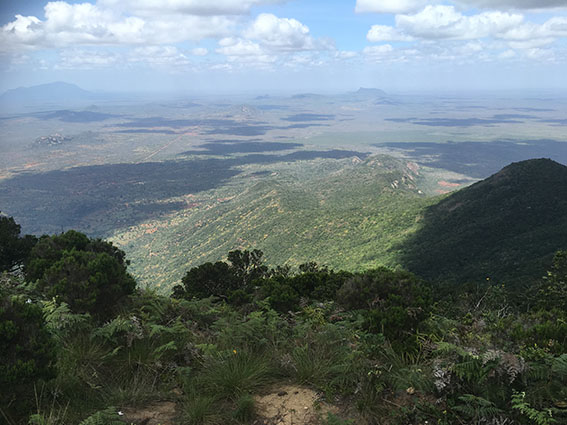



 Animals of Taita, Kenya