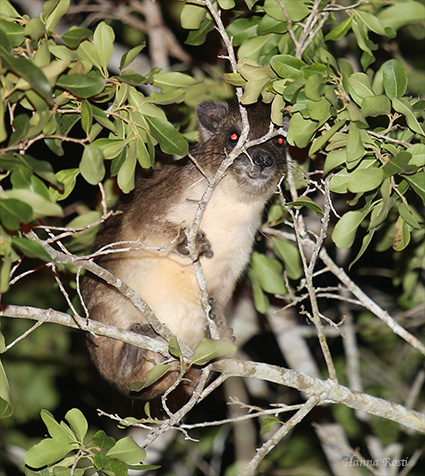
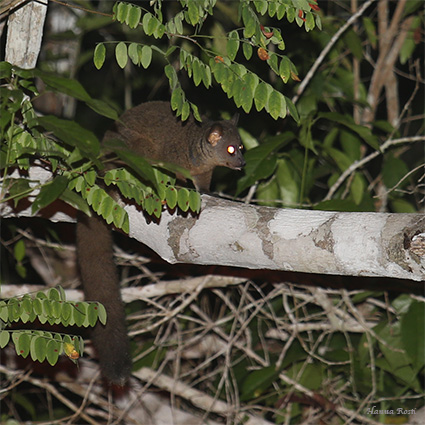
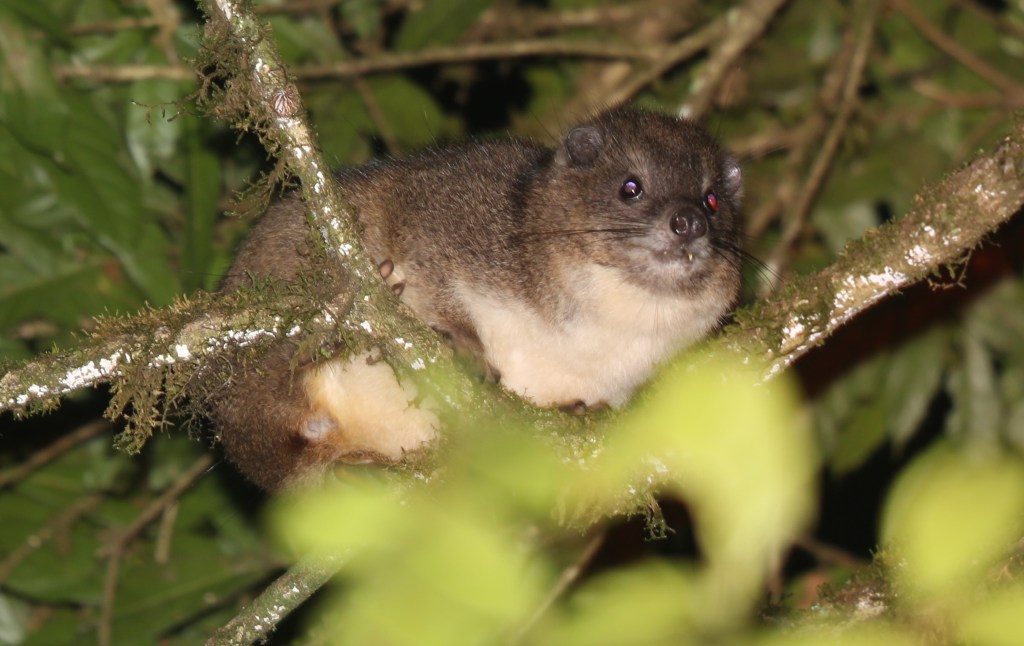
Tree hyraxes eat leaves of trees, thus they are browsers. They are excellent climbers in trees.
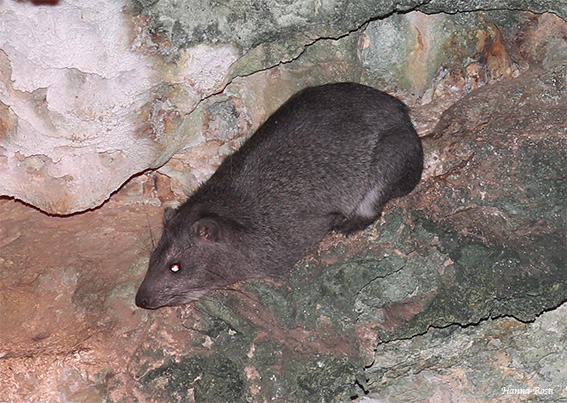
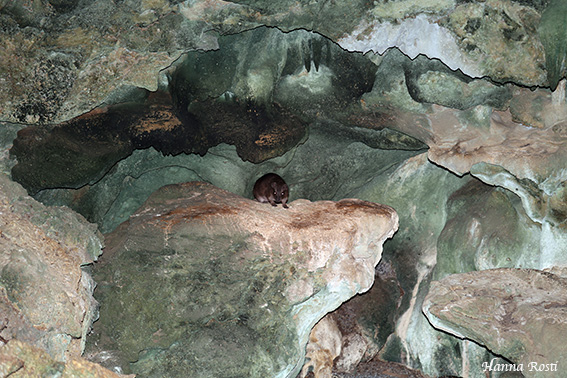
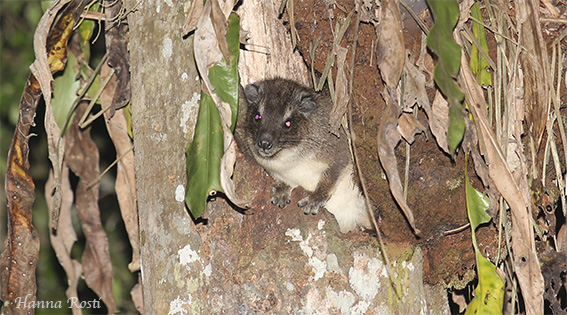
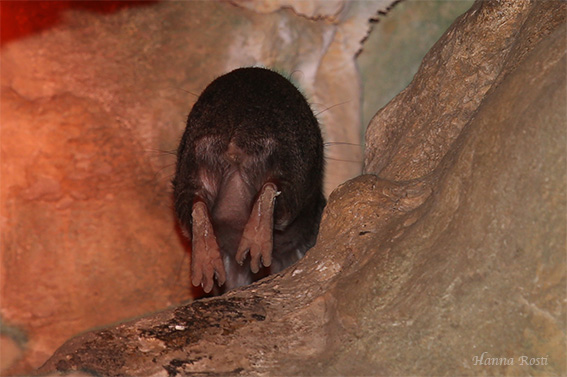
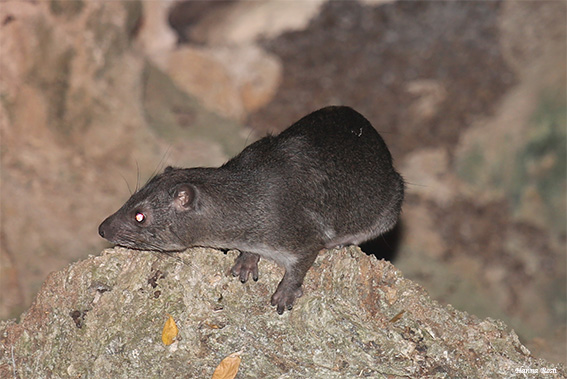
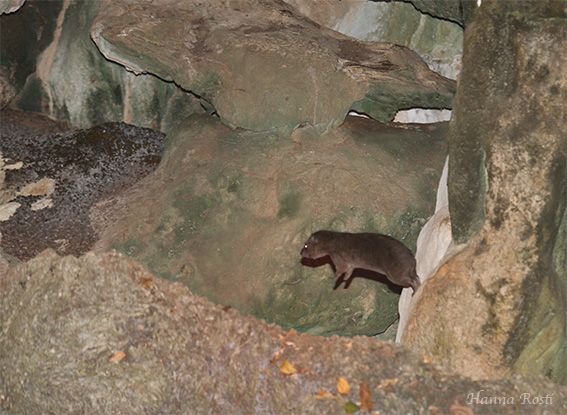
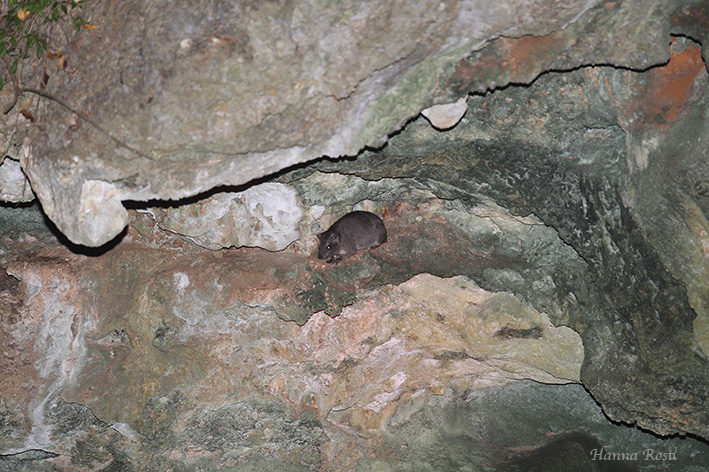
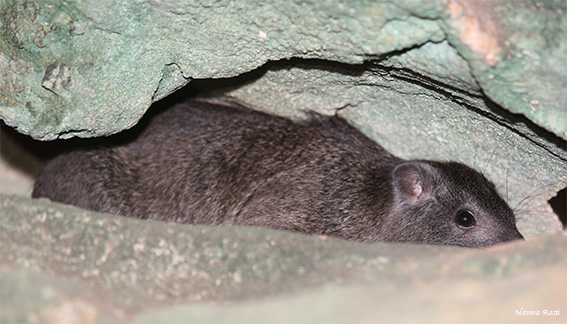
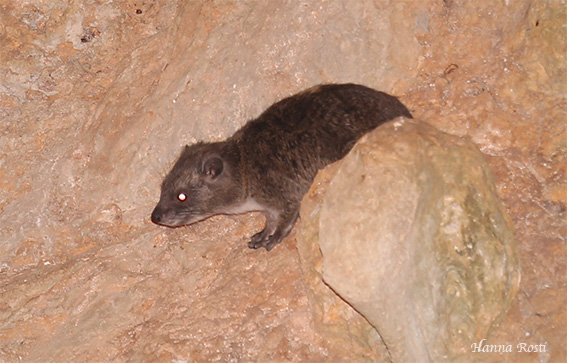
In some locations, tree hyraxes live in rocky formations, and caves.
Short 1 min video of the tree hyraxes living at the coast of Kenya
Tree hyraxes are related to rock hyraxes, that live in rocky formations. Perhaps coming down to rocky formations is not that difficult to tree hyraxes.
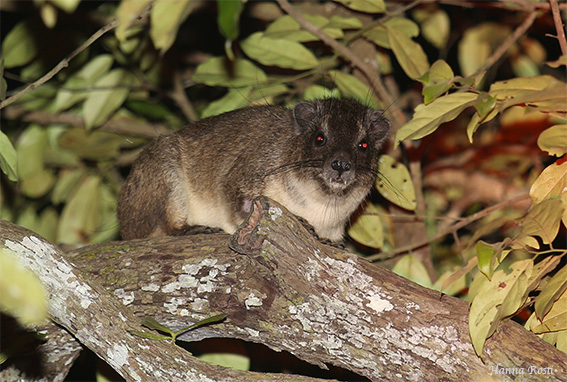
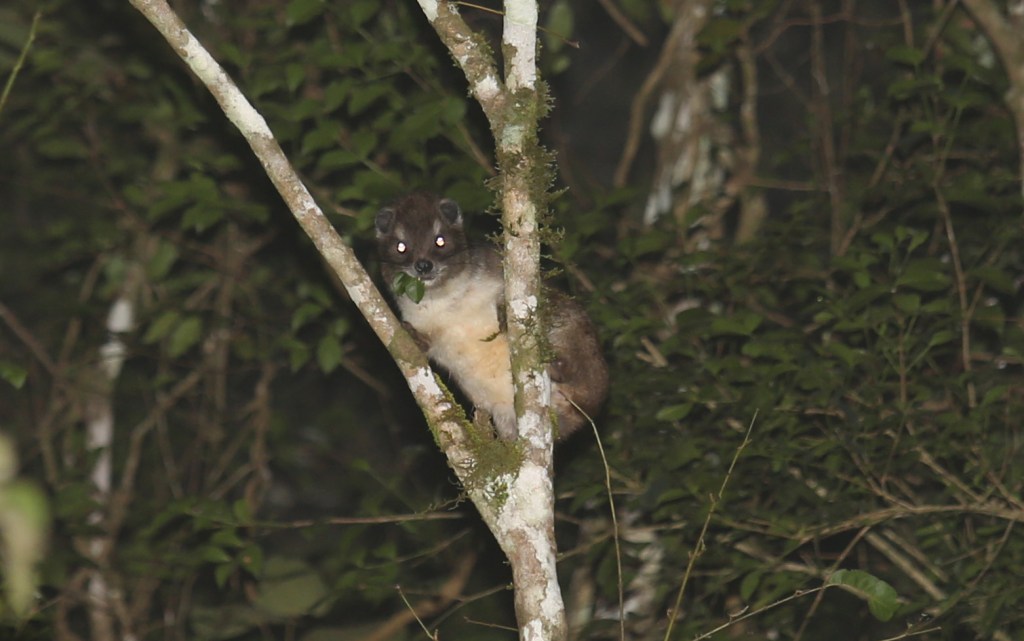
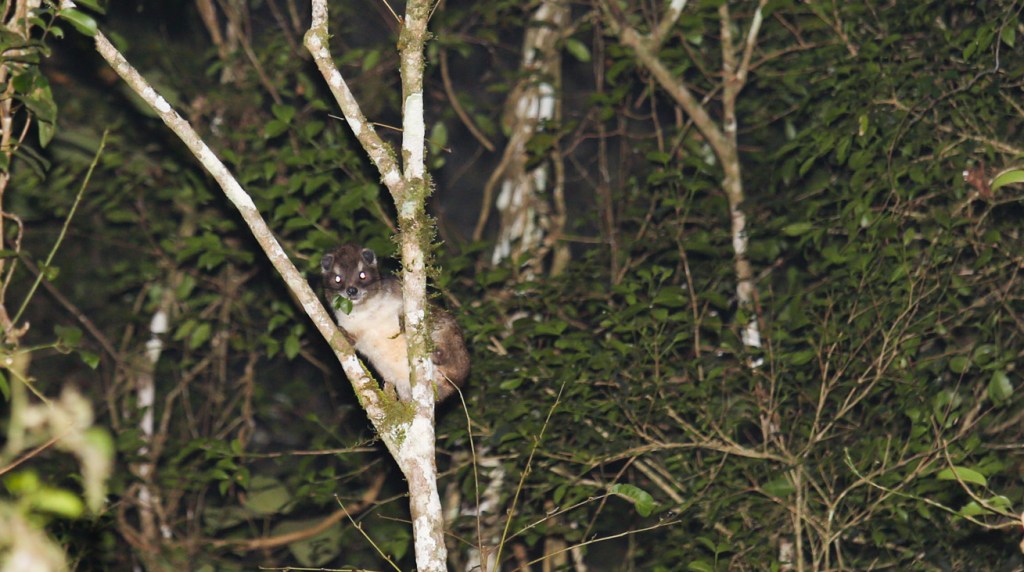
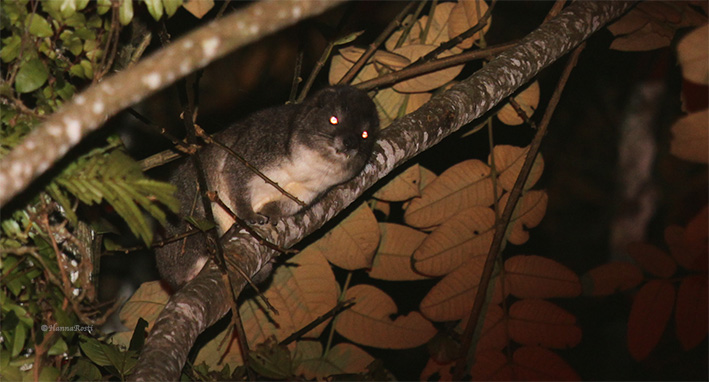
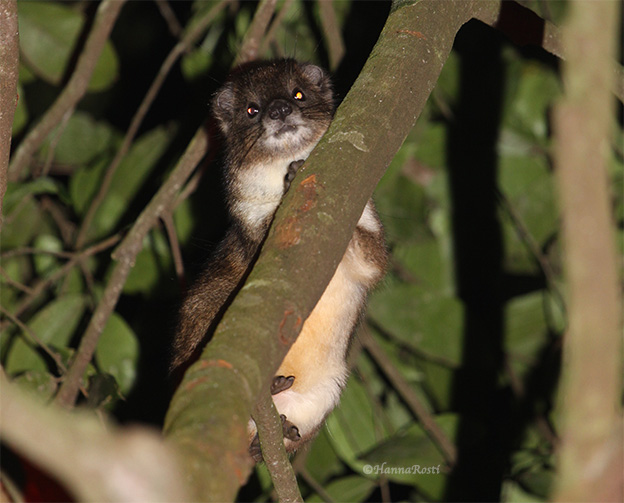
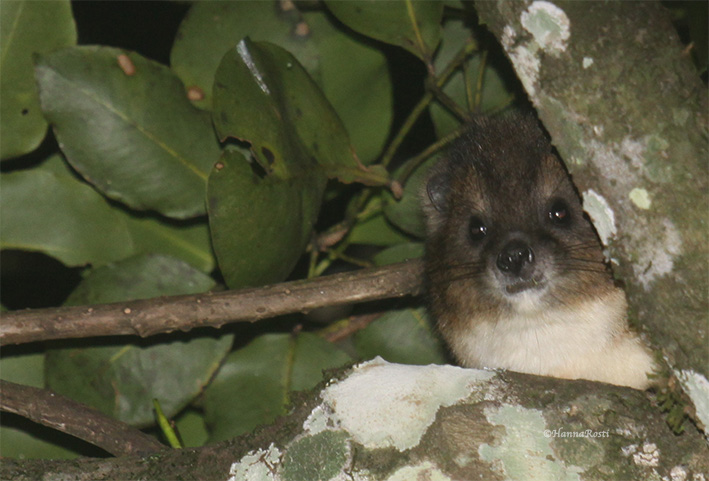
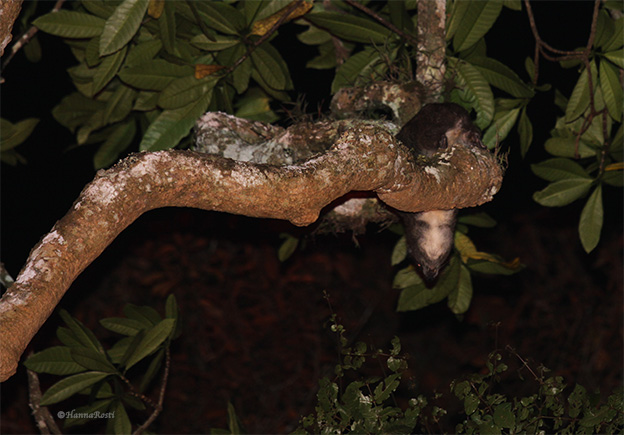
These are first photographs and video published (as far as we know) of the Eastern tree hyraxes (Dendrohyrax validus) from Kenya.
You can read the full peer reviewed article from Ecology and Evolution
Tree hyraxes can be found from Shimba Hills National Reserve. However, it is not found throughout the forest.
Tree hyraxes are easy to locate based on their calls. However, seeing them is another matter.
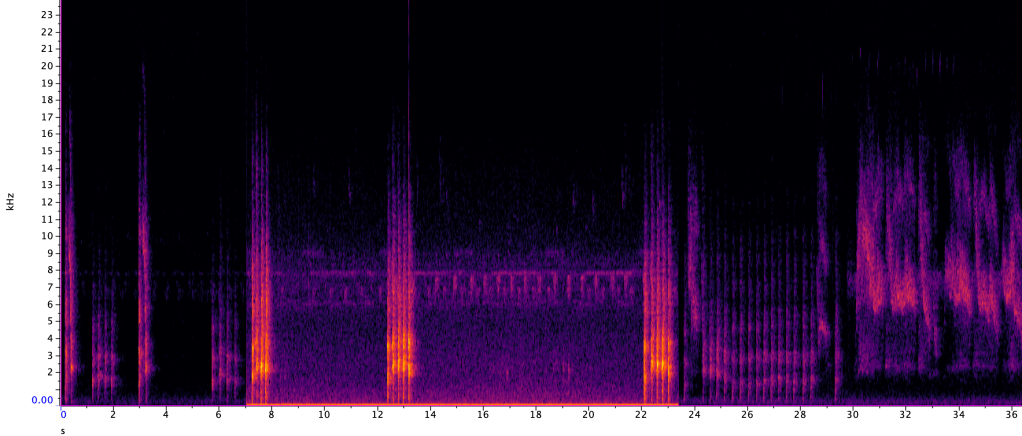
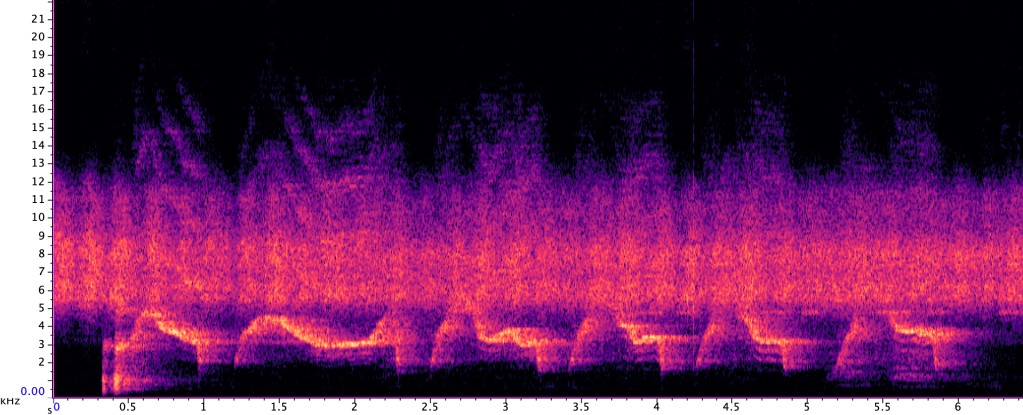
Spectrogram and combination of calls that tree hyraxes at the coast of Kenya are using.
Outside Shimba Hills, only few tiny fragments of forest remain. Tree hyraxes are dependent of moist natural forests. Even though they may be able to survive in small fragments with caves and rock for some time, these isolated populations are doomed for extinction if all forest is cleared.
Tree hyraxes in the caves are social. Also in Simba Hills, I could follow the movement of the tree hyrax group by their contact calls. I suspect that these tree hyraxes, belonging to species D. validus (as fas as we know at the moment), has similar type of social structure as rock hyraxes.
Tree hyraxes (Dendrohyrax validus) from the caves in 2022
Dendrohyrax – tree hyraxes – 4 species at the moment – more to come
Heterohyrax – bush hyrax – 1 species + 20+ subspecies
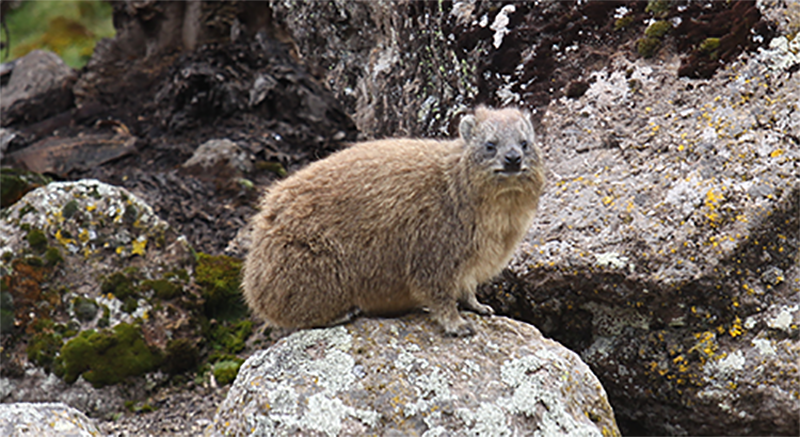
Procavia – rock hyrax – 1 species +17 subspecies – and some of them are species
Taita tree hyrax (Dendrohyrax sp.)
Some features
small mammals 1.8-5.5 kg
no visible tail
coat dense and light grey to dark brown
all three genera are highly vocal
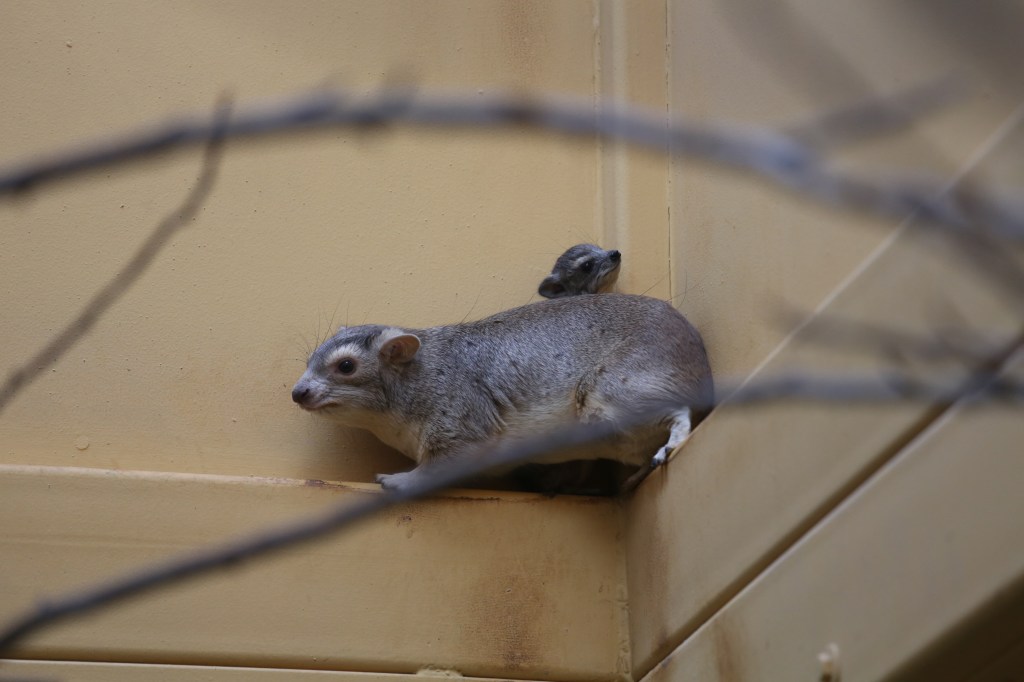
Bush hyrax from Plzen Zoo, Czech. They are smaller, grayish, and they have very strong white patches above the eyes. They are not as round as rock hyrax and tree hyraxes.
Unusual features
dorsal gland with hair with different color
tactile hairs around the body (length up to 8 cm)
forefoot has four digits and hindfoot three
stomach divided into two chambers
highly subdivided liver – plant food they use may be toxic
internal testes
unbranched caecum acts as a fermentation chamber that produces large amounts of volatile fatty acids that serve as an energy source
effective kidney function, they have high capacity for concentrating urea, and excreting large amounts of undissolved calcium carbonate.
many species defaecate to specific spots, and many species use latrines
low metabolic rate
they have poor ability to regulate their body temperature
body temperature is is maintained by behavioral thermoregulation
gestation period is long 6-8 months
Odd appearance has caused confusion
First they were thought to be rodents, thus genus Procavia (cavia meaning before guinea pigs)
Later called hyrax – equally wrong – as “shrew mouse”
Dassie used in South Africa comes from Dutch badger – das
3000 years age Phoenician seamen found small mammals from Mediterrian and called the place “I-saphan-im” Island of the Hyrax. The Romans later modified the name to Hispania. That later became Spain. The animals were really rabbits! Not hyraxes, so the name “Spain” comes from faulty observation.
Key reference: Shoshani, J., Bloomer, P., Seiffert, E. (2013) ‘Order Hyracoidea – Hyraxes’ in Mammals of Africa. London, Bloomsbury, pp. 148-151.
Other sources for Dendrohyraxes:
Cordeiro, N.J. et al. (2005) ‘Notes on the ecology and status of some forest mammals in four Eastern Arc Mountains, Tanzania’, Journal of East African Natural History, 94(1), pp. 175–189. doi:10.2982/0012-8317(2005)94[175:NOTEAS]2.0.CO;2.
Gaylard, A. and Kerley, G.I.H. (1997) ‘Diet of Tree Hyraxes Dendrohyrax arboreus (Hyracoidea: Procaviidae) in the Eastern Cape, South Africa’, Journal of Mammalogy, 78(1), pp. 213–221. doi:10.2307/1382654.
Gaylard, A. and Kerley, G.I.H. (2001) ‘Habitat assessment for a rare, arboreal forest mammal, the tree hyrax (Dendrohyrax arboreus)’, African Journal of Ecology, 39(2), pp. 205–212. doi:10.1046/j.0141-6707.2000.301.x.
Hoeck, H. (no date) ‘Some thoughts on the distribution of the tree hyraxes (genus Dendrohyrax) in Northern Tanzania’, 2017(13:47–49).
IUCN (2013) ‘Dendrohyrax arboreus: Butynski, T., Hoeck, H. & de Jong, Y.A.: The IUCN Red List of Threatened Species 2015: e.T6409A21282806’. International Union for Conservation of Nature. doi:10.2305/IUCN.UK.2015-2.RLTS.T6409A21282806.en.
IUCN (2014) ‘Dendrohyrax validus: Hoeck, H., Rovero, F., Cordeiro, N., Butynski, T., Perkin, A. & Jones, T.: The IUCN Red List of Threatened Species 2015: e.T136599A21288090’. International Union for Conservation of Nature. doi:10.2305/IUCN.UK.2015-2.RLTS.T136599A21288090.en.
Kundaeli, J.N. (1976) ‘Distribution of tree hyrax (Dendrohyrax validus validus True) on Mt Kilimanjaro, Tanzania’, African Journal of Ecology, 14(4), pp. 253–264. doi:10.1111/j.1365-2028.1976.tb00241.x.
Milner, J.M. and Harris, S. (1999) ‘Habitat use and ranging behaviour of tree hyrax, Dendrohyrax arboreus, in the Virunga Volcanoes, Rwanda: Habitat use by tree hyrax’, African Journal of Ecology, 37(3), pp. 281–294. doi:10.1046/j.1365-2028.1999.00185.x.
Oates, J.F. et al. (2021) ‘A new species of tree hyrax (Procaviidae: (Dendrohyrax) from West Africa and the significance of the Niger–Volta interfluvium in mammalian biogeography’, Zoological Journal of the Linnean Society, p. zlab029. doi:10.1093/zoolinnean/zlab029.
Opperman, E.J., Cherry, M.I. and Makunga, N.P. (2018) ‘Community harvesting of trees used as dens and for food by the tree hyrax (Dendrohyrax arboreus) in the Pirie forest, South Africa’, Koedoe, 60(1). doi:10.4102/koedoe.v60i1.1481.
Roberts, D., Topp-Jørgensen, E. and Moyer, D. (2013) ‘Dendrohyrax validus Eastern tree hyrax’, in Mammals of Africa. London, Bloomsbury, pp. 158–161.
Topp-Jørgensen, J.E. et al. (2008) ‘Quantifying the Response of Tree Hyraxes ( Dendrohyrax Validus ) to Human Disturbance in the Udzungwa Mountains, Tanzania’, Tropical Conservation Science, 1(1), pp. 63–74. doi:10.1177/194008290800100106.
True, F.W. (1890) ‘Description of two new species of mammals from Mt. Kilima-Njaro, East Africa’, Proceedings of the United States National Museum, 13(814), pp. 227–229. doi:10.5479/si.00963801.814.227.
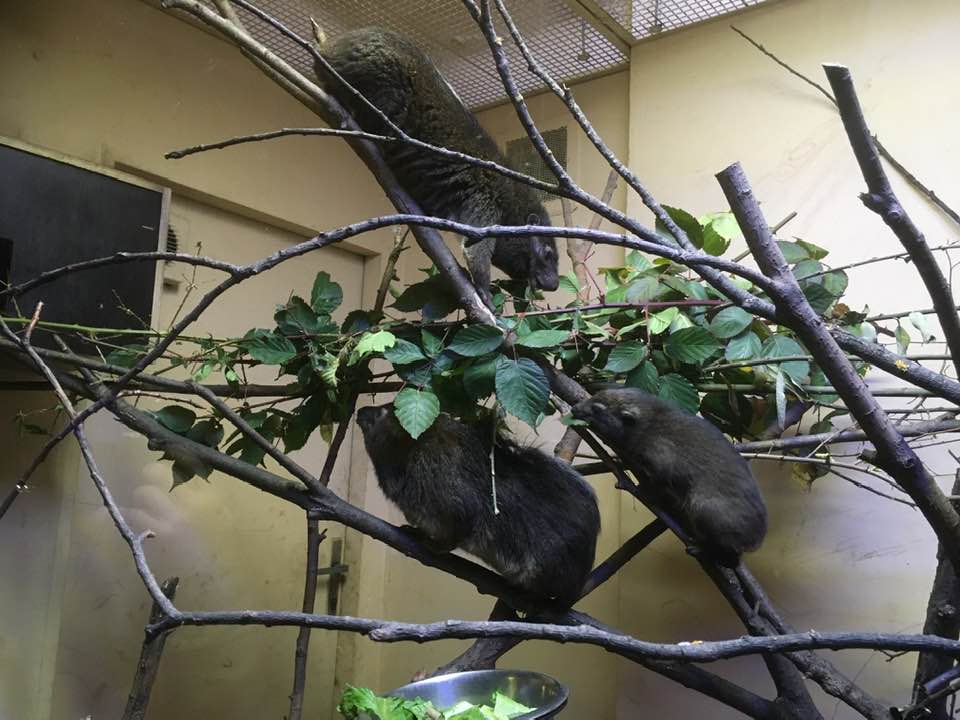
Dendrohyrax dorsalis family, male, female and one juvenile from Plzen Zoo, Czech. (October 2021). In this species female (up) is larger than male (down), juvenile is on the right.
Six subspecies have been recognized, and resently Oates et al. (2022) described one as Dendrohyrax interfluvialis from Benin.
Coat is dark brown/black with clear, large, white back patch.
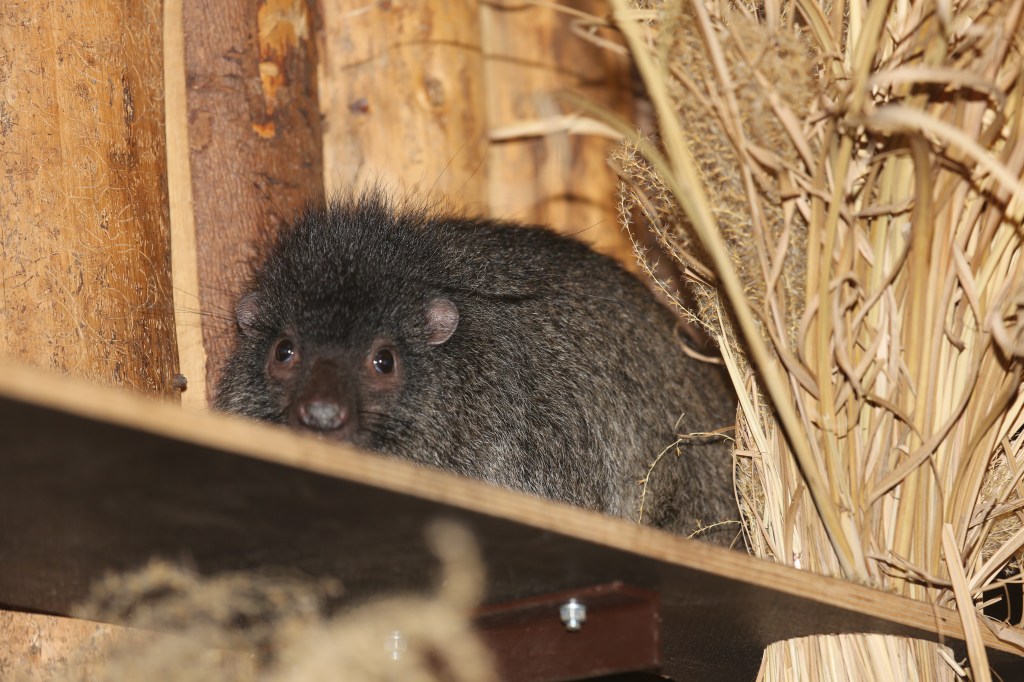
Dendrohyrax dorsalis from Ostrava Zoo, Czech
Compared to other Dendrohyrax species they are more calm and less shy. They call less frequently.
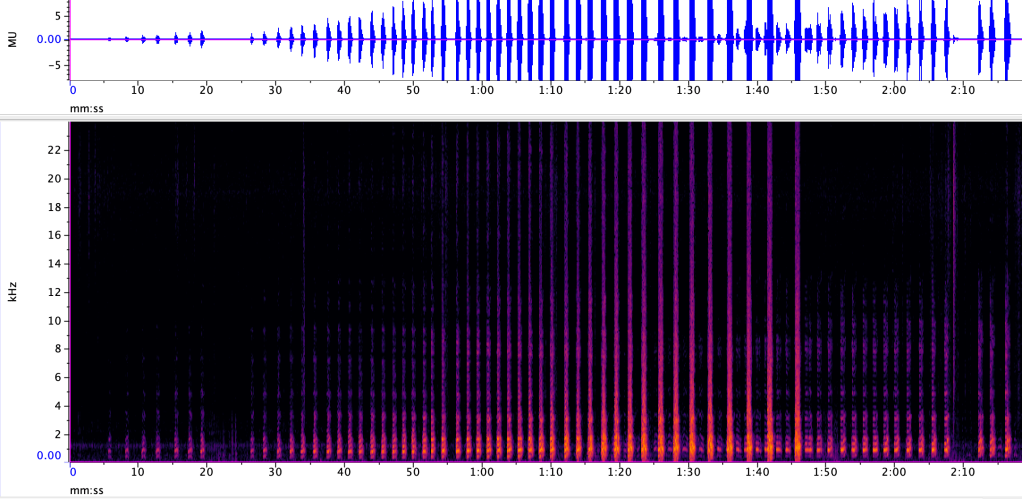
Dendrohyrax dorsalis calls recorded from Ostrava zoo in October 2021. Family, again male, female and one offspring are calling together about three am in the morning.Listen to the call of D dorsalis, call is the same as in spectrogram.
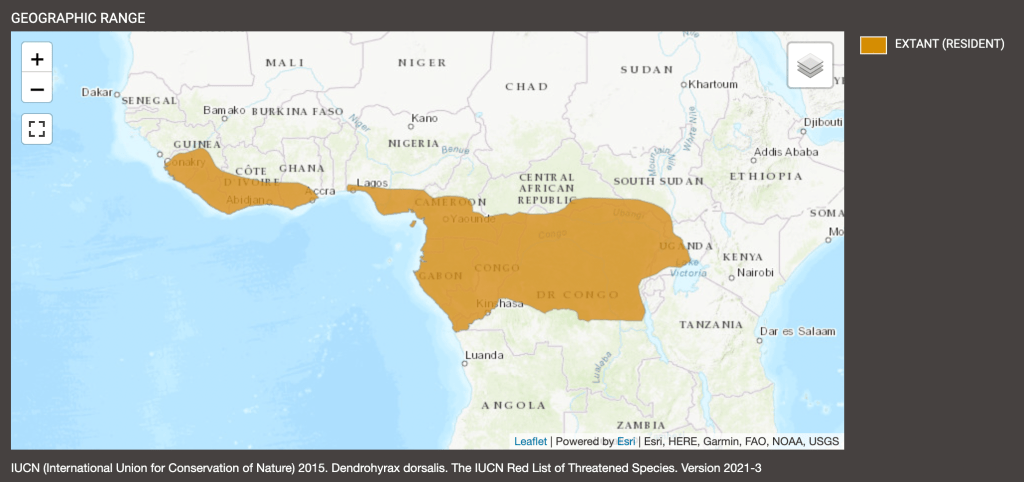
D. dorsalis range extends from Guinea to Uganda. Map from IUCN assessment (Butynski et al. 2014).
D. dorsalis is found in moist lowland forests and moist savannas to an altitude of 1500 m asl.
There are no behavioral studies of the species. Group structure is unknown.
In fact it is very difficult to find any articles about D. dorsalis.
Herbivorous, eats mainly leaves, shoots and seeds.
In many parts of the range births happen throughout the year.
Key reference: Shultz, S. & Roberts, D. (2013) ‘Dendrohyrax dorsalis Western tree hyrax’ In: Mammals of Africa. Bloomsbury. London.
Sources:
Butynski, T., Dowsett-Lemaire, F. & Hoeck, H. 2015. Dendrohyrax dorsalis. The IUCN Red List of Threatened Species 2015: e.T6410A21282601. http://dx.doi.org/10.2305/IUCN.UK.2015- 2.RLTS.T6410A21282601.en
Oates, J.F. et al. (2021) ‘A new species of tree hyrax (Procaviidae: (Dendrohyrax) from West Africa and the significance of the Niger–Volta interfluvium in mammalian biogeography’, Zoological Journal of the Linnean Society, p. zlab029. doi:10.1093/zoolinnean/zlab029.
This rare footage shows Taita tree hyrax feeding and moving in the indigenous forest of Taita Hills 2020. Filmed by Benson Lombo, edited by Hanna Rosti.
Short video introduction to tree hyraxes, with unique footage
Video of tree hyraxes filmed at night with night binoculars
As far as we know this is first video of tree hyraxes filmed at night. Tree hyraxes in East Africa are extremely shy, and difficult to observe. Usually they vanish in to the canopy when seen, or before humans can see them.
Mwalua Wildlife Trust was founded by Patrick Kilonzo to provide drinking water for animals suffering from lack of water during the dry season. As Water for Elephants has been success, many more work needs to be done. Volunteers from all over the world are welcome to join
Test if you identify animals from thermal imaging camera. Animals in the video are nocturnal and live in indigenous cloud forests of Taita Hills, Kenya. These animals are surviving on the last fragments of indigenous forest.
Tsavo West is one of most beautiful places in the world. And one of world largest conservation areas. This short film introduces scenery of Tsavo West and its most common animals. Peter also visits Chaimu crater and Mzima springs.
This article focuses on incredible variable acoustic communication of Taita tree hyrax. If you are interested in other peculiar features of tree hyraxes please read this previous article of Taita tree hyraxes.
Taita tree hyrax is believed to be undescribed species for the science based on these calls. For nocturnal cryptic animals, that are difficult to observe, call analysis has been the typical method of making taxonomic evaluation. Each species have their typical calls, especially calls that are used for so called ‘advertising’. These are calls that are used to draw attention of other con-species.
Taita tree hyrax female. Life of tree hyraxes are almost completely unknown. We don’t know if both sexes are calling, or are they just males. Tree hyraxes are believed to be solitary, but continues calling is difficult to explain for animal that is believed to be solitary.
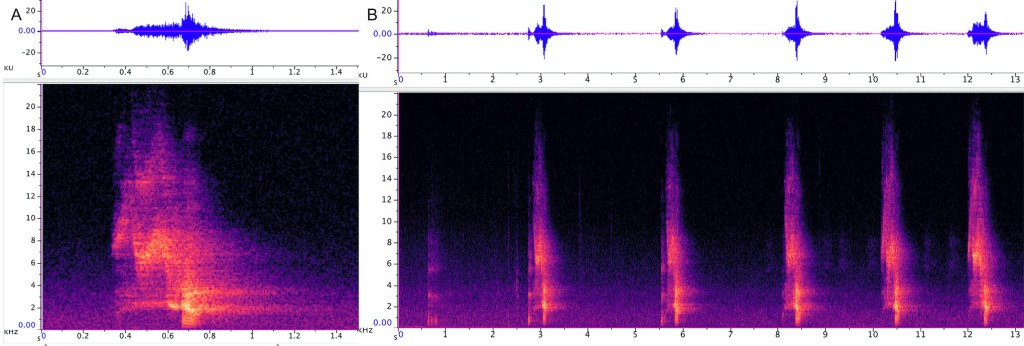
Basic territorial call that is heard frequently in the forests of Taita Hills is ‘strangled thwack’. This call is most likely call that tree hyraxes use to claim their territory. Tree hyraxes eat leaves, and they are dependent on tree cavities for daytime sleeping sites.
Strangled thwack is more than 100 dB call. Twist in the call, and noisy elements make sure that this call doesn’t go unnoticed.
Strangled thwacks are used in Taita Hills and in East Usambara Mountain. East Usambara Mountains are 160 km from Taita Hills. East Usambara Mountains are also part of Eastern Arch Mountains, and it is located in Tanzania.
Based on this very unique call type, Taita tree hyrax is believed to be tree hyrax species that is not yet described scientifically (Rosti et al. 2020).
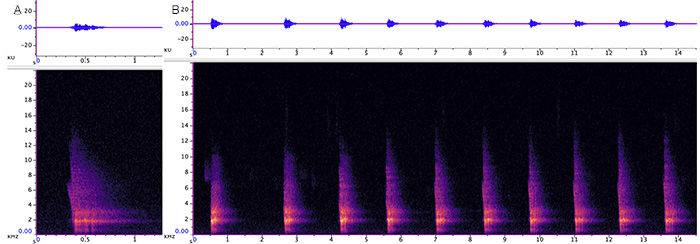
Strangled thwack call from Taita Hills. Horizontal axel time (s), vertical axel frequency (kHz) A) One strangled thwack call. Call duration about 1 s. Noticechanges (frequency modulation) in the strongest frequency of the call.B) Sequence of strangled thwacks. Usually tree hyraxes use these calls in about 10 call sequences where they counter call with other tree hyraxes.Strangled thwack sequence from one animal
Usually tree hyraxes are counter calling with each other.
TaitaTree hyrax counter-calling
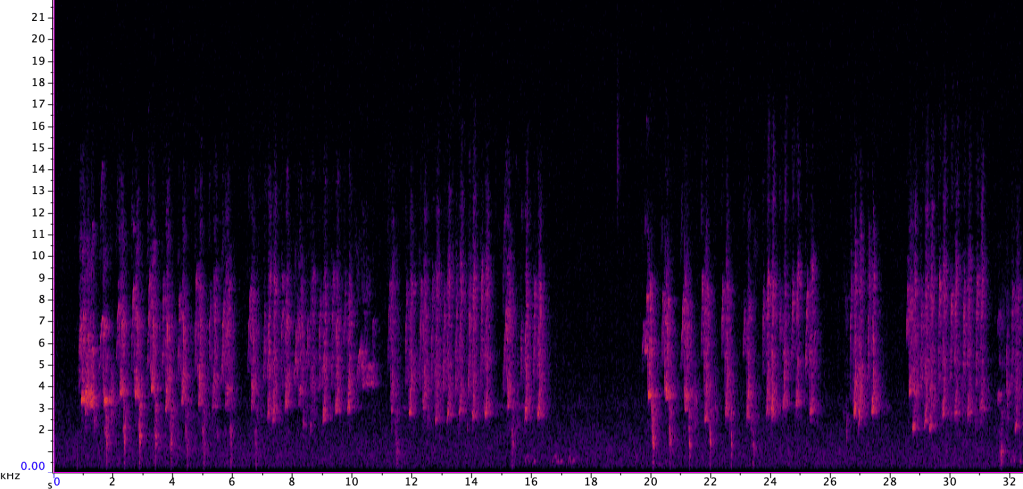
Another call type that tree hyraxes are using in Taita Hills is called hac. Hac call is used as territorial call. It is not quite as loud and frequency range is lower. Probably hac call is used when calling animal becomes little tired, or it want’s to use call type that is slightly less demanding.
Spectrograms of hac calls, time (s) on horizontal axel, frequency (kHz) on vertical axel.Hac call has smaller frequency range and it can be continued much longer, sometimes sequence may have more than hundred calls.
Songs from Taita tree hyrax
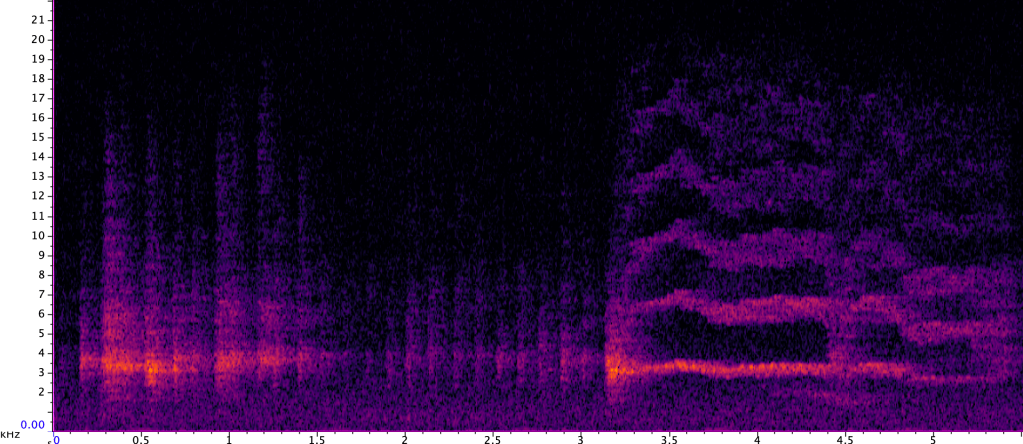
Taita tree hyrax sings songs. Songs have been previously found from rock hyrax (Procavia capensis) (Koren et al. 2008).
Singing mammals are very rare. Gibbons and whales sing. But I don’t know other singing mammals.
Singing Taita tree hyrax. Duration on horizontal axel (s) and frequency on vertical axel (kHz). These songs may last for more than 12 minutes.Sound sample from Taita tree hyrax song.Dendrohyrax song may begin like this.
Purpose of these songs are unknown. Probably they are used by males as they advertise their fitness for females that might be available for mating. In Taita Hills, remaining forests are packed with tree hyraxes and most likely all available territories are taken. It might mean that moving from one place to another could be difficult. Tree hyraxes may have to take a risk and come down to the ground where they are in greater danger to be hunted by genets. Acoustic communication is used as means to communicate with other tree hyraxes.
Tree hyrax wheezes, wheeze may be used as part of a song or aloneTaita tree hyrax wheezes with katytids on the background
More reading about tree hyraxes:
Demartsev, Vlad, Arik Kershenbaum, Amiyaal Ilany, Adi Barocas, Einat Bar Ziv, Lee Koren, and Eli Geffen. 2014. “Male Hyraxes Increase Song Complexity and Duration in the Presence of Alert Individuals.” Behavioral Ecology 25 (6): 1451–58. https://doi.org/10.1093/beheco/aru155.
Hoeck, Hendrik. 2017. “Some Thoughts on the Distribution of the Tree Hyraxes (Genus Dendrohyrax) in Northern Tanzania.” Afrotherian Conservation, no. 13: 47–49.
IUCN. 2014. “Dendrohyrax Validus: Hoeck, H., Rovero, F., Cordeiro, N., Butynski, T., Perkin, A. & Jones, T.: The IUCN Red List of Threatened Species 2015: E.T136599A21288090.” International Union for Conservation of Nature. https://doi.org/10.2305/IUCN.UK.2015-2.RLTS.T136599A21288090.en.
Koren, Lee, Ofer Mokady, and Eli Geffen. 2008. “Social Status and Cortisol Levels in Singing Rock Hyraxes.” Hormones and Behavior 54 (1): 212–16. https://doi.org/10.1016/j.yhbeh.2008.02.020.
Roberts, Diana, Elmer Topp-Jørgensen, and D.C. Moyer. 2013. “Dendrohyrax Validus Eastern Tree Hyrax.” In Mammals of Africa Vol I. Vol. 2013. Bloomsbury.
I will never forget fist time that I heard tree hyrax. I was sitting on a log. It was first time I was in the forest after dark. I was companied by Kenya Forest Service ranger Jonam Mwandoe. Startling call, that seemed to come just to my ear, almost dropped me from the log. I asked what an earth was that?
Jonam told me about tree hyraxes, but I really didn’t understand. I had no idea that there could be relatives of elephants in the trees. For some time I thought of them as some peculiar rodents, which they really are not!
Each night in the forest had been filled with their vocalizations, where individuals counter call to another. But it took weeks to see one. At the time I had no idea how special this event was.
This individual, probably young female was first tree hyrax I saw. It was resting just about 4 meters above the ground. Females have smaller and rounder tusks.
Researchers just don’t see tree hyraxes. And this is probably why these animals are so neglected in science. Studying animals that you can’t see in difficult and challenging conditions and producing scientific articles with real data even more difficult.
As time went on I gathered more pictures and tons of recordings of their vocalizations. I became more and more intrigued by these mysterious animals. Then it really hit me:
Tree elephants!!!!
Hyraxes belong to Paenungulata, their relatives are elephants and manatees. How amazing and unbelievable group!
My supervisor, emeritus professor Simon Bearder pointed out from recordings, that these tree hyraxes are new species for the science.
Special features of tree hyraxes
Belong to Paenungulata with elephants and manatees
Small tusks
Teeth like rhinos
Dense fur
Three toes
Round body
Eat leaves, fibrous, low calorie diet
Slow metabolic rate
Complicated digestion system
Low body temperature
Internal testes
Whiskers around the body
Scent gland
Spends days in tree holes
Use toilets
Extremely variable vocal communication
Solitary
Nocturnal
Variable vocal communication suggests that this species has complex social behavior, even though they are solitary. Knowledge of these species and their behavior is very limited.
This male is much larger and has bigger tusks.
Ecological niche of tree hyrax is the same as koala and sloth
In some two largest forests of Taita Hills, Ngangao and Mbololo tree hyrax density is high. However total area of these forests are only three square kilometers. As density is high, young animals are forced to move out of forest, where they easy food for dogs.
Tree hyrax only lives in indigenous forest. It is dependent on tree cavities for safety
Tree hyrax jumping from branch to another. Thinking and hesitating took minutes before actual jump.
How tree hyraxes can live in the canopy of tall mountain rain forest is amazing. Animal is heavy, it has only tree toes. It seems like species that is taken out of their real environment.
One form of protection for this species could be to build artificial nest in areas, where are trees, but no tree cavities. However replanting of indigenous forest and building corridors between fragments is necessary for long term survival of this species.
This sweet female was observing us from close range, she was possibly moving on to new tree.
These unknown tree hyraxes are in serious threat by human development all over Africa, not just in Taita Hills. Different species of tree hyraxes are possibly going extinct even before they are identified.
Mammals of Africa (2013):
“Major revision of this group is overdue”
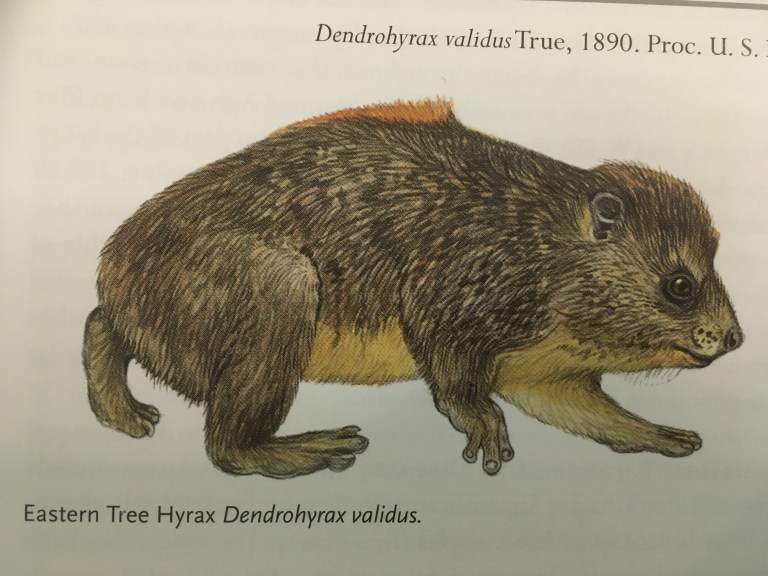
Eastern tree hyrax (Dendrohyrax validus) drawing from Mammals of Africa (Kingdon 2013).
“Taita tree hyrax desperately needs taxonomic identification and conservation”
Cordeiro, Norbert J., Nathalie Seddon, David R. Capper, Jonathan M. M. Ekstrom, Kim M. Howell, Isabel S. Isherwood, Charles A. M. Msuya, et al. 2005. “NOTES ON THE ECOLOGY AND STATUS OF SOME FOREST MAMMALS IN FOUR EASTERN ARC MOUNTAINS, TANZANIA.” Journal of East African Natural History 94 (1): 175–89. https://doi.org/10.2982/0012-8317(2005)94%5B175:NOTEAS%5D2.0.CO;2.
IUCN. 2013. “Dendrohyrax Arboreus: Butynski, T., Hoeck, H. & de Jong, Y.A.: The IUCN Red List of Threatened Species 2015: E.T6409A21282806.” International Union for Conservation of Nature. https://doi.org/10.2305/IUCN.UK.2015-2.RLTS.T6409A21282806.en.
IUCN. 2014. “Dendrohyrax Validus: Hoeck, H., Rovero, F., Cordeiro, N., Butynski, T., Perkin, A. & Jones, T.: The IUCN Red List of Threatened Species 2015: E.T136599A21288090.” International Union for Conservation of Nature. https://doi.org/10.2305/IUCN.UK.2015-2.RLTS.T136599A21288090.en.
Kingdon, Jonathan, ed. 2013. Mammals of Africa. Vol. 1: Introductory Chapters and Afrotheria. London: Bloomsbury.
Roberts, Diana. 2001. “GEOGRAPHIC VARIATION IN THE LOUDCALLS OF TREE HYRAX – DENDROHYRAX VALIDUS (TRUE 1890) – IN THE EASTERN ARC MOUNTAINS, EAST AFRICA: TAXONOMIC AND CONSERVATION IMPLICATIONS.” UNIVERSITY OF READING.


 Animals of Taita, Kenya