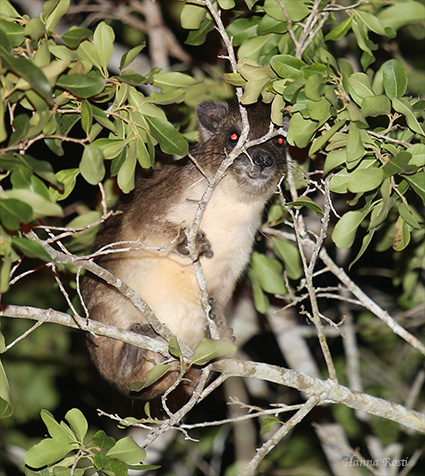
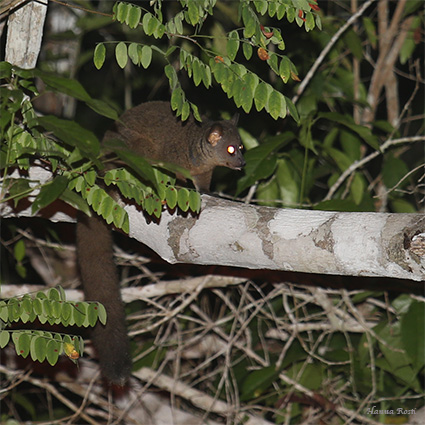
Tree hyraxes eat leaves of trees, thus they are browsers. They are excellent climbers in trees.
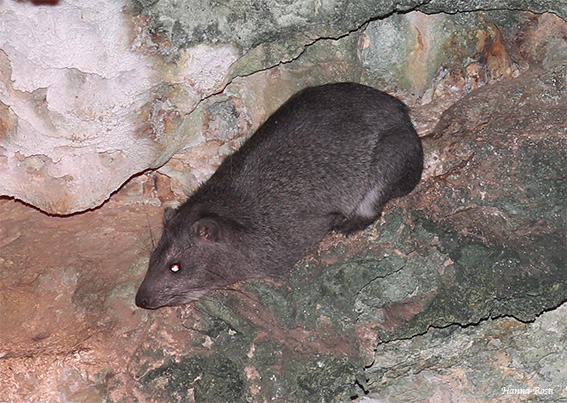
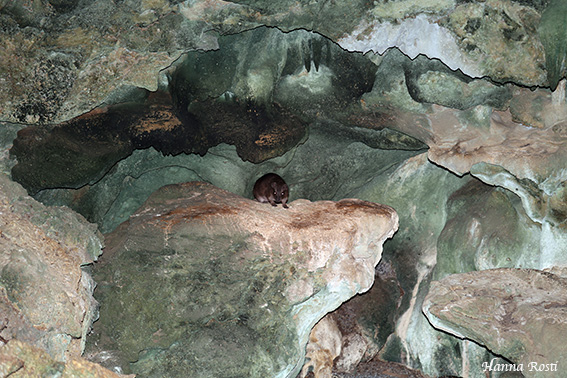
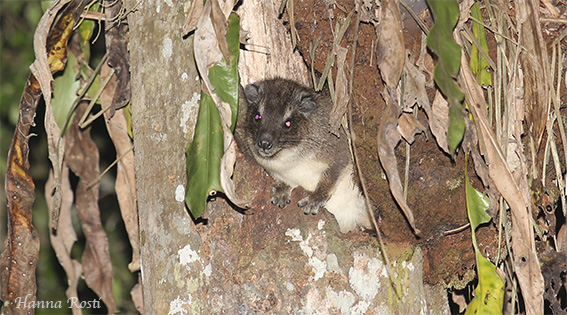
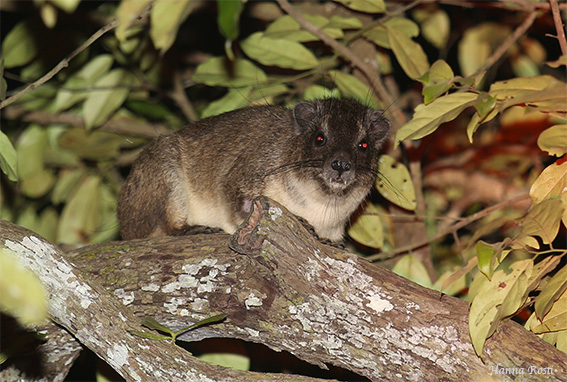
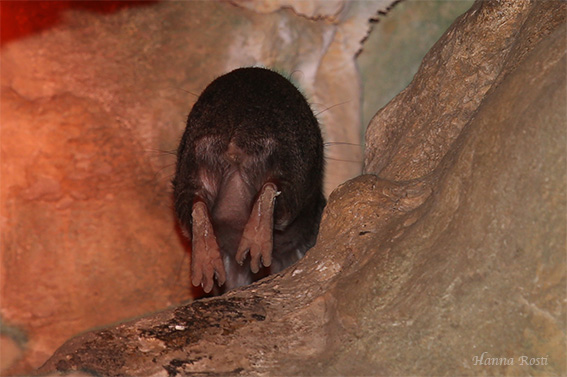
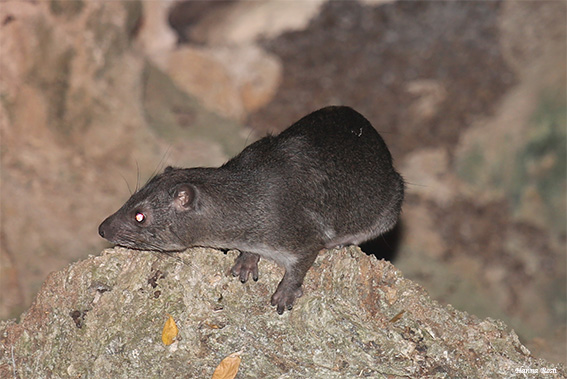
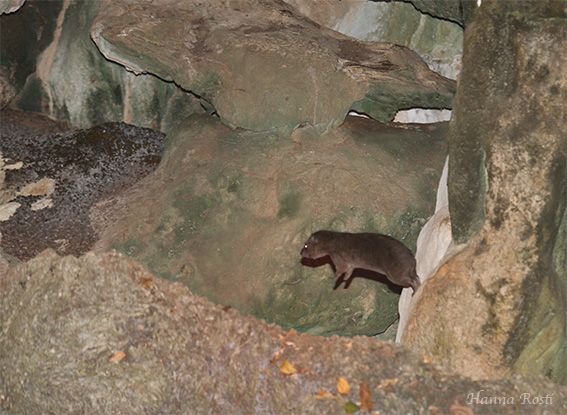
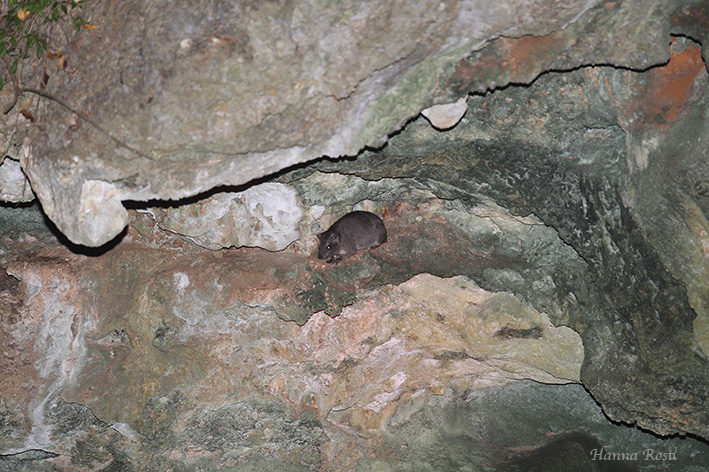
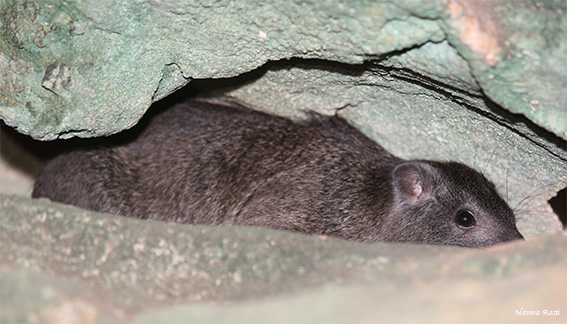
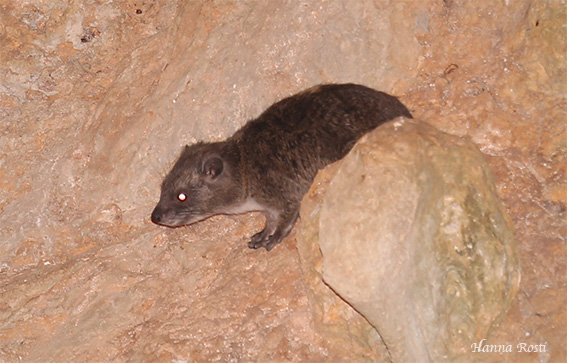
In some locations, tree hyraxes live in rocky formations, and caves.
Short 1 min video of the tree hyraxes living at the coast of Kenya
Tree hyraxes are related to rock hyraxes, that live in rocky formations. Perhaps coming down to rocky formations is not that difficult to tree hyraxes.
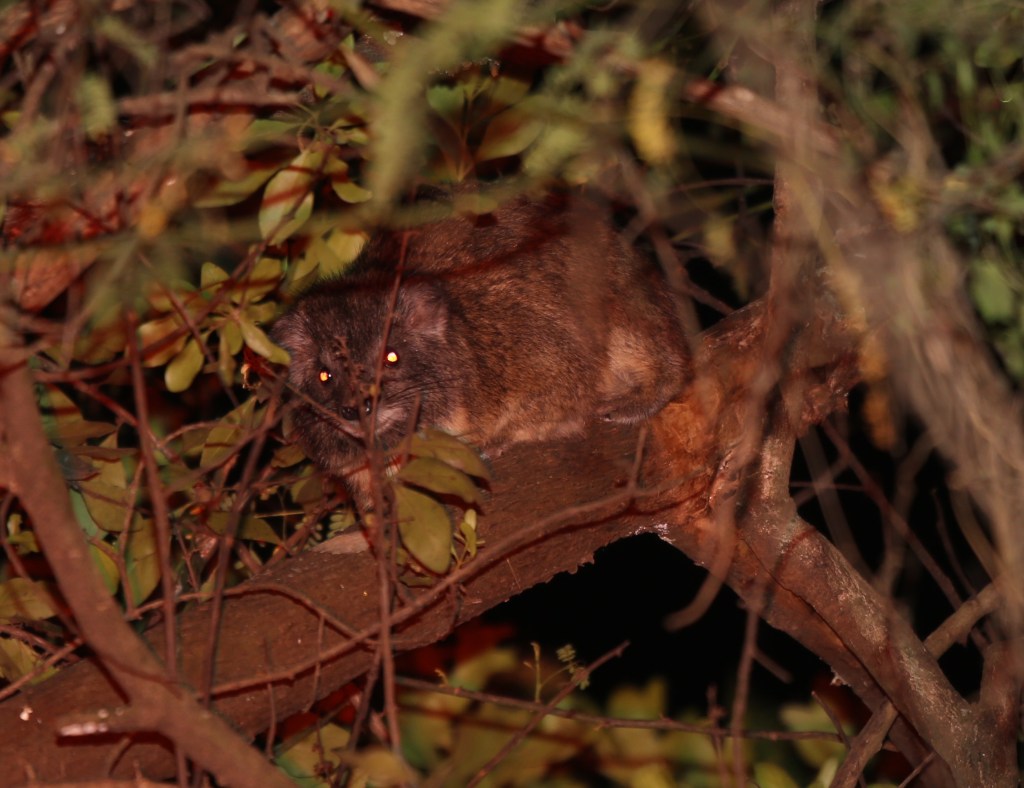
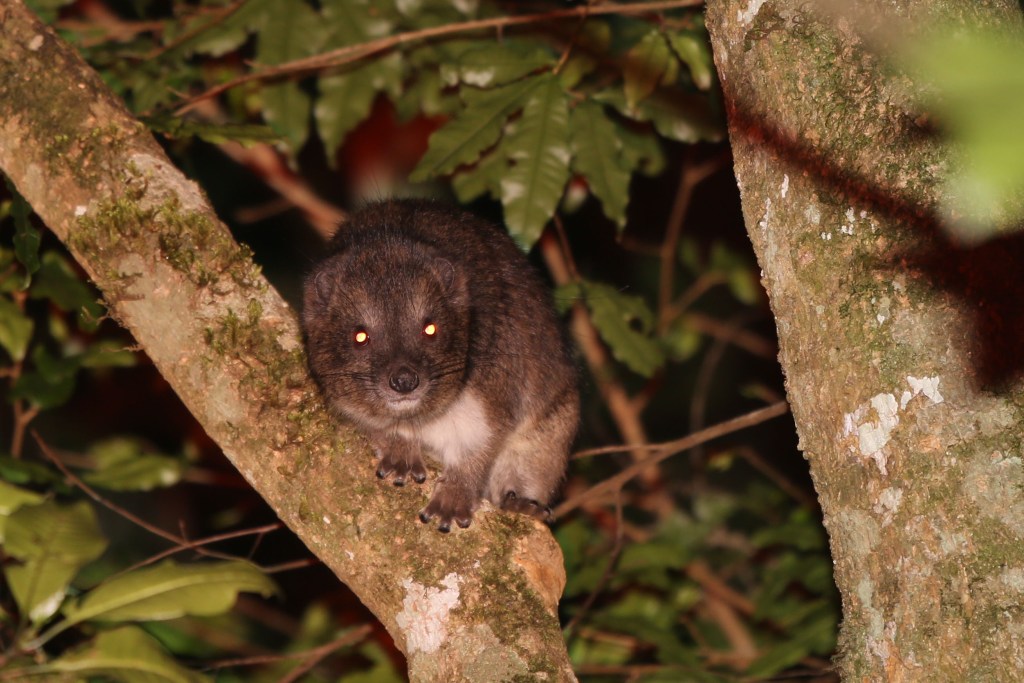
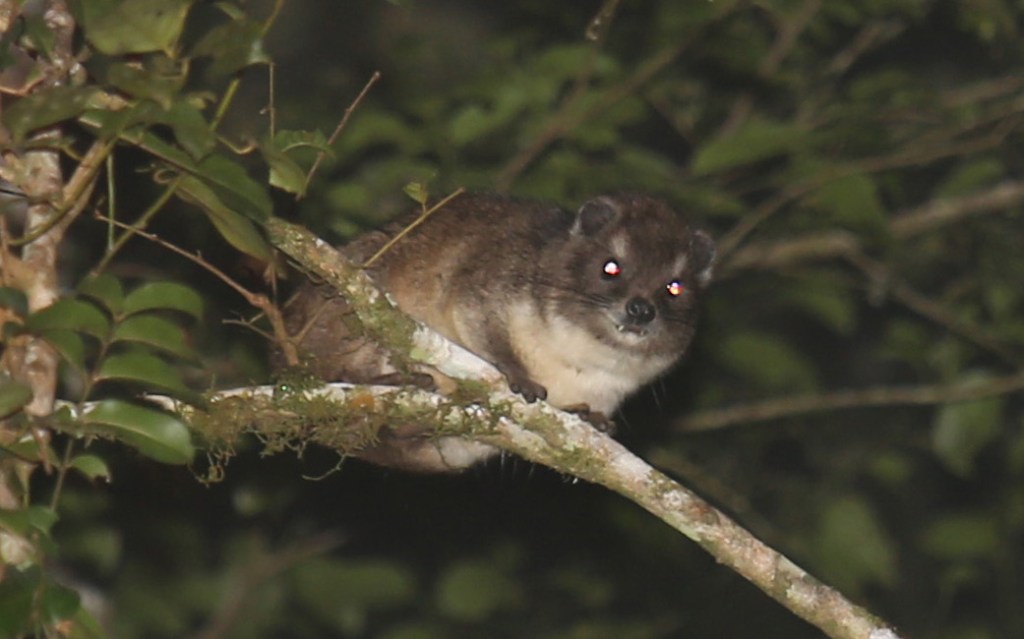
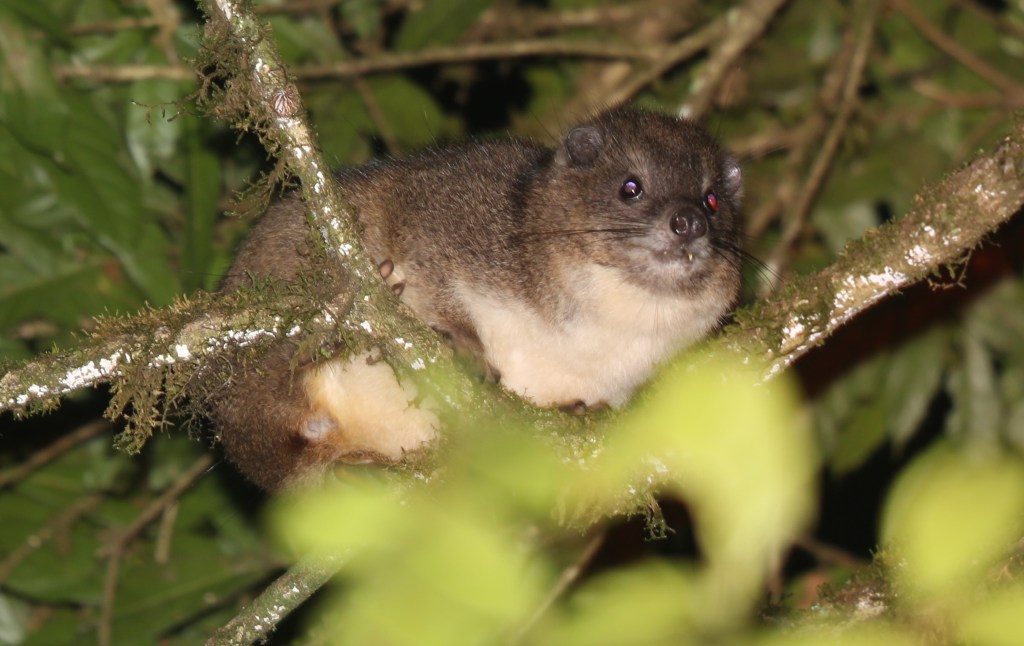
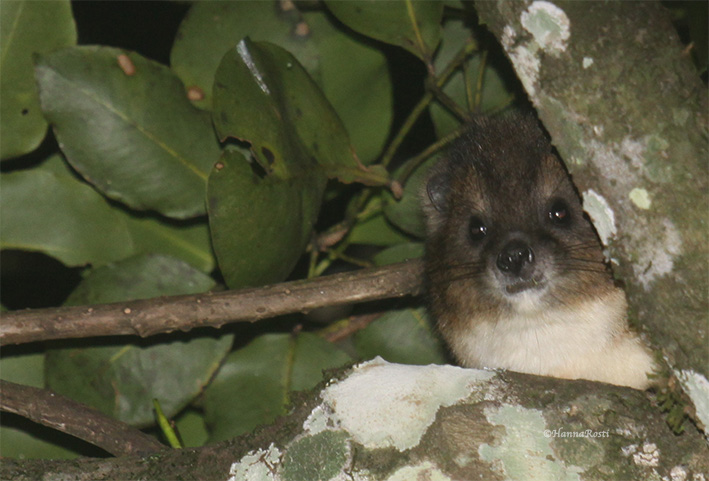
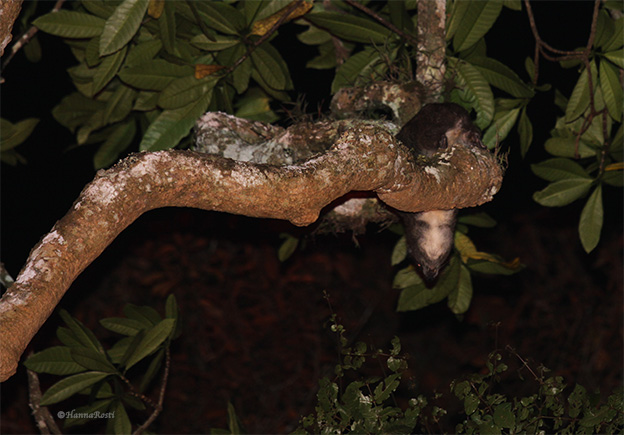
These are first photographs and video published (as far as we know) of the Eastern tree hyraxes (Dendrohyrax validus) from Kenya.
You can read the full peer reviewed article from Ecology and Evolution
Tree hyraxes can be found from Shimba Hills National Reserve. However, it is not found throughout the forest.
Tree hyraxes are easy to locate based on their calls. However, seeing them is another matter.
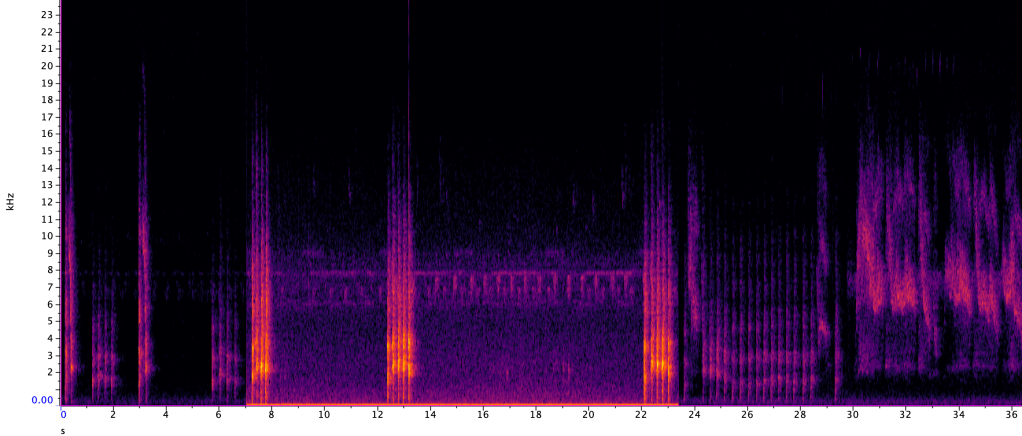
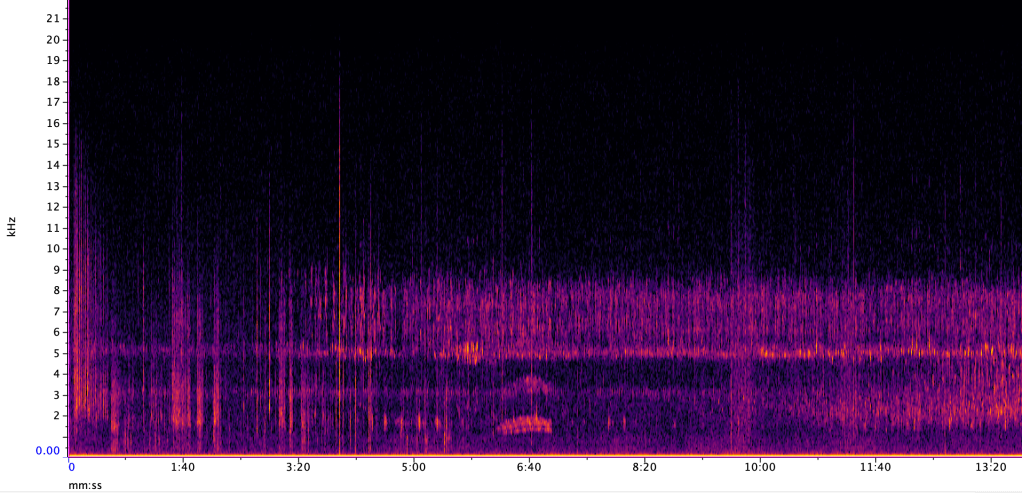
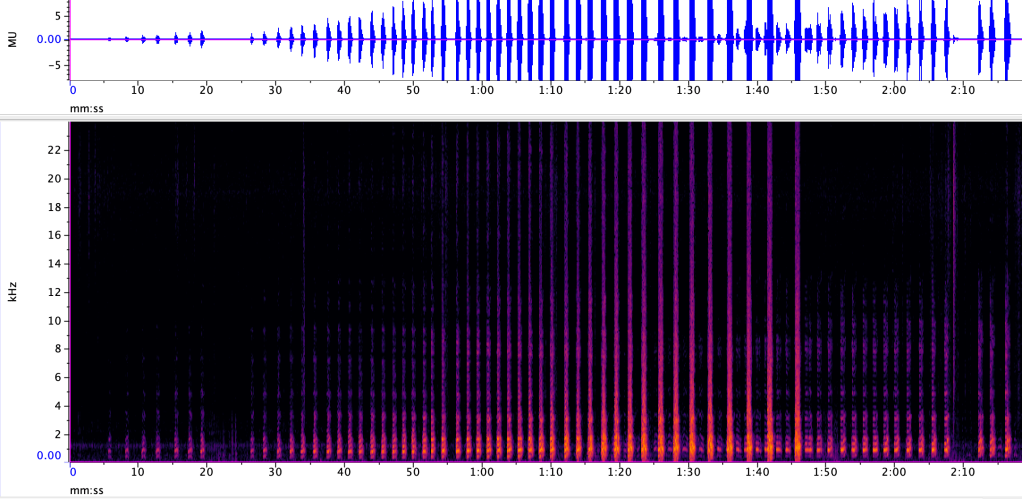
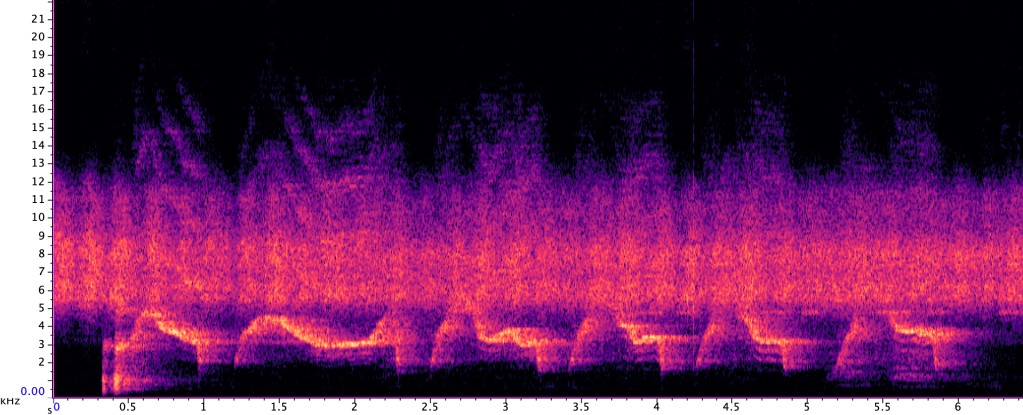
Spectrogram and combination of calls that tree hyraxes at the coast of Kenya are using.
Outside Shimba Hills, only few tiny fragments of forest remain. Tree hyraxes are dependent of moist natural forests. Even though they may be able to survive in small fragments with caves and rock for some time, these isolated populations are doomed for extinction if all forest is cleared.
Tree hyraxes in the caves are social. Also in Simba Hills, I could follow the movement of the tree hyrax group by their contact calls. I suspect that these tree hyraxes, belonging to species D. validus (as fas as we know at the moment), has similar type of social structure as rock hyraxes.
Tree hyraxes (Dendrohyrax validus) from the caves in 2022
Taxonomy and range of tree, bush and rock hyraxes is poorly known from Africa. We hope to collect information of hyraxes based on their calls and location. This information would be very useful in the study of hyrax taxonomy and conservation.
At the moment number of hyrax species is unknown.
If you would like to help us with this citizen science project, you could do following:
Send us recording of hyrax loud calls, phone recording is just fine or WAV of any other common form. With hyraxes loud calls mean that you can hear them loud and clear from a distance. These calls are different for each species.
For example:
Dendrohyrax arboreus calling in Nanuyki, Kenya
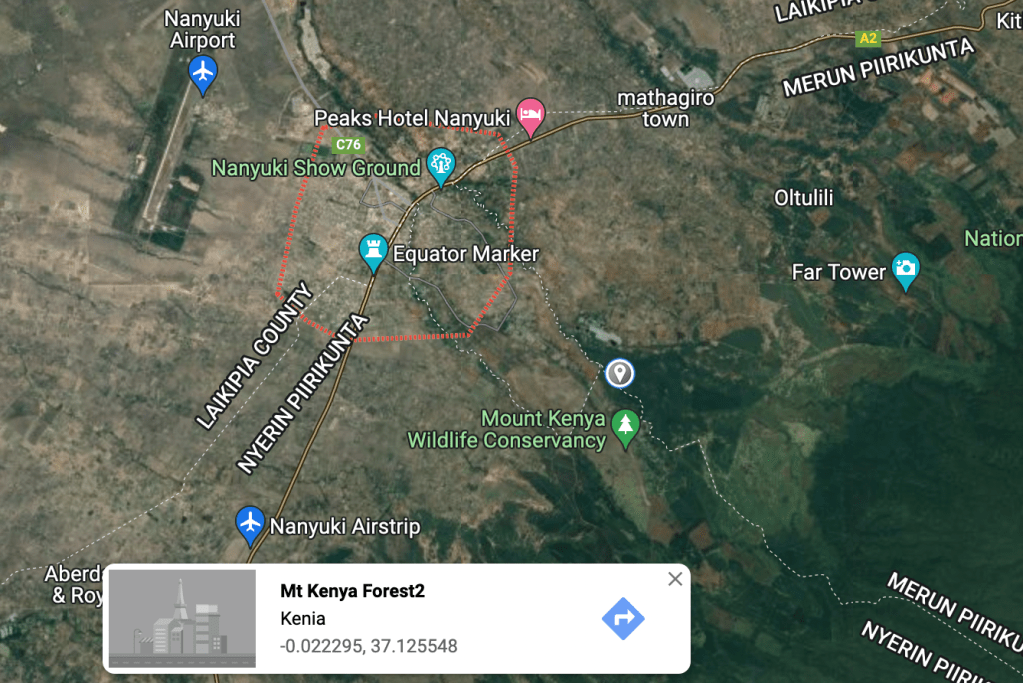
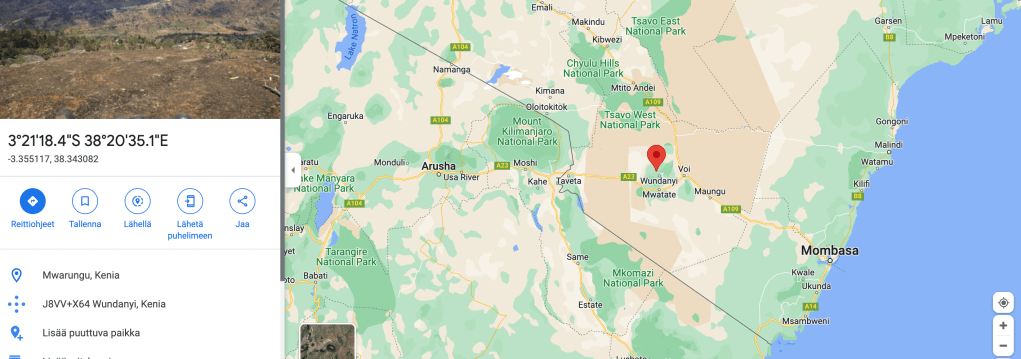
2. Location coordinates e.g. PIN with WhatsApp is great, or like this bellow with Google Maps. When you select location on Google Maps, you can simply share it https://goo.gl/maps/B33tF8Y2oeYnkPq69
With WhatsApp it looks like this, this is excellent way to map a location
3. Time of day, when recording was made
Time is important, as it helps us identify tree hyraxes. If the identification is difficult.
Photos are excellent addition, but not necessary. You don’t need to identify hyraxes, all though if you are certain that they are tree, rock or bush hyraxes it is helpful.
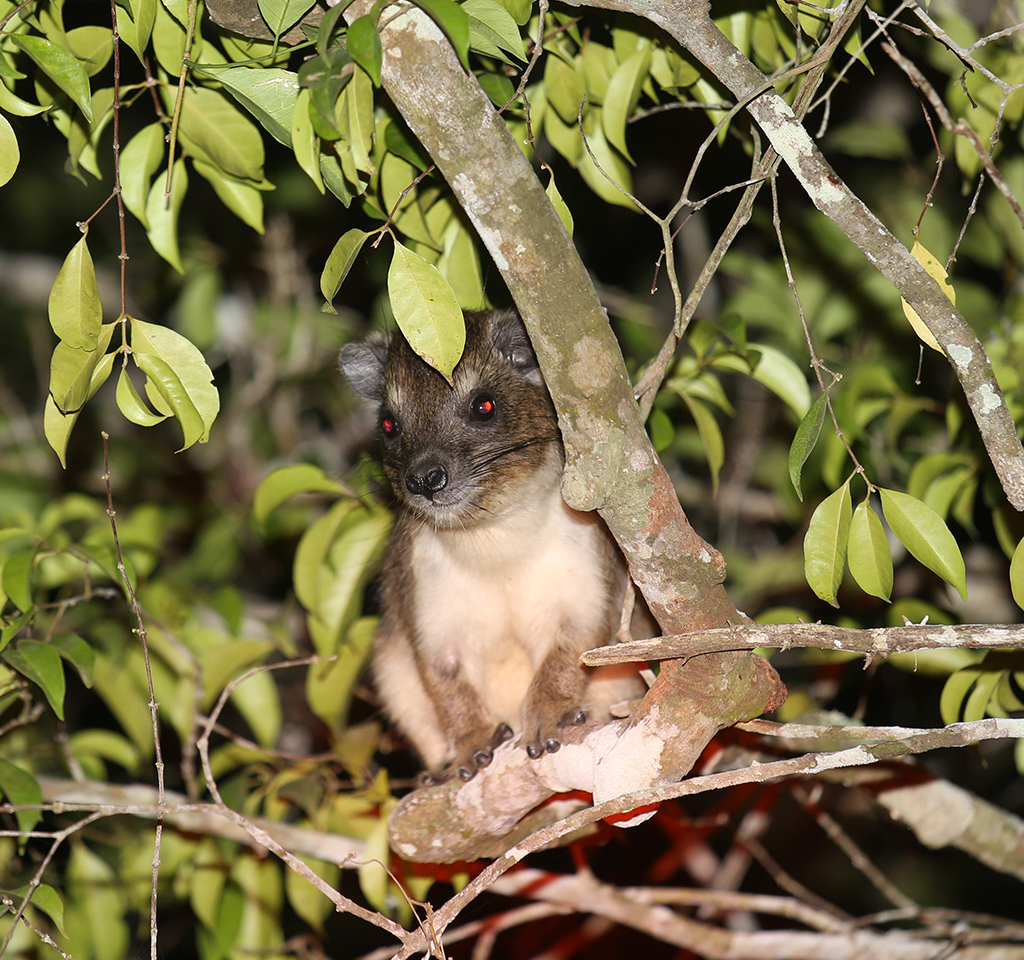
Souther tree hyrax (Dendrohyrax arboreus) can be encountered from South Africa to Kenya, Uganda and Congo.
Southern tree hyraxes live in forests, they feed on leaves.
Southern tree hyrax from Nanuyki, close to Mt Kenya.
Southern tree hyraxes are related to elephants. Very little is known about their lives from the canopies, as they are nocturnal and difficult to see.
Most commonly tree hyraxes are heard. Southern tree hyrax sounds like it’s halloween.
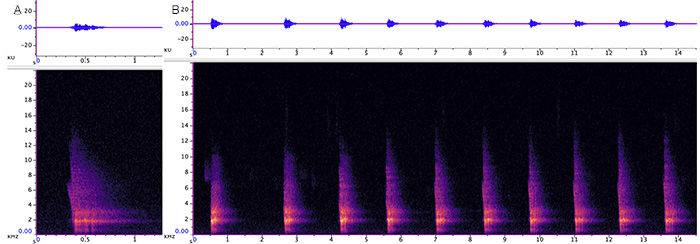
Call and spectrogram of the southern tree hyrax from Nanuyki, Kenya
Call and spectrogram of the southern tree hyrax from Nanuyki, Kenya
Southern tree hyrax is quite adaptable to different forests, it also lives in secondary forests. Poaching is largest threat, it is also hunted by large predator birds.
As a nocturnal animal, it mostly sleeps during the days. Tree hyraxes may also come to bask in the sun during the day.
If not disturbed by humans it will also seek safety under the roofs of warehouses.
They have also many social calls. Group is formed by more tightly bonded, and most likely related, females, and males that live on the outskirts of female group. There is hierarchy in the group between males and between females.
See and listen how chorus of tree hyraxes change into chorus of birds. This is recorded in Ngangao Forest, Taita Hills, Kenya on 8.1.2022 with SM4 recorder.
How many different animal species can you hear from this recording?
This is spectrogram video filmed from screen. It shows how spectrogram goes in Raven Pro software.
From this sequence you can hear how wide range of calls are used by tree hyraxes.
This spectrogram also shows how different species have adapted to use different frequencies to avoid acoustic competition.
At first forest is full of tree hyraxes. Tree hyraxes are related to elephants and they live in trees eating leaves. Their calling activity is incredible. These animals are almost unknown to science, as they are so difficult to study.
As tree hyraxes quiet down, as sun begins to raise, morning chorus of birds begin. This happens in January in Taita Hills about 5.45 in the morning.
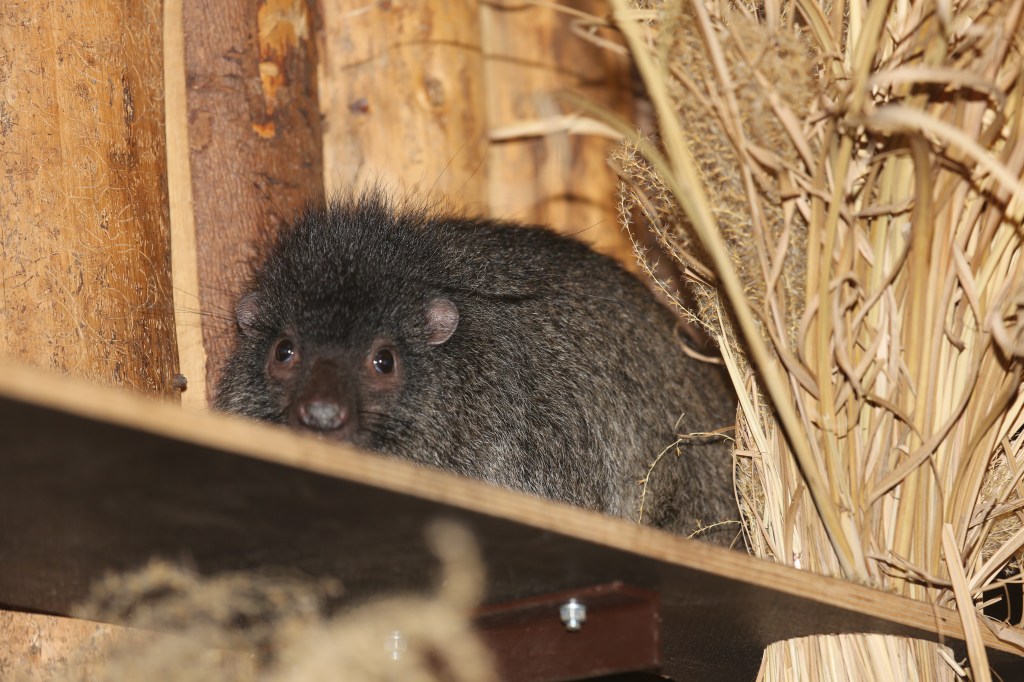
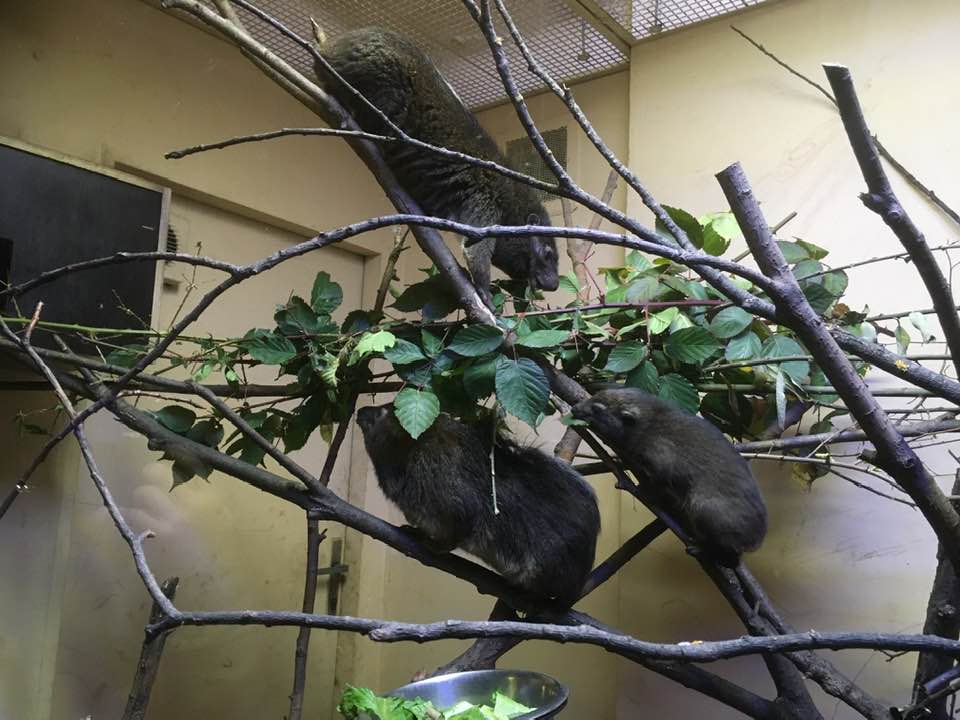
Dendrohyrax dorsalis family, male, female and one juvenile from Plzen Zoo, Czech. (October 2021). In this species female (up) is larger than male (down), juvenile is on the right.
Six subspecies have been recognized, and resently Oates et al. (2022) described one as Dendrohyrax interfluvialis from Benin.
Coat is dark brown/black with clear, large, white back patch.
Dendrohyrax dorsalis from Ostrava Zoo, Czech
Compared to other Dendrohyrax species they are more calm and less shy. They call less frequently.
Dendrohyrax dorsalis calls recorded from Ostrava zoo in October 2021. Family, again male, female and one offspring are calling together about three am in the morning.Listen to the call of D dorsalis, call is the same as in spectrogram.
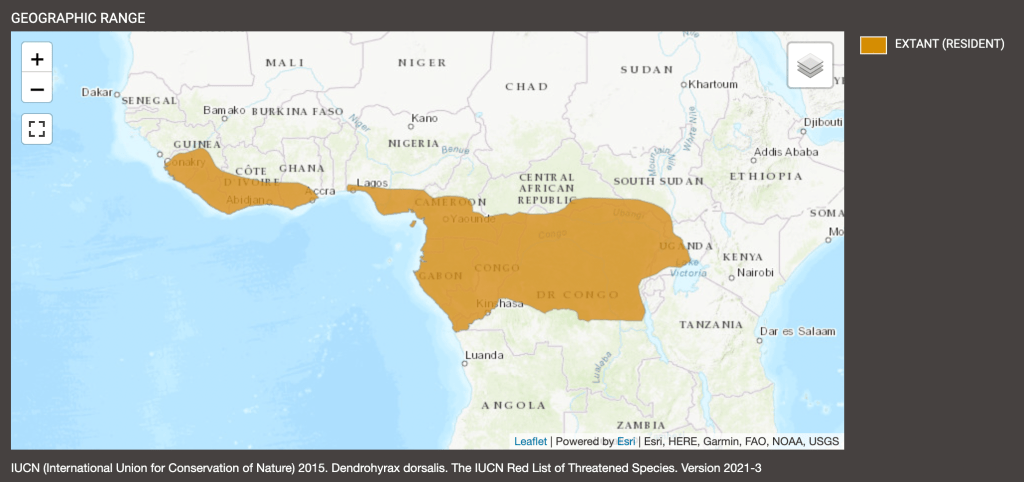
D. dorsalis range extends from Guinea to Uganda. Map from IUCN assessment (Butynski et al. 2014).
D. dorsalis is found in moist lowland forests and moist savannas to an altitude of 1500 m asl.
There are no behavioral studies of the species. Group structure is unknown.
In fact it is very difficult to find any articles about D. dorsalis.
Herbivorous, eats mainly leaves, shoots and seeds.
In many parts of the range births happen throughout the year.
Key reference: Shultz, S. & Roberts, D. (2013) ‘Dendrohyrax dorsalis Western tree hyrax’ In: Mammals of Africa. Bloomsbury. London.
Sources:
Butynski, T., Dowsett-Lemaire, F. & Hoeck, H. 2015. Dendrohyrax dorsalis. The IUCN Red List of Threatened Species 2015: e.T6410A21282601. http://dx.doi.org/10.2305/IUCN.UK.2015- 2.RLTS.T6410A21282601.en
Oates, J.F. et al. (2021) ‘A new species of tree hyrax (Procaviidae: (Dendrohyrax) from West Africa and the significance of the Niger–Volta interfluvium in mammalian biogeography’, Zoological Journal of the Linnean Society, p. zlab029. doi:10.1093/zoolinnean/zlab029.
This rare footage shows Taita tree hyrax feeding and moving in the indigenous forest of Taita Hills 2020. Filmed by Benson Lombo, edited by Hanna Rosti.
EXTINCT (EX): A taxon is Extinct when there is no reasonable doubt that the last individual has died. A taxon is presumed Extinct when exhaustive surveys in known and/or expected habitat, at appropriate times (diurnal, seasonal, annual), throughout its historic range have failed to record an individual. Surveys should be over a time frame appropriate to the taxon’s life cycle and life form.
EXTINCT IN THE WILD (EW) A taxon is Extinct in the Wild when it is known only to survive in cultivation, in captivity or as a naturalized population (or populations) well outside the past range. A taxon is presumed Extinct in the Wild when exhaustive surveys in known and/or expected habitat, at appropriate times (diurnal, seasonal, annual), throughout its historic range have failed to record an individual. Surveys should be over a time frame appropriate to the taxon’s life cycle and life form.
CRITICALLY ENDANGERED (CR) A taxon is Critically Endangered when the best available evidence indicates that it meets any of the criteria A to E for Critically Endangered (see Section V), and it is therefore considered to be facing an extremely high risk of extinction in the wild.
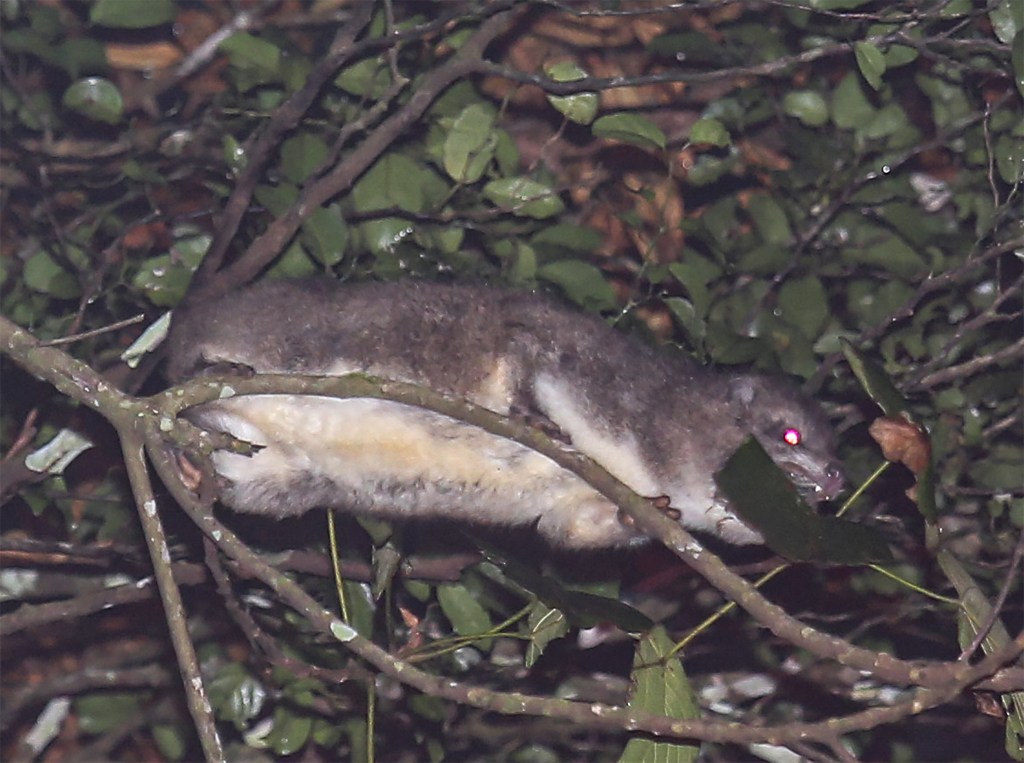
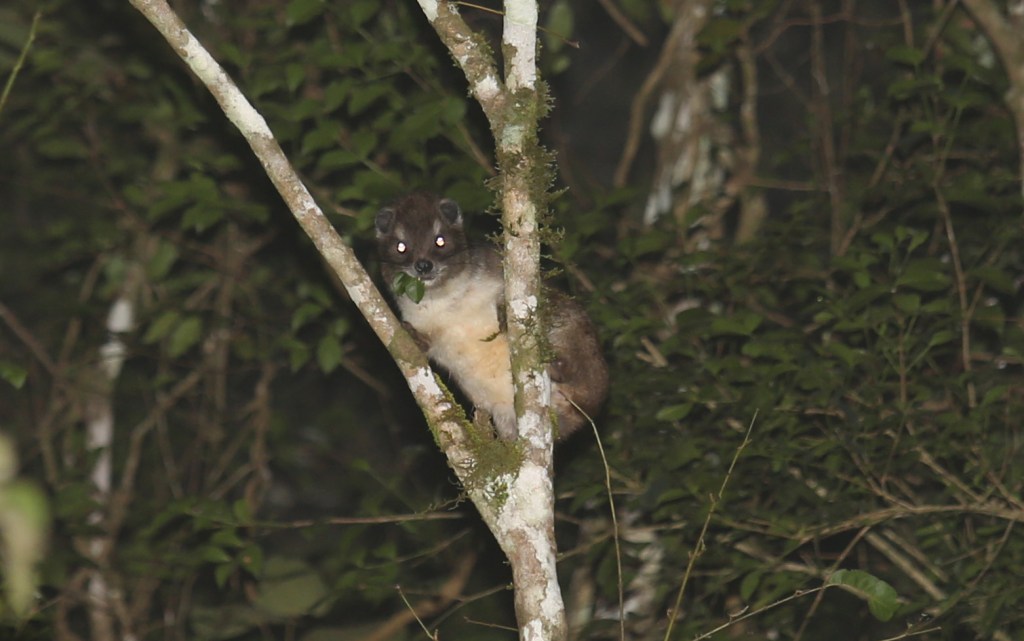
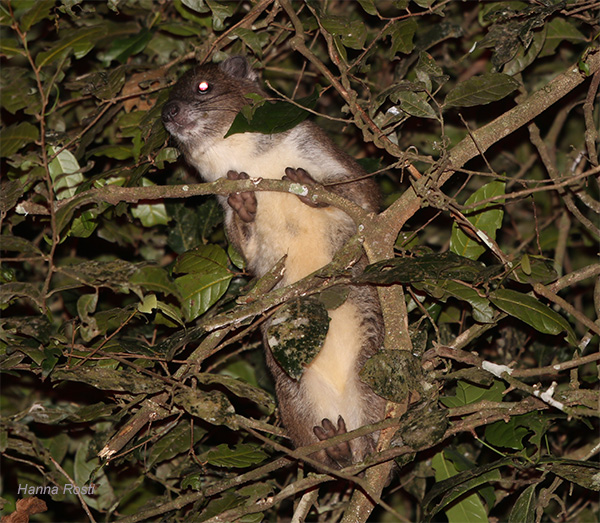
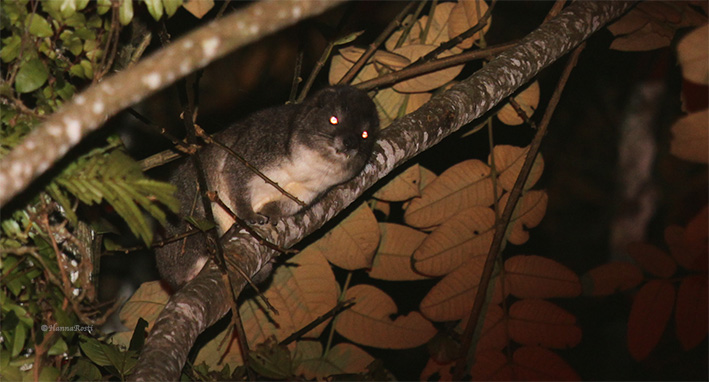
Tree hyrax (Dendrohyrax sp.) Taita Hills, Kenya. This is most likely undescribed species for the science and thus doesn’t have IUCN assessment.
ENDANGERED (EN) A taxon is Endangered when the best available evidence indicates that it meets any of the criteria A to E for Endangered (see Section V), and it is therefore considered to be facing a very high risk of extinction in the wild.
VULNERABLE (VU) A taxon is Vulnerable when the best available evidence indicates that it meets any of the criteria A to E for Vulnerable (see Section V), and it is therefore considered to be facing a high risk of extinction in the wild.
NEAR THREATENED (NT) A taxon is Near Threatened when it has been evaluated against the criteria but does not qualify for Critically Endangered, Endangered or Vulnerable now, but is close to qualifying for or is likely to qualify for a threatened category in the near future.
LEAST CONCERN (LC) A taxon is Least Concern when it has been evaluated against the criteria and does not qualify for Critically Endangered, Endangered, Vulnerable or Near Threatened. Widespread and abundant taxa are included in this category.
DATA DEFICIENT (DD) A taxon is Data Deficient when there is inadequate information to make a direct, or indirect, assessment of its risk of extinction based on its distribution and/or population status. A taxon in this category may be well studied, and its biology well known, but appropriate data on abundance and/or distribution are lacking. Data Deficient is therefore not a category of threat. Listing of taxa in this category indicates that more information is required and acknowledges the possibility that future research will show that threatened classification is appropriate. It is important to make positive use of whatever data are available. In many cases great care should be exercised in choosing between DD and a threatened status. If the range of a taxon is suspected to be relatively circumscribed, and a considerable period of time has elapsed since the last record of the taxon, threatened status may well be justified.
NOT EVALUATED (NE) A taxon is Not Evaluated when it has not yet been evaluated against the criteria.
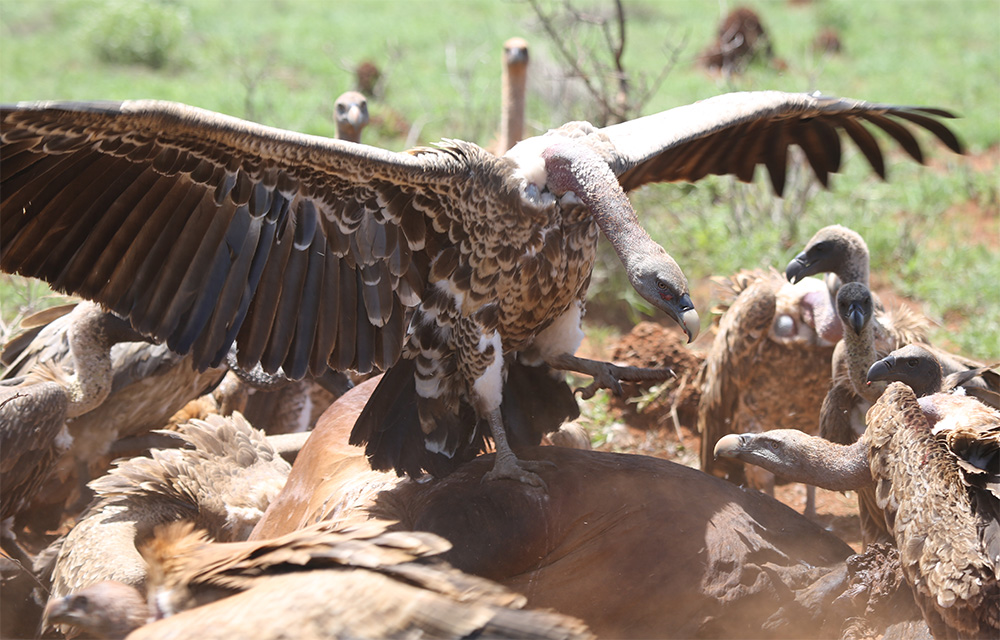
Critically Endangered (CR) vultures, Rüppells Vulture (Gyps rueppelli) and White-Backed Vulture (Gyps africanus) feeding on cow that has been killed by lions in Lumo conservancy Kenya in 2021.
Taita tree hyrax (Dendrohyrax sp.) and Taita dwarf galago (Paragalago cocos) fulfill following criteria for Critically Endangered species.
MORE DETAILED KNOWLEDGE ABOUT CRITICALLY ENDANGERED (CR)
An observed, estimated, inferred or suspected population size reduction of ≥90% over the last 10 years based on direct observation, decline in area of occupancy, extent of occurrence and/or quality of habitat
An observed, estimated, inferred or suspected population size reduction of ≥80% over the last 10 years where the reduction or its causes may not have ceased or may not be understood or may not be reversible.
B. Geographic range
Extent of occurrence estimated to be less than 100 km2
Area of occupancy estimated to be less than 10 km2
C. Population size estimated to number fewer than 250 mature individuals or
A continuing decline, observed, projected, or inferred, in numbers of mature individuals. Quantitative analysis showing the probability of extinction in the wild is at least 50% within 10 years or three generations, whichever is the longer (up to a maximum of 100 years).
How IUCN assessment and criteria is made?
UCN criteria are made based on peer reviewed scientific journals, and they are written by top scientist of the species. Before IUCN assessment can be done, species must be scientifically identified and named.
Assessment is based on research. Collecting substantial knowledge, preferably long-term knowledge of each species in the planet is not always possible. Species are very different, and methods that different species are studied vary accordingly. There is lack of data on most nocturnal animals, simply because they are so difficult to study.
Publishing scientific articles is time consuming and expensive. It means that species may go extinct, or their IUCN status may change faster than can be noticed, as humans are changing Earth in ever-growing speed.
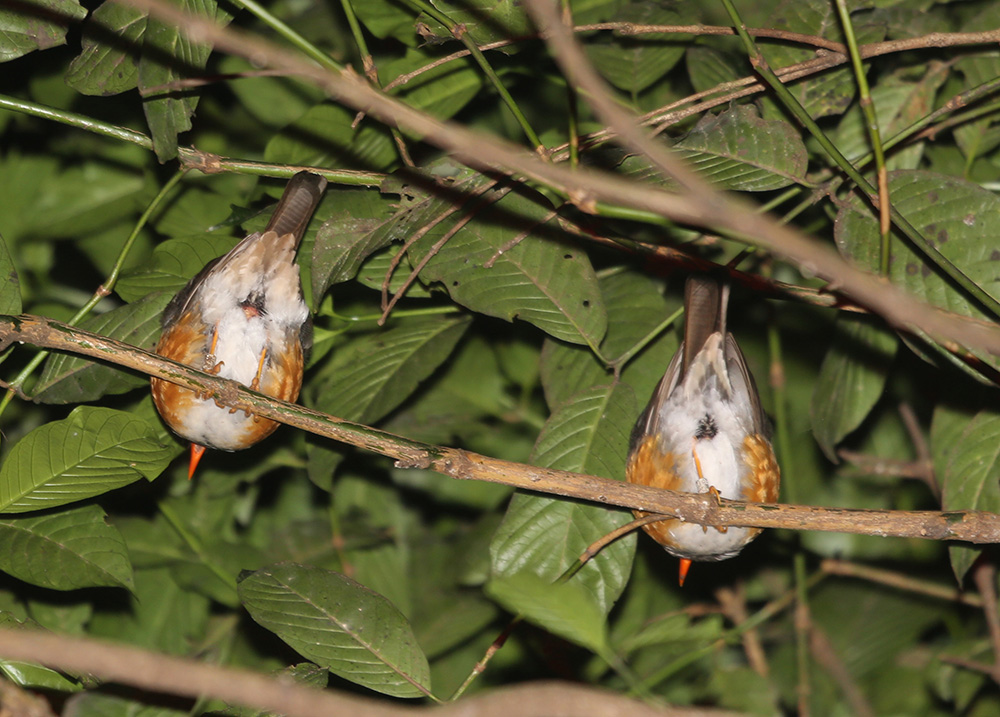
Critically Endangered (CR) Taita thrush (Turdus helleri) from Taita Hills. Number of mature individuals 930.
Taita tree hyrax and Taita dwarf galago are already CR Critically endangered
However, Taita tree hyrax and Taita dwarf galago don’t yet have any IUCN criteria. In Taita Hills there is about 6 km2 of indigenous tropical cloud forest left. This means that these species are Critially Endangered based on B2, area of occupancy less than 10 km2.
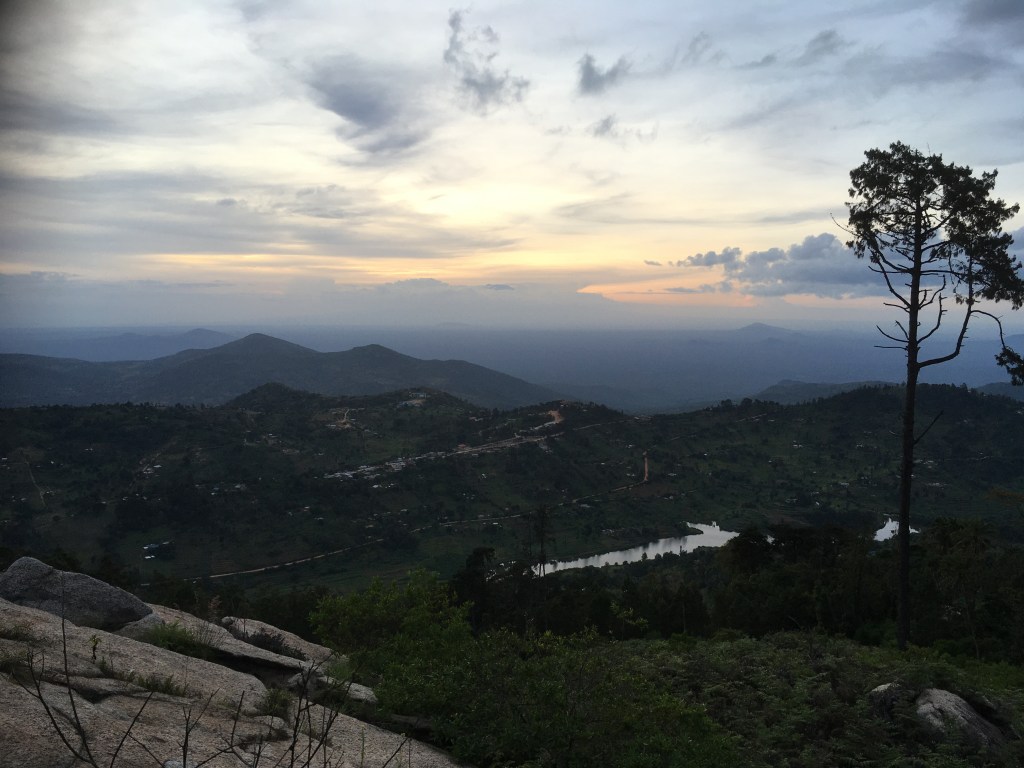
Forests that are left in Taita Hills are severely fragmented, and not connected to each other. So they are like islands in the sea. Forests are remaining in the mountain tops of Taita Hills, and they are also called water towers, as local people understand the ability of indigenous forest of attract rainwater.
Most of Taita Hills forest have been cleared for agriculture and exotic tree (Eucalyptus, cyprus, pine etc.) plantations during last 100 years.
Largest forest fragments are Mbololo 1,8 km2, and Ngangao 1,2 km2 and Chawia 0,8 km2. These are very small forests – all of them. Only Mbololo and Ngangao still have dwarf galago populations. Tree hyrax is more common, and it also survives in smaller fragments.
These severy fragmented forests are still source of firewood for some local people. A price of electricity is very high in Kenya, and using gas is also too expensive to some people. Firewood is used for cooking. Collection of firewood decreases quality of the forest, and signs are clearly visible on the edges and around paths inside the forest.
This Kenya coast dwarf galago (Paragalago cocos), is interesting relict population from wider range of Kenya coast dwarf galago. Other populations are living in coast of Kenya. But in Taita Hills, it is only living on two mountain tops.
Populations are what matter!
All populations are worth conservation. Before species go extinct, population number may even increase in some area, if habitats are destroyed and animals are packed in remaining habitat. This is called extinction debt. Competition in remaining habitat will decrease number of animals.
If we wait with conservation efforts until 90 % of population is lost, it is too late!
Forms of life are connected to each other. What happens to one species, happens to many species. This is because species use other species as food sources and rely on other species as their habitat, reproduction, safety and habitat.
The web of life can decrease in countless ways that humans are unable to monitor, even with most high quality research.
In a another words, we can’t predict consequences to other species caused by one species of animal going Critically Endangered or Extinct.
All populations should be conserved in a level, where they have genetic biodiversity, resilience to changes and disease, capability to reproduce normally.
IUCN guidelines are necessary tool to evaluate and compare situations where species are.
However, more awareness should be given to each population, and conservation before species is Critically Endangered.
We are living sixth mass extinction, our responsibility is to protect other species, and keep populations of other species alive, resilient and strong.
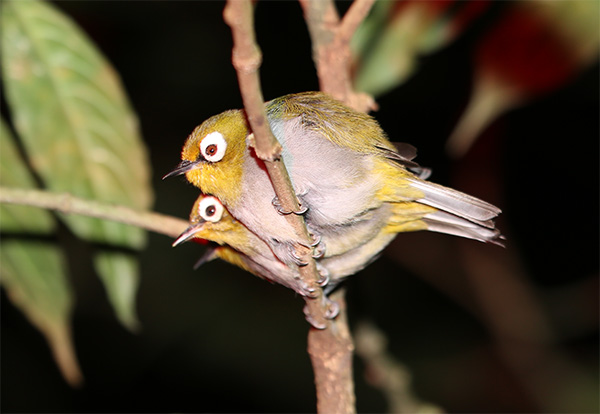
Taita white-eye (Zosterops silvanus) is categorized as Endangered (EN) by IUCN.
Short video introduction to tree hyraxes, with unique footage
Video of tree hyraxes filmed at night with night binoculars
As far as we know this is first video of tree hyraxes filmed at night. Tree hyraxes in East Africa are extremely shy, and difficult to observe. Usually they vanish in to the canopy when seen, or before humans can see them.
Mwalua Wildlife Trust was founded by Patrick Kilonzo to provide drinking water for animals suffering from lack of water during the dry season. As Water for Elephants has been success, many more work needs to be done. Volunteers from all over the world are welcome to join
Test if you identify animals from thermal imaging camera. Animals in the video are nocturnal and live in indigenous cloud forests of Taita Hills, Kenya. These animals are surviving on the last fragments of indigenous forest.
Tsavo West is one of most beautiful places in the world. And one of world largest conservation areas. This short film introduces scenery of Tsavo West and its most common animals. Peter also visits Chaimu crater and Mzima springs.
This article focuses on incredible variable acoustic communication of Taita tree hyrax. If you are interested in other peculiar features of tree hyraxes please read this previous article of Taita tree hyraxes.
Taita tree hyrax is believed to be undescribed species for the science based on these calls. For nocturnal cryptic animals, that are difficult to observe, call analysis has been the typical method of making taxonomic evaluation. Each species have their typical calls, especially calls that are used for so called ‘advertising’. These are calls that are used to draw attention of other con-species.
Taita tree hyrax female. Life of tree hyraxes are almost completely unknown. We don’t know if both sexes are calling, or are they just males. Tree hyraxes are believed to be solitary, but continues calling is difficult to explain for animal that is believed to be solitary.
Basic territorial call that is heard frequently in the forests of Taita Hills is ‘strangled thwack’. This call is most likely call that tree hyraxes use to claim their territory. Tree hyraxes eat leaves, and they are dependent on tree cavities for daytime sleeping sites.
Strangled thwack is more than 100 dB call. Twist in the call, and noisy elements make sure that this call doesn’t go unnoticed.
Strangled thwacks are used in Taita Hills and in East Usambara Mountain. East Usambara Mountains are 160 km from Taita Hills. East Usambara Mountains are also part of Eastern Arch Mountains, and it is located in Tanzania.
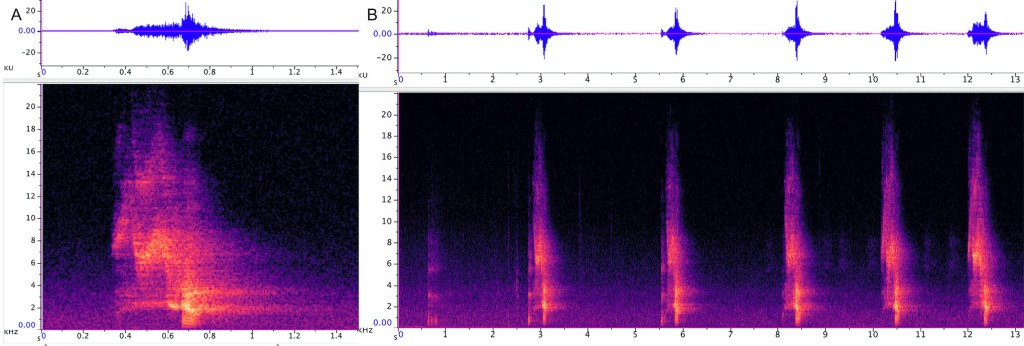
Based on this very unique call type, Taita tree hyrax is believed to be tree hyrax species that is not yet described scientifically (Rosti et al. 2020).
Strangled thwack call from Taita Hills. Horizontal axel time (s), vertical axel frequency (kHz) A) One strangled thwack call. Call duration about 1 s. Noticechanges (frequency modulation) in the strongest frequency of the call.B) Sequence of strangled thwacks. Usually tree hyraxes use these calls in about 10 call sequences where they counter call with other tree hyraxes.Strangled thwack sequence from one animal
Usually tree hyraxes are counter calling with each other.
TaitaTree hyrax counter-calling
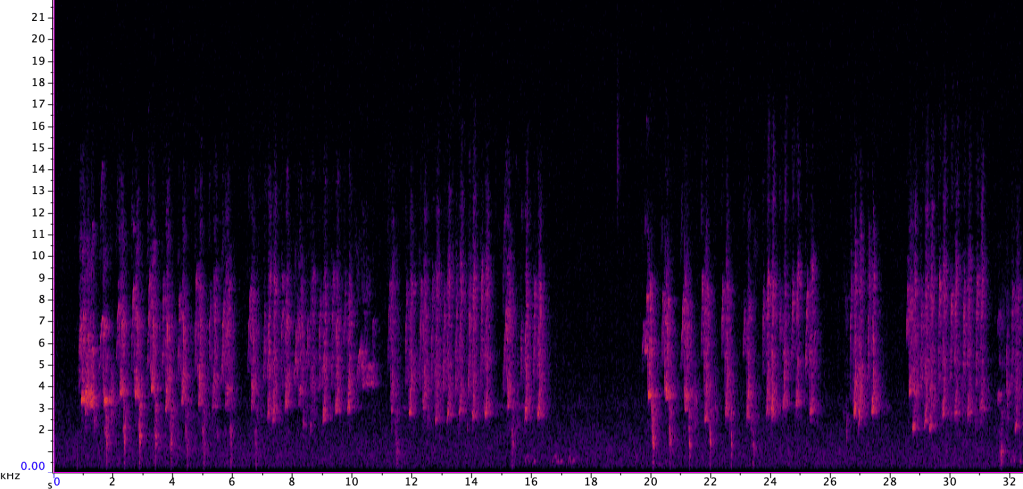
Another call type that tree hyraxes are using in Taita Hills is called hac. Hac call is used as territorial call. It is not quite as loud and frequency range is lower. Probably hac call is used when calling animal becomes little tired, or it want’s to use call type that is slightly less demanding.
Spectrograms of hac calls, time (s) on horizontal axel, frequency (kHz) on vertical axel.Hac call has smaller frequency range and it can be continued much longer, sometimes sequence may have more than hundred calls.
Songs from Taita tree hyrax
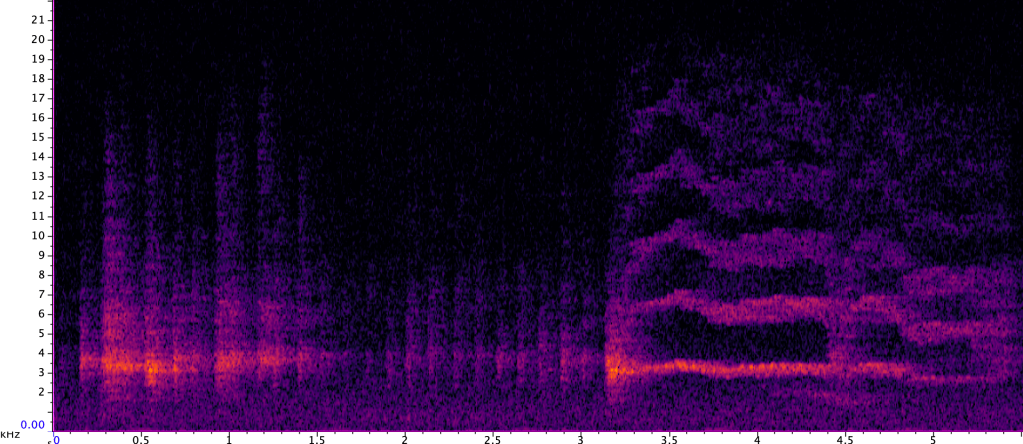
Taita tree hyrax sings songs. Songs have been previously found from rock hyrax (Procavia capensis) (Koren et al. 2008).
Singing mammals are very rare. Gibbons and whales sing. But I don’t know other singing mammals.
Singing Taita tree hyrax. Duration on horizontal axel (s) and frequency on vertical axel (kHz). These songs may last for more than 12 minutes.Sound sample from Taita tree hyrax song.Dendrohyrax song may begin like this.
Purpose of these songs are unknown. Probably they are used by males as they advertise their fitness for females that might be available for mating. In Taita Hills, remaining forests are packed with tree hyraxes and most likely all available territories are taken. It might mean that moving from one place to another could be difficult. Tree hyraxes may have to take a risk and come down to the ground where they are in greater danger to be hunted by genets. Acoustic communication is used as means to communicate with other tree hyraxes.
Tree hyrax wheezes, wheeze may be used as part of a song or aloneTaita tree hyrax wheezes with katytids on the background
More reading about tree hyraxes:
Demartsev, Vlad, Arik Kershenbaum, Amiyaal Ilany, Adi Barocas, Einat Bar Ziv, Lee Koren, and Eli Geffen. 2014. “Male Hyraxes Increase Song Complexity and Duration in the Presence of Alert Individuals.” Behavioral Ecology 25 (6): 1451–58. https://doi.org/10.1093/beheco/aru155.
Hoeck, Hendrik. 2017. “Some Thoughts on the Distribution of the Tree Hyraxes (Genus Dendrohyrax) in Northern Tanzania.” Afrotherian Conservation, no. 13: 47–49.
IUCN. 2014. “Dendrohyrax Validus: Hoeck, H., Rovero, F., Cordeiro, N., Butynski, T., Perkin, A. & Jones, T.: The IUCN Red List of Threatened Species 2015: E.T136599A21288090.” International Union for Conservation of Nature. https://doi.org/10.2305/IUCN.UK.2015-2.RLTS.T136599A21288090.en.
Koren, Lee, Ofer Mokady, and Eli Geffen. 2008. “Social Status and Cortisol Levels in Singing Rock Hyraxes.” Hormones and Behavior 54 (1): 212–16. https://doi.org/10.1016/j.yhbeh.2008.02.020.
Roberts, Diana, Elmer Topp-Jørgensen, and D.C. Moyer. 2013. “Dendrohyrax Validus Eastern Tree Hyrax.” In Mammals of Africa Vol I. Vol. 2013. Bloomsbury.
I will never forget fist time that I heard tree hyrax. I was sitting on a log. It was first time I was in the forest after dark. I was companied by Kenya Forest Service ranger Jonam Mwandoe. Startling call, that seemed to come just to my ear, almost dropped me from the log. I asked what an earth was that?
Jonam told me about tree hyraxes, but I really didn’t understand. I had no idea that there could be relatives of elephants in the trees. For some time I thought of them as some peculiar rodents, which they really are not!
Each night in the forest had been filled with their vocalizations, where individuals counter call to another. But it took weeks to see one. At the time I had no idea how special this event was.
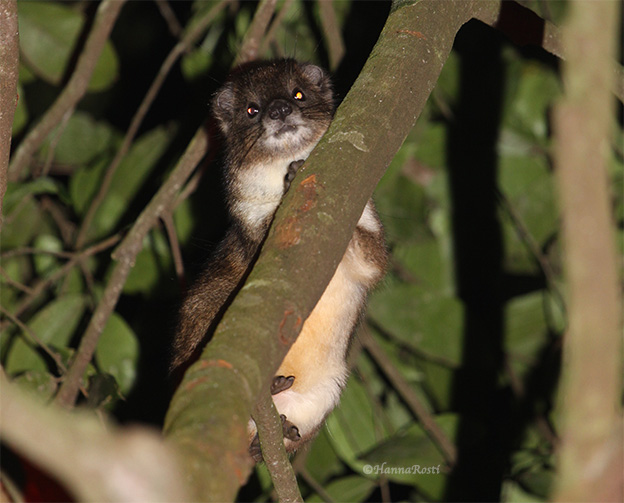
This individual, probably young female was first tree hyrax I saw. It was resting just about 4 meters above the ground. Females have smaller and rounder tusks.
Researchers just don’t see tree hyraxes. And this is probably why these animals are so neglected in science. Studying animals that you can’t see in difficult and challenging conditions and producing scientific articles with real data even more difficult.
As time went on I gathered more pictures and tons of recordings of their vocalizations. I became more and more intrigued by these mysterious animals. Then it really hit me:
Tree elephants!!!!
Hyraxes belong to Paenungulata, their relatives are elephants and manatees. How amazing and unbelievable group!
My supervisor, emeritus professor Simon Bearder pointed out from recordings, that these tree hyraxes are new species for the science.
Special features of tree hyraxes
Belong to Paenungulata with elephants and manatees
Small tusks
Teeth like rhinos
Dense fur
Three toes
Round body
Eat leaves, fibrous, low calorie diet
Slow metabolic rate
Complicated digestion system
Low body temperature
Internal testes
Whiskers around the body
Scent gland
Spends days in tree holes
Use toilets
Extremely variable vocal communication
Solitary
Nocturnal
Variable vocal communication suggests that this species has complex social behavior, even though they are solitary. Knowledge of these species and their behavior is very limited.
This male is much larger and has bigger tusks.
Ecological niche of tree hyrax is the same as koala and sloth
In some two largest forests of Taita Hills, Ngangao and Mbololo tree hyrax density is high. However total area of these forests are only three square kilometers. As density is high, young animals are forced to move out of forest, where they easy food for dogs.
Tree hyrax only lives in indigenous forest. It is dependent on tree cavities for safety
Tree hyrax jumping from branch to another. Thinking and hesitating took minutes before actual jump.
How tree hyraxes can live in the canopy of tall mountain rain forest is amazing. Animal is heavy, it has only tree toes. It seems like species that is taken out of their real environment.
One form of protection for this species could be to build artificial nest in areas, where are trees, but no tree cavities. However replanting of indigenous forest and building corridors between fragments is necessary for long term survival of this species.
This sweet female was observing us from close range, she was possibly moving on to new tree.
These unknown tree hyraxes are in serious threat by human development all over Africa, not just in Taita Hills. Different species of tree hyraxes are possibly going extinct even before they are identified.
Mammals of Africa (2013):
“Major revision of this group is overdue”
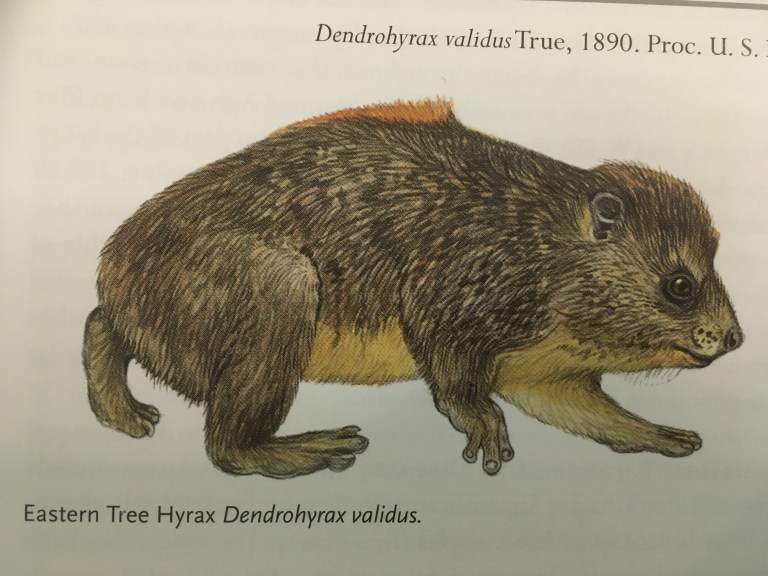
Eastern tree hyrax (Dendrohyrax validus) drawing from Mammals of Africa (Kingdon 2013).
“Taita tree hyrax desperately needs taxonomic identification and conservation”
Cordeiro, Norbert J., Nathalie Seddon, David R. Capper, Jonathan M. M. Ekstrom, Kim M. Howell, Isabel S. Isherwood, Charles A. M. Msuya, et al. 2005. “NOTES ON THE ECOLOGY AND STATUS OF SOME FOREST MAMMALS IN FOUR EASTERN ARC MOUNTAINS, TANZANIA.” Journal of East African Natural History 94 (1): 175–89. https://doi.org/10.2982/0012-8317(2005)94%5B175:NOTEAS%5D2.0.CO;2.
IUCN. 2013. “Dendrohyrax Arboreus: Butynski, T., Hoeck, H. & de Jong, Y.A.: The IUCN Red List of Threatened Species 2015: E.T6409A21282806.” International Union for Conservation of Nature. https://doi.org/10.2305/IUCN.UK.2015-2.RLTS.T6409A21282806.en.
IUCN. 2014. “Dendrohyrax Validus: Hoeck, H., Rovero, F., Cordeiro, N., Butynski, T., Perkin, A. & Jones, T.: The IUCN Red List of Threatened Species 2015: E.T136599A21288090.” International Union for Conservation of Nature. https://doi.org/10.2305/IUCN.UK.2015-2.RLTS.T136599A21288090.en.
Kingdon, Jonathan, ed. 2013. Mammals of Africa. Vol. 1: Introductory Chapters and Afrotheria. London: Bloomsbury.
Roberts, Diana. 2001. “GEOGRAPHIC VARIATION IN THE LOUDCALLS OF TREE HYRAX – DENDROHYRAX VALIDUS (TRUE 1890) – IN THE EASTERN ARC MOUNTAINS, EAST AFRICA: TAXONOMIC AND CONSERVATION IMPLICATIONS.” UNIVERSITY OF READING.
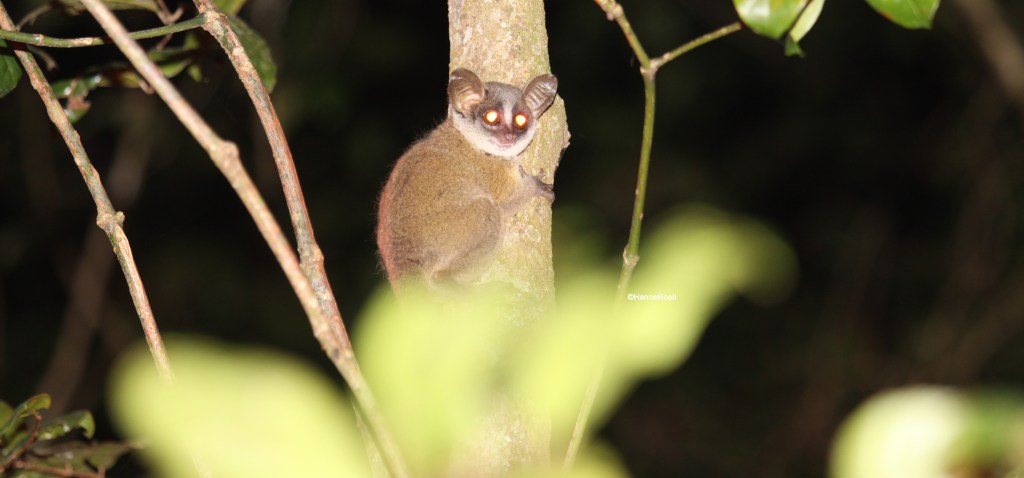
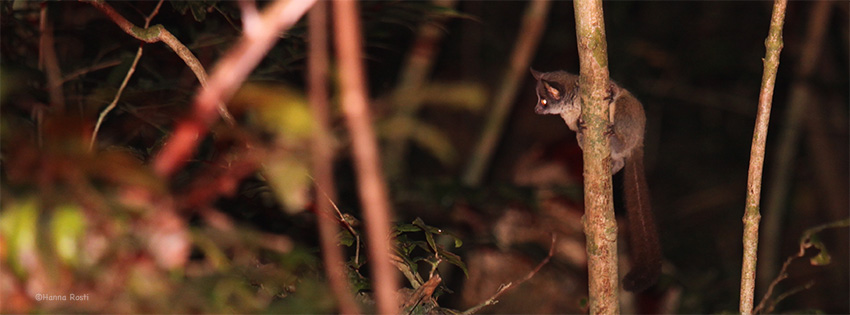
In Taita Hills there is small primate species that was first seen in 2002 and then no observations were made until 2018. In 2023 we failed to find it from Ngangao forest.
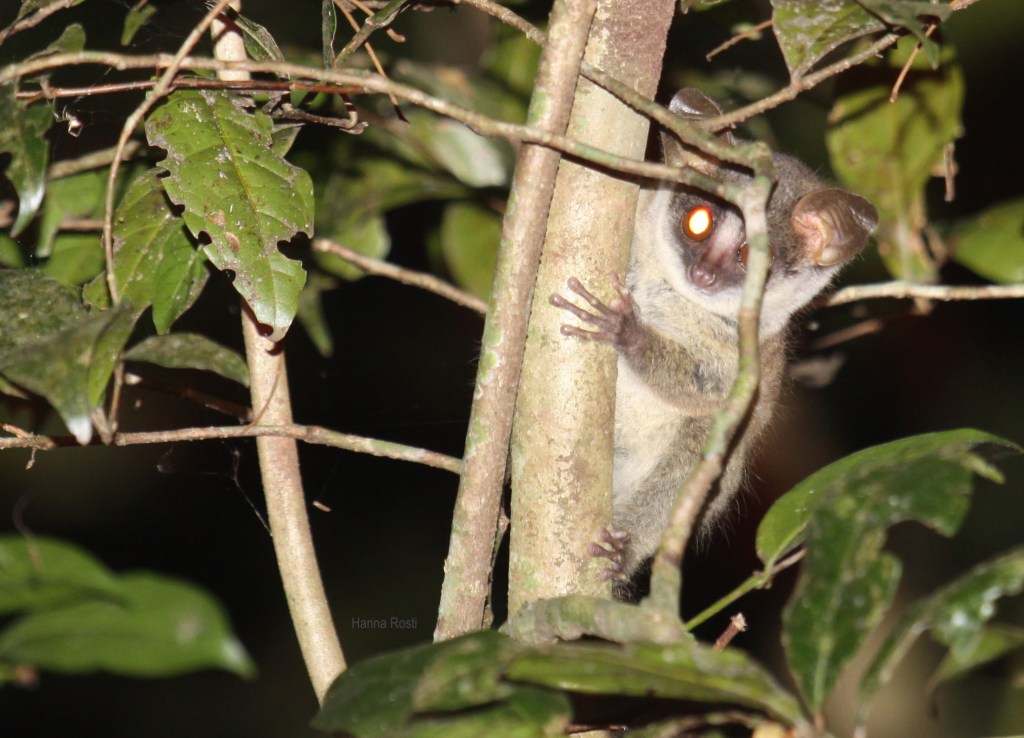
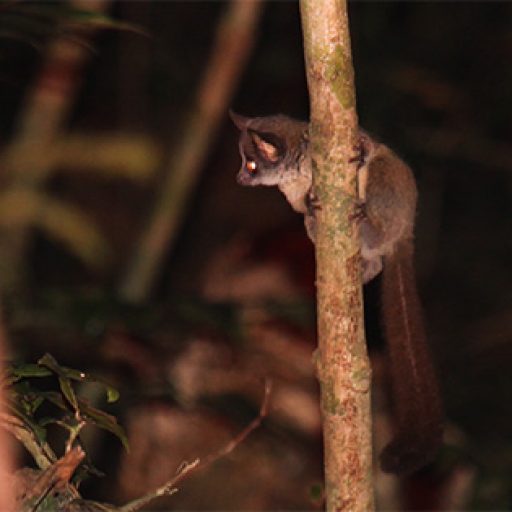
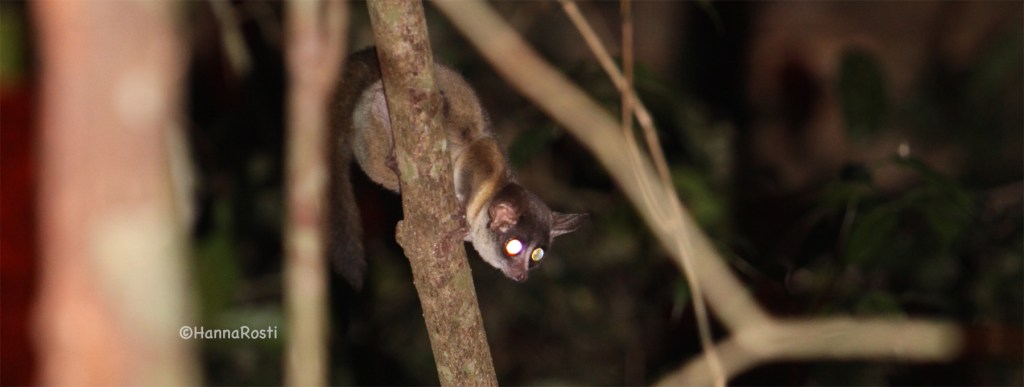
Dwarf galagos hunt insects by jumping from small tree to another like its relatives makis in Madagascar. Photo Rosti 2019.
This tiny -only 100-180 grams weighing dwarf galago eats insects in the hearts of most pristine parts of indigenous forests.
Oryx – the International Journal of Conservation published 11.2020 conservation news about Taita mountain dwarf galago: Taita mountain dwarf galago is extant in Taita Hills of Kenya https://doi.org/10.1017/S003060531900142X
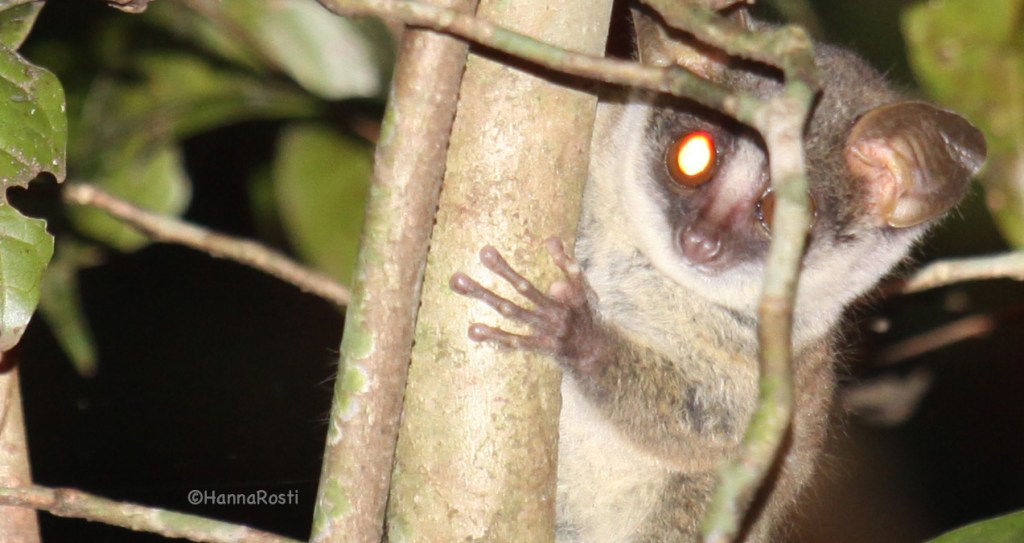
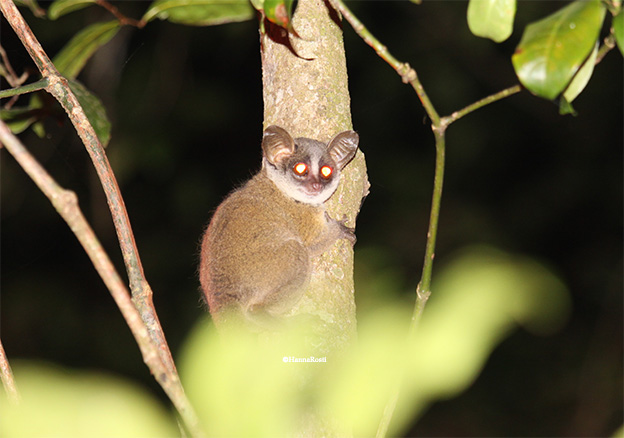
Cryptic dwarf galagos have intriguing hand morphology. Photo Rosti 2019.
Researcher from Nocturnal Primates Research Group identified calls of Taita mountain dwarf galago as Kenya Coast Dwarf Galago (Paragalago cocos). However these populations have been isolated for millions of years and live in completely different habitat. At the coast forest is low and temperatures high, in the mountains forest is high and temperatures low. All tree species are different between these forests. It seems that dwarf galagos in Taita Hills are relict population of once wider distribution of Kenya coast dwarf galagos.
Dwarf galago species are cryptic, meaning that they all look almost the same. Their vocal communication reveals the species, in the darkness of the forest, vocal communication is most important means of communication.
There is urgent need for conservation of forests and replanting of indigenous trees in Taita Hills.
Tree hyraxes of Taita Hills are new species for the science
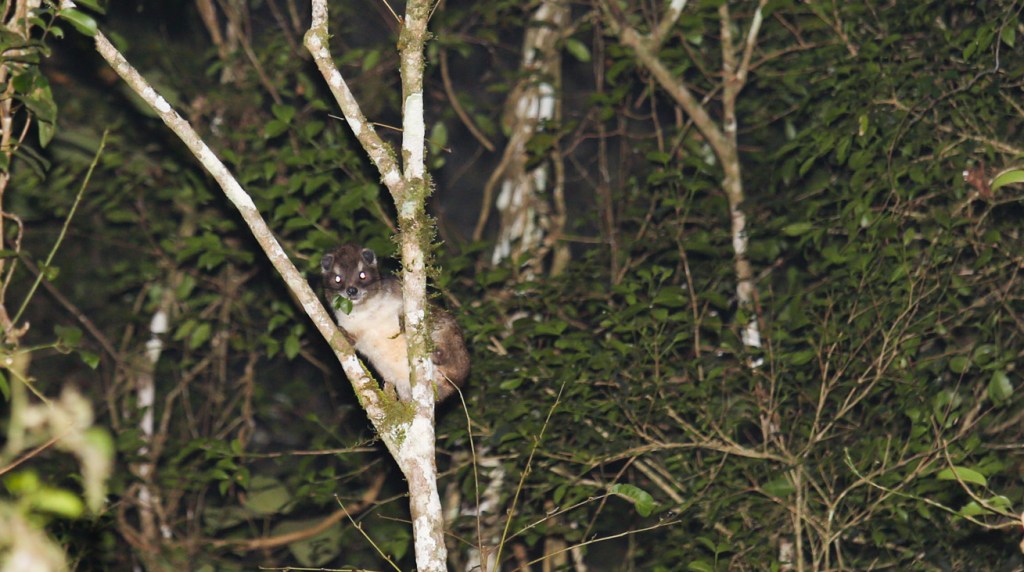
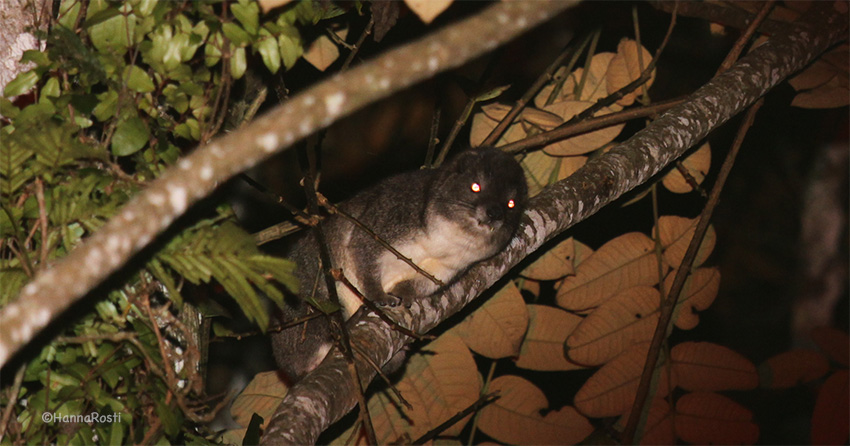
This is first picture ever taken from Taita tree hyrax. They are highly vocal, but difficult to find. Photo Rosti 2019
Tree hyraxes of Taita Hills should be conserved as Critically Endangered species
Both species are dependent of indigenous trees as their habitat. Dwarf galagos eat insects and tree hyraxes eat leaves of indigenous trees. Both are dependent on tree cavities for daytime shelter.
How these species were found
Mysterious cryptic dwarf galagos was mentioned first in article in Journal of East African Natural History 91: 1–13 (2002) by Andrew Perkin, Thomas Butynski, Simon Bearder, Bernard Agwanda and Benny Bytebier 2002. Nothing happened after the article and nobody knew if this species existed any more.
Taita Hills research station has been the base of the research. Director of research station and professor of Helsinki University Petri Pellikka has contributed enormously to this research even before the beginning.
Professor from University of Helsinki, Jouko Rikkinen told me about this species, as he had been intrigued by it and its survival for years. Professor Rikkinen has been studying biodiversity of Taita Hills since 2009. Knowledge and insights of Jouko Rikkinen has been backbone of this research.
In August 2018 I began searching for these small primates, as no-one knew about their fate. My assistant in the forest was and still is Benson Mwakachola. He has been reliable and supportive companion in sometimes challenging conditions.
After search for several nights, we got super lucky and tiny animal with reddish eyes were looking at us in just few meters away. This dwarf galago seemed interested about us. And we were so happy to see it.
Emeritus professor Simon Bearder from Oxford Brookes University has contributed in many ways as he is expert on nocturnal mammals and primatology. Simon had been one of writers of first article about Taita mountain dwarf galago in 2002.
From the recordings Simon Bearder, who has 40 years of experience from nocturnal animal research in Africa, understood that tree hyrax in Taita Hills is different species than it had been thought to be.
News in Daily Mail: Adorable 3.5OUNCE African primate the Taita mountain dwarf galago is caught on camera for the first time in nearly 20 years as the species faces extinction

 Animals of Taita, Kenya